Exercise and Natural Killer Cells
     By: Stephanie Edwards and Jaclyn Woods
How KIR Receptors Work
 Killer cell immunoglobulin-like receptors are considered the most
   important receptor for the effectiveness of NK cell cytotoxicity.

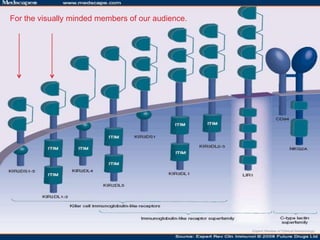
 KIRs are divided into two broad categories based on whether they
   function in activation or inhibition. Activatory KIRs have short
   cytoplasmic tails and inhibitory KIRs have long cytoplasmic tails.

 Activatory KIRs promote cytotoxicity, while inhibitory KIRs
   suppress cytotoxicity. Both categories of receptors interact
   specifically with MHC Class I.

 The combination of inhibitory and activatory signals is critical for
   the stimulation of NK cell effector functions.
For the visually minded members of our audience.
KIRs and Moderate Exercise
 Moderate exercise increases the expression of two KIR genes in
   particular. They are KIR2DS2 (Activation) and KIR2DL3
   (Inhibition).

 Factors that stimulate KIR gene expression are IL-2, IL-15, and IL-
   18, and most importantly HSP-70Exercise causes HSP-70 serum
   levels in the blood to rise.

 HSP-70 expression is controlled primarily by a heat shock
   transcription factor called HSF-1, that becomes activated due to
   the elevated body temperature as a result of exercise.

 As a result, the two noted KIR genes increase in expression, which
   results in more KIR receptors on the NK cell surface.
Exercise as a part of a healthy
             Immune System
 The consequence of exercise induced changes in the population of
   CD56 NK cell subsets and expression for KIR genes promotes the
   effectiveness of immune surveillance.

 Exercise is a potential means of maintaining the integrity of the innate
   and adaptive immune responses through the promotion of natural killer
   cell functionality.

 Individuals experiencing minor illnesses can benefit from the
   implementation of moderate exercise in order to maintain a healthy
   immune system.
Works Cited
1. Boyton, R. J. and Altmann, D. M. Natural Killer Cells, Killer Immunoglobulin-like Receptors and Human Leucocyte Antigen Class I in Disease. Clin Exp Immunol. 2007;
      149: 1-8.


2. Dambarva, S. V.; Durning, Maureen; Rozner, A. E.; and Golos, T. G. Immunophenotype and Cytokine Profiles of Rhesus Monkey CD56bright and CD56dim Natural Killer
      Cells. BiolReprod. 2011 Sep. [Published online in advance of print edition], accessed on Nov. 5, 2011.


3. Gannon, G. A.; Rhind, S. G.; Suzui, M.; Shek, P. N.; and Shephard, R. J. Circulating Levels ofPeripheral Blood Leukocytes Following Competitive Cycling. Can J Appl
      Physiol. 1997; 22: 133-147.


4. Maltseva, D. V.; Sakharov, D. A.; Tonevitsky, E. A.; Northoff, H.; and Tonevitsky, A. G. Killer Cell Immunoglobulin-like Receptors and Exercise. ExercImmunol Rev. 2011;
       17: 150-163.


5. Middleton, D. and Gonzelez, F. The Extensive Polymorphism of KIR Genes. Immunology. 2009; 129: 8-19.


6. Milush, J. M.; Long, B. R.; Snyder-Cappione, J. E.; Cappione III, A. J.; York, V. A.; Ndholvu, L. C.; Lanier, L. L.; Michaelsson, J.; and Nixon, D. F. Functionally Distinct
       Subsets of Human NK Cells and Monocyte/DC-like Cells Identified by Coexpression of CD56, CD7, and CD4. Blood. 2009 Nov; 114(23): 4823-4831.


7. Poli, A.; Michel, T.; Theresine, M.; Andres, E.; Hentges, F.; and Zimmer, J. CD56bright Natural Killer (NK) Cells: An Important NK Cell Subset. Immunology. 2009; 126: 458-
        465.


8. Shleptsova, V. A.; Grebenyuk, E. S.; Khaustova, S. A.; Obraztsova, N. P.; Shkurnikov, M. Yu.; Sakharov, D. A.; and Tonevitsky, E. A. Expression of KIR2DL3 and
      KIR2DS2 Natural Killer Receptors in Exercise. B Exp Biol Med+. 2010 Nov; 149(6): 695-698.


9. Timmons, B. W. and Cieslak, T. Human Natural Killer Cell Subsets and Acute Exercise: A Brief Review. ExercImmunol Rev. 2008; 14: 8-23.


10. Wang, J-S and Wu, C-K. Systemic Hypoxia Affects Exercise-mediated Antitumor Cytotoxicity of Natural Killer Cells. J Appl Physiol. 2009; 107: 1817-1824.


11. Abravaya, K.; Myers, M. P.; Murphy, S.P.; et al. The Human Heat Shock Protein hsp70 Interacts with HSF, the Transcription Factor that Regulates Heat Shock Gene
       Expression. Gene Dev. 1992; 6: 1153-1164.


12. Burton, D. A.; Stokes, K.; and Hall, G. M. Physiological Effects of Exercise. ContinEducAnaesthCrit Care Pain. 2004; 4(6): 185-188.


13. Le Masson, F. and Christians, E. HSFs and Regulation of Hsp70.1 (Hspa1b) in Oocytes andPreimplantationEmbryos: New Insights brought by Transgenic and Knockout
       Mouse Models. Cell Stress Chaperon. 2011; 16: 275-285.

Edwardswoodsppt

  • 1.
    Exercise and NaturalKiller Cells By: Stephanie Edwards and Jaclyn Woods
  • 2.
    How KIR ReceptorsWork  Killer cell immunoglobulin-like receptors are considered the most important receptor for the effectiveness of NK cell cytotoxicity.  KIRs are divided into two broad categories based on whether they function in activation or inhibition. Activatory KIRs have short cytoplasmic tails and inhibitory KIRs have long cytoplasmic tails.  Activatory KIRs promote cytotoxicity, while inhibitory KIRs suppress cytotoxicity. Both categories of receptors interact specifically with MHC Class I.  The combination of inhibitory and activatory signals is critical for the stimulation of NK cell effector functions.
  • 3.
    For the visuallyminded members of our audience.
  • 4.
    KIRs and ModerateExercise  Moderate exercise increases the expression of two KIR genes in particular. They are KIR2DS2 (Activation) and KIR2DL3 (Inhibition).  Factors that stimulate KIR gene expression are IL-2, IL-15, and IL- 18, and most importantly HSP-70Exercise causes HSP-70 serum levels in the blood to rise.  HSP-70 expression is controlled primarily by a heat shock transcription factor called HSF-1, that becomes activated due to the elevated body temperature as a result of exercise.  As a result, the two noted KIR genes increase in expression, which results in more KIR receptors on the NK cell surface.
  • 5.
    Exercise as apart of a healthy Immune System  The consequence of exercise induced changes in the population of CD56 NK cell subsets and expression for KIR genes promotes the effectiveness of immune surveillance.  Exercise is a potential means of maintaining the integrity of the innate and adaptive immune responses through the promotion of natural killer cell functionality.  Individuals experiencing minor illnesses can benefit from the implementation of moderate exercise in order to maintain a healthy immune system.
  • 6.
    Works Cited 1. Boyton,R. J. and Altmann, D. M. Natural Killer Cells, Killer Immunoglobulin-like Receptors and Human Leucocyte Antigen Class I in Disease. Clin Exp Immunol. 2007; 149: 1-8. 2. Dambarva, S. V.; Durning, Maureen; Rozner, A. E.; and Golos, T. G. Immunophenotype and Cytokine Profiles of Rhesus Monkey CD56bright and CD56dim Natural Killer Cells. BiolReprod. 2011 Sep. [Published online in advance of print edition], accessed on Nov. 5, 2011. 3. Gannon, G. A.; Rhind, S. G.; Suzui, M.; Shek, P. N.; and Shephard, R. J. Circulating Levels ofPeripheral Blood Leukocytes Following Competitive Cycling. Can J Appl Physiol. 1997; 22: 133-147. 4. Maltseva, D. V.; Sakharov, D. A.; Tonevitsky, E. A.; Northoff, H.; and Tonevitsky, A. G. Killer Cell Immunoglobulin-like Receptors and Exercise. ExercImmunol Rev. 2011; 17: 150-163. 5. Middleton, D. and Gonzelez, F. The Extensive Polymorphism of KIR Genes. Immunology. 2009; 129: 8-19. 6. Milush, J. M.; Long, B. R.; Snyder-Cappione, J. E.; Cappione III, A. J.; York, V. A.; Ndholvu, L. C.; Lanier, L. L.; Michaelsson, J.; and Nixon, D. F. Functionally Distinct Subsets of Human NK Cells and Monocyte/DC-like Cells Identified by Coexpression of CD56, CD7, and CD4. Blood. 2009 Nov; 114(23): 4823-4831. 7. Poli, A.; Michel, T.; Theresine, M.; Andres, E.; Hentges, F.; and Zimmer, J. CD56bright Natural Killer (NK) Cells: An Important NK Cell Subset. Immunology. 2009; 126: 458- 465. 8. Shleptsova, V. A.; Grebenyuk, E. S.; Khaustova, S. A.; Obraztsova, N. P.; Shkurnikov, M. Yu.; Sakharov, D. A.; and Tonevitsky, E. A. Expression of KIR2DL3 and KIR2DS2 Natural Killer Receptors in Exercise. B Exp Biol Med+. 2010 Nov; 149(6): 695-698. 9. Timmons, B. W. and Cieslak, T. Human Natural Killer Cell Subsets and Acute Exercise: A Brief Review. ExercImmunol Rev. 2008; 14: 8-23. 10. Wang, J-S and Wu, C-K. Systemic Hypoxia Affects Exercise-mediated Antitumor Cytotoxicity of Natural Killer Cells. J Appl Physiol. 2009; 107: 1817-1824. 11. Abravaya, K.; Myers, M. P.; Murphy, S.P.; et al. The Human Heat Shock Protein hsp70 Interacts with HSF, the Transcription Factor that Regulates Heat Shock Gene Expression. Gene Dev. 1992; 6: 1153-1164. 12. Burton, D. A.; Stokes, K.; and Hall, G. M. Physiological Effects of Exercise. ContinEducAnaesthCrit Care Pain. 2004; 4(6): 185-188. 13. Le Masson, F. and Christians, E. HSFs and Regulation of Hsp70.1 (Hspa1b) in Oocytes andPreimplantationEmbryos: New Insights brought by Transgenic and Knockout Mouse Models. Cell Stress Chaperon. 2011; 16: 275-285.