THE EDUCATION AND ASSESSMENT
      SYSTEM IN POLAND
 ZESPÓŁ SZKÓŁ NR 2
  RYBNIK , POLAND
 JOANNA LUBAŃSKA-PIELOCH

This project has been funded with support from the European Commission.
This publication [communication] reflects the views only of the author, and the
Commission cannot be held responsible for any use which may be made of
the information contained therein.
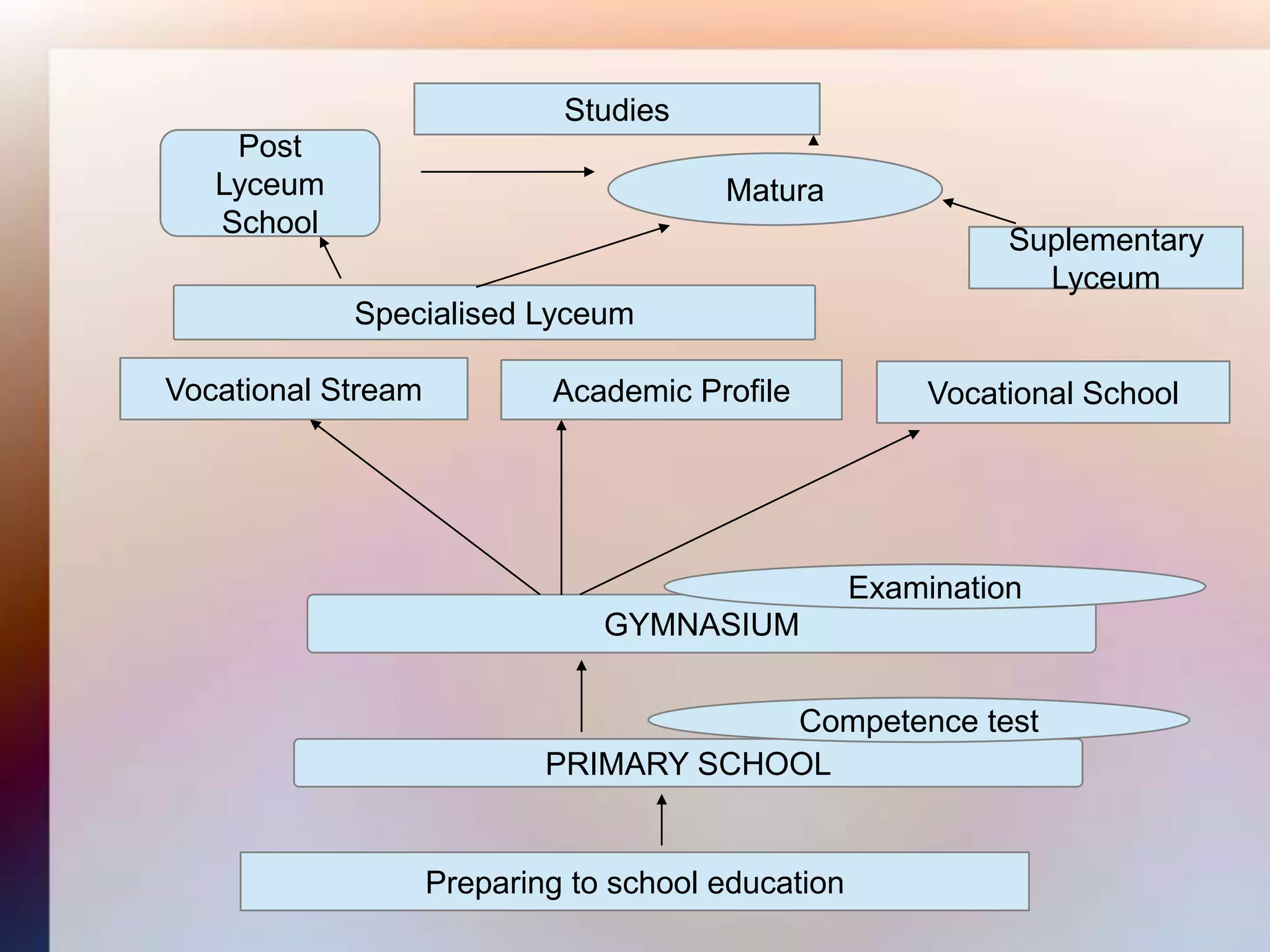
Studies
    Post
   Lyceum                               Matura
   School
                                                              Suplementary
                                                                Lyceum
            Specialised Lyceum

Vocational Stream           Academic Profile             Vocational School


                                                    Examination
                                GYMNASIUM


                                        Competence test
                            PRIMARY SCHOOL


                    Preparing to school education
DECISION MAKING IN EDUCATION


THE MINISTRY OF EDUCATION                 SCHOOLS

                                DECISION ON THE SCHOOL SET OF
    CORE CURRICULUM FOR         CURRICULA AND THE CHOICE OF
    ALL   SUBJECTS   AND        TEXTBOOKS
    EDUCATIONAL PATHS

    APPROVAL OF CURRICULA AND   FORM OF ON-GOING
    TEXTBOOKS                   ASSESSMENT AND STUDENTS’
                                EVALUATION

    THE ATTAINMENT
    STANDARDS FOR EXAMS
CORE                CURRICULUM

Prepared for each educational level and educational activity
(subjects and educational paths)

Ensures continuity of education between subsequent levels
(common features for all levels)

Common structure for each educational activity:
-         educational aims
-         tasks of the school
-         contents
- pupils’ achievements (basis for the attainment standards)

Basis for writers of curricula and textbooks
CORE CURRICULUM AND THE
                ASSESSMENT SYSTEM

                          CORE CURRICULUM


    Internal assessment               External assessment


        Curricula

                                     - the idea of the exam
                                     - examination requirements
- the school assessment system
- educational requirements for       - exam papers and tasks
individual subjects
- school grades                        results
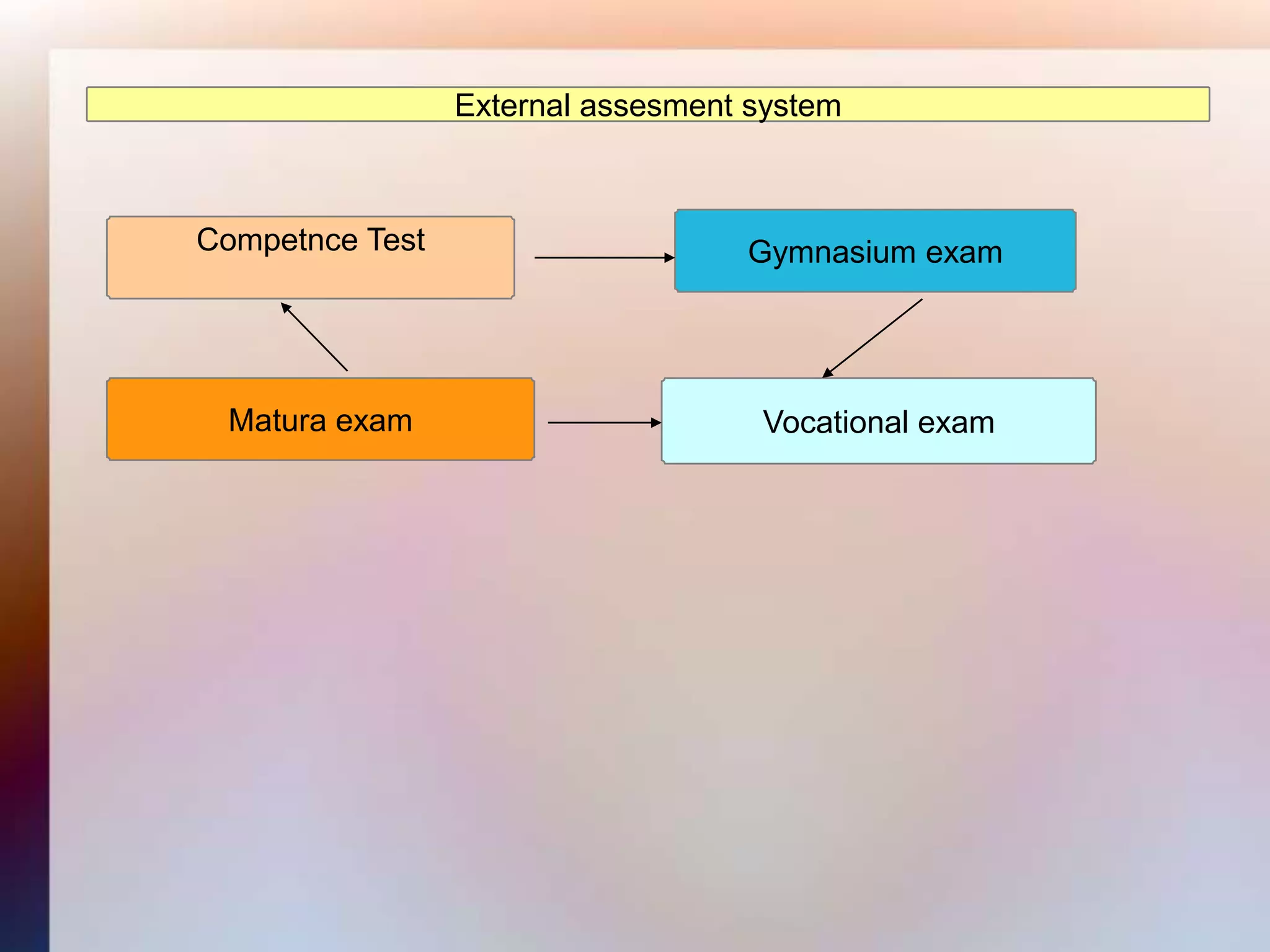
External assesment system


Competnce Test                     Gymnasium exam


 Matura exam                        Vocational exam
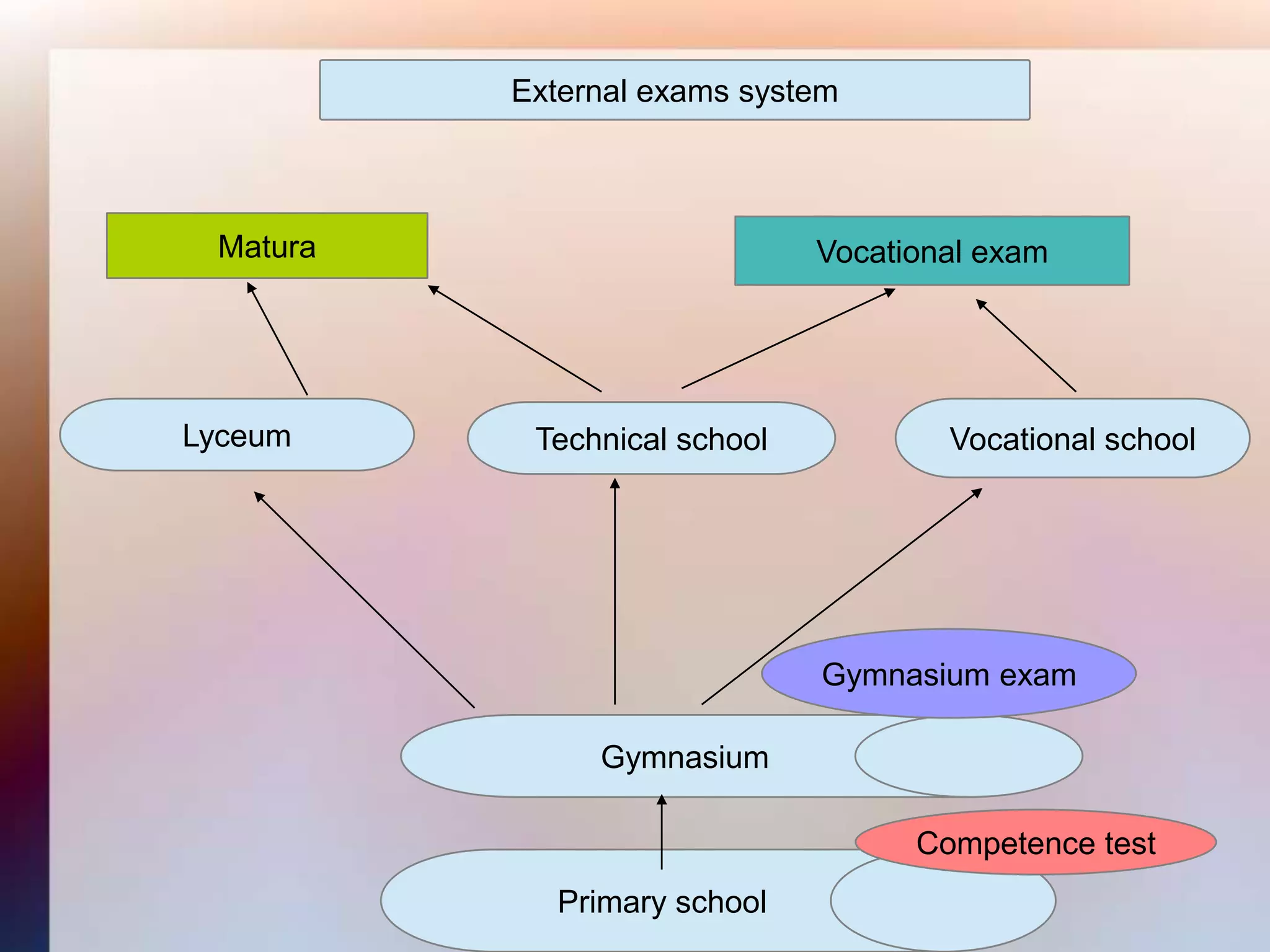
External exams system


 Matura                       Vocational exam


Lyceum     Technical school           Vocational school


                              Gymnasium exam

               Gymnasium

                                    Competence test
            Primary school
UPPER POST SECONDARY EDUCATION


                                Lyceum (general
                               education academic
                                     profile)
Specialised lyceum


                                                    Supplementary
                            Types of                   lyceum
                             schools
Technical secondary
       school                                   Supplementary
                                                  Technical
                                                 Secondary
                                                   School

    Post lyceum school
                                 Basic vocational
                                      school
Lyceum
                      (upper secondary school)
Admission: based on school criteria (gymnasium exam results essential)
Age of students: 16-19
Final exam: a standarised exam in the last grade MATURA

lThe most common type of school at this level
lAcademic profile

lPreparation for the matura exam and academic studies as priority

lTwo foreign languages obligatory
PRIMARY SCHOOL


Admission: based only on age
Age of students: 7-13
Final exam: a competance test in the last grade
Gymnasium
                            (Lower secondary school)
Admission: primary school leaving certificate necessary
Age of students: 14-16
Final exam: a standardised exam in the last grade

l   A compulsory, non-specialised school providing general education

l   Subject-based teaching (including educational paths)

l   One foreign language obligatory ( in our school also second language german / french)

lThe main task is to identify the abilities and interests of the pupils
l ensure a rational choice of their further educational route

l(general education or vocational training)
GYMNASIUM EXAM


lScience exam
lArts exam

lForeign language exam
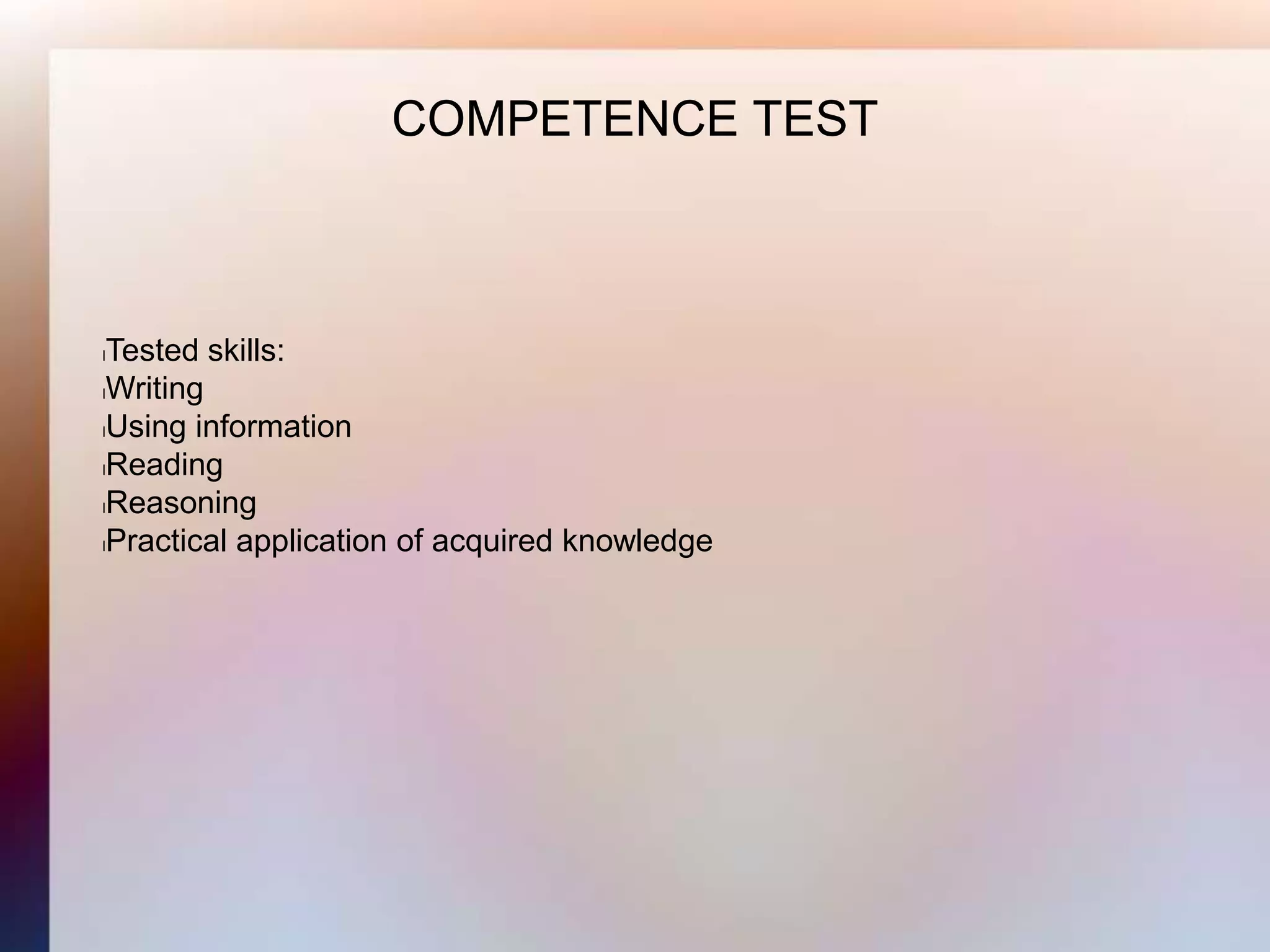
COMPETENCE TEST


lTested skills:
lWriting

lUsing information

lReading

lReasoning

lPractical application of acquired knowledge

Education system poland

  • 1.
    THE EDUCATION ANDASSESSMENT SYSTEM IN POLAND ZESPÓŁ SZKÓŁ NR 2 RYBNIK , POLAND JOANNA LUBAŃSKA-PIELOCH This project has been funded with support from the European Commission. This publication [communication] reflects the views only of the author, and the Commission cannot be held responsible for any use which may be made of the information contained therein.
  • 2.
    Studies Post Lyceum Matura School Suplementary Lyceum Specialised Lyceum Vocational Stream Academic Profile Vocational School Examination GYMNASIUM Competence test PRIMARY SCHOOL Preparing to school education
  • 3.
    DECISION MAKING INEDUCATION THE MINISTRY OF EDUCATION SCHOOLS DECISION ON THE SCHOOL SET OF CORE CURRICULUM FOR CURRICULA AND THE CHOICE OF ALL SUBJECTS AND TEXTBOOKS EDUCATIONAL PATHS APPROVAL OF CURRICULA AND FORM OF ON-GOING TEXTBOOKS ASSESSMENT AND STUDENTS’ EVALUATION THE ATTAINMENT STANDARDS FOR EXAMS
  • 4.
    CORE CURRICULUM Prepared for each educational level and educational activity (subjects and educational paths) Ensures continuity of education between subsequent levels (common features for all levels) Common structure for each educational activity: - educational aims - tasks of the school - contents - pupils’ achievements (basis for the attainment standards) Basis for writers of curricula and textbooks
  • 5.
    CORE CURRICULUM ANDTHE ASSESSMENT SYSTEM CORE CURRICULUM Internal assessment External assessment Curricula - the idea of the exam - examination requirements - the school assessment system - educational requirements for - exam papers and tasks individual subjects - school grades results
  • 6.
    External assesment system CompetnceTest Gymnasium exam Matura exam Vocational exam
  • 7.
    External exams system Matura Vocational exam Lyceum Technical school Vocational school Gymnasium exam Gymnasium Competence test Primary school
  • 8.
    UPPER POST SECONDARYEDUCATION Lyceum (general education academic profile) Specialised lyceum Supplementary Types of lyceum schools Technical secondary school Supplementary Technical Secondary School Post lyceum school Basic vocational school
  • 9.
    Lyceum (upper secondary school) Admission: based on school criteria (gymnasium exam results essential) Age of students: 16-19 Final exam: a standarised exam in the last grade MATURA lThe most common type of school at this level lAcademic profile lPreparation for the matura exam and academic studies as priority lTwo foreign languages obligatory
  • 10.
    PRIMARY SCHOOL Admission: basedonly on age Age of students: 7-13 Final exam: a competance test in the last grade
  • 11.
    Gymnasium (Lower secondary school) Admission: primary school leaving certificate necessary Age of students: 14-16 Final exam: a standardised exam in the last grade l A compulsory, non-specialised school providing general education l Subject-based teaching (including educational paths) l One foreign language obligatory ( in our school also second language german / french) lThe main task is to identify the abilities and interests of the pupils l ensure a rational choice of their further educational route l(general education or vocational training)
  • 12.
    GYMNASIUM EXAM lScience exam lArtsexam lForeign language exam
  • 13.
    COMPETENCE TEST lTested skills: lWriting lUsinginformation lReading lReasoning lPractical application of acquired knowledge