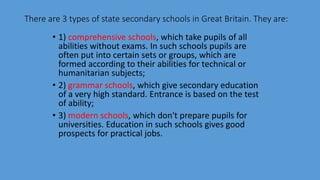
Prior to 1965 in Great Britain, children took an exam called the "eleven-plus" at age 11 that determined which type of secondary school they would attend. Those who passed went to grammar schools, while those who failed went to secondary modern schools. This system was criticized for being unfair. In 1965, the British government introduced comprehensive schools to provide equal education to all children instead of separating them based on exam results at age 11. Comprehensive schools aimed to give all pupils opportunities to pursue academic or vocational paths after finishing compulsory education, which ends at age 16.