Urban Farming:
By BCIL
What is Urban Agriculture?
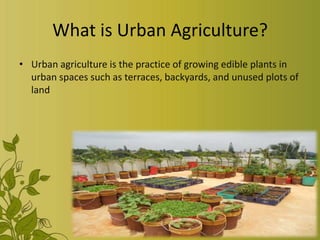
• Urban agriculture is the practice of growing edible plants in
urban spaces such as terraces, backyards, and unused plots of
land
Facts..
• 50% of the world’s population
lives in cities
• Low income urban dwellers
spend between 40% and 60%
of their income on food alone
• Only one benefiting from
agriculture is the middle man, neither farmer nor consumer.
City’s Food Needs
• Average purchase of fruits & vegetables to a
family is 1 kg.
• Middle- and upper classes in Bangalore count
up to 1 million in a city of 8.5 million. That’s
1000 tons a day.
• Average distance of travel of vegetables in
Bangalore : 100 km. That’s 30 liters for every 5
tons of fruits and vegetables.
• That’s 200 trucks a day!
The Benefits of Urban Farming
• Energy Saving: Urban agriculture produces food that is
truly local while reducing food miles (the distance food
travels before you get to eat it)
• Reduced Use of Pesticides: Crops produced on a
smaller scale are less likely to be devastated by pests
and disease, particularly when biodiversity is practiced
• Reduced Need for Preservatives: Food produced
within the city is not transported over long distances and
does not require extra measures to increase its lifespan
What it takes ?
• Sun, little water, cow dung or organic manure,
little soil.
• organic waste generated in the house, and co
ntainers
Recycled containers
• Recycled cements bags / poly bags
• Recycled drums
• Recycled containers
• Planter boxes
• Old tiers
• Concrete structures
• Any structure that can hold a garden
Locations
• Balcony: Vegetables like a couple of beets,
carrots, some spinach, methi, coriander, onions
can be grown in a container.
• Productive Public Spaces: Convert public lands
into productive farms of organic vegetable
produce
• Schools and Educational institutions: Make
students care for vegetable gardens whose produ
ce could be Used in their canteens.
Locations
• Corporates: Empty spaces around office
buildings could serve to grow veggies for employ
ees. Would serve to green office areas and make
employees healthy and happy – De-stressing for
the mind, a good exercise and relaxing for body
• Terraces: Apartment dwellers in cities could
take our services to reduce their food miles
by letting us convert their terraces into productiv
e vegetable growing spaces
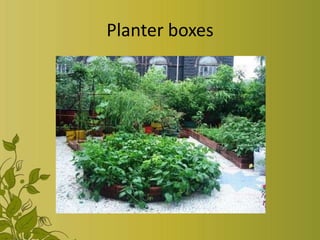
Planter boxes
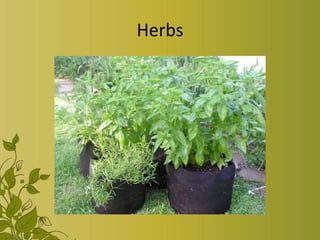
Herbs
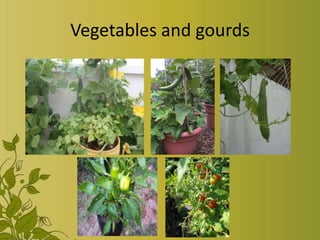
Vegetables and gourds
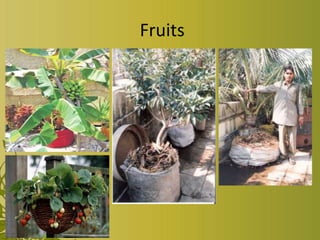
Fruits
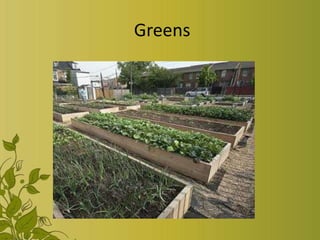
Greens
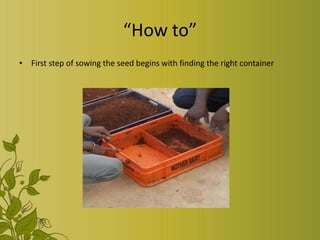
“How to”
• First step of sowing the seed begins with finding the right container
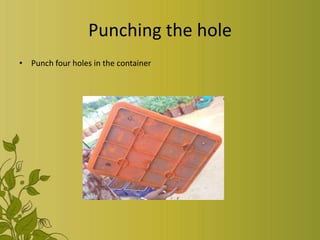
Punching the hole
• Punch four holes in the container
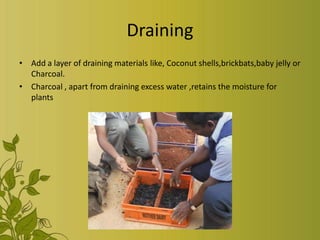
Draining
• Add a layer of draining materials like, Coconut shells,brickbats,baby jelly or
Charcoal.
• Charcoal , apart from draining excess water ,retains the moisture for
plants
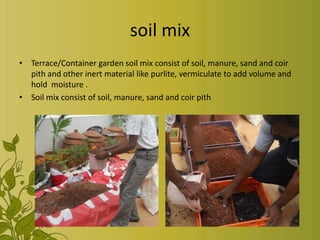
soil mix
• Terrace/Container garden soil mix consist of soil, manure, sand and coir
pith and other inert material like purlite, vermiculate to add volume and
hold moisture .
• Soil mix consist of soil, manure, sand and coir pith
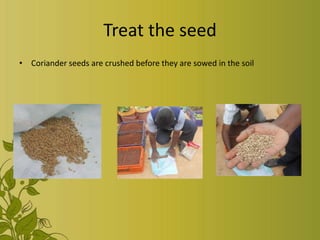
Treat the seed
• Coriander seeds are crushed before they are sowed in the soil
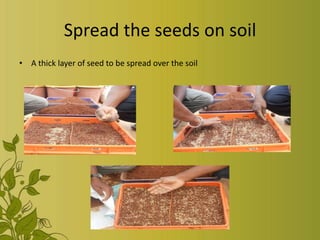
Spread the seeds on soil
• A thick layer of seed to be spread over the soil
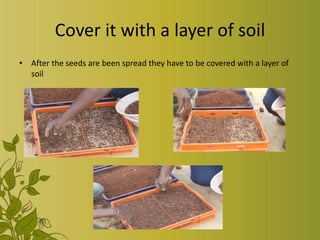
Cover it with a layer of soil
• After the seeds are been spread they have to be covered with a layer of
soil
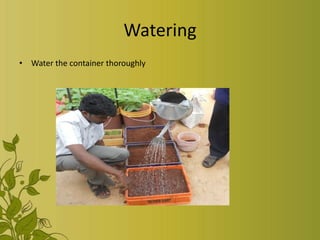
Watering
• Water the container thoroughly
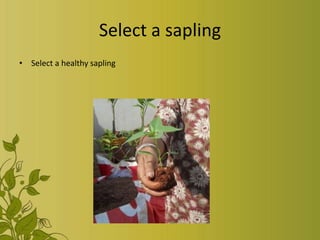
Select a sapling
• Select a healthy sapling
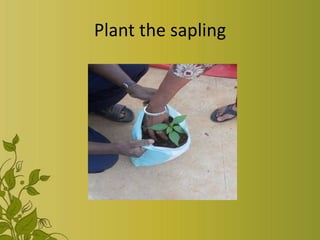
Plant the sapling
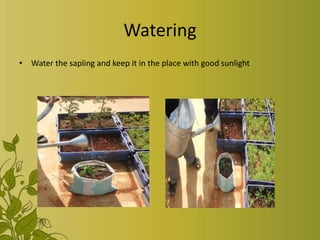
Watering
• Water the sapling and keep it in the place with good sunlight
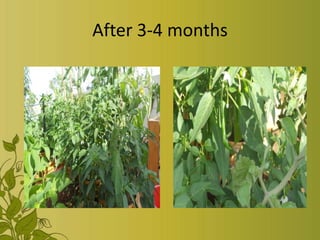
After 3-4 months
Shobha Devi on edible plants

Shobha Devi on edible plants

  • 1.
  • 2.
    What is UrbanAgriculture? • Urban agriculture is the practice of growing edible plants in urban spaces such as terraces, backyards, and unused plots of land
  • 3.
    Facts.. • 50% ofthe world’s population lives in cities • Low income urban dwellers spend between 40% and 60% of their income on food alone • Only one benefiting from agriculture is the middle man, neither farmer nor consumer.
  • 4.
    City’s Food Needs •Average purchase of fruits & vegetables to a family is 1 kg. • Middle- and upper classes in Bangalore count up to 1 million in a city of 8.5 million. That’s 1000 tons a day. • Average distance of travel of vegetables in Bangalore : 100 km. That’s 30 liters for every 5 tons of fruits and vegetables. • That’s 200 trucks a day!
  • 5.
    The Benefits ofUrban Farming • Energy Saving: Urban agriculture produces food that is truly local while reducing food miles (the distance food travels before you get to eat it) • Reduced Use of Pesticides: Crops produced on a smaller scale are less likely to be devastated by pests and disease, particularly when biodiversity is practiced • Reduced Need for Preservatives: Food produced within the city is not transported over long distances and does not require extra measures to increase its lifespan
  • 6.
    What it takes? • Sun, little water, cow dung or organic manure, little soil. • organic waste generated in the house, and co ntainers
  • 7.
    Recycled containers • Recycledcements bags / poly bags • Recycled drums • Recycled containers • Planter boxes • Old tiers • Concrete structures • Any structure that can hold a garden
  • 8.
    Locations • Balcony: Vegetableslike a couple of beets, carrots, some spinach, methi, coriander, onions can be grown in a container. • Productive Public Spaces: Convert public lands into productive farms of organic vegetable produce • Schools and Educational institutions: Make students care for vegetable gardens whose produ ce could be Used in their canteens.
  • 9.
    Locations • Corporates: Emptyspaces around office buildings could serve to grow veggies for employ ees. Would serve to green office areas and make employees healthy and happy – De-stressing for the mind, a good exercise and relaxing for body • Terraces: Apartment dwellers in cities could take our services to reduce their food miles by letting us convert their terraces into productiv e vegetable growing spaces
  • 10.
  • 11.
  • 12.
  • 13.
  • 14.
  • 15.
    “How to” • Firststep of sowing the seed begins with finding the right container
  • 16.
    Punching the hole •Punch four holes in the container
  • 17.
    Draining • Add alayer of draining materials like, Coconut shells,brickbats,baby jelly or Charcoal. • Charcoal , apart from draining excess water ,retains the moisture for plants
  • 18.
    soil mix • Terrace/Containergarden soil mix consist of soil, manure, sand and coir pith and other inert material like purlite, vermiculate to add volume and hold moisture . • Soil mix consist of soil, manure, sand and coir pith
  • 19.
    Treat the seed •Coriander seeds are crushed before they are sowed in the soil
  • 20.
    Spread the seedson soil • A thick layer of seed to be spread over the soil
  • 21.
    Cover it witha layer of soil • After the seeds are been spread they have to be covered with a layer of soil
  • 22.
    Watering • Water thecontainer thoroughly
  • 23.
    Select a sapling •Select a healthy sapling
  • 24.
  • 25.
    Watering • Water thesapling and keep it in the place with good sunlight
  • 26.