ECOSYSTEM AND ITSFUNCTIONS
PRESENTED BY:
KANISHKKAN V
2403717610421021
2.
ECOSYSTEM:
An Ecosystem isa community of living organisms (Plants,
Animals) and their non-living environment (Sunlight, Water),
interacting with each other and the physical environment..
3.
COMPONENTS OF ECOSYSTEM:
•Ecosystem consists of both Biotic (Living) and Abiotic (Non-living)
organisms.
• Biotic Components: Producers(Plants), Consumers (Animals) and
Decomposers (Bacteria, Fungi).
• Abiotic Components: Non-Living Factors like water, sunlight, soil
and temperature, etc..,
FOOD CHAIN:
• TheFood Chain is the sequence of organism
where nutrients and energy transfer from one
organism to other within the ecosystem.
• Each level in the food chain is called a Trophic
Level.
• The different Tropic levels are Producers ,
Primary Consumer , Secondary Consumer
and Tertiary Consumer.
6.
TYPES OF FOODCHAIN:
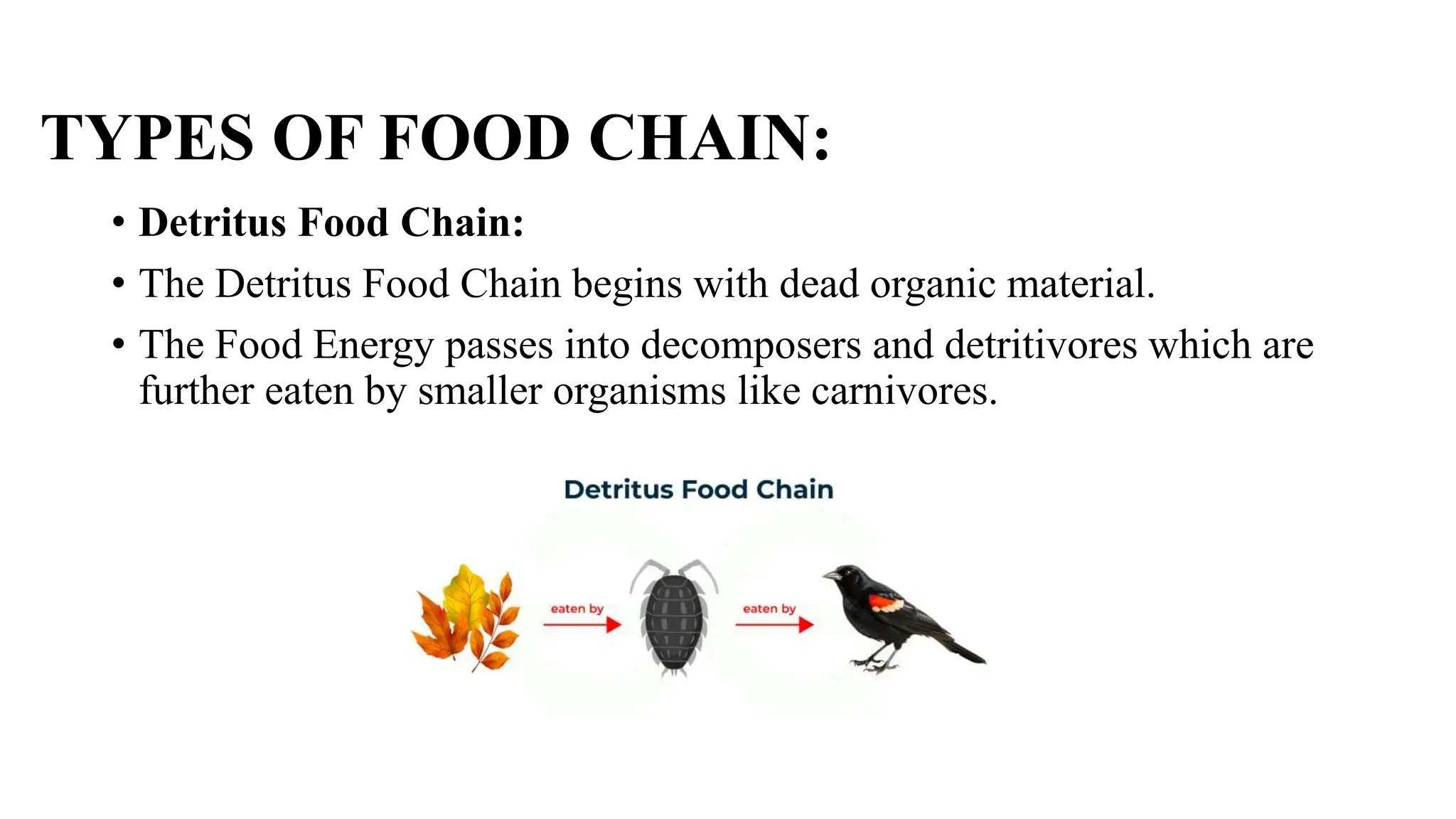
• Detritus Food Chain:
• The Detritus Food Chain begins with dead organic material.
• The Food Energy passes into decomposers and detritivores which are
further eaten by smaller organisms like carnivores.
7.
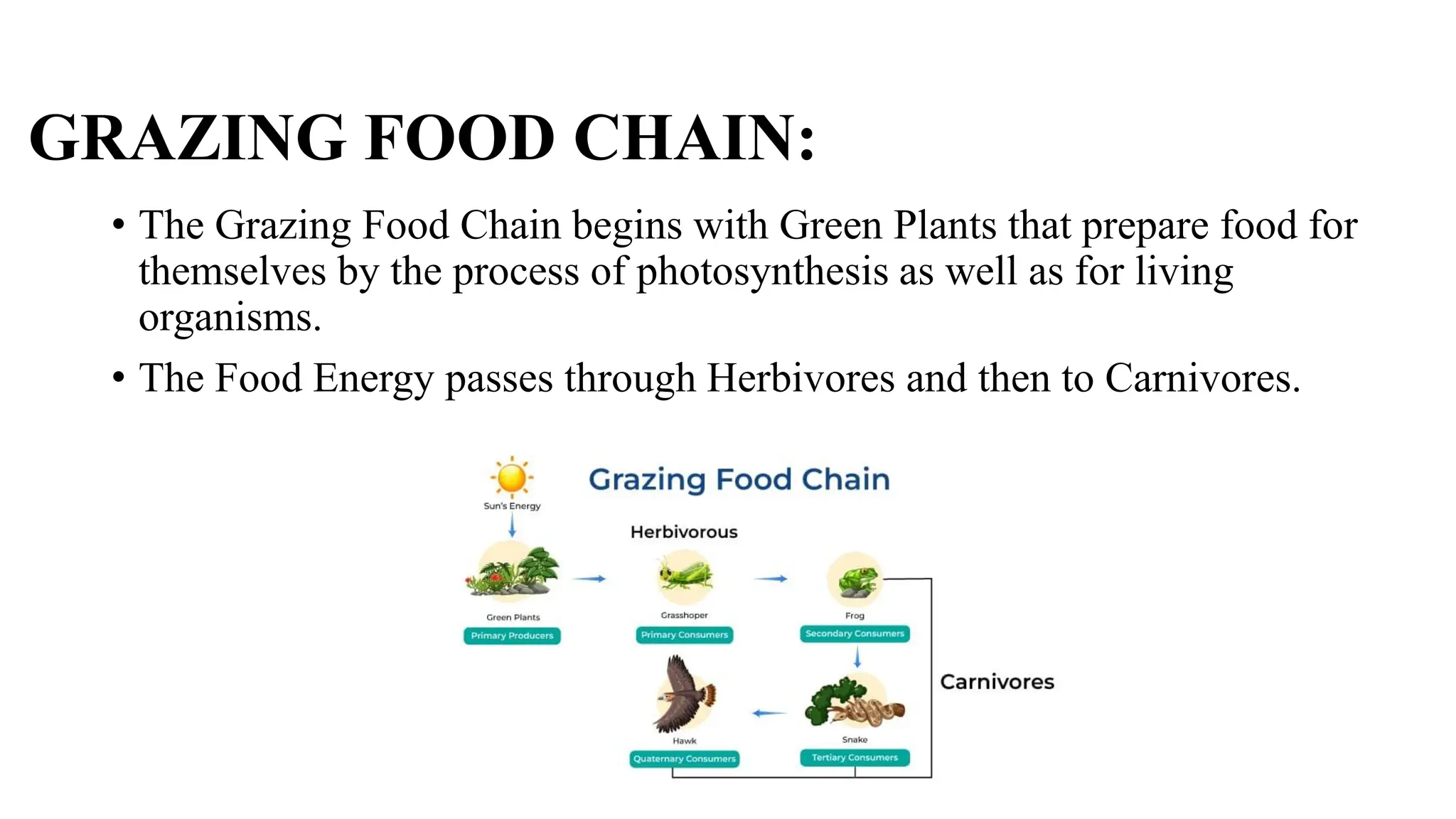
GRAZING FOOD CHAIN:
•The Grazing Food Chain begins with Green Plants that prepare food for
themselves by the process of photosynthesis as well as for living
organisms.
• The Food Energy passes through Herbivores and then to Carnivores.
8.
FOOD WEB:
• FoodWeb is a network of interconnected of multiple
food chains. It comprises all the food chains within
a single ecosystem.
• Significance of Food Web:
• It is constructed to describe species
interactions(direct relationships).
• It illustrates how energy transfer flows in an
ecosystem.
9.
DIFFERENCES BETWEEN
FOOD CHAIN
•It allows only a single path.
• An organism eats a single item.
• In food chain, there is a single
path for energy flow.
FOOD WEB
• A food web allows multiple path.
• An organism eats multiple items.
• In food web, there are different
paths for energy flow.