United Indians of all Tribes Foundation Pathways to Prosperity Project
Community Economic Development Randy Ross, Coordinator Ponca Tribe of Nebraska
Introduction Native Americans of all ethnicities have the worst Poverty (50%) Homelessness (30%) of Seattle homeless population Unemployment (up to 90%) Victims of Crime (Amnesty International) Lowest life expectancy (50 yrs old) Education (up to 90% drop out) NWAF gave UIATF 3.5 million to hire a team to find a solution. The pathways to Prosperity project
PPP - CED Building individual and community capacity for economic success – Workshops, Training, T/A Small Business strategic consultation services and support (Incubator, NABEC, PTAC, SBA, EDA, ANA) Access to capital and financing - CDFI, ATNI RLF, Native American Bank, Other Social Enterprise Initiative – Teepee Camp (Cultural Education Ventures); Salmon Bake/Catering Service; Northwest Canoe House/Seattle Parks Foundation
Community Needs Low-income and Lack of Access to Economic Development Opportunities Lack of access to capital and credit Lack of access to business opportunities due to market entry barriers Job training Lack of knowledge to joint venture and sub-contract for minority business opportunities under 8a SBA certification, WO/MBE, SDV, SDB, HubZone, etc.
Solutions/Services Establishing a Business Consulting Service staffed by Business Asssistance Officer and Consultants Identify financial partners to support joint venture for-profit projects to be owned by UIATF under a Community Development Corporation or LLC structure (ownership, income, and jobs creation) Offer Small Business training programs and entrepreneurial technical assistance services Credit and financial literacy training
Goals Create greater number of job opportunities  Create business ownership opportunities Assist in existing or emergent small business growth Develop asset building opportunities through small business training and community economic development participation Develop networks and partnership through economic alliances with tribes and corporations supporting UIATF Work with Day Break Star College
Working Together Identify family members who have interest and skills to become a small business owner Develop a learning plan to include credit and financial literacy training leading towards asset building (home ownership, small business) Identify successful Native Business persons to participate in Advisory Circle to help Pathways advance and grow (i.e. connecting to tribal leadership from home reservations, education resources)
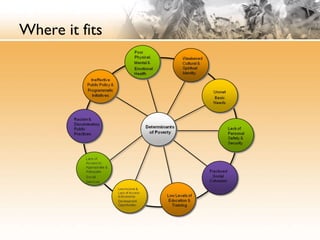
Where it fits
Conclusion UIATF, as a non-profit, and has in the past been largely dependent upon grants and gifts.  The grant economy is weakening; and even when it was considered strong only less than ½ of 1% of giving by all Public and Private Foundations is gifted to Native American organizations and purposes. Unrelated earned income and for-profit strategies to earn revenues is a must for future security and growth of UIATF. To reduce poverty, we must create our own wealth
Questions & Answers Invite questions from the audience www.fwii.net

Econ dev powerpoint_rr

  • 1.
    United Indians ofall Tribes Foundation Pathways to Prosperity Project
  • 2.
    Community Economic DevelopmentRandy Ross, Coordinator Ponca Tribe of Nebraska
  • 3.
    Introduction Native Americansof all ethnicities have the worst Poverty (50%) Homelessness (30%) of Seattle homeless population Unemployment (up to 90%) Victims of Crime (Amnesty International) Lowest life expectancy (50 yrs old) Education (up to 90% drop out) NWAF gave UIATF 3.5 million to hire a team to find a solution. The pathways to Prosperity project
  • 4.
    PPP - CEDBuilding individual and community capacity for economic success – Workshops, Training, T/A Small Business strategic consultation services and support (Incubator, NABEC, PTAC, SBA, EDA, ANA) Access to capital and financing - CDFI, ATNI RLF, Native American Bank, Other Social Enterprise Initiative – Teepee Camp (Cultural Education Ventures); Salmon Bake/Catering Service; Northwest Canoe House/Seattle Parks Foundation
  • 5.
    Community Needs Low-incomeand Lack of Access to Economic Development Opportunities Lack of access to capital and credit Lack of access to business opportunities due to market entry barriers Job training Lack of knowledge to joint venture and sub-contract for minority business opportunities under 8a SBA certification, WO/MBE, SDV, SDB, HubZone, etc.
  • 6.
    Solutions/Services Establishing aBusiness Consulting Service staffed by Business Asssistance Officer and Consultants Identify financial partners to support joint venture for-profit projects to be owned by UIATF under a Community Development Corporation or LLC structure (ownership, income, and jobs creation) Offer Small Business training programs and entrepreneurial technical assistance services Credit and financial literacy training
  • 7.
    Goals Create greaternumber of job opportunities Create business ownership opportunities Assist in existing or emergent small business growth Develop asset building opportunities through small business training and community economic development participation Develop networks and partnership through economic alliances with tribes and corporations supporting UIATF Work with Day Break Star College
  • 8.
    Working Together Identifyfamily members who have interest and skills to become a small business owner Develop a learning plan to include credit and financial literacy training leading towards asset building (home ownership, small business) Identify successful Native Business persons to participate in Advisory Circle to help Pathways advance and grow (i.e. connecting to tribal leadership from home reservations, education resources)
  • 9.
  • 10.
    Conclusion UIATF, asa non-profit, and has in the past been largely dependent upon grants and gifts. The grant economy is weakening; and even when it was considered strong only less than ½ of 1% of giving by all Public and Private Foundations is gifted to Native American organizations and purposes. Unrelated earned income and for-profit strategies to earn revenues is a must for future security and growth of UIATF. To reduce poverty, we must create our own wealth
  • 11.
    Questions & AnswersInvite questions from the audience www.fwii.net