Outline
• Introduction
• Benefits of Eco Tourism
• Principles of Eco Tourism
• Wildlife Management Techniques
• Challenges in Eco Tourism and Wildlife
Management
• Strategies for a Better Future
Ecotourism
• Responsible travel that focuses
on experiencing and
appreciating natural
environments and wildlife
• minimizing the negative impacts
on the environment and local
communities.
“Responsible travel to natural
areas that conserves the
environment, sustains the well-
being of the local people, and
involves interpretation and
education" (TIES, 2015).
The International Ecotourism Society
For the tourism industry, ecotourism (niche market) is the fastest
growing market segment. (USD 195.9 billion in 2022 epecetd:USD 656.19
billion by 2032.
(Precedence Research 2023). Leading region north America, Indian $2.24
billion in 2019, 2027: $4.55 billion) Target Market: older citizens
Ecotourism embodies essential principles, symbiotic relationships
between varying interests should follow, with environmental protection
resulting both from and in enhanced standards of living for local
populations, continued profits for the industry, sustained visitor
attraction and revenue for conservation
Benefits of Eco Tourism
• Economic Benefits
• Environmental Benefits
• Social Benefits
• Cultural Benefits
Principles
Environmental Conservation: The
primary goal is to conserve natural
habitats, wildlife, and ecosystems.
Education: Ecotourism often involves
educational components to raise
awareness about conservation issues
and promote sustainable practices.
Community Involvement: Local
communities are typically involved in
ecotourism activities, benefiting from
the economic opportunities it
provides.
Low Impact: Minimizing the
environmental impact by adhering to
principles like "leave no trace" and
reducing carbon footprints.
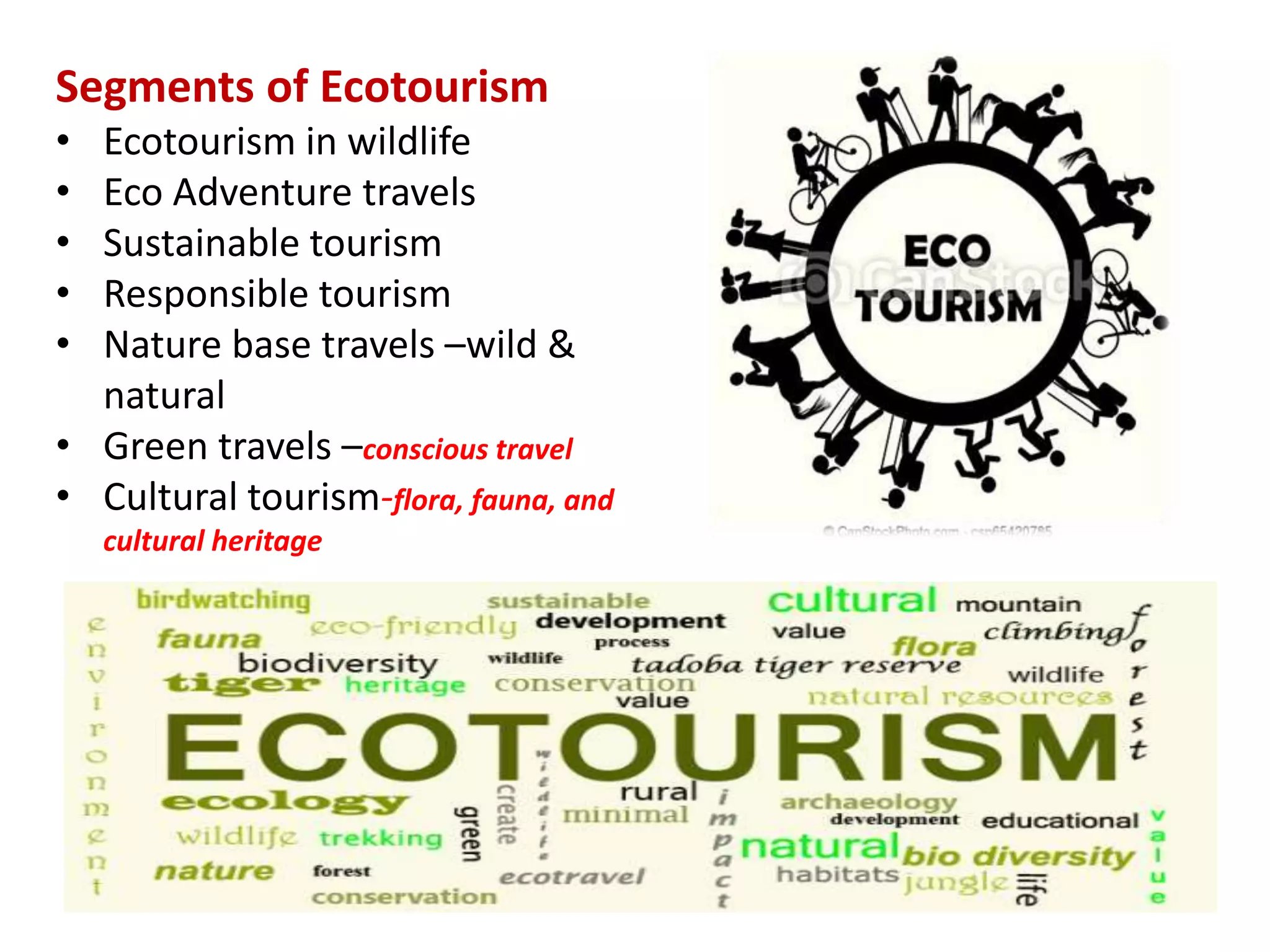
Segments of Ecotourism
• Ecotourism in wildlife
• Eco Adventure travels
• Sustainable tourism
• Responsible tourism
• Nature base travels –wild &
natural
• Green travels –conscious travel
• Cultural tourism-flora, fauna, and
cultural heritage
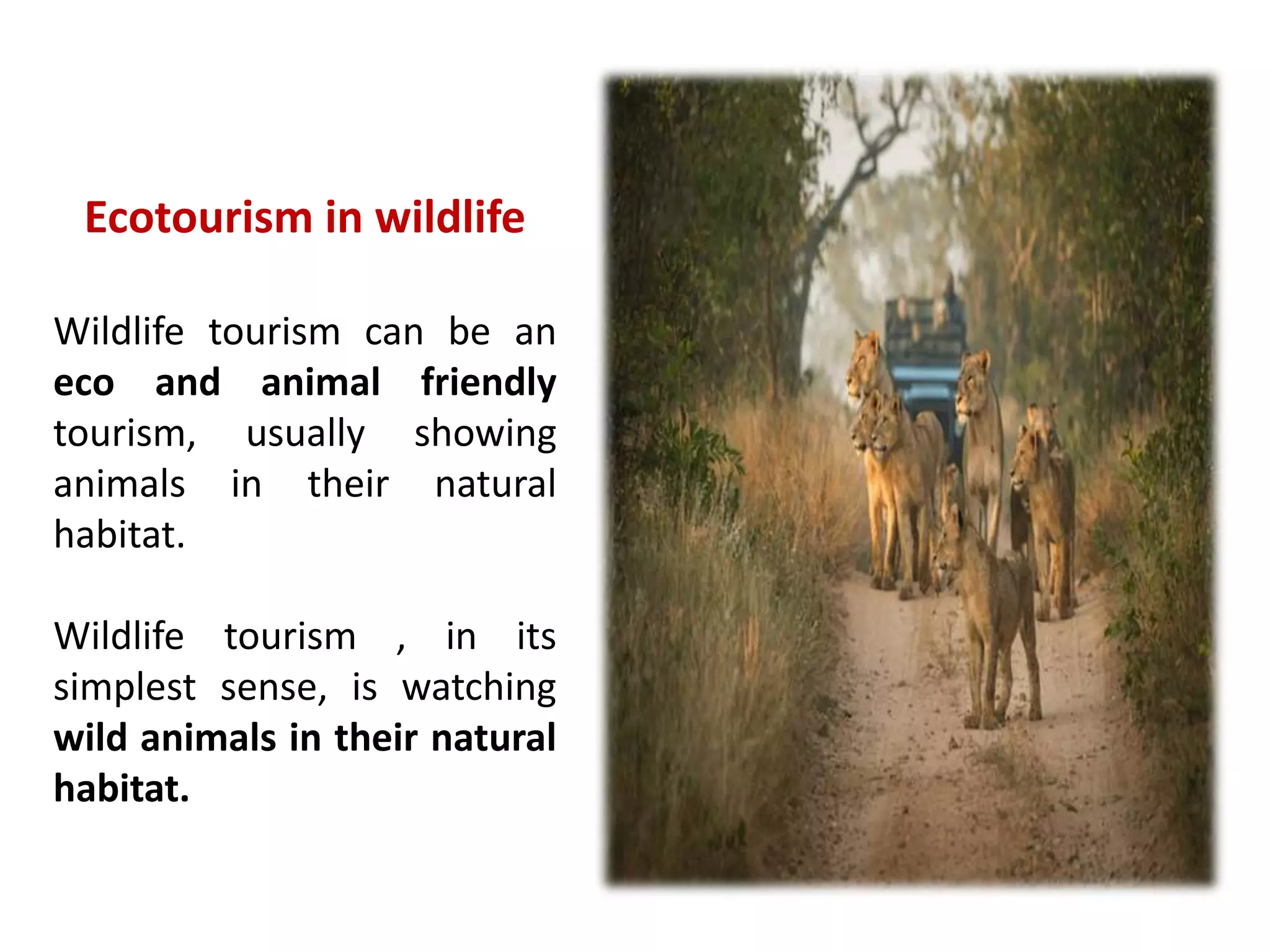
Ecotourism in wildlife
Wildlife tourism can be an
eco and animal friendly
tourism, usually showing
animals in their natural
habitat.
Wildlife tourism , in its
simplest sense, is watching
wild animals in their natural
habitat.
Sustainable Wildlife
Management
Sustainable wildlife
management is the practice
of using natural resources,
such as wildlife and their
habitats, in a way that
ensures their long-term
viability while meeting the
needs of current and future
generations.
Principles
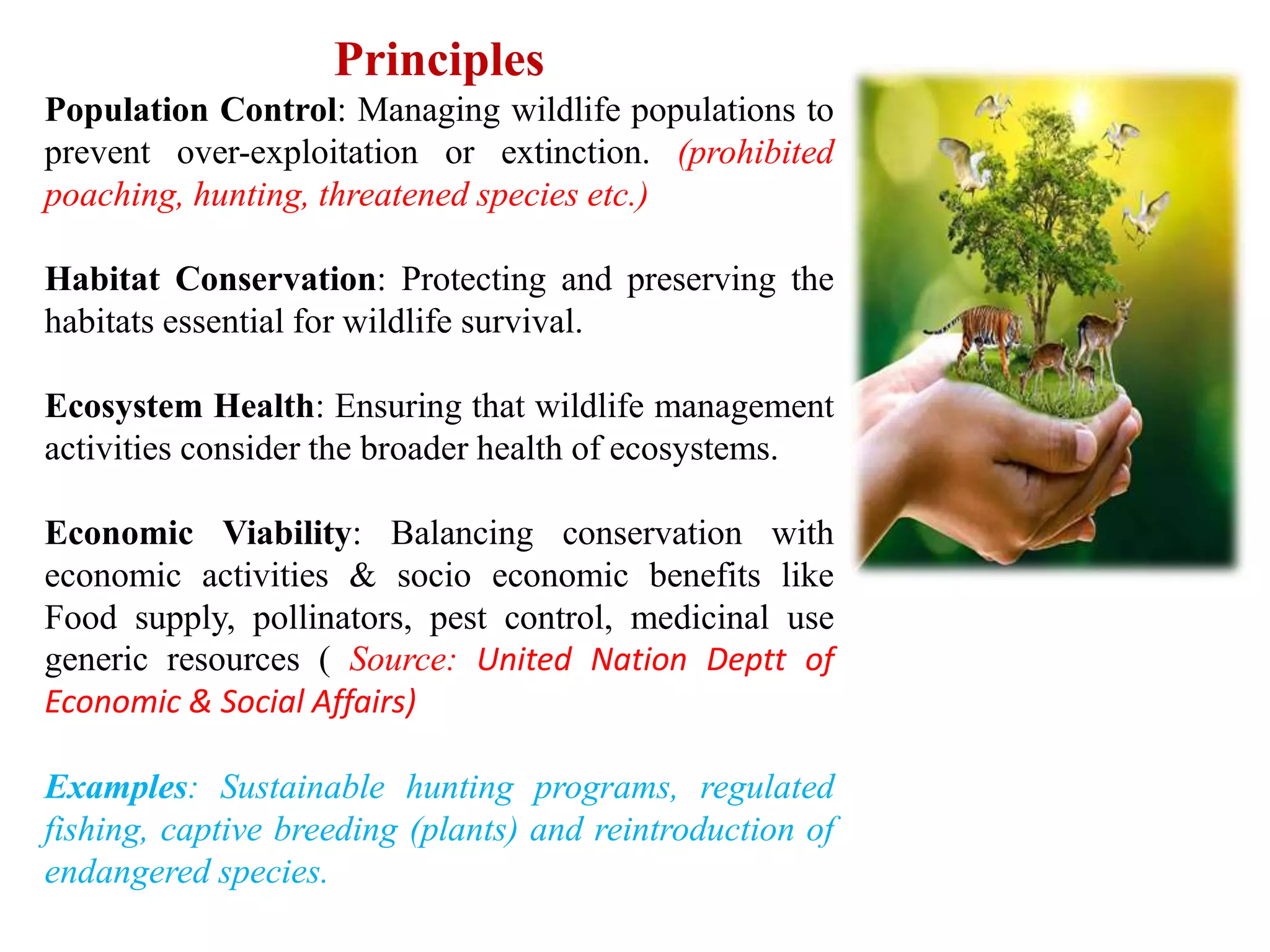
Population Control: Managing wildlife populations to
prevent over-exploitation or extinction. (prohibited
poaching, hunting, threatened species etc.)
Habitat Conservation: Protecting and preserving the
habitats essential for wildlife survival.
Ecosystem Health: Ensuring that wildlife management
activities consider the broader health of ecosystems.
Economic Viability: Balancing conservation with
economic activities & socio economic benefits like
Food supply, pollinators, pest control, medicinal use
generic resources ( Source: United Nation Deptt of
Economic & Social Affairs)
Examples: Sustainable hunting programs, regulated
fishing, captive breeding (plants) and reintroduction of
endangered species.
Wildlife Management Techniques
 Habitat Conservation
 Species Protection
 Sustainable Hunting and Fishing
 Wildlife Rehabilitation
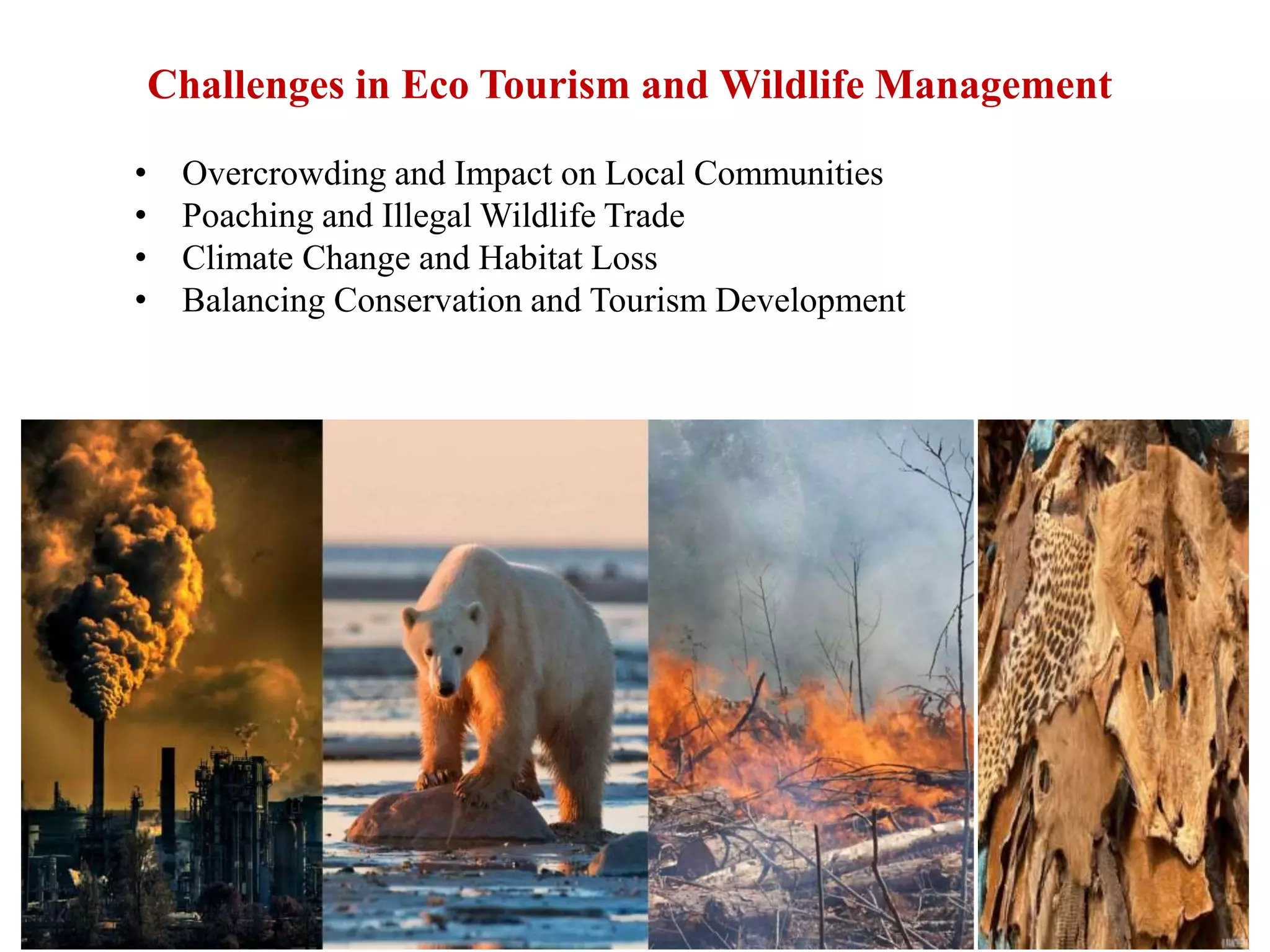
Challenges in Eco Tourism and Wildlife Management
• Overcrowding and Impact on Local Communities
• Poaching and Illegal Wildlife Trade
• Climate Change and Habitat Loss
• Balancing Conservation and Tourism Development
Relationship between Ecotourism and
Sustainable Wildlife Management
Ecotourism often complements sustainable wildlife management by
providing financial incentives for conservation.
Revenue generated from ecotourism activities can be used to fund wildlife
management programs and protect habitats.
Both concepts emphasize the importance of conservation and community
involvement.
They recognize that local communities are crucial stakeholders in efforts to
protect wildlife and natural resources.
Ecotourism can also serve as a tool for education and advocacy, helping to
raise awareness about the importance of sustainable wildlife management
and the need to protect biodiversity.
• Income Potential
• Rural & Cultural Benefits
• Elasticity of Demand, Substitution & Competition
• Image of the Destination
• Ease of Implementation
However, it's important to note that the success of both
ecotourism and sustainable wildlife management depends on
careful planning, monitoring, and adherence to best practices
to ensure that they truly contribute to the conservation of wildlife
and their habitats, while also benefiting local communities.
Overexploitation, habitat
destruction, and poorly
managed tourism can have
detrimental effects on
ecosystems and wildlife
populations.
Dr Ramjit Singh
Sr. Assistant Professor
drramjit05@gmail.com
9419291269

Eco Tourism.pptx

  • 2.
    Outline • Introduction • Benefitsof Eco Tourism • Principles of Eco Tourism • Wildlife Management Techniques • Challenges in Eco Tourism and Wildlife Management • Strategies for a Better Future
  • 3.
    Ecotourism • Responsible travelthat focuses on experiencing and appreciating natural environments and wildlife • minimizing the negative impacts on the environment and local communities. “Responsible travel to natural areas that conserves the environment, sustains the well- being of the local people, and involves interpretation and education" (TIES, 2015). The International Ecotourism Society
  • 4.
    For the tourismindustry, ecotourism (niche market) is the fastest growing market segment. (USD 195.9 billion in 2022 epecetd:USD 656.19 billion by 2032. (Precedence Research 2023). Leading region north America, Indian $2.24 billion in 2019, 2027: $4.55 billion) Target Market: older citizens Ecotourism embodies essential principles, symbiotic relationships between varying interests should follow, with environmental protection resulting both from and in enhanced standards of living for local populations, continued profits for the industry, sustained visitor attraction and revenue for conservation
  • 5.
    Benefits of EcoTourism • Economic Benefits • Environmental Benefits • Social Benefits • Cultural Benefits
  • 6.
    Principles Environmental Conservation: The primarygoal is to conserve natural habitats, wildlife, and ecosystems. Education: Ecotourism often involves educational components to raise awareness about conservation issues and promote sustainable practices. Community Involvement: Local communities are typically involved in ecotourism activities, benefiting from the economic opportunities it provides. Low Impact: Minimizing the environmental impact by adhering to principles like "leave no trace" and reducing carbon footprints.
  • 7.
    Segments of Ecotourism •Ecotourism in wildlife • Eco Adventure travels • Sustainable tourism • Responsible tourism • Nature base travels –wild & natural • Green travels –conscious travel • Cultural tourism-flora, fauna, and cultural heritage
  • 8.
    Ecotourism in wildlife Wildlifetourism can be an eco and animal friendly tourism, usually showing animals in their natural habitat. Wildlife tourism , in its simplest sense, is watching wild animals in their natural habitat.
  • 9.
    Sustainable Wildlife Management Sustainable wildlife managementis the practice of using natural resources, such as wildlife and their habitats, in a way that ensures their long-term viability while meeting the needs of current and future generations.
  • 10.
    Principles Population Control: Managingwildlife populations to prevent over-exploitation or extinction. (prohibited poaching, hunting, threatened species etc.) Habitat Conservation: Protecting and preserving the habitats essential for wildlife survival. Ecosystem Health: Ensuring that wildlife management activities consider the broader health of ecosystems. Economic Viability: Balancing conservation with economic activities & socio economic benefits like Food supply, pollinators, pest control, medicinal use generic resources ( Source: United Nation Deptt of Economic & Social Affairs) Examples: Sustainable hunting programs, regulated fishing, captive breeding (plants) and reintroduction of endangered species.
  • 11.
    Wildlife Management Techniques Habitat Conservation  Species Protection  Sustainable Hunting and Fishing  Wildlife Rehabilitation
  • 12.
    Challenges in EcoTourism and Wildlife Management • Overcrowding and Impact on Local Communities • Poaching and Illegal Wildlife Trade • Climate Change and Habitat Loss • Balancing Conservation and Tourism Development
  • 14.
    Relationship between Ecotourismand Sustainable Wildlife Management Ecotourism often complements sustainable wildlife management by providing financial incentives for conservation. Revenue generated from ecotourism activities can be used to fund wildlife management programs and protect habitats. Both concepts emphasize the importance of conservation and community involvement. They recognize that local communities are crucial stakeholders in efforts to protect wildlife and natural resources. Ecotourism can also serve as a tool for education and advocacy, helping to raise awareness about the importance of sustainable wildlife management and the need to protect biodiversity.
  • 15.
    • Income Potential •Rural & Cultural Benefits • Elasticity of Demand, Substitution & Competition • Image of the Destination • Ease of Implementation
  • 16.
    However, it's importantto note that the success of both ecotourism and sustainable wildlife management depends on careful planning, monitoring, and adherence to best practices to ensure that they truly contribute to the conservation of wildlife and their habitats, while also benefiting local communities. Overexploitation, habitat destruction, and poorly managed tourism can have detrimental effects on ecosystems and wildlife populations.
  • 18.
    Dr Ramjit Singh Sr.Assistant Professor drramjit05@gmail.com 9419291269