ECO-
FRIENDLY
TEXTILES
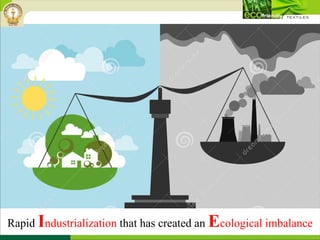
Rapid Industrialization that has created an Ecological imbalance
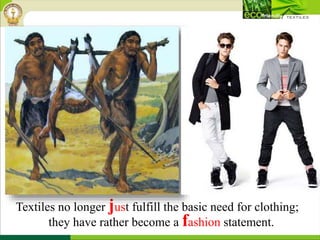
Textiles no longer just fulfill the basic need for clothing;
they have rather become a fashion statement.
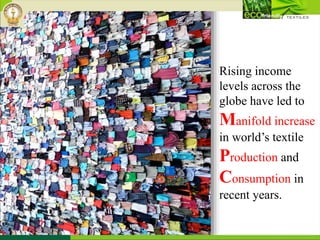
Rising income
levels across the
globe have led to
Manifold increase
in world’s textile
Production and
Consumption in
recent years.
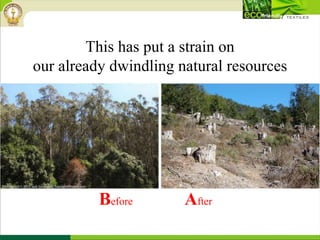
This has put a strain on
our already dwindling natural resources
Before After
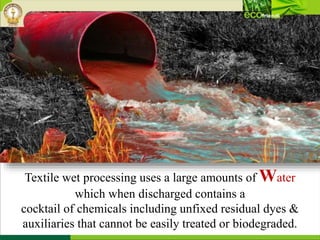
Textile wet processing uses a large amounts of Water
which when discharged contains a
cocktail of chemicals including unfixed residual dyes &
auxiliaries that cannot be easily treated or biodegraded.
It takes 1 lb of Chemical Fertilizers to conventionally grow
3 lbs of cotton to make a t-shirt and a pair of jeans
Conventionally grown cotton accounts for more than
25% of insecticide and 10% of the pesticides used in the world.
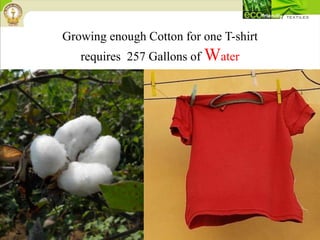
Growing enough Cotton for one T-shirt
requires 257 Gallons of Water
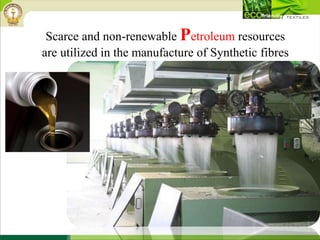
Scarce and non-renewable Petroleum resources
are utilized in the manufacture of Synthetic fibres
Burning of Fossil fuels is done to
provide energy for the various processing operations
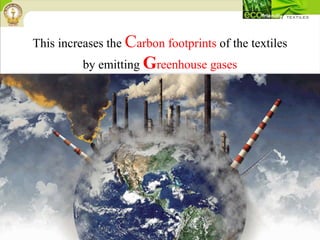
This increases the Carbon footprints of the textiles
by emitting Greenhouse gases
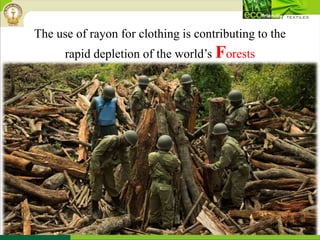
The use of rayon for clothing is contributing to the
rapid depletion of the world’s Forests
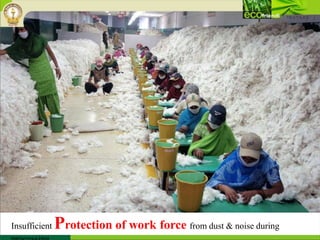
Insufficient Protection of work force from dust & noise during
Textile Industry is thus
Water, Chemical & Energy Intensive
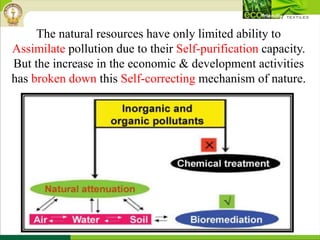
The natural resources have only limited ability to
Assimilate pollution due to their Self-purification capacity.
But the increase in the economic & development activities
has broken down this Self-correcting mechanism of nature.
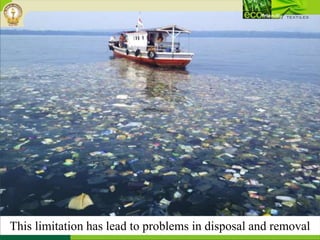
This limitation has lead to problems in disposal and removal
According to Earth Pledge, a NPO committed to
promotion & support for sustainable development
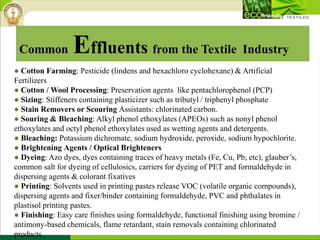
● Cotton Farming: Pesticide (lindens and hexachloro cyclohexane) & Artificial
Fertilizers
● Cotton / Wool Processing: Preservation agents like pentachlorophenol (PCP)
● Sizing: Stiffeners containing plasticizer such as tributyl / triphenyl phosphate
● Stain Removers or Scouring Assistants: chlorinated carbon.
● Souring & Bleaching: Alkyl phenol ethoxylates (APEOs) such as nonyl phenol
ethoxylates and octyl phenol ethoxylates used as wetting agents and detergents.
● Bleaching: Potassium dichromate, sodium hydroxide, peroxide, sodium hypochlorite.
● Brightening Agents / Optical Brighteners
● Dyeing: Azo dyes, dyes containing traces of heavy metals (Fe, Cu, Pb, etc), glauber’s,
common salt for dyeing of cellulosics, carriers for dyeing of PET and formaldehyde in
dispersing agents & colorant fixatives
● Printing: Solvents used in printing pastes release VOC (volatile organic compounds),
dispersing agents and fixer/binder containing formaldehyde, PVC and phthalates in
plastisol printing pastes.
● Finishing: Easy care finishes using formaldehyde, functional finishing using bromine /
antimony-based chemicals, flame retardant, stain removals containing chlorinated
products.
Common Effluents from the Textile Industry
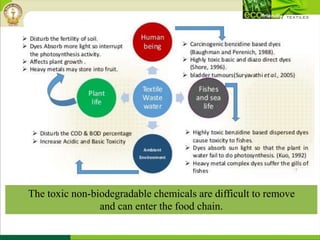
The toxic non-biodegradable chemicals are difficult to remove
and can enter the food chain.
Water is used in large quantities as a
solvent for processing chemicals and as a
washing & rinsing medium and thus a
large amount of effluent with high BOD
and COD values is generated
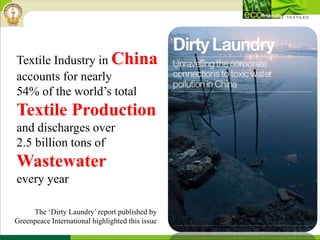
Textile Industry in China
accounts for nearly
54% of the world’s total
Textile Production
and discharges over
2.5 billion tons of
Wastewater
every year
The ‘Dirty Laundry’ report published by
Greenpeace International highlighted this issue
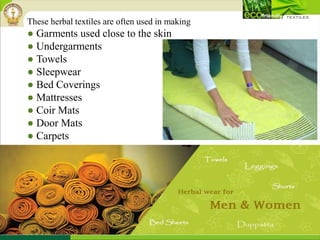
● Various Allerges
● Dermatitis
● Anemia, reduction in RBC and haemoglobin
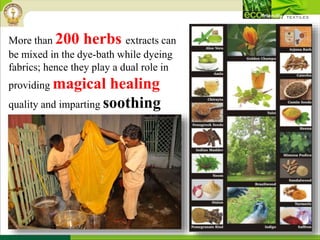
● Cyanosis (deprivation of the availability of oxygen to the blood)
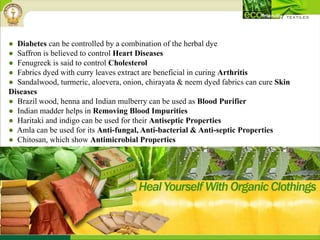
● Haemoerrhagic disease of various organs (reduction in the platelet
count)
● Anilism also known as meth-haemoglobinaemia
● Hepatotoxic effects (jaundice & loss of liver function).
● Nephrotoxic effects (injury to the kidneys)
● Neurosis
● Asthma
● Pulmonary (puemoconiosis) effects
● Lukaemia
● Cancer (tumours of the urinary bladder).
Health Problems Related to the Textile Industry
Environmental Protection & Clean
Technologies
is a Universal Concern Today
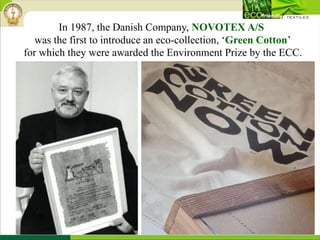
In 1987, the Danish Company, NOVOTEX A/S
was the first to introduce an eco-collection, ‘Green Cotton’
for which they were awarded the Environment Prize by the ECC.
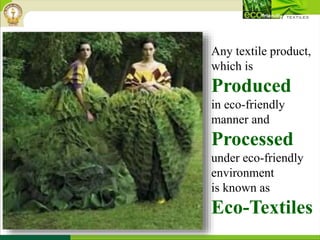
Any textile product,
which is
Produced
in eco-friendly
manner and
Processed
under eco-friendly
environment
is known as
Eco-Textiles
Eco-Textiles is also known as
● Sustainable Fashion
● Eco Fashion
● Eco-tech
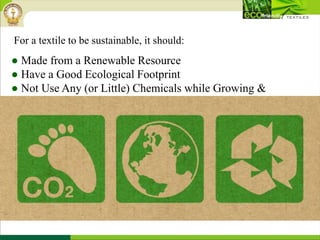
● Made from a Renewable Resource
● Have a Good Ecological Footprint
● Not Use Any (or Little) Chemicals while Growing &
Processing
For a textile to be sustainable, it should:
● Procurement of raw materials does not create a negative
impact on land & water resources (natural fibres), or the
adversely impact the fossil fuels resources (synthetic
fibres).
● Production considerations do not create adverse impact
on sources of water and energy.
● Added chemicals do not affect the health of textile
workers as well as consumers.
● The end-of-life of the textile product is smooth
(biodegradable) and it allows reclamation of the
infrastructure required to sustain further production.
Factors that a sustainable textiles must fulfill:
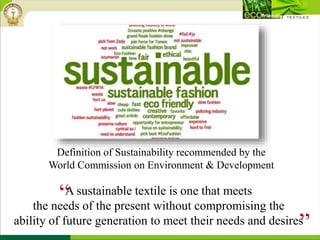
A sustainable textile is one that meets
the needs of the present without compromising the
ability of future generation to meet their needs and desires
Definition of Sustainability recommended by the
World Commission on Environment & Development
“
”
HOW CAN TEXTILE INDUSTRY GO GREEN?
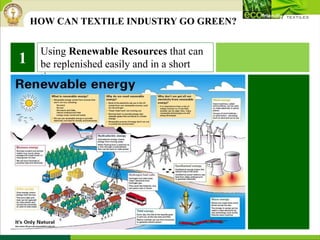
Using Renewable Resources that can
be replenished easily and in a short
time.
1
Following
Fair Trade Practices
2
HOW CAN TEXTILE INDUSTRY GO GREEN?
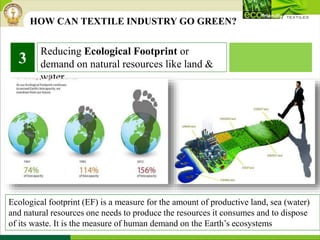
Reducing Ecological Footprint or
demand on natural resources like land &
water.
3
Ecological footprint (EF) is a measure for the amount of productive land, sea (water)
and natural resources one needs to produce the resources it consumes and to dispose
of its waste. It is the measure of human demand on the Earth’s ecosystems
HOW CAN TEXTILE INDUSTRY GO GREEN?
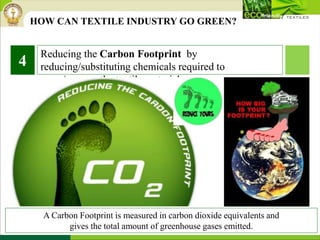
Reducing the Carbon Footprint by
reducing/substituting chemicals required to
grow/process the textile material.
4
A Carbon Footprint is measured in carbon dioxide equivalents and
gives the total amount of greenhouse gases emitted.
HOW CAN TEXTILE INDUSTRY GO GREEN?
Going Organic
Using Sustainable Processing Methods
Recycling / Upcycling
Chemical Substitution
Chemcal Recovery
Process Modification
HOW CARBON FOOTPRINT CAN BE REDUCED?
1
2
3
a
b
c
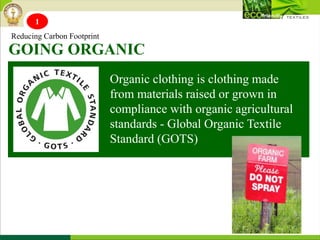
Organic clothing is clothing made
from materials raised or grown in
compliance with organic agricultural
standards - Global Organic Textile
Standard (GOTS)
GOING ORGANIC
Reducing Carbon Footprint
1
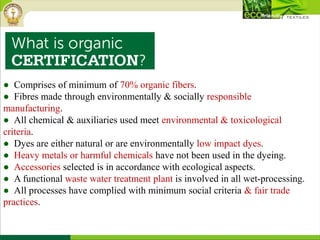
● Comprises of minimum of 70% organic fibers.
● Fibres made through environmentally & socially responsible
manufacturing.
● All chemical & auxiliaries used meet environmental & toxicological
criteria.
● Dyes are either natural or are environmentally low impact dyes.
● Heavy metals or harmful chemicals have not been used in the dyeing.
● Accessories selected is in accordance with ecological aspects.
● A functional waste water treatment plant is involved in all wet-processing.
● All processes have complied with minimum social criteria & fair trade
practices.
BENEFITS OF ORGANIC
TEXTILES
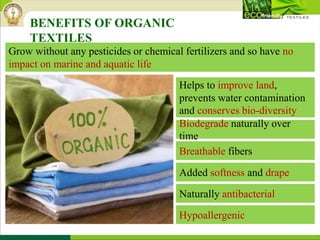
Grow without any pesticides or chemical fertilizers and so have no
impact on marine and aquatic life
Biodegrade naturally over
time
Breathable fibers
Added softness and drape
Hypoallergenic
Naturally antibacterial
Helps to improve land,
prevents water contamination
and conserves bio-diversity
ORGANIC COTTON
Highly
Absorbent
Non-
Irritant
Non-
Allergic
Without Pesticide / Fertilized
No Health Hazard
Fair Trade
Free for Allergies
Produced as per IVN BEST Guidelines
Durable
ORGANIC WOOL
Durable Absorbent
More
Elastic
OTHER
ECO-FRIENDLY
FIBRES
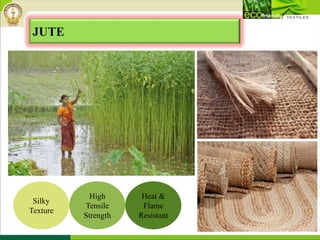
JUTE
Silky
Texture
High
Tensile
Strength
Heat &
Flame
Resistant
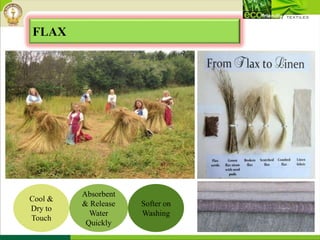
FLAX
Cool &
Dry to
Touch
Absorbent
& Release
Water
Quickly
Softer on
Washing
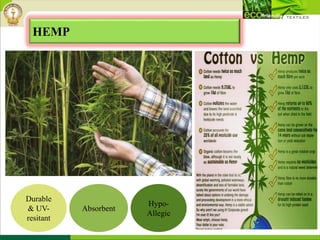
HEMP
Durable
& UV-
resitant
Absorbent
Hypo-
Allegic
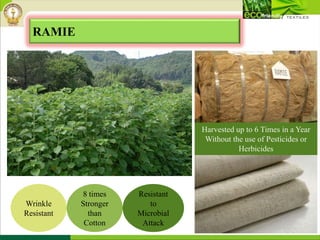
RAMIE
Wrinkle
Resistant
8 times
Stronger
than
Cotton
Resistant
to
Microbial
Attack
Harvested up to 6 Times in a Year
Without the use of Pesticides or
Herbicides
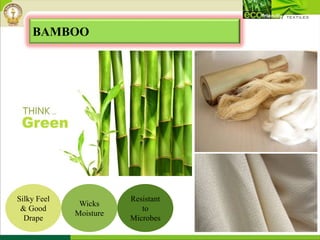
BAMBOO
Silky Feel
& Good
Drape
Wicks
Moisture
Resistant
to
Microbes
NETTLE
Longest
Bast
Fibre
High
Tensile
Strength
Hollow -
Natural
Insulation
Obtained from Brennessel Plant
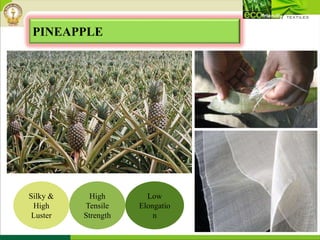
PINEAPPLE
Silky &
High
Luster
High
Tensile
Strength
Low
Elongatio
n
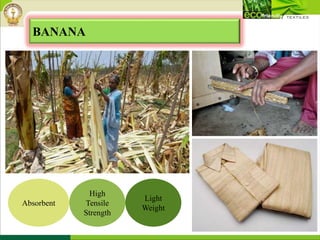
BANANA
Absorbent
High
Tensile
Strength
Light
Weight
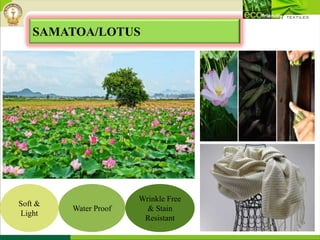
SAMATOA/LOTUS
Soft &
Light
Water Proof
Wrinkle Free
& Stain
Resistant
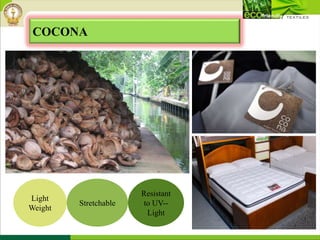
COCONA
Light
Weight
Stretchable
Resistant
to UV--
Light
CORN
Softness
& Good
Drape
Resilience
Flame
Retardant
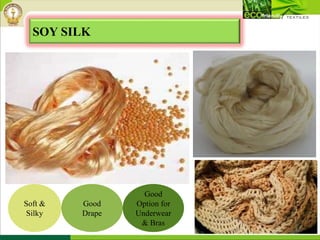
SOY SILK
Soft &
Silky
Good
Drape
Good
Option for
Underwear
& Bras
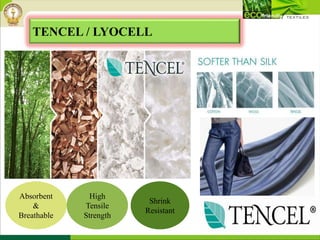
TENCEL / LYOCELL
Absorbent
&
Breathable
High
Tensile
Strength
Shrink
Resistant
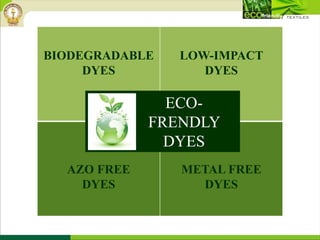
ECO-FRIENDLY
DYES
BIODEGRADABLE
DYES
LOW-IMPACT
DYES
AZO FREE
DYES
METAL FREE
DYES
ECO-
FRENDLY
DYES
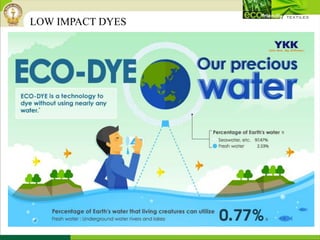
LOW IMPACT DYES
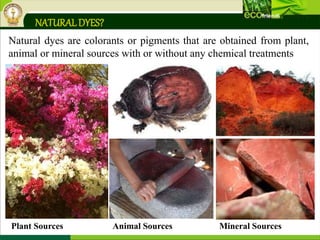
NATURALDYES?
Natural dyes are colorants or pigments that are obtained from plant,
animal or mineral sources with or without any chemical treatments
Plant Sources Animal Sources Mineral Sources
Roots& Barks
AL ROOTS MADDER ROOTS TURMERIC
FUSTIC CATECHU LOGWOOD
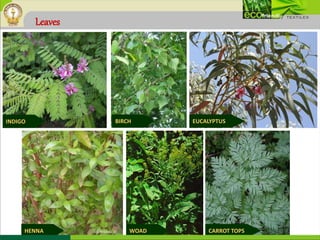
Leaves
BIRCH EUCALYPTUS
WOAD CARROT TOPS
HENNA
INDIGO
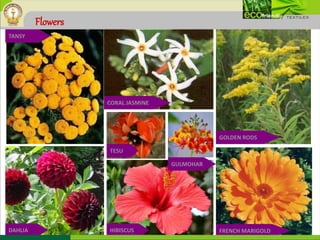
Flowers
TANSY
DAHLIA
CORAL JASMINE
GOLDEN RODS
FRENCH MARIGOLD
HIBISCUS
TESU
GULMOHAR
Fruits and Berries
MYROBOLAN POMEGRANATE
ONION
WALNUT
ALMOND
ANNATTO
Animal Origin
TYRIAN PURPLE
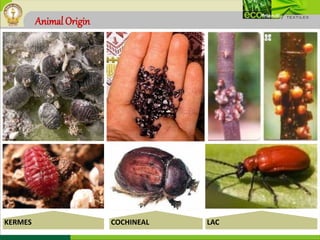
Animal Origin
KERMES COCHINEAL LAC
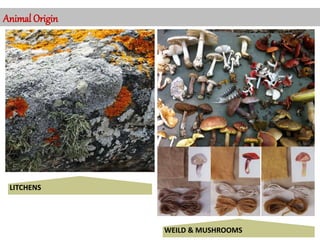
Animal Origin
LITCHENS
WEILD & MUSHROOMS
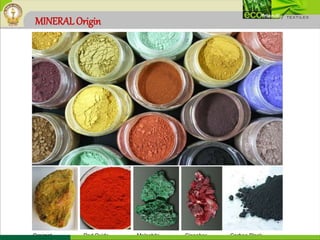
MINERAL Origin
Orpimat Red Oxide Malachite Cinnabar Carbon Black
Herbal powder, vegetable powder, parsley vegetable powder, rosemary vegetable
powder, brown mica oxide powder, yellow mica oxide powder
MINERAL Origin
HISTORY OF NATURALDYES
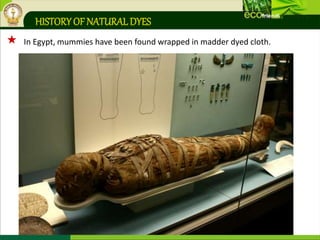
 In Egypt, mummies have been found wrapped in madder dyed cloth.
HISTORY OF NATURALDYES
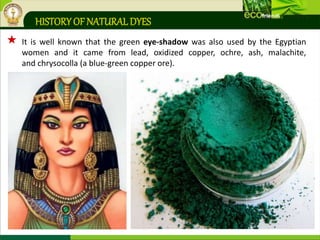
 It is well known that the green eye-shadow was also used by the Egyptian
women and it came from lead, oxidized copper, ochre, ash, malachite,
and chrysocolla (a blue-green copper ore).
HISTORY OF NATURALDYES
 It is well known that Egyptian women lined their eyes and eyebrows with Khol
that is a dark-colored powder made of crushed antimony,
burnt almonds, lead or any combination thereof
Woman would apply khol, a black dye kept in a jar or pot, to line
her eyes and eyebrows, using an "brush" or "pencil" made of a
reed
HISTORY OF NATURALDYES
 It is well known that the lipstick used by Cleopatra, the famous Egyptian
queen came from the bixa tree.
ADVANTAGESOF NATURALDYES
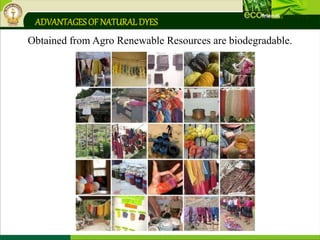
Obtained from Agro Renewable Resources are biodegradable.
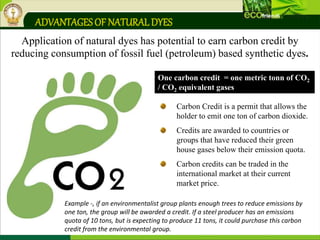
Application of natural dyes has potential to earn carbon credit by
reducing consumption of fossil fuel (petroleum) based synthetic dyes.
ADVANTAGESOF NATURALDYES
Carbon Credit is a permit that allows the
holder to emit one ton of carbon dioxide.
Credits are awarded to countries or
groups that have reduced their green
house gases below their emission quota.
Carbon credits can be traded in the
international market at their current
market price.
One carbon credit = one metric tonn of CO2
/ CO2 equivalent gases
Example -, if an environmentalist group plants enough trees to reduce emissions by
one ton, the group will be awarded a credit. If a steel producer has an emissions
quota of 10 tons, but is expecting to produce 11 tons, it could purchase this carbon
credit from the environmental group.
ADVANTAGESOF NATURALDYES
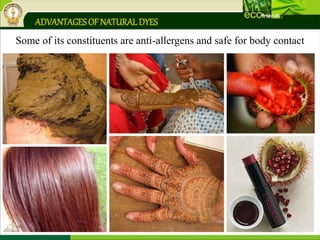
Some of its constituents are anti-allergens and safe for body contact
ADVANTAGESOF NATURALDYES
Bleed but do not stain other fabrics, turmeric being an exception
ADVANTAGESOF NATURALDYES
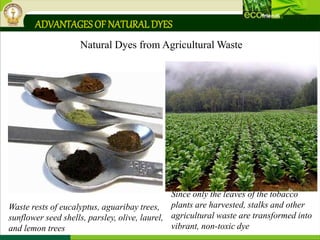
Natural Dyes from Agricultural Waste
Waste rests of eucalyptus, aguaribay trees,
sunflower seed shells, parsley, olive, laurel,
and lemon trees
Since only the leaves of the tobacco
plants are harvested, stalks and other
agricultural waste are transformed into
vibrant, non-toxic dye
ADVANTAGESOF NATURALDYES
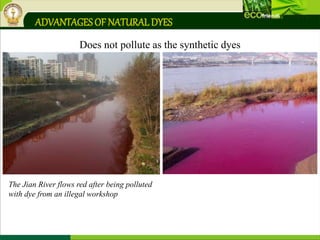
Does not pollute as the synthetic dyes
The Jian River flows red after being polluted
with dye from an illegal workshop
The dye waste may become an ideal fertilizer for agricultural fields
ADVANTAGESOF NATURALDYES
Indigo waste used to irrigate the tomatoes
The waste
water pH it’s
good for
water lily
plantation
Waste from
barks /
leafs used
in dyeing
in Bali
ECO-FRIENDLY
FABRICS
The Sanskrit word, ‘ayur’ means life and ‘vastra’ means cloth or dress.
It is based on the Ayurvedic Principles of Medicine which believes that
regular contact with cloth made from yarns
infused with extracts of organic herbs and medicinal plants
will cure metabolic disorders & promote healthy living
These herbal clothing
● Helps to restore balance within the body's systems
● Strengthens the immune system
● Helps in reducing the spread of diseases
● Exhibits anti-microbial & anti-bacterial properties
These herbal textiles are often used in making
● Garments used close to the skin
● Undergarments
● Towels
● Sleepwear
● Bed Coverings
● Mattresses
● Coir Mats
● Door Mats
● Carpets
The most effective time to wear Ayurvedic clothing is when
the body is at rest – Sleep & Relaxation / Meditation
Ayurvastra are made from fibres like certified organic cotton, natural
cotton, silk wool, coir, linen, jute, hemp, bamboo and their blends.
More than 200 herbs extracts can
be mixed in the dye-bath while dyeing
fabrics; hence they play a dual role in
providing magical healing
quality and imparting soothing
colours
● Diabetes can be controlled by a combination of the herbal dye
● Saffron is believed to control Heart Diseases
● Fenugreek is said to control Cholesterol
● Fabrics dyed with curry leaves extract are beneficial in curing Arthritis
● Sandalwood, turmeric, aloevera, onion, chirayata & neem dyed fabrics can cure Skin
Diseases
● Brazil wood, henna and Indian mulberry can be used as Blood Purifier
● Indian madder helps in Removing Blood Impurities
● Haritaki and indigo can be used for their Antiseptic Properties
● Amla can be used for its Anti-fungal, Anti-bacterial & Anti-septic Properties
● Chitosan, which show Antimicrobial Properties
● Castor oil helps in Maintaining Body Temperature

Eco Friendly Textiles- sustainable textiles

  • 1.
  • 2.
    Rapid Industrialization thathas created an Ecological imbalance
  • 3.
    Textiles no longerjust fulfill the basic need for clothing; they have rather become a fashion statement.
  • 4.
    Rising income levels acrossthe globe have led to Manifold increase in world’s textile Production and Consumption in recent years.
  • 5.
    This has puta strain on our already dwindling natural resources Before After
  • 6.
    Textile wet processinguses a large amounts of Water which when discharged contains a cocktail of chemicals including unfixed residual dyes & auxiliaries that cannot be easily treated or biodegraded.
  • 7.
    It takes 1lb of Chemical Fertilizers to conventionally grow 3 lbs of cotton to make a t-shirt and a pair of jeans Conventionally grown cotton accounts for more than 25% of insecticide and 10% of the pesticides used in the world.
  • 8.
    Growing enough Cottonfor one T-shirt requires 257 Gallons of Water
  • 9.
    Scarce and non-renewablePetroleum resources are utilized in the manufacture of Synthetic fibres
  • 10.
    Burning of Fossilfuels is done to provide energy for the various processing operations
  • 11.
    This increases theCarbon footprints of the textiles by emitting Greenhouse gases
  • 12.
    The use ofrayon for clothing is contributing to the rapid depletion of the world’s Forests
  • 13.
    Insufficient Protection ofwork force from dust & noise during
  • 14.
    Textile Industry isthus Water, Chemical & Energy Intensive
  • 15.
    The natural resourceshave only limited ability to Assimilate pollution due to their Self-purification capacity. But the increase in the economic & development activities has broken down this Self-correcting mechanism of nature.
  • 16.
    This limitation haslead to problems in disposal and removal
  • 17.
    According to EarthPledge, a NPO committed to promotion & support for sustainable development
  • 18.
    ● Cotton Farming:Pesticide (lindens and hexachloro cyclohexane) & Artificial Fertilizers ● Cotton / Wool Processing: Preservation agents like pentachlorophenol (PCP) ● Sizing: Stiffeners containing plasticizer such as tributyl / triphenyl phosphate ● Stain Removers or Scouring Assistants: chlorinated carbon. ● Souring & Bleaching: Alkyl phenol ethoxylates (APEOs) such as nonyl phenol ethoxylates and octyl phenol ethoxylates used as wetting agents and detergents. ● Bleaching: Potassium dichromate, sodium hydroxide, peroxide, sodium hypochlorite. ● Brightening Agents / Optical Brighteners ● Dyeing: Azo dyes, dyes containing traces of heavy metals (Fe, Cu, Pb, etc), glauber’s, common salt for dyeing of cellulosics, carriers for dyeing of PET and formaldehyde in dispersing agents & colorant fixatives ● Printing: Solvents used in printing pastes release VOC (volatile organic compounds), dispersing agents and fixer/binder containing formaldehyde, PVC and phthalates in plastisol printing pastes. ● Finishing: Easy care finishes using formaldehyde, functional finishing using bromine / antimony-based chemicals, flame retardant, stain removals containing chlorinated products. Common Effluents from the Textile Industry
  • 19.
    The toxic non-biodegradablechemicals are difficult to remove and can enter the food chain.
  • 20.
    Water is usedin large quantities as a solvent for processing chemicals and as a washing & rinsing medium and thus a large amount of effluent with high BOD and COD values is generated
  • 21.
    Textile Industry inChina accounts for nearly 54% of the world’s total Textile Production and discharges over 2.5 billion tons of Wastewater every year The ‘Dirty Laundry’ report published by Greenpeace International highlighted this issue
  • 22.
    ● Various Allerges ●Dermatitis ● Anemia, reduction in RBC and haemoglobin ● Cyanosis (deprivation of the availability of oxygen to the blood) ● Haemoerrhagic disease of various organs (reduction in the platelet count) ● Anilism also known as meth-haemoglobinaemia ● Hepatotoxic effects (jaundice & loss of liver function). ● Nephrotoxic effects (injury to the kidneys) ● Neurosis ● Asthma ● Pulmonary (puemoconiosis) effects ● Lukaemia ● Cancer (tumours of the urinary bladder). Health Problems Related to the Textile Industry
  • 23.
    Environmental Protection &Clean Technologies is a Universal Concern Today
  • 24.
    In 1987, theDanish Company, NOVOTEX A/S was the first to introduce an eco-collection, ‘Green Cotton’ for which they were awarded the Environment Prize by the ECC.
  • 25.
    Any textile product, whichis Produced in eco-friendly manner and Processed under eco-friendly environment is known as Eco-Textiles
  • 26.
    Eco-Textiles is alsoknown as ● Sustainable Fashion ● Eco Fashion ● Eco-tech
  • 27.
    ● Made froma Renewable Resource ● Have a Good Ecological Footprint ● Not Use Any (or Little) Chemicals while Growing & Processing For a textile to be sustainable, it should:
  • 28.
    ● Procurement ofraw materials does not create a negative impact on land & water resources (natural fibres), or the adversely impact the fossil fuels resources (synthetic fibres). ● Production considerations do not create adverse impact on sources of water and energy. ● Added chemicals do not affect the health of textile workers as well as consumers. ● The end-of-life of the textile product is smooth (biodegradable) and it allows reclamation of the infrastructure required to sustain further production. Factors that a sustainable textiles must fulfill:
  • 29.
    A sustainable textileis one that meets the needs of the present without compromising the ability of future generation to meet their needs and desires Definition of Sustainability recommended by the World Commission on Environment & Development “ ”
  • 30.
    HOW CAN TEXTILEINDUSTRY GO GREEN? Using Renewable Resources that can be replenished easily and in a short time. 1
  • 31.
    Following Fair Trade Practices 2 HOWCAN TEXTILE INDUSTRY GO GREEN?
  • 32.
    Reducing Ecological Footprintor demand on natural resources like land & water. 3 Ecological footprint (EF) is a measure for the amount of productive land, sea (water) and natural resources one needs to produce the resources it consumes and to dispose of its waste. It is the measure of human demand on the Earth’s ecosystems HOW CAN TEXTILE INDUSTRY GO GREEN?
  • 33.
    Reducing the CarbonFootprint by reducing/substituting chemicals required to grow/process the textile material. 4 A Carbon Footprint is measured in carbon dioxide equivalents and gives the total amount of greenhouse gases emitted. HOW CAN TEXTILE INDUSTRY GO GREEN?
  • 34.
    Going Organic Using SustainableProcessing Methods Recycling / Upcycling Chemical Substitution Chemcal Recovery Process Modification HOW CARBON FOOTPRINT CAN BE REDUCED? 1 2 3 a b c
  • 35.
    Organic clothing isclothing made from materials raised or grown in compliance with organic agricultural standards - Global Organic Textile Standard (GOTS) GOING ORGANIC Reducing Carbon Footprint 1
  • 36.
    ● Comprises ofminimum of 70% organic fibers. ● Fibres made through environmentally & socially responsible manufacturing. ● All chemical & auxiliaries used meet environmental & toxicological criteria. ● Dyes are either natural or are environmentally low impact dyes. ● Heavy metals or harmful chemicals have not been used in the dyeing. ● Accessories selected is in accordance with ecological aspects. ● A functional waste water treatment plant is involved in all wet-processing. ● All processes have complied with minimum social criteria & fair trade practices.
  • 37.
    BENEFITS OF ORGANIC TEXTILES Growwithout any pesticides or chemical fertilizers and so have no impact on marine and aquatic life Biodegrade naturally over time Breathable fibers Added softness and drape Hypoallergenic Naturally antibacterial Helps to improve land, prevents water contamination and conserves bio-diversity
  • 38.
    ORGANIC COTTON Highly Absorbent Non- Irritant Non- Allergic Without Pesticide/ Fertilized No Health Hazard Fair Trade Free for Allergies Produced as per IVN BEST Guidelines Durable
  • 39.
  • 40.
  • 41.
  • 42.
    FLAX Cool & Dry to Touch Absorbent &Release Water Quickly Softer on Washing
  • 43.
  • 44.
    RAMIE Wrinkle Resistant 8 times Stronger than Cotton Resistant to Microbial Attack Harvested upto 6 Times in a Year Without the use of Pesticides or Herbicides
  • 45.
  • 46.
  • 47.
  • 48.
  • 49.
  • 50.
  • 51.
  • 52.
  • 53.
  • 54.
  • 55.
  • 56.
  • 57.
    NATURALDYES? Natural dyes arecolorants or pigments that are obtained from plant, animal or mineral sources with or without any chemical treatments Plant Sources Animal Sources Mineral Sources
  • 58.
    Roots& Barks AL ROOTSMADDER ROOTS TURMERIC FUSTIC CATECHU LOGWOOD
  • 59.
  • 60.
  • 61.
    Fruits and Berries MYROBOLANPOMEGRANATE ONION WALNUT ALMOND ANNATTO
  • 62.
  • 63.
  • 64.
  • 65.
    MINERAL Origin Orpimat RedOxide Malachite Cinnabar Carbon Black
  • 66.
    Herbal powder, vegetablepowder, parsley vegetable powder, rosemary vegetable powder, brown mica oxide powder, yellow mica oxide powder MINERAL Origin
  • 67.
    HISTORY OF NATURALDYES In Egypt, mummies have been found wrapped in madder dyed cloth.
  • 68.
    HISTORY OF NATURALDYES It is well known that the green eye-shadow was also used by the Egyptian women and it came from lead, oxidized copper, ochre, ash, malachite, and chrysocolla (a blue-green copper ore).
  • 69.
    HISTORY OF NATURALDYES It is well known that Egyptian women lined their eyes and eyebrows with Khol that is a dark-colored powder made of crushed antimony, burnt almonds, lead or any combination thereof Woman would apply khol, a black dye kept in a jar or pot, to line her eyes and eyebrows, using an "brush" or "pencil" made of a reed
  • 70.
    HISTORY OF NATURALDYES It is well known that the lipstick used by Cleopatra, the famous Egyptian queen came from the bixa tree.
  • 71.
    ADVANTAGESOF NATURALDYES Obtained fromAgro Renewable Resources are biodegradable.
  • 72.
    Application of naturaldyes has potential to earn carbon credit by reducing consumption of fossil fuel (petroleum) based synthetic dyes. ADVANTAGESOF NATURALDYES Carbon Credit is a permit that allows the holder to emit one ton of carbon dioxide. Credits are awarded to countries or groups that have reduced their green house gases below their emission quota. Carbon credits can be traded in the international market at their current market price. One carbon credit = one metric tonn of CO2 / CO2 equivalent gases Example -, if an environmentalist group plants enough trees to reduce emissions by one ton, the group will be awarded a credit. If a steel producer has an emissions quota of 10 tons, but is expecting to produce 11 tons, it could purchase this carbon credit from the environmental group.
  • 73.
    ADVANTAGESOF NATURALDYES Some ofits constituents are anti-allergens and safe for body contact
  • 74.
    ADVANTAGESOF NATURALDYES Bleed butdo not stain other fabrics, turmeric being an exception
  • 75.
    ADVANTAGESOF NATURALDYES Natural Dyesfrom Agricultural Waste Waste rests of eucalyptus, aguaribay trees, sunflower seed shells, parsley, olive, laurel, and lemon trees Since only the leaves of the tobacco plants are harvested, stalks and other agricultural waste are transformed into vibrant, non-toxic dye
  • 76.
    ADVANTAGESOF NATURALDYES Does notpollute as the synthetic dyes The Jian River flows red after being polluted with dye from an illegal workshop
  • 77.
    The dye wastemay become an ideal fertilizer for agricultural fields ADVANTAGESOF NATURALDYES Indigo waste used to irrigate the tomatoes The waste water pH it’s good for water lily plantation Waste from barks / leafs used in dyeing in Bali
  • 78.
  • 79.
    The Sanskrit word,‘ayur’ means life and ‘vastra’ means cloth or dress. It is based on the Ayurvedic Principles of Medicine which believes that regular contact with cloth made from yarns infused with extracts of organic herbs and medicinal plants will cure metabolic disorders & promote healthy living
  • 80.
    These herbal clothing ●Helps to restore balance within the body's systems ● Strengthens the immune system ● Helps in reducing the spread of diseases ● Exhibits anti-microbial & anti-bacterial properties
  • 81.
    These herbal textilesare often used in making ● Garments used close to the skin ● Undergarments ● Towels ● Sleepwear ● Bed Coverings ● Mattresses ● Coir Mats ● Door Mats ● Carpets
  • 82.
    The most effectivetime to wear Ayurvedic clothing is when the body is at rest – Sleep & Relaxation / Meditation
  • 83.
    Ayurvastra are madefrom fibres like certified organic cotton, natural cotton, silk wool, coir, linen, jute, hemp, bamboo and their blends.
  • 84.
    More than 200herbs extracts can be mixed in the dye-bath while dyeing fabrics; hence they play a dual role in providing magical healing quality and imparting soothing colours
  • 85.
    ● Diabetes canbe controlled by a combination of the herbal dye ● Saffron is believed to control Heart Diseases ● Fenugreek is said to control Cholesterol ● Fabrics dyed with curry leaves extract are beneficial in curing Arthritis ● Sandalwood, turmeric, aloevera, onion, chirayata & neem dyed fabrics can cure Skin Diseases ● Brazil wood, henna and Indian mulberry can be used as Blood Purifier ● Indian madder helps in Removing Blood Impurities ● Haritaki and indigo can be used for their Antiseptic Properties ● Amla can be used for its Anti-fungal, Anti-bacterial & Anti-septic Properties ● Chitosan, which show Antimicrobial Properties ● Castor oil helps in Maintaining Body Temperature