

Dr Laura-Jane Smith
Non-smoker, Non-vaper
SpR Respiratory and General Medicine
Training Day, North East Thames Respiratory Medicine
Whittington Health
June 2015
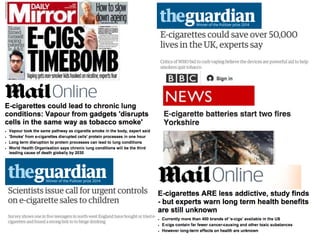
e-cigarettes: pros, cons
and controversy
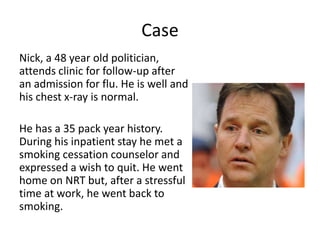
Case
Nick, a 48 year old politician,
attends clinic for follow-up after
an admission for flu. He is well and
his chest x-ray is normal.
He has a 35 pack year history.
During his inpatient stay he met a
smoking cessation counselor and
expressed a wish to quit. He went
home on NRT but, after a stressful
time at work, he went back to
smoking.
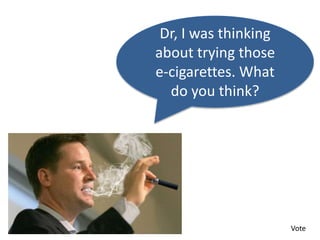
Dr, I was thinking
about trying those
e-cigarettes. What
do you think?
Vote
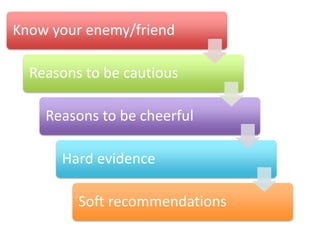
Know your enemy/friend
Reasons to be cautious
Reasons to be cheerful
Hard evidence
Soft recommendations
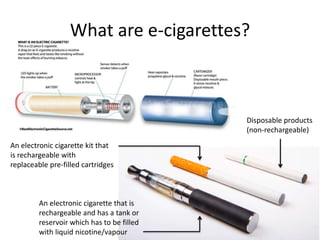
What are e-cigarettes?
An electronic cigarette that is
rechargeable and has a tank or
reservoir which has to be filled
with liquid nicotine/vapour
Disposable products
(non-rechargeable)
An electronic cigarette kit that
is rechargeable with
replaceable pre-filled cartridges
HISTORICAL CONTEXT
Quiz
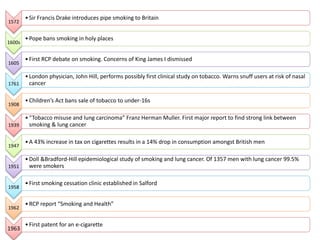
1572
•Sir Francis Drake introduces pipe smoking to Britain
1600s
•Pope bans smoking in holy places
1605
•First RCP debate on smoking. Concerns of King James I dismissed
1761
•London physician, John Hill, performs possibly first clinical study on tobacco. Warns snuff users at risk of nasal
cancer
1908
•Children’s Act bans sale of tobacco to under-16s
1939
•“Tobacco misuse and lung carcinoma” Franz Herman Muller. First major report to find strong link between
smoking & lung cancer
1947
•A 43% increase in tax on cigarettes results in a 14% drop in consumption amongst British men
1951
•Doll &Bradford-Hill epidemiological study of smoking and lung cancer. Of 1357 men with lung cancer 99.5%
were smokers
1958
•First smoking cessation clinic established in Salford
1962
•RCP report “Smoking and Health”
1963
•First patent for an e-cigarette
1965
• Cigarette advertising banned on TV
1971
• First government health warning on cigarette packs
1988
• BA bans smoking on domestic flights
1992
• Sales of tobacco products in hospital shops ceases
1994
• Latest figures from Doll study shows ½ smokers die from smoking-related diseases
1997
• Sponsorship of sporting events banned
2004
• Ireland is first place to ban smoking in workplaces and public places
2007
• Scotland and England go smoke free in public places. Age raised to 18.
2013
• E-cigarettes are advertised on TV
2014
• Ban on smoking in cars with children
2015
• Plain packs passed in House of Commons
http://www.ash.org.uk/files/documents/ASH_741.pdf
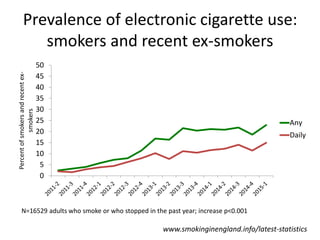
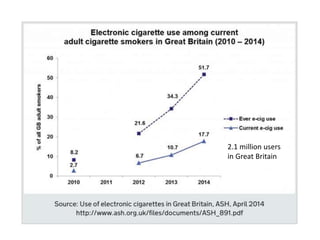
Prevalence of electronic cigarette use:
smokers and recent ex-smokers
0
5
10
15
20
25
30
35
40
45
50
Percentofsmokersandrecentex-
smokers
Any
Daily
N=16529 adults who smoke or who stopped in the past year; increase p<0.001
www.smokinginengland.info/latest-statistics
2.1 million users
in Great Britain
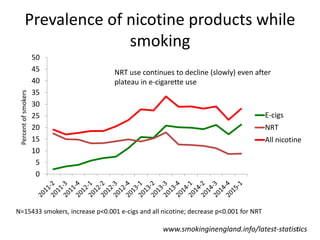
Prevalence of nicotine products while
smoking
12
0
5
10
15
20
25
30
35
40
45
50
Percentofsmokers
E-cigs
NRT
All nicotine
N=15433 smokers, increase p<0.001 e-cigs and all nicotine; decrease p<0.001 for NRT
NRT use continues to decline (slowly) even after
plateau in e-cigarette use
www.smokinginengland.info/latest-statistics
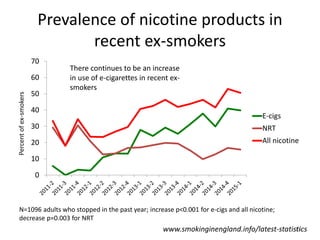
Prevalence of nicotine products in
recent ex-smokers
13
0
10
20
30
40
50
60
70
Percentofex-smokers
E-cigs
NRT
All nicotine
N=1096 adults who stopped in the past year; increase p<0.001 for e-cigs and all nicotine;
decrease p=0.003 for NRT
There continues to be an increase
in use of e-cigarettes in recent ex-
smokers
www.smokinginengland.info/latest-statistics
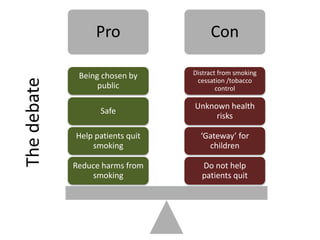
Pro Con
Do not help
patients quit
‘Gateway’ for
children
Unknown health
risks
Distract from smoking
cessation /tobacco
control
Reduce harms from
smoking
Help patients quit
smoking
Safe
Being chosen by
public
Thedebate
ARE E-CIGARETTES SAFE?
What’s the evidence?
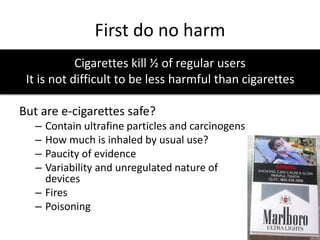
First do no harm
Cigarettes kill ½ of regular users
It is not difficult to be less harmful than cigarettes
But are e-cigarettes safe?
– Contain ultrafine particles and carcinogens
– How much is inhaled by usual use?
– Paucity of evidence
– Variability and unregulated nature of
devices
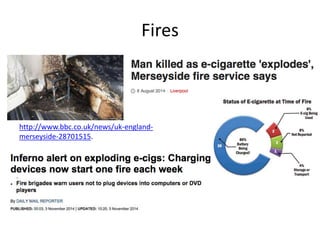
– Fires
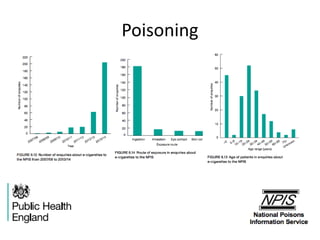
– Poisoning
“the electronic cigarette is not a proven nicotine
replacement therapy. WHO has no scientific
evidence to confirm the product’s safety and
efficacy. However, WHO does not discount the
possibility that the electronic cigarette could be
useful as a smoking cessation aid. The only way
to know is to test.”
Ale Alwen, the Assistant Director General for Non-communicable
Diseases and Mental Health, August 2008
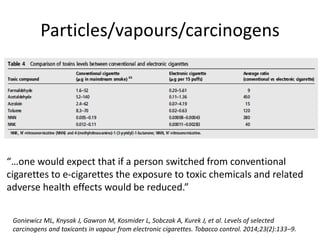
Particles/vapours/carcinogens
Goniewicz ML, Knysak J, Gawron M, Kosmider L, Sobczak A, Kurek J, et al. Levels of selected
carcinogens and toxicants in vapour from electronic cigarettes. Tobacco control. 2014;23(2):133–9.
“…one would expect that if a person switched from conventional
cigarettes to e-cigarettes the exposure to toxic chemicals and related
adverse health effects would be reduced.”
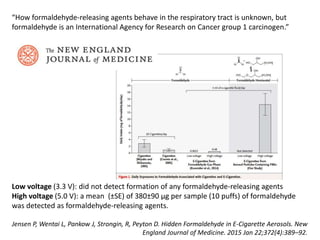
“How formaldehyde-releasing agents behave in the respiratory tract is unknown, but
formaldehyde is an International Agency for Research on Cancer group 1 carcinogen.”
Jensen P, Wentai L, Pankow J, Strongin, R, Peyton D. Hidden Formaldehyde in E-Cigarette Aerosols. New
England Journal of Medicine. 2015 Jan 22;372(4):389–92.
Low voltage (3.3 V): did not detect formation of any formaldehyde-releasing agents
High voltage (5.0 V): a mean (±SE) of 380±90 μg per sample (10 puffs) of formaldehyde
was detected as formaldehyde-releasing agents.
The importance
of puff
topograpy
Objections
Fires
http://www.bbc.co.uk/news/uk-england-
merseyside-28701515.
Poisoning
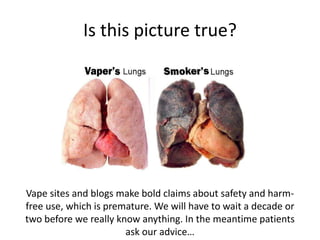
Is this picture true?
Vape sites and blogs make bold claims about safety and harm-
free use, which is premature. We will have to wait a decade or
two before we really know anything. In the meantime patients
ask our advice…
DO E-CIGARETTES REDUCE TOBACCO
HARM AT INDIVIDUAL LEVEL?
What’s the evidence?
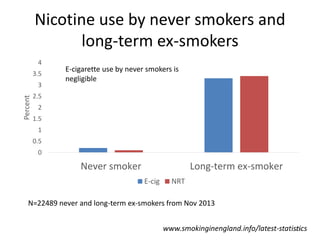
Nicotine use by never smokers and
long-term ex-smokers
0
0.5
1
1.5
2
2.5
3
3.5
4
Never smoker Long-term ex-smoker
Percent
E-cig NRT
25
N=22489 never and long-term ex-smokers from Nov 2013
E-cigarette use by never smokers is
negligible
www.smokinginengland.info/latest-statistics
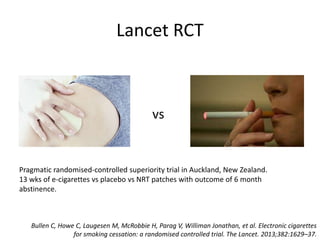
Lancet RCT
vs
Bullen C, Howe C, Laugesen M, McRobbie H, Parag V, Williman Jonathan, et al. Electronic cigarettes
for smoking cessation: a randomised controlled trial. The Lancet. 2013;382:1629–37.
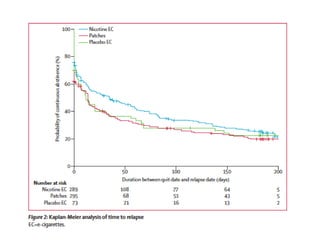
Pragmatic randomised-controlled superiority trial in Auckland, New Zealand.
13 wks of e-cigarettes vs placebo vs NRT patches with outcome of 6 month
abstinence.
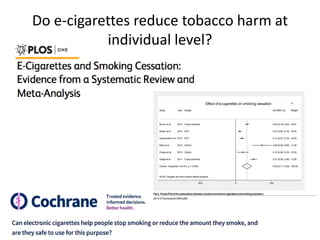
Do e-cigarettes reduce tobacco harm at
individual level?
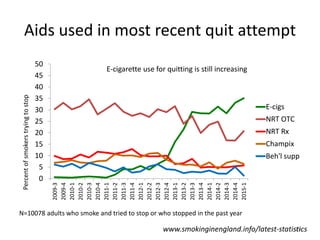
Aids used in most recent quit attempt
29
0
5
10
15
20
25
30
35
40
45
50
2009-3
2009-4
2010-1
2010-2
2010-3
2010-4
2011-1
2011-2
2011-3
2011-4
2012-1
2012-2
2012-3
2012-4
2013-1
2013-2
2013-3
2013-4
2014-1
2014-2
2014-3
2014-4
2015-1
Percentofsmokerstryingtostop
E-cigs
NRT OTC
NRT Rx
Champix
Beh'l supp
N=10078 adults who smoke and tried to stop or who stopped in the past year
E-cigarette use for quitting is still increasing
www.smokinginengland.info/latest-statistics
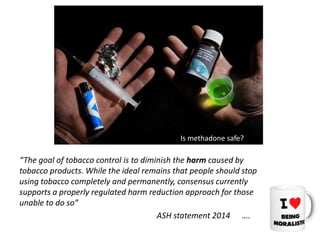
“The goal of tobacco control is to diminish the harm caused by
tobacco products. While the ideal remains that people should stop
using tobacco completely and permanently, consensus currently
supports a properly regulated harm reduction approach for those
unable to do so”
ASH statement 2014 ….
Is methadone safe?
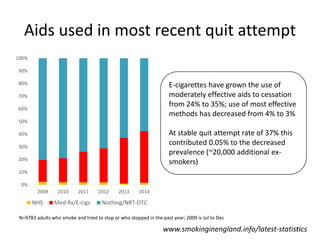
Aids used in most recent quit attempt
0%
10%
20%
30%
40%
50%
60%
70%
80%
90%
100%
2009 2010 2011 2012 2013 2014
NHS Med Rx/E-cigs Nothing/NRT-OTC
31
N=9783 adults who smoke and tried to stop or who stopped in the past year; 2009 is Jul to Dec
E-cigarettes have grown the use of
moderately effective aids to cessation
from 24% to 35%; use of most effective
methods has decreased from 4% to 3%
At stable quit attempt rate of 37% this
contributed 0.05% to the decreased
prevalence (~20,000 additional ex-
smokers)
www.smokinginengland.info/latest-statistics
DO E-CIGARETTES REDUCE TOBACCO
HARM AT POPULATION LEVEL?
What’s the evidence?
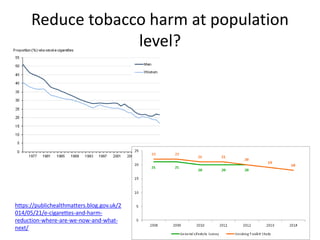
Reduce tobacco harm at population
level?
https://publichealthmatters.blog.gov.uk/2
014/05/21/e-cigarettes-and-harm-
reduction-where-are-we-now-and-what-
next/
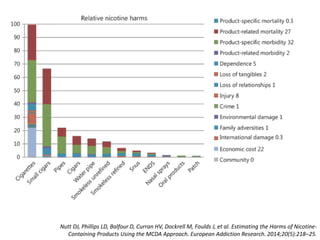
Nutt DJ, Phillips LD, Balfour D, Curran HV, Dockrell M, Foulds J, et al. Estimating the Harms of Nicotine-
Containing Products Using the MCDA Approach. European Addiction Research. 2014;20(5):218–25.
IS THERE A GATEWAY EFFECT?
What’s the evidence?
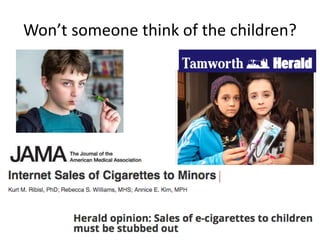
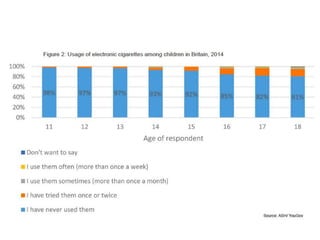
Won’t someone think of the children?
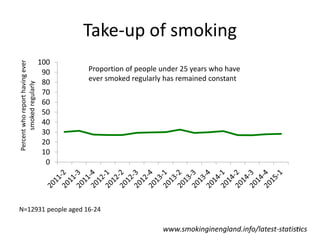
Take-up of smoking
39
0
10
20
30
40
50
60
70
80
90
100
Percentwhoreporthavingever
smokedregularly
N=12931 people aged 16-24
Proportion of people under 25 years who have
ever smoked regularly has remained constant
www.smokinginengland.info/latest-statistics
IS POLICY ADDRESSING ANY OF
THIS?
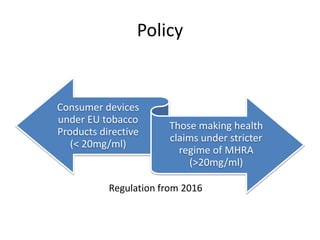
Policy
Consumer devices
under EU tobacco
Products directive
(< 20mg/ml)
Those making health
claims under stricter
regime of MHRA
(>20mg/ml)
Regulation from 2016
From: Calc M, Gear SUY, Board V, It S, Buys A-CC, Sales MS-C. NEW ASH document. Hot off the press! [cited 2015
May 31]; Available from: http://allaboute-cigarettes.proboards.com/thread/16831
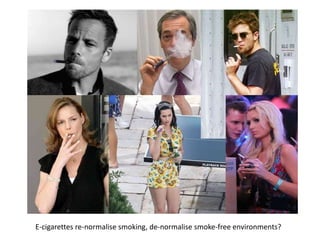
E-cigarettes re-normalise smoking, de-normalise smoke-free environments?
http://www.telegraph.co.uk/news/health/11216824/A
dvert-to-show-e-cigarette-vaping-for-first-time.html
“Above all we should not let electronic cigarettes
divide the tobacco control community, or
distract us from the comprehensive approach to
delivering a smokefree future.”
Andrew Furber, Dept Public Health, Wakefield
Thorax Dec 2014
QUESTIONS?
Conclusions
Cigarettes kill ½ of regular users
Tobacco harm continues to be a major global problem,
and huge contributor to inequality
E-cigarettes appear to be significantly less harmful
than cigarettes
More research is needed on the safety of ENDS, and
regulation will improve safety
Long term effects will not be known for many years
E-cigarettes are being chosen by the public as harm
reduction and as quit devices
We have a responsibility to advise individual patients
in informed and honest ways, so keep up to date
Dr, I was thinking
about trying those
e-cigarettes. What
do you think?
Vote
References
• http://www.ash.org.uk/files/documents/ASH_741.pdf
• www.smokinginengland.info/latest-statistics
• http://www.npis.org/NPISAnnualReport2013-14.pdf
• https://publichealthmatters.blog.gov.uk/2014/05/21/e-cigarettes-and-harm-reduction-
where-are-we-now-and-what-next/
• Britton J. Electronic cigarettes. Thorax. 2013;68(10):904–5.
• Britton J. Electronic cigarettes: pro. Thorax. 2015;70(4):309–10.
• Bullen C, Howe C, Laugesen M, McRobbie H, Parag V, Williman Jonathan, et al. Electronic
cigarettes for smoking cessation: a randomised controlled trial. The Lancet.
2013;382:1629–37.
• Calc M, Gear SUY, Board V, It S, Buys A-CC, Sales MS-C. NEW ASH document. Hot off the
press! [cited 2015 May 31]; Available from: http://allaboute-
cigarettes.proboards.com/thread/16831
• Dawkins L, Turner J, Hasna S, Soar K. The electronic-cigarette: Effects on desire to smoke,
withdrawal symptoms and cognition. Addictive Behaviors. 2012 Aug;37(8):970–3.
• Fidler, et al., 2011. 'The smoking toolkit study': a national study of smoking and smoking
cessation in England. BMC Public Health 11:479
• Furber A. Electronic cigarettes: reasons to be cautious. Thorax. 2015 Apr 1;70(4):307–8.
• Goniewicz ML, Knysak J, Gawron M, Kosmider L, Sobczak A, Kurek J, et al. Levels of
selected carcinogens and toxicants in vapour from electronic cigarettes. Tobacco
control. 2014;23(2):133–9.
• Hajek P. Electronic cigarettes for smoking cessation. The Lancet.
2013;382(9905):1614–6.
• Jensen P, Wentai L, Pankow J, Strongin, R, Peyton D. Hidden Formaldehyde in E-
Cigarette Aerosols. New England Journal of Medicine. 2015 Jan 22;372(4):389–92.
• Kotz D, Brown J, West R. “Real-world” effectiveness of smoking cessation treatments:
a population study: Smoking cessation treatment in the real world. Addiction. 2014
Mar;109(3):491–9.
• McCauley L. An Unexpected Consequence of Electronic Cigarette Use. CHEST Journal.
2012 Apr 1;141(4):1110.
• McRobbie H, Bullen C, Hartmann-Boyce J, Hajek P. Electronic cigarettes for smoking
cessation and reduction. Cochrane Database of Systematic Reviews 2014, Issue 12.
Art. No.: CD010216. DOI: 10.1002/14651858.CD010216.pub2
• Nutt DJ, Phillips LD, Balfour D, Curran HV, Dockrell M, Foulds J, et al. Estimating the
Harms of Nicotine-Containing Products Using the MCDA Approach. European
Addiction Research. 2014;20(5):218–25.
• Rahman MA, Hann N, Wilson A, Mnatzaganian G, Worrall-Carter L. E-Cigarettes and
Smoking Cessation: Evidence from a Systematic Review and Meta-Analysis. Le Foll B,
editor. PLOS ONE. 2015 Mar 30;10(3):e0122544.
• Siegel MB, Tanwar KL, Wood KS. Electronic Cigarettes As a Smoking-Cessation Tool.
American Journal of Preventive Medicine. 2011 Apr;40(4):472–5.
http://www.slideshare.net/_elljay_
@drlaurajane
Thanks
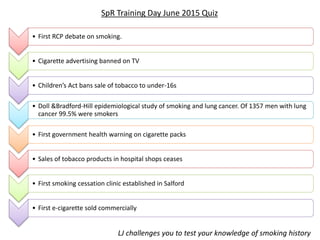
• First RCP debate on smoking.
• Cigarette advertising banned on TV
• Children’s Act bans sale of tobacco to under-16s
• Doll &Bradford-Hill epidemiological study of smoking and lung cancer. Of 1357 men with lung
cancer 99.5% were smokers
• First government health warning on cigarette packs
• Sales of tobacco products in hospital shops ceases
• First smoking cessation clinic established in Salford
• First e-cigarette sold commercially
SpR Training Day June 2015 Quiz
LJ challenges you to test your knowledge of smoking history

E-cigarettes: pros, cons and controversy

  • 1.
    Dr Laura-Jane Smith Non-smoker,Non-vaper SpR Respiratory and General Medicine Training Day, North East Thames Respiratory Medicine Whittington Health June 2015 e-cigarettes: pros, cons and controversy
  • 2.
    Case Nick, a 48year old politician, attends clinic for follow-up after an admission for flu. He is well and his chest x-ray is normal. He has a 35 pack year history. During his inpatient stay he met a smoking cessation counselor and expressed a wish to quit. He went home on NRT but, after a stressful time at work, he went back to smoking.
  • 3.
    Dr, I wasthinking about trying those e-cigarettes. What do you think? Vote
  • 4.
    Know your enemy/friend Reasonsto be cautious Reasons to be cheerful Hard evidence Soft recommendations
  • 6.
    What are e-cigarettes? Anelectronic cigarette that is rechargeable and has a tank or reservoir which has to be filled with liquid nicotine/vapour Disposable products (non-rechargeable) An electronic cigarette kit that is rechargeable with replaceable pre-filled cartridges
  • 7.
  • 8.
    1572 •Sir Francis Drakeintroduces pipe smoking to Britain 1600s •Pope bans smoking in holy places 1605 •First RCP debate on smoking. Concerns of King James I dismissed 1761 •London physician, John Hill, performs possibly first clinical study on tobacco. Warns snuff users at risk of nasal cancer 1908 •Children’s Act bans sale of tobacco to under-16s 1939 •“Tobacco misuse and lung carcinoma” Franz Herman Muller. First major report to find strong link between smoking & lung cancer 1947 •A 43% increase in tax on cigarettes results in a 14% drop in consumption amongst British men 1951 •Doll &Bradford-Hill epidemiological study of smoking and lung cancer. Of 1357 men with lung cancer 99.5% were smokers 1958 •First smoking cessation clinic established in Salford 1962 •RCP report “Smoking and Health” 1963 •First patent for an e-cigarette
  • 9.
    1965 • Cigarette advertisingbanned on TV 1971 • First government health warning on cigarette packs 1988 • BA bans smoking on domestic flights 1992 • Sales of tobacco products in hospital shops ceases 1994 • Latest figures from Doll study shows ½ smokers die from smoking-related diseases 1997 • Sponsorship of sporting events banned 2004 • Ireland is first place to ban smoking in workplaces and public places 2007 • Scotland and England go smoke free in public places. Age raised to 18. 2013 • E-cigarettes are advertised on TV 2014 • Ban on smoking in cars with children 2015 • Plain packs passed in House of Commons http://www.ash.org.uk/files/documents/ASH_741.pdf
  • 10.
    Prevalence of electroniccigarette use: smokers and recent ex-smokers 0 5 10 15 20 25 30 35 40 45 50 Percentofsmokersandrecentex- smokers Any Daily N=16529 adults who smoke or who stopped in the past year; increase p<0.001 www.smokinginengland.info/latest-statistics
  • 11.
    2.1 million users inGreat Britain
  • 12.
    Prevalence of nicotineproducts while smoking 12 0 5 10 15 20 25 30 35 40 45 50 Percentofsmokers E-cigs NRT All nicotine N=15433 smokers, increase p<0.001 e-cigs and all nicotine; decrease p<0.001 for NRT NRT use continues to decline (slowly) even after plateau in e-cigarette use www.smokinginengland.info/latest-statistics
  • 13.
    Prevalence of nicotineproducts in recent ex-smokers 13 0 10 20 30 40 50 60 70 Percentofex-smokers E-cigs NRT All nicotine N=1096 adults who stopped in the past year; increase p<0.001 for e-cigs and all nicotine; decrease p=0.003 for NRT There continues to be an increase in use of e-cigarettes in recent ex- smokers www.smokinginengland.info/latest-statistics
  • 14.
    Pro Con Do nothelp patients quit ‘Gateway’ for children Unknown health risks Distract from smoking cessation /tobacco control Reduce harms from smoking Help patients quit smoking Safe Being chosen by public Thedebate
  • 15.
  • 16.
    First do noharm Cigarettes kill ½ of regular users It is not difficult to be less harmful than cigarettes But are e-cigarettes safe? – Contain ultrafine particles and carcinogens – How much is inhaled by usual use? – Paucity of evidence – Variability and unregulated nature of devices – Fires – Poisoning
  • 17.
    “the electronic cigaretteis not a proven nicotine replacement therapy. WHO has no scientific evidence to confirm the product’s safety and efficacy. However, WHO does not discount the possibility that the electronic cigarette could be useful as a smoking cessation aid. The only way to know is to test.” Ale Alwen, the Assistant Director General for Non-communicable Diseases and Mental Health, August 2008
  • 18.
    Particles/vapours/carcinogens Goniewicz ML, KnysakJ, Gawron M, Kosmider L, Sobczak A, Kurek J, et al. Levels of selected carcinogens and toxicants in vapour from electronic cigarettes. Tobacco control. 2014;23(2):133–9. “…one would expect that if a person switched from conventional cigarettes to e-cigarettes the exposure to toxic chemicals and related adverse health effects would be reduced.”
  • 19.
    “How formaldehyde-releasing agentsbehave in the respiratory tract is unknown, but formaldehyde is an International Agency for Research on Cancer group 1 carcinogen.” Jensen P, Wentai L, Pankow J, Strongin, R, Peyton D. Hidden Formaldehyde in E-Cigarette Aerosols. New England Journal of Medicine. 2015 Jan 22;372(4):389–92. Low voltage (3.3 V): did not detect formation of any formaldehyde-releasing agents High voltage (5.0 V): a mean (±SE) of 380±90 μg per sample (10 puffs) of formaldehyde was detected as formaldehyde-releasing agents.
  • 20.
  • 21.
  • 22.
  • 23.
    Is this picturetrue? Vape sites and blogs make bold claims about safety and harm- free use, which is premature. We will have to wait a decade or two before we really know anything. In the meantime patients ask our advice…
  • 24.
    DO E-CIGARETTES REDUCETOBACCO HARM AT INDIVIDUAL LEVEL? What’s the evidence?
  • 25.
    Nicotine use bynever smokers and long-term ex-smokers 0 0.5 1 1.5 2 2.5 3 3.5 4 Never smoker Long-term ex-smoker Percent E-cig NRT 25 N=22489 never and long-term ex-smokers from Nov 2013 E-cigarette use by never smokers is negligible www.smokinginengland.info/latest-statistics
  • 26.
    Lancet RCT vs Bullen C,Howe C, Laugesen M, McRobbie H, Parag V, Williman Jonathan, et al. Electronic cigarettes for smoking cessation: a randomised controlled trial. The Lancet. 2013;382:1629–37. Pragmatic randomised-controlled superiority trial in Auckland, New Zealand. 13 wks of e-cigarettes vs placebo vs NRT patches with outcome of 6 month abstinence.
  • 28.
    Do e-cigarettes reducetobacco harm at individual level?
  • 29.
    Aids used inmost recent quit attempt 29 0 5 10 15 20 25 30 35 40 45 50 2009-3 2009-4 2010-1 2010-2 2010-3 2010-4 2011-1 2011-2 2011-3 2011-4 2012-1 2012-2 2012-3 2012-4 2013-1 2013-2 2013-3 2013-4 2014-1 2014-2 2014-3 2014-4 2015-1 Percentofsmokerstryingtostop E-cigs NRT OTC NRT Rx Champix Beh'l supp N=10078 adults who smoke and tried to stop or who stopped in the past year E-cigarette use for quitting is still increasing www.smokinginengland.info/latest-statistics
  • 30.
    “The goal oftobacco control is to diminish the harm caused by tobacco products. While the ideal remains that people should stop using tobacco completely and permanently, consensus currently supports a properly regulated harm reduction approach for those unable to do so” ASH statement 2014 …. Is methadone safe?
  • 31.
    Aids used inmost recent quit attempt 0% 10% 20% 30% 40% 50% 60% 70% 80% 90% 100% 2009 2010 2011 2012 2013 2014 NHS Med Rx/E-cigs Nothing/NRT-OTC 31 N=9783 adults who smoke and tried to stop or who stopped in the past year; 2009 is Jul to Dec E-cigarettes have grown the use of moderately effective aids to cessation from 24% to 35%; use of most effective methods has decreased from 4% to 3% At stable quit attempt rate of 37% this contributed 0.05% to the decreased prevalence (~20,000 additional ex- smokers) www.smokinginengland.info/latest-statistics
  • 32.
    DO E-CIGARETTES REDUCETOBACCO HARM AT POPULATION LEVEL? What’s the evidence?
  • 33.
    Reduce tobacco harmat population level? https://publichealthmatters.blog.gov.uk/2 014/05/21/e-cigarettes-and-harm- reduction-where-are-we-now-and-what- next/
  • 34.
    Nutt DJ, PhillipsLD, Balfour D, Curran HV, Dockrell M, Foulds J, et al. Estimating the Harms of Nicotine- Containing Products Using the MCDA Approach. European Addiction Research. 2014;20(5):218–25.
  • 35.
    IS THERE AGATEWAY EFFECT? What’s the evidence?
  • 36.
    Won’t someone thinkof the children?
  • 39.
    Take-up of smoking 39 0 10 20 30 40 50 60 70 80 90 100 Percentwhoreporthavingever smokedregularly N=12931people aged 16-24 Proportion of people under 25 years who have ever smoked regularly has remained constant www.smokinginengland.info/latest-statistics
  • 40.
  • 41.
    Policy Consumer devices under EUtobacco Products directive (< 20mg/ml) Those making health claims under stricter regime of MHRA (>20mg/ml) Regulation from 2016
  • 42.
    From: Calc M,Gear SUY, Board V, It S, Buys A-CC, Sales MS-C. NEW ASH document. Hot off the press! [cited 2015 May 31]; Available from: http://allaboute-cigarettes.proboards.com/thread/16831
  • 44.
    E-cigarettes re-normalise smoking,de-normalise smoke-free environments?
  • 45.
  • 46.
    “Above all weshould not let electronic cigarettes divide the tobacco control community, or distract us from the comprehensive approach to delivering a smokefree future.” Andrew Furber, Dept Public Health, Wakefield Thorax Dec 2014
  • 47.
  • 48.
    Conclusions Cigarettes kill ½of regular users Tobacco harm continues to be a major global problem, and huge contributor to inequality E-cigarettes appear to be significantly less harmful than cigarettes More research is needed on the safety of ENDS, and regulation will improve safety Long term effects will not be known for many years E-cigarettes are being chosen by the public as harm reduction and as quit devices We have a responsibility to advise individual patients in informed and honest ways, so keep up to date
  • 49.
    Dr, I wasthinking about trying those e-cigarettes. What do you think? Vote
  • 50.
    References • http://www.ash.org.uk/files/documents/ASH_741.pdf • www.smokinginengland.info/latest-statistics •http://www.npis.org/NPISAnnualReport2013-14.pdf • https://publichealthmatters.blog.gov.uk/2014/05/21/e-cigarettes-and-harm-reduction- where-are-we-now-and-what-next/ • Britton J. Electronic cigarettes. Thorax. 2013;68(10):904–5. • Britton J. Electronic cigarettes: pro. Thorax. 2015;70(4):309–10. • Bullen C, Howe C, Laugesen M, McRobbie H, Parag V, Williman Jonathan, et al. Electronic cigarettes for smoking cessation: a randomised controlled trial. The Lancet. 2013;382:1629–37. • Calc M, Gear SUY, Board V, It S, Buys A-CC, Sales MS-C. NEW ASH document. Hot off the press! [cited 2015 May 31]; Available from: http://allaboute- cigarettes.proboards.com/thread/16831 • Dawkins L, Turner J, Hasna S, Soar K. The electronic-cigarette: Effects on desire to smoke, withdrawal symptoms and cognition. Addictive Behaviors. 2012 Aug;37(8):970–3. • Fidler, et al., 2011. 'The smoking toolkit study': a national study of smoking and smoking cessation in England. BMC Public Health 11:479 • Furber A. Electronic cigarettes: reasons to be cautious. Thorax. 2015 Apr 1;70(4):307–8.
  • 51.
    • Goniewicz ML,Knysak J, Gawron M, Kosmider L, Sobczak A, Kurek J, et al. Levels of selected carcinogens and toxicants in vapour from electronic cigarettes. Tobacco control. 2014;23(2):133–9. • Hajek P. Electronic cigarettes for smoking cessation. The Lancet. 2013;382(9905):1614–6. • Jensen P, Wentai L, Pankow J, Strongin, R, Peyton D. Hidden Formaldehyde in E- Cigarette Aerosols. New England Journal of Medicine. 2015 Jan 22;372(4):389–92. • Kotz D, Brown J, West R. “Real-world” effectiveness of smoking cessation treatments: a population study: Smoking cessation treatment in the real world. Addiction. 2014 Mar;109(3):491–9. • McCauley L. An Unexpected Consequence of Electronic Cigarette Use. CHEST Journal. 2012 Apr 1;141(4):1110. • McRobbie H, Bullen C, Hartmann-Boyce J, Hajek P. Electronic cigarettes for smoking cessation and reduction. Cochrane Database of Systematic Reviews 2014, Issue 12. Art. No.: CD010216. DOI: 10.1002/14651858.CD010216.pub2 • Nutt DJ, Phillips LD, Balfour D, Curran HV, Dockrell M, Foulds J, et al. Estimating the Harms of Nicotine-Containing Products Using the MCDA Approach. European Addiction Research. 2014;20(5):218–25. • Rahman MA, Hann N, Wilson A, Mnatzaganian G, Worrall-Carter L. E-Cigarettes and Smoking Cessation: Evidence from a Systematic Review and Meta-Analysis. Le Foll B, editor. PLOS ONE. 2015 Mar 30;10(3):e0122544. • Siegel MB, Tanwar KL, Wood KS. Electronic Cigarettes As a Smoking-Cessation Tool. American Journal of Preventive Medicine. 2011 Apr;40(4):472–5.
  • 52.
  • 53.
    • First RCPdebate on smoking. • Cigarette advertising banned on TV • Children’s Act bans sale of tobacco to under-16s • Doll &Bradford-Hill epidemiological study of smoking and lung cancer. Of 1357 men with lung cancer 99.5% were smokers • First government health warning on cigarette packs • Sales of tobacco products in hospital shops ceases • First smoking cessation clinic established in Salford • First e-cigarette sold commercially SpR Training Day June 2015 Quiz LJ challenges you to test your knowledge of smoking history

Editor's Notes

  • #4 How many people have been asked this question by a patient? How many people have been asked this by a friend/relative?
  • #6 The public is confused. We need to know what we think so that we don’t add to their confusion, and can do some good.
  • #7 Electronic cigarettes are electronic devices that heat a liquid – usually comprising propylene glycol and glycerol, with or without nicotine and flavours, stored in disposable or refillable cartridges or a reservoir – into an aerosol for inhalation. Electronic cigarettes vary substantially in quality, nicotine delivery and levels of contaminants in the vapour they produce but most deliver nicotine in a carrier, usually propylene glycol, with variable degrees of contamination by impurities from the nicotine solution or generated by vapour production
  • #9 Just a few of the historical higlights in smoking / tobacco / nicotine use The earliest electronic cigarette can be traced to American Herbert A. Gilbert, who in 1963 patented a device described as "a smokeless non-tobacco cigarette" that involved "replacing burning tobacco and paper with heated, moist, flavored air”. This device was designed to produce flavored steam without nicotine. The patent was granted in 1965. Gilbert’s invention was ahead of its time, and it had gotten little attention. It was never commercialized. This was because smoking was still generally fashionable during that era. Gilbert said in 2013 that today's electric cigarettes follow the basic design set forth in his original patent.
  • #10 Policy lags far behind evidence of harm. Many, many patients suffer during this lag time. I don’t think claims of a nanny state are justified.
  • #11 Smoking Toolkit Study, Monthly household surveys. Each month involves a new representative sample of ~1800 respondents; smokers ~450. sample weighted to match census. Data collected on electronic cigarettes since second quarter 2011. The e-cigarette market is estimated to be worth £91.3 million a year. It increased by 340% in 2013 to reach £193 million, and is expected to be worth £340 million by 2015. In the UK, there are an estimated 1.3 million ecigarette users.
  • #15 So, what’s the evidence?
  • #17 Electronic cigarettes are not safe therefore, and the hazards of long-term use will remain unknown for decades, but are likely to be of orders of magnitude substantially lower than those of smoking. The health risks of electronic cigarettes are unknown: This is true, but they are clearly orders of magnitude less severe than those of smoking
  • #19 Previous studies analysed the chemicals in cartridges or nicotine refill solutions. They showed that the cartridges contain only trace amounts of potentially harmful substances, including nitrosamines, acetaldehyde, acetone and formaldehyde. Hypothesis However, using e-cigarettes requires heating the cartridges and under such conditions chemical reactions may result in formation of new compounds. Such a situation takes place in the case of ordinary cigarettes, where a number of toxic compounds are formed during combustion. The investigators used the internet to research the most popular ecigarettes available in Poland. All cartridges were characterised by high nicotine content (16–18 mg). As a reference product the medicinal nicotine inhalator was used (Nicorette 10 mg, Johnson&Johnson, Poland). Vapours were generated from 12 brands of e-cigarettes and the reference product, the medicinal nicotine inhaler, in controlled conditions using a modified smoking machine. All testing procedures in this work were carried out using the same averaged puffing conditions: puff duration of 1.8 s, intervals between puffs of 10 s, puff volume 70 ml and number of puffs taken in one puffing session was 15. A total of 150 puffs were taken from each e-cigarette in 10 series of 15 puffs with intervals between series of 5 min each. Each e-cigarette was tested three times on three following days after batteries were recharged during nights. The selected toxic compounds were extracted from vapours into a solid or liquid phase and analysed with chromatographic and spectroscopy methods. We found that the e-cigarette vapours contained some toxic substances. The levels of the toxicants were 9–450 times lower than in cigarette smoke and were, in many cases, comparable with trace amounts found in the reference product. “For comparison purposes, we assumed that 150 puffs of an e-cigarette correspond to smoking 10 cigarettes.”
  • #20  E-cigarette liquids are typically solutions of propylene glycol, glycerol, or both, plus nicotine and flavorant chemicals. We have observed that formaldehyde-containing hemiacetals, shown by others to be entities that are detectable by means of nuclear magnetic resonance (NMR) spectroscopy can be formed during the e-cigarette “vaping” process. The aerosolized liquid was collected in an NMR spectroscopy tube (10 50-ml puffs over 5 minutes; 3 to 4 seconds per puff). With each puff, 5 to 11 mg of e-liquid was consumed, and 2 to 6 mg of liquid was collected. At low voltage (3.3 V), we did not detect the formation of any formaldehyde-releasing agents (estimated limit of detection, approximately 0.1 μg per 10 puffs). At high voltage (5.0 V), a mean (±SE) of 380±90 μg per sample (10 puffs) of formaldehyde was detected as formaldehyde-releasing agents. Extrapolating from the results at high voltage, an e-cigarette user vaping at a rate of 3 ml per day would inhale 14.4±3.3 mg of formaldehyde per day in formaldehyde-releasing agents.
  • #21 There were multiple letters to the NEJM, stating that the methodology in the paper did not reflect day to day use. In particular responders thought that “the 5-V puff topography used by Jensen et al. appears to have overheated the coil, resulting in excessive breakdown of propylene glycol to formaldehyde. This phenomenon is readily detected by the consumer by virtue of an exceedingly unpleasant burning taste, commonly referred to as a “dry puff.” It has been described in detail in the literature.” Another responder further complicated matters by pointing out that resistance was also relevant. “he authors reported that 3.3 V did not produce detectable levels of formaldehyde-releasing agents. A brief review of the websites of several e-cigarette manufacturers reveals variable-voltage devices with element resistances ranging from 0.5 to 6.5 Ω. Critically, applying 3.3 V to a 0.5-Ω element would produce 21.8 W of dissipated power, whereas the same voltage applied to a 3.0-Ω element would produce just 3.6 W. The surface area of the element and differences in conductive heat loss further complicate the issue. We should therefore caution readers against assuming that 3.3 V is “more safe” and that higher voltages are “less safe.” From a public health perspective, we think the questions are, “What is the full toxicologic terrain of the vaping process?” and “Can ENDS be better designed to be safer?”
  • #22 http://www.bbc.co.uk/news/uk-england-merseyside-28701515. Was using charger not supplied with device. Set fire to oxygen canister. https://www.usfa.fema.gov/downloads/pdf/publications/electronic_cigarettes.pdf Ecigareets are a fire risk if used with the wrong charger: But this applies to all electrical appliances with batteries. Use the right charger.
  • #23 http://www.npis.org/NPISAnnualReport2013-14.pdf Comparable to international ie USA stats.
  • #24 http://everythingcannabis.co/whats-the-healthiest-alternative-to-smoking-weed-vaping-of-course
  • #26 An important question is whether non-smokers are taking up e-cigarettes. This would result in harm to previous non-smokers. No evidence that this is the case. Almost exclusively used by smokers and recent ex-smokers.
  • #27 Previous trial in 300 smokers unwilling to quit showed low rates of cessation at 12 months for nicotine e-cigarettes and placebo e-cigarettes. Pragmatic randomised-controlled superiority trial in Auckland, New Zealand 2011. 13 wks of e-cigarettes vs placebo vs NRT patches Outcomes: 6 month abstinence. In this trial we aimed to assess whether e-cigarettes with cartridges containing nicotine (nicotine e-cigarette) were more effective for smoking cessation than nicotine patches, and included a blind comparison with e-cigarettes containing no nicotine (placebo e-cigarette). All participants had standard telephone behavioural support. “E-cigarettes, with or without nicotine, were modestly effective at helping smokers to quit, with similar achievement of abstinence as with nicotine patches, and few adverse events. Uncertainty exists about the place of e-cigarettes in tobacco control, and more research is urgently needed to clearly establish their overall benefi ts and harms at both individual and population levels.” Limitations: participants were sent a voucher for NRT patches, but couriered an e-cigarette.
  • #28 Over all, loss to follow-up was 22%: 17% (48 of 289) in the nicotine e-cigarettes group, 27% (80 of 295) in the patches group, and 22% (16 of 73) in placebo e-cigarettes group. “Achievement of abstinence was substantially lower than we anticipated, thus we had insufficient statistical power to conclude superiority of nicotine e-cigarettes to patches or to placebo e-cigarettes. Most participants relapsed within 50 days.” “In the nicotine e-cigarettes group, 57% of participants reduced daily cigarettes by at least half at 6 months—a significantly greater proportion than in the patches group (41%; p=0.0002). We identified no difference in adverse events with e-cigarettes compared with patches.” “Our study has established benchmarks for performance of nicotine e-cigarettes relative to NRT and placebo e-cigarettes with which to design future, more adequately powered trials. Our f ndings point to potential for e-cigarettes in regard to cessation effectiveness beyond that noted in the present study. Furthermore, because they have far greater reach and higher acceptability (as shown by the present study) among smokers than NRT, and seem to have no greater risk of adverse effects, e-cigarettes also have potential for improving population health.”
  • #29 Smoking is declining without electronic cigarettes: True, but not quickly enough, and certainly not in disadvantaged groups. These smokers need all the help they can get to quit smoking as soon as possible. No head to head trials of different methods As effective as over the counter NRT Not as effective as NRT + Champix + behavioural support May have some advantages over NRT (acceptability, availability) Paucity of evidence to draw firm conclusions Cochrane: Combined results from two studies, involving over 600 people, showed that using an EC containing nicotine increased the chances of stopping smoking long-term compared to using an EC without nicotine. Using an EC with nicotine also helped more smokers reduce the amount they smoked by at least half compared to using an EC without nicotine. Up to July 2014. PLOS 1 Published 2015: Six studies were included involving 7,551 participants. Meta-analyses included 1,242 participants who had complete data on smoking cessation. Use of e-cigarettes is associated with smoking cessation and reduction. More randomised controlled trials are needed to assess effectiveness against other cessation methods.
  • #31 Evidence that nicotine is as addictive as heroin. Preventing addiction is not the prime objective of health policy (if it were, we would be trying to eradicate tea and coffee drinking); the prime objective is to prevent harm. The same argument also applies to, but is not used against, licensed nicotine replacement therapy. Supported by NICE guidance
  • #32 Smokers can use NHS SSS to quit: Sadly, less than 10% do. We need more options for the majority who don’t.
  • #34 Reduction in adult smoking prevalence in England Correlation =/ causation Economic downturn 70% dual users
  • #37 Concerns about e-cigarette use in children/teens No evidence of progression to cigarettes so far Current evidence shows that e-cigarette use in children/teens confined almost entirely to those who have tried cigarettes In JAMA study minors successfully received cigarettes for 93.6% of credit card purchase attempts and for 88.9% of money order purchase attempts. Age was never verified for any of these deliveries. Internet vendors sent a total of 1650 packs of cigarettes to the underage adolescents in this study.
  • #42 Concerns have been raised about the rapid growth of the electronic cigarette market and the increasing involvement of tobacco companies in the industry. The World Health Organization treaty on tobacco (WHO Framework Convention on Tobacco Control) obliges signatories to protect health policy with respect to tobacco control from the ‘commercial and vested interests’ of the tobacco industry. Tobacco company involvement in tobacco harm reduction is a cause for concern. Regulation has been seen as an important part of limiting the risk of tobacco industry involvement and to ensure the market evolves in a way that supports public health objectives. In February 2014 the EU Tobacco Products Directive (TPD) was passed by the European Parliament and became law on 29 April. Member States now have until 20 May 2016 to transpose the new rules into national law. Vaper websites say 18 ml/mg is the strength usually found suitable by average smokers. Safety mechanisms (such as childproof fastening and opening) for e-liquid containers, cartridges and tanks. Warnings on the two largest surfaces of the packs and any outside packaging covering 30% of the external area. These must state either ‘This product contains nicotine which is a highly addictive substance’ or the above plus ‘It is not recommended for use by non-smokers’. In addition, the Children & Families Act 2014 gave the Government powers to ban the sale of electronic cigarettes to persons under the age of 18. A consultation on draft regulations is expected soon.
  • #44 Use in public places Risk of second hand vapour unknown Denormalisation of smoke-free environments Currently, electronic cigarettes are not regulated under smokefree laws in the UK, although this is under consideration in Wales. In general, users are free to use them in most public places such as bars, restaurants and on public transport, although the managers of some premises have prohibited their use. Vapour may harm others: This is theoretically possible, but practically unlikely as the vapour contains little of potential hazard and has a half-life of seconds. It is a matter of courtesy however not to use electronic cigarettes in a manner that causes other people to be exposed involuntarily.
  • #45 Steven Dorff (Blade actor), Nigel Farage, R Pats Katherine Heigl, Katy Perry, Paris Hilton Policy: advertising. Including celebrity endorsements.
  • #46 Cigarette advertising was banned on UK television in 1965, and tobacco advertising was banned entirely in 2002. This advert, for VIP e-cigarettes, was broadcast after the watershed, during the first commercial break in ITV1’s Grantchester in Nob 2014. It was banned (several times due ot various versions, firslty being too sexualised) after a month following complaints from medical bodies, and 187 members of the public whi comlained to the Advertising Standards Agency. It was said to glamorise smoking. NB this is the toned down version….! Following a public consultation, CAP, the Committee on Advertising Practice, published new rules on the advertising of electronic cigarettes to cover the interim period between now and when the TPD comes into effect. Key measures include: • Ads must not be likely to appeal to people under 18 • People shown using e-cigarettes must neither be, nor seem to be under 25 • Ads must not be directed at people under 18 through the selection of media or the context in which they appear • Ads must not encourage non-smokers or non-nicotine users to use electronic cigarettes • Ads must make clear that the product is an e-cigarette and not a tobacco product.
  • #50 How many people have been asked this question by a patient? How many people have been asked this by a friend/relative?
  • #54 QUIZ