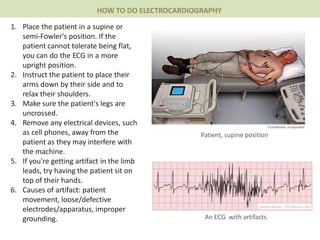
The document provides information about electrocardiography (ECG) including:
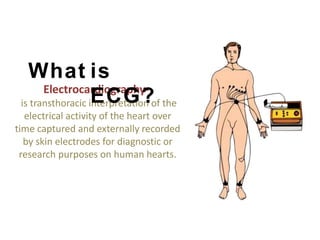
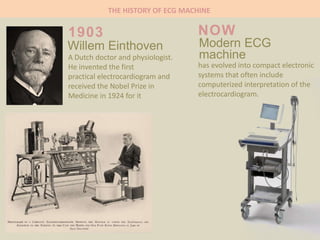
- An ECG records the electrical activity of the heart over time through electrodes placed on the skin. Willem Einthoven invented the first practical ECG machine in 1903.
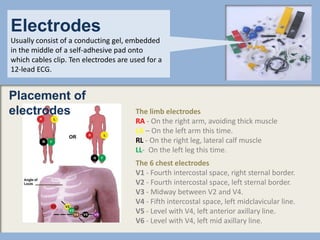
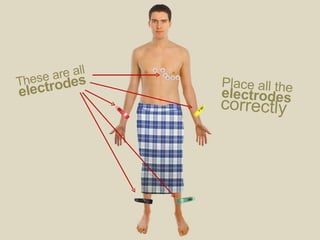
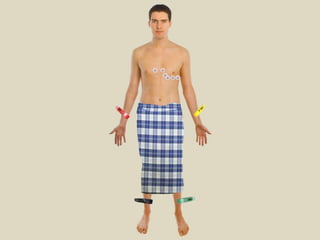
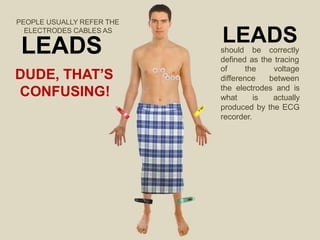
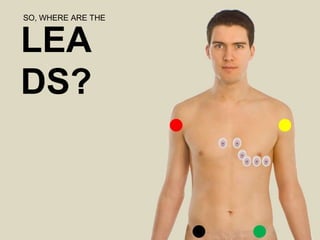
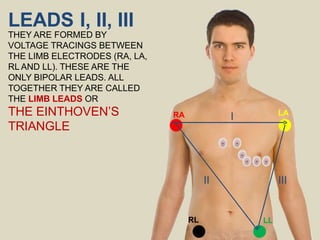
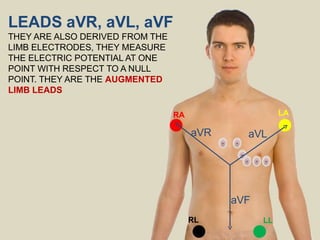
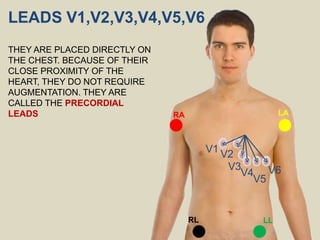
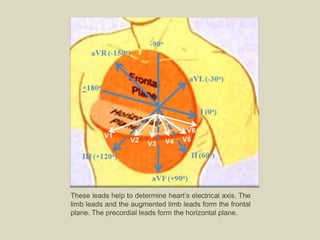
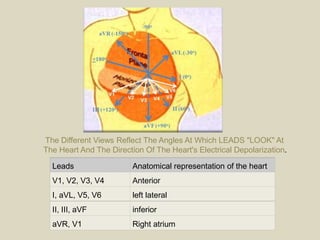
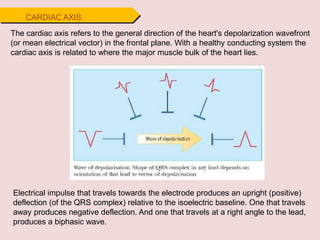
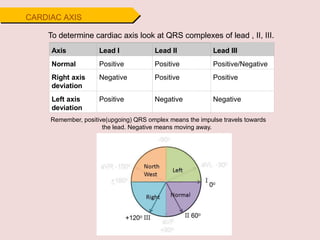
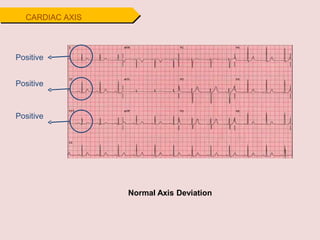
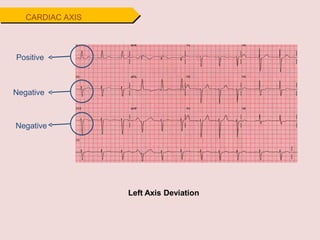
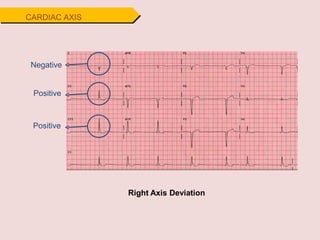
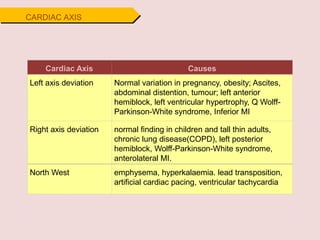
- A standard ECG uses 10 electrodes placed in specific locations to produce 12 leads that view the heart from different angles. The leads help determine the heart's electrical axis.
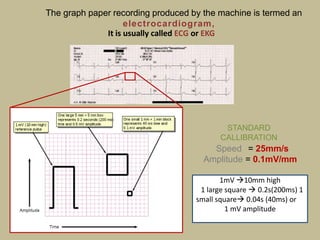
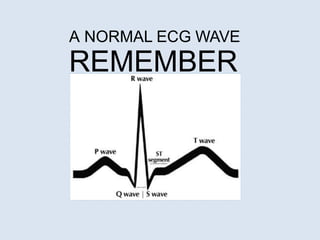
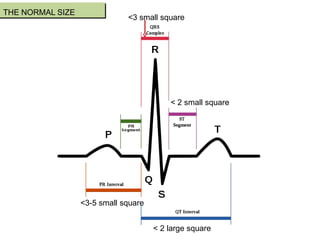
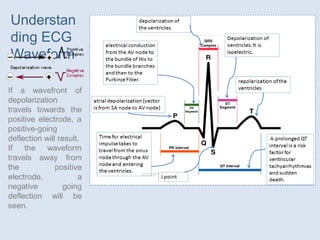
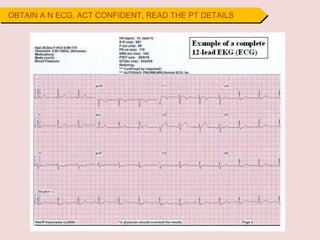
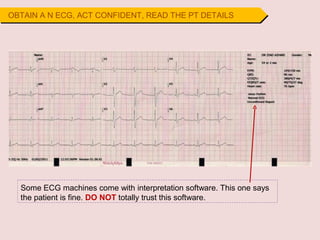
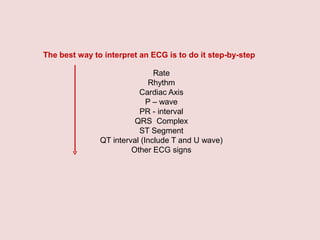
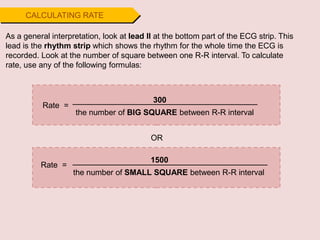
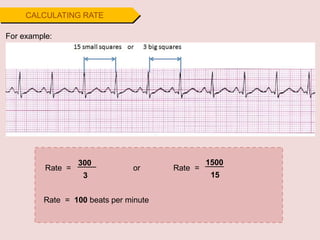
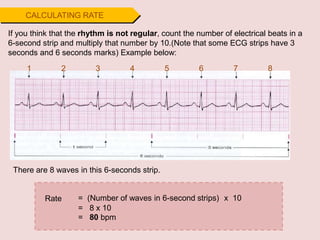
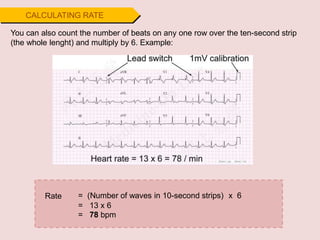
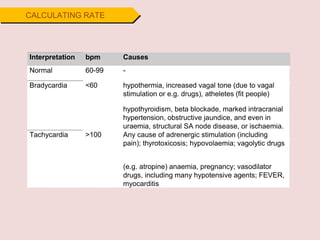
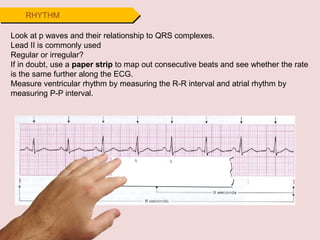
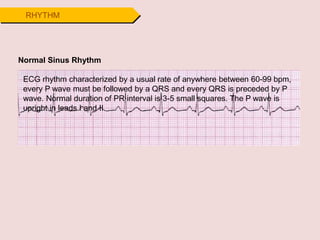
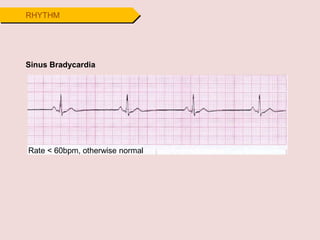
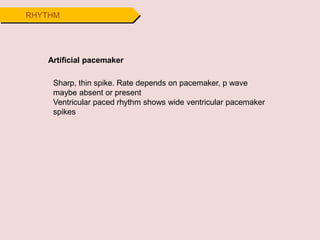
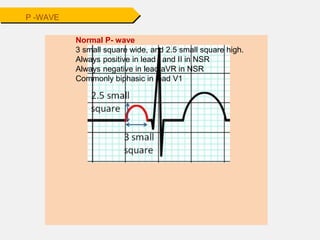
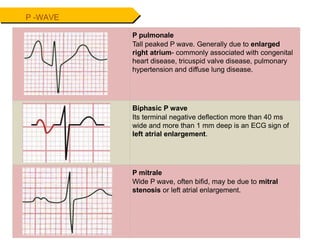
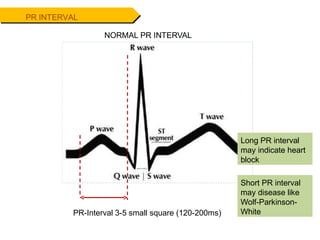
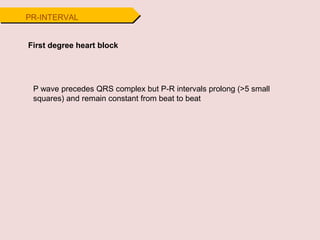
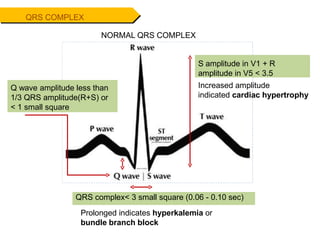
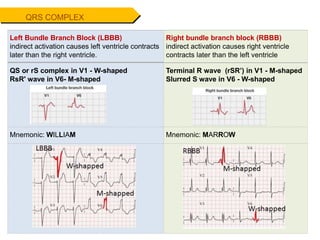
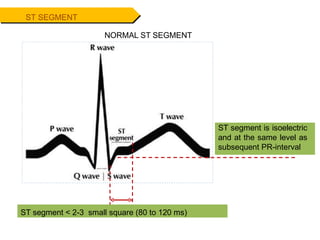
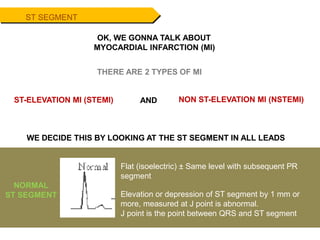
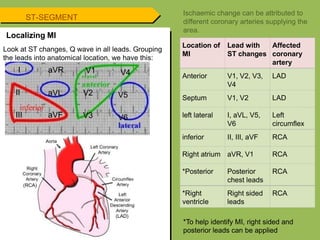
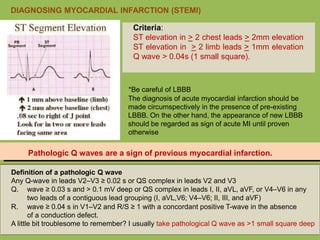
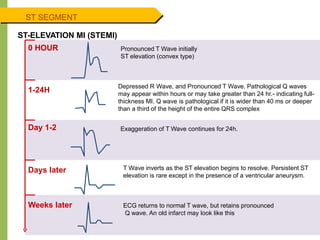
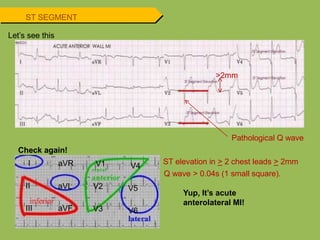
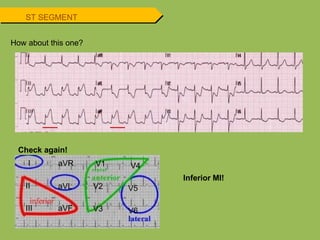
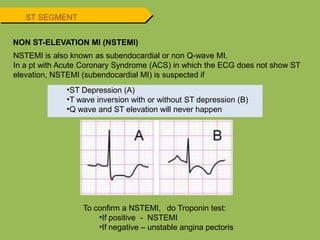
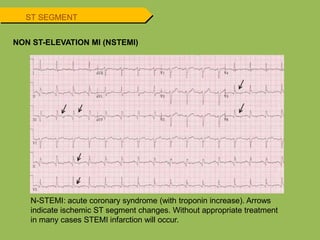
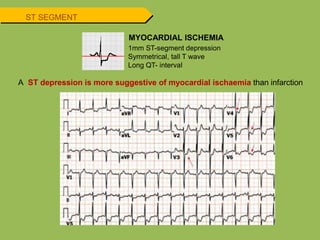
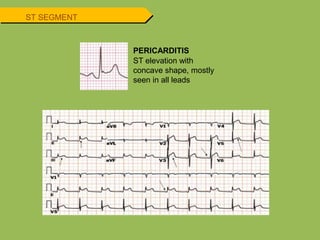
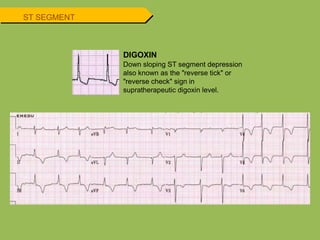
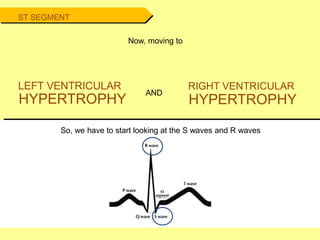
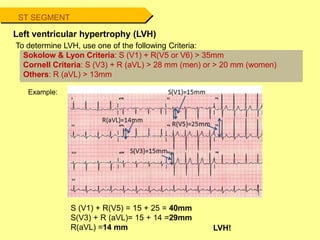
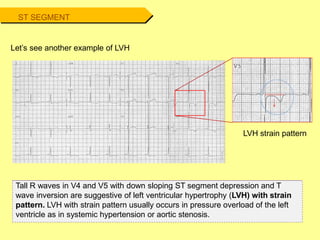
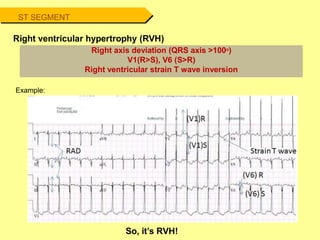
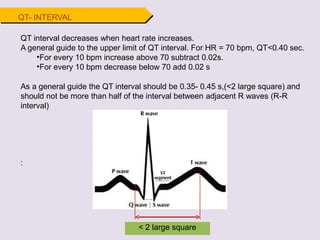
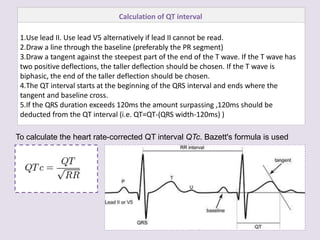
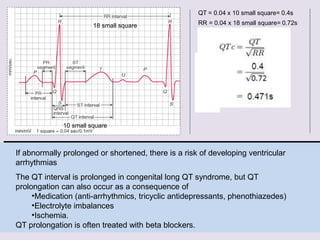
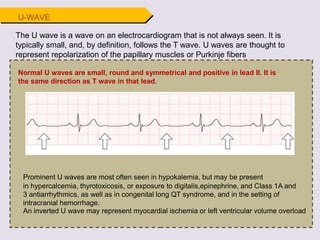
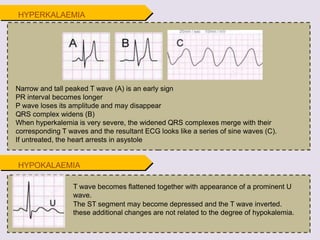
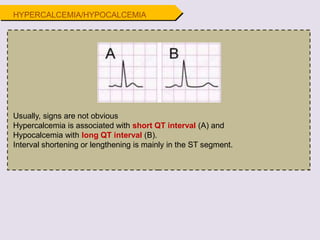
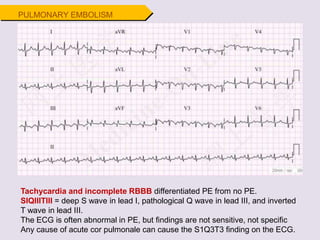
- An ECG trace is analyzed by examining characteristics like rate, rhythm, P wave, QRS complex, and ST segment to identify normal sinus rhythm or potential abnormalities.
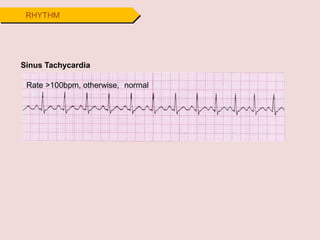
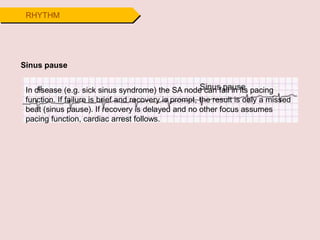
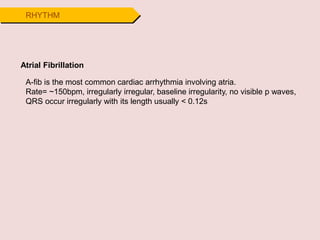
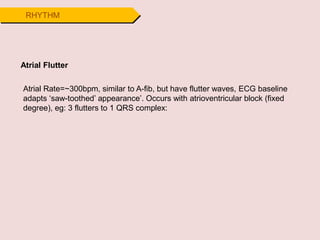
- Common rhythms include sinus bradycardia, sinus tachycardia, atrial