PPT ON
DIGITAL IMAGE PROCESSING
B.Tech IV semester
By
P.V.MURALIKRISHNA
Dept of ECE
1
DEPARTMENT OF ELECRTONICS AND COMMUNICATION ENGINEERING
2
1
UNIT-I
DIGITAL IMAGE FUNDAMENTALS
3
What is a Digital Image ?
• An image may be defined as a two- dimensional
function, f(x,y) where x and y are spatial
(plane) coordinates, and the amplitude of f at
any pair of coordinates (x, y) is called the
intensity or gray level of the image at that point.
• When x, y, and the amplitude values of f are all finite,
discrete quantities, we call the image a digital
image
4
What Is Digital Image Processing?
• The field of digital image processing refers to
processing digital images by means of a digital
computer.
5
Picture elements, Image elements, pels, and
pixels
• A digital image is composed of a finite number of
elements, each of which has a particular location
and value.
• These elements are referred to as picture elements,
image elements, pels, and pixels.
• Pixel is the term most widely used to denote the
elements of a digital image.
6
The Origins of Digital Image
Processing
• One of the first applications of digital images was in
the newspaper industry, when pictures were first
sent by submarine cable between London and New
York.
• Specialized printing equipment coded pictures for
cable transmission and then reconstructed them
at the receiving end.
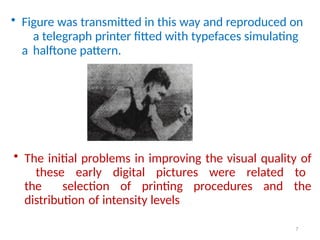
• Figure was transmitted in this way and reproduced on
a telegraph printer fitted with typefaces simulating
a halftone pattern.
7
• The initial problems in improving the visual quality of
these early digital pictures were related to
the selection of printing procedures and the
distribution of intensity levels
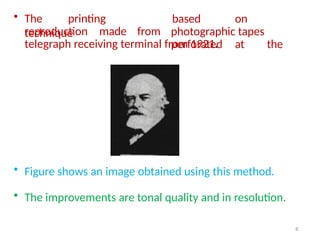
• The printing
technique
reproduction made from
based on
photographic tapes
perforated at the
telegraph receiving terminal from 1921.
• Figure shows an image obtained using this method.
• The improvements are tonal quality and in resolution.
8
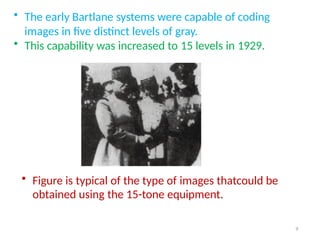
• The early Bartlane systems were capable of coding
images in five distinct levels of gray.
• This capability was increased to 15 levels in 1929.
• Figure is typical of the type of images thatcould be
obtained using the 15-tone equipment.
9
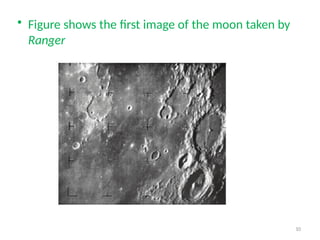
• Figure shows the first image of the moon taken by
Ranger
10
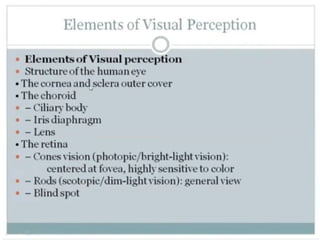
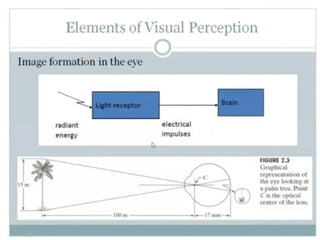
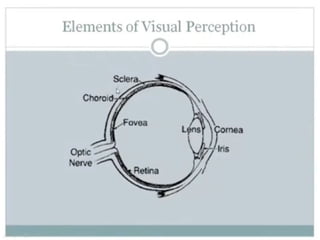
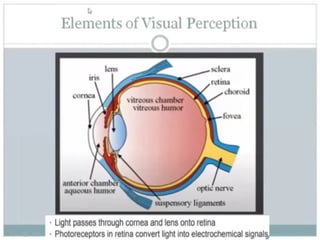
HUMAN VISION
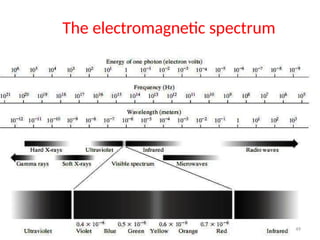
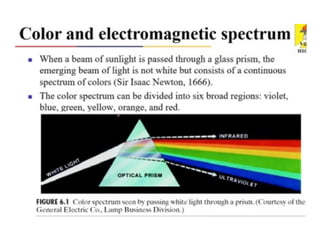
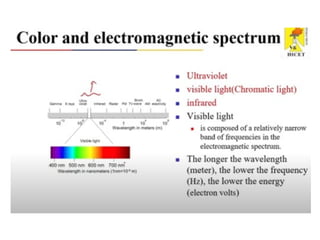
The electromagnetic spectrum
49
50
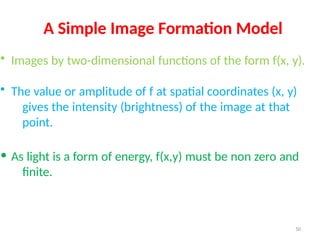
A Simple Image Formation Model
• Images by two-dimensional functions of the form f(x, y).
• The value or amplitude of f at spatial coordinates (x, y)
gives the intensity (brightness) of the image at that
point.
• As light is a form of energy, f(x,y) must be non zero and
finite.
51
• The function f(x, y) may be characterized by two
components:
(1) the amount of source illumination incident on
the scene being viewed
(2) the amount of illumination reflected by the
objects in the scene.
• These are called the illumination and reflectance
components and are denoted by i(x, y) and r(x,
y), respectively.
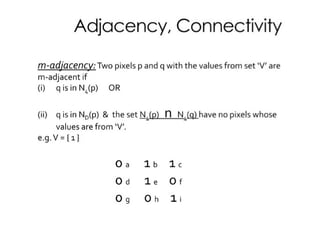
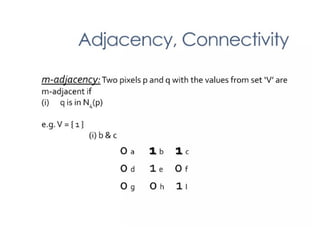
BASIC RELATION BETWEEN
PIXELS
ECE-Digital-Image-Processing and transformations

ECE-Digital-Image-Processing and transformations

  • 1.
    PPT ON DIGITAL IMAGEPROCESSING B.Tech IV semester By P.V.MURALIKRISHNA Dept of ECE 1 DEPARTMENT OF ELECRTONICS AND COMMUNICATION ENGINEERING
  • 2.
  • 3.
    3 What is aDigital Image ? • An image may be defined as a two- dimensional function, f(x,y) where x and y are spatial (plane) coordinates, and the amplitude of f at any pair of coordinates (x, y) is called the intensity or gray level of the image at that point. • When x, y, and the amplitude values of f are all finite, discrete quantities, we call the image a digital image
  • 4.
    4 What Is DigitalImage Processing? • The field of digital image processing refers to processing digital images by means of a digital computer.
  • 5.
    5 Picture elements, Imageelements, pels, and pixels • A digital image is composed of a finite number of elements, each of which has a particular location and value. • These elements are referred to as picture elements, image elements, pels, and pixels. • Pixel is the term most widely used to denote the elements of a digital image.
  • 6.
    6 The Origins ofDigital Image Processing • One of the first applications of digital images was in the newspaper industry, when pictures were first sent by submarine cable between London and New York. • Specialized printing equipment coded pictures for cable transmission and then reconstructed them at the receiving end.
  • 7.
    • Figure wastransmitted in this way and reproduced on a telegraph printer fitted with typefaces simulating a halftone pattern. 7 • The initial problems in improving the visual quality of these early digital pictures were related to the selection of printing procedures and the distribution of intensity levels
  • 8.
    • The printing technique reproductionmade from based on photographic tapes perforated at the telegraph receiving terminal from 1921. • Figure shows an image obtained using this method. • The improvements are tonal quality and in resolution. 8
  • 9.
    • The earlyBartlane systems were capable of coding images in five distinct levels of gray. • This capability was increased to 15 levels in 1929. • Figure is typical of the type of images thatcould be obtained using the 15-tone equipment. 9
  • 10.
    • Figure showsthe first image of the moon taken by Ranger 10
  • 41.
  • 49.
  • 50.
    50 A Simple ImageFormation Model • Images by two-dimensional functions of the form f(x, y). • The value or amplitude of f at spatial coordinates (x, y) gives the intensity (brightness) of the image at that point. • As light is a form of energy, f(x,y) must be non zero and finite.
  • 51.
    51 • The functionf(x, y) may be characterized by two components: (1) the amount of source illumination incident on the scene being viewed (2) the amount of illumination reflected by the objects in the scene. • These are called the illumination and reflectance components and are denoted by i(x, y) and r(x, y), respectively.
  • 59.