(eBook PDF) OrganizationalBehaviour
Understanding Managing 10th download
https://ebookluna.com/product/ebook-pdf-organizational-behaviour-
understanding-managing-10th/
Download more ebook from https://ebookluna.com
2.
www.pearsoncanada.ca
ISBN 978-0-13-395162-2
9 78 0 1 3 3 9 5 1 6 2 2
9 0 0 0 0
ORGANIZATIONAL BEHAVIOUR
UNDERSTANDING AND MANAGING LIFE AT WORK GARY JOHNS ALAN M. SAKS
T ENT H EDIT ION
ORGANIZATIONAL
BEHAVIOUR
TEN TH
ED ITIO N
UNDERSTANDING
AND
MANAGING
LIFE
AT
WORK
JOHNS
SAKS
3.
vii
Case Incident
Playing Hooky75
Case Study
Roaring Dragon Hotel: A Second Attempt at Modernization 76
Chapter 3 Perception, Attribution, and Diversity 82
What Is Perception? 84
Components of Perception 84
The Perceiver 85 The Target 85 The Situation 86
Social Identity Theory 86
A Model of the Perceptual Process 87
Basic Biases in Person Perception 88
Primacy and Recency Effects 88 Reliance on Central
Traits 89 Implicit Personality Theories 89 Projection 89
Stereotyping 90
Attribution: Perceiving Causes and Motives 91
Consistency Cues 91 Consensus Cues 92 Distinctiveness
Cues 92 Attribution in Action 92 Biases in Attribution 93
Person Perception and Workforce Diversity 94
The Changing Workplace 95 Valuing Diversity 95 Stereotypes and
Workforce Diversity 96
● APPLIED FOCUS
Police Anti-Bias Training 97
● ETHICAL FOCUS
What’s in a Name? You’re Hired … or Not! 99
Managing Workforce Diversity 104
Perceptions of Trust 105
● YOU BE THE MANAGER
American Express Canada’s Skilled Immigrant Strategy 106
Perceived Organizational Support 107
Person Perception in Human Resources 108
Perceptions of Recruitment and Selection 109 Perceptions in the
Employment Interview 109 Perceptions and the Performance
Appraisal 111
● THE MANAGER’S NOTEBOOK
American Express Canada’s Skilled Immigrant Strategy 114
Learning Objectives Checklist 114
Discussion Questions 115
Integrative Discussion Questions 116
On-the-Job Challenge Question
Australia’s Jobs Bonus Initiative 116
Experiential Exercise
Beliefs about Older Workers 117
Case Incident
The New Hiring Policy 118
Case Study
LGBTA at TD Bank Financial Group in 2012 119
Chapter 4 Values, Attitudes, and Work Behaviour 126
What Are Values? 128
Generational Differences in Values 128 Cultural Differences in
Values 129 Implications of Cultural Variation 132
CONTENTS
A01_JOHN1622_10_SE_FM.indd vii
A01_JOHN1622_10_SE_FM.indd vii 3/7/16 4:05 PM
3/7/16 4:05 PM
4.
viii
● YOU BETHE MANAGER
Carlsberg’s Winning Behaviours Campaign 134
● GLOBAL FOCUS
Canadians Have Cultural Intelligence 135
What Are Attitudes? 136
What Is Job Satisfaction? 136
What Determines Job Satisfaction? 137
Discrepancy 137 Fairness 138 Disposition 140
● GLOBAL FOCUS
Is The Importance of Fairness Universal Across Cultures? 140
Mood and Emotion 141 Some Key Contributors to Job
Satisfaction 143
Consequences of Job Satisfaction 144
Absence from Work 144 Turnover 145 Performance 147 Organiza-
tional Citizenship Behaviour 148 Customer Satisfaction and Profit 149
What Is Organizational Commitment? 150
Key Contributors to Organizational Commitment 150 Consequences
of Organizational Commitment 150 Changes in the Workplace and
Employee Commitment 151
● THE MANAGER’S NOTEBOOK
Carlsberg’s Winning Behaviours Campaign 152
Learning Objectives Checklist 152
Discussion Questions 153
Integrative Discussion Questions 153
On-the-Job Challenge Question
Mr. Winston 153
Experiential Exercise
Attitudes Toward Absenteeism from Work 154
Case Incident
How Much Do You Get Paid? 155
Case Study
Michael Simpson 155
Chapter 5 Theories of Work Motivation 158
Why Study Motivation? 160
What Is Motivation? 160
Basic Characteristics of Motivation 160 Extrinsic and Intrinsic
Motivation 161 Motivation and Performance 162 The Motivation–
Performance Relationship 164
Need Theories of Work Motivation 164
Maslow’s Hierarchy of Needs 165 Alderfer’s ERG Theory 166
McClelland’s Theory of Needs 167 Research Support for Need
Theories 168 Managerial Implications of Need Theories 169
Self-Determination Theory 169
Research Support for and Managerial Implications of Self-Determination
Theory 170
Process Theories of Work Motivation 171
Expectancy Theory 171 Research Support for Expectancy
Theory 173 Managerial Implications of Expectancy Theory 173
Equity Theory 174 Research Support for Equity Theory 175 Mana-
gerial Implications of Equity Theory 175 Goal Setting Theory 176
CONTENTS
A01_JOHN1622_10_SE_FM.indd viii
A01_JOHN1622_10_SE_FM.indd viii 3/7/16 4:05 PM
3/7/16 4:05 PM
5.
ix
What Kinds ofGoals Are Motivational? 176 Enhancing Goal
Commitment 177 Goal Orientation 178
● RESEARCH FOCUS
Challenging Goals and Business-Unit Performance 179
Goal Proximity 180 Research Support for Goal Setting
Theory 180 Managerial Implications of Goal Setting Theory 181
Do Motivation Theories Translate Across Cultures? 181
● ETHICAL FOCUS
The Dark Side of Goal Setting 182
● YOU BE THE MANAGER
Your Tips or Your Job 183
Putting It All Together: Integrating Theories of Work Motivation 185
● THE MANAGER’S NOTEBOOK
Your Tips or Your Job 186
Learning Objectives Checklist 187
Discussion Questions 188
Integrative Discussion Questions 189
On-the-Job Challenge Question
Employee Time Theft 189
Experiential Exercise
What Is Your Goal Orientation? 190
Case Incident
A Night at the Office 191
Case Study
Kyle Evans at Ruffian Apparel: Staffing a Retail Establishment 191
Chapter 6 Motivation in Practice 200
Money as a Motivator 202
Linking Pay to Performance on Production Jobs 202 Potential Problems
with Wage Incentives 203 Linking Pay to Performance on White-Collar
Jobs 205 Potential Problems with Merit Pay Plans 206
● RESEARCH FOCUS
Improving the “Line-of-Sight” in Pay-for-Performance Programs 207
● ETHICAL FOCUS
Incentive Compensation and Unethical Behaviour 208
● YOU BE THE MANAGER
Retention Bonuses at SNC-Lavalin Group Inc. 210
Using Pay to Motivate Teamwork 210
Job Design as a Motivator 213
Traditional Views of Job Design 214 Job Scope and
Motivation 214 The Job Characteristics Model 215
Job Enrichment 219 Potential Problems with Job Enrichment 220
Work Design and Relational Job Design 221
Management by Objectives 223
Flexible Work Arrangements as Motivators for a Diverse Workforce 224
Flex-Time 224 Compressed Workweek 225 Job and Work
Sharing 226 Telecommuting 227
Motivational Practices in Perspective 228
● THE MANAGER’S NOTEBOOK
Retention Bonuses at SNC-Lavalin 229
Learning Objectives Checklist 230
CONTENTS
A01_JOHN1622_10_SE_FM.indd ix
A01_JOHN1622_10_SE_FM.indd ix 3/7/16 4:05 PM
3/7/16 4:05 PM
6.
x
Discussion Questions 231
IntegrativeDiscussion Questions 231
On-the-Job Challenge Question
Your New Salary 231
Experiential Exercise
Task Characteristics Scale 232
Case Incident
The Junior Accountant 233
Case Study
Dr. Jack Perry, DDS 234
Integrative Case
Ken Private Limited: Digitization Project 238
PART THREE SOCIAL BEHAVIOUR
AND ORGANIZATIONAL PROCESSES 240
Chapter 7 Groups and Teamwork 240
What Is a Group? 242
Group Development 242
Typical Stages of Group Development 243 Punctuated
Equilibrium 244
Group Structure and Its Consequences 245
Group Size 245 Diversity of Group Membership 247
Group Norms 247 Roles 248 Status 250
Group Cohesiveness 252
Factors Influencing Cohesiveness 252 Consequences of
Cohesiveness 254
Social Loafing 255
What Is a Team? 256
Designing Effective Work Teams 256
Self-Managed Work Teams 257
● RESEARCH FOCUS
Supporting Teamwork on the Mission to Mars 260
Cross-Functional Teams 261 Virtual Teams 262
● APPLIED FOCUS
Virtual Teams at Save the Children 263
● YOU BE THE MANAGER
Creating Trust in Virtual Teams at Orange 264
A Word of Caution: Teams as a Panacea 266
● THE MANAGER’S NOTEBOOK
Creating Trust in Virtual Teams at Orange 266
Learning Objectives Checklist 267
Discussion Questions 268
Integrative Discussion Questions 268
On-the-Job Challenge Question
Self-Managed Teams at ISE Communications 268
Experiential Exercise
NASA 269
Case Incident
The Group Assignment 270
Case Study
Levi Strauss & Co.’s Flirtation with Teams 271
CONTENTS
A01_JOHN1622_10_SE_FM.indd x
A01_JOHN1622_10_SE_FM.indd x 3/7/16 4:05 PM
3/7/16 4:05 PM
7.
xi
Chapter 8 SocialInfluence, Socialization,
and Organizational Culture 274
Social Influence in Organizations 276
Information Dependence and Effect Dependence 276 The Social
Influence Process and Conformity 277
Organizational Socialization 277
Stages of Socialization 279
Unrealistic Expectations and the Psychological Contract 280
Unrealistic Expectations 280 Psychological Contract 281
Methods of Organizational Socialization 281
Realistic Job Previews 282 Employee Orientation
Programs 283 Socialization Tactics 284 Mentoring 286
● ETHICAL FOCUS
Socialization Tactics and Ethical Conflict 287
● RESEARCH FOCUS
The Discriminatory Gap in University Mentoring 290
Proactive Socialization 291
Organizational Culture 292
What Is Organizational Culture? 292 The “Strong Culture”
Concept 294 Assets of Strong Cultures 295 Liabilities of Strong
Cultures 296 Contributors to the Culture 297 Diagnosing a Culture 300
● YOU BE THE MANAGER
Changing the Culture at Kinaxis 301
● THE MANAGER’S NOTEBOOK
Changing the Culture at Kinaxis 303
Learning Objectives Checklist 303
Discussion Questions 304
Integrative Discussion Questions 305
On-the-Job Challenge Question
Culture or Biology? 305
Experiential Exercise
Socialization Preferences and Experience 306
Case Incident
The Reality Shock 308
Case Study
The Wonderful World of Human Resources at Disney 308
Chapter 9 Leadership 318
What Is Leadership? 320
Are Leaders Born? The Trait Theory of Leadership 321
Research on Leadership Traits 322 Limitations of the Trait
Approach 322
● RESEARCH FOCUS
Narcissism and Leadership 323
The Behaviour of Leaders 324
Consideration and Initiating Structure 325 The Consequences of
Consideration and Structure 325 Leader Reward and Punishment
Behaviours 325
Situational Theories of Leadership 326
Fiedler’s Contingency Theory 326 House’s Path–Goal Theory 328
Participative Leadership: Involving Employees in Decisions 330
CONTENTS
A01_JOHN1622_10_SE_FM.indd xi
A01_JOHN1622_10_SE_FM.indd xi 3/7/16 4:05 PM
3/7/16 4:05 PM
8.
xii
What Is ParticipativeLeadership? 330 Potential Advantages of
Participative Leadership 330 Potential Problems of Participative
Leadership 331 Vroom and Jago’s Situational Model of Participation 332
Leader–Member Exchange (LMX) Theory 334
Transactional and Transformational Leadership Theory 334
Intellectual Stimulation 335 Individualized Consideration 335
Inspirational Motivation 335 Charisma 336
New and Emerging Theories of Leadership 337
Empowering Leadership 337
● RESEARCH FOCUS
Empowering Leadership and Newcomer Creativity 338
Ethical Leadership 338 Authentic Leadership 339 Servant
Leadership 341
● YOU BE THE MANAGER
Leadership at the CBC 342
Gender and Leadership 343
Culture and Leadership 345
Global Leadership 348
What Style of Leadership is Best? 349
● THE MANAGER’S NOTEBOOK
Leadership at the CBC 351
Learning Objectives Checklist 352
Discussion Questions 353
Integrative Discussion Questions 353
On-the-Job Challenge Question
The RCMP’s New Boss 354
Experiential Exercise
Ethical Leadership Scale (ELS) 354
Experiential Exercise
Leadership Empowerment Behaviour 355
Experiential Exercise
Servant Leadership Scale 356
Case Incident
Fran-Tech 357
Case Study
Radio Station WEAA: Leading in a Challenging Situation 358
Chapter 10 Communication 366
What Is Communication? 368
Basics of Organizational Communication 369
Communication by Strict Chain of Command 369 Deficiencies in the
Chain of Command 369
Voice, Silence, and the Mum Effect 370
● YOU BE THE MANAGER
Communicating Diversity and Inclusion at Ryder 371
The Grapevine 371
Characteristics of the Grapevine 372 Who Participates in the Grapevine,
and Why? 372 Pros and Cons of the Grapevine 373
The Verbal Language of Work 373
The Non-Verbal Language of Work 374
Body Language 374 Props, Artifacts, and Costumes 375
CONTENTS
A01_JOHN1622_10_SE_FM.indd xii
A01_JOHN1622_10_SE_FM.indd xii 3/7/16 4:05 PM
3/7/16 4:05 PM
9.
xiii
● RESEARCH FOCUS
TheRed Sneakers Effect: When Nonconformity Signals High Status 377
Gender Differences in Communication 377
Cross-Cultural Communication 379
Language Differences 379 Non-Verbal Communication across
Cultures 380
● GLOBAL FOCUS
Self-Presentation Bias: Who’s Most and Least
Modest in Job Applications? 381
Etiquette and Politeness across Cultures 381 Social Conventions across
Cultures 382 Cultural Context 383
Computer-Mediated Communication 384
Personal Approaches to Improving Communication 387
Basic Principles of Effective Communication 387 When in
Rome… 388
Organizational Approaches to Improving Communication 389
Provision of Explanations 389 360-Degree Feedback 389 Employee
Surveys and Survey Feedback 390 Suggestion Systems 390 Telephone
Hotlines, Intranets, and Webcasts 390 Management Training 391
● THE MANAGER’S NOTEBOOK
Communicating Diversity and Inclusion at Ryder 392
Learning Objectives Checklist 392
Discussion Questions 393
Integrative Discussion Questions 393
On-the-Job Challenge Question
Carol Bartz and Yahoo! 394
Experiential Exercise
Communication Technology and Media Dilemmas 394
Case Incident
Email Madness 396
Case Study
Facebook (A) and (B) 396
Chapter 11 Decision Making 398
What Is Decision Making? 400
Well-Structured Problems 400 Ill-Structured Problems 401
The Compleat Decision Maker—A Rational Decision-Making Model 402
Perfect versus Bounded Rationality 402
● APPLIED FOCUS
Decision Errors Lead to Target’s Failure in Canada 403
Problem Identification and Framing 404 Information Search 405
Alternative Development, Evaluation, and Choice 406 Risky
Business 407 Solution Implementation 408 Solution Evaluation 408
How Emotions and Mood Affect Decision Making 410
● YOU BE THE MANAGER
Preventing Surgical Decision Errors at Toronto General Hospital 412
Rational Decision Making—A Summary 413
Group Decision Making 414
Why Use Groups? 414 Do Groups Actually Make Higher-Quality
Decisions than Individuals? 415 Disadvantages of Group Decision
Making 416 Stimulating and Managing Controversy 417 How Do
Groups Handle Risk? 418
CONTENTS
A01_JOHN1622_10_SE_FM.indd xiii
A01_JOHN1622_10_SE_FM.indd xiii 3/7/16 4:05 PM
3/7/16 4:05 PM
10.
xiv
Contemporary Approaches toImproving Decision Making 419
Evidence-Based Management 419 Crowdsourcing 420
● APPLIED FOCUS
Some Applications of Crowdsourcing 421
Analytics and Big Data 421
● THE MANAGER’S NOTEBOOK
Preventing Surgical Decision Errors at Toronto General Hospital 422
Learning Objectives Checklist 423
Discussion Questions 424
Integrative Discussion Questions 424
On-the-Job Challenge Question
Toronto Ritz-Carlton Nixes Poppies 425
Experiential Exercise
The New Truck Dilemma 425
Case Incident
The Restaurant Review 427
Case Study
The Admissions Dilemma 427
Chapter 12 Power, Politics, and Ethics 430
What Is Power? 432
The Bases of Individual Power 432
Legitimate Power 432 Reward Power 433 Coercive Power 433
Referent Power 433 Expert Power 434
How do People Obtain Power? 434
Doing the Right Things 434 Cultivating the Right People 435
Empowerment—Putting Power Where it is Needed 436
Influence Tactics—Putting Power to Work 438
Who Wants Power? 439
Controlling Strategic Contingencies—How Subunits Obtain Power 440
Scarcity 440 Uncertainty 441 Centrality 441 Substitutability 441
Organizational Politics—Using and Abusing Power 442
The Basics of Organizational Politics 442
● ETHICAL FOCUS
Knowledge Hiding in Organizations 443
The Facets of Political Skill 444 Machiavellianism—The Harder Side of
Politics 446 Defensiveness—Reactive Politics 447
Ethics in Organizations 447
The Nature of Ethical Misconduct 448 Causes of Unethical
Behaviour 450
● YOU BE THE MANAGER
Yahoo’s Resume Scandal 451
Whistle-Blowing 453
● RESEARCH FOCUS
Are You More Moral in the Morning? 453
Sexual Harassment—When Power and Ethics Collide 454 Employing
Ethical Guidelines 456
● THE MANAGER’S NOTEBOOK
Yahoo’s Resume Scandal 456
Learning Objectives Checklist 457
Discussion Questions 458
CONTENTS
A01_JOHN1622_10_SE_FM.indd xiv
A01_JOHN1622_10_SE_FM.indd xiv 3/7/16 4:05 PM
3/7/16 4:05 PM
11.
xv
Integrative Discussion Questions458
On-the-Job Challenge Question
CBC’s Steven Smart 458
Experiential Exercise
Political Skill Inventory 459
Case Incident
Doubling Up 460
Case Study
To Tell the Truth 460
Chapter 13 Conflict and Stress 462
What Is Conflict? 464
Causes of Organizational Conflict 464
Group Identification and Intergroup Bias 464 Interdepen-
dence 465 Differences in Power, Status, and Culture 465
Ambiguity 466 Scarce Resources 466
Types of Conflict 466
Conflict Dynamics 467
Modes of Managing Conflict 467
Avoiding 468 Accommodating 468 Competing 468
Compromise 468 Collaborating 469
Managing Conflict with Negotiation 469
Distributive Negotiation Tactics 470 Integrative Negotiation
Tactics 471 Third-Party Involvement 473
Is All Conflict Bad? 474
A Model of Stress in Organizations 474
Stressors 474 Stress 474 Stress Reactions 475 Personality
and Stress 475
Stressors in Organizational Life 476
Executive and Managerial Stressors 476 Operative-Level
Stressors 477 Boundary Role Stressors, Burnout, and Emotional
Labour 478 The Job Demands–Resources Model and Work
Engagement 479 Some General Stressors 480
● RESEARCH FOCUS
Get Smarty Pants 482
● YOU BE THE MANAGER
Bullying at Veterans Affairs 483
Reactions to Organizational Stress 485
Behavioural Reactions to Stress 485 Psychological Reactions to
Stress 487 Physiological Reactions to Stress 488
Organizational Strategies for Managing Stress 488
Job Redesign 488 “Family-Friendly” Human Resource
Policies 489 Stress Management Programs 489
● APPLIED FOCUS
Vancity Offers Family-Friendly Policies 490
Work–Life Balance, Fitness, and Wellness Programs 491
● THE MANAGER’S NOTEBOOK
Bullying at Veterans Affairs 491
Learning Objectives Checklist 492
Discussion Questions 493
CONTENTS
A01_JOHN1622_10_SE_FM.indd xv
A01_JOHN1622_10_SE_FM.indd xv 3/7/16 4:05 PM
3/7/16 4:05 PM
12.
xvi
Integrative Discussion Questions493
On-the-Job Challenge Question
Why Don’t People Take Their Vacations? 493
Experiential Exercise
Strategies for Managing Conflict 494
Case Incident
Bringing Baby to Work 494
Case Study
Tough Guy 495
Integrative Case
Ken Private Limited: Digitization Project 498
PART FOUR THE TOTAL ORGANIZATION 500
Chapter 14 Environment, Strategy, and Structure 500
The External Environment of Organizations 502
Organizations as Open Systems 503 Components of the External
Environment 503 Environmental Uncertainty 505 Resource
Dependence 507
Strategic Responses to Uncertainty and Resource Dependence 508
● RESEARCH FOCUS
CEO Narcissism and Firm Strategy 509
What Is Organizational Structure? 510
Vertical Division of Labour 510 Horizontal Division of
Labour 511 Departmentation 512 Basic Methods of Coordinating
Divided Labour 516 Other Methods of Coordination 517
Traditional Structural Characteristics 518
Span of Control 518 Flat versus Tall 519 Formalization 519
Centralization 520 Complexity 521 Size and Structure 521
● APPLIED FOCUS
Did BP’s Organizational Structure Contribute to the Gulf Oil Spill? 522
Summarizing Structure—Organic versus Mechanistic 522
Contemporary Organic Structures 524
The Ambidextrous Organization 524
● YOU BE THE MANAGER
Zappos New Organizational Structure 525
Network and Virtual Organizations 526 The Modular
Organization 527 Other Forms of Strategic Response 528
● THE MANAGER’S NOTEBOOK
Zappos New Organizational Structure 531
Learning Objectives Checklist 532
Discussion Questions 533
Integrative Discussion Questions 533
On-the-Job Challenge Question
Span of Control at Google 534
Experiential Exercise
Organizational Structure Preference Scale 534
Case Incident
Conway Manufacturing 535
Case Study
Chris Peterson at DSS Consulting 535
CONTENTS
A01_JOHN1622_10_SE_FM.indd xvi
A01_JOHN1622_10_SE_FM.indd xvi 3/7/16 4:05 PM
3/7/16 4:05 PM
13.
xvii
Chapter 15 OrganizationalChange, Development, and Innovation 542
The Concept of Organizational Change 544
Why Organizations Must Change 544 What Organizations Can
Change 545 The Change Process 546 The Learning
Organization 548
● RESEARCH FOCUS
Do Organizations Learn More from Success or Failure? 549
Issues in the Change Process 550
Diagnosis 550 Resistance 550 Evaluation and Institutionalization 553
● YOU BE THE MANAGER
Transforming a Legacy Culture at 3M 554
Organizational Development: Planned Organizational Change 554
Some Specific Organizational Development Strategies 555
Team Building 555 Survey Feedback 556 Total Quality
Management 558 Reengineering 560
Does Organizational Development Work? 562
The Innovation Process 563
What Is Innovation? 563 Generating and Implementing Innovative
Ideas 564
● APPLIED FOCUS
Guests Help Hotels Innovate 567
Diffusing Innovative Ideas 570
A Footnote: The Knowing–Doing Gap 571
● THE MANAGER’S NOTEBOOK
Transforming a Legacy Culture at 3M 572
Learning Objectives Checklist 572
Discussion Questions 573
Integrative Discussion Questions 574
On-the-Job Challenge Question
The Hacker Way at Facebook 574
Experiential Exercise
Measuring Tolerance for Ambiguity 574
Case Incident
Dandy Toys 575
Case Study
Ions Consulting: The MP^2 Training Program 576
Integrative Case
Ken Private Limited: Digitization Project 579
References 580
Index 621
CONTENTS
A01_JOHN1622_10_SE_FM.indd xvii
A01_JOHN1622_10_SE_FM.indd xvii 3/7/16 4:05 PM
3/7/16 4:05 PM
14.
PREFACE
Welcome to thetenth edition of Organizational Behaviour: Understanding and Managing
Life at Work! This edition marks the 33rd anniversary of the text, which has been rigorously
updated over the years to present students with the latest knowledge and research on both
the science and practice of organizational behaviour. First published in 1983, Organizational
Behaviour is the longest-running, continuously published, and regularly revised organizational
behaviour textbook authored in Canada.
In writing the tenth edition of this book, we have been guided by three goals. First, we
wish to convey the genuine excitement inherent in the subject of organizational behaviour by
sharing our enthusiasm about the subject with students who are reading and learning about it
for the first time.
Second, we want the presentation of the material to have both academic and practical
integrity, acknowledging the debt of the field to both behavioural science research and organi-
zational practice. To put it another way, we want this book to be useful and enjoyable to read
without oversimplifying key subjects on the premise that this somehow makes them easier to
understand. This requires striking a balance between research and theory on the one hand,
and practice and application on the other hand. The tenth edition of Organizational Behav-
iour includes the most recent research and theory in the field (e.g., positive organizational
behaviour, Chapter 1; cultural distance and cultural intelligence, Chapter 4; ethical, authentic,
and servant leadership, Chapter 9; evidence-based management, big data, and crowdsourcing,
Chapter 11; abusive supervision and cyberbullying, Chapter 13) as well as many examples of the
application and practice of organizational behaviour that are throughout the text and showcased
in the chapter-opening vignettes, the “Applied Focus”features, and the “You Be the Manager”
features.
Third, we want students to not only learn about organizational behaviour but also to
understand the connections and linkages across topics and how to integrate theory, principles,
and concepts across chapters rather than see them as separate or isolated topics. Special features
designed to enhance this skill include a new integrative case that runs through each section of
the text and integrative discussion questions at the end of every chapter. We sincerely hope
these goals have resulted in a textbook that is interesting and enjoyable to read and also conveys
the importance of organizational behaviour to individuals, groups, organizations, and society.
NEW TO THE TENTH EDITION
The tenth edition of Organizational Behaviour involves a substantial revision to Chapters 14
(Organizational Structure) and what was Chapter 15 (Environment, Strategy, and Technology)
in the previous editions. In the tenth edition, these two chapters have been merged, resulting
in a new Chapter 14 (Environment, Strategy, and Structure) that covers the material on the
external environment and strategic responses to uncertainty and resource dependence from the
previous Chapter 15 as well as material on organizational structure and structural characteris-
tics from the previous Chapter 14. In addition, the Appendix on Research in Organizational
Behaviour that appeared in previous editions of Organizational Behaviour is now available online.
The tenth edition of Organizational Behaviour adds substantial new content, features, and
pedagogy while remaining faithful to the general format and structure of the ninth edition.
While the major topics of the ninth edition remain in this edition, we have added new content
to reflect recent research as well as new and emerging themes in the organizational behaviour
literature in every chapter of the text. Examples of new vignettes, focus boxes, topics, case
studies, and definitions that can be found in the tenth edition include
A01_JOHN1622_10_SE_FM.indd xviii
A01_JOHN1622_10_SE_FM.indd xviii 3/7/16 4:05 PM
3/7/16 4:05 PM
15.
PREFACE xix
● IntegrativeCase: Ken Private Limited: Digitization Project
Chapter 1:
● positive organizational behavior
● Chapter-Opening Vignette: Vega
● Research Focus box: Collective Organization Engagement
● Applied Focus box: Mental Health at Wellington County
● Case Study: Argamassa Construction Materials
Chapter 2:
● Chapter-Opening Vignette: Naheed Nenshi
● Research Focus box: Personality and Adaptive Performance
● Case Study: Roaring Dragon Hotel
Chapter 3:
● LGBT stereotypes
● Chapter-Opening Vignette: RBC
● Applied Focus box: Police Anti-Bias Training
● Case Study: LGBTA at TD Bank
Chapter 4:
● cultural distance and cultural intelligence
● Chapter-Opening Vignette: Facebook
● You be the Manager box: Carlsberg Group
Chapter 5:
● expanded coverage of self-determination theory (e.g., autonomy support)
● Chapter-Opening Vignette: DevFacto Technologies
● Research Focus box: Challenging Goals and Business Unit Performance
● Ethical Focus box: The Dark Side of Goal Setting
● Case Study: Kyle Evans at Ruffian Apparel: Staffing a Retail Establishment
Chapter 6:
● flexible work arrangements
● Updated Chapter-Opening Vignette: EllisDon
● Research Focus box: Improving the “Line-of-Sight” in Pay-for-Performance Programs
● You Be the Manager: Retention Bonuses at SNC-Lavalin
● Case Study: Dr. Jack Perry
Chapter 7:
● Research Focus box: Supporting Teamwork on the Mission to Mars
● Applied Focus box: Virtual Teams at Save the Children
● Case Study: Levi Strauss & Co.’s Flirtation with Teams
Chapter 8:
● person-group (PG) fit
● Chapter-Opening Vignette: Kicking Horse Coffee
● Research Focus box: The Discriminatory Gap in University Mentoring
● Case Study: The Wonderful World of Human Resources at Disney
A01_JOHN1622_10_SE_FM.indd xix
A01_JOHN1622_10_SE_FM.indd xix 3/7/16 4:05 PM
3/7/16 4:05 PM
16.
xx
Chapter 9:
● rolecongruity theory
● Chapter-Opening Vignette: Sergio Marchionne (Fiat Chrysler Automobiles)
● Research Focus box: Narcissism and Leadership
● Research Focus box: Empowering Leadership and Newcomer Creativity
● You Be the Manager: Leadership at the CBC
● Case Study: Radio Station WEAA: Leading in a Challenging Situation
Chapter 10:
● enterprise social media
● Chapter-Opening Vignette: Toronto Sick Kids Hospital
● You Be the Manager: Communicating Diversity and Inclusion at Ryder
● Research Focus box: Red Sneakers Effect
Chapter 11:
● crowdsourcing
● evidence-based management
● big data
● Applied Focus box: Target Decision Errors
● Applied Focus box: Crowdsourcing
● Case Study: The Admissions Dilemma
Chapter 12:
● effects of extreme performance pressure on ethical lapses
● Research Focus box: Are you more moral in morning?
● Case Study: To Tell the Truth
Chapter 13:
● Chapter-opening Vignette: Orange France
● Research Focus box: Get Smarty Pants
● Applied Focus box: Vancity family-friendly
Chapter 14:
● Holacracy organizational structure
● Chapter-Opening Vignette: McDonald’s
● You be the Manager: Zappos
● Case Study: Chris Peterson at DSS Consulting
Chapter 15:
● Chapter-Opening Vignette: Microsoft’s Struggle
● You Be the Manager: Transforming 3M culture
● Applied Focus box: Guests Help Hotels Innovate
● Case Study: ION Consulting: The MP^2 Training Program
We have updated many other areas throughout the text with the most current and recent
research from the practising management literature, academic literature, and the popular and
business press. We have also replaced the content of many of the features and added new
ones. In total, the tenth edition contains 11 new chapter-opening vignettes, 19 new “Focus”
boxes, and 6 new “You Be the Manager” features. These features have been carefully chosen to
represent current and exciting examples of organizational behaviour. Of those examples that we
have retained from the ninth edition, many have been substantially updated.
PREFACE
A01_JOHN1622_10_SE_FM.indd xx
A01_JOHN1622_10_SE_FM.indd xx 3/7/16 4:05 PM
3/7/16 4:05 PM
any gentleman desirousto try his fortune out West as a tenant, on
conditions which they will communicate, the general principle being
that the tenant and the landowner should be in co-partnership, the
returns of the occupant's farming to be divided in certain proportions
between him and the owners, until such time as the former becomes
absolute proprietor. There are several gentlemen already engaged in
this way, and we heard of persons coming from districts in Ireland,
Scotland, or England, who had associated together for mutual help
and support, and of those it was said that fair success was so far
crowning their struggle. For struggle it is, even under most
favourable circumstances. At first the conditions of life are hard;
what would be considered at home privations, in the matter of food,
drink, and living, by the class furnishing these emigrants, has to be
endured or the fight must be given up; and it is not until after some
years that a little ease can be indulged in, the comforts and the
necessaries of life secured, and the tension of constant effort to
make even virgin soil yield adequate resources be unknown. Here,
as elsewhere, capital is needed. The possession of it ensures a good
start, a patient toleration of present mischiefs with the assurance of
a better time to come.
After the inspection of part of the farm, the Duke and his friends
returned to the train and continued their journey. In traversing the
immense expanse of prairie-land which lies between the boundary of
Minnesota and Sioux City, the traveller is struck by the paucity of
houses. The Sioux City and St. Paul Railway has, however, a great
future before it. If the statement of Mr. J. H. Drake, land
commissioner at St. Paul, Minnesota, be true, and I see no reason to
doubt it, a million acres of unsurpassed farming and stock lands are
at the disposal of the "wide, wide world," if it has money in its
pockets, with the certainty of a magnificent fortune out of that
investment. The system of location of lands is very well known, and
any one who wishes to gain full information respecting it cannot do
better than procure one of the maps which the St. Paul and Sioux
City Railway will send with pleasure, and which exhibits the lots in
the possession of the State, and those which the Company have
19.
disposed of, orhold over for purchase, numbered. The districts are
laid out in squares of 640 acres (5200 square feet to the front); but
arrangements can be made by which 40 acres of land can be
purchased. Each block alternates with a block of the same size
belonging to the State. The shaded squares on the map indicate that
they are the property of the Company. Each shaded block is
numbered; and the intending purchaser has only to fix upon the line
in which it is situated and give the number, and he will procure all
the particulars respecting it. But I fear that if it be adjacent to the
railway, he will find he has been forestalled, for the land-speculators
have been very active, and in Minnesota good prospects are not
often to be had at a low price.
A number of ponds, attaining in some places the dimensions of lakes
of very considerable size, and worthy of the names they bear, were
visible from the railway; one indeed—Heron lake—resembling an
inland sea. It is 326 miles, by the Iowa division of the Illinois Central
Railway, from Dubuque to Sioux City on the Missouri; all along the
Sioux City and St. Paul Railway, the Black Hills branch to Woodstock,
the Sioux Falls branch to Valley Springs, and the Rock River branch
there are blocks of 640 acres belonging to the Company, apparently
well watered if they be like those through which we passed,
abounding in rich grasses and wide-spreading meadows; so that if
there be not some reason at work, in climate or the like, which
prevents an accumulation of settlers, I cannot see why Jackson
county, Wattowa, Nobles, Ocecola, Lyon, and other counties, should
not be densely settled, at no distant period, by a thriving agricultural
and pastoral community.
I confess my head could not hold the statistics which were driven
into it only to come out again. It is 117 miles to St. James, and we
took about four hours to do the distance, so that the speed left
nothing to be complained of. But all the time of our journey, the kind
gentlemen who accompanied us poured out information in a copious
stream respecting the value of the lands, the fortunes of lots, and
the particulars as to the little towns we passed through. Notable was
20.
it, however, thatat the smallest of these there was sure to be a
school-house and some place of worship, whatever the sect might
be. But the names, I confess, left few memories behind them:
Kasota junction, Mankalto, Christal, all become mixed up with
Madelia and St. James when I try to recollect them.
We reached Sioux City at 9.20, continuing our journey all night, and
slept in the train, which travelled pretty smoothly.
The easy natural way in which we all "turn in" now at the end of the
day would make one suppose it was almost our normal state of life.
In fact it is a cruise on wheels, a yachting excursion on iron waves
rolling over the land, and this is becoming more lively as we
approach the Missouri. There is a cloudy lining to the brightness of
the prospect hereabouts. The rivers have been playing havoc, and
we are obliged to read in the papers of great mischief by flood and
storm, of cyclones and fires, damage to crops and property, and loss
of life. Other things we read too. "Right Royally Received!
Handsomely Entertained! They Express Admiration of the Wonderful
Development and Beautiful Scenery. They Still Think Their System of
Railway Management the Best. The Ducal Party Dine!" The climate
must have a strange effect on us all. The Duke is a veritable Proteus
in dress and looks. Sir H. Green is a man so various that he seems to
be "Not one but all mankind's epitome." Mr. Stephen glides steadily
through the columns of description with a fair share of
commendation and uniformity. I have suddenly become bald, Mr.
Neale is a universal favourite, though there is some tendency to
resent his reluctance to admit the American system is better than
the L. & N. W. R. Mr. Bickersteth and the Auditor and Mr. G. Crosfield
are subjected to much modification of description. Crockett has
whole paragraphs of apocryphal matter all to himself, but our
conductors and drivers are uniformly mentioned in terms of
respectful admiration in the local journal.
One paper under the heading of "Cousin George, With Other
Distinguished Members of The Foreign Branch of Our Family," gives
an account of the party which is certainly minute enough, for the
21.
writer, having describedthe Duke's appearance and dress, observes
that "on the little finger of his right hand was a seal ring worn
smooth;" but perhaps the description would have been more caustic
had not the Chronicler or Dispatcher been propitiated by the
admission "that the palace-car was exceedingly elegant, and that
nothing like it existed on any of the roads in England."
The interviewers in the Western cities were not as numerous as they
were at New York, but there was still a fair demand for information
respecting the object of the Duke's visit. It is strange that America,
which floods Europe with travellers and sightseers, should be
represented in the press at home by gentlemen who want to know
why a party of English people have come to the United States. Their
descriptions of our personnel, if sometimes flattering, were, as I
have said, variable, and the Duke of Sutherland has been
represented as "a merry little man," "a tall, grave, serious
gentleman," "of aristocratic mien and attire," "of plain aspect and
unpretending dress," "with a limp," and with "a swift, strong stride,"
&c. Most of us were subjected to observations, generally in a kindly
spirit, even in the case of the person to whom the papers still attach
the soubriquet of "Bull Run Russell" (myself to wit), which was given
to me because, twenty years ago, I had the misfortune of being
obliged to write an account of a strategic movement of the Federal
army, from the advance upon Richmond back upon the Potomac, in
which I was involved.
May 26th.—At 10 in the morning we found ourselves at the great
Depôt between Council Bluffs and Omaha, where a long delay
ensued, whilst arrangements were being made to defeat the attempt
of the river Missouri to obstruct us, by effecting a detour of some
seventy miles to Creston, whence we were to work over the
damaged rails to Kansas City, where we intended to arrive and to
sleep at 9.30 P.M. I do not think I should like to creep along an
inundated line, with the Missouri close at my flank, every day in the
week, but it was very interesting for once in a way, and the engineer
22.
was especially commendedfor his skill in driving us over such an
exciting railroad.
The recent inundation in the West, of which we had heard in the
Eastern States, had done fully as much mischief as was reported.
Looking from the station, mud and slime, trunks of trees, and debris
of all kinds, as far as the eye could reach, told of the ruinous extent
of the overflow. For more than 200 miles the railway had suffered
severely; in some places the "track" had been completely submerged
or destroyed. But the gentlemen who had charge of our movements
were not to be beaten by even Missouri in full flood, and
arrangements were made for the train to circumvent the enemy by a
wide sweep round its flank to a point of junction of the line with the
railroad to Kansas City. The detour enabled us to see a country of
extraordinary fertility, but the liability to such floods must seriously
interfere with its attractions as a permanent residence or for
profitable farming. The train reached Creston at 12.30, and
continued its course immediately, running over a line which had
been hastily repaired, and was by no means pleasant to travel over
for long intervals. At 3.15 we were at Bolcklow—ninety-four miles
from Kansas City—and in an hour and three-quarters came out upon
the great river Missouri at a "cut-off" where it was flowing in a
stream of liquid mud three miles broad, carrying with it branches,
trees, fences, straw, and corn. It was indeed very gingerly work to
drive the engine, which at times threatened to slide from under us
into the stream, and the boldest held his breadth for a time, when,
coming to a very bad bit, and looking out ahead, we saw the
engineers anxiously consulting with the directors of the train, and
felt the labouring of the engine as it rose up and down over the
uneven line. Unless I had witnesses to corroborate my statement I
should be loth to aver that on several occasions the rails have sunk
so much that when the train was passing over them the end of one
carriage was tilted up at a considerable angle to the roof of that
which followed it! Winthrop Junction is forty-eight miles from Kansas
City, but we did not arrive there until 6.30, having been all that time
getting over the ground from Bolcklow. Thenceforth the anxieties of
23.
the journey becameaggravated instead of lessened; the line was
worse and worse, and the interest deepened low or rose high as the
engineer, failing to surmount a sharp rise up to the level of the line,
over a sort of hole into which we had fallen, reversed the engine,
then put on steam, and with a great struggle succeeded in getting
into position again. It is quite as well our friends of the London and
North-Western had this little experience of western travel ere they
left. This was to be the last night that we were all to consort
together, for the party was now about to break up into two divisions;
Messrs. Crosfield, Bickersteth, and Neale returning to New York on
their way home, the Duke, Sir H. and Lady Green, Mr. Stephen, Mr.
Wright and I going on to San Francisco; and at dinner in the train, in
the middle of the contending emotions which were occasioned by
the conditions under which we were continuing our course to the
West, the Auditor made a feeling little speech which touched the
heart and gained the assent of the company, and healths were
proposed.
"Coates's House," Kansas City, on which we descended late at night,
is not exactly the hotel a fastidious or exacting person would select
as an abiding place if he had one experience of it. Moreover, there
was a convention at Coates's House. We have been much exercised
by "Conventions," dropping upon them at unexpected times and
places—"Conventions" of doctors, of druggists, of railway
conductors; and these being in possession, and masters of the
situation, were always the most favoured guests. A stranger
accustomed to have his own way in his inn, and to have his orders
attended to with dispatch, might perhaps have his temper ruffled by
the divine calm of the coloured citizens who officiated as helps, or by
the haughty composure of the landlord, probably a warrior of
renown, and assuredly a "colonel," at the very least who did not
complaints or importunities. Quoth British railway director to mine
host at the office:—"There is no looking-glass in my bedroom, and I
can't find any basin and ewer." To whom the lord of Coates's House:
—"Well, I've done the best I can for you! There are ladies sleeping
on the floor! And if you don't like what you get here, there are other
24.
hotels in KansasCity, and you can go to them if you please."
Director collapsed. But he appeared clothed and in his right mind in
the morning, and I do not think the Colonel meant to be at all
uncivil. Perhaps a party of ten coming in after hours, each
demanding a separate bedroom, is considered as a disturbing and
aggressive element, to be promptly sat upon and repressed. Next
morning we were all up and downstairs betimes. An ample breakfast
was well served by white women, aided by "darkies," in the public
room, and then came the leave-taking with Mr. Bickersteth, Mr.
Crosfield and Mr. Neale, the friends and companions with whom we
had been living and travelling day and night, since the 23rd April, in
harmony, which was not marred for an instant even when there
were discussions concerning the programme, or small conflicts of
wishes. The regret of which the outward and visible sign was only a
deal of hand-shaking and simply expressed good wishes, based on
the harmony of our mutual relations, was sincere. We saw our
friends off on their journey to New York, and bade good-bye to Mr.
Whelpley our conductor, Mr. Whitfield the baggage-master, who had
been with us all along, and to the steward and excellent valetaille of
the train, to whose care we were very deeply indebted for our
comfort.
We were now transferred to the Atchison, Topeka, and Santa Fé
Railroad Company. Mr. White, representative of it, who took charge
of the Duke and his party, was certainly an admirable selection in all
respects, as we had every reason to acknowledge every day and
night of the many weeks we were so fortunate as to enjoy his
society and profit by his quiet thoughtfulness. Mr. White is one of
those Americans—the modern types in all his good qualities of
Juvenal's Greek—whom no one, after a short experience of the
versatility of their talents—quick, sagacious, bold yet cautious, with a
keen eye for character and much quiet humour, full of decision and
resource—would be surprised to hear of as candidates for the
highest office. He brought with him Mayor Anderson, a railway
official who had wide experience of campaigning in the Civil War,
and who carried about in his person a leaden memento of battle,
25.
which had noeffect on his animal spirits, or, I am glad to add, his
bodily health; Mr. Jerome, an officer of the Chicago Railway; and Mr.
Townsend, correspondent of the Field, to the readers of which he is
known, under the name of "St. Kames," as the author of lively
papers. We left Kansas City at 11.30, in a complete little special train
consisting of two luggage and two saloon and sleeping cars, simply
perfection in finish, elegance, and internal arrangements, with
kitchen, cooking apparatus, dining and sitting saloon, harmonium,
tables covered with bouquets of choice flowers, thanks to Mr.
Pullman.
26.
CHAPTER IX.
KANSAS—COLORADO—NEW MEXICO.
Atchison,Topeka, and Santa Fé Railroad—Land Grants—Farming Statistics—
Immigration and Settling—Colorado—New Mexico—Santa Fé—Colossal Hotels—
Archbishop Lamy—The Rio Grande.
We have now taken a new point of departure. In a few minutes we
are in the State of Kansas (in which Kansas City is not, it is in
Missouri) and the western world lies before us. We have crossed the
great river by a bridge 1387 ft. long, which cost 200,000l.
Kansas has now been opened up, as it is called. The Atchison,
Topeka, and Santa Fé Railway, incorporated in 1863, is one of the
most important trunk railways of the American continent. It now
extends, with its branches, over 1700 miles; but although it was
authorised as a railway in the year I have mentioned, the line from
Topeka westward was not commenced till 1869; and it was not till
1871 that communication was completed to Newton, and a branch
made to Wichita. In the following year the line was completed
between Atchison and Topeka; and in 1875 and 1876 between
Topeka and Kansas City, with an extension westward to Pueblo in
Colorado, increasing the mileage to 820. And now it has spanned
rivers, tunnelled mountains, and crossed deserts to Florida Pass in
New Mexico, where it "connects" with the Southern Pacific Railway
and completes the communication with San Francisco. The Company
are still developing and pushing out their lines. The Santa Fé
Railroad is striking out for Albuquerque, New Mexico, to make a
short route to San Francisco. Another line is being made to
Guaymas, on the Gulf of California; and another to the city of Mexico
27.
itself. And whenall these are completed the boast of the Handbook
of the Company will be justified, and the Atchison, Topeka, and
Santa Fé will be the longest railway in the world under one
management. It will have every reasonable chance of being also the
main continental route to China, Japan, Australia, and South
America, tapping a large share of the passenger traffic to India, and
leading across the American Continent streams of voyagers and
tourists. When the Guaymas line is finished there will be a saving of
not less than 1400 miles over the San Francisco route between New
York and Australia; and Japan and China will be brought nearer by
800 and 1000 miles respectively.
Now it does not, I think, fall within the scope of such a book as this,
which is intended to be a record of what a certain number of people
did in a short tour in the United States, rather than a work of
reference for emigrants, or repository of investigation, to offer any
opinion which might mislead those who are looking towards the
western world for their future homes and for the scene of their
labours in search of competence or fortune; but from what I was
told I think it may be taken as true that the railway company I have
named has acted with a liberality, in regard to the settlers in the
State of Kansas, which, if it has brought in return profits to them,
must be admitted to have entitled them to the praise of liberal and
intelligent dealing. When misfortune came upon the State, and the
frontier settlers needed help, the Atchison, Topeka, and Santa Fé
Railway gave it them, and carried them away from the scene of the
failure, or granted them terms for the repayment of the obligations
they incurred if they were willing to stay upon the farms. The
Company have given fair warning to all comers that they do not
encourage them to rush off to what is called the "Far West," and to
wander about in the wilderness in the hope that they will find quails
and manna already cooked and tumbling from the skies. They say
that they do not advise any person to come to Kansas to start
farming unless he has capital enough to run it for a year. By Act of
Congress, in 1863, 3,000,000 acres of land were granted to the
Company in alternate sections, between Cottonwood and the border
28.
of Kansas onthe west, extending twenty miles each side on the line
as far as Kinsley, where the breadth narrows to ten miles at each
side. Government in these Western States, in the case of grants like
this, is authorised by Congress to retain the alternative sections of
one square mile, equal to 640 acres, which are retained for
homestead and pre-emption; and at the time at which I am writing
all the even-numbered sections which are thus belonging to the
Government are occupied by settlers as far west as Spearville, and
the sections with odd numbers within ten and twenty miles of the
railway, belonging to the Railway Company, have now been largely
appropriated, about one-third having been sold to actual settlers.
But the Company state that it is almost impossible now to find any
vacant land over one mile from a neighbour's house, or over three
miles from a school-house east of Spearville, except in the strip of
sandhills lying on the south side of the Arkansas Railway. In many of
the counties, the country is thickly settled and improved, and has an
appearance of having been farmed for a quarter of a century instead
of a few years.
It would probably be unjust to suppose that the praise and
recommendation of the gentlemen connected with the great lines
are much, if at all, influenced by the consideration of their own
interests as officers or shareholders; and therefore I may take it for
granted that the assertion, that "no matter what the speciality of the
farmer may be, he will find soil and climate in the sections of the
Company to suit him," is justified. Along by Cottonwood, and the
eastern half of the Marion county, the high rolling prairie, covered
with sweet nutritious grass, broken at short intervals by numerous
valleys of corn, a quarter of a mile to a mile wide, through which
flow perennial streams fed by hundreds of living springs, and fringed
with timber, is peculiarly adapted to cattle-raising and dairying as a
speciality, and the soil and climate are favourable to general farming.
Between Florence and the Great Bend is described as the finest
portion of Kansas. The county is gently rolling, in rich fields of which
nearly every acre can be tilled, with deep upland soil and dark sandy
loam underlaid with a porous marl, almost equal in fertility and
29.
affording a perfectand natural drainage. It is almost ridiculous to
enumerate the crops which can be grown, according to my authority
in this district—corn, wheat, oats, rye, barley, flax, buckwheat,
tobacco, Irish and sweet potatoes, sorghum, castor-beans, broom-
corn, rice-corn, millet, clover, timothy, peanuts, silkworms, apples,
peaches, pears, plums, cherries, grapes, and all kinds of vegetables.
There was in 1879, and a part of last year, a terrible drought in the
western portion of the State, and Mr. Bennyworth, seeing that wheat
could not be grown in consequence, planted 600 acres of sugar-
cane, and was rewarded for his intelligence and enterprise by a crop
of which the sugar and syrup are equal to the best of Louisiana—10
tons to the acre, every ton producing 80 lbs. of sugar and 2 gallons
of syrup, the average yield of the acre being 800 lbs. of sugar, at
10c., and 20 gallons of syrup. Value of the crop $75 to $80 per acre,
or from 15l. to 16l., which is, they say, a clear profit of 8l. an acre.
The United States at present pays about 20,000,000l. to foreign
countries for sugar; and if this new industry succeeds, a large
outflow of money will be cut off and turned westwards into the
pockets of the Kansas farmer. Dhoura, or Egyptian corn, is being also
cultivated with success, and is pronounced very excellent food for
hogs, cattle, and horses, giving the stock-raiser of the West cheap
food for his cattle, and, in conjunction with the buffalo-grass,
enabling him to fatten them at the smallest possible rate.
In South Central Kansas, forest trees are rapidly growing up; for it
would seem that before the country was settled trees were not
found at all, except by the banks of the streams. Between the Great
Bend and Dodge City the country has the same deep, rich, well-
drained soil, but it presents a great change in the climate and the
grasses, the latter being principally the buffalo-grass, instead of the
tall blue-stained grass of the country farther east. As we go
westward from the Great Bend, there is a higher elevation, a drier
atmosphere and a smaller rainfall, and a different system of cropping
is required. Winter wheat is dangerous to meddle with, because
there may be a short rainfall, which happens once every five years,
30.
and then failureis certain; but broom-corn can get on in dry
weather, and the sugar-cane has never failed. The manufacture of
sugar at Larned in Pawnee County is declared to have been so
successful that sugar-growing and making give every promise of
being the coming industry in South-western Kansas; and in the same
district, sheep-raising has made marked progress. But it is admitted
that the result was very much in consequence of the failure of the
wheat-crop. Capital is required here for growing wheat, broom-corn,
or sugar, or breeding sheep or cattle. West of Dodge City the
Company admit that there is only grazing to be had, except along
the valley of the Arkansas river, where irrigation is being carried on
with successful results in fitting the soil to raise vegetables for the
markets in Colorado and New Mexico. It must be remembered that
the average elevation of the great region which is traversed by the
rail is about 200 feet above the level of the sea; and although I will
not go so far as to believe that chills and fevers, asthma,
consumption, and pulmonary diseases do not exist, or are relieved
and cured by the air, I think there is ground for accepting the
statement that the climate is generally healthy.
I cannot offer any opinion on the great question of water supply, but
the Railway Company aver that the eastern half of their grant is well
watered by running streams, and that though in the western half
there are longer intervals between the watercourses, ample supplies
of this great necessary can be obtained at a depth of 15 to 50 feet
below the surface, and it is only on the summit of the high divides
that greater depth must be reached before water is struck. The
employment of windmills is becoming pretty general.
Now as to the rainfall. Over such a large extent of territory, it is not
to be wondered at that there should be a considerable difference in
the averages. The Eastern Belt of Kansas has an average rainfall of
33 inches, the Centre Belt 25 inches, and the Western Belt 20
inches; the sufficiency of this rainfall depends upon the nature of the
soil, a fact to be remembered and taken much to heart by every
man who goes out to Kansas with a view to settling there, and his
31.
family. There isalmost a menace in the words in which they are told
by the local authorities, that deep ploughing, repeated harrowing,
and frequent rolling are required for success, and that no State
requires so high a standard of intelligence as Kansas. Slipshod
farming is not profitable anywhere, least of all in Kansas; my friends
of the Atchison, Topeka, and Santa Fé Railway admit that there are
people who, returning to the east, denounce the climate and the
country which they could not understand or work; but take heart at
the thought that they are the shiftless who are weeded out, and that
pluck and intelligence are attracted and will prosper on a soil
peculiarly suited for them.
Kansas was organised as a territory in 1854. It then contained 8000
people. In January 1861 it was admitted into the Union as a State,
but the population at that time was not 110,000 souls. In the Civil
War party spirit ran high, and the struggle between the Federals and
Confederates was protracted and fierce. But the majority of the
emigrants were the hardy and adventurous people of the North and
North-west States, and these, notwithstanding the vicinity of the
great slave States and their consequent influence, established their
ascendency, and amongst the most valiant soldiers of the Union
were the men of Kansas regiments, of whom it is said that 61 per
cent. fell in battle.
On the establishment of the Federal Government, the increase of
Kansas was rapid, and the development of the State in the last
fifteen years is said to be unparalleled in the history of these lands
of wondrous growth and progress, even when compared with the
most rapid extension of the most prosperous of its western
neighbours. The population increased from 136,000 in 1865, to
997,000 last year. Taxable property in the same time increased from
$36,000,000 to $160,000,000; the taxation for State purposes from
$217,000 to $884,000. The taxes which were $1 60c. in 1865, were
not 89c. last year. The State debts had increased from $456,000 to
$1,182,000; but the amount per head had fallen from $3 35c. to $1
18c. The assessed value of the State is 50 per cent. less than the
32.
real value. Thetotal number of acres in the State was given at
52,000,000 some odd thousands; but there is a remarkable fact to
be noticed, that of these only 22,000,000 and some odd thousands
are returned as taxable. The wealth of the State per head is given at
the very respectable figure of $323, which may be taken to be about
65l.; and the total value of farm products in 1879 was $81,000,000.
There were 5000 school-houses; 7000 teachers in the State; the
invested school fund amounted to $1,684,000, and the annual
school fund to $303,000; and the estimated value of all unsold
school lands to $13,000,000.
We are threatened over in the East with an extraordinary rush of
cattle across the Atlantic, and from Kansas will come, should that
menace be realised, which I do not believe, a very large share of the
contribution to our food resources. The corn crop of the State
yielded over 100,000,000 bushels in one year; but it is not so much
what the value of that crop is, as the amount of cattle, sheep, pigs
and horses it would feed, that the Kansas people consider. In 1880,
however, the returns did not quite alarm one, although the increase
in stock in fifteen years was very remarkable. There were 1,116,000
cattle; 1,282,000 pigs; 427,000 sheep; 368,000 horses, and 59,000
mules. The total value of the stock was estimated at something over
12,000,000l. Note, however, that there has been a failure in the
grass crops of Mexico and Colorado, and that vast flocks of sheep
were driven perforce from those regions into Western Kansas. I have
heard from a good authority that it has been found that herds of
cattle absolutely deteriorate the grass instead of enriching it, which
is a phenomenon that requires explanation. With respect to sheep
there appears to be more certainty. In some districts a threefold
increase has taken place in the quantity of stock in one year.
Generally, as to prices, there is but an increase of 5 per cent. over
the cost of necessary articles in the East, in the large Kansas stores.
While the increase in the population of the United States for the last
ten years has been about 1,000,000 per annum, the increase in that
of Kansas has been 100,000 annually, or one-tenth of the entire
33.
increase of theforty-seven States and Territories of the Union. It is
believed that when the next census is taken nine years hence,
Kansas will be in the position of the fourth or fifth of the States in
population and productiveness—yesterday an infant, to-day a giant.
However, the giant is exposed to many sorts of trouble as he is
attaining his development.
I fear to weary my readers more with figures, but any one who is
interested in the actual condition of Kansas, and desirous of
investigating the statistics connected with it, will have no difficulty in
obtaining full information by applying to the Land Commissioner at
Topeka, or to any officer of the United States Government connected
with the land.
In order that emigrants may test with their own eyes as far as
possible the reality of the statements made respecting these lands,
tickets are issued, good for forty days, which may be obtained at all
the railway offices in the United States. The holder must go in five
days to the Arkansas Valley, and return from it in the same time, so
that he will have thirty days to examine the country between
Cottonwood and Dodge City; and if a purchase of 160 acres be
made from the Company, the amount of the fare will be refunded,
and half the fare if the emigrant buys eighty acres. Now as to the
people who should come. The artisan looking for employment, the
young man who desires to be a clerk, the farmer who has no capital,
the man who wants to be rich in a few years without hard work—
these are not wanted; there is no hope for them; nor is there for the
man who has made a failure wherever he has tried to succeed; nor
the agriculturist who sets out with a great stock of machinery under
a heavy mortgage. But men and women who expect to meet
drawbacks, and who are not discouraged, and not afraid to work;
who know how to economise, and possess intelligence, judgment,
and enterprise—these, and plenty of them, are wanted. So are
people of capital. What is called a gritty farmer may start in a small
way with 200l., but to give him a fair chance he ought to have at
least double the money. A man with 1000l. can secure—mind, non
34.
mea sermo—a finefarm in South Central Kansas in a well-settled
community, near schools and churches; put one-third of his capital
into stock, and nothing short of mismanagement can prevent the
realisation of 33 per cent. from his stock investment. The people
who have got all these good things, moral and material, to start
with, may do very well in other places. The remark upon that is, that
they must succeed in Kansas.
I have seen too many evidences of wealth, natural and acquired, to
doubt of the greatness of the future which is opening in the Far
West to the citizens of the Republic; but I also have witnessed, even
from the windows of a railway train, sufficient to make me aware of
the great struggles which must be made by pioneers, and by the
early colonists and settlers in these distant regions, before the
conditions of civilised life be fulfilled. There can be no question of
the severity and length of the winters, but then we were told on all
sides, with a concurrent testimony that could not be disputed or
doubted, that the exceeding dryness of the climate renders the most
excessive cold of very much less actual consequence to the sufferer
than it would be in a country where there is moisture in the air. In
fact in these Prairie regions, when the thermometer is perhaps 15°
or 20° below freezing point, the cold is not so severely felt as with
us when it is only 2° or 3° below 32°.
The existence of insect plagues—bugs and beetles of all kinds, or at
least many destructive species—the prevalence of drought, violent
tornados, the sudden rising of great rivers, forest and grass fires, all
and each present elements of insecurity for the harvest. It would
seem that one of the most serious mischiefs which the early settler
has to encounter—I do not speak of the Indians, who are only to be
found in certain districts far away from the region of which I am
writing—is the insufficiency of the capital with which most of them
begin life. They think that when they have got a square of land they
have an assured subsistence, but when they come to break it up and
to procure seed and agricultural implements, in a country where
labour is scarcely to be had even on exorbitant terms, they find that
35.
their little capitalwith which they commenced—the greater part of
which was probably absorbed in the erection of the humble dwelling
in which they are content to live at the beginning—is quite
insufficient to meet their needs and to enable them to tide over the
interval between their establishment on the land and the time when
any reward can be reaped for their labour. They and their families
must live; food must be bought; and so it is that among these
outlying settlements there is one sure harvest to be reaped—that is,
the gain of the money-lender, I will not say usurer, who advances on
the security of the land sums for which he charges 10, 15 or 20 per
cent. interest. Formerly the struggle was not so severe as it is now,
because the land was more accessible, and speculators, whose
operations have attracted unfavourable comment, had not come into
possession; but now it will be very hard indeed to obtain at
moderate rates any land on the great lines of railway of a superior
quality, except at a high price; and the settler is obliged to go far
afield, and to strike out into the country which has not been
appropriated by the land-shark.
It would be unsatisfactory to rely on statements, often interested,
which one hears respecting the resources of the country; and it was
not to be expected that the opportunity of influencing one who
might direct a considerable amount of emigration and of money into
these parts, would be lost by active-minded gentlemen who are
interested in the land. But making allowance for all exaggerations,
and trusting to the evidence of one's senses, I could not but believe
that a young man with 500l. at his command, clear of all deductions,
with determination to get on, a little practical knowledge of
agriculture, and absolute self-control to resist the temptations of
prairie life, would be master of an assured competence in four or
five years, unless he were exceedingly unfortunate or subject to
some of the vicissitudes of which I have spoken.
A man can buy outright in Kansas a farm for a year's rent of one in
the East, and in less than ten years he can make a good living for
himself and family. It is amusing almost to be assured that if he has
36.
a wife sheshould come with him, "because her husband is a landed
proprietor, and she will find the social distinctions which in the East
are drawn between the family of the landowner and those of the
mere renter." They may think that the society they have left is
different from that which they will find out in the West, but if they
come they will discover as many families of refinement and
education among the Kansas farmers as in any part of the States.
The terms of sale are different. First, there is No. 1, or eleven years'
credit, with 7 per cent. interest. Let us take a farm of 160 acres, at
$5 per acre, bought on the 1st of April, 1882. The first payment of
one-tenth of the principal and 7 per cent. interest on the remainder,
in all $130 40c., must be made at the time of purchase—that is 26l.
In April the following year the payment is only the 7 per cent.
interest, and the same for the second year, namely, $50 40c. for
each year. On the third year one-tenth of the principal, with 7 per
cent. on the balance, amounting to $124 80c., and so on each
succeeding year, so that in 1893 the man would become the owner
of his plot of 160 acres, for which he would have paid $800 principal
and $352 80c. interest—total, $1152 80c., or 225l. In the six years'
credit, or No. 2 term, the first payment is made, at date of purchase,
of one-sixth principal and 7 per cent.; the second payment is interest
only; and in the subsequent year one-sixth of the sum and 7 per
cent. interest, and so on; but the Company will give a discount from
the appraised prices of 20 per cent. under these circumstances. On
two years' credit they allow 30 per cent., the payments being three
in number; the first, a third of the principal at the time of purchase,
with 10 per cent. interest on the balance, and that balance being
paid in two annual instalments. So with the same farm under this
system, on term No. 3, the farmer will pay $560 for securing 160
acres of land, and $56 interest, or $616 altogether—about 123l.
Where the whole amount of the purchase money is paid down a
discount of 33⅓ per cent. is made, so that one can become the
owner of 160 acres for $533 33c.; or, if payments are made in
advance of maturity, and deed taken up, purchasers on long credit
will be allowed a liberal discount. There were still about 1,105,000
37.
acres of landto be let, varying in price from $4 an acre in Sedgewick
County, to $1 50c. in Stafford, Pawnee, &c.
Droughty Kansas, as it is called, was smitten severely last year, but it
is hoped that at least twenty will elapse before the State is afflicted
by a similar visitation; and the rain-belt is said to be travelling
westward in the past twenty-five years, each increase of acreage
cultivated adding to the moisture store, and the capacity of the soil
increasing the evaporation.
Travellers like ourselves must depend greatly upon hearsay for any
information that we can derive respecting the resources of the
country through which we are going.
There are few buildings which would be considered of a permanent
character visible from the railway train at the stations. They are
generally built for the accommodation of some small town close at
hand. Wood, generally to be found in the West before the prairie
lands are reached, furnishes the material of which most public
edifices and private habitations are constructed; and invariably there
is to be seen, wherever a dozen such houses are placed together,
one structure, generally the most important of all—the school; and a
church and a printing office. These are great agencies. Nothing has
perhaps done more to develop the energy of the American people
than the amount of general intelligence which has been diffused by
the State from the very outset of the Republic by the system of
Common Schools, which dates far back, long previous to the
successful assertion of their independence by the colonists, and
which was grafted upon the institutions of the country.
The line of rail regulates its course by the windings of the Kansas
River for nearly 200 miles, and as we journeyed on the dim outlines
of the Rocky Mountains could be discerned, and they gradually
strengthened and grew high and broad as we sped westwards.
Towns of which we had never heard rose up imposingly on the plain.
Lawrence and Topeka, capital of the State (60 miles from Kansas
City), and smaller settlements in a wonderful country. "What have
38.
these people done,"exclaimed one of my companions, "that God
should be so good to them?" And that was said more than once, I
think, and would be felt far oftener by distressed agriculturists if
they could see the country. All day long we ran through this land of
fatness, conversing with our new companions, whom we found very
intelligent and agreeable. There was a fresh "crew" on board our
ship, but we found no reason to regret the change, loth as we had
been to part with our late attendants. The sun set over the western
slopes, night fell—our companions retired to their own carriages,
and after a talk over our new experiences we followed their
example.
May 28th.—The "track" was not always in good order, and the car
was "agitated" pretty violently at times, for we were going at a very
fair speed over exceedingly sharp curves; in fact, no waggon on the
English principle could be expected to remain on the rail at all; and
so I had occasion ever and anon to peep out at the stars, for I was
shut in and curtained closely in my Pullman, and observed that the
country had subsided into a dead waste, treeless, and apparently
houseless, through which flowed a broad river, bank-full, and almost
on a level with the rail. The line struck the Arkansas at Nickerson,
and never left it for hundreds of miles. I awoke at dawn from a
troublous sleep, and looked out on the outer world from my
secluded couch—on a world so utterly unlike that through which we
had passed yesterday, that it was scarcely possible to imagine that
we had only travelled through the darkness of one night at the rate
of twenty-five miles an hour in the same land. The border line had
been passed at "Serjeants," 10 miles east, and we were now in
Colorado.
Colorado is a vast square, extending from 25° to 35° west longitude,
from 37° to 41° of latitude from Washington. It is bounded by New
Mexico on the south, Kansas and Nebraska on the east, Wyoming
Territory on the north, and Utah on the west. The great mass of the
population is concentrated about the middle of the State, at Denver,
Leadville, and on the course of the rivers adjacent to the principal
39.
mining districts. Onthe west towards Utah an enormous extent of
country is occupied by Indian reservations, and there are also
mountain ranges and vast plateaus which, as yet, are unsettled and
almost uninhabited.
By the side of the rail there spread away to the horizon a plain
apparently as flat as the sea itself, but the course and current of the
river on our left showed that there was a steady rise to the west; the
Arkansas has a fall of 7 feet in the mile, so that we mount westward
at that rate till we reach the summit of the great upheaval of the
Rockies, the existence of which would not otherwise be cognizable.
The plain is covered with tufted grass, the soil is thin and sandy. At
long intervals a small wooden shanty. Now and then a roof visible
above the level of the plain, covering an excavated dwelling—the
solitary window just even with the ground, the doorway buried in a
covered way, and the early inhabitant pretty sure to have his or her
head thereat to inspect the passing train. Prairie dogs popped up
their inquisitive faces. Turkey buzzards soared over the carcases of
cattle killed on the line, the number of which must be pretty large, if
all the skeletons by the way belonged to the category.
As morning broke the greatness of the change became more
marked. Farewell to fat corn-fields and undulating plains, beseamed
with tree-embowered, deeply set, and muddy rivers, to frequent
villages and Kansas towns, to the cheerful aspect of labour and its
rich rewards, to the rows of tender green maize, the expanses of
wheat, the herds of cattle, belly-deep in the meadows, the black
swine wallowing in the ponds! I do not say "farewell" regretfully, but
use the word to express a complete departure from the scene of
yesterday. By the margin of the river belts of cotton-wood trees lent
shade as the day wore on to herds of wild-looking cattle, and
presently vast flocks of sheep and lambs appeared on the plain, and
droves of horses, the mares with foals at their feet, tended by
mounted men, accompanied by slim wiry greyhounds. These
belonged to the marshes, which became more frequent as we
progressed westward. The character of the soil gradually improved;
40.
patches of flowers,purple, blue, and yellow, gave brightness to the
colouring of the prairie grass, but it is not easy to identify species
from the windows of a railway carriage. Here Pawnees and Apaches
hunted the buffaloes, which not long ago literally blackened the
meadows. Soon after 8 A.M. the train stopped at Granada—three or
four scattered detached houses—a "store," "a drover's home," a
ticket-office; the Duke and some others got out "to change the air,"
and to talk to some workmen who were digging a deep well for
engine supply.
More life perhaps, and greater show of cattle and horses—
interesting too in what there was to see, for it was of novel aspect;
toiling over the track parallel to the railway, tilt-covered carts, one or
two, or three perhaps, of emigrants making westwards "immer und
immer"; groups of tents where the wayfarers halted; the usual
outcome of women and children gazing at the special; tall, long-
haired, wild-looking men tending their herds, riding lasso in hand
after the wild colts scampering in the distance, for we are now in
New Mexico.
If a Boer in a trance were taken up by the breeches and dropped
hereabouts, he would surely begin to look about for his house! It is
the Transvaal all over—the Drakensberg, with patches of snow here
and there on the peaks near at hand. The land does not flow with
milk or water, but there is coal in the hills, and there is wealth of
sheep, horses, and herds. The "burro" or donkey, which plays such
an important part in the domestic economy of the Mexican,
abounded; explorers' covered carts, termed "desert schooners," with
white tilt roofs, were seen on the plain.
A little before noon the train reached La Junta (the junction)—
pronounced by the natives "Le Hunter." Mount Fisher on one side,
the Spanish Peak on the other, towered higher and higher. At last,
beyond Starkville, we reached the summit pass of the Rocky range,
here 9000 feet high. It needed two engines to haul the train up the
summit, which is perforated by a tunnel 1700 feet long. I am not
sure that the Sömmering or the Bhoreghaut presented greater
41.
engineering difficulties. Wegot out to walk across the hill—not a
mile—and were well rewarded for the slight exertion, for there is a
grand panoramic view from the top, and we rejoined the train at the
foot laden with wild flowers and delighted with the scenery. Our
American friends told us not to hurry, as the air was so rarefied it
might affect us; but I do not think any of the party were
inconvenienced by the climb or descent. Lady Green was the first
Englishwoman who ever crossed the summit. There are not, we
were told, more than half-a-dozen American or other ladies who
have ever been over it.
A little further west we crossed towards evening the frontier of New
Mexico. We whistled rejoicingly along cañons, slid down by the sides
of tremendous ravines, and sidled into the lower regions, where the
train found rest in a siding for the night at Las Vegas ("the
meadows").
May 29th.—The ship of the desert was under weigh soon after 6
A.M., and the promises made that early risers would be rewarded by
fine scenery were amply fulfilled. We were still making our way by
wide, sweeping curves downwards to the hilly plains of New Mexico
—a novel flora and a complete change of forestry—scarce a house
visible, stations at long intervals, sage bush, juniper, and firs, the
river courses marked by belts of cotton-wood trees.
At last we reached Santa Fé—a very pleasant break, indeed, but
short, alas! at this ancient city—the oldest now existing on this North
American Continent—100 years older than Boston—hubbiest and
most rejuvenated of the work of civilised hands! The cupolas of the
cathedral, of the hospital, and of the old church of San Miguel, were
visible some time before the adobe houses of the "city" came in
view. The builders put Santa Fé in a hollow for the sake of the little
stream. Colonel Hatch and his staff, who were waiting to receive the
Duke in full uniform, entered the saloon and introduced his adjutant,
Captain Lord, Major Lee, of the Quartermaster-General's
Department, Captain Woodruff, &c. What a charming change it was
to meet agreeable, well-informed gentlemen who never once
42.
mentioned "dollars," ortold us what any one was worth, or the
number of bushels of wheat and other stuffs which were raised per
acre, and who had no elevators to show! Carriages were waiting.
Colonel Hatch drove the Duke of Sutherland "behind" a capital pair
of fast trotters. Lady Green and Sir H. Green, accompanied by Major
Lee, were in a carriage and pair; Mr. Stephen, Mr. Wright and I were
assigned to Captain Woodruff; Edward was on the box; our chariot
wheels drave heavily; but the spirited little horses spun us rapidly
through the streets of the town, into what would be called in India
"the cantonment"—the Head-Quarters of the district of New Mexico.
Within a large quadrangle, fenced in by a neat white paling, facing
two sides of the square, are placed the detached houses of the
officers, each with its little garden and trellised verandah in front,
and a small space in the rear; the barracks and hospital, very neat
outside, and no doubt equally proper interiorly—efforts at gardening
and flowers commendable. In the centre the tall pole bearing "Old
Glory" (the Stars and Stripes) aloft to the admiring skies, a Parrot
gun for signals, and military properties generally. Some soldiers of
the 9th Cavalry and 15th Infantry were lounging about, but the
Command is scattered at Fort Union, Fort Bayard, Fort Wingate
(13th Infantry), Fort Lewis, Pagosa Springs, Fort Craig, Ojo Caliente,
Fort Stanton, Fort Bliss (Texas), Fort Cummings, and Fort Seldon.
Just before we arrived a column had marched off to strengthen the
frontier posts, 200 miles away, where the Ute Indians were
menacing the poor whites with war—one of those troubles which
appear to be the greatest blot on the capacity of the United States
Government in its civil administration. The streets are narrow, the
houses of abode two storeys high, with flat earth roofs, but there is
a plaza with some trees, in which there was a small crowd listening
to the strains of the excellent band of the 9th Cavalry—a penny
theatre, drinking saloons, bars, &c., and a large hotel is being built
on a scale which argues a robust faith in the future of Santa Fé.
From the mounds on which Fort Marcy stood in the time of the war,
we looked down on the flat roofs of the town and wondered how the
people were fed, for of cornfields or of green there was no trace; but
we were told that there is a good deal of trade in the place, and that
43.
it was notas bad as it looked. Thence the Cathedral—to be the
magnum opus of the good Archbishop. The lofty walls of cut stone
and pillared doorways and windows are rising—let us hope rapidly
and surely—round the original adobe of the simple edifice, which
was built by the Spaniards in the usual cruciform shape more than
two centuries ago. Some veiled and black-robed sisters of charity
were praying before the Virgin in the transept; curiosity to see the
strangers prevailed for a moment, and for a moment only. Criticism
must be mute before the pious intent with which the intrepid
missionaries decorated with images and pictures the altar and the
lateral chapels. If any one as he stood thought of the peril which
attended the steps of these good men, and then felt inclined to scoff
at the rude art of the Christian symbols he saw around him, I should
not feel proud of his companionship. We went on to the Church of
San Miguel, an adobe block, dating from 1572, in the time of the
Marquis of Penuelo, but renovated after two fires, the last about 200
years ago. The stalwart sacristan who received us, a full-blooded
Canadian, was a famous base ball player. He showed the little there
was to be seen with care and courtesy—no doubt "pius miles, fortis
sacerdos." A large Hospital, due to the devotion of one nun, who
collected and worked year after year among the faithful, was pointed
out to us. But we had yet to pay our respects to the venerated and
venerable Archbishop. Our carriages stopped at the door of a
modest house—the visitors were conducted through an open
courtyard in the Spanish fashion, with a fountain sparkling in the
centre, to the Archbishop's reception-room, a quietly furnished
apartment, with religious paintings and pictures on the walls,
bookcases well-filled with patristic theology, history, &c. Presently
the Archbishop entered—a tall man of commanding presence and
benevolent aspect, dressed in the purple of his rank, with perfect
manners and the pleasantest possible expression in his keen yet
gentle eyes. Over seventy years of age, he is still the boldest and
most untiring of horsemen, and, unarmed and unescorted, he travels
from one end of New Mexico to Texas and California without any
fear of what man, red or white, can do unto him. It is forty years
since Archbishop Lamy left the shores of France for America, and for
44.
thirty years hehas devoted himself to the spiritual welfare and
temporal progress of the people of his enormous diocese. By all
classes and all denominations he is held in honour, and when the
Pope sent him the archbishop's pallium some years back, the
procession was headed by two Jews! a singular token of tolerance
on both sides, which might be commended to the notice of religious
Germans and Russians. The Archbishop led us to his ample and well-
stocked garden, an oasis in the adobe wilderness; to his fish-ponds,
where trout and fish unknown to us rose to take food from his hand,
all the time chatting so easily and answering questions so kindly that
every one felt sorry when it was time to go. If all we were told be
true, the field of the Archbishop's labours yields many tares and
thistles. Monte is a powerful rival; faro has many votaries; the only
two houses of pretension in Santa Fé belong to priests of these
cultes. High and low, rich and poor, gamble as the business of life.
The ladies, once freed from duennadom by marriage, cause great
uneasiness to their father confessors. Several of the younger
women, with fine eyes and teeth and raven tresses, were pretty, but
we did not see any who looked like a lady; the old ones were fat and
exceedingly unlovely. The Mexican men and women were dark as
Indians—dusky as Lola—and easily recognisable from Americans by
their affectation of gay colours in dress. Colonel Hatch and his
officers bade good-bye at the station. General Sheridan had
telegraphed that the party would arrive last night, and a little ball
had been arranged in our honour, but all we could do now was to
thank our friends for their good intentions and drink to their long life
and preservation from the Indians and other evils, and at four
o'clock the train moved out and left the capital of New Mexico to its
own devices. The good prelate sent the Duke a present of Mexican
wine, which disappeared between the house and the railway. I hope
it disagreed with the rogues who drank it, but that is a detail. The
Indians—a race called Pueblos—about here are quiet, civilised after
a fashion and a bad one. There is a large settlement some miles
farther on than Santa Fé where the train halted, and we were
surrounded by red men eager for tobacco, women, and children,
with turquoises to sell—keen-eyed, white-teethed, with masses of
45.
straight, coarse blackhair, cut straight off the forehead, worn by the
men in clubs behind, and by the women in unkempt locks. The
women had their legs swathed from the knee down in thick folds of
cotton cloth, and wore a sort of kilt, with red and black blankets on
their shoulders. The men wore deerskin leggings and castaway
European clothing; none were armed but one, who had an old
musket. I committed a penal offence unwittingly by giving one of
them a small glass of whisky. Alas! How long was it before our kind
Christian friends discovered that the firewater of the palefaces was
not an "agency" for good? How long ere the Wilfrid Lawsons of
Washington decreed that temperance for red men should be
enforced by law? The train sped on, the broad dry bed of the
tributary of the Rio Grande del Norte close at hand. Ere sunset we
had struck the great but unprofitable river itself. As the train
steamed along through the waste, "It's exactly like Sibi," said one.
"It's Beloochistan," says another. "No," argued a fellow, "It's like
Egypt about Abul-Simnel." Any way, an Indian Caractacus might well
wonder why Hidalgo of Spain or Yankee of New England should envy
him his barren, fata-morgana-haunted desert, fenced in by mountain
ridges tier upon tier. "By thunder! they'll get $100,000,000 of gold
out of that mountain before they be done with it. There is a
company forming to make a dam that will cost $500,000 to scoop it
out." And the untutored Indian, anxious for a 10c. piece, knew not
that more wealth than Cortez, or Pizarro, Drake, or Raleigh, ever
dreamt of lay close at hand! The Duke, who had what the Americans
call "quite a good time of it" on the engine, with a London and
North-Western driver, was struck with the stress of work put on the
locomotive. It was to run from Kansas City to Deming—1140 miles—
it is not often an English engine has to do more than 200 miles
without an overhaul and rest. There were two engineers and two
firemen for all the journey, and they were to return from Deming as
soon as needed. "Ten o'clock! Arthur, make up the beds—good
night, everyone!" Rattle, rattle, all night—onwards under the bright
stars through the desert till morning.
46.
END OF VOL.I.
LONDON: PRINTED BY WILLIAM CLOWES AND SONS, LIMITED, STAMFORD
STREET AND CHARING CROSS.
47.
FOOTNOTES
[1] The partyconsisted of the Duke of Sutherland, the Marquis of
Stafford, M.P., Mr. Knowles, M.P., Directors L. & N. W. R., Mr.
Bickersteth, Deputy Chairman L. & N. W. R., Mr. O. L. Stephen,
Mr. G. Crosfield, Directors L. & N. W. R., Mr. H. Crosfield, Auditor
L. & N. W. R., Mr. Neale, Superintendent L. & N. W. R., and Mr.
Wright, the Duke's Private Secretary. Major-General Sir Henry and
Lady Green, who were about to visit Canada, joined the party on
the invitation of the Duke of Sutherland in London, and I
embarked on board the "Gallia" at Queenstown, having left
London the previous week to see some members of my family in
the County Cork.
[2] 'My Diary North and South,' vol. i. p. 17. Bradbury and Evans,
London, 1863.
[3] At starting, the party formed a common purse, which was
placed in the hands of Mr. Neale, and a most excellent Chancellor
of the Exchequer he proved from our departure to cross the
Atlantic till he left us to return to England.
[4] "The Present State of His Majesties Isles and Territories in
America, &c. London: Printed by H. Clark, for Dorman Newman,
at the King's Arms, in the Poultry, 1687."
[5] It is under the impression of the sad event which has caused
the world to take such a profound interest in the President's life
that I transcribe the record of the moment.
[6] General Burnside, I regret to see, died since our return to
England.
[7] "Where they got drunk."
48.
[8] "This greatriver, the St. Lawrence, has received different
names in different parts of its course. Between Lakes Superior
and Huron it is called the St. Mary, between Lakes Huron and Erie
the St. Clair and Detroit, between Lake Erie and Ontario the
Niagara, between Lake Ontario and the sea the St. Lawrence."—
Keith Johnston, Lovell's Gazetteer, Bevan's 'Modern Geography
Manual,' Murray, &c.
49.
*** END OFTHE PROJECT GUTENBERG EBOOK HESPEROTHEN;
NOTES FROM THE WEST, VOL. 1 (OF 2) ***
Updated editions will replace the previous one—the old editions will
be renamed.
Creating the works from print editions not protected by U.S.
copyright law means that no one owns a United States copyright in
these works, so the Foundation (and you!) can copy and distribute it
in the United States without permission and without paying
copyright royalties. Special rules, set forth in the General Terms of
Use part of this license, apply to copying and distributing Project
Gutenberg™ electronic works to protect the PROJECT GUTENBERG™
concept and trademark. Project Gutenberg is a registered trademark,
and may not be used if you charge for an eBook, except by following
the terms of the trademark license, including paying royalties for use
of the Project Gutenberg trademark. If you do not charge anything
for copies of this eBook, complying with the trademark license is
very easy. You may use this eBook for nearly any purpose such as
creation of derivative works, reports, performances and research.
Project Gutenberg eBooks may be modified and printed and given
away—you may do practically ANYTHING in the United States with
eBooks not protected by U.S. copyright law. Redistribution is subject
to the trademark license, especially commercial redistribution.
START: FULL LICENSE
PLEASE READ THISBEFORE YOU DISTRIBUTE OR USE THIS WORK
To protect the Project Gutenberg™ mission of promoting the free
distribution of electronic works, by using or distributing this work (or
any other work associated in any way with the phrase “Project
Gutenberg”), you agree to comply with all the terms of the Full
Project Gutenberg™ License available with this file or online at
www.gutenberg.org/license.
Section 1. General Terms of Use and
Redistributing Project Gutenberg™
electronic works
1.A. By reading or using any part of this Project Gutenberg™
electronic work, you indicate that you have read, understand, agree
to and accept all the terms of this license and intellectual property
(trademark/copyright) agreement. If you do not agree to abide by all
the terms of this agreement, you must cease using and return or
destroy all copies of Project Gutenberg™ electronic works in your
possession. If you paid a fee for obtaining a copy of or access to a
Project Gutenberg™ electronic work and you do not agree to be
bound by the terms of this agreement, you may obtain a refund
from the person or entity to whom you paid the fee as set forth in
paragraph 1.E.8.
1.B. “Project Gutenberg” is a registered trademark. It may only be
used on or associated in any way with an electronic work by people
who agree to be bound by the terms of this agreement. There are a
few things that you can do with most Project Gutenberg™ electronic
works even without complying with the full terms of this agreement.
See paragraph 1.C below. There are a lot of things you can do with
Project Gutenberg™ electronic works if you follow the terms of this
agreement and help preserve free future access to Project
Gutenberg™ electronic works. See paragraph 1.E below.
52.
Welcome to ourwebsite – the ideal destination for book lovers and
knowledge seekers. With a mission to inspire endlessly, we offer a
vast collection of books, ranging from classic literary works to
specialized publications, self-development books, and children's
literature. Each book is a new journey of discovery, expanding
knowledge and enriching the soul of the reade
Our website is not just a platform for buying books, but a bridge
connecting readers to the timeless values of culture and wisdom. With
an elegant, user-friendly interface and an intelligent search system,
we are committed to providing a quick and convenient shopping
experience. Additionally, our special promotions and home delivery
services ensure that you save time and fully enjoy the joy of reading.
Let us accompany you on the journey of exploring knowledge and
personal growth!
ebookluna.com
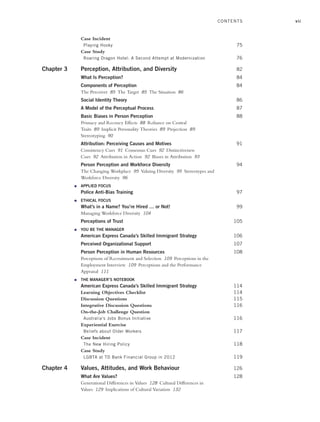
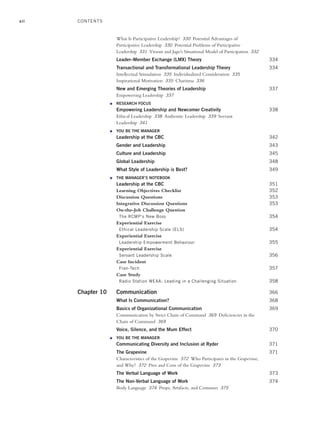
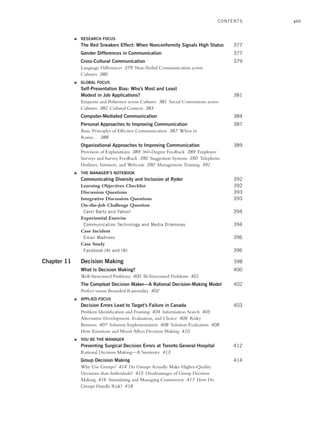
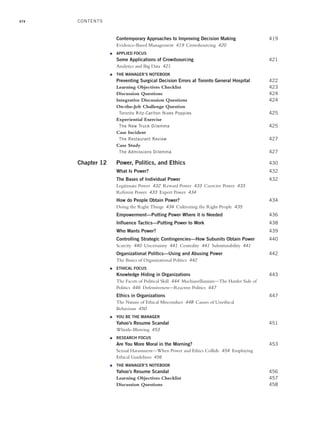
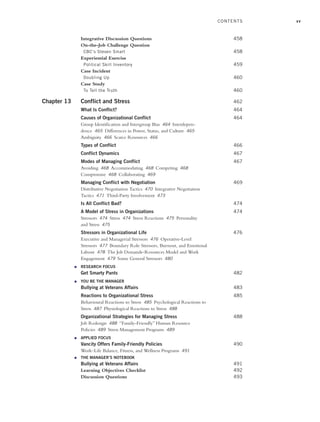

![FOOTNOTES
[1] The party consisted of the Duke of Sutherland, the Marquis of
Stafford, M.P., Mr. Knowles, M.P., Directors L. & N. W. R., Mr.
Bickersteth, Deputy Chairman L. & N. W. R., Mr. O. L. Stephen,
Mr. G. Crosfield, Directors L. & N. W. R., Mr. H. Crosfield, Auditor
L. & N. W. R., Mr. Neale, Superintendent L. & N. W. R., and Mr.
Wright, the Duke's Private Secretary. Major-General Sir Henry and
Lady Green, who were about to visit Canada, joined the party on
the invitation of the Duke of Sutherland in London, and I
embarked on board the "Gallia" at Queenstown, having left
London the previous week to see some members of my family in
the County Cork.
[2] 'My Diary North and South,' vol. i. p. 17. Bradbury and Evans,
London, 1863.
[3] At starting, the party formed a common purse, which was
placed in the hands of Mr. Neale, and a most excellent Chancellor
of the Exchequer he proved from our departure to cross the
Atlantic till he left us to return to England.
[4] "The Present State of His Majesties Isles and Territories in
America, &c. London: Printed by H. Clark, for Dorman Newman,
at the King's Arms, in the Poultry, 1687."
[5] It is under the impression of the sad event which has caused
the world to take such a profound interest in the President's life
that I transcribe the record of the moment.
[6] General Burnside, I regret to see, died since our return to
England.
[7] "Where they got drunk."](https://image.slidesharecdn.com/2012-250410065200-c8c77d55/85/eBook-PDF-Organizational-Behaviour-Understanding-Managing-10th-47-320.jpg)
![[8] "This great river, the St. Lawrence, has received different
names in different parts of its course. Between Lakes Superior
and Huron it is called the St. Mary, between Lakes Huron and Erie
the St. Clair and Detroit, between Lake Erie and Ontario the
Niagara, between Lake Ontario and the sea the St. Lawrence."—
Keith Johnston, Lovell's Gazetteer, Bevan's 'Modern Geography
Manual,' Murray, &c.](https://image.slidesharecdn.com/2012-250410065200-c8c77d55/85/eBook-PDF-Organizational-Behaviour-Understanding-Managing-10th-48-320.jpg)