Read Anytime AnywhereEasy Ebook Downloads at ebookluna.com
(eBook PDF) Organizational Behavior 8th Edition
https://ebookluna.com/product/ebook-pdf-organizational-
behavior-8th-edition/
OR CLICK HERE
DOWLOAD EBOOK
Visit and Get More Ebook Downloads Instantly at https://ebookluna.com
2.
Instant digital products(PDF, ePub, MOBI) available
Download now and explore formats that suit you...
(eBook PDF) Organizational Behavior 7th Edition
https://ebookluna.com/product/ebook-pdf-organizational-behavior-7th-
edition/
ebookluna.com
Organizational Behavior, 13th Edition (eBook PDF)
https://ebookluna.com/product/organizational-behavior-13th-edition-
ebook-pdf/
ebookluna.com
Organizational Behavior 17th Edition (eBook PDF)
https://ebookluna.com/product/organizational-behavior-17th-edition-
ebook-pdf/
ebookluna.com
Organizational Behavior 18th Edition (eBook PDF)
https://ebookluna.com/product/organizational-behavior-18th-edition-
ebook-pdf/
ebookluna.com
viii Contents
Connect Self-Assessment3.2: How Much General Self-
Efficacy Do You Have? 68
Connect Self-Assessment 3.3: What Is Your Locus of
Control? 69
The Social Self 69
Self-Concept and Organizational Behavior 70
Perceiving the World around Us 70
Global Connections 3.1: Confirmation Bias Leads to False
Arrests 72
Perceptual Organization and Interpretation 72
Connect Self-Assessment 3.4: How Much Perceptual
Structure Do You Need? 72
Specific Perceptual Processes and Problems 73
Stereotyping in Organizations 73
Global Connections 3.2: Perceptual Barriers to Women on
Corporate Boards 76
Attribution Theory 77
Self-Fulfilling Prophecy 79
Other Perceptual Effects 80
Improving Perceptions 81
Awareness of Perceptual Biases 81
Improving Self-Awareness 81
Debating Point: Do Diversity Programs Actually Reduce
Perpetual Biases? 82
Meaningful Interaction 83
Connect Self-Assessment 3.5: How Strong Is Your
Perspective Taking (Cognitive Empathy)? 84
Connect Self-Assessment 3.6: How Strong Is Your
Emotional Empathy? 84
Global Mindset: Developing Perceptions across Borders 84
Global Connections 3.3: Encouraging a Global
Mindset in a Global Business 85
Developing a Global Mindset 85
Chapter Summary 86
Key Terms 87
Critical Thinking Questions 87
Case Study: Hy Dairies, Inc. 88
Web Exercise: Diversity and Stereotyping on Display in
Corporate Websites 89
Team Exercise: Personal and Organizational Strategies for
Developing a Global Mindset 89
Chapter 4 Workplace Emotions, Attitudes,
and Stress 90
Emotions in the Workplace 92
Connect Self-Assessment 4.1: What Is Your Emotional
Personality? 92
Types of Emotions 92
Emotions, Attitudes, and Behavior 93
Cognitive Dissonance 96
Connect Self-Assessment 2.4: Are You a Sensing or
Intuitive Type? 43
Debating Point: Should Companies Use Personality Tests
to Select Job Applicants? 44
Values in the Workplace 45
Types of Values 45
Connect Self-Assessment 2.5: What Are Your Dominant
Values? 47
Values and Individual Behavior 47
Values Congruence 48
Global Connections 2.2: Values Congruence Generates
Bags of Enthusiasm and Intent 48
Ethical Values and Behavior 48
Three Ethical Principles 49
Moral Intensity, Moral Sensitivity, and Situational
Influences 49
Global Connections 2.3: Alcoa Executive Sets Ethical
Standard in Russia 50
Supporting Ethical Behavior 51
Values across Cultures 51
Individualism and Collectivism 52
Connect Self-Assessment 2.6: How Much Do You Value
Individualism and Collectivism? 53
Power Distance 53
Global Connections 2.4: Cross-Cultural Hiccups at Beam
Suntory 53
Connect Self-Assessment 2.7: What Is Your Level of Power
Distance? 54
Uncertainty Avoidance 54
Achievement-Nurturing Orientation 54
Caveats about Cross-Cultural Knowledge 54
Cultural Diversity in the United States 55
Chapter Summary 55
Key Terms 56
Critical Thinking Questions 56
Case Study: SNC-Lavalin Group Inc. 57
Class Exercise: Test Your Knowledge of Personality 58
Class Exercise: Personal Values Exercise 60
Team Exercise: Ethics Dilemma Vignettes 60
Chapter 3 Perceiving Ourselves and
Others in Organizations 62
Self-Concept: How We Perceive Ourselves 64
Self-Concept Complexity, Consistency,
and Clarity 64
Connect Self-Assessment 3.1: How Much Does Work
Define Your Self-Concept? 65
Self-Enhancement 66
Self-Verification 67
Self-Evaluation 68
8.
Contents ix
Chapter 5Foundations of Employee
Motivation 120
Global Connections 5.1: DHL Express Employees
Get Engaged 122
Employee Engagement 122
Employee Drives and Needs 123
Individual Differences in Needs 124
Maslow’s Needs Hierarchy Theory 124
Connect Self-Assessment 5.1: How Strong Are Your
Growth Needs? 126
Intrinsic and Extrinsic Motivation 126
Learned Needs Theory 127
Connect Self-Assessment 5.2: How Strong Are Your
Learned Needs? 128
Four-Drive Theory 129
Expectancy Theory of Motivation 130
Expectancy Theory in Practice 131
Organizational Behavior Modification and Social
Cognitive Theory 133
Organizational Behavior Modification 133
Global Connections 5.2: AirBaltic Motivates
Employee Involvement and Learning with
Gamification 135
Social Cognitive Theory 136
Goal Setting and Feedback 137
Connect Self-Assessment 5.3: What Is Your Goal
Orientation? 138
Characteristics of Effective Feedback 138
Sources of Feedback 139
Evaluating Goal Setting and Feedback 140
Organizational Justice 140
Equity Theory 140
Debating Point: Does Equity Motivate More Than
Equality? 141
Connect Self-Assessment 5.4: How Sensitive Are You to
Inequities? 143
Procedural Justice 144
Chapter Summary 144
Key Terms 145
Critical Thinking Questions 146
Case Study: Predicting Harry’s
Work Effort 146
Case Study: Cincinnati Super Subs 147
Class Exercise: Needs Priority Exercise 148
Class Exercise: The Learning Exercise 149
Team Exercise: Bonus Decision Exercise 150
Debating Point: Is Having Fun at Work Really a Good
Idea? 97
Emotions and Personality 97
Managing Emotions at Work 98
Emotional Display Norms across
Cultures 98
Emotional Dissonance 98
Global Connections 4.1: Learning to Express Positive
Emotions at Aeroflot 99
Emotional Intelligence 99
Connect Self-Assessment 4.2: How
Well Do You Recognize and Regulate
Emotions? 100
Emotional Intelligence Outcomes and
Development 101
Job Satisfaction 102
Job Satisfaction and Work Behavior 103
Job Satisfaction and Performance 104
Job Satisfaction and Customer
Satisfaction 104
Job Satisfaction and Business Ethics 106
Organizational Commitment 106
Connect Self-Assessment 4.3: How Committed Are You to
Your School? 106
Consequences of Affective and Continuance
Commitment 106
Building Organizational Commitment 107
Work-Related Stress and Its Management 108
Connect Self-Assessment 4.4: How Stressed
Are You? 109
General Adaptation Syndrome 109
Consequences of Distress 109
Stressors: The Causes of Stress 110
Global Connections 4.2: Chronic Work Overload in
China 111
Individual Differences in Stress 112
Connect Self-Assessment 4.5: Are You a
Workaholic? 112
Managing Work-Related Stress 113
Connect Self-Assessment 4.6: How Do You Cope with
Stressful Situations? 115
Chapter Summary 115
Key Terms 116
Critical Thinking Questions 116
Case Study: Diana’s Disappointment: The Promotion
Stumbling Block 117
Class Exercise: Strengths-Based
Coaching 118
Team Exercise: Ranking Jobs on Their Emotional
Labor 119
9.
x Contents
Connect Self-Assessment6.4: Do You Have a Proactive
Personality? 175
Chapter Summary 175
Key Terms 176
Critical Thinking Questions 176
Case Study: Yakkatech, Inc. 177
Team Exercise: Is Student Work Enriched? 178
Chapter 7 Decision Making and
Creativity 180
Rational Choice Decision Making 182
Rational Choice Decision-Making Process 182
Problems with Rational Choice Decision
Making 184
Identifying Problems and Opportunities 184
Problems with Problem Identification 184
Identifying Problems and Opportunities More
Effectively 186
Searching for, Evaluating, and Choosing
Alternatives 186
Problems with Goals 187
Problems with Information Processing 187
Problems with Maximization 189
Evaluating Opportunities 190
Emotions and Making Choices 190
Intuition and Making Choices 191
Connect Self-Assessment 7.1: What Is Your Preferred
Decision-Making Style? 192
Making Choices More Effectively 192
Implementing Decisions 193
Evaluating Decision Outcomes 194
Escalation of Commitment 194
Global Connections 7.1: Escalation of Commitment
Produces a White Elephant in Queensland 195
Evaluating Decision Outcomes More Effectively 195
Creativity 196
The Creative Process 196
Connect Self-Assessment 7.2: How Well Do You Engage in
Divergent Thinking? 197
Characteristics of Creative People 198
Connect Self-Assessment 7.3: Do You Have a Creative
Personality? 199
Organizational Conditions Supporting
Creativity 199
Activities That Encourage Creativity 200
Employee Involvement in Decision Making 202
Benefits of Employee Involvement 202
Global Connections 7.2: Brasilata, the Ideas Company 203
Contingencies of Employee Involvement 203
Chapter 6 Applied Performance
Practices 152
The Meaning of Money in the Workplace 154
Connect Self-Assessment 6.1: What Is Your Attitude
toward Money? 154
Financial Reward Practices 155
Membership- and Seniority-Based Rewards 155
Global Connections 6.1: Mega Reward for Tiens Group
Employees 156
Job Status–Based Rewards 156
Competency-Based Rewards 157
Performance-Based Rewards 157
Improving Reward Effectiveness 159
Debating Point: Is It Time to Ditch the Performance
Review? 160
Link Rewards to Performance 160
Ensure That Rewards Are Relevant 161
Use Team Rewards for Interdependent Jobs 161
Ensure That Rewards Are Valued 161
Watch Out for Unintended Consequences 161
Global Connections 6.2: When Rewards
Go Wrong 162
Job Design Practices 162
Job Design and Work Efficiency 162
Scientific Management 163
Problems with Job Specialization 164
Job Design and Work Motivation 165
Core Job Characteristics 166
Critical Psychological States 166
Individual Differences 167
Social and information Processing Job Characteristics 167
Job Design Practices That Motivate 168
Job Rotation 168
Job Enlargement 169
Job Enrichment 169
Empowerment Practices 170
Connect Self-Assessment 6.2: Are You Empowered as a
Student? 170
Supporting Empowerment 171
Global Connections 6.3: Svenska Handelsbanken’s
Branch-Level Empowerment 171
Self-Leadership Practices 172
Self-Leadership Strategies 172
Connect Self-Assessment 6.3: How Well Do You Practice
Self-Leadership? 174
Effectiveness of Self-Leadership 174
Personal and Situational Predictors of
Self-Leadership 175
xii Contents
Connect Self-Assessment10.2: What Is Your Approach to
Influencing Coworkers? 291
Types of Influence Tactics 291
Consequences and Contingencies of Influence
Tactics 295
Organizational Politics 296
Connect Self-Assessment 10.3: How Politically Charged Is
Your School? 296
Global Connections 10.3: Playing Politics with the
Vacation Schedule 297
Minimizing Organizational Politics 297
Connect Self-Assessment 10.4: How Machiavellian
Are You? 298
Chapter Summary 298
Key Terms 299
Critical Thinking Questions 299
Case Study: Resonus Corporation 300
Team Exercise: Deciphering the Network 301
Team Exercise: Managing Your Boss 301
Chapter 11 Conflict and Negotiation in the
Workplace 302
The Meaning and Consequences of Conflict 304
Is Conflict Good or Bad? 304
The Emerging View: Task and Relationship
Conflict 306
Separating Task from Relationship Conflict 307
Conflict Process Model 308
Structural Sources of Conflict in
Organizations 308
Incompatible Goals 309
Differentiation 309
Interdependence 309
Scarce Resources 310
Ambiguous Rules 310
Communication Problems 310
Interpersonal Conflict-Handling Styles 311
Connect Self-Assessment 11.1: What Is Your Preferred
Conflict-Handling Style? 312
Choosing the Best Conflict-Handling
Style 312
Cultural and Gender Differences in
Conflict-Handling Styles 314
Structural Approaches to Conflict
Management 314
Emphasizing Superordinate Goals 314
Reducing Differentiation 315
Improving Communication and Mutual
Understanding 315
Connect Self-Assessment 9.1: Are You an Active
Listener? 268
Improving Communication throughout the
Hierarchy 268
Workspace Design 268
Internet-Based Organizational Communication 268
Direct Communication with Top Management 269
Communicating through the Grapevine 270
Grapevine Characteristics 270
Grapevine Benefits and Limitations 270
Debating Point: Should Management Use the Grapevine to
Communicate to Employees? 271
Chapter Summary 271
Key Terms 272
Critical Thinking Questions 272
Case Study: Silver Lines: Challenges in Team
Communication 273
Team Exercise: Cross-Cultural Communication
Game 275
Chapter 10 Power and Influence in the
Workplace 276
The Meaning of Power 278
Sources of Power in Organizations 280
Legitimate Power 280
Global Connections 10.1: Deference to Authority Leads
People to the Extreme 281
Reward Power 282
Coercive Power 282
Expert Power 282
Referent Power 282
Contingencies of Power 284
Substitutability 284
Centrality 285
Debating Point: How Much Power Do CEOs
Really Possess? 285
Visibility 286
Discretion 286
The Power of Social Networks 286
Connect Self-Assessment 10.1: Do You Have a Guanxi
Orientation? 287
Social Capital and Sources of Power 287
Global Connections 10.2: Energy Company Improves
Productivity through Social Networks 287
Gaining Power through Social Networks 288
Consequences of Power 290
Influencing Others 290
12.
Contents xiii
Global Connections11.1: L’Oréal Canada Improves
Mutual Understanding across Generations 316
Reducing Interdependence 316
Increasing Resources 317
Clarifying Rules and Procedures 317
Third-Party Conflict Resolution 317
Choosing the Best Third-Party Intervention
Strategy 318
Resolving Conflict through Negotiation 319
Distributive versus Integrative Approaches to
Negotiation 319
Preparing to Negotiate 320
The Negotiation Process 321
The Negotiation Setting 324
Gender and Negotiation 325
Chapter Summary 326
Key Terms 327
Critical Thinking Questions 327
Case Study: Elaine’s Challenging Experience 328
Class Exercise: The Contingencies of Conflict Handling 329
Team Exercise: Kumquat Conflict Role Play 332
Chapter 12 Leadership in Organizational
Settings 334
What Is Leadership? 336
Shared Leadership 336
Global Connections 12.1: EllisDon: The Leaderful
Construction Company 337
Transformational Leadership Perspective 337
Develop and Communicate a Strategic Vision 338
Global Connections 12.2: Lasvit’s Vision of Breathtaking
Light and Design 338
Model the Vision 340
Encourage Experimentation 340
Build Commitment toward the Vision 340
Connect Self-Assessment 12.1: What Are Your
Transformational Leadership Tendencies? 340
Transformational Leadership and Charisma 341
Global Connections 12.3: Tencent’s Uncharismatic
Tranformational Leader 341
Evaluating the Transformational Leadership Perspective 342
Managerial Leadership Perspective 342
Task-Oriented and People-Oriented Leadership 343
Connect Self-Assessment 12.2: What Is Your Preferred
Managerial Leadership Style? 344
Servant Leadership 344
Path–Goal Leadership Theory 345
Other Managerial Leadership Theories 347
Leadership Substitutes 349
4
Implicit Leadership Perspective 349
Prototypes of Effective Leaders 349
The Romance of Leadership 350
Global Connections 12.4: Semco CEO
Warns against the Romance of Charismatic
Leadership 350
Connect Self-Assessment 12.3: Do Leaders Make a
Difference? 350
Personal Attributes Perspective of Leadership 351
Authentic Leadership 353
Debating Point: Should Leaders Really Be
Authentic All the Time? 354
Personal Attributes Perspective Limitations
and Practical Implications 354
Cross-Cultural and Gender Issues in Leadership 355
Gender and Leadership 355
Chapter Summary 356
Key Terms 357
Critical Thinking Questions 357
Case Study: A Window on Life 358
Team Exercise: Leadership Diagnostic Analysis 359
ORGANIZATIONAL
PROCESSES 360
Chapter 13 Designing
Organizational Structures 360
Division of Labor and Coordination 362
Division of Labor 362
Coordination of Work Activities 363
Elements of Organizational Structure 365
Span of Control 365
Global Connections 13.1: BBC Further Flattens the
Hierarchy 367
Centralization and Decentralization 369
Debating Point: Should Organizations Cut Back Middle
Management? 369
Formalization 369
Mechanistic versus Organic Structures 370
Connect Self-Assessment 13.1: Which Organizational
Structure Do You Prefer? 371
Forms of Departmentalization 371
Simple Structure 371
Functional Structure 371
Global Connections 13.2: Chapman’s Ice Cream Grows Its
Organizational Structure 372
Divisional Structure 373
Source: Tim Eulitz/Wikimedia
13.
xiv Contents
Changing andStrengthening Organizational
Culture 401
Actions of Founders and Leaders 401
Align Artifacts with the Desired Culture 402
Introduce Culturally Consistent Rewards and
Recognition 402
Support Workforce Stability and Communication 403
Use Attraction, Selection, and Socialization
for Cultural Fit 404
Global Connections 14.1: Spinning the
Wheel for Culture Fit 404
Organizational Socialization 404
Learning and Adjustment Process 405
Psychological Contracts 405
Stages of Organizational Socialization 406
Global Connections 14.2: Connected Socialization
at trivago 407
Improving the Socialization Process 408
Chapter Summary 409
Key Terms 409
Critical Thinking Questions 410
Case Study: Hillton’s Transformation 410
Team Exercise: Organizational Culture
Metaphors 411
Class Exercise: Diagnosing Corporate Culture
Proclamations 413
Chapter 15 Organizational Change 414
Lewin’s Force Field Analysis Model 416
Understanding Resistance to Change 418
Why Employees Resist Change 419
Connect Self-Assessment 15.1: Are You Ready for
Change? 419
Unfreezing, Changing, and Refreezing 421
Creating an Urgency for Change 421
Global Connections 15.1: Panasonic
Generates an Urgency for Change by
Revealing the Truth 422
Connect Self-Assessment 15.2: Are You Tolerant of
Change? 423
Reducing the Restraining Forces 423
Refreezing the Desired Conditions 425
Global Connections 15.2: Communicate, Involve, or
Change Your People 426
Leadership, Coalitions, and Pilot Projects 426
Transformational Leadership and Change 426
Coalitions, Social Networks, and Change 427
Global Connections 13.3: Toyota’s Evolving
Divisional Structure 374
Team-Based Structure 375
Global Connections 13.4: Haier Group’s Team-Based
Organizational Structure 376
Matrix Structure 376
Global Connections 13.5: Matrix Structure Troubles at
Hana Financial Group 378
Network Structure 379
Contingencies of Organizational Design 380
External Environment 380
Organizational Size 381
Technology 382
Connect Self-Assessment 13.2: Does
Your Job Require an Organic or Mechanistic
Structure? 382
Organizational Strategy 382
Chapter Summary 383
Key Terms 383
Critical Thinking Questions 384
Case Study: Merritt’s Bakery 384
Team Exercise: The Club Ed Exercise 385
Chapter 14 Organizational Culture 386
Elements of Organizational Culture 388
Espoused versus Enacted Values 389
Content of Organizational Culture 390
Connect Self-Assessment 14.1: Which Corporate Culture
Do You Prefer? 391
Organizational Subcultures 391
Deciphering Organizational Culture through
Artifacts 391
Organizational Stories and Legends 392
Organizational Language 392
Rituals and Ceremonies 393
Physical Structures and Symbols 394
Is Organizational Culture Important? 395
Meaning and Potential Benefits of a
Strong Culture 395
Contingencies of Organizational Culture and
Effectiveness 396
Debating Point: Is Corporate Culture an Overused
Phrase? 398
Organizational Culture and Business Ethics 398
Merging Organizational Cultures 399
Bicultural Audit 399
Strategies for Merging Different Organizational
Cultures 399
14.
Contents xv
Global Connections15.3: Trailblazing Viral Change at
RSA Insurance 428
Pilot Projects and Diffusion of Change 428
Four Approaches to Organizational Change 430
Action Research Approach 430
Debating Point: What’s the Best Speed for
Organizational Change? 431
Appreciative Inquiry Approach 432
Global Connections 15.4: Appreciative Inquiry Guides
Leadership at Toronto Western Hospital 434
Large Group Intervention Approach 434
Parallel Learning Structure Approach 435
Cross-Cultural and Ethical Issues in Organizational
Change 435
Organizational Behavior: The Journey Continues 436
Chapter Summary 436
Key Terms 437
Critical Thinking Questions 437
Case Study: TransAct Insurance Corporation 438
Team Exercise: Strategic Change Incidents 439
ADDITIONAL CASES
Case 1: A Mir Kiss? 440
Case 2: Arctic Mining Consultants 441
Case 3: From REO to Nuclear to Nucor 443
Case 4: Going to the X-Stream 445
Case 5: Keeping Suzanne Chalmers 448
Case 6: The Regency Grand Hotel 449
Case 7: Simmons Laboratories 450
Case 8: Tamarack Industries 454
Case 9: The Outstanding Faculty Award 454
Case 10: The Shipping Industry Accounting Team 455
Case 11: Vêtements Ltée 456
Appendix A
Theory Building and Systematic Research Methods 457
Endnotes EN1
Organization Index I1
Name Index I5
Glossary/Subject Index I28
xvi Contents
xvi
Welcome tothe exciting world of organizational behavior! Knowledge is replacing infra-
structure. Social media and virtual teams are transforming the way employees work to-
gether. Values and self-leadership are replacing command-and-control management.
Companies are looking for employees with emotional intelligence and effective team-
work skills, not just technical smarts.
Organizational Behavior, Eighth Edition, is written in the context of these emerging
workplace realities. This edition explains how emotions are the foundation of employee
motivation, attitudes, and decisions; how social networks generate power and shape
communication patterns; how self-concept influences individual behavior, team cohe-
sion, and leadership; and how adopting a global mindset has become an important
employee characteristic in this increasingly interconnected world. This book also
presents the reality that organizational behavior is not just for managers; it is relevant and
valuable to anyone who works in and around organizations.
Linking Theory with Reality
Every chapter of Organizational Behavior is filled with examples to make OB knowledge
more meaningful as well as to illuminate the relevance and excitement of this field. These
stories about real people and organizations translate academic theories into useful knowl-
edge and real-life applications. For example, we describe how employees at Airbnb, the
San Francisco–based online vacation accommodation company, are
intrinsically motivated
through autonomy and personal growth; how John Dean, executive chair of Hawaii’s
Central Pacific Bank, helped his executive team work together more effectively by learning
about each other’s personalities; how easyJet CEO Carolyn McCall revived the discount
airline through transformational leadership behaviors and effective leadership skills; how
police forces in San Diego and Baltimore are improving officers’ interpersonal skills
through emotional intelligence training; and how David Sacks (cofounder of Yammer and
one of PayPal’s earliest executives) applied change leadership practices to transform
Silicon Valley start-up Zenefits into a more compliance-driven company.
These real-life stories, which the authors personally selected and incorporated into this
book, appear in many forms. Every chapter is filled with photo captions and in-text anec-
dotes about work life. Global Connections features “connect” OB concepts with events in
real-world companies around the planet. Case studies in each chapter also connect OB
concepts to the emerging workplace realities. These anecdotes and detailed descriptions
discuss large and small organizations around the world and in a wide range of industries.
Global Focus
From its first edition, this book has been crafted around the reality of increasing global-
ization. The Eighth Edition continues this global focus by introducing the theme in the
first chapter and by discussing global and cross-cultural issues in many other chapters.
Furthermore, every chapter includes truly global examples, not just how American com-
panies operate in other parts of the world. For example, we describe how New Zealand
drinks manufacturer Frucor Beverages maintains a highly engaged workforce; how
China’s e-commerce giant Alibaba Group has nurtured a strong organizational culture;
how Buurtzorg Nederland organized its 8,000 professionals into self-directed teams to
become one of the world’s best-managed community health care organizations; how In-
fosys, one of India’s leading technology companies, is improving employee creativity
and decision making through design thinking principles and practices; how the president
of Panasonic Corporation created an urgency for change at the Japanese conglomerate;
and how trivago, the German-based hotel metasearch company, puts considerable
resources into the employee socialization process.
preface
17.
Contemporary Theory Foundation
Vividreal-world examples and practices are valuable only if they are connected to good
theory. Organizational Behavior has developed a reputation for its solid foundation in con-
temporary and classic research and writing. This evidence-based foundation is apparent
from the number and quality of literature cited in each chapter, including dozens of articles,
books, and other sources. The most recent literature receives thorough coverage, resulting
in what we believe is the most up-to-date organizational behavior textbook available. These
references also reveal that we reach out to marketing, information management, human
resource management, and other disciplines for new ideas. This book is rigorously focused
on information that readers value, namely OB knowledge and practices. Consequently,
with a few classic exceptions, we avoid writing a “who’s who” book; most scholars are
named in the references, not in the main text.
One of the driving forces for writing Organizational Behavior is to provide a more
responsive conduit for emerging OB knowledge to reach students, practitioners, and fellow
scholars. To its credit, Organizational Behavior is apparently the first major OB book to
discuss the full self-concept model (not just core self-evaluation), workplace emotions,
social identity theory, global mindset, four-drive theory, predictors of moral intensity,
specific elements of social networks, appreciative inquiry, affective events theory (but
without the jargon), somatic marker hypothesis (also without the jargon), virtual teams,
mindfulness in ethical behavior, Schwartz’s values model, employee engagement, learning
orientation, social and information processing characteristics of job design, and several
other groundbreaking topics. This edition continues this leadership by introducing the
latest knowledge on design thinking, self-concept distinctiveness versus inclusion, and the
four factors to consider when selecting the best communication channel.
Organizational Behavior Knowledge
for Everyone
Another distinctive feature of Organizational Behavior is that it is written for everyone
in organizations, not just managers. The philosophy of this book is that everyone who
works in and around organizations needs to understand and make use of organizational
behavior knowledge. People throughout the organization—systems analysts, production
employees, accounting professionals—are taking on more responsibilities as companies
remove layers of management and give the rest of us more autonomy and accountability
for our work outcomes. This book helps everyone make sense of organizational behavior,
and provides the conceptual tools to work more effectively in the workplace.
Active Learning and Critical Thinking Support
We teach organizational behavior, so we understand how important it is to use a textbook
that offers deep support for active learning and critical thinking. Business school
accreditation associations also emphasize the importance of the learning experience,
which further reinforces our attention on classroom activities. This Eighth Edition in-
cludes more than two dozen case studies in various forms and levels of complexity, as
well as four dozen self-assessments, most of which have been empirically tested and
validated. This book is also a rich resource for in-class activities, some of which are not
available in other organizational behavior books, such as the Personal Values Exercise,
Employee Involvement Cases, Deciphering the (Social) Network, Test Your Knowledge
of Personality, and the Cross-Cultural Communication Game.
Preface xvii
18.
Changes to theEighth Edition
Organizational Behavior, Eighth Edition, incorporates numerous improvements, thanks
to reviews by dozens of organizational behavior instructors across several countries,
along with our regular practice of scanning the diverse literature for new ideas that have
gained sufficient evidential support. Almost every chapter in this edition has noticeable
updates and revisions, but the most substantial changes have occurred in Chapter 1
(introduction to OB), Chapter 7 (decision making and creativity), Chapter 9 (communi-
cation), and Chapter 11 (conflict and negotiation).
Together with dozens of conceptual improvements, this edition replaces most exam-
ples with new real-world stories that satisfy our criteria of being recent, interesting, and
relevant. Almost all of the chapter-opening case studies are new; only two opening vi-
gnettes remain from the previous edition, both of which have been updated. Most cap-
tioned photos and Global Connections features are new or updated. We have also added
dozens of new in-text examples as well as several new case studies for class discussion
or course assignments. A unique strength of Organizational Behavior, Eighth Edition
(and previous editions), is that the authors personally researched and wrote all of the
conceptual content, in-text examples, captioned photos, and features. This provides bet-
ter integration of the knowledge and ensures that the examples are truly relevant and
useful additions to the learning experience.
Here are the main conceptual improvements in Organizational Behavior, Eighth Edition:
• Chapter 1: Introduction to the Field of Organizational Behavior—This chapter
has been substantially updated, revised, and reorganized from the previous edition.
We have incorporated an integrated model of organizational behavior to help
students visualize the relationship among the main concepts throughout this book.
Technological change has been added in the section on contemporary developments
facing organizations. The section on perspectives of organizational effectiveness
has been streamlined and moved to the latter part of the chapter. Most topics have
been rewritten, but particularly the text on the four contemporary developments,
why study OB, and several aspects of organizational effectiveness.
• Chapter 2: Individual Behavior, Personality, and Values—Several topics in this
chapter have been updated, particularly coverage of the five-factor model of per-
sonality and work performance, values and individual behavior, moral sensitivity,
and cultural diversity within the United States.
• Chapter 3: Perceiving Ourselves and Others in Organizations—This book apparently
pioneered the full model of self-concept and its relevance to organizational behavior.
This edition further develops this important topic and provides new information
on the opposing motives for distinctiveness and inclusion. The section on stereo-
typing also includes new information about stereotype threat.
• Chapter 4: Workplace Emotions, Attitudes, and Stress—This edition significantly
revises and updates discussion on four key workplace stressors, with new writing
about organizational constraints and interpersonal conflict as stressors. Other parts
of this chapter received minor revision, such as discussion of attitude–behavior
contingencies.
• Chapter 5: Foundations of Employee Motivation—New to this edition is the topic
of intrinsic and extrinsic motivation, as well as the question of whether introducing
extrinsic sources of motivation reduces intrinsic motivation. We have also refined
the writing on four-drive theory, drives and needs, Maslow’s needs hierarchy, and
feedback.
• Chapter 6: Applied Performance Practices—The previous edition was among the
first OB books to introduce recent knowledge about the social and information
xviii Preface
19.
processing characteristics ofjobs. This edition further refines that emerging topic.
It also has updated content on the meaning of money, supporting empowerment,
and self-leadership effectiveness.
• Chapter 7: Decision Making and Creativity—This chapter has been substantially
revised and updated in several ways. The emerging topic of design thinking was
briefly introduced in the previous edition, but this chapter now presents the topic
fully as a set of principles and activities to improve creative decision making.
Another area with substantial rewriting is the topic of problems with information
processing when choosing alternatives. Several topics have also received minor
updates, particularly on solution-focused problems, problems with goals, implicit
favorite bias, and satisficing (problems with maximization).
• Chapter 8: Team Dynamics—This edition refines discussion introduced in the
previous edition on the three characteristics that distinguish types of teams. It also
updates and offers more detail about social loafing. This chapter incorporates task
variability and analyzability (introduced in Chapter 6) as task characteristics that
influence the need for teamwork. Several other topics have also been revised, such
as team mental models (as part of team development), team development through
team building, the team cohesion–performance relationship, and brainstorming.
• Chapter 9: Communicating in Teams and Organizations—This edition includes a
complete revision and update on choosing the best communication medium. This
topic now fully discusses four key factors (synchronicity, social presence, social
acceptance, and media richness), along with their associated contingencies to
communication channel selection. This edition further shifts the focus toward
various forms of digital communication (less focus on email alone). It also has
minor revisions on the encoding–decoding process and the benefits of enterprise
social media.
• Chapter 10: Power and Influence in the Workplace—This chapter has a few minor
changes, such as on the topic of nonsubstitutability.
• Chapter 11: Conflict and Negotiation in the Workplace—This edition substantially
reorganizes and updates the entire section on resolving conflict through negotiation.
The new or revised topics include distributive and integrative approaches to bar-
gaining, understanding needs, bargaining zone dynamics, how BATNA increases
bargaining power, the importance of listening, and strategies for making conces-
sions. This edition also introduces recent knowledge about gender and negotiation.
Elsewhere in this chapter, we update coverage on task and relationship conflict,
including further clarification of these concepts, reference to process conflict,
and problems resulting from relationship conflict.
• Chapter 12: Leadership in Organizational Settings—The previous edition sub-
stantially revised and reorganized this chapter. Aside from new examples and
references, this edition has relatively minor changes, notably on the topics of
communicating the vision, evaluating path–goal theory, and the personal attributes
of effective leaders.
• Chapter 13: Designing Organizational Structures—This chapter has minor
revisions, notably on span of control and on the structural contingency of diverse
versus integrated environments.
• Chapter 14: Organizational Culture—Along with replacing most examples and
updating references, this chapter has a number of subtle changes, particularly on
the topics of espoused versus enacted values, content of organizational culture,
types of organizational culture artifacts, the integration strategy for merging
cultures, and how founders and leaders shape and strengthen culture.
• Chapter 15: Organizational Change—The main changes to this chapter are examples
and updated literature references.
Preface xix
20.
xx Contents
Organizational behavioris a fascinating subject. It is also incredibly relevant and valu-
able, which becomes apparent while developing a world-class book such as Organiza-
tional Behavior, Eighth Edition. Throughout this project, we witnessed the power of
teamwork, the excitement of creative thinking, and the motivational force of the vision
that we collectively held as our aspiration. The tight coordination and innovative synergy
was evident throughout this venture. Our teamwork is even more amazing when you con-
sider that most team members on this project are scattered throughout the United States,
and the lead coauthor (Steve) spends most of his time on the other side of the planet!
Executive brand manager Mike Ablassmeir led the development of Organizational
Behavior with unwavering enthusiasm and foresight. Katie Eddy and Tracey Douglas
orchestrated the daily process with superhuman skill and determination, which is par-
ticularly important given the magnitude of this revision, the pressing deadlines, and the
24-hour time zones in which we operated. Jennifer Blankenship, our photo researcher,
continues to amaze us. She tracked down photos that we sought from every corner of
the globe. Jessica Cuevas created a refreshing book design that elegantly incorporated
the writing, exhibits, anecdotes, photos, and many other resources that we pack into this
volume. We also extend our thanks to Sharon O’Donnell for superb copyediting, Christine
Vaughan for leading the production process like a precision timepiece, Judy Bulin for her
work on Connect, Integra for its work on the test bank, Kepos Media for its work on
LearnSmart, and Necco McKinley for her excellent marketing and sales development
work. Thanks to you all. This has been a truly wonderful journey!
Several dozen instructors around the world reviewed parts or all of Organizational
Behavior, Eighth Edition, or related editions in other countries over the past few years.
Their compliments were energizing, and their suggestions significantly improved the
final product. The following people from U.S. colleges and universities provided
the most recent feedback for improvements specifically for this edition:
acknowledgments
Brenda Bradford
Missouri Baptist University
Tristan Davison
Daytona State College
Ruben Delgado
California State Polytechnic University,
Pomona
Steven Elias
New Mexico State University
Jody Fry
Texas A&M Central Texas
Nathan Heller
Tarleton State University
Kendra Ingram
Texas A&M University, Commerce
Avan Jassawalla
SUNY Geneseo
Rusty Juban
Southeastern Louisiana University
Joyce Lopez
Missouri State University
Douglas McCabe
Georgetown University
Grady Meeks
Daytona State College
Angela Murphy
Florida A&M University
Antoinette Phillips
Southeastern Louisiana University
Shaun Pichler
California State University, Fullerton
Vana Prewitt
Mount Olive College
xx
STORY OF SAILOR
SanFrancisco Examiner
If you had done nothing worse than going to sleep in an out-
of-the-way place on a bay steamer and awakening to find
yourself in State’s prison with a fifteen-year sentence hanging
over your head, how would you feel?
John Larsen had such an experience last Friday. He was, and
may yet be, a deckhand on the schooner Mary. He imbibed a
quantity of refreshment on the water front and then hid away in
the steamer Caroline for a quiet nap. He didn’t know that the
Caroline was about to go over to San Quentin with a load of
supplies for the prison. The first thing he did know was that a
husky guard with a big gun was prodding him into wakefulness
and saying hard things. Captain Smith of the Caroline was
standing near.
“Yes, it’s that fifteen-year man, all right,” the guard said, as
he gave Larsen a stiff jolt under the ribs.
The sleepy sailor was yanked out into daylight and taken
ashore, where he saw only prison walls and men in stripes all
about him. He was marched to the office of the captain of the
guard, the man beside him meanwhile commenting on the fine
disguise Larsen wore. The poor sailor was dumb from fright,
and could not make an intelligible protest. But when the officials
looked him over, they laughed and told the guard to throw him
out. He was not the man.
“Ay scart lak djefoul ven woke oop in yale,” said Larsen
yesterday after he had got back from San Quentin by ferry. “Ay
ban sleep on bale yute in Caroline ven gun stick me in ribs an’
ay see mens vid stripes all aroond, an’ man vid gun say ay ban
fifteen-year faller. You bat heart went in boots and ay ban sick.
23.
Ven man stickgun in ribs an’ say ‘Git!’ You bat ay coom quick
avay. No more sleep in Caroline on bale yute, you bat!”
A STOWAWAY
Boston Journal
Abraham Grabau wanted to get into the United States mighty
badly.
He was poor and had never had a chance. But he had read a
lot about America and thought how fine it would be to come
here and retrieve himself and really do something worth while
before it was too late.
So at Port Said he hid away on board the steamship St.
Patrick, which was bound for Boston from Yokohama.
Of course he knew it wasn’t right to become a stowaway, but
he couldn’t see what real harm there was in it. Besides, he
hadn’t any money and it seemed to be the only thing that was
left. And he never dreamed that the great free country beyond
the seas often keeps worthy men outside its borders just
because they haven’t the price of a ticket.
But he learned many things that worried him from the St.
Patrick’s crew during the passage, after he had made himself
known, when he couldn’t starve any longer, and had been put to
work.
He was told that an alien stowaway has a mighty poor show
of “getting by” with Uncle Sam—that, in fact, he hadn’t a
chance on earth of being landed here. It nearly broke his heart,
for there seemed to be no way out. But he finally found one—
24.
and why not?It was as good a way as any other. And, besides,
he might win.
While the St. Patrick lay at anchor off quarantine Thursday
night, Abraham slipped off his shoes and stole on deck
noiselessly. He placed his shoes on deck alongside the railing
and pulled down a life-buoy.
He gave a last look toward the lights that were twinkling on
shore and dropped into the water.
Next morning the shoes were found near where the life-buoy
should have been.
Of course the ship was searched, but Abraham was missing.
Immigration officials at Long Wharf and the harbor police were
notified of the escape. But there was no trace of the stowaway.
Yesterday the Hebrew’s daring act was talked of admiringly in
many quarters, and the hope was expressed that he had won.
There is a slight chance that he was picked up and carried to
safety. But those best informed declare that the little Hebrew
has beyond a doubt reached the Port of Missing Men, where
entry is never refused, even to the friendless and the hopeless
and the forlorn.
SEARCH FOR LOST TREASURES
New York Sun
In the gray hours before the dawn this morning, when all
Ulmer Park sleeps and nothing is heard along the reaches of
Marine Basin but the crowing of the restless cocks, will slip from
her moorings a low, rakish craft. With hawseholes muffled and
25.
silence cloths onport and starboard anchor, hatches muzzled
and even the kick of her propeller smothered by a blanket, this
phantom will speed past the clam factories and chowder
distilleries out to the bounding main.
Hush! ’Tis the Mayflower, onetime defender of the America’s
cup, bearing her daring crew of gentleman adventurers down to
the isles of spice and the bloodied seas where Morgan trod
piratical quarterdecks and Teach snicked off the heads of
treasure bearers. Skipper Scull is at the helm, Buck Harrison in
the galley; four more, good men and true, stand in the port
chains and shade their eyes as they scan the waters of
Gravesend Bay for the police boat.
Romance lies behind the horizon and the glint of the rising
sun has the glint of Sir Henry’s gold. For, mark ye well, Skipper
Scull has wrapped in tarpaulin, next to his open front
undershirt, a chart. Red and blue is the chart; it marks a reef in
the Caribbean; it limns in the sea the boundaries of a precious
spot; it tells where lies the English corvette, Good Faith, out of
Santo Domingo City in 1684 with five millions in plate and
minted doubloons in her strong boxes.
But who are these men, tried and found trusty, who sail with
Skipper Scull on the converted yacht Mayflower out of Marine
Basin this morning? Skipper Scull, Harvard, ’98, a venturesome
soul who lived in Tokio many, many months, and who, wishing
to be a war correspondent, finally was allowed to get as near as
forty-five miles from the scene of a battle. Then there are
Gordon Brown, Yale, ’01, who was captain of the football team
that laid Harvard so low in 1900, Stephen Noyes, Harvard, ’03,
H. L. Corbett, Harvard, ’03, Buck Harrison, Harvard, ’04,
fullback, whose name was a terror to all opponents, and Roger
Darby, Harvard, ’05, a tower of strength on the Crimson line in
his time.
26.
Consider this, thatMatsukata, whose father is a Baron in
Japan and holds fief over hundreds of samurai, was offered a
place in the intrepid crew—as cook. Matsukata yearned for
adventure, but he could not so demean himself, and that is why
Buck Harrison of the line holds his place in the galley when the
Mayflower slips out of the Basin this morning.
With the Mayflower steaming out of Gravesend Bay, nose to
the south, there must come a hiatus in this tale, and the curtain
of the past must be lifted, revealing dark and bloody scenes.
CURTAIN
It is a fair day in June, Anno Domini 1684, and the tropical
palms that fringe the beach about Santo Domingo Bay are
nodding in the breeze. [Santo Domingo Bay is used as a
disguise of the real port, which it wouldn’t do to reveal.] All is
astir about the wharf, for the good English corvette, Good Faith,
is sailing this day for Plymouth, laden fair to the gunwales with
plate of price, spoils of cathedrals in Mexico and hard minted
gold in doubloons—and oh, yes, pieces of eight!—that is, the
ransom of cities in Salvador and the Guineas. Spanish gold it is,
torn from the grasp of bleeding men.
A cheer, a roundelay as the anchor comes up, and with sails
bellying and the crosses of St. George and St. Andrew whipping
from the gaff, the Good Faith ploughs her way past the reef and
out to sea.
But wait! From around the bluff beyond the sea gate, which is
hidden from the Good Faith by the rocky headland, come
stealing two long feluccas. The brass of cannon glints from bow
27.
and taffrail; sailsstrain with the wind; the gorgeous banner of
Spain streams from the mainsail peak.
The watchers on the headlands of Santo Domingo City drop
on their knees in prayer at the sight, for are not those two
feluccas the sea vultures of Don Sebastian Fernando Hacienda y
Juan Fernandez, plunderer of towns and pillager of altars?
At gaze stand the citizens of Santo Domingo City as they
watch the feluccas steal into the track of the Good Faith.
Tortured with anxiety are these good folk when they behold the
Good Faith swing about the headland and come into view of the
dastard Spaniards. Now the Good Faith is aware of her peril.
See her crowd the canvas on! See her leap to the tug of the
wind and race for her life down, down the watery way to the
horizon! The feluccas follow fast; they gain yard by yard; still
they gain and yet still.
The horizon rises and swallows up the Good Faith and the
Don’s feluccas, mere dots on the horizon.
Alack, never again did man set eyes on the Good Faith.
Plymouth awaited her in vain; Santo Domingo City sent out
sloops and men-o’-war to search for her. Never again did Don
Sebastian ravage the coasts of Salvador and plunder the
galleons of the Main. Men forgot that there had ever been a
Good Faith or a Don Sebastian.
* * * * *
[Stars here indicate hiatus of 220 years.]
A fisher of sponges, an American fisher of sponges, in sooth,
is sailing his craft about the Caribbean in search of his prey. It is
some years later. It is only a few years ago in fact. A storm
comes roaring out of the Gulf, and the fisher of sponges with his
native fishermen is driven in his cockleshell far, far out of his
28.
course. In thedead of night and the murk of the storm the boat
is piled up on a reef and they rub elbows with death until the
ruddy streaks of dawn come.
Then this fisher of sponges, this American fisher of sponges—
he was also a diver and he helped raise the Merrimac in
Santiago harbor once—looked over the side of his boat and he
saw down about fifteen feet in the blue water the prow of a
ship. Straightway he dived. He came up with pieces of eight
sticking through the cracks of both fists, or maybe it was
doubloons.
Forthwith all of his native fishermen dived, and they came up
with silver and golden coin representing maybe $1,221.34
American, who knows?
They dived again and brought up the ship’s bell. About the
rust eaten rim was graven this motto:
“Good Faith yclept Dom. 1680 Plymouth. Ringeth this Belle
God’s hours and telleyeth man’s life Space.”
Straightway did this American fisher of sponges get him his
sextant and his latitude. He had to guess at the longitude. Then
with the ship’s bell and the pieces of eight he sailed to Jamaica.
There he found one who was interested in his tale. Together
they went to a lawyer, and he recommended them to another
lawyer, whose name is Reginald R. Leaycraft and whose office is
at 129 Pearl street, this city. Many old records in Santo Domingo
City and in England were gone over, so say this fisher of
sponges and his lawyer, and at last the shipping register of the
original Good Faith was discovered. Then they knew of her fatal
journey out of Santo Domingo City on that June afternoon so
long ago, and knew, so say both, of the treasure that was in her
bottom.
29.
Skipper Scull, andhe alone, knows how it was that the
sponge diver happened to meet such an adventurous spirit as
himself here in New York. Yet, hark ye, within a month after the
sponge fisher and Skipper Scull had met fortuitously, all of those
other brave gentlemen and true from Harvard and Yale had met
to form a solemn bond and compact.
This was the bond and compact: That the organization should
be made under the auspices of the Southern Research
Company, a duly registered organization; that the sponge fisher
and his lawyer should have share and share alike with the
others; that the sponge fisher should be one of the party of
discovery, in that he knew best how to interpret the chart that
he had made that blue morning after the storm; and that, chief
of all, Matsukata, the man whose father is a baron in Japan,
should be cook.
All of these conditions, save the last, so recalcitrant did
Matsukata prove, were fulfilled to the letter. Then went the
representatives of the company to Mrs. Eva M. Barker, the
owner of the old cup defender, Mayflower. Five years ago the
old defender had been converted into a sloop with auxiliary
power. The Mayflower was brought around to the Marine Basin
and all sorts of strange stores in boxes and crates were lowered
into her hold. Diving suits flopped upon her decks and grappling
hooks shoved their prongs through burlap sacking.
Skipper Scull was there on the deck of the Mayflower each
day to shoo away the curious and to scowl at the prying. Not a
word would the war correspondent skipper say to the most
veiled interrogations. Until the Mayflower slipped past the
chowder distilleries in this morning’s early light the mystery of
her mission and her bourne remained inviolate.
But Skipper Scull, Buck Harrison and the rest have
overreached themselves in their secretiveness. For know that
30.
over a longglass clinking with ice one sleepy night up at the
Harvard Club on Forty-fourth street one of the sextette of
adventurers revealed the scheme of the expedition. That is why
not even Skipper Scull knows what fell plot is now a-brewing to
rob him of his putative treasure.
This is the plot: Up in Boston lives Alexander Forbes, the
grandson of John Murray Forbes. He is the possessor of the
yacht Merlin. To his ears came the tale of the treasure hunt. Not
long did the grass grow under the Forbes foot. He called
together the following men, known to be desperate pirates: Jim
Field, Harvard, ’03; Donald Gregg, Harvard, ’02; Ralph Page,
Harvard, ’03; Buz Baird, Harvard, ’04, and W. Davis Conrad, also
of Harvard. To them he broached his counter plot, and all
gleefully agreed, if they did not sign a pact with their life blood.
So it will be—and one of these Boston pirates said yesterday
that it cannot but be—that after the Mayflower has gone to her
all but secret destination in the Caribbean and is sailing
homeward, either laden with gold or with experience, the yacht
Merlin will one day stalk out of the horizon and confront her.
The Jolly Roger will fly from the peak of the Merlin and a six
pounder will cough out demand for the Mayflower’s surrender.
The Mayflower will have to heave to and be robbed or go to the
bottom with all of her gallant gentlemen adventurers weltering
in their own blood.
It will be about three weeks hence, so swore this Boston
pirate by book and ring yesterday, that the Merlin will sail on her
fell mission. After that the Spanish Main will roar again and
bloody death will be abroad over the mellifluous waters of the
Gulf stream.
RELIEF SHIP
31.
New York EveningPost
Capt. Pickels—“Pickels of the schooner Cluett,” as they called
him on the Labrador coast—standing on the deck of that stanch
little vessel, which will soon be bucking ice in Baffin Bay, is not
the figure of an Arctic explorer. To the mildly interested visitor to
the East River dock, where his ship was moored, there was
nothing about the square-set skipper in shirt sleeves and straw
hat, watching supplies come aboard, to suggest that he is the
man selected to command the relief expedition which will
search for Donald B. MacMillan, starting to-day. MacMillan set
out from New York just two years ago to find mythical Crocker
Land, and now the American Museum of Natural History, one of
the chief backers of his expedition, is sending Pickels to find
MacMillan.
Both the captain in summer city garb and his little schooner,
dwarfed by the overhanging pier, and not so different to the
unpracticed eye from hundreds of sailing craft loading here,
refused at first to fit into the picture which he painted in simple
language of the months ahead. Within a few weeks the Cluett
will be feeling out open reaches in the ice which is rarely absent
after Nachvak Bay, on the north Labrador coast, is passed,
laying a course almost due north up Davis Strait. Thence to
Melville Bay, near Etah, the MacMillan expedition’s base, it will
be nip and tuck between the Cluett and rapidly descending
winter. She will be late, and, skirting the ever-present “middle
ice” of Baffin Bay, on a course not far off shore, she will be
lucky to reach her objective before the waters close entirely.
And luckier still if she finds MacMillan and his party waiting.
For then there is the chance that, with more good fortune and
able seamanship, Capt. Pickels may be able to bring all hands
out through the thin crust which by September will cover all
those waters. In that event he will have made a season’s record
to be very proud of. What is far more likely—and that is the
32.
reason for thetwo years’ supply of foodstuffs on board the
Cluett—the schooner will nose her way into Melville Bay with
hardly enough time in which to select a winter berth in the ice.
If MacMillan has to be waited for or search made for him, the
long winter will make either task easy. The diminutive,
unpretentious wooden sailing ship which now reeks of oil and
ship stores under the warm sun, will then find herself
encompassed with leagues of ice. Eskimo ice huts will spring up
around her like mushrooms, and in the long Arctic night it would
be difficult to identify the little Cluett with the picture at the foot
of East 21st Street.
But closer acquaintance with Pickels and the Cluett helps
one’s imagination to bridge the gap. Ever since she was built at
Tottenville, some four years ago, for the Grenfell Mission service
on the Labrador coast, Pickels has commanded her. She was
designed for work in northern waters. As the bronze plate in the
captain’s cabin sets forth, she was presented to Dr. Wilfred
Grenfell in July, 1911, by George B. Cluett, of Troy, N. Y. That
she went to sea with purposes other than those of the ordinary
trading schooner, the plate makes plain in these few words:
“The Sea is His and He made It.” The inscription in the brass
band which binds the wheel, “Jesus saith I will make you fishers
of men,” serves to distinguish her from the run of fishing craft
which infest the Labrador waters. But for these symbols of a
higher vocation she is just like them, save that she is much
more stanch.
From stem to stern the Cluett measures 142 feet, and her
beam is 26 feet. Every foot of timber in her is white oak. And
back of the thin steel plate on her bows, where the impact of
ice is concentrated, she can boast about two feet of solid timber.
The outer shell forward is composed of white oak timbers eight
inches thick. Behind them is nearly a foot of timbering, and then
an inner shell of six-inch white oak all stiffened with drift bolts.
The Cluett can be counted on to stand up to the force of her
33.
eighty horse-power keroseneengines, against all but solid ice.
And she has proved it more than once.
That brought the captain to the recital of an achievement
which probably had much to do with the selection by the
Museum authorities of him and his ship for the work in hand.
Making ordinarily about three trips a year as supply ship to the
chain of missions established by the Grenfell Association, it was
no new thing for the Cluett to show her seaworthiness in ice
and dirty weather. But last summer she did something out of the
common. Chartered for a few months by the Carnegie
Institution for magnetic investigations in Hudson’s Bay, she and
Capt. Pickets displayed remarkable facility for edging into ice-
strewn waters and slipping out with promptness.
In a month’s time she made the circuit of Hudson’s Bay,
undeterred by almost constant snow-storms and gales,
frequently traversing untried waterways. She escaped without
misadventure, where a less careful pilot might have lost his
ship. Once the two principal members of the party, the
observers, were swamped in a small boat. Losing instruments
and all their equipment they went five days without food or fire,
and owed their lives to Capt. Pickels’s prompt appearance with
relief. Getting into Hudson’s Bay in mid-summer of last year was
not easy on account of the ice. After cleanly threading Hudson
Strait, the Cluett encountered a Canadian icebreaker, smashed
by the very element she was designed to combat, and breaking
up. As this point was a long way south of his present
destination, Capt. Pickels is mindful of what may be in store for
him this summer. But he regards the MacMillan relief expedition
with as much serenity as if it were one of his regular northern
visits, and with as little timidity as might be expected from a
mariner who has navigated every ocean and circumvented ice in
Bering Sea as successfully as in Grenfell’s Tickle.
34.
Although the provednimbleness of the Cluett leads her
charterers to hope that she may slip into Melville Bay and out
with the rescued MacMillan party in time to get back to New
York in November, the way food supplies have been poured into
her show that no chances are to be taken, in a locality where,
as the captain remarked, “ye can’t fetch stuff from a grocery
’round the corner.’” He shed light upon what for a dozen men
might be considered a two years’ food supply. Some two
thousand pounds of beef, nearly half of it canned and the rest
pickled in brine, and an almost equal quantity of mutton and
pork, formed the backbone of the stores. Beans and potatoes
and barrel on barrel of pilot bread set off this impressive meat
supply, which winter hunting is to vary with fresh steaks and
roasts.
Several hundred pounds of coffee and a hundred of tea,
onions and many gallons of lime juice to ward off scurvy, were
important items; strangely enough, not a particle of chocolate
or cocoa. A comment upon the rather small supply of milk—
condensed, of course—as compared with, for one thing, three
hundred pounds of rolled oats, drew from the hardy captain the
explanation that crews in the North preferred molasses with
their oatmeal, and of molasses he had nearly a hundred gallons.
Perhaps these assurances of creature comfort have had their
attractions. At any rate, Capt. Pickels has been pestered with
would-be passengers who want to make the trip with him or put
in a winter of hunting on Melville Bay. And they were not all
men. One young person from Vassar sent a request. But Capt.
Pickels will have none of them. So that, when he starts on the
last leg of his journey north, with decks piled high with barrels
of kerosene—the Cluett is to be stocked with nearly five
thousand gallons of kerosene and 900 gallons of gasolene for
her engines—the only person aboard beside his crew of eight
hardy Nova Scotians, will be the representative of the Natural
35.
History Museum. Capt.Pickels’s Newfoundland dog “Chum”
completes the list.
SQUIRREL
New York World
Somebody let a squirrel loose in City Hall Park yesterday, or
more likely Saturday night, and as a result that part of the
green grass plot just north of the Nathan Hale statue was the
only busy section in the business district from 2 until 3 o’clock
on the Sabbath. If there was one cat there were thirty. Of all
sizes and conditions they ranged, hailing from Cherry Hill and
other points. Toms, tabbies and kittens were all there, and in
circles they sat about a big tree on which a gilt sign read “Ulmus
Americanus.”
Above, perched in the branches, was Mr. Squirrel. Intently he
looked down at the cats and the crowd of park loungers and
others leaning on the fence and flicked his gray tail saucily at
the feline delegation. One venturesome Tom scooted up the
tree, but when he began to crawl out on the branch on which
“Brer” Squirrel sat the latter lightly jumped to an adjoining tree,
not labelled, and chattered back at Tomcatus Cherryhillibus.
The other cats with uplifted eyes watched the flight of the
squirrel and camped under the second tree, while the crowd of
human onlookers increased. The siege was getting interesting.
“I wonder will the cats get him, Jimmie,” said one young
woman, but the squirrel only kept on scolding to himself.
Not long after a young man in a gray suit stepped over the
fence and stood beneath the tree. He carried a small bag over
36.
one shoulder. Themoment the squirrel saw him he ran down
the tree and perched on the man’s other shoulder. When the
man opened the bag he popped in, and they started off for a
Jersey ferry.
The disgusted cats dispersed and the crowd melted away.
POLICEMEN’S PET
Philadelphia Telegraph
Just as the “joker” tapped 12 o’clock today in the Trenton
avenue and Dauphin street police station, a file of unhelmeted
patrolmen marched silently into the back yard and reverently
placed the remains of “Benny” in his last long resting place.
For a moment they stood sad-eyed, while Bill Tufts, the old
turnkey, softly dropped the earth upon the coffin, and then,
when only a memory marked the spot near the patrol house
where “Benny” slept, they went back to the roll-room and
discussed in whispers the unexpected death.
“Benny” died at 11.20 o’clock, despite the efforts of House
Sergeant Site, who immersed him in fresh water and tried in
every way to restore the fast-ebbing life. But a broken heart
could not thus be appeased, for “Benny’s” heart had
undoubtedly been broken when a younger rival for the
affections of the bluecoats turned up in the station house not
long ago.
Old age might also have contributed toward the death, for
“Benny” was 7½ years old, and his species never exist longer
than seven years, according to Street Sergeant Murdock, who is
well posted on the subject. “Benny” holds the record for age
37.
around the stationhouse. There have been others of his ilk
there constantly for fifteen years, but “Benny” was the longest
liver of the entire crowd.
“Benny” was a fan-tailed goldfish.
ZOO STORY
New York World
This rock shall fly from its firm base as soon as I.
—Hippopotamus Pete.
“He’s a pig-headed brute,” say the keepers in the Bronx Zoo
after they have been up all night watching Pete, who weighs
1,300 pounds—more than four Tafts.
“He’s a wise old guy,” say the keepers admiringly after they
have slept and are wondering at Pete’s sagacity.
Director Hornaday, of the Zoo, and the keepers fondly hope to
remove Pete to-day from his old cage in the antelope house to
his apartment in the new and splendid elephant house. But
whether Pete goes or stays in the antelope house depends upon
how hungry he was last night.
The World has told of the futile efforts to move this Gibraltar
of hippopotamus flesh. As a last resort, Director Hornaday has
been starving Pete for two days and nights. When Pete is
hungry he is very hungry, indeed. He eats a wagon load of
provender a day, shovelling in the food as stokers shovel coal
into a steamship’s furnace.
Taking advantage of this, Director Hornaday had placed in
Pete’s cage a “moving case,” a very strong box big enough to
38.
hold Pete. Atone end of the box is a drop door rigged to a fall
and tackle. At the closed end of the big box the keepers placed
a tempting meal of all the things Pete likes best.
It was all very simple. Two keepers watched Pete every hour
of the twenty-four. Pete, hungry, was to walk into the box after
the food, the keepers were to let the drop door fall and—there
you are, or, rather, there Pete was.
The simple plan did not work out well. By day Pete seemed to
have lost all appetite. But by Saturday night he had thought out
a plan in his turn. While the sleepy keepers watched, Pete
entered the box, but he carefully stretched back his hind legs so
that they remained outside it. The keepers dropped the door; it
fell on Pete’s hind quarters.
Pete backed out, scooping the food along with his fore legs.
Once outside he had a hearty meal, which he seemed to enjoy
exceedingly.
They built a much longer moving case yesterday and put food
at its closed end. A hippopotamus is not built like a dachshund.
To get that food Pete must include his whole bulk in the box.
CAT
Chicago Inter Ocean
Tom Stroller is dead.
Tom Stroller was only a cat, and he was old and ugly and
never even had been allowed within the sacred precincts of a
cat show, so, perhaps, it doesn’t matter much.
39.
And yet therewere a hundred girls, students at the Art
Institute, who looked wistfully at the desk of the Klio Club when
they went to their lunch. And there were 100 others who didn’t
smile as they sat about the tables. One or two attempted a
eulogy, but the efforts were not inspiring, for the best that could
be said of old Tom Stroller was that “he was such a friendly cat.”
Time was when Tom was young and useful. Those were the
days—twelve years ago—when there was a stern work to be
done at the Klio Club, then at South Michigan Avenue and East
Monroe Street. Those were the days when Tom stepped proudly
through serried ranks of rodent dead, the days when he was
tolerated because he was useful, and was forgiven his ugliness
because he was so friendly. Those were the days when Tom
achieved his first love—the love of Mrs. Bush, mother of the
club.
Side by side Tom and Mrs. Bush grew old together. When the
girls at the institute moved their club to 26 South Wabash
Avenue, Tom, now toothless, and Mrs. Bush, now almost at the
end of the road, were established together at the cashier’s desk.
New students came to look amused and remained to love
them both. Old students came back to Chicago to rush up to the
Klio Club and cry: “Why, if there aren’t Tom and Mother Bush.
God bless you both!”
But one day last year Mrs. Bush was stricken with an illness
that soon may prove fatal. She was taken to the Mary
Thompson Hospital and a new cashier came to the club’s desk.
She was kind to Tom and stroked his grizzled fur, but things
were different now, and Tom began to grow old very fast. He
died yesterday morning.
40.
DOG
Chicago Herald
Colonel isonly a dog, but he is believed to be dying because
he did his duty.
Colonel is a dignified St. Bernard, with a fine head and kindly
eye. He belongs to Sven Carlson, a saloon-keeper at 3300 North
Racine avenue. When Colonel could lie on the floor, keeping one
eye on the door and the other on his master, the dog was
happy.
Carlson was proud of Colonel, too. He boasted of the dog’s
cleverness—how he would fetch and carry from the grocer’s,
and even carry notes to tradesmen in the neighborhood. Colonel
never failed to go to the right store.
It was for Carlson that the dog sacrificed himself.
A few minutes before closing time Saturday night Carlson
went behind the bar and Colonel followed him.
Two men entered the saloon and walked over to the bar. They
did not see the dog.
“Hands up,” ordered one man.
“It’s late, gentlemen; if you wish to drink you have no time for
such joking,” replied Carlson.
Both men drew revolvers.
“It’s a long way from a joke,” said the man. “Hands up or we’ll
shoot.”
“Go for ’em, Colonel,” ordered Carlson.
41.
The dog spedaround the end of the bar as though he had
been shot from a catapult, his hair bristling, uttering deep
growls; and the bandits backed away.
Then one of the men fired a shot, and the dog toppled over
and lay still.
Carlson gave a roar of rage when he saw Colonel fall, and,
grasping a bung starter, climbed over the bar.
The holdups fled.
Carlson chased them a block before he gave up the pursuit.
Colonel was taken to Thomas Kendrew’s veterinary hospital at
3039 Sheffield avenue, bandaged and put into a private kennel
with clean, sweet straw to lie upon.
“He surely will die,” said Dr. Kendrew. “I think there is no
hope for him. The bullet went into his hip and through some of
his vital organs.
“If every man could die as gallantly as Colonel this would be a
better world.”
TRICK MULE
Kansas City Star
If you’ve been to the horse show this week you’ve seen Henry
and Zip. Henry—his last name is Harbaugh—is 18 years old and
lives near Bedford, Mo., when he’s at home. Zip is 8 years old,
and if you don’t believe he’s the most wonderful trick mule in
the world, you’d better not mention it to Henry.
42.
Zip knows howto sit up on his haunches like a rabbit and
walk around on his hind legs with Henry on his back, and walk
across the tanbark arena on his knees, and—oh, innumerable
things. Also he can buck in the most humorous way—you’re
quite sure nobody but Henry could stick on.
There’s an interesting story connected with Henry and Zip. Zip
is an educated mule, and he is helping make Henry an educated
boy. For, the money that Henry receives for his talents and Zip’s
goes for Henry’s education. The boy is half way through the
high school at Avalon, Mo., and when he finishes, he hopes to
go to the University of Missouri. And the talented Zip is a great
help to a fellow who’s trying to get an education. For Henry is
drawing down $50 and expenses for his week’s work at the
Kansas City Horse Show, and he has hopes of repeating the
performance at St. Louis next week.
Col. W. V. Galbraith, general manager of the horse show, got
a letter from the trick mule’s owner last week. The letter told
about all the wonderful things Zip could do—and he can, too—
and said if the colonel could find a place for him, please to let
Henry know at once, as it’s one hundred miles from Bedford to
Kansas City, and it would take some little time to ride. The boy,
having no money to spend on railroad fare, proposed to ride his
mule to Kansas City. The colonel was so pleased by the boy’s
enterprise that he sent him word to come and enclosed money
to bring Zip by railroad. Of course, strictly speaking, a mule
doesn’t belong in a horse show, but Colonel Galbraith figured
that a trick mule named Zip was too good a bet to overlook.
The boy started training his mule five years ago, when he was
13 years old and Zip was 3. Henry lived on a farm and he had
no brothers and sisters. So he made a pet of Zip, and taught
him all sorts of tricks. Then he began showing him at county
fairs and saving the money that he got to spend for education.
One of these days he hopes to be as well educated for a boy as
43.
Zip is fora mule. And if they gave degrees to mules, Zip would
certainly be a Ph.D.
Zip is also quite a teacher. He has taught this country boy a
philosophy of life.
“You have to be patient—patient and kind,” Henry said
yesterday. “The first thing I ever taught Zip took me two hours
and a half. I wanted to see if I could make him lie down. I
grabbed his opposite foreleg and held it up. I just had to tire
him out, but at last he keeled over. Next day he did it in two
minutes. He had learned what I wanted. It was easy after that.”
Henry had never seen a trick mule, but he began thinking of
other tricks. With infinite patience he showed Zip what was
wanted.
“Then he did it because he loved me,” said the boy simply.
Henry never uses a whip to teach Zip tricks. He feeds him
sugar, and is just kind to him and works with him and is patient.
Now he learns faster than ever. You can teach an old mule new
tricks, according to Henry.
Arrest for hold-up,55, 56, 57.
Arrest for intoxication, 48.
Arrest for murder, 59, 65.
Arrest for passing worthless checks, 50.
Arrest for swindle, 49.
Arrest, humorous treatment of, 48.
Arrest, pathetic treatment of, 57.
“Asleep at the switch,” 48.
Assignment in bankruptcy, 96.
Attorney general, opinion of, 90.
Automobile bandits, 55.
Automobile collision, 23, 24.
Automobile drivers’ strike, 187.
Automobile ordinance, violation of, 78.
Automobile parade, 149, 150.
Automobile show, opening of, 142.
Bandit, automobile, 55.
Bandit, pathetic story of, 57.
Bandit, street car, 57.
Bankruptcy case, 95, 96.
Banquet, 157.
Baseball, 212–216.
Baseball game, humorous treatment of, 215.
Bazaar, charity, 230.
47.
Bonds, sale ofmunicipal, 245.
Boston Advertiser, story from, 25.
Boston Globe, story from, 212.
Boston Herald, stories from, 23, 40, 143, 171, 246.
Boston Journal, story from, 251.
Boston Post, story from, 212.
Boston Transcript, stories from, 16, 18, 34, 138, 192, 219,
224, 239, 240, 244, 247.
Boston Traveler, story from, 29.
Bridge party, 229.
Brooklyn Eagle, stories from, 42, 88.
Building of new hotel, 244.
Burglary, 54.
Burglary, human interest treatment of, 54.
Business merger, 242.
Card party, 228, 229.
Carnegie, Andrew, toast by, at banquet, 157.
Cat, death of, 258.
Cathedral service, anniversary, 160.
Charity bazaar, 230.
Chicago Daily News, stories from, 68, 136.
Chicago Evening Post, stories from, 102, 226, 228, 229.
Chicago Herald, stories from, 47, 54, 55, 66, 91, 95, 105,
115, 120, 222, 223, 227, 228, 229, 234, 236, 258.
48.
Chicago Inter Ocean,stories from, 67, 108, 109, 171, 222,
258.
Chicago Record-Herald, stories from, 37, 146, 184.
Chicago Tribune, stories from, 19, 39, 42, 73, 105, 130,
137, 138, 164, 187, 188, 244, 246.
Children, news stories of, 25, 26, 39, 41, 42, 43, 47, 54,
154, 158, 159, 250.
Children’s court, 79.
Chinese girls in court, 79.
Christian Science Monitor, stories from, 217, 235.
Christmas dinner, family reunion at, 227.
Christmas in children’s hospital, 154.
Christmas pantomime, 155.
Christmas, preparations for celebrating, 152.
Church, anniversary celebration in, 160.
City bonds, sale of, 245.
City council meeting, 117.
College alumnae meeting, 228.
College class day, 166.
College commencement, 162–166.
College crew prospects, 216.
College crew races, 217.
College fraternity dinner, 226.
College glee club, entertainment for, 229.
Collision, automobile, 23, 24.
Collision, railroad, 30, 31.
49.
Collision, ships in,34.
Colorado miners’ strike, 188.
Colorado miners’ strike, investigation of, 108.
Commencement exercises, college, 162–166.
Common council meeting, 117.
Conventions, 119–123.
Convict, capture of escaped, 67.
Convict, pathetic story of escaped, 68.
Council, meeting of city, 117.
Counterfeiter, human interest story of, 83.
County fair, 143.
Court decisions, 88, 89, 90.
Court, pathetic story of, 78.
Court, police, 78.
Courts, civil, 88–105.
Courts, criminal, 81–87.
Courtship, unusual, 221, 222.
Crew, prospects of college, 216.
Crew races, college, 217.
Dancing parties, 226, 227, 228.
Deaths, 171–177.
Decision, court, 88, 89, 90.
Decoration Day parade, 151.
Defalcation of bank clerk, 51.
50.
Delinquency of younggirl, 66.
Detroit News, stories from, 83, 94.
Dinner parties, 226, 227.
Disorderly conduct, arrest for, 58.
Divers, death of, in ship’s hold, 32.
Dividend, railroad company’s, 246.
Divorce suit, 93, 94.
Docks, stories from, 250–254.
Dog, death of, 258.
Drowning, 39–42, 196.
Duluth Herald, stories from, 87, 89.
Easter, 193.
Eclipse of sun, 197.
Elections, 179–184.
Election day, 180.
Election, forecast of, 179.
Election, returns of city, 183.
Election, returns of state, 182, 183.
Elopement, 223.
Embezzlement, 51.
Engagement, announcement of, 226.
Entertainment, Christmas, in hospital, 154.
Entertainment, Christmas pantomime, 153.
Entertainment for charity, 230.
51.
Entertainment in children’shospital, 158.
Entertainment, lawn fête, 159.
Entertainment, school, 158.
Exhibitions, 142.
Explosion, cause of fire, 16, 19.
Explosion in fireworks plant, 19.
Explosion in mine, 36.
Explosion in subway, 26.
Explosion in tannery, 16.
Failure, commercial, 95, 96.
Fair, agricultural, 143.
Fall from scaffold, 39.
Fête, lawn, 159.
Fight on elevated train, 58.
Fight on wagon, 78.
Financial news, 245, 246.
Fire, fatal, in factory, 19.
Fire, fatal, in lodging house, 21.
Fire, fatal, in tenement, 21.
Fire in university building, 17.
Fire, investigation of cause of, 18, 21, 22.
Fires, 16–22.
Football, 202–212.
Football game, 205, 207.
52.
Football game, analysisof, 209.
Football game, day of, 202, 203.
Forgery, 49, 50, 78.
Forgery, pathetic treatment of, 78.
Golf match, 219.
Hearing before investigating committee, 108, 110.
Hearing in investigation, pathetic treatment of, 110.
Hearing on city ordinance, 112, 113, 115.
Hearing on ordinance, humorous treatment of, 113.
Highway robbery, 55.
Hippopotamus, story of, 257.
Hold-up, 55, 56, 57.
Hospital, Christmas in children’s, 154.
Hospital, entertainment in children’s, 158.
Hospital, surgical operation in, 170.
Hotel, new, 244.
Hotel story, humorous, 249.
Humorous stories, 25, 47, 48, 55, 57, 58, 78, 91, 92, 113,
121, 122, 142, 150, 156, 157, 198, 215, 222, 249, 250,
252.
Illness, 168.
Indian, dying, 169.
Indianapolis News, stories from, 133, 134.
53.
Insanity case incourt, 91.
Inspection, medical, of schools, 236.
Interview with educator, 134.
Interview with official, 133.
Interview with opera singer, 136.
Interview with woman philanthropist, 135.
Interviews, 133–137.
Interviews, group of, 137.
Investigation, congressional, of strike, 108.
Investigation of drowning, 40.
Investigation of fire, 18, 21, 22.
Investigation of strike, 108, 110.
Investigation, pathetic treatment of, 110.
Jubilee service in cathedral, 160.
Juvenile delinquency, 66.
Kansas City Star, stories from, 38, 49, 51, 56, 57, 60, 62,
65, 66, 78, 100, 127, 130, 135, 168, 172, 218, 227, 228,
235, 259.
Kansas City Times, stories from, 159, 171.
Labor difficulties and strikes, 186–190.
Larceny, conviction for, 87.
Law suit, humorous treatment of, 92.
Lawn fête, 159.
54.
Welcome to ourwebsite – the ideal destination for book lovers and
knowledge seekers. With a mission to inspire endlessly, we offer a
vast collection of books, ranging from classic literary works to
specialized publications, self-development books, and children's
literature. Each book is a new journey of discovery, expanding
knowledge and enriching the soul of the reade
Our website is not just a platform for buying books, but a bridge
connecting readers to the timeless values of culture and wisdom. With
an elegant, user-friendly interface and an intelligent search system,
we are committed to providing a quick and convenient shopping
experience. Additionally, our special promotions and home delivery
services ensure that you save time and fully enjoy the joy of reading.
Let us accompany you on the journey of exploring knowledge and
personal growth!
ebookluna.com




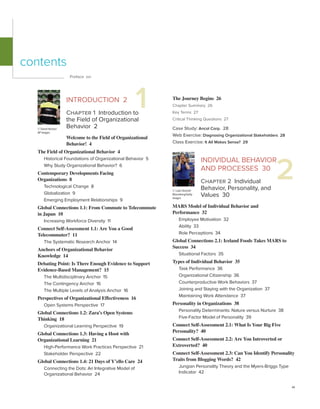


![Consider this, that Matsukata, whose father is a Baron in
Japan and holds fief over hundreds of samurai, was offered a
place in the intrepid crew—as cook. Matsukata yearned for
adventure, but he could not so demean himself, and that is why
Buck Harrison of the line holds his place in the galley when the
Mayflower slips out of the Basin this morning.
With the Mayflower steaming out of Gravesend Bay, nose to
the south, there must come a hiatus in this tale, and the curtain
of the past must be lifted, revealing dark and bloody scenes.
CURTAIN
It is a fair day in June, Anno Domini 1684, and the tropical
palms that fringe the beach about Santo Domingo Bay are
nodding in the breeze. [Santo Domingo Bay is used as a
disguise of the real port, which it wouldn’t do to reveal.] All is
astir about the wharf, for the good English corvette, Good Faith,
is sailing this day for Plymouth, laden fair to the gunwales with
plate of price, spoils of cathedrals in Mexico and hard minted
gold in doubloons—and oh, yes, pieces of eight!—that is, the
ransom of cities in Salvador and the Guineas. Spanish gold it is,
torn from the grasp of bleeding men.
A cheer, a roundelay as the anchor comes up, and with sails
bellying and the crosses of St. George and St. Andrew whipping
from the gaff, the Good Faith ploughs her way past the reef and
out to sea.
But wait! From around the bluff beyond the sea gate, which is
hidden from the Good Faith by the rocky headland, come
stealing two long feluccas. The brass of cannon glints from bow](https://image.slidesharecdn.com/2418-250307163957-2a70eea7/85/eBook-PDF-Organizational-Behavior-8th-Edition-26-320.jpg)
![and taffrail; sails strain with the wind; the gorgeous banner of
Spain streams from the mainsail peak.
The watchers on the headlands of Santo Domingo City drop
on their knees in prayer at the sight, for are not those two
feluccas the sea vultures of Don Sebastian Fernando Hacienda y
Juan Fernandez, plunderer of towns and pillager of altars?
At gaze stand the citizens of Santo Domingo City as they
watch the feluccas steal into the track of the Good Faith.
Tortured with anxiety are these good folk when they behold the
Good Faith swing about the headland and come into view of the
dastard Spaniards. Now the Good Faith is aware of her peril.
See her crowd the canvas on! See her leap to the tug of the
wind and race for her life down, down the watery way to the
horizon! The feluccas follow fast; they gain yard by yard; still
they gain and yet still.
The horizon rises and swallows up the Good Faith and the
Don’s feluccas, mere dots on the horizon.
Alack, never again did man set eyes on the Good Faith.
Plymouth awaited her in vain; Santo Domingo City sent out
sloops and men-o’-war to search for her. Never again did Don
Sebastian ravage the coasts of Salvador and plunder the
galleons of the Main. Men forgot that there had ever been a
Good Faith or a Don Sebastian.
* * * * *
[Stars here indicate hiatus of 220 years.]
A fisher of sponges, an American fisher of sponges, in sooth,
is sailing his craft about the Caribbean in search of his prey. It is
some years later. It is only a few years ago in fact. A storm
comes roaring out of the Gulf, and the fisher of sponges with his
native fishermen is driven in his cockleshell far, far out of his](https://image.slidesharecdn.com/2418-250307163957-2a70eea7/85/eBook-PDF-Organizational-Behavior-8th-Edition-27-320.jpg)