Definition
 Electronic waste, popularly known as ‘e-
waste’ can be defined as electronic
equipments or products connects with power
plug, batteries which have become obsolete
due to:
1. Advancement in technology
2. Changes in fashion, style and status
3. Nearing the end of their useful life.
Classification of e-waste
 E-waste encompasses ever growing range of
obsolete products classified as
1. Electronic devices such as computers, servers,
main frames, monitors, TVs & display devices
2. Telecommunication devices such as cellular
phones & pagers, calculators, audio and video
devices, printers, scanners, fax machines,
refrigerators, air conditioners, washing
machines, and microwave ovens.
3. Recording devices such as DVDs, CDs,
floppies, tapes, printing cartridges, military
electronic waste, automobile catalytic
converters.
4. Electronic components such as chips,
processors, mother boards, printed circuit
boards, industrial electronics such as
sensors, alarms, sirens, security devices,
automobile electronic devices.
Need of E-Waste Management
 Industrial Revolution.
 Advancement in Information Technology.
 There mismanagement can lead to the
pollution.
 From the data collected, in a single year the
production is around 1200 tons of electronic
scrap.
 Production of E-Waste is on mass basis in
many developed countries including India.
 This waste is not Eco-friendly.
 Hence there is a need to check this electronic
waste pollution by proper management.
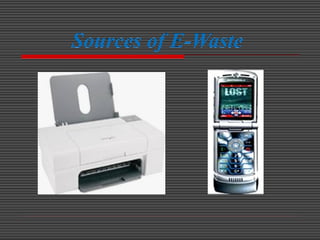
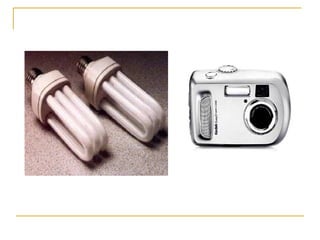
Sources of E-Waste
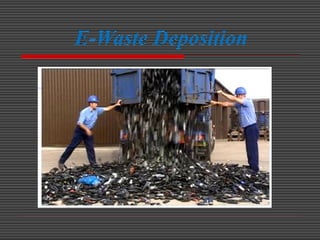
E-Waste Deposition
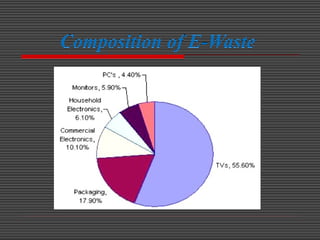
Composition of E-Waste
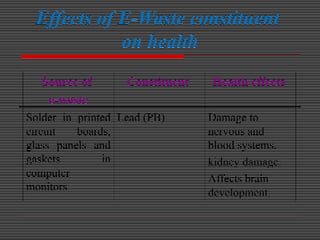
Effects of E-Waste constituent
on health
Source of
e-waste
Constituent Health effects
Solder in printed
circuit boards,
glass panels and
gaskets in
computer
monitors
Lead (PB) Damage to
nervous and
blood systems.
kidney damage.
Affects brain
development.
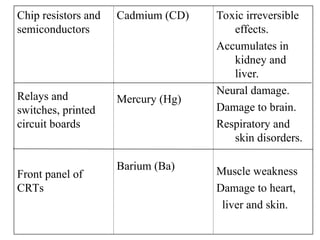
Chip resistors and
semiconductors
Relays and
switches, printed
circuit boards
Front panel of
CRTs
Cadmium (CD)
Mercury (Hg)
Barium (Ba)
Toxic irreversible
effects.
Accumulates in
kidney and
liver.
Neural damage.
Damage to brain.
Respiratory and
skin disorders.
Muscle weakness
Damage to heart,
liver and skin.
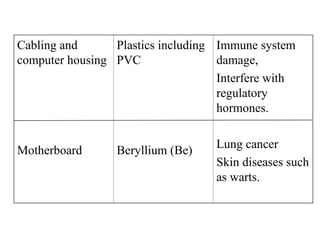
Cabling and
computer housing
Motherboard
Plastics including
PVC
Beryllium (Be)
Immune system
damage,
Interfere with
regulatory
hormones.
Lung cancer
Skin diseases such
as warts.
Management Of E-waste
 Due to advancement in techniques the old
instruments are becoming outdated.
 This necessitates implemental management
measures.
 India as a developing country needs simpler,
low cost technology for proper management of
E-waste.
In industries management of e-waste should
begin at the point of generation.
Waste minimization in industries involves
adopting:
1. inventory management,
2. production-process modification,
3. volume reduction,
4. Recovery and reuse.
Management Options
 Considering the severity of the problem, it
is imperative that certain management
options must be adopted to handle the bulk
e-wastes.
 Following are some of the management
options suggested for the government,
industries and the public.
Responsibilities of the Government
 Government should set up regulatory
agencies.
 Government should provide an adequate
system of laws and controls.
 Government must encourage research into
the development and production of less
hazardous equipments.
Responsibility and Role of industries
 Generators of wastes should take responsibility
to determine the output characteristics of
wastes.
 All involved person should be properly
qualified and trained in handling e-waste in
industries.
 Companies should adopt waste minimization
techniques.
Responsibilities of the Citizen
 Reuse
 Donating used electronics to schools, non-profit
organizations, and lower-income families.
 E-wastes should never be disposed with garbage
and other household wastes.
 These wastes should be collected at a separate
site and they should be sent for various processes
like Reuse, Recycling, and Donating.
Conclusion
 E-waste is going to create lot of problems in
future.
 E-Waste management is of utmost
importance.
 Proper management is necessary to
minimize its ill effects on human beings and
nature.
E-Waste-Management for engineering to .ppt

E-Waste-Management for engineering to .ppt

  • 1.
    Definition  Electronic waste,popularly known as ‘e- waste’ can be defined as electronic equipments or products connects with power plug, batteries which have become obsolete due to: 1. Advancement in technology 2. Changes in fashion, style and status 3. Nearing the end of their useful life.
  • 2.
    Classification of e-waste E-waste encompasses ever growing range of obsolete products classified as 1. Electronic devices such as computers, servers, main frames, monitors, TVs & display devices 2. Telecommunication devices such as cellular phones & pagers, calculators, audio and video devices, printers, scanners, fax machines, refrigerators, air conditioners, washing machines, and microwave ovens.
  • 3.
    3. Recording devicessuch as DVDs, CDs, floppies, tapes, printing cartridges, military electronic waste, automobile catalytic converters. 4. Electronic components such as chips, processors, mother boards, printed circuit boards, industrial electronics such as sensors, alarms, sirens, security devices, automobile electronic devices.
  • 4.
    Need of E-WasteManagement  Industrial Revolution.  Advancement in Information Technology.  There mismanagement can lead to the pollution.  From the data collected, in a single year the production is around 1200 tons of electronic scrap.
  • 5.
     Production ofE-Waste is on mass basis in many developed countries including India.  This waste is not Eco-friendly.  Hence there is a need to check this electronic waste pollution by proper management.
  • 6.
  • 8.
  • 9.
  • 10.
    Effects of E-Wasteconstituent on health Source of e-waste Constituent Health effects Solder in printed circuit boards, glass panels and gaskets in computer monitors Lead (PB) Damage to nervous and blood systems. kidney damage. Affects brain development.
  • 11.
    Chip resistors and semiconductors Relaysand switches, printed circuit boards Front panel of CRTs Cadmium (CD) Mercury (Hg) Barium (Ba) Toxic irreversible effects. Accumulates in kidney and liver. Neural damage. Damage to brain. Respiratory and skin disorders. Muscle weakness Damage to heart, liver and skin.
  • 12.
    Cabling and computer housing Motherboard Plasticsincluding PVC Beryllium (Be) Immune system damage, Interfere with regulatory hormones. Lung cancer Skin diseases such as warts.
  • 13.
    Management Of E-waste Due to advancement in techniques the old instruments are becoming outdated.  This necessitates implemental management measures.  India as a developing country needs simpler, low cost technology for proper management of E-waste.
  • 14.
    In industries managementof e-waste should begin at the point of generation. Waste minimization in industries involves adopting: 1. inventory management, 2. production-process modification, 3. volume reduction, 4. Recovery and reuse.
  • 15.
    Management Options  Consideringthe severity of the problem, it is imperative that certain management options must be adopted to handle the bulk e-wastes.  Following are some of the management options suggested for the government, industries and the public.
  • 16.
    Responsibilities of theGovernment  Government should set up regulatory agencies.  Government should provide an adequate system of laws and controls.  Government must encourage research into the development and production of less hazardous equipments.
  • 17.
    Responsibility and Roleof industries  Generators of wastes should take responsibility to determine the output characteristics of wastes.  All involved person should be properly qualified and trained in handling e-waste in industries.  Companies should adopt waste minimization techniques.
  • 18.
    Responsibilities of theCitizen  Reuse  Donating used electronics to schools, non-profit organizations, and lower-income families.  E-wastes should never be disposed with garbage and other household wastes.  These wastes should be collected at a separate site and they should be sent for various processes like Reuse, Recycling, and Donating.
  • 19.
    Conclusion  E-waste isgoing to create lot of problems in future.  E-Waste management is of utmost importance.  Proper management is necessary to minimize its ill effects on human beings and nature.