KNOWLEDGE INSTITUTE OFTECHNOLOGY,
SALEM
DEPT.OFMECHANICALENGINEERING
TECHNICALSEMINAR – I
DUALFUELENGINE
PRESENTATION BY
K. DHANASEKAR (611220114006)
IV-MECH-A
OVERVIEW
Introduction
Working Principle
Dual-Fuel Operation
Factors Affecting Performance in Dual-Fuel Engine
Performance of Dual-Fuel Engine
Advantages of Dual-Fuel Engine
Conclusion
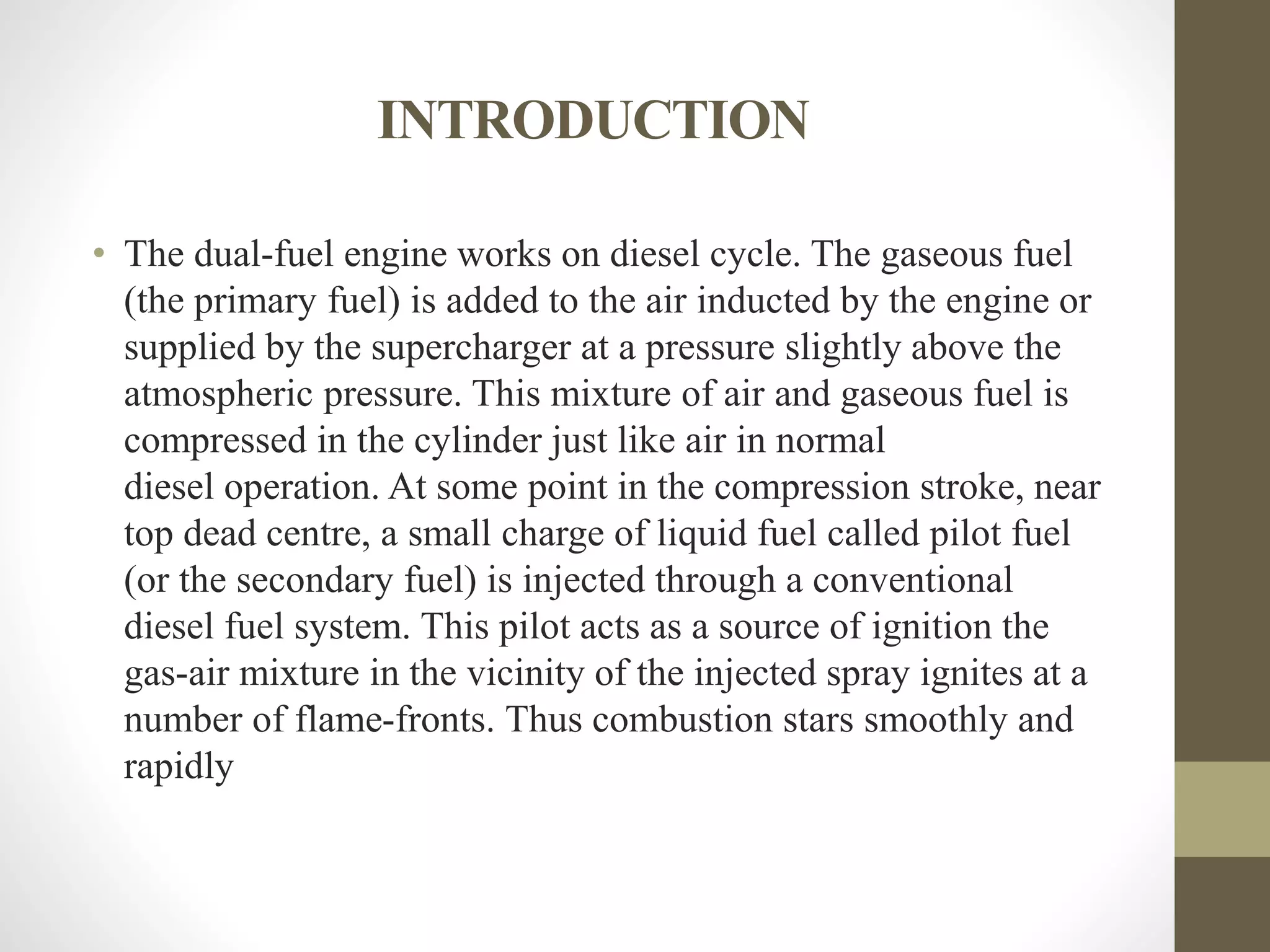
INTRODUCTION
• The dual-fuel engine works on diesel cycle. The gaseous fuel
(the primary fuel) is added to the air inducted by the engine or
supplied by the supercharger at a pressure slightly above the
atmospheric pressure. This mixture of air and gaseous fuel is
compressed in the cylinder just like air in normal
diesel operation. At some point in the compression stroke, near
top dead centre, a small charge of liquid fuel called pilot fuel
(or the secondary fuel) is injected through a conventional
diesel fuel system. This pilot acts as a source of ignition the
gas-air mixture in the vicinity of the injected spray ignites at a
number of flame-fronts. Thus combustion stars smoothly and
rapidly
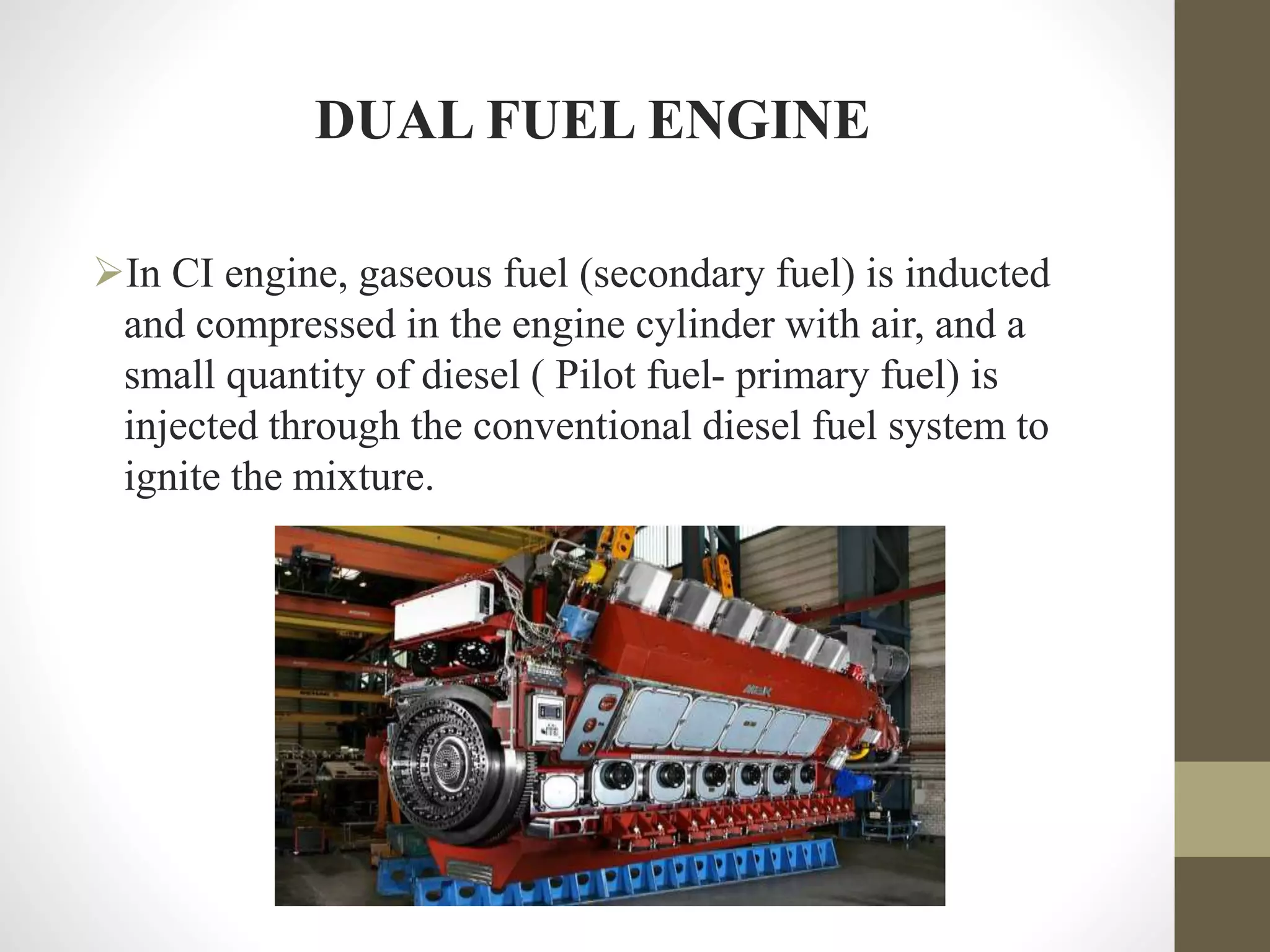
DUAL FUEL ENGINE
In CI engine, gaseous fuel (secondary fuel) is inducted
and compressed in the engine cylinder with air, and a
small quantity of diesel ( Pilot fuel- primary fuel) is
injected through the conventional diesel fuel system to
ignite the mixture.
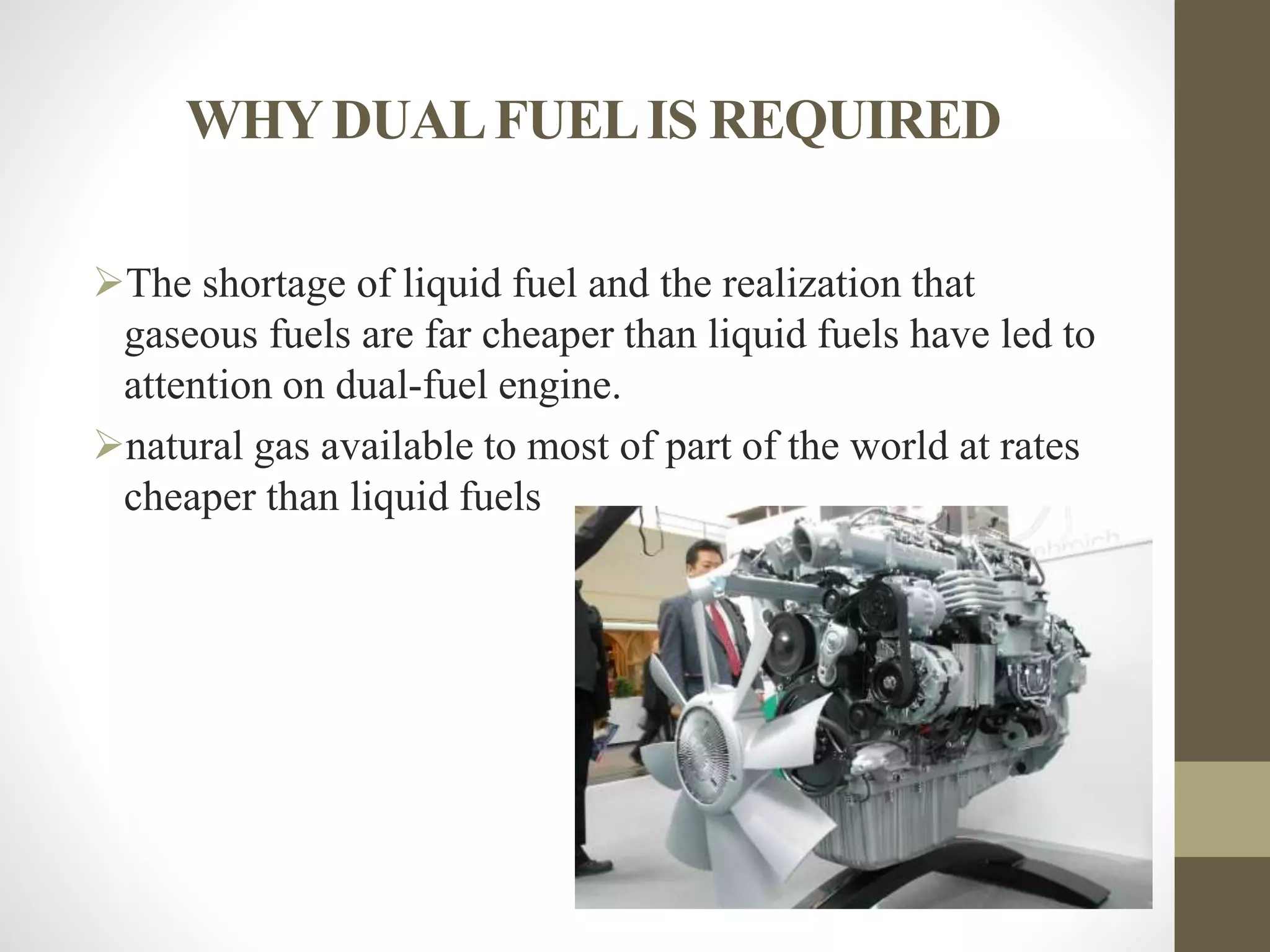
WHYDUALFUELIS REQUIRED
The shortage of liquid fuel and the realization that
gaseous fuels are far cheaper than liquid fuels have led to
attention on dual-fuel engine.
natural gas available to most of part of the world at rates
cheaper than liquid fuels
WORKING PRINCIPLE
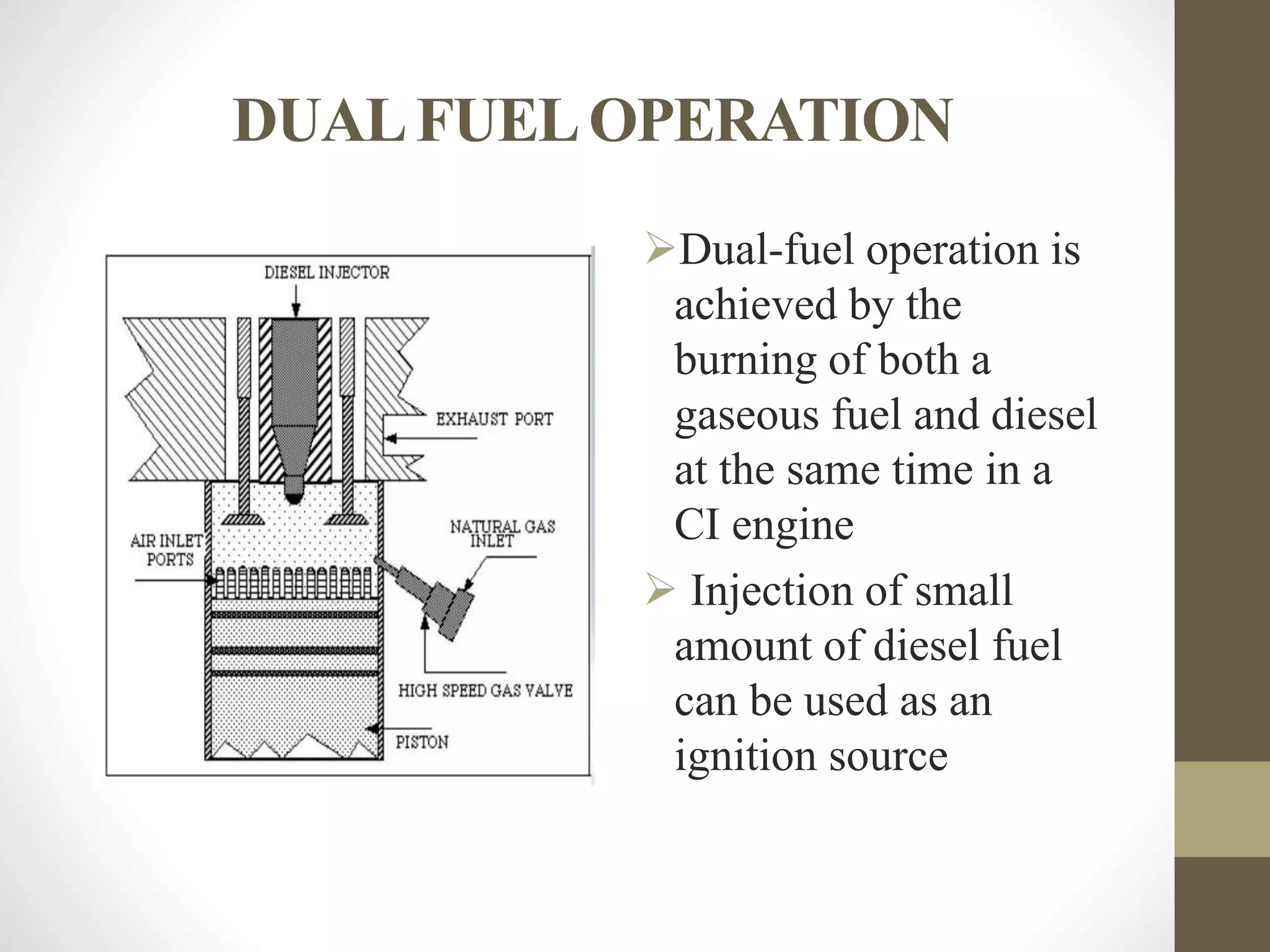
DUALFUELOPERATION
Dual-fuel operation is
achieved by the
burning of both a
gaseous fuel and diesel
at the same time in a
CI engine
 Injection of small
amount of diesel fuel
can be used as an
ignition source
FACTORSAFFECTING
Pilot fuel quantity
Injection Timing.
Cetane Number of Pilot Fuel.
Inlet Temperature.
Gaseous Fuels.
Effect of Throttling.
Mixture Strength
KNOCK & ITS CONTROL
• NATURE OF KNOCK: The phenomenon of knock in a dual-
fuel engine is of the nature of auto ignition of gaseous mixture
in the neighbourhood of injected spray.
• KNOCK IN DUAL-FUEL ENGINE CONTROLLED BY
ANY OF THE FOOLOWING METHODS:-
Excess supply of air.
Use of cold combustion air.
Increased cooling of piston.
Reducing the pressure of the gaseous fuel.
ADVANTAGES
The gas burns without leaving any residue - exhaust is clean –
less air pollution.
The clean combustion results in reduced wear of the engine
parts and reduced consumption of lubricating oil.
Lubricating oil change periods are also increased as the
maximum pressure in cylinder are less than those for a diesel
engine, thereby reducing the blow-by past piston. This reduces
the contamination of the lube oil.
Lower initial cost and lower operating costs than a dedicated
natural gas engine
Better fuel economy than a dedicated natural gas engine
Lower maintenance costs than a dedicated natural gas engine
CONCLUSION
The ignition delay in gas-fuelled diesel engines of the
dual-fuel type depends strongly on both the quantity and
quality of the pilot fuel used.
Dual-fuel engine performance is improved with the
employment of high cetane number pilots.
 For stationary application, diesel substitution of 70% is
possible by using dual fuel engine which is quite
considerable and also economical
 DUAL FUEL ENGINE.pptx

DUAL FUEL ENGINE.pptx

  • 1.
    KNOWLEDGE INSTITUTE OFTECHNOLOGY, SALEM DEPT.OFMECHANICALENGINEERING TECHNICALSEMINAR– I DUALFUELENGINE PRESENTATION BY K. DHANASEKAR (611220114006) IV-MECH-A
  • 2.
    OVERVIEW Introduction Working Principle Dual-Fuel Operation FactorsAffecting Performance in Dual-Fuel Engine Performance of Dual-Fuel Engine Advantages of Dual-Fuel Engine Conclusion
  • 3.
    INTRODUCTION • The dual-fuelengine works on diesel cycle. The gaseous fuel (the primary fuel) is added to the air inducted by the engine or supplied by the supercharger at a pressure slightly above the atmospheric pressure. This mixture of air and gaseous fuel is compressed in the cylinder just like air in normal diesel operation. At some point in the compression stroke, near top dead centre, a small charge of liquid fuel called pilot fuel (or the secondary fuel) is injected through a conventional diesel fuel system. This pilot acts as a source of ignition the gas-air mixture in the vicinity of the injected spray ignites at a number of flame-fronts. Thus combustion stars smoothly and rapidly
  • 4.
    DUAL FUEL ENGINE InCI engine, gaseous fuel (secondary fuel) is inducted and compressed in the engine cylinder with air, and a small quantity of diesel ( Pilot fuel- primary fuel) is injected through the conventional diesel fuel system to ignite the mixture.
  • 5.
    WHYDUALFUELIS REQUIRED The shortageof liquid fuel and the realization that gaseous fuels are far cheaper than liquid fuels have led to attention on dual-fuel engine. natural gas available to most of part of the world at rates cheaper than liquid fuels
  • 6.
  • 7.
    DUALFUELOPERATION Dual-fuel operation is achievedby the burning of both a gaseous fuel and diesel at the same time in a CI engine  Injection of small amount of diesel fuel can be used as an ignition source
  • 8.
    FACTORSAFFECTING Pilot fuel quantity InjectionTiming. Cetane Number of Pilot Fuel. Inlet Temperature. Gaseous Fuels. Effect of Throttling. Mixture Strength
  • 9.
    KNOCK & ITSCONTROL • NATURE OF KNOCK: The phenomenon of knock in a dual- fuel engine is of the nature of auto ignition of gaseous mixture in the neighbourhood of injected spray. • KNOCK IN DUAL-FUEL ENGINE CONTROLLED BY ANY OF THE FOOLOWING METHODS:- Excess supply of air. Use of cold combustion air. Increased cooling of piston. Reducing the pressure of the gaseous fuel.
  • 10.
    ADVANTAGES The gas burnswithout leaving any residue - exhaust is clean – less air pollution. The clean combustion results in reduced wear of the engine parts and reduced consumption of lubricating oil. Lubricating oil change periods are also increased as the maximum pressure in cylinder are less than those for a diesel engine, thereby reducing the blow-by past piston. This reduces the contamination of the lube oil. Lower initial cost and lower operating costs than a dedicated natural gas engine Better fuel economy than a dedicated natural gas engine Lower maintenance costs than a dedicated natural gas engine
  • 11.
    CONCLUSION The ignition delayin gas-fuelled diesel engines of the dual-fuel type depends strongly on both the quantity and quality of the pilot fuel used. Dual-fuel engine performance is improved with the employment of high cetane number pilots.  For stationary application, diesel substitution of 70% is possible by using dual fuel engine which is quite considerable and also economical