Source: Wikipedia.org,http://en.wikipedia.org/wiki/Controlled_Substances_Act 
Text is available under the Creative Commons Attribution-ShareAlike License; additional terms may apply. 
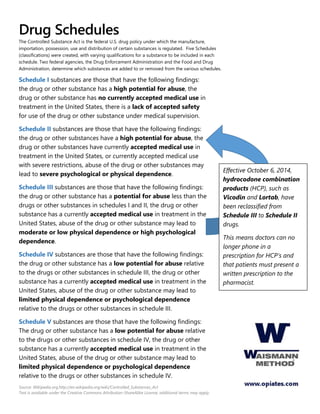
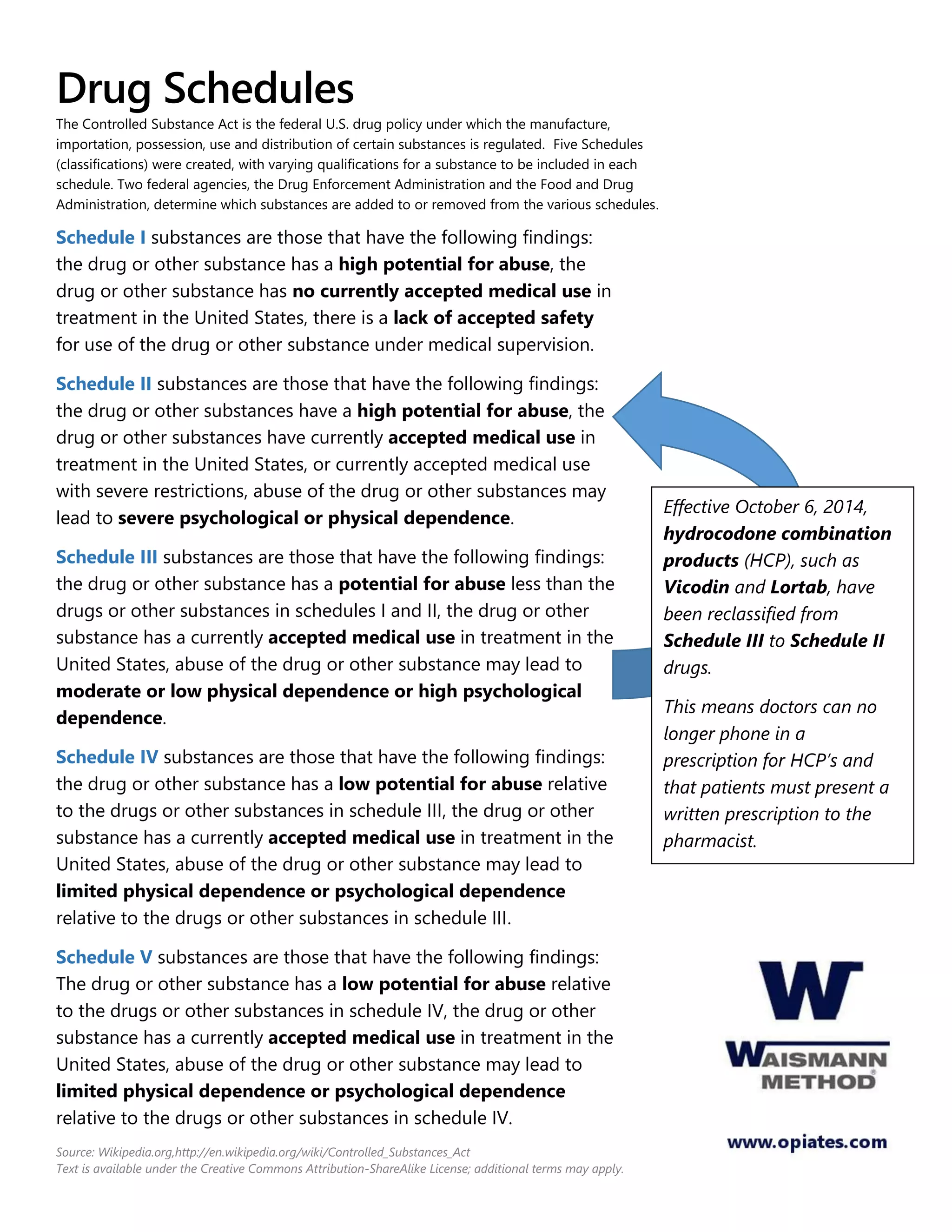
Drug Schedules The Controlled Substance Act is the federal U.S. drug policy under which the manufacture, importation, possession, use and distribution of certain substances is regulated. Five Schedules (classifications) were created, with varying qualifications for a substance to be included in each schedule. Two federal agencies, the Drug Enforcement Administration and the Food and Drug Administration, determine which substances are added to or removed from the various schedules. Schedule I substances are those that have the following findings: the drug or other substance has a high potential for abuse, the drug or other substance has no currently accepted medical use in treatment in the United States, there is a lack of accepted safety for use of the drug or other substance under medical supervision. Schedule II substances are those that have the following findings: the drug or other substances have a high potential for abuse, the drug or other substances have currently accepted medical use in treatment in the United States, or currently accepted medical use with severe restrictions, abuse of the drug or other substances may lead to severe psychological or physical dependence. Schedule III substances are those that have the following findings: the drug or other substance has a potential for abuse less than the drugs or other substances in schedules I and II, the drug or other substance has a currently accepted medical use in treatment in the United States, abuse of the drug or other substance may lead to moderate or low physical dependence or high psychological dependence. Schedule IV substances are those that have the following findings: the drug or other substance has a low potential for abuse relative to the drugs or other substances in schedule III, the drug or other substance has a currently accepted medical use in treatment in the United States, abuse of the drug or other substance may lead to limited physical dependence or psychological dependence relative to the drugs or other substances in schedule III. Schedule V substances are those that have the following findings: The drug or other substance has a low potential for abuse relative to the drugs or other substances in schedule IV, the drug or other substance has a currently accepted medical use in treatment in the United States, abuse of the drug or other substance may lead to limited physical dependence or psychological dependence relative to the drugs or other substances in schedule IV. Effective October 6, 2014, hydrocodone combination products (HCP), such as Vicodin and Lortab, have been reclassified from Schedule III to Schedule II drugs. This means doctors can no longer phone in a prescription for HCP’s and that patients must present a written prescription to the pharmacist.

Drug Schedules

  • 1.
    Source: Wikipedia.org,http://en.wikipedia.org/wiki/Controlled_Substances_Act Textis available under the Creative Commons Attribution-ShareAlike License; additional terms may apply. Drug Schedules The Controlled Substance Act is the federal U.S. drug policy under which the manufacture, importation, possession, use and distribution of certain substances is regulated. Five Schedules (classifications) were created, with varying qualifications for a substance to be included in each schedule. Two federal agencies, the Drug Enforcement Administration and the Food and Drug Administration, determine which substances are added to or removed from the various schedules. Schedule I substances are those that have the following findings: the drug or other substance has a high potential for abuse, the drug or other substance has no currently accepted medical use in treatment in the United States, there is a lack of accepted safety for use of the drug or other substance under medical supervision. Schedule II substances are those that have the following findings: the drug or other substances have a high potential for abuse, the drug or other substances have currently accepted medical use in treatment in the United States, or currently accepted medical use with severe restrictions, abuse of the drug or other substances may lead to severe psychological or physical dependence. Schedule III substances are those that have the following findings: the drug or other substance has a potential for abuse less than the drugs or other substances in schedules I and II, the drug or other substance has a currently accepted medical use in treatment in the United States, abuse of the drug or other substance may lead to moderate or low physical dependence or high psychological dependence. Schedule IV substances are those that have the following findings: the drug or other substance has a low potential for abuse relative to the drugs or other substances in schedule III, the drug or other substance has a currently accepted medical use in treatment in the United States, abuse of the drug or other substance may lead to limited physical dependence or psychological dependence relative to the drugs or other substances in schedule III. Schedule V substances are those that have the following findings: The drug or other substance has a low potential for abuse relative to the drugs or other substances in schedule IV, the drug or other substance has a currently accepted medical use in treatment in the United States, abuse of the drug or other substance may lead to limited physical dependence or psychological dependence relative to the drugs or other substances in schedule IV. Effective October 6, 2014, hydrocodone combination products (HCP), such as Vicodin and Lortab, have been reclassified from Schedule III to Schedule II drugs. This means doctors can no longer phone in a prescription for HCP’s and that patients must present a written prescription to the pharmacist.