CREATING VALUE FROM WAST
EXAMPLES AND DILLEMA’S
Liselotte van Dijk | Hogeschool van Amsterdam
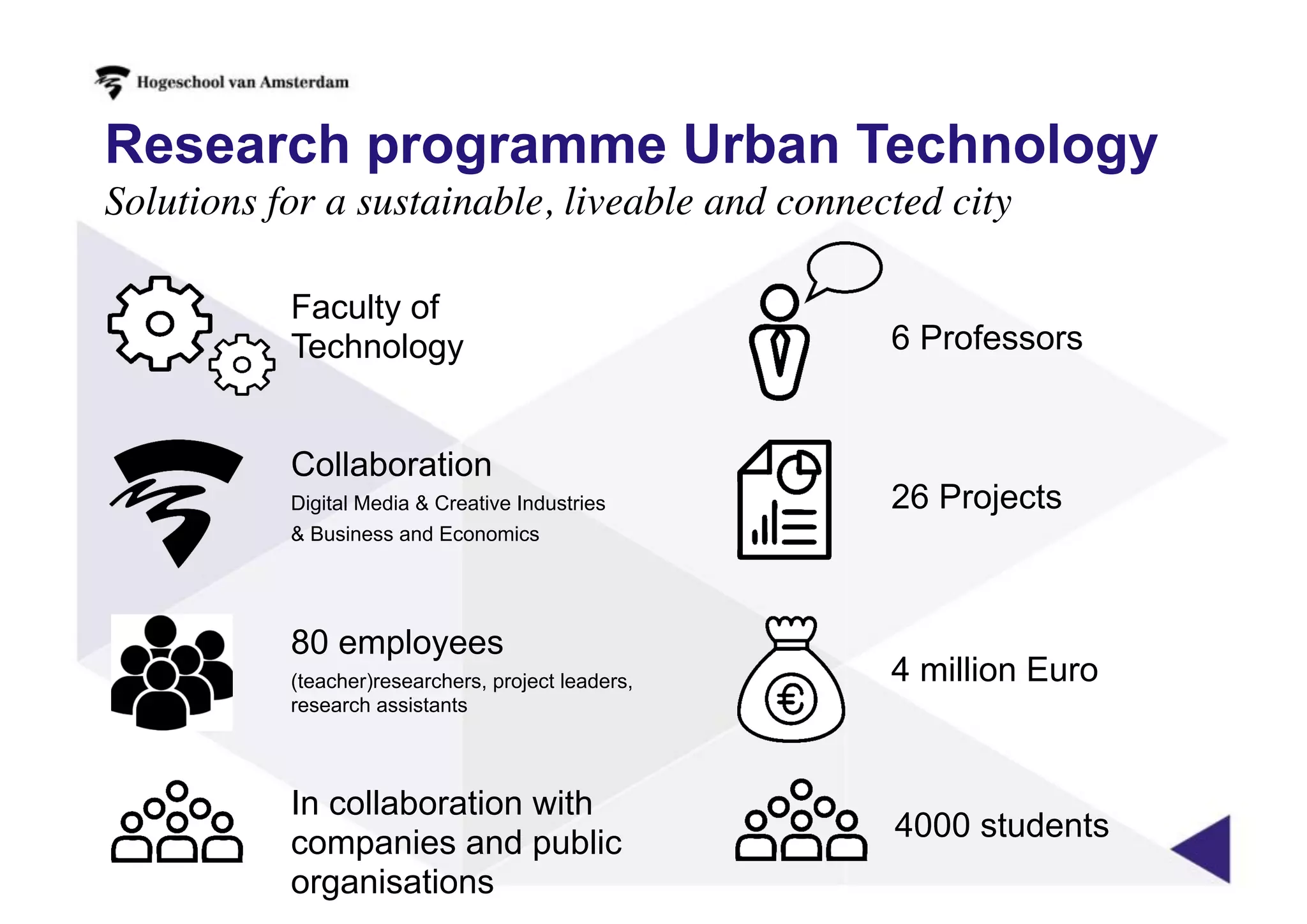
Faculty of
Technology
Research programme Urban Technology
Solutions for a sustainable, liveable and connected city
6 Professors
80 employees
(teacher)researchers, project leaders,
research assistants
In collaboration with
companies and public
organisations
Collaboration
Digital Media & Creative Industries
& Business and Economics
4 million Euro
26 Projects
4000 students
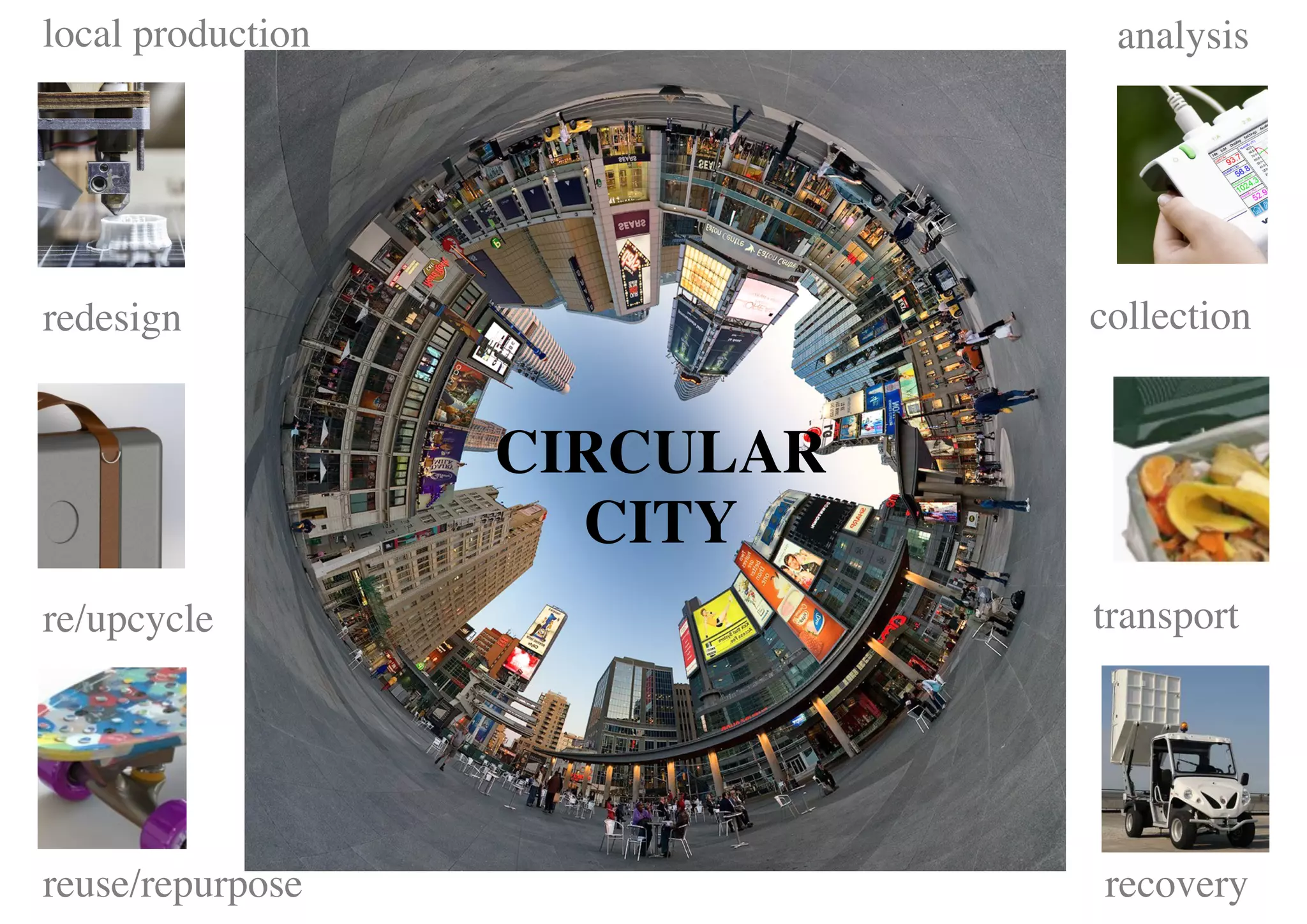
recovery
collection
transport
reuse/repurpose
re/upcycle
local production
redesign
analysis
CIRCULAR
CITY
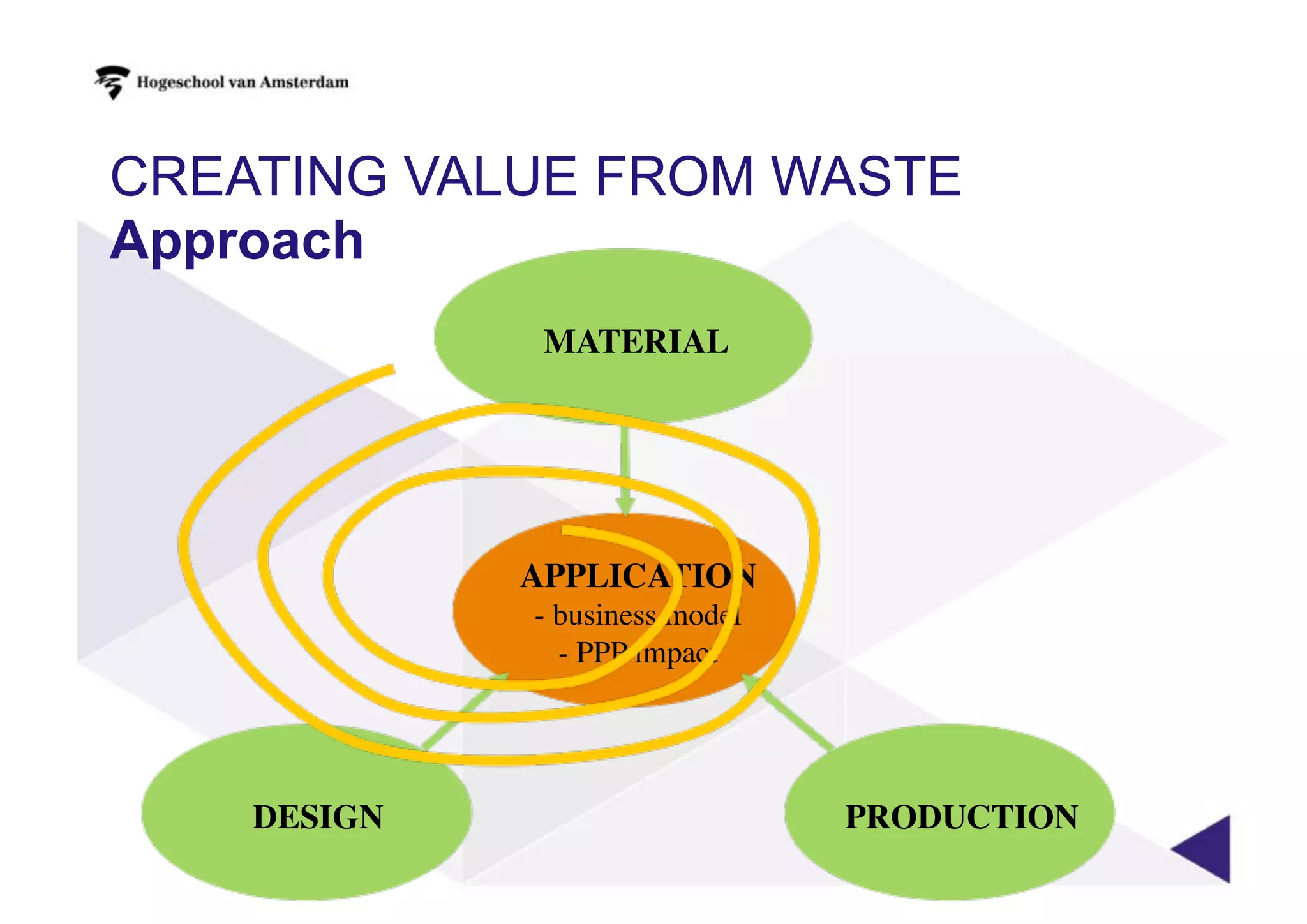
CREATING VALUE FROM WASTE
Approach
MATERIAL
PRODUCTIONDESIGN
APPLICATION
- business model
- PPP impact
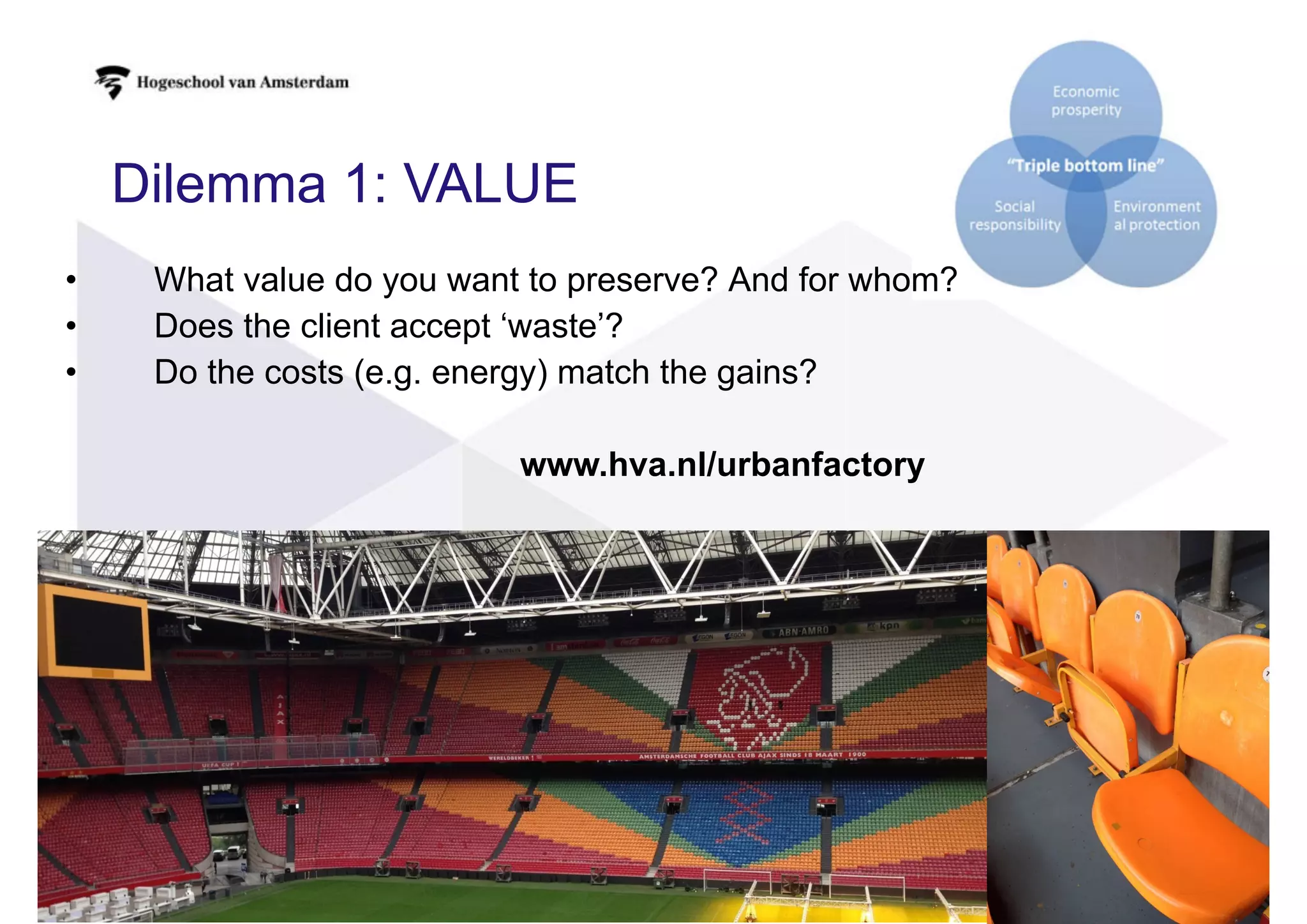
Dilemma 1: VALUE
• What value do you want to preserve? And for whom?
• Does the client accept ‘waste’?
• Do the costs (e.g. energy) match the gains?
www.hva.nl/urbanfactory
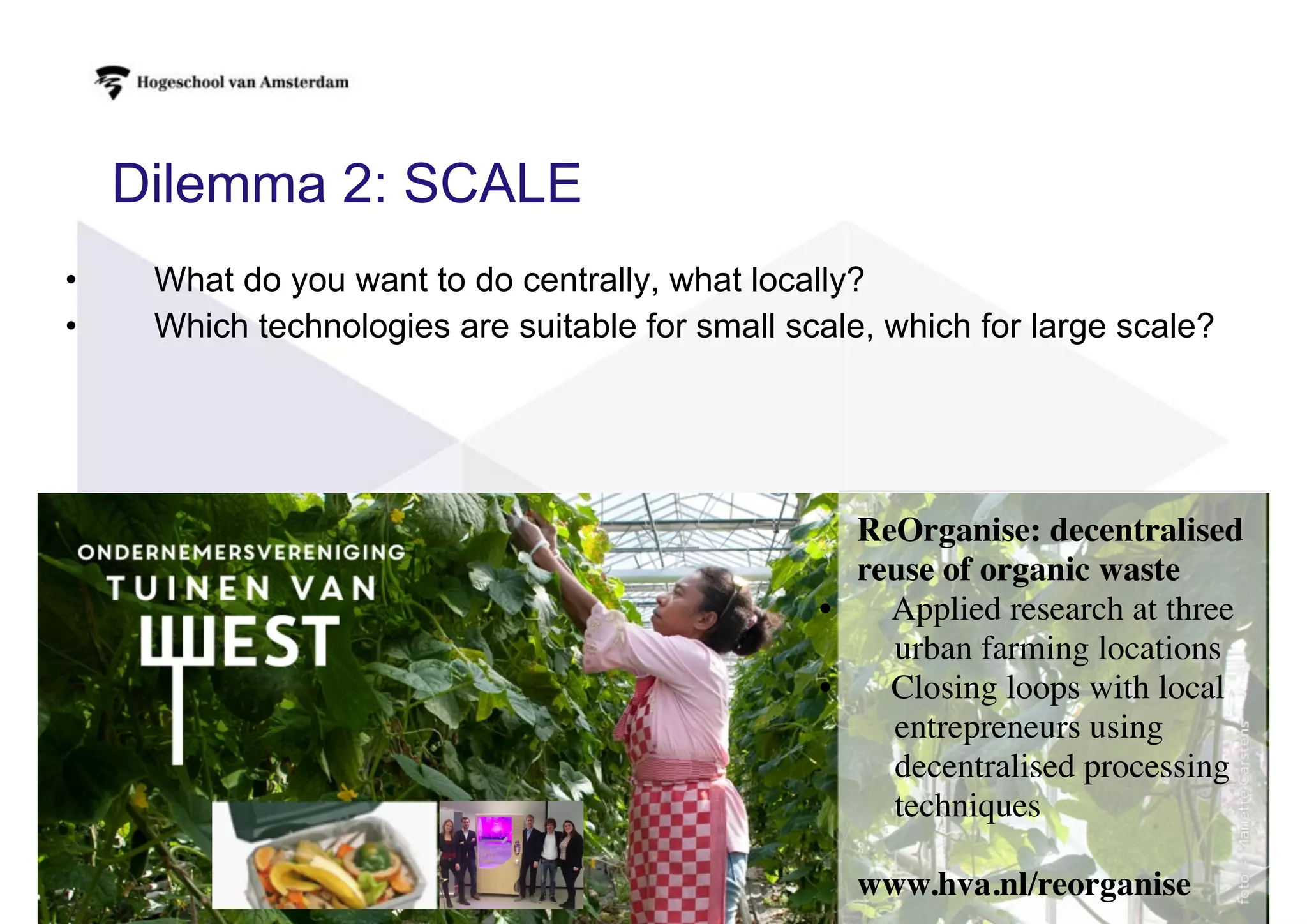
Dilemma 2: SCALE
• What do you want to do centrally, what locally?
• Which technologies are suitable for small scale, which for large scale?
ReOrganise: decentralised
reuse of organic waste
• Applied research at three
urban farming locations
• Closing loops with local
entrepreneurs using
decentralised processing
techniques
www.hva.nl/reorganise
Dilemma 3: COLLABORATION
• How do you set-up a successful consortium?
• How do you create a balance between costs and benefits?
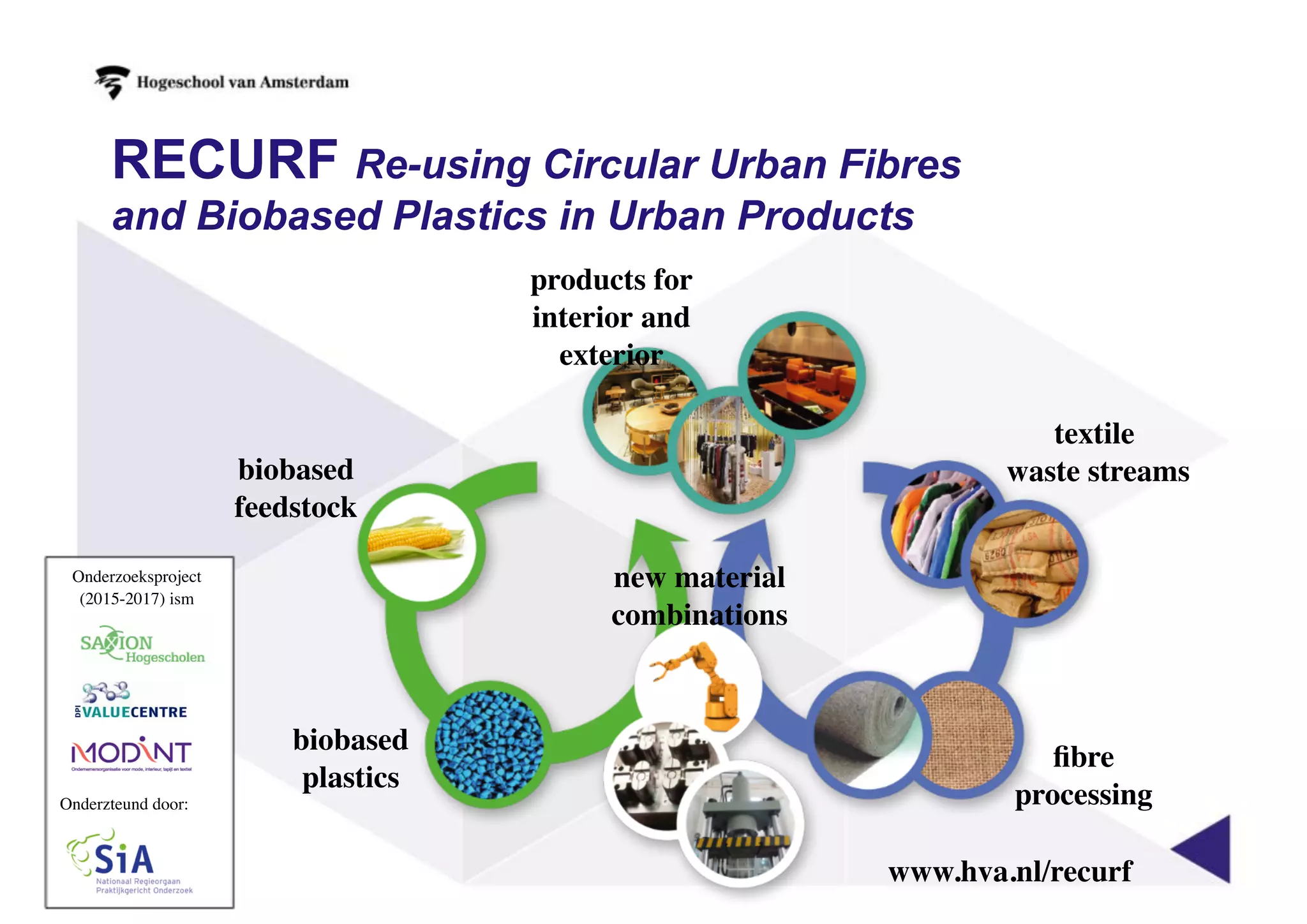
RECURF Re-using Circular Urban Fibres
and Biobased Plastics in Urban Products
biobased
feedstock
biobased
plastics
products for
interior and
exterior
textile
waste streams
fibre
processing
new material
combinations
Onderzoeksproject
(2015-2017) ism
Onderzteund door:
www.hva.nl/recurf
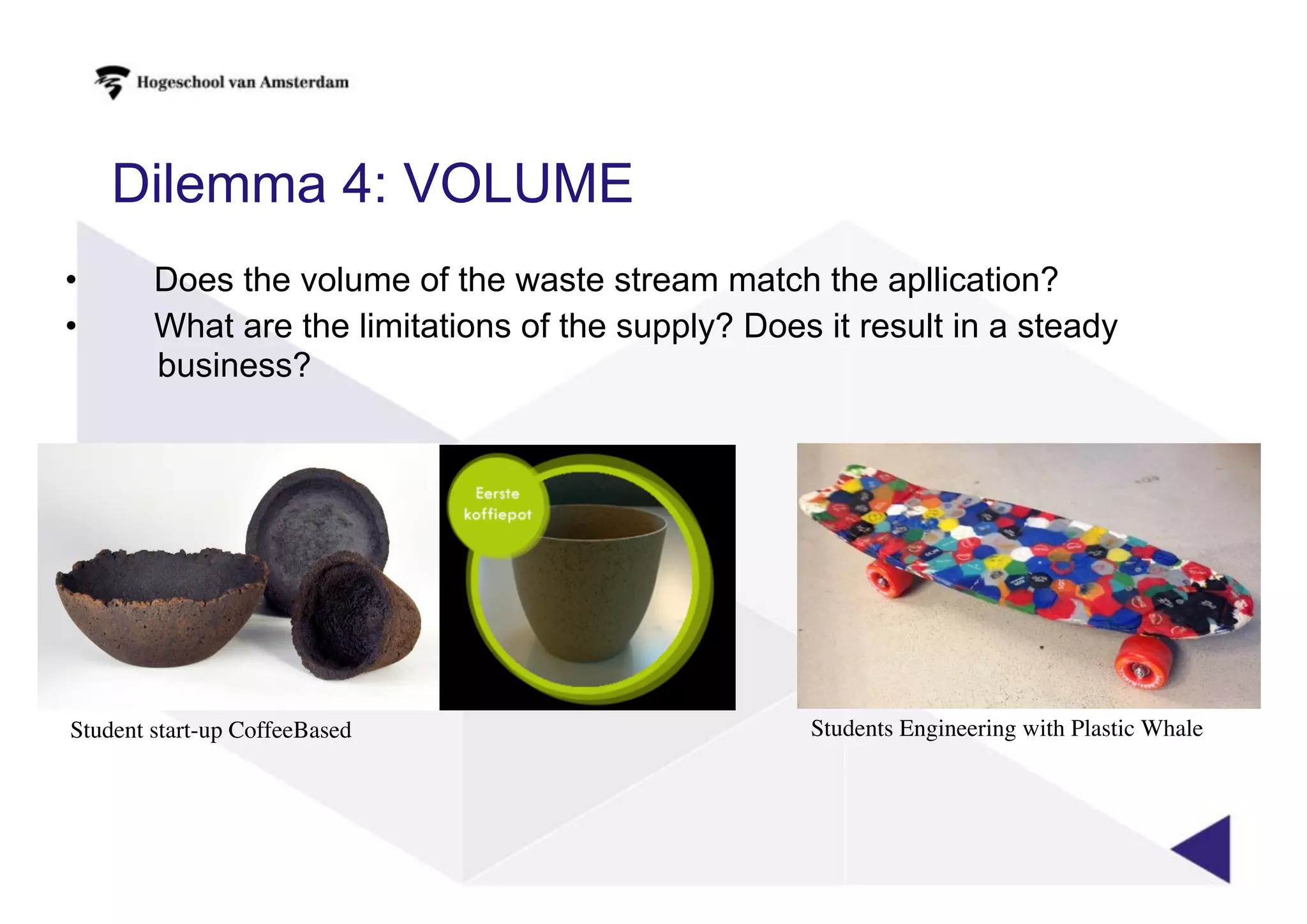
Dilemma 4: VOLUME
• Does the volume of the waste stream match the apllication?
• What are the limitations of the supply? Does it result in a steady
business?
Student start-up CoffeeBased Students Engineering with Plastic Whale
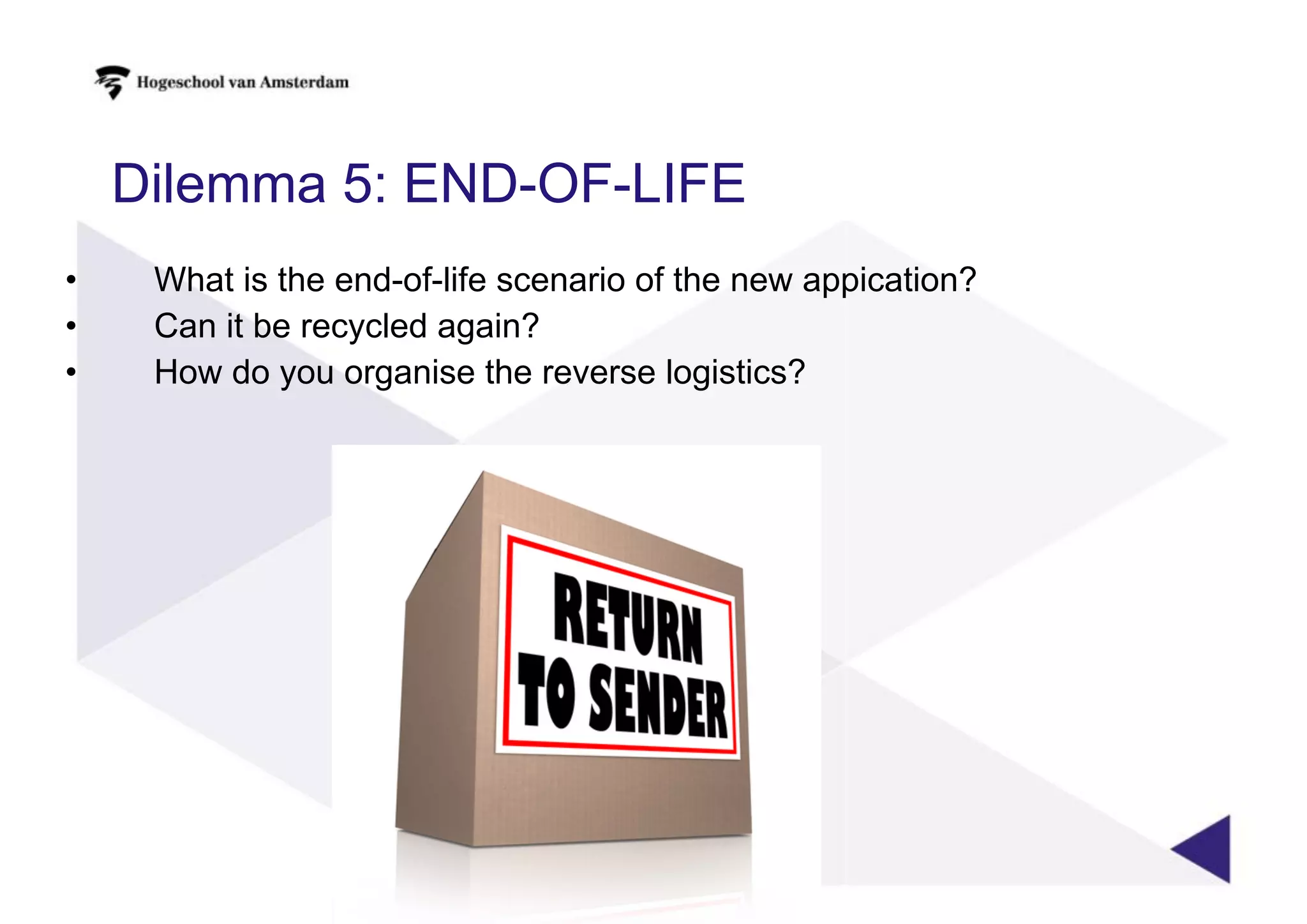
Dilemma 5: END-OF-LIFE
• What is the end-of-life scenario of the new appication?
• Can it be recycled again?
• How do you organise the reverse logistics?
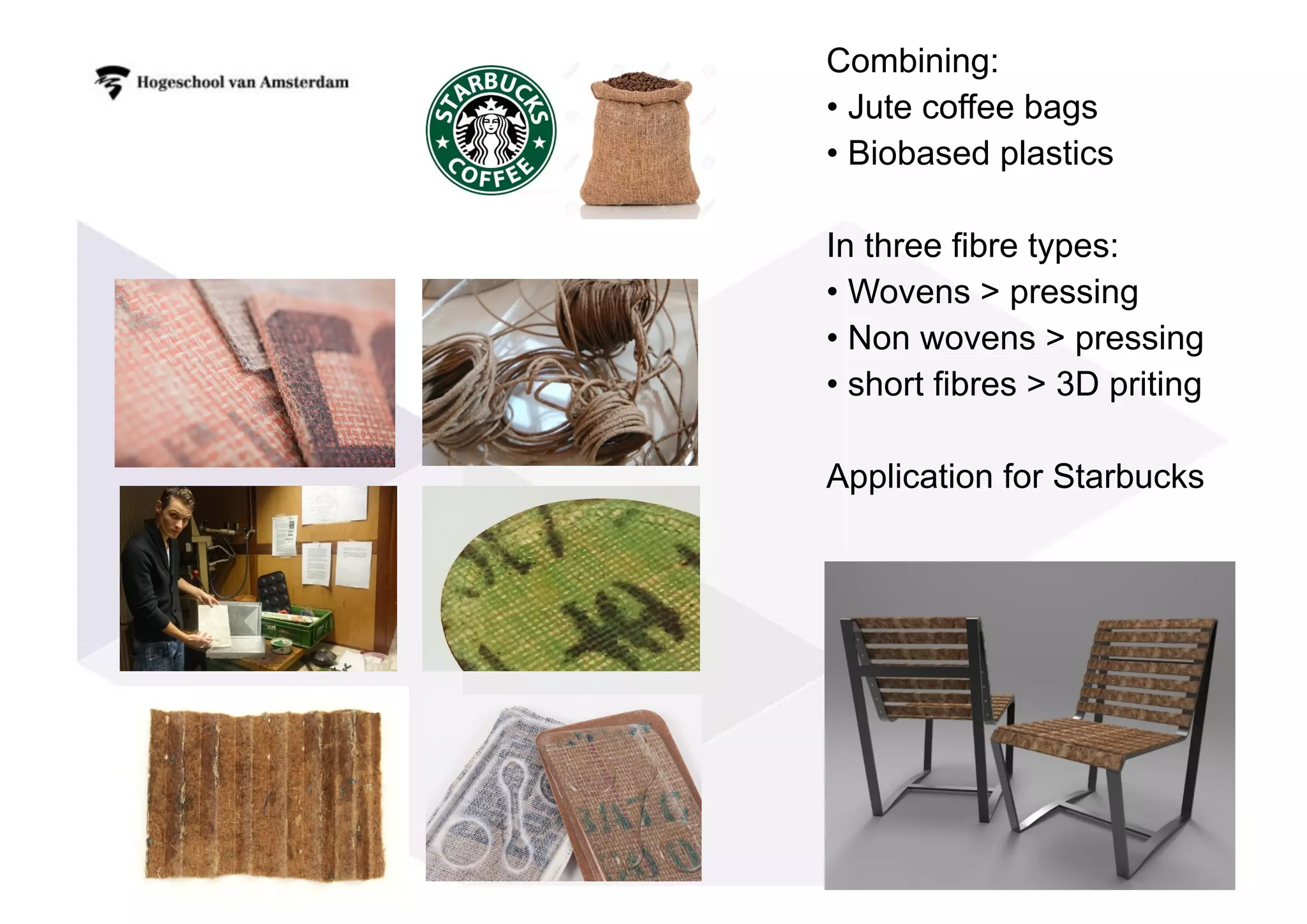
Combining:
• Jute coffee bags
• Biobased plastics
In three fibre types:
• Wovens > pressing
• Non wovens > pressing
• short fibres > 3D priting
Application for Starbucks
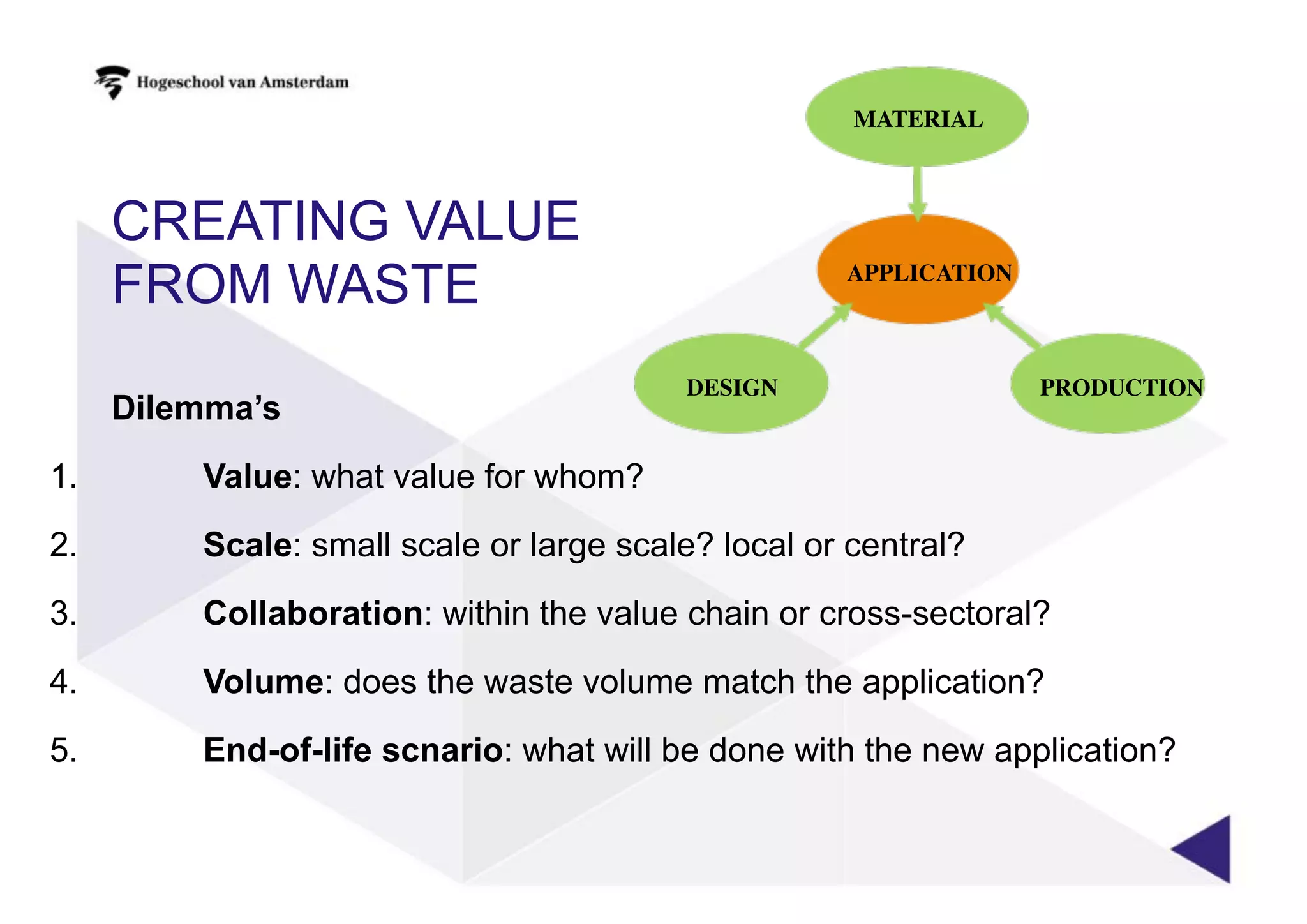
Dilemma’s
1. Value: what value for whom?
2. Scale: small scale or large scale? local or central?
3. Collaboration: within the value chain or cross-sectoral?
4. Volume: does the waste volume match the application?
5. End-of-life scnario: what will be done with the new application?
CREATING VALUE
FROM WASTE
MATERIAL
PRODUCTIONDESIGN
APPLICATION
Liselotte van Dijk
Projectmanager Urban Factory
Inge Oskam
Professor Technical Innovation & Entrepreneurhip
Urban Technology research programme
Amsterdam University of Applied Sciences | Faculty of Technology
Weesperzijde 190 | 1097 DZ Amsterdam
Postbus 1025 | 1000 BA Amsterdam
T +31 6 20616089
E i.f. oskam@hva.nl
W www.hva.hl/urbantechnology
Twitter @ingeoskam @HvAUrbanTech

DRIVE 2016 | 27 October - CIRCO: Creating value from waste - examples and dilemmas

  • 1.
    CREATING VALUE FROMWAST EXAMPLES AND DILLEMA’S Liselotte van Dijk | Hogeschool van Amsterdam
  • 2.
    Faculty of Technology Research programmeUrban Technology Solutions for a sustainable, liveable and connected city 6 Professors 80 employees (teacher)researchers, project leaders, research assistants In collaboration with companies and public organisations Collaboration Digital Media & Creative Industries & Business and Economics 4 million Euro 26 Projects 4000 students
  • 3.
  • 4.
    CREATING VALUE FROMWASTE Approach MATERIAL PRODUCTIONDESIGN APPLICATION - business model - PPP impact
  • 5.
    Dilemma 1: VALUE •What value do you want to preserve? And for whom? • Does the client accept ‘waste’? • Do the costs (e.g. energy) match the gains? www.hva.nl/urbanfactory
  • 6.
    Dilemma 2: SCALE •What do you want to do centrally, what locally? • Which technologies are suitable for small scale, which for large scale? ReOrganise: decentralised reuse of organic waste • Applied research at three urban farming locations • Closing loops with local entrepreneurs using decentralised processing techniques www.hva.nl/reorganise
  • 7.
    Dilemma 3: COLLABORATION •How do you set-up a successful consortium? • How do you create a balance between costs and benefits?
  • 8.
    RECURF Re-using CircularUrban Fibres and Biobased Plastics in Urban Products biobased feedstock biobased plastics products for interior and exterior textile waste streams fibre processing new material combinations Onderzoeksproject (2015-2017) ism Onderzteund door: www.hva.nl/recurf
  • 9.
    Dilemma 4: VOLUME •Does the volume of the waste stream match the apllication? • What are the limitations of the supply? Does it result in a steady business? Student start-up CoffeeBased Students Engineering with Plastic Whale
  • 10.
    Dilemma 5: END-OF-LIFE •What is the end-of-life scenario of the new appication? • Can it be recycled again? • How do you organise the reverse logistics?
  • 11.
    Combining: • Jute coffeebags • Biobased plastics In three fibre types: • Wovens > pressing • Non wovens > pressing • short fibres > 3D priting Application for Starbucks
  • 12.
    Dilemma’s 1. Value: whatvalue for whom? 2. Scale: small scale or large scale? local or central? 3. Collaboration: within the value chain or cross-sectoral? 4. Volume: does the waste volume match the application? 5. End-of-life scnario: what will be done with the new application? CREATING VALUE FROM WASTE MATERIAL PRODUCTIONDESIGN APPLICATION
  • 13.
    Liselotte van Dijk ProjectmanagerUrban Factory Inge Oskam Professor Technical Innovation & Entrepreneurhip Urban Technology research programme Amsterdam University of Applied Sciences | Faculty of Technology Weesperzijde 190 | 1097 DZ Amsterdam Postbus 1025 | 1000 BA Amsterdam T +31 6 20616089 E i.f. oskam@hva.nl W www.hva.hl/urbantechnology Twitter @ingeoskam @HvAUrbanTech