CVNG2012
ENVIRONMENTAL ENGINEERING 1
Lecturer: Vincent Cooper
PHYSICAL
CHEMICAL
MICROBIOLOGICAL
DRINKING WATER QUALITY
Water Quality
• Provision of safe, palatable, and ample public water supplies
• Proper disposal of or recycling of wastewater and solid wastes
• Control of water, soil, and atmospheric pollution (including noise as
an atmospheric pollution)
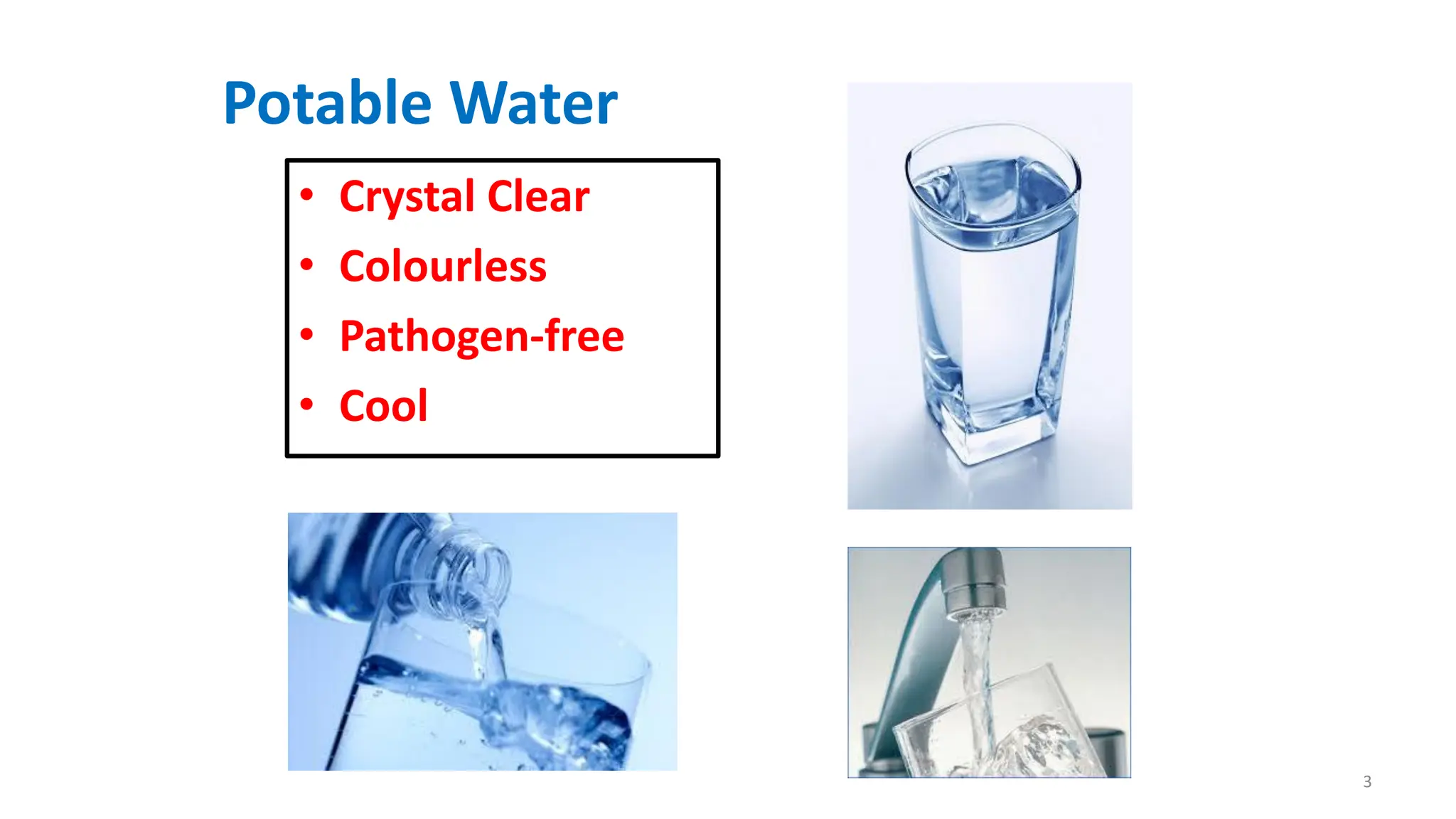
Potable Water
• Crystal Clear
• Colourless
• Pathogen-free
• Cool
3
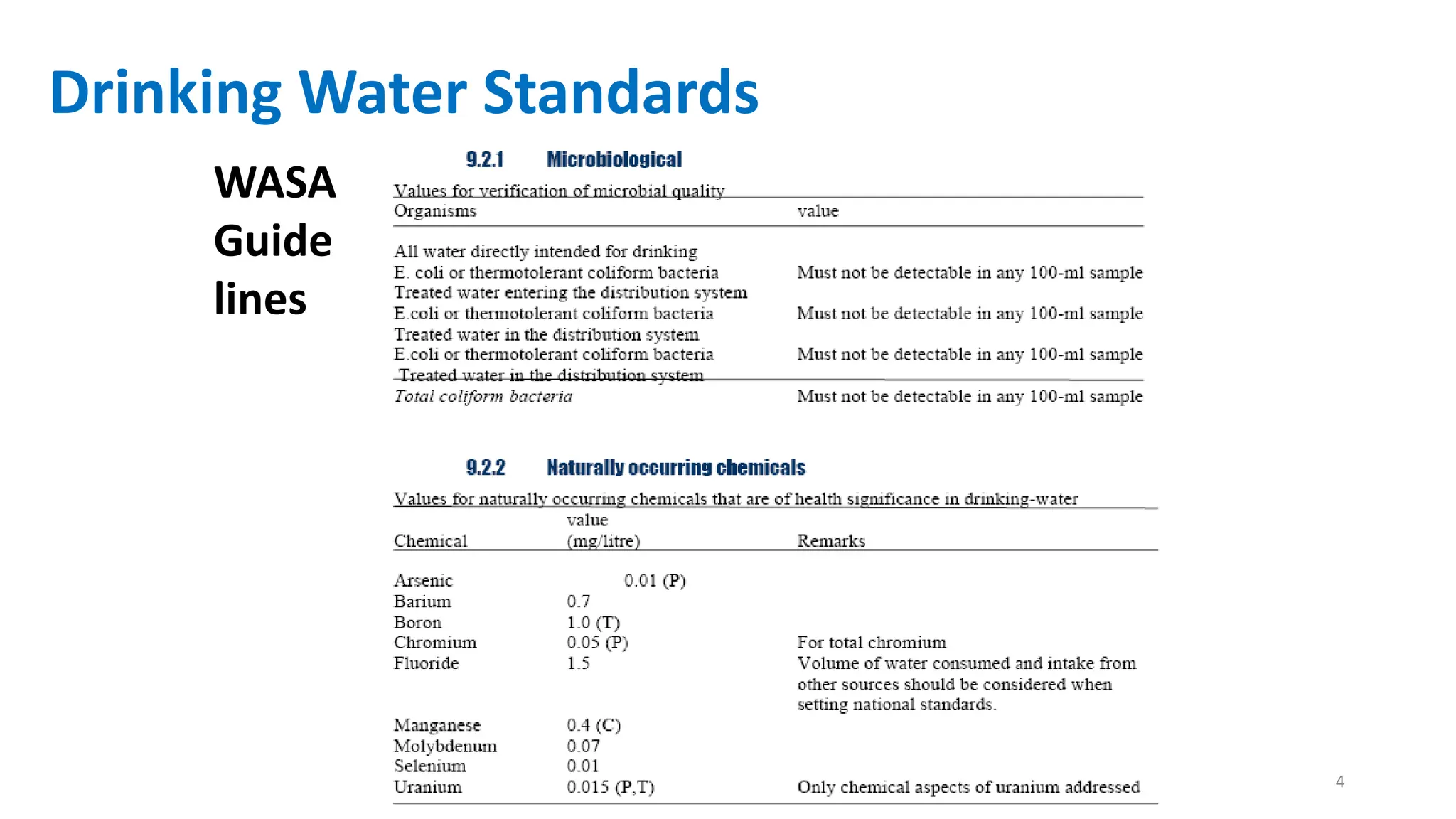
WASA
Guide
lines
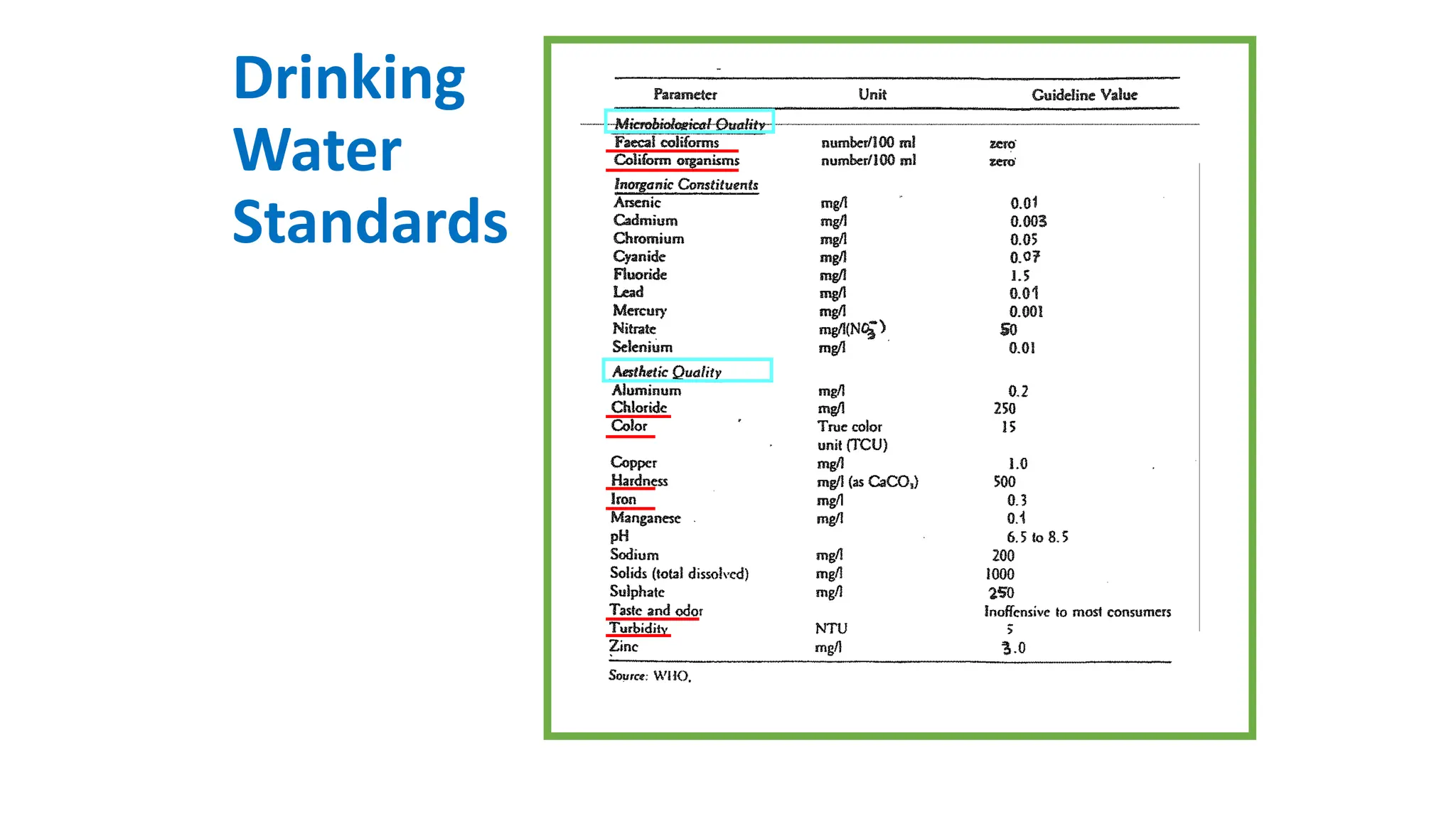
Drinking Water Standards
4
Drinking
Water
Standards
Sources of Water
Surface water
• Rivers and
streams
6
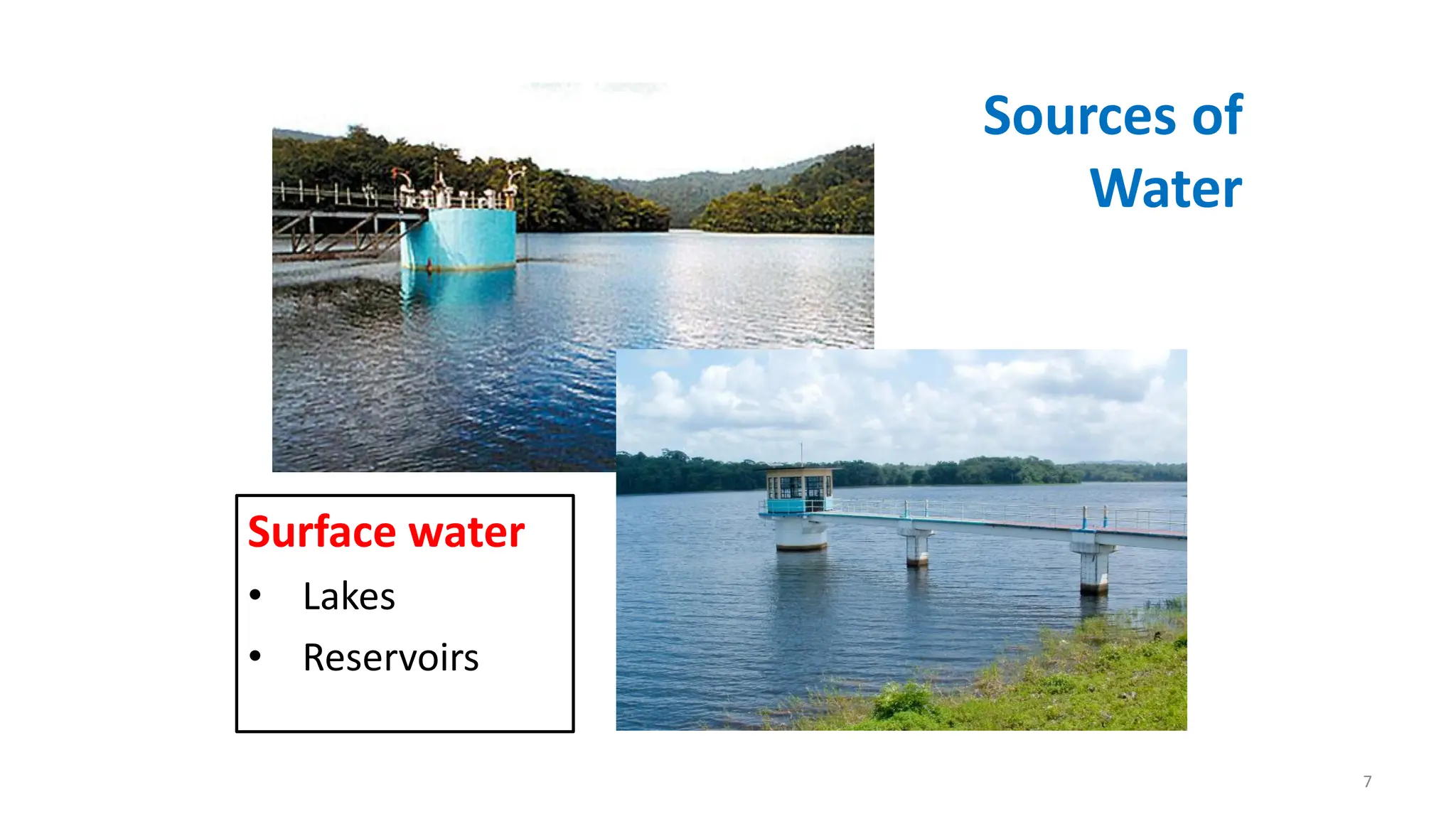
Surface water
• Lakes
• Reservoirs
Sources of
Water
7
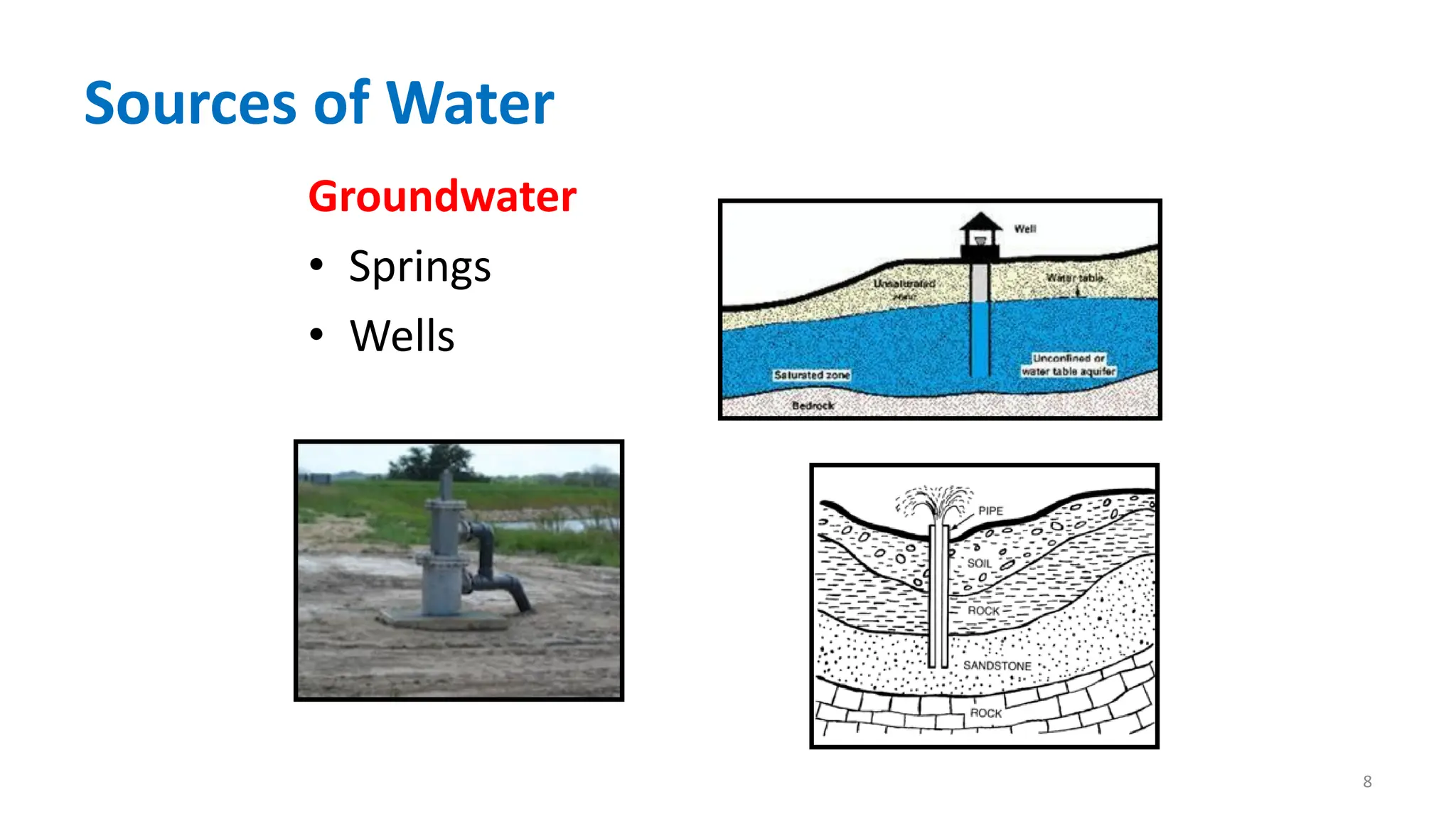
Sources of Water
Groundwater
• Springs
• Wells
8
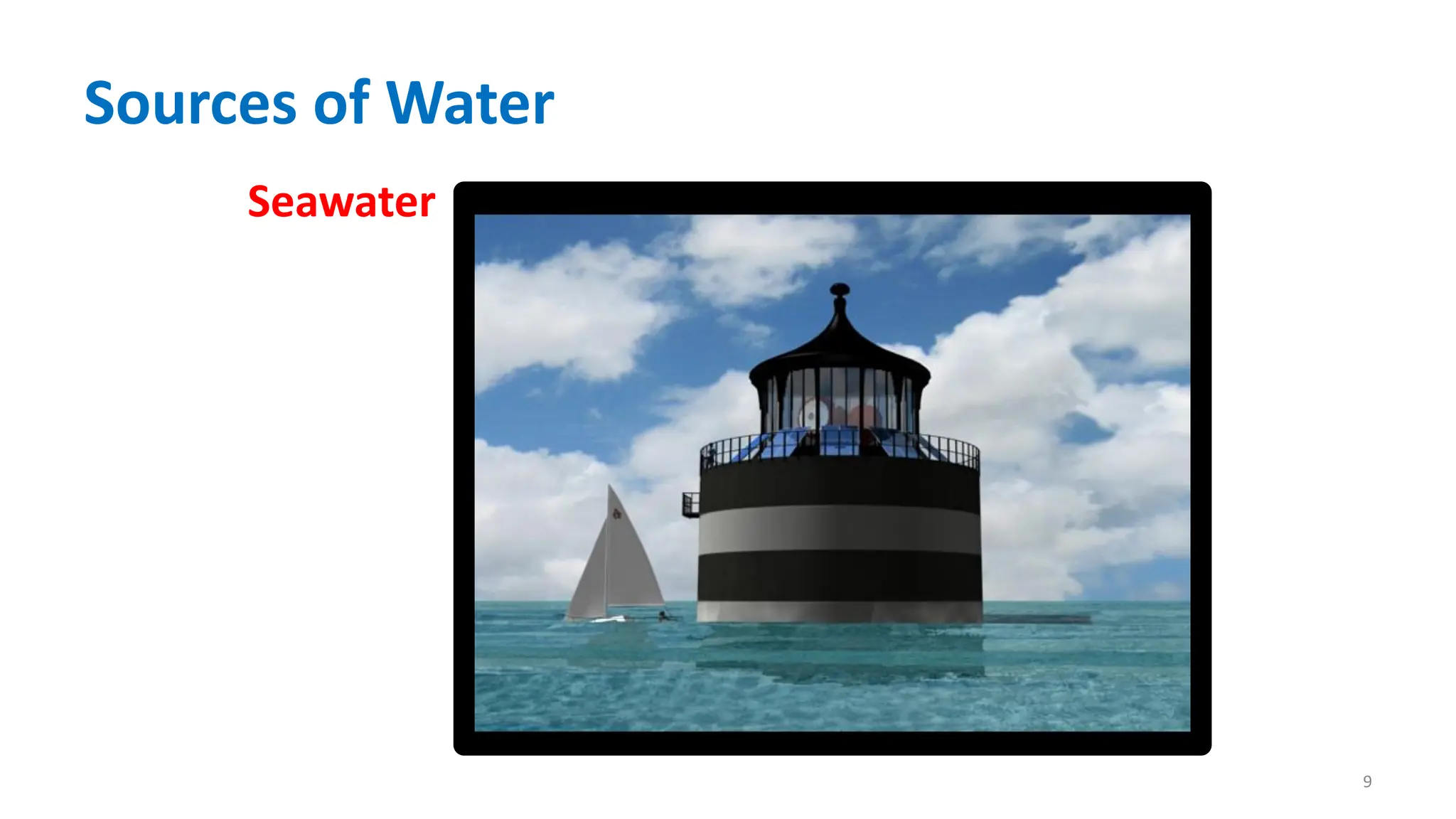
Sources of Water
Seawater
9
Sources of Water
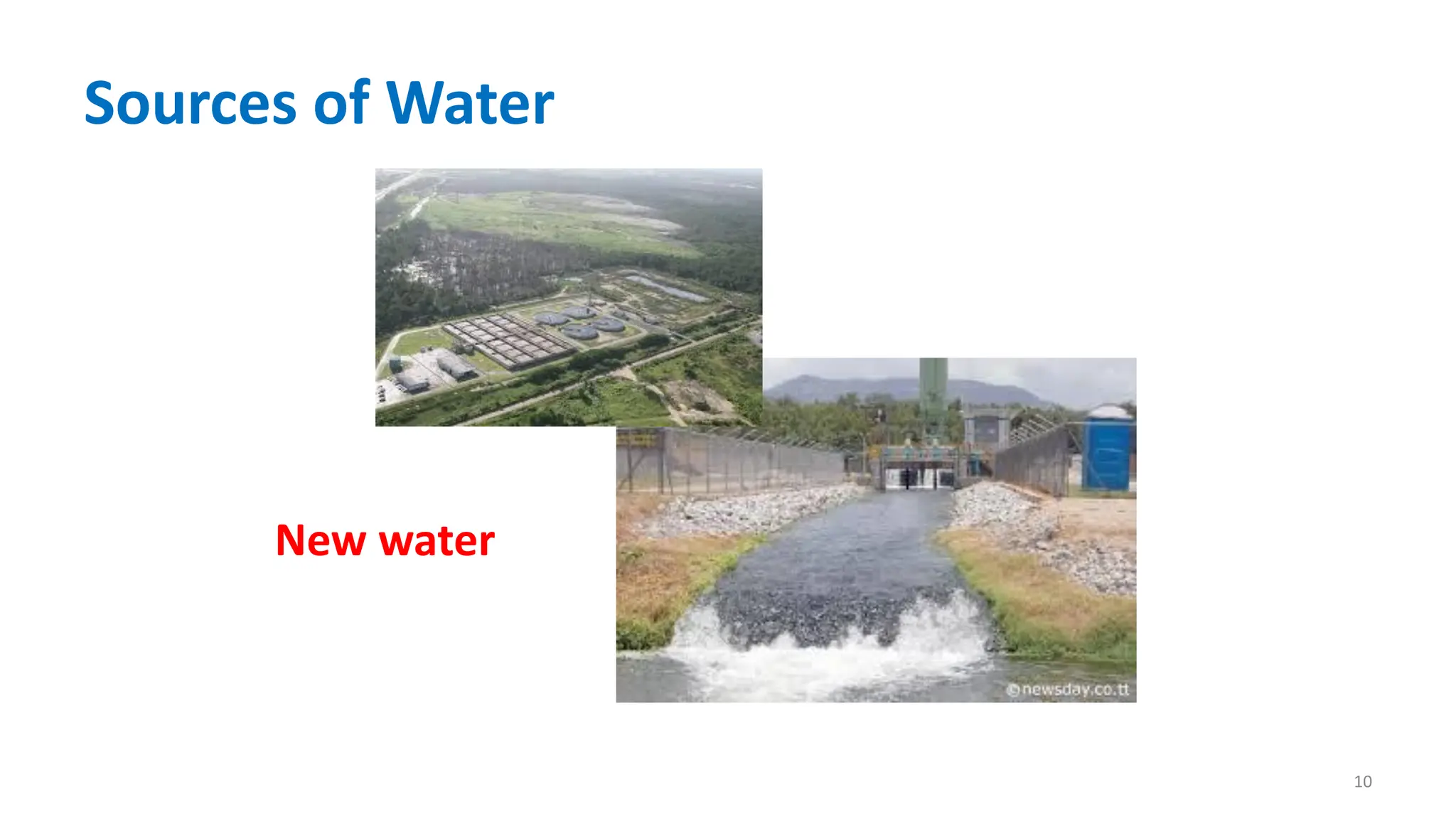
New water
10
Water Quality
Three main categories to describe drinking water quality
• Physical—associated with appearance of water
• Colour
• Turbidity
• Taste and odour
• Temperature
• Chemical
• Evidenced by their observed reactions, such as comparative performance of hard and
soft water in laundering
• Differences may not be visible
• Microbiological
• Important for public health
Physical Properties
Physical Characteristics
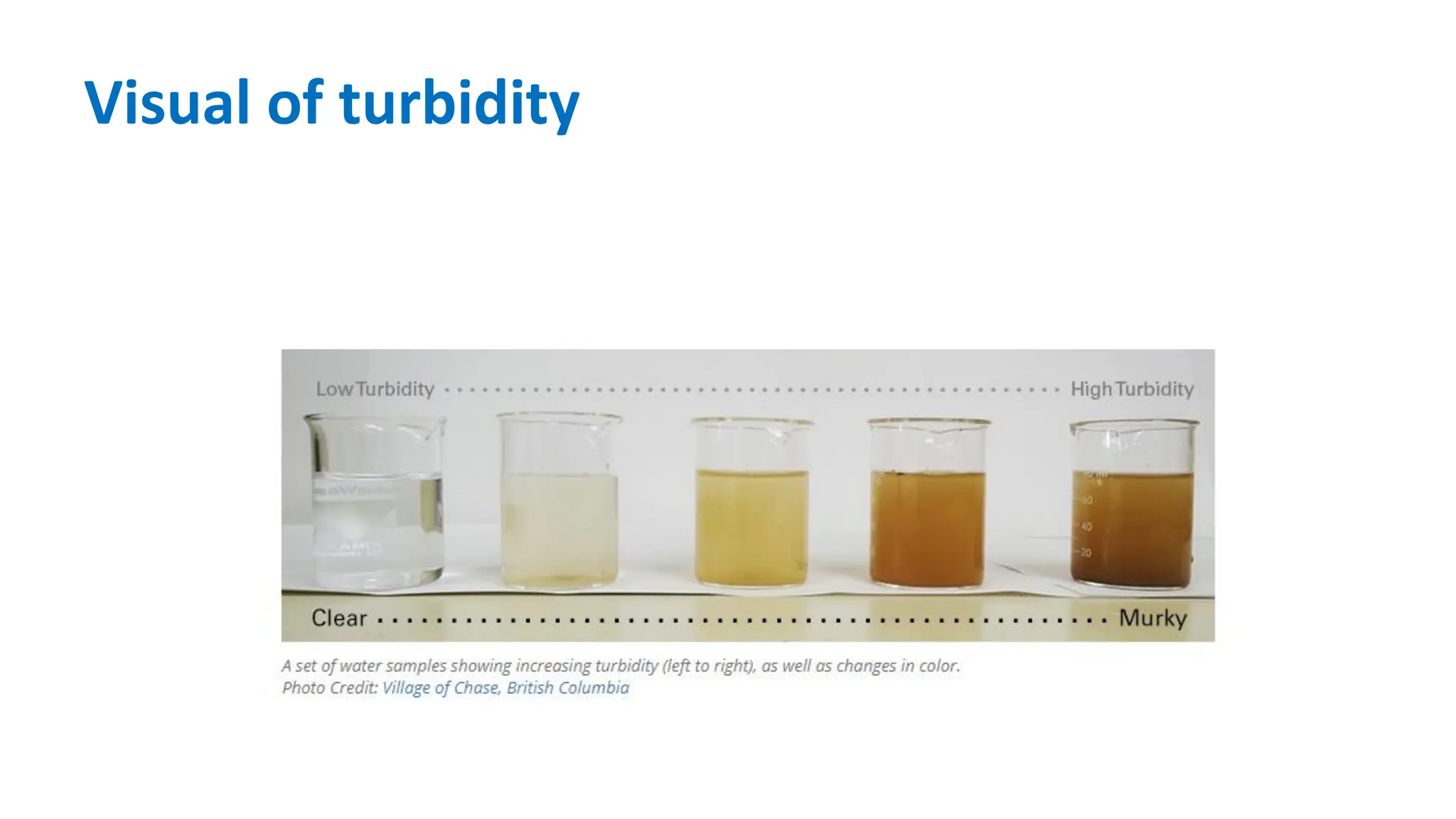
Turbidity
Presence of suspended material such as clay, silt, finely divided organic
material and other particulate material in water.
• Unit of measurement: Turbidity Unity (TU); Nephlometric Turbidity
Unit (NTU)
• May not adversely affect health
• Water containing such particles may require treatment for intended
use
Visual of turbidity
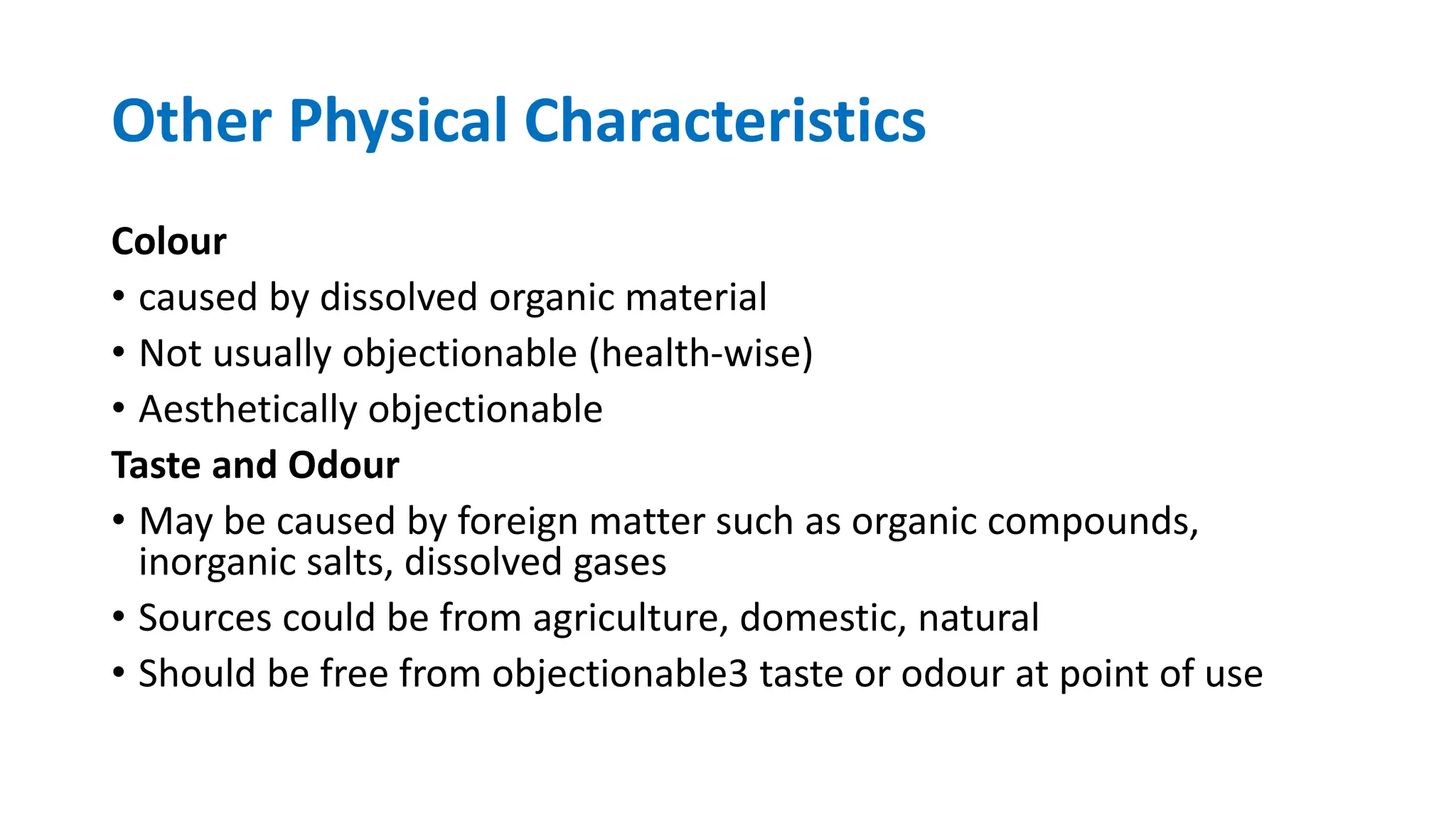
Other Physical Characteristics
Colour
• caused by dissolved organic material
• Not usually objectionable (health-wise)
• Aesthetically objectionable
Taste and Odour
• May be caused by foreign matter such as organic compounds,
inorganic salts, dissolved gases
• Sources could be from agriculture, domestic, natural
• Should be free from objectionable3 taste or odour at point of use
Chemical Properties
Microbiological Properties
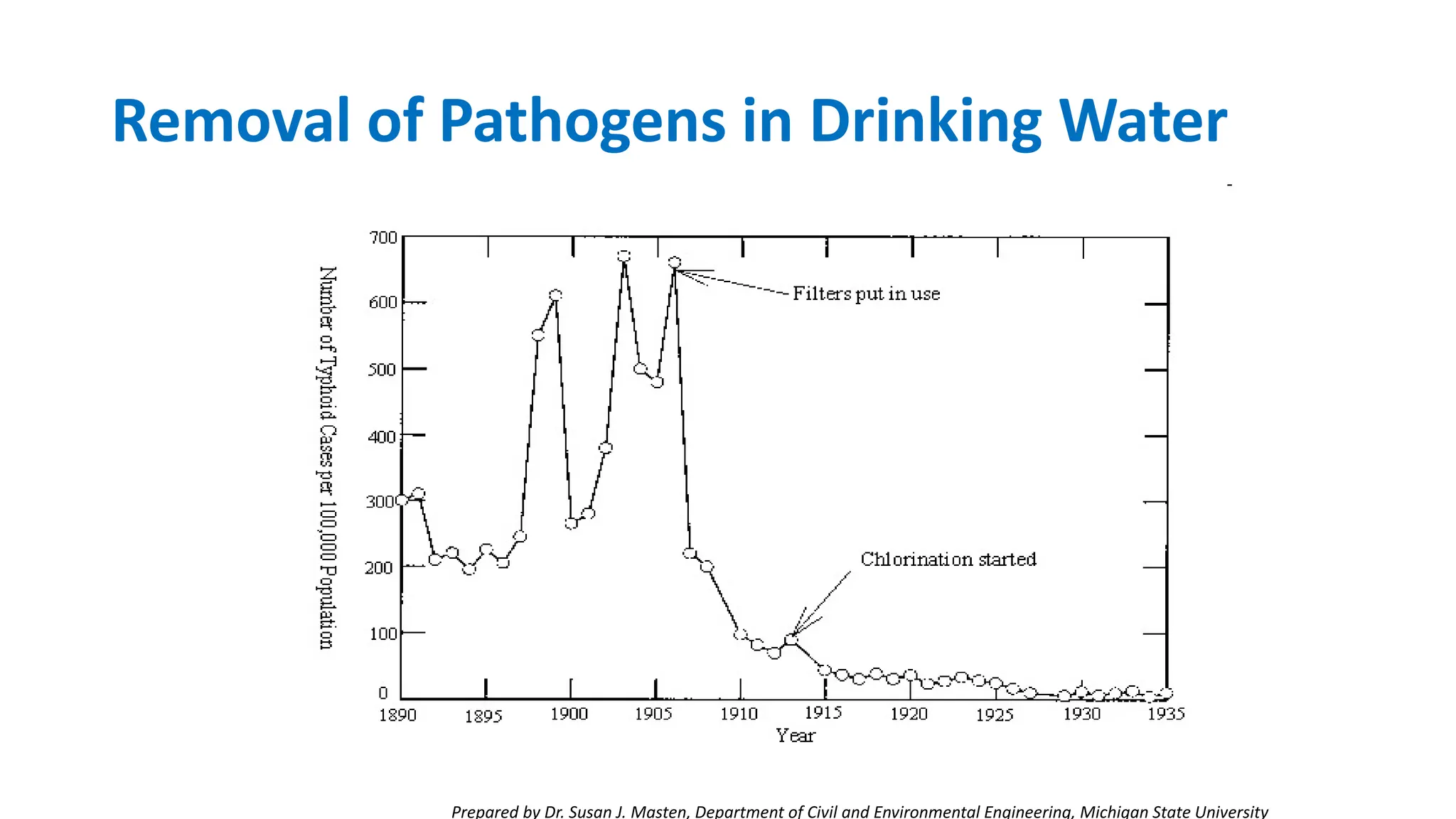
Removal of Pathogens in Drinking Water
Prepared by Dr. Susan J. Masten, Department of Civil and Environmental Engineering, Michigan State University
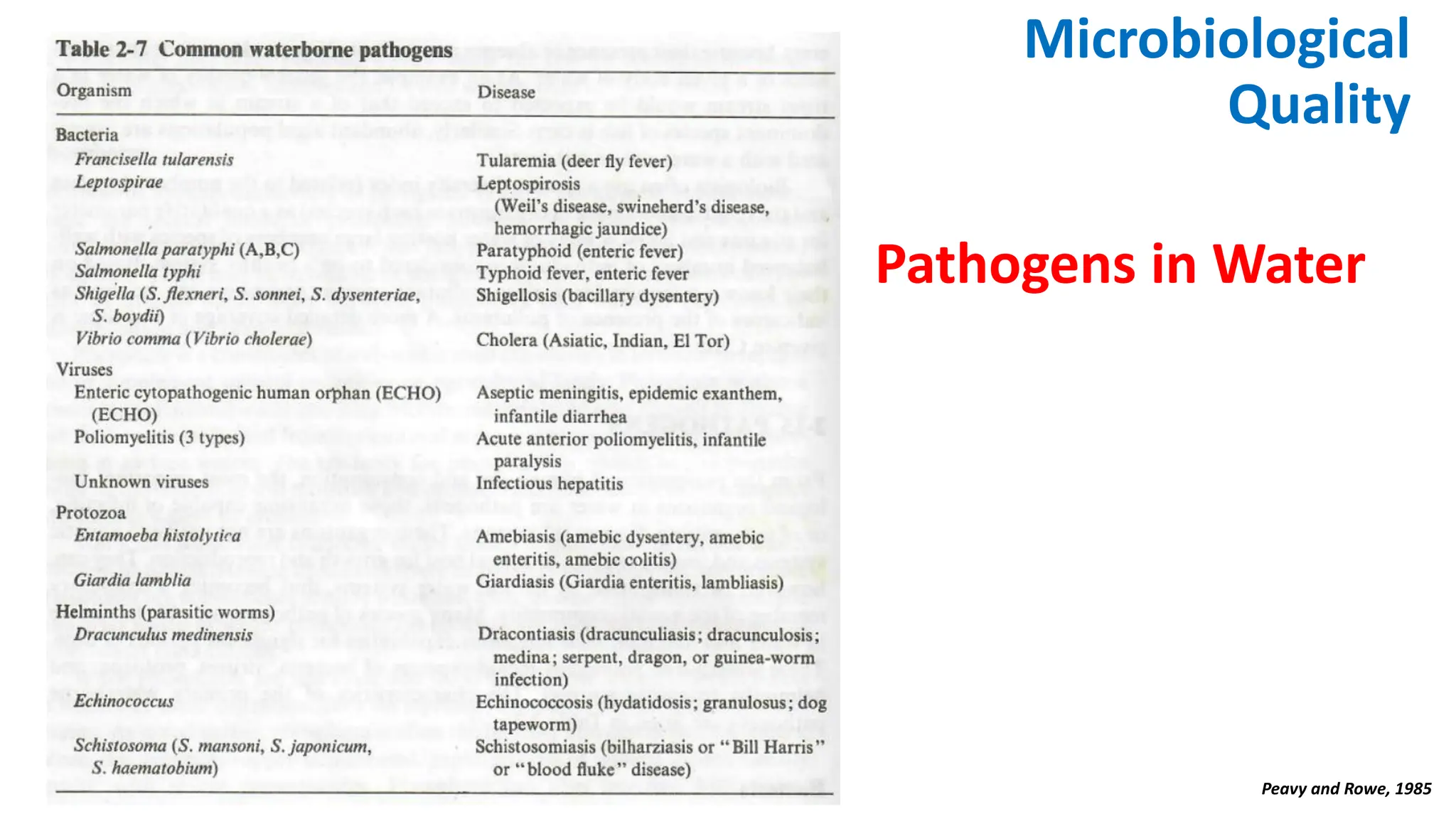
Microbiological
Quality
Pathogens in Water
Peavy and Rowe, 1985
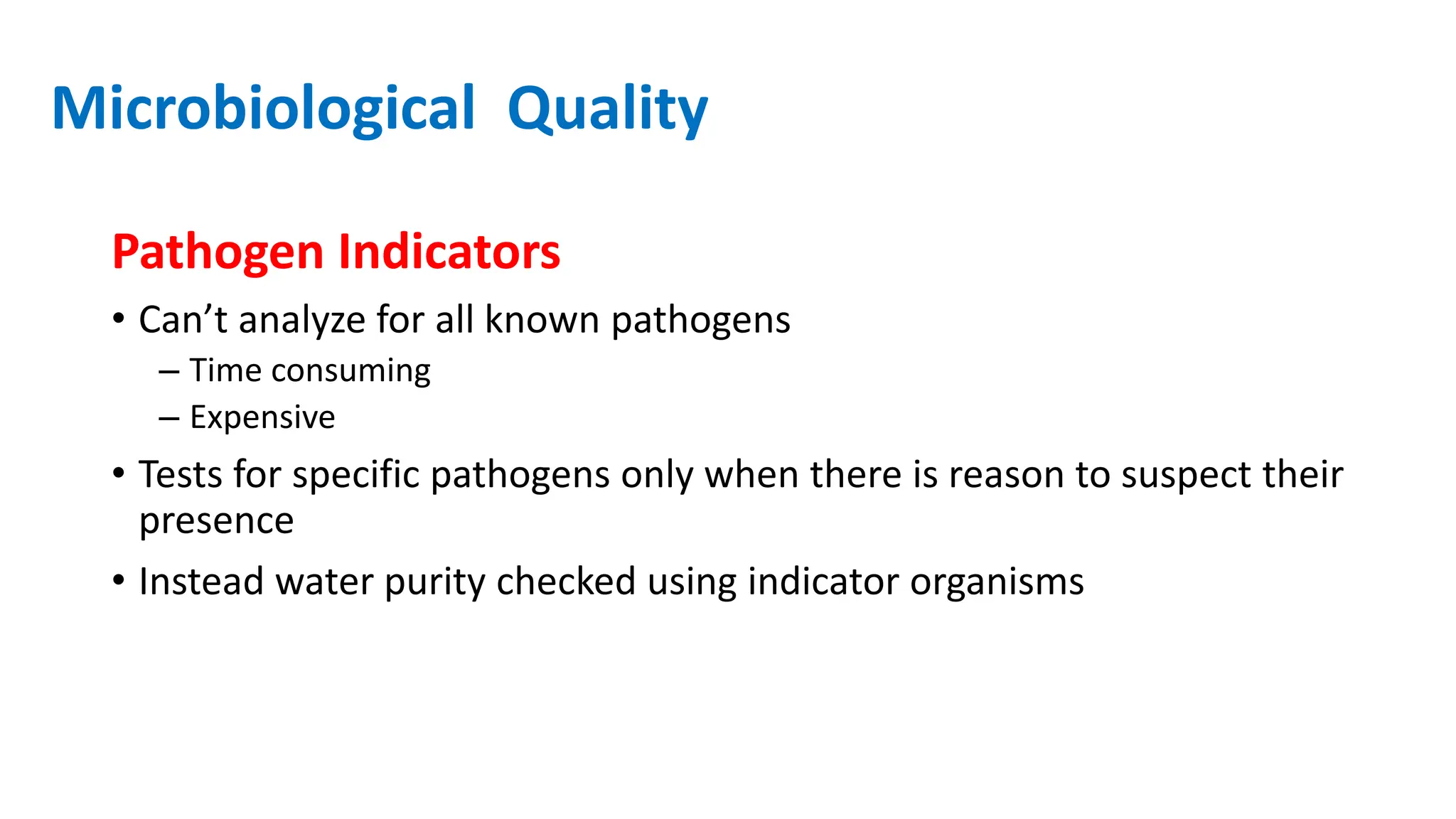
Microbiological Quality
Pathogen Indicators
• Can’t analyze for all known pathogens
– Time consuming
– Expensive
• Tests for specific pathogens only when there is reason to suspect their
presence
• Instead water purity checked using indicator organisms
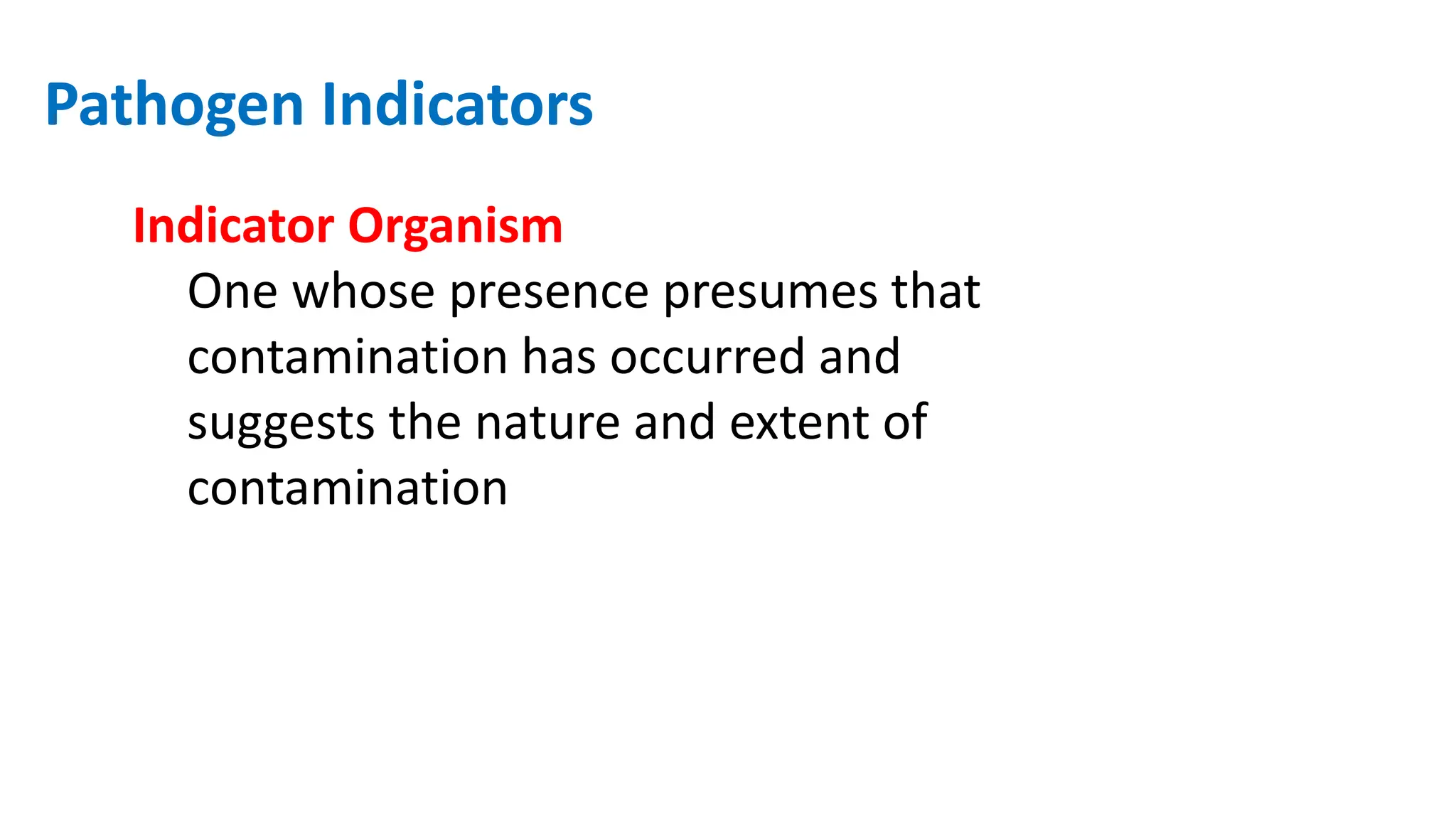
Pathogen Indicators
Indicator Organism
One whose presence presumes that
contamination has occurred and
suggests the nature and extent of
contamination
Pathogen Indicators
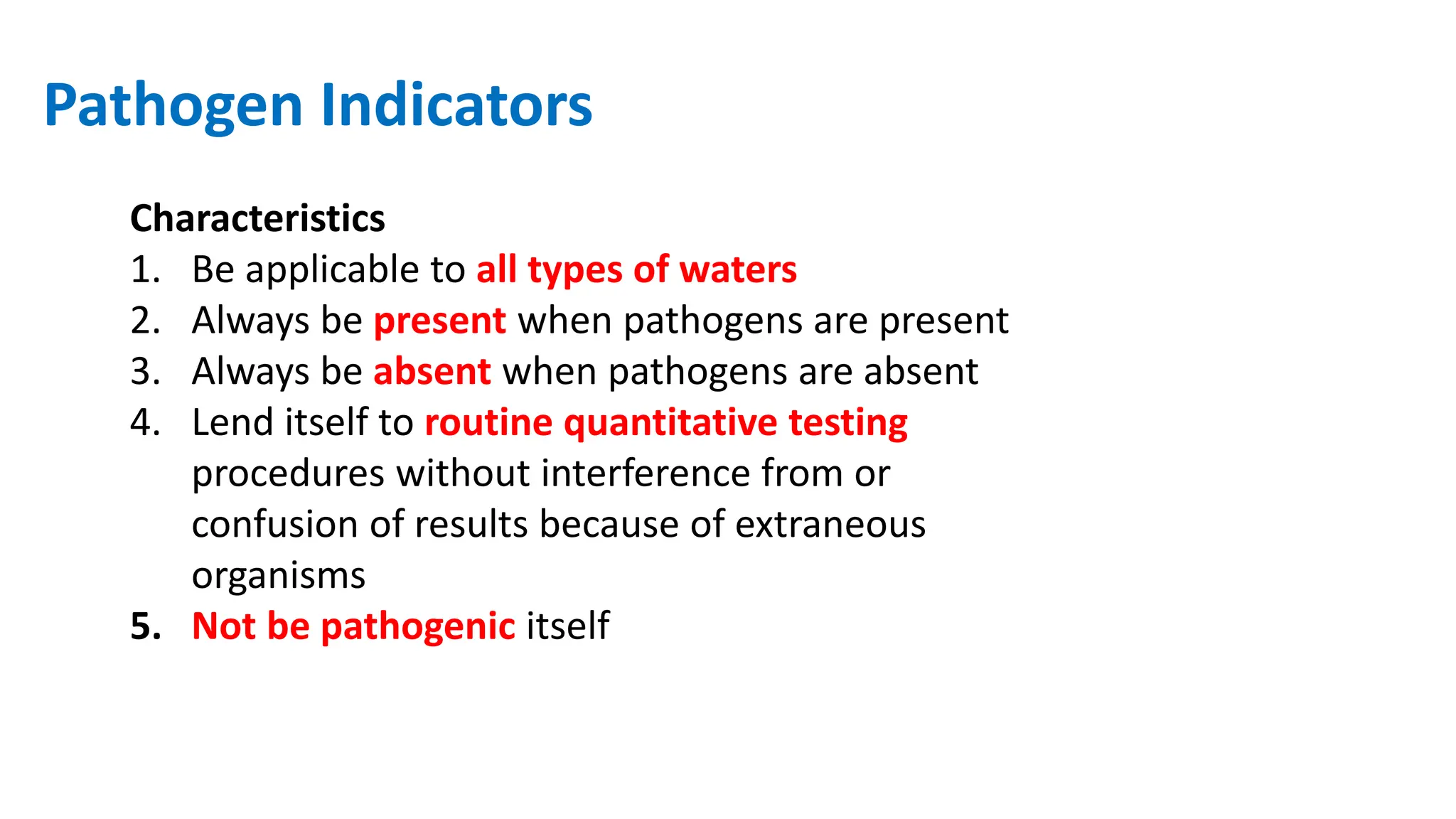
Characteristics
1. Be applicable to all types of waters
2. Always be present when pathogens are present
3. Always be absent when pathogens are absent
4. Lend itself to routine quantitative testing
procedures without interference from or
confusion of results because of extraneous
organisms
5. Not be pathogenic itself
Pathogen Indicators
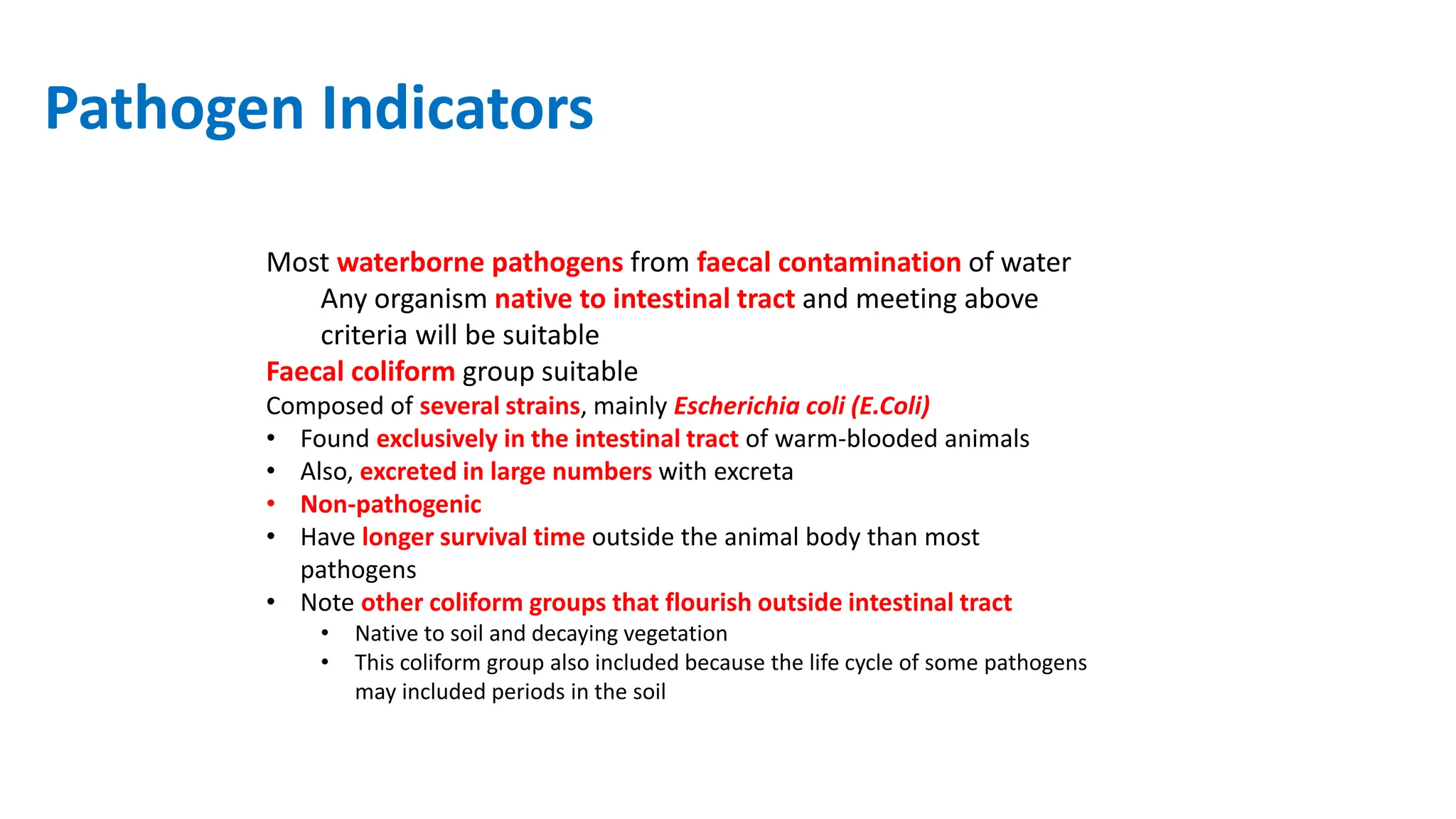
Most waterborne pathogens from faecal contamination of water
Any organism native to intestinal tract and meeting above
criteria will be suitable
Faecal coliform group suitable
Composed of several strains, mainly Escherichia coli (E.Coli)
• Found exclusively in the intestinal tract of warm‐blooded animals
• Also, excreted in large numbers with excreta
• Non‐pathogenic
• Have longer survival time outside the animal body than most
pathogens
• Note other coliform groups that flourish outside intestinal tract
• Native to soil and decaying vegetation
• This coliform group also included because the life cycle of some pathogens
may included periods in the soil
Pathogen Indicators
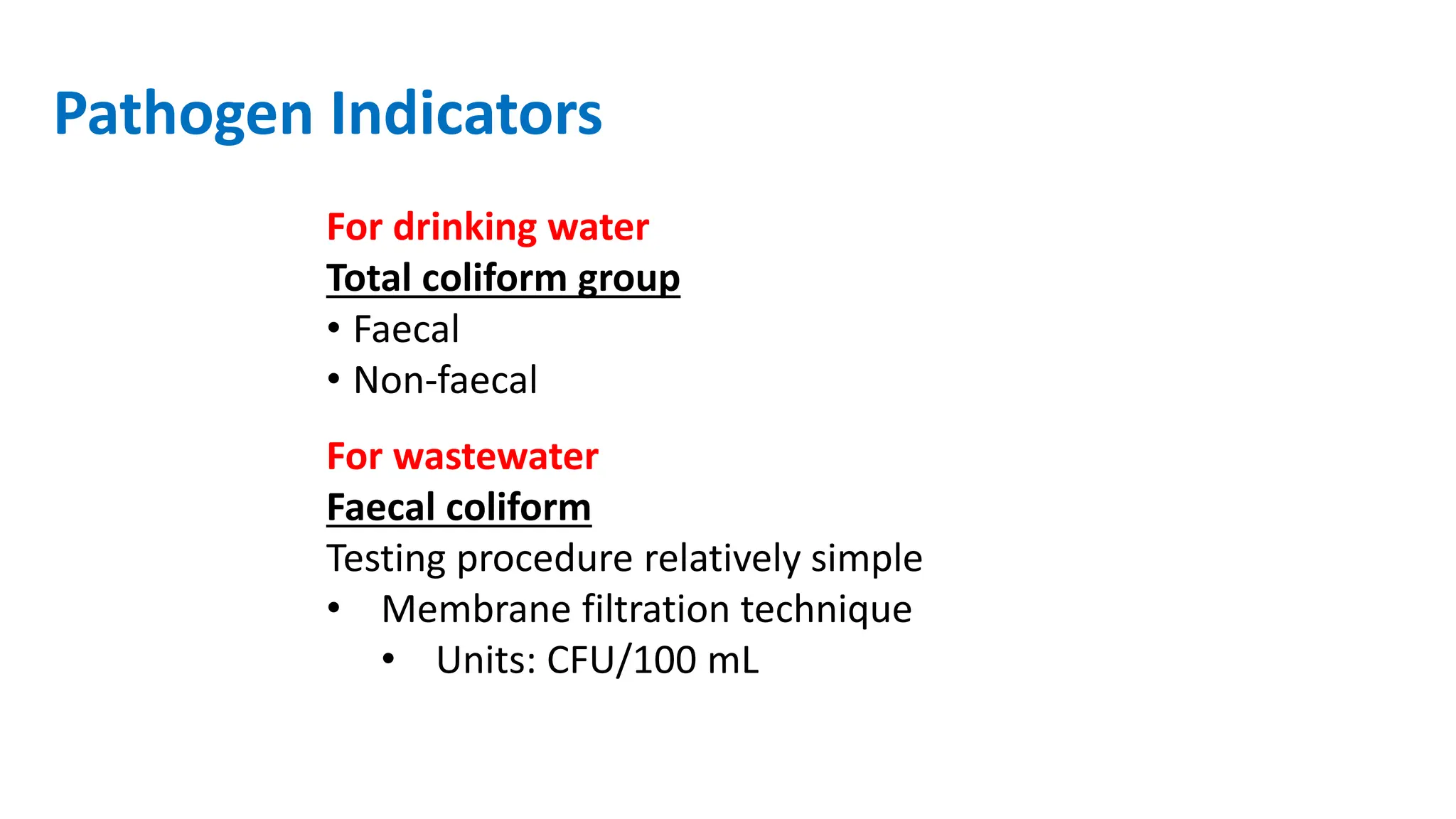
For drinking water
Total coliform group
• Faecal
• Non‐faecal
For wastewater
Faecal coliform
Testing procedure relatively simple
• Membrane filtration technique
• Units: CFU/100 mL
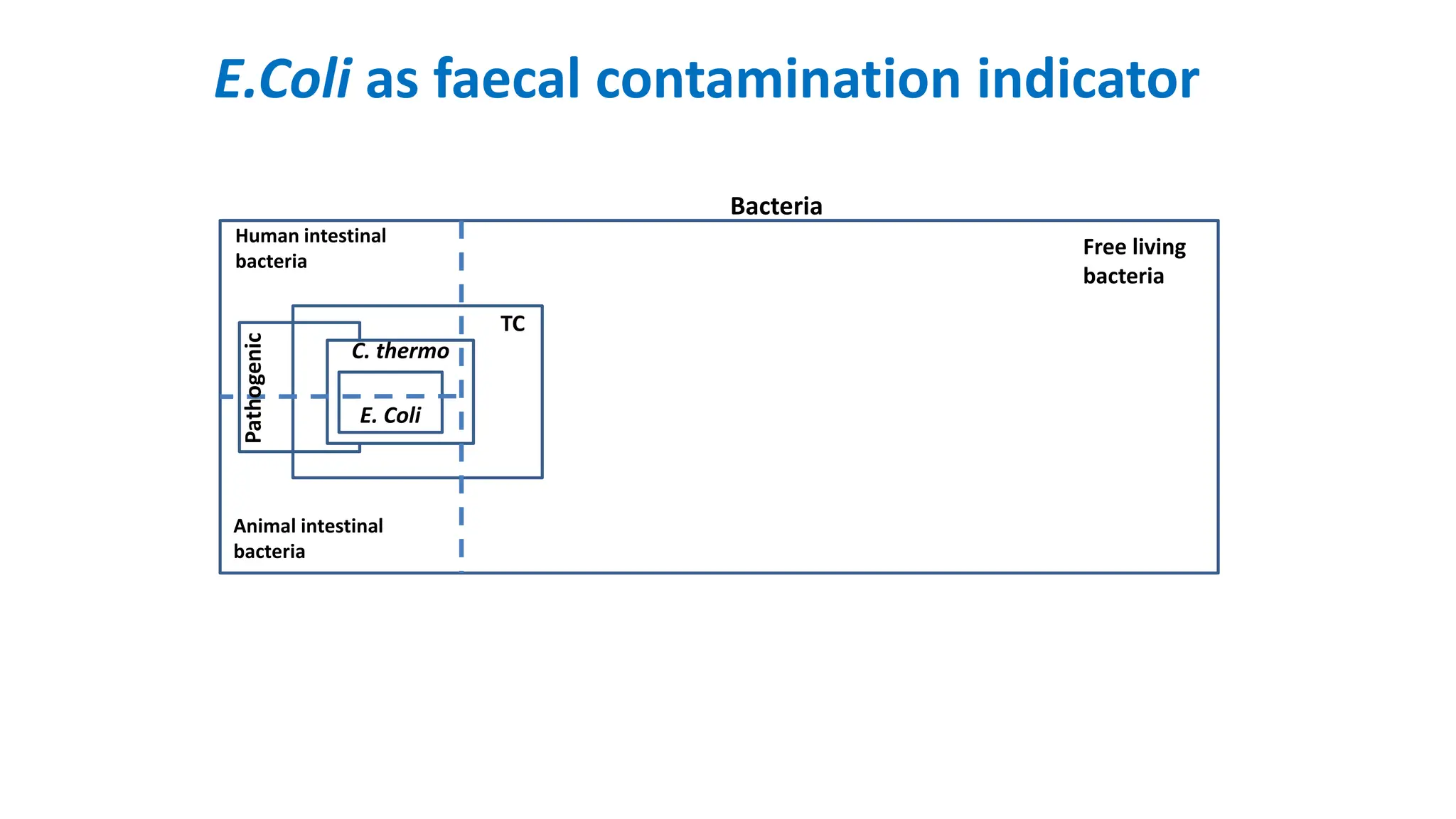
E.Coli as faecal contamination indicator
C.thermo
Bacteria
Animal intestinal
bacteria
Free living
bacteria
C. thermo
Human intestinal
bacteria
E. Coli
Pathogenic
TC
Things you know now
1. What are the pathogens that cause major water-related outbreaks
2. What is an indicator organism
3. What are the characteristics of an indicator organism
4. Why are total and faecal coliform tested in water treatment

Drinking Water Quality- Environmental Engineering 1

  • 1.
    CVNG2012 ENVIRONMENTAL ENGINEERING 1 Lecturer:Vincent Cooper PHYSICAL CHEMICAL MICROBIOLOGICAL DRINKING WATER QUALITY
  • 2.
    Water Quality • Provisionof safe, palatable, and ample public water supplies • Proper disposal of or recycling of wastewater and solid wastes • Control of water, soil, and atmospheric pollution (including noise as an atmospheric pollution)
  • 3.
    Potable Water • CrystalClear • Colourless • Pathogen-free • Cool 3
  • 4.
  • 5.
  • 6.
    Sources of Water Surfacewater • Rivers and streams 6
  • 7.
    Surface water • Lakes •Reservoirs Sources of Water 7
  • 8.
  • 9.
  • 10.
  • 11.
    Water Quality Three maincategories to describe drinking water quality • Physical—associated with appearance of water • Colour • Turbidity • Taste and odour • Temperature • Chemical • Evidenced by their observed reactions, such as comparative performance of hard and soft water in laundering • Differences may not be visible • Microbiological • Important for public health
  • 12.
  • 13.
    Physical Characteristics Turbidity Presence ofsuspended material such as clay, silt, finely divided organic material and other particulate material in water. • Unit of measurement: Turbidity Unity (TU); Nephlometric Turbidity Unit (NTU) • May not adversely affect health • Water containing such particles may require treatment for intended use
  • 14.
  • 15.
    Other Physical Characteristics Colour •caused by dissolved organic material • Not usually objectionable (health-wise) • Aesthetically objectionable Taste and Odour • May be caused by foreign matter such as organic compounds, inorganic salts, dissolved gases • Sources could be from agriculture, domestic, natural • Should be free from objectionable3 taste or odour at point of use
  • 16.
  • 17.
  • 18.
    Removal of Pathogensin Drinking Water Prepared by Dr. Susan J. Masten, Department of Civil and Environmental Engineering, Michigan State University
  • 19.
  • 20.
    Microbiological Quality Pathogen Indicators •Can’t analyze for all known pathogens – Time consuming – Expensive • Tests for specific pathogens only when there is reason to suspect their presence • Instead water purity checked using indicator organisms
  • 21.
    Pathogen Indicators Indicator Organism Onewhose presence presumes that contamination has occurred and suggests the nature and extent of contamination
  • 22.
    Pathogen Indicators Characteristics 1. Beapplicable to all types of waters 2. Always be present when pathogens are present 3. Always be absent when pathogens are absent 4. Lend itself to routine quantitative testing procedures without interference from or confusion of results because of extraneous organisms 5. Not be pathogenic itself
  • 23.
    Pathogen Indicators Most waterbornepathogens from faecal contamination of water Any organism native to intestinal tract and meeting above criteria will be suitable Faecal coliform group suitable Composed of several strains, mainly Escherichia coli (E.Coli) • Found exclusively in the intestinal tract of warm‐blooded animals • Also, excreted in large numbers with excreta • Non‐pathogenic • Have longer survival time outside the animal body than most pathogens • Note other coliform groups that flourish outside intestinal tract • Native to soil and decaying vegetation • This coliform group also included because the life cycle of some pathogens may included periods in the soil
  • 24.
    Pathogen Indicators For drinkingwater Total coliform group • Faecal • Non‐faecal For wastewater Faecal coliform Testing procedure relatively simple • Membrane filtration technique • Units: CFU/100 mL
  • 25.
    E.Coli as faecalcontamination indicator C.thermo Bacteria Animal intestinal bacteria Free living bacteria C. thermo Human intestinal bacteria E. Coli Pathogenic TC
  • 26.
    Things you knownow 1. What are the pathogens that cause major water-related outbreaks 2. What is an indicator organism 3. What are the characteristics of an indicator organism 4. Why are total and faecal coliform tested in water treatment