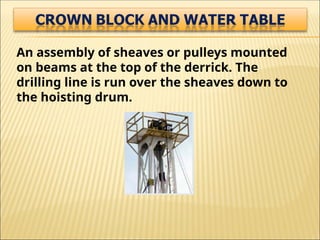
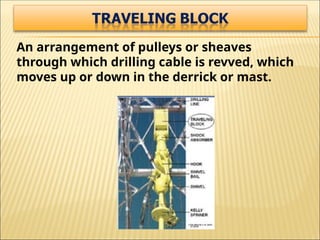
An assembly ofsheaves or pulleys mounted
on beams at the top of the derrick. The
drilling line is run over the sheaves down to
the hoisting drum.
3.
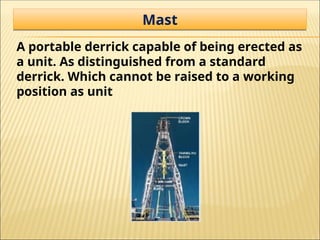
Mast
A portable derrickcapable of being erected as
a unit. As distinguished from a standard
derrick. Which cannot be raised to a working
position as unit
4.
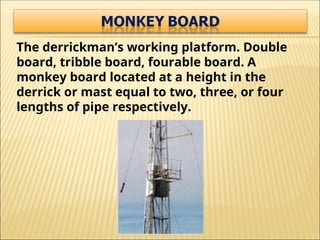
The derrickman’s workingplatform. Double
board, tribble board, fourable board. A
monkey board located at a height in the
derrick or mast equal to two, three, or four
lengths of pipe respectively.
5.
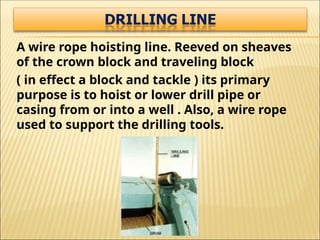
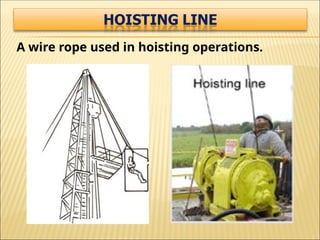
A wire ropehoisting line. Reeved on sheaves
of the crown block and traveling block
( in effect a block and tackle ) its primary
purpose is to hoist or lower drill pipe or
casing from or into a well . Also, a wire rope
used to support the drilling tools.
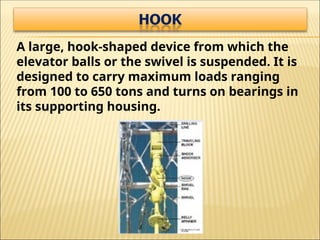
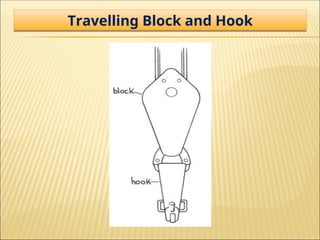
A large, hook-shapeddevice from which the
elevator balls or the swivel is suspended. It is
designed to carry maximum loads ranging
from 100 to 650 tons and turns on bearings in
its supporting housing.
8.
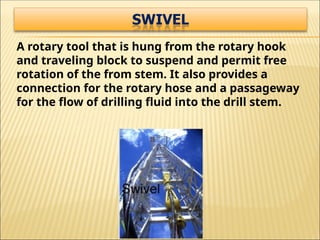
A rotary toolthat is hung from the rotary hook
and traveling block to suspend and permit free
rotation of the from stem. It also provides a
connection for the rotary hose and a passageway
for the flow of drilling fluid into the drill stem.
9.
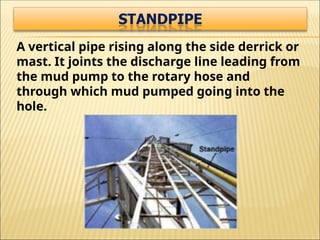
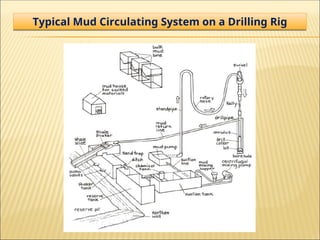
A vertical piperising along the side derrick or
mast. It joints the discharge line leading from
the mud pump to the rotary hose and
through which mud pumped going into the
hole.
10.
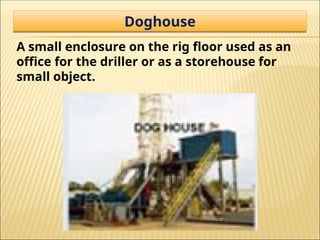
A small enclosureon the rig floor used as an
office for the driller or as a storehouse for
small object.
Doghouse
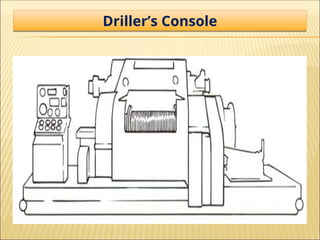
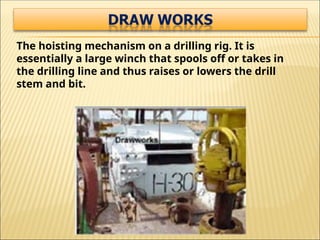
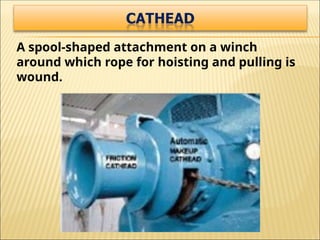
The hoisting mechanismon a drilling rig. It is
essentially a large winch that spools off or takes in
the drilling line and thus raises or lowers the drill
stem and bit.
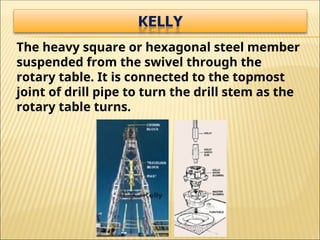
The heavy squareor hexagonal steel member
suspended from the swivel through the
rotary table. It is connected to the topmost
joint of drill pipe to turn the drill stem as the
rotary table turns.
19.
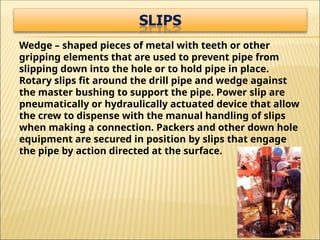
Wedge – shapedpieces of metal with teeth or other
gripping elements that are used to prevent pipe from
slipping down into the hole or to hold pipe in place.
Rotary slips fit around the drill pipe and wedge against
the master bushing to support the pipe. Power slip are
pneumatically or hydraulically actuated device that allow
the crew to dispense with the manual handling of slips
when making a connection. Packers and other down hole
equipment are secured in position by slips that engage
the pipe by action directed at the surface.
20.
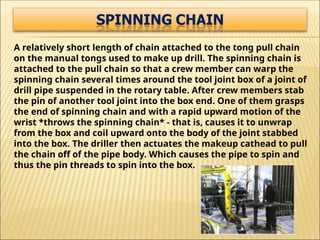
A relatively shortlength of chain attached to the tong pull chain
on the manual tongs used to make up drill. The spinning chain is
attached to the pull chain so that a crew member can warp the
spinning chain several times around the tool joint box of a joint of
drill pipe suspended in the rotary table. After crew members stab
the pin of another tool joint into the box end. One of them grasps
the end of spinning chain and with a rapid upward motion of the
wrist *throws the spinning chain* - that is, causes it to unwrap
from the box and coil upward onto the body of the joint stabbed
into the box. The driller then actuates the makeup cathead to pull
the chain off of the pipe body. Which causes the pipe to spin and
thus the pin threads to spin into the box.
21.
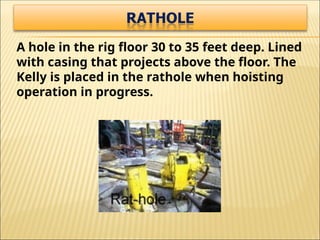
A hole inthe rig floor 30 to 35 feet deep. Lined
with casing that projects above the floor. The
Kelly is placed in the rathole when hoisting
operation in progress.
22.
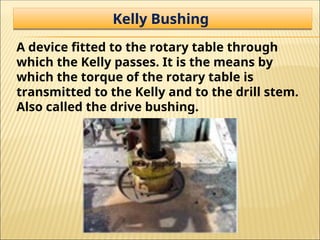
Kelly Bushing
A devicefitted to the rotary table through
which the Kelly passes. It is the means by
which the torque of the rotary table is
transmitted to the Kelly and to the drill stem.
Also called the drive bushing.
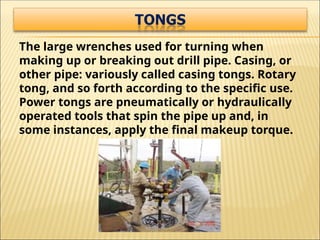
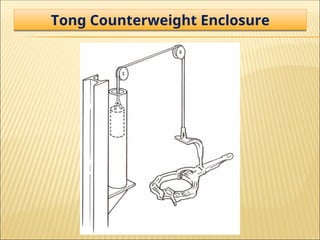
The large wrenchesused for turning when
making up or breaking out drill pipe. Casing, or
other pipe: variously called casing tongs. Rotary
tong, and so forth according to the specific use.
Power tongs are pneumatically or hydraulically
operated tools that spin the pipe up and, in
some instances, apply the final makeup torque.
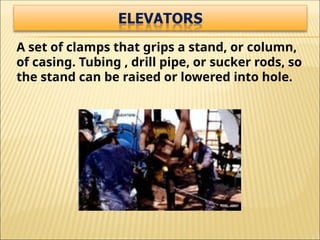
A set ofclamps that grips a stand, or column,
of casing. Tubing , drill pipe, or sucker rods, so
the stand can be raised or lowered into hole.
27.
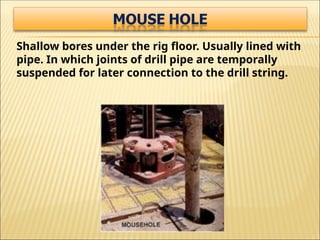
Shallow bores underthe rig floor. Usually lined with
pipe. In which joints of drill pipe are temporally
suspended for later connection to the drill string.
28.
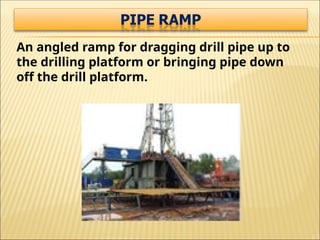
An angled rampfor dragging drill pipe up to
the drilling platform or bringing pipe down
off the drill platform.
29.
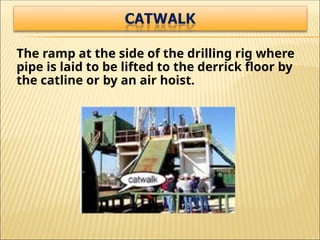
The ramp atthe side of the drilling rig where
pipe is laid to be lifted to the derrick floor by
the catline or by an air hoist.
30.
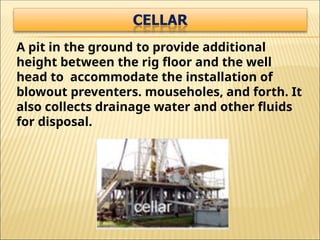
A pit inthe ground to provide additional
height between the rig floor and the well
head to accommodate the installation of
blowout preventers. mouseholes, and forth. It
also collects drainage water and other fluids
for disposal.
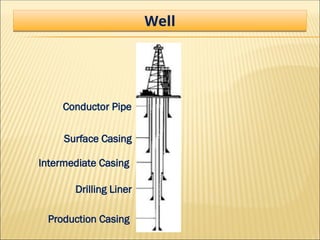
31.
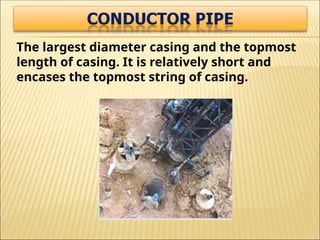
The largest diametercasing and the topmost
length of casing. It is relatively short and
encases the topmost string of casing.
32.
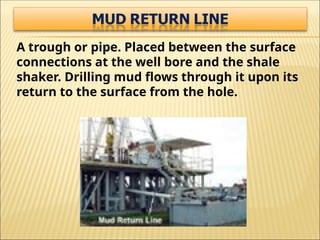
A trough orpipe. Placed between the surface
connections at the well bore and the shale
shaker. Drilling mud flows through it upon its
return to the surface from the hole.
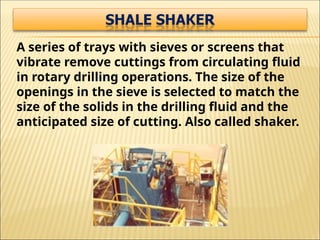
A series oftrays with sieves or screens that
vibrate remove cuttings from circulating fluid
in rotary drilling operations. The size of the
openings in the sieve is selected to match the
size of the solids in the drilling fluid and the
anticipated size of cutting. Also called shaker.
35.
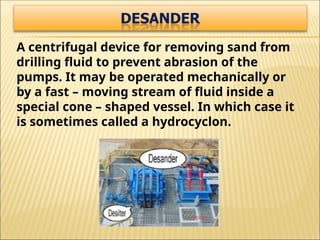
A centrifugal devicefor removing sand from
drilling fluid to prevent abrasion of the
pumps. It may be operated mechanically or
by a fast – moving stream of fluid inside a
special cone – shaped vessel. In which case it
is sometimes called a hydrocyclon.
36.
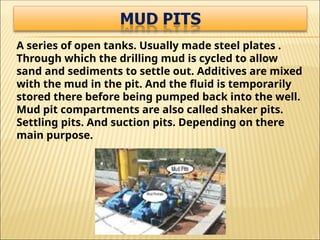
A series ofopen tanks. Usually made steel plates .
Through which the drilling mud is cycled to allow
sand and sediments to settle out. Additives are mixed
with the mud in the pit. And the fluid is temporarily
stored there before being pumped back into the well.
Mud pit compartments are also called shaker pits.
Settling pits. And suction pits. Depending on there
main purpose.
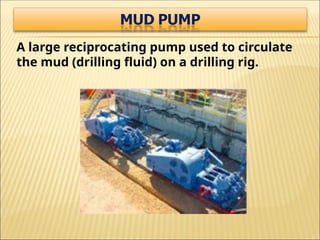
A large reciprocatingpump used to circulate
the mud (drilling fluid) on a drilling rig.
39.
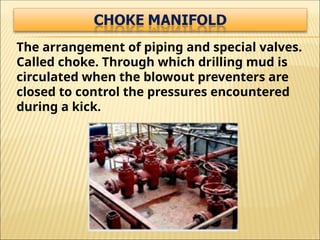
The arrangement ofpiping and special valves.
Called choke. Through which drilling mud is
circulated when the blowout preventers are
closed to control the pressures encountered
during a kick.
40.
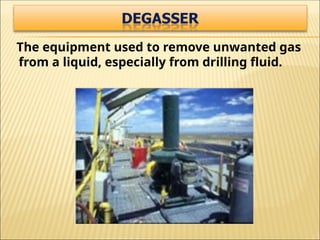
The equipment usedto remove unwanted gas
from a liquid, especially from drilling fluid.
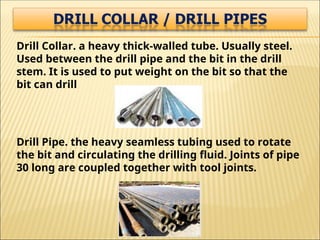
41.
Drill Collar. aheavy thick-walled tube. Usually steel.
Used between the drill pipe and the bit in the drill
stem. It is used to put weight on the bit so that the
bit can drill
Drill Pipe. the heavy seamless tubing used to rotate
the bit and circulating the drilling fluid. Joints of pipe
30 long are coupled together with tool joints.
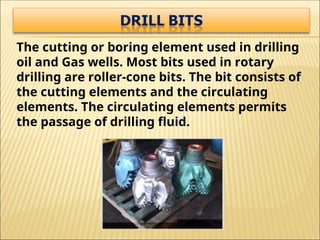
42.
The cutting orboring element used in drilling
oil and Gas wells. Most bits used in rotary
drilling are roller-cone bits. The bit consists of
the cutting elements and the circulating
elements. The circulating elements permits
the passage of drilling fluid.
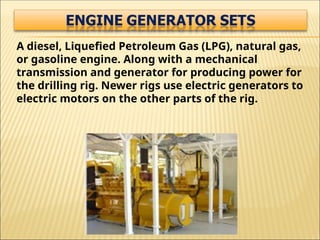
A diesel, LiquefiedPetroleum Gas (LPG), natural gas,
or gasoline engine. Along with a mechanical
transmission and generator for producing power for
the drilling rig. Newer rigs use electric generators to
electric motors on the other parts of the rig.
46.
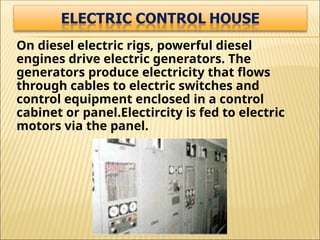
On diesel electricrigs, powerful diesel
engines drive electric generators. The
generators produce electricity that flows
through cables to electric switches and
control equipment enclosed in a control
cabinet or panel.Electircity is fed to electric
motors via the panel.
47.
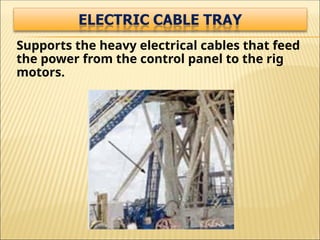
Supports the heavyelectrical cables that feed
the power from the control panel to the rig
motors.