Downloaded 10 times
![The full document is available here: http://nepa.energy.gov/1156.htm
SUMMARY
The U.S. Department of Energy (DOE) has prepared this environmental impact statement (EIS) to eva-
luate the potential impacts of a power generation project proposed by Mississippi Power Company in Kemper
County, east-central Mississippi. The proposed power plant would demonstrate an advanced integrated gasifica-
tion combined-cycle (IGCC) power generation
system at a commercial scale. The facility
would convert Mississippi lignite mined by
North American Coal Corporation (NACC)
into a synthesis gas (syngas), which would
fuel the plant’s combustion turbine (CT) gene-
rating units. The new power plant would be
capable of generating 582 megawatts (MW)
(nominal capacity) of electricity while reduc-
ing emissions of carbon dioxide (CO2), sulfur
dioxide (SO2), oxides of nitrogen (NOx), mer-
cury, and particulates compared to conven-
tional lignite-fired power plants. New electric-
al power transmission lines and upgrades of
some existing transmission lines, a natural gas
supply pipeline, a reclaimed water supply
pipeline, and a CO2 pipeline would be con-
structed in connection with the power plant
(the pipelines and transmission lines are some-
times referred to as linear facilities). NACC’s
proposed mine would be located on adjacent
properties in Kemper County but would ex-
tend into Lauderdale County; it would supply
lignite to the power plant over its planned
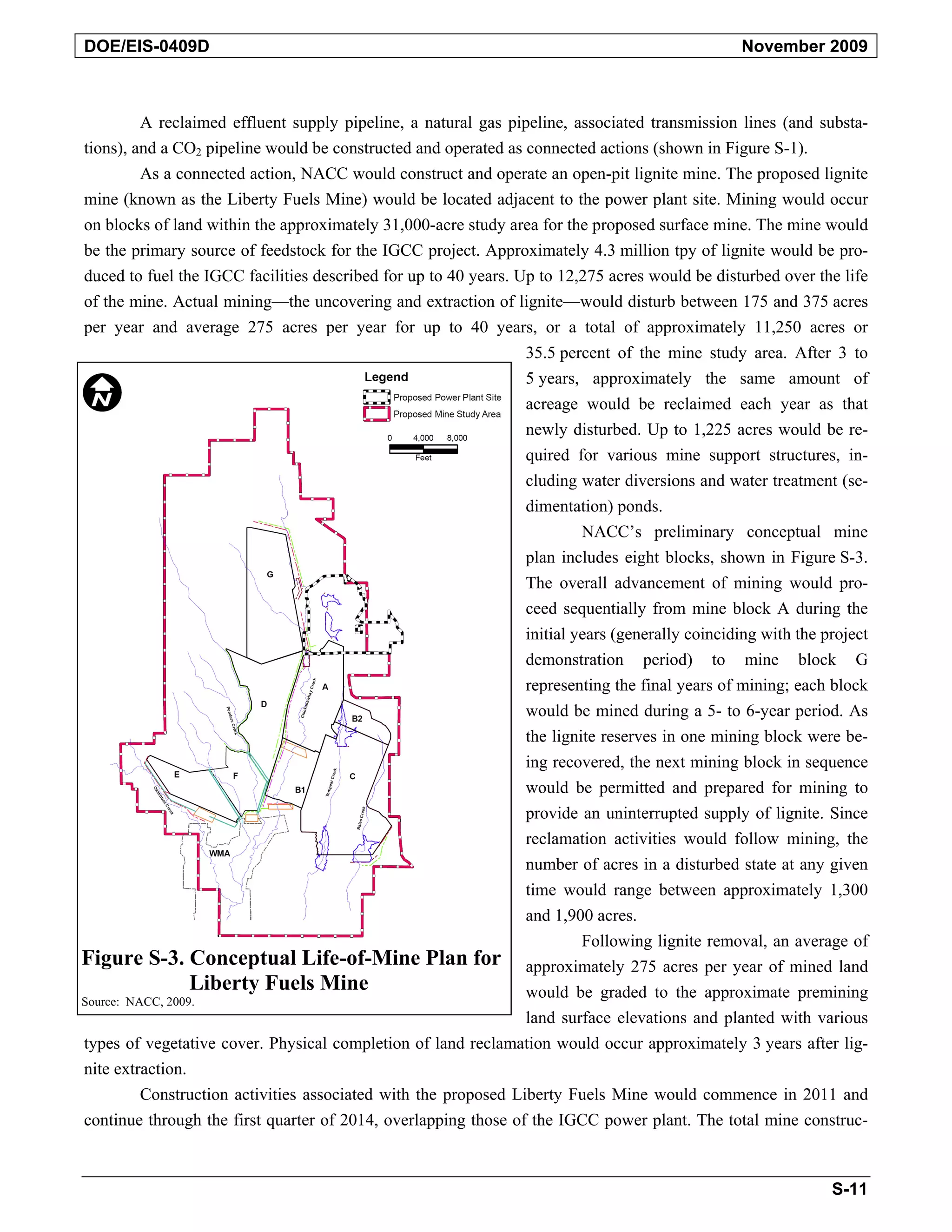
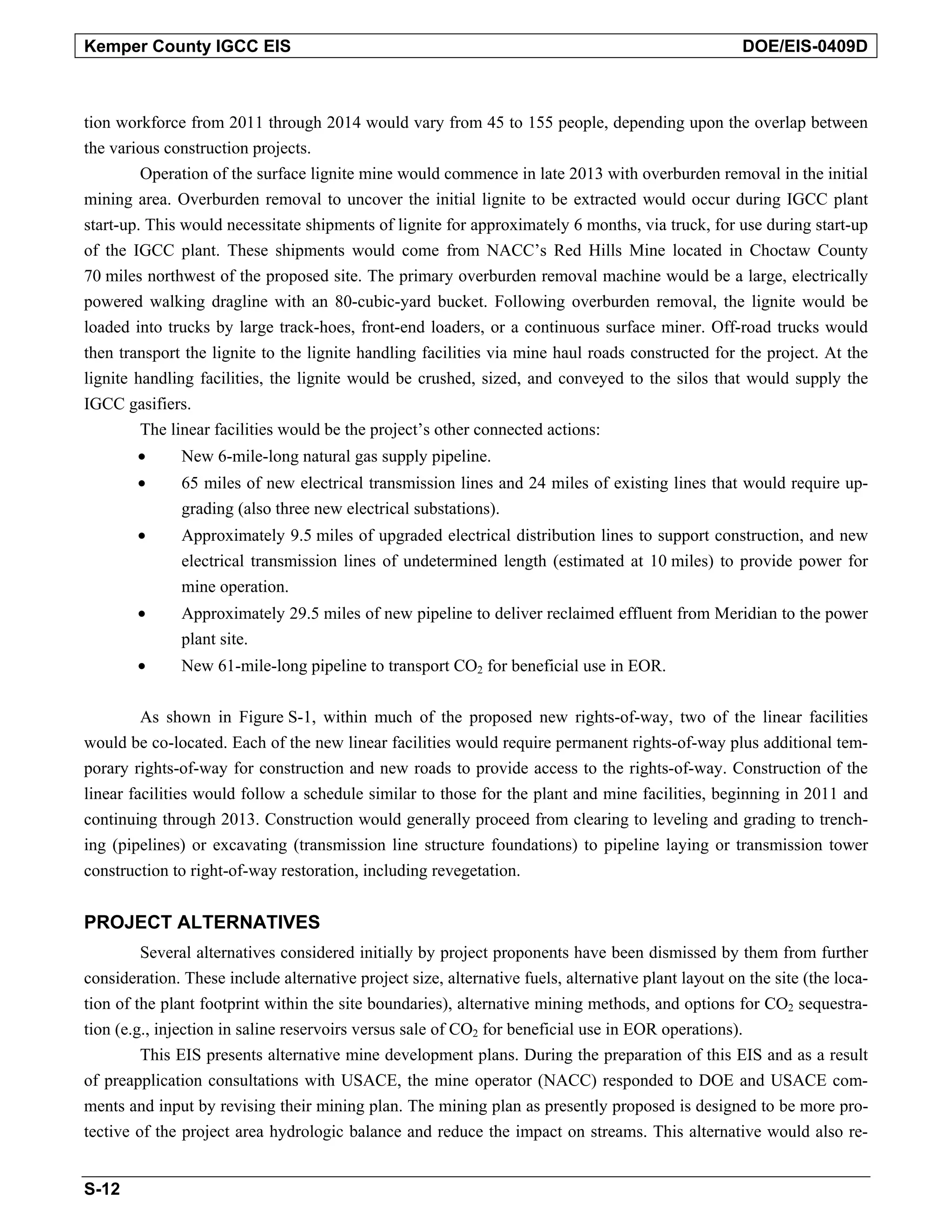
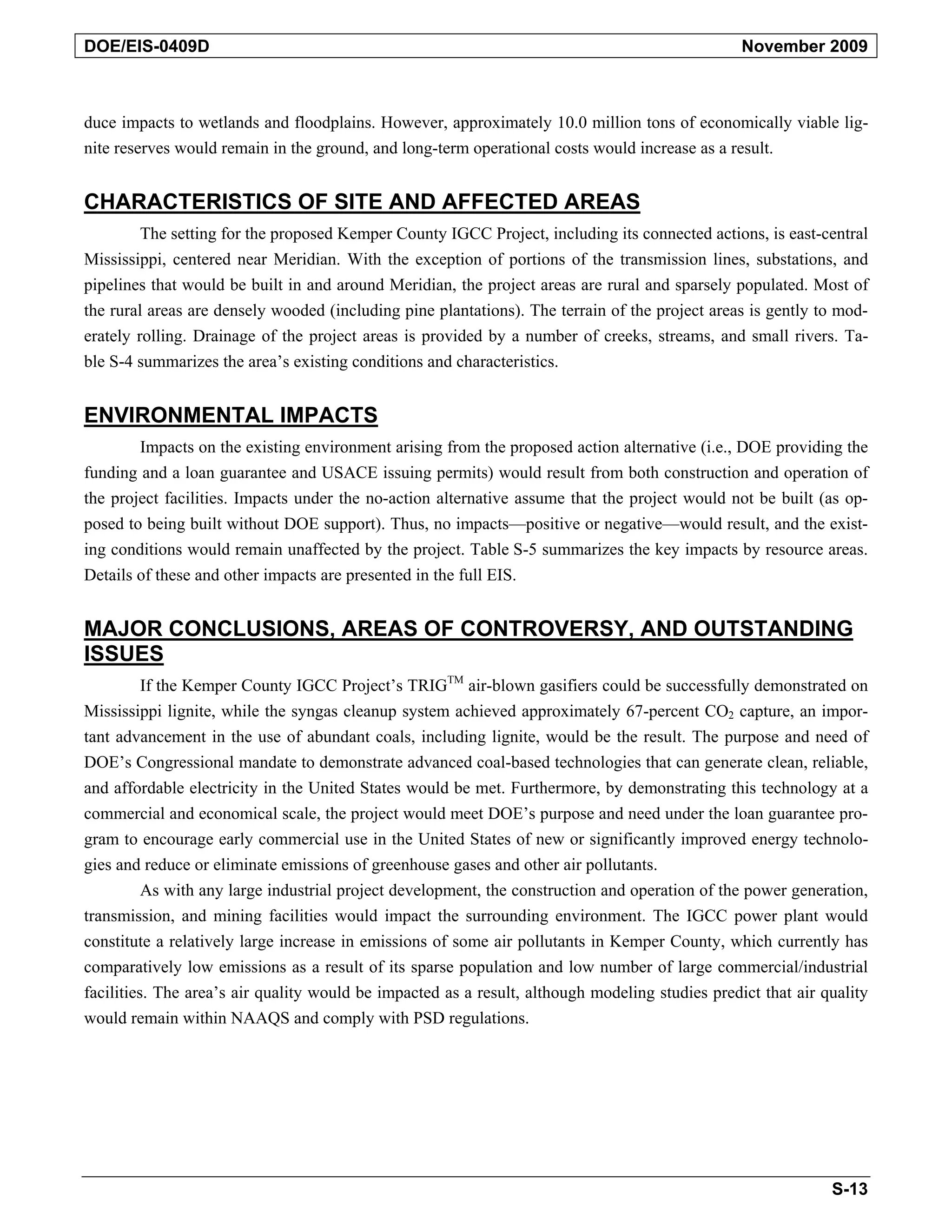
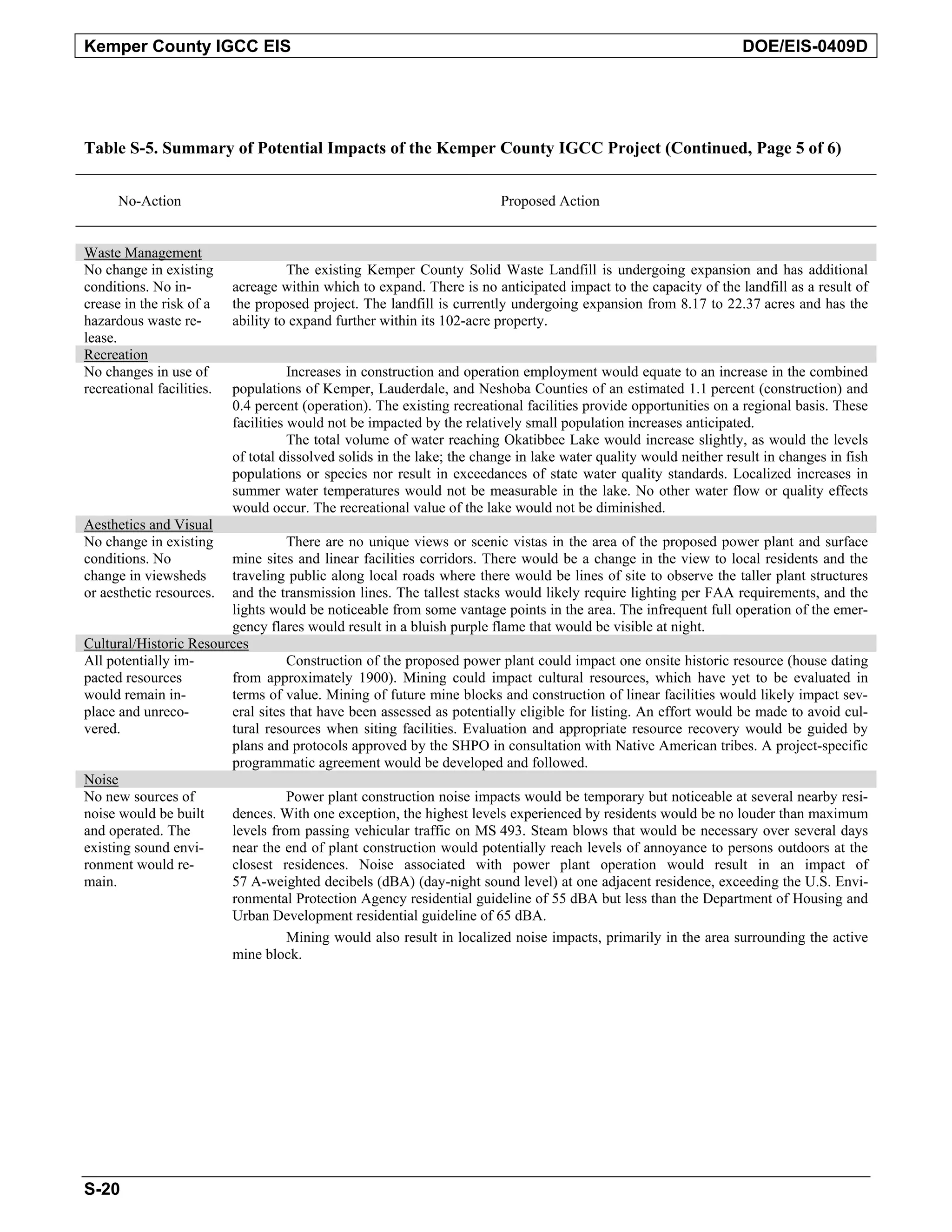
40-year life. Figure S-1 shows the locations of Figure S-1. Proposed Kemper County IGCC
the project’s principal components. Project, NACC Mine, and Linear Fa-
DOE is the lead federal agency re- cilities
Sources: US Census, 2000; MARIS, 2008; ECT, 2009.
sponsible for the preparation of this EIS, while
the U.S. Army Corps of Engineers (USACE) (Mobile District) is a cooperating agency. In compliance with the
National Environmental Policy Act of 1969 (NEPA), as amended (Chapter 42, Part 4321, et seq., United States
Code [U.S.C.]), DOE is evaluating the environmental impacts associated with the proposed project as part of its
decision on whether or not to provide financial assistance and a loan guarantee. USACE is evaluating the poten-
tial environmental impacts before deciding whether to issue permits under the Clean Water Act (CWA) for stream
and wetland disturbances that would be associated with the proposed mine, power plant, electrical transmission
lines, and pipelines.
S-1](https://image.slidesharecdn.com/drafteis-kempercountyigccproject-100804144657-phpapp01/75/Draft-EIS-Kemper-County-IGCC-Project-1-2048.jpg)
![Kemper County IGCC EIS DOE/EIS-0409D
PROPOSED AGENCY ACTIONS, PURPOSES AND NEEDS
DOE
DOE’s proposed action has two components: first, to release funding for cost-shared financial assistance
and, second, to issue a loan guarantee. DOE proposes to provide an additional $270 million in cost-shared finan-
cial assistance under the Clean Coal Power Initiative (CCPI) program to the Kemper County IGCC Project.
DOE’s proposed action encompasses those activities that are eligible for this DOE cost-shared funding, including
the construction of the onsite power plant components, such as the gasification island, the combined-cycle power
generation unit, and the auxiliary facilities. DOE has already provided a portion of the original funding
($24.4 million of an original $294 million) to Southern Company for cost sharing in the preliminary design and
definition of this project at a previous location. In addition to sharing in certain costs, DOE may issue a loan guar-
antee pursuant to the Energy Policy Act of 2005 (EPAct05). The financial assistance would apply to the planning,
design, permitting, equipment procurement, construction, startup, and 4.5-year demonstration of the power plant
technology. The loan guarantee would apply to the planning, design, permitting, equipment procurement, con-
struction, and startup of the power plant. If approved for DOE loan guarantee, a portion of the power plant’s con-
struction costs would be funded through the U.S. Treasury Department’s Federal Financing Bank. The loan would
then be guaranteed by DOE, resulting in interest expense savings for Mississippi Power. The U.S. Congress estab-
lished the CCPI program to accelerate commercial deployment of advanced technologies for generating clean,
reliable, and affordable electricity in the United States using abundant domestic reserves of coal. EPAct05 estab-
lished the Federal Loan Guarantee Program for eligible energy projects that employ innovative technologies (i.e.,
projects that “avoid, reduce, or sequester air pollutants or anthropogenic emissions of greenhouse gases” and
“employ new or significantly improved technologies as compared to commercial technologies in service in the
United States at the time the guarantee is issued”).
The purpose and need of DOE’s action under the CCPI program are to demonstrate the feasibility of this
selected IGCC technology at a size that would be attractive to utilities for commercial operation, thereby satisfy-
ing the responsibility Congress imposed on DOE to demonstrate advanced coal-based technologies that can gen-
erate clean, reliable, and affordable electricity in the United States. The lignite gasifier design is based on a tech-
nology that Southern Company, Kellogg Brown & Root LLC (successor in interest to Kellogg Brown & Root,
Inc. [KBR]), and DOE have been developing since 1996 at a research facility near Wilsonville, Alabama. The
proposed Transport Integrated Gasification (TRIGTM) IGCC technology appears most cost-effective when using
low-heating value, high-moisture, or high-ash coals, including lignite. These coals constitute approximately one-
half of the proven United States’ and world’s coal reserves. Successful demonstration of the TRIGTM technology
would generate technical, environmental, and financial data from the design, construction, and operation of the
facility to confirm that the technology can be implemented at a commercial scale.
The purpose and need of DOE’s loan guarantee would be to comply with DOE’s mandate under EPAct05
by selecting eligible projects that meet the goals of EPAct05, which are to encourage early commercial use in the
United States of new or significantly improved energy technologies and reduce emissions of greenhouse gases.
The Kemper County IGCC Project would include carbon capture systems sufficient to reduce CO2 emissions from
the power plant by up to 67 percent by removing carbon from the syngas downstream of the gasification process.
S-2](https://image.slidesharecdn.com/drafteis-kempercountyigccproject-100804144657-phpapp01/75/Draft-EIS-Kemper-County-IGCC-Project-2-2048.jpg)
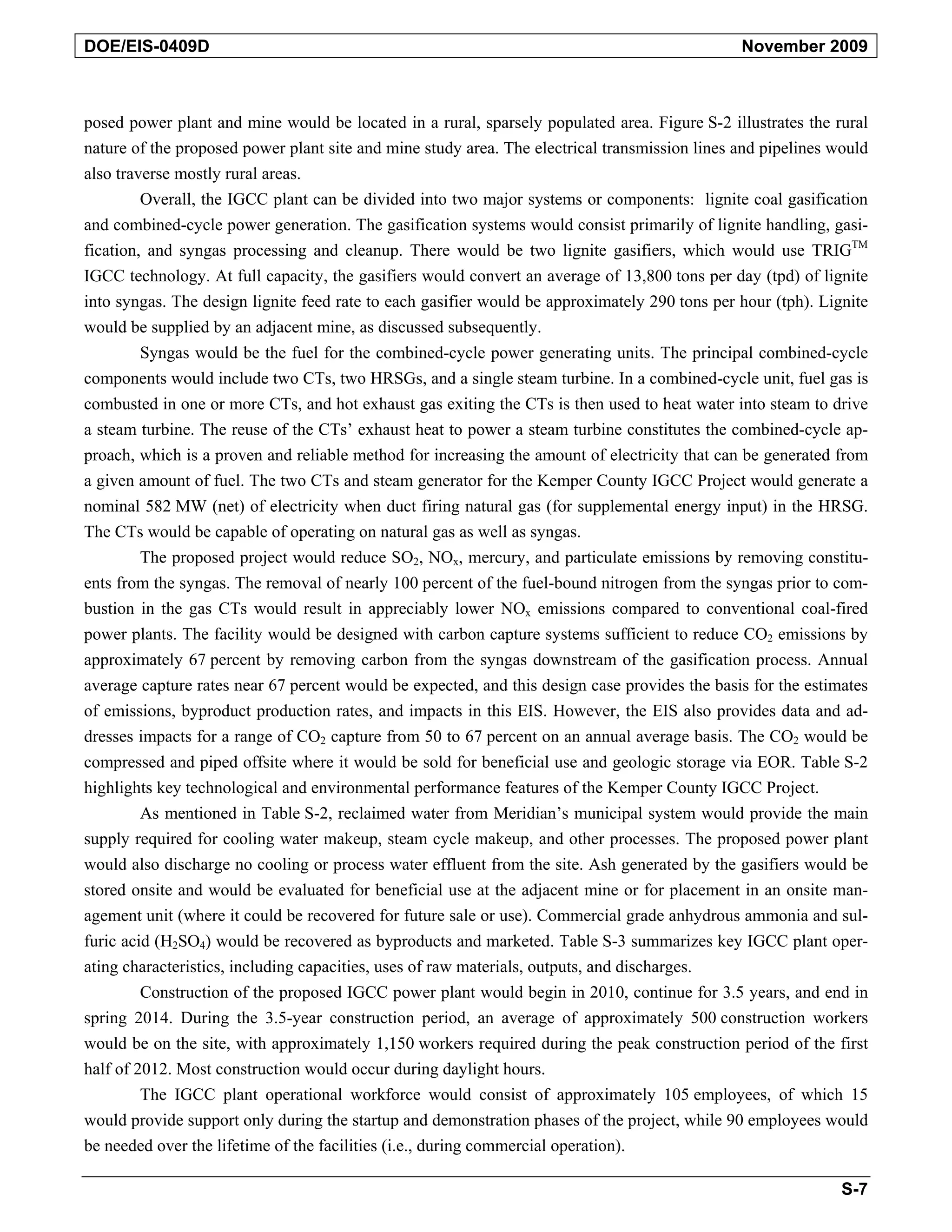
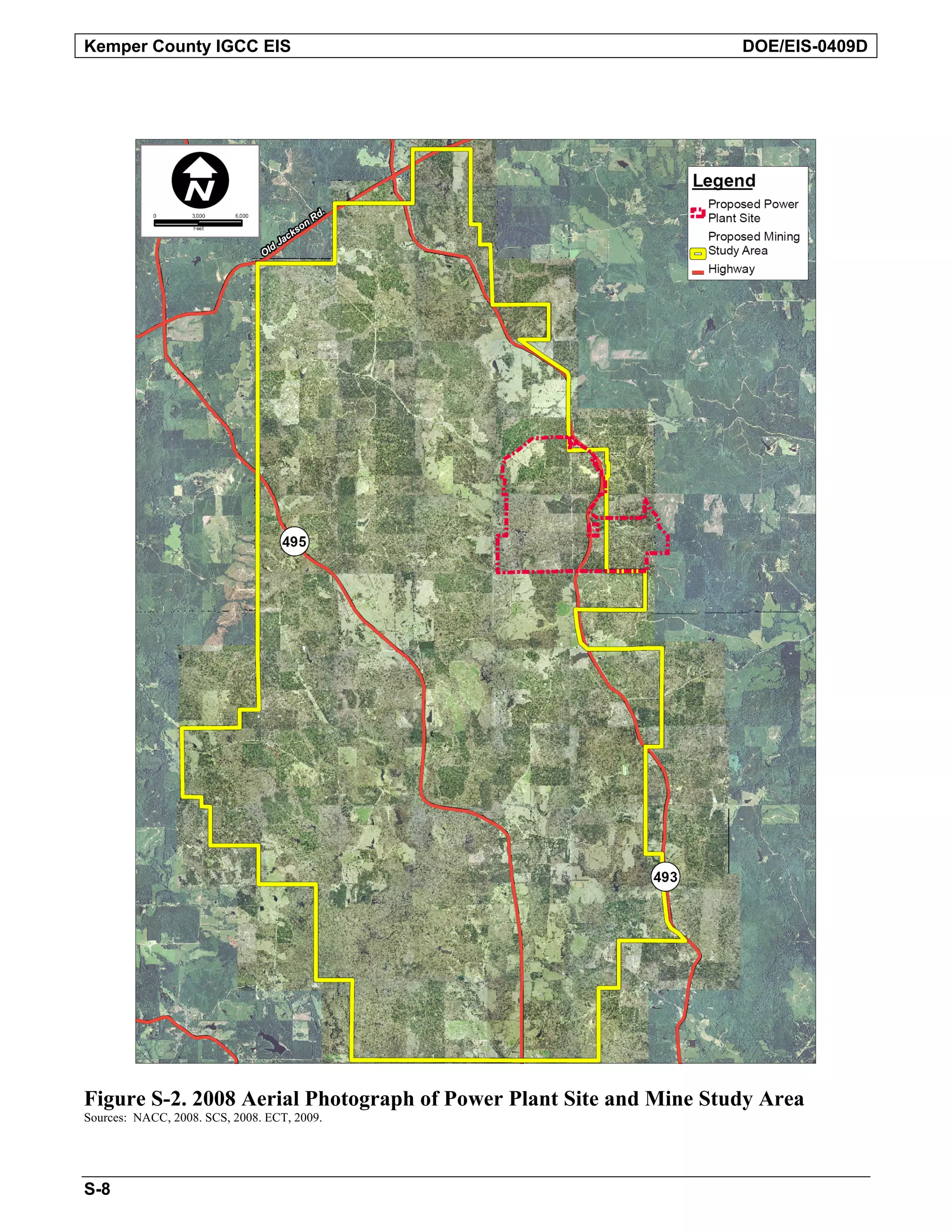
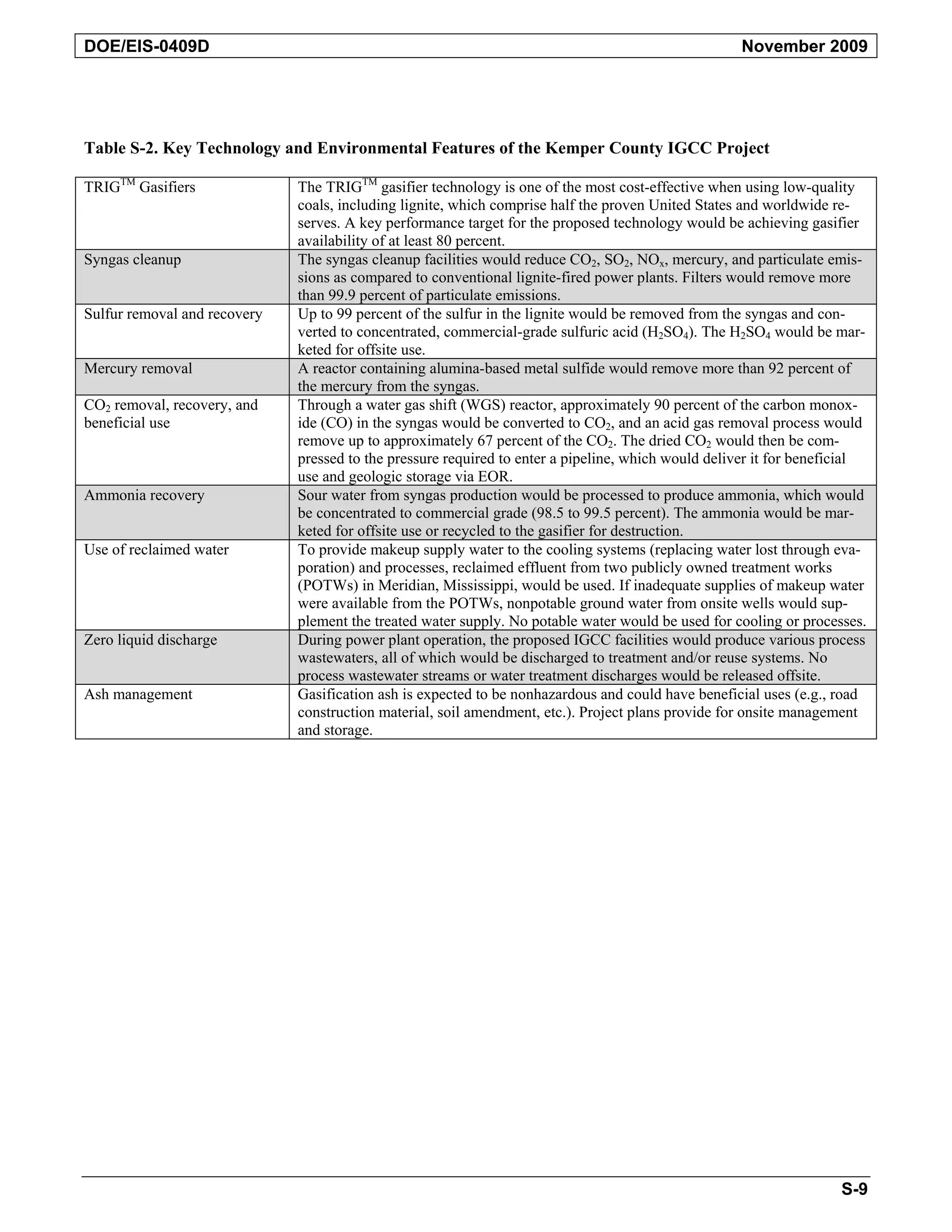
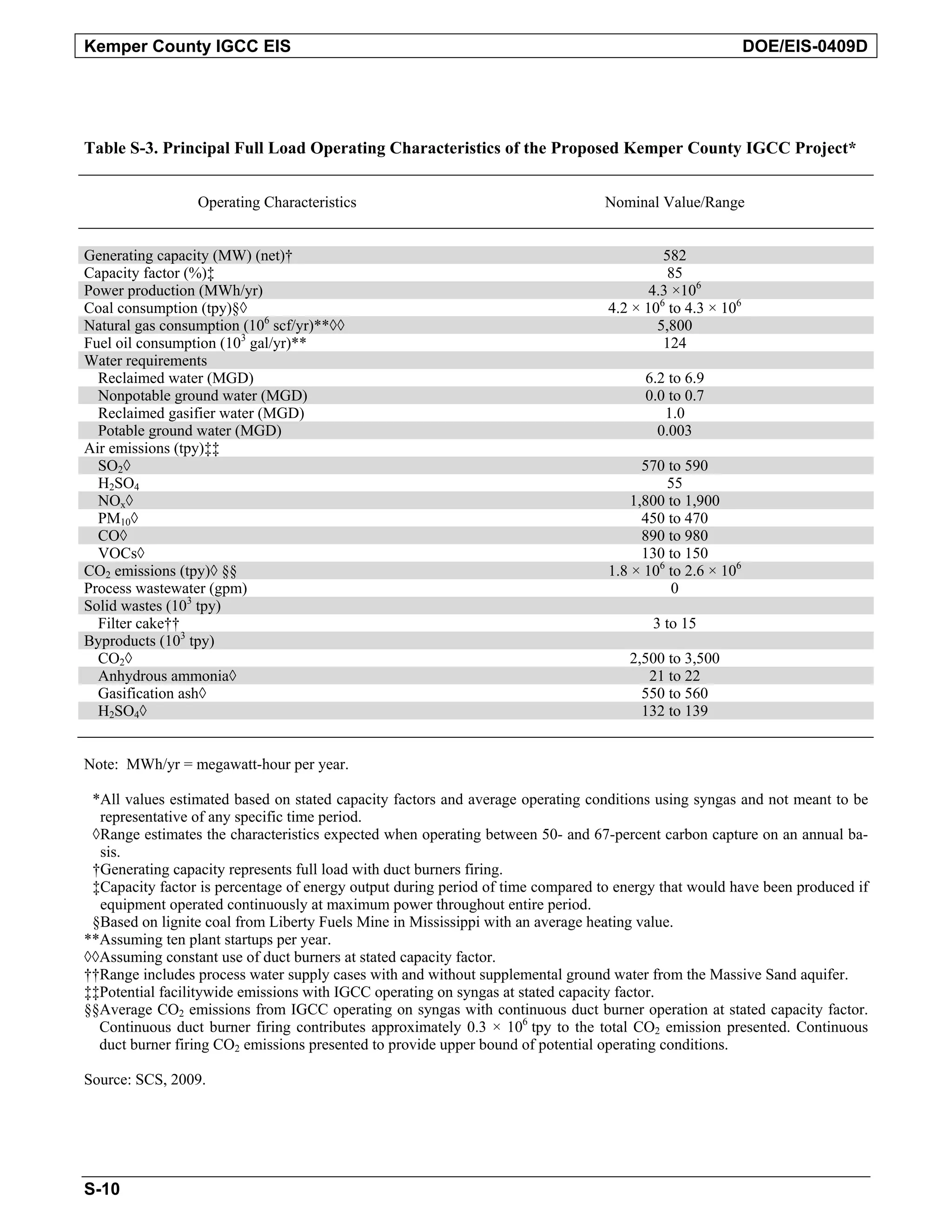
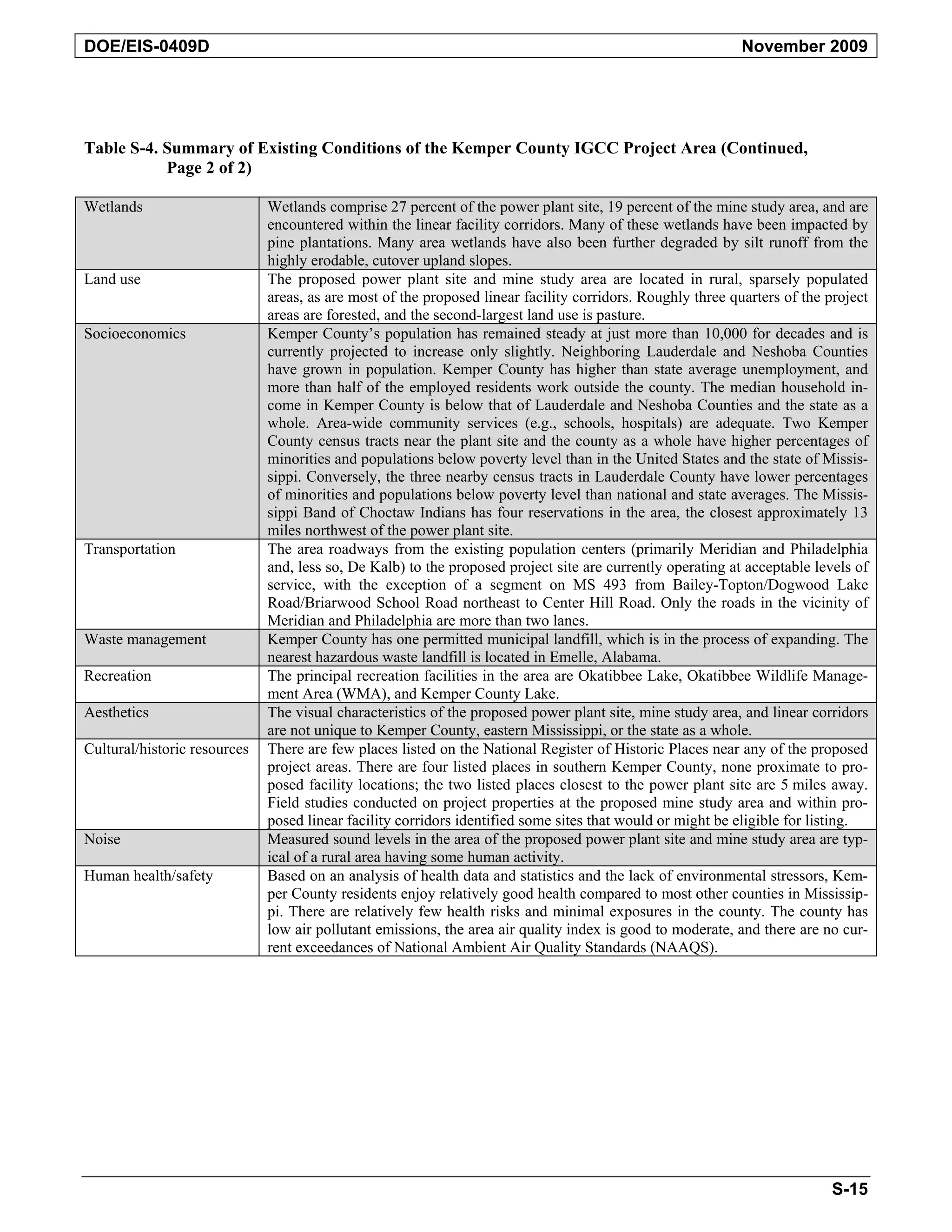
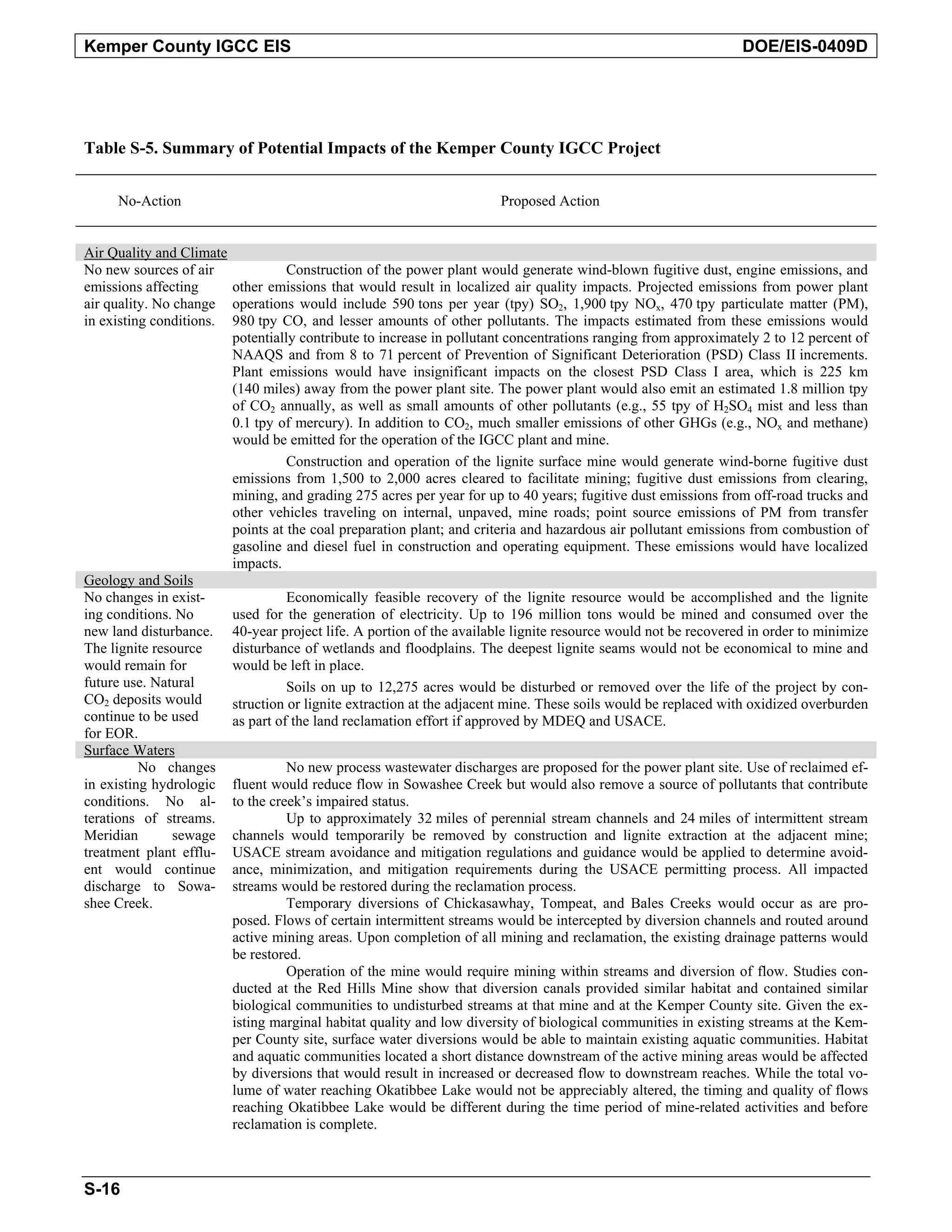
![DOE/EIS-0409D November 2009
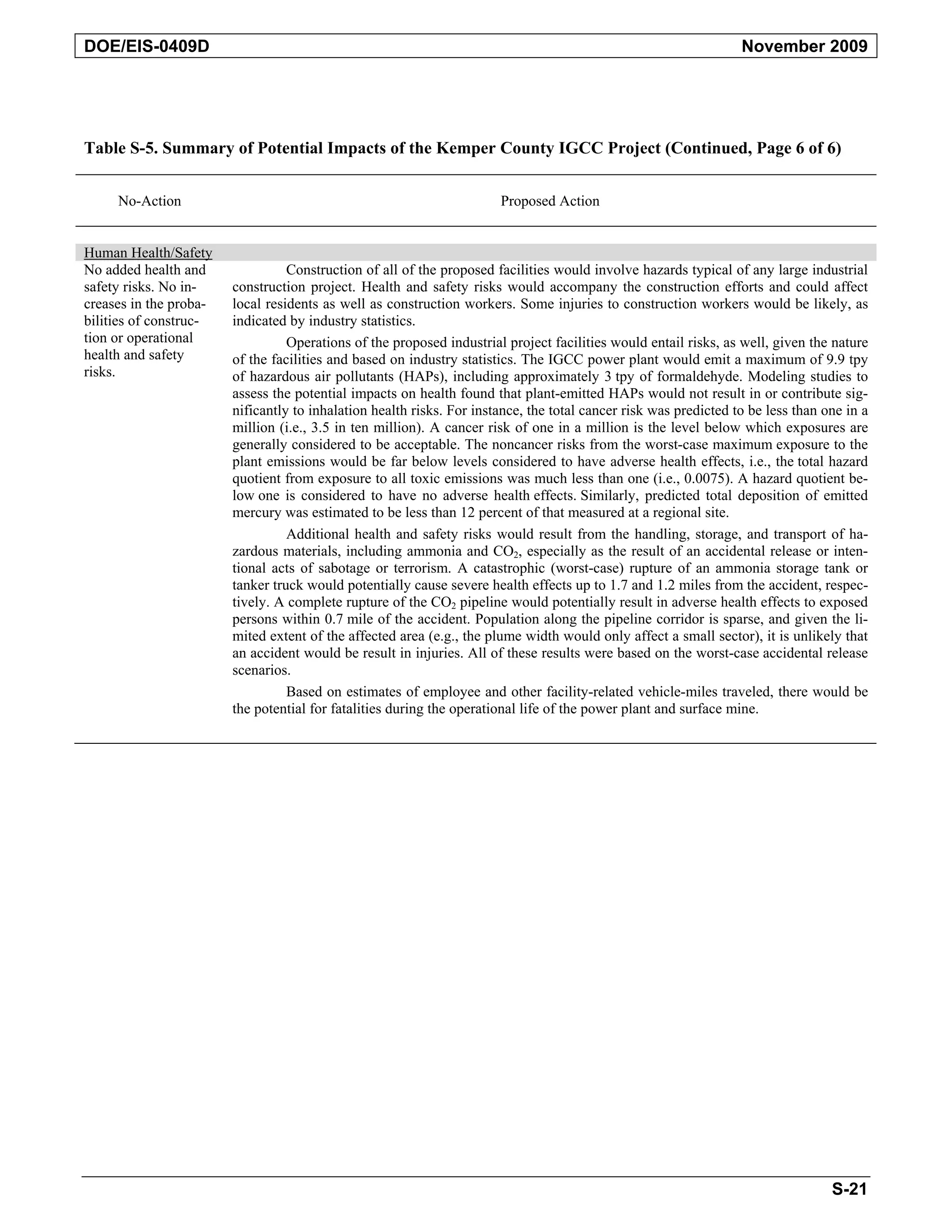
Table S-5. Summary of Potential Impacts of the Kemper County IGCC Project (Continued, Page 2 of 6)
No-Action Proposed Action
Ground Water
No changes in exist- The power plant could use up to 1 MGD of saline ground water from the Massive Sand aquifer.
ing conditions. No No adverse impacts to other users of the Massive Sand or other aquifers would result from drawdowns
changes in aquifer caused by this use.
levels. Construction and operation of the lignite mine would require ongoing activities for mine pit water
control. These operations would cause drawdown in the shallow Middle Wilcox aquifer and could adverse-
ly impact some local ground water wells (depending on site-specific drawdown experienced and the specif-
ic circumstances of a given well [e.g., well depth, pump setting, etc.]). It is possible that the amount of
drawdown at a given well could cause adverse impacts to that water user via diminution of supply. At oth-
er wells, the drawdown effects might be insignificant. If an existing supply became unusable, alternative
supplies would provided by NACC, the mine operator, as required by the surface mining regulations.
Postmining ground water quality could be impacted within the reclaimed mine area. Postmining
ground water quality in the reclaimed mine area cannot be predicted with certainty, but based on histories
of other similar mines, would likely have higher TDS than premining ground water. Therefore, develop-
ment of shallow freshwater wells in mine spoil deposits might not be feasible. However, sufficient fresh
water would be available from the Lower Wilcox aquifer and public water systems during and after min-
ing.
Terrestrial Ecology
No change in existing Up to approximately 1,100 acres of terrestrial ecological resources would be altered due to con-
conditions. Terrestrial struction of the power plant (including onsite mine-related facilities). Of this, approximately 443 acres are
ecological resources currently in agricultural production, mostly pine plantations and pasture/hay fields. Most wildlife located
would remain in cur- within the construction area would be mobile and relocate to suitable onsite or adjacent habitats; small, less
rent conditions. mobile or burrowing animals might be lost. No federally listed plants or animals were observed on the site,
nor are any known to occur there, although records exist for a few listed species in the surrounding region.
Construction and operation of the facilities on the power plant site would not adversely affect either listed
or migratory species.
Lignite mine site preparation and construction activities would result in sequential vegetation re-
moval from most of the mine facility construction areas. Approximately 1,455 acres would be affected
during the initial construction phase. Thereafter, existing terrestrial resources would be cleared and rec-
laimed at an average rate of 275 acres per year. After mining, mine pits would be reclaimed and revege-
tated. As with the power plant site, mobile wildlife would likely relocate to adjacent, nonimpacted, or res-
tored portions of the mine study area or to suitable offsite habitats. After reclamation, various wildlife spe-
cies could return to reclaimed lands relatively quickly. Individuals of less mobile or burrowing species
could be lost. No federally listed plants were observed in the mine study area, although Price’s potato bean
may occur in the region. It is unlikely that regional populations of listed or migratory species would be
adversely affected by mining.
The primary impact to terrestrial resources from linear facility construction or upgrades would re-
sult from vegetation clearing; smaller temporary impacts would be due to pipeline trenching. The only
permanent impact would be due to any necessary pole placement or access road construction in or across
wetlands. These impacts could be minimized by flexibility in final engineering design. Assuming that the
entire width of each corridor would be cleared or otherwise altered, approximately 3,037 acres of terrestrial
resources would be impacted. However, of this, approximately 1,485 acres have been cleared in the past
and are currently pine plantations, pastures, hayfield, deer plots, existing transmission and gas pipeline
corridors, roads, shrublands, or other development. For wildlife, existing forested and shrub-dominated
communities would initially be cleared, resulting in a loss of forested habitats. Most wildlife would be
mobile enough to relocate to offsite habitats during clearing and construction activities; most would return
to utilize the herb- and shrub-dominated communities that would become dominant and maintained as such
for the life of the project. Individuals of some less mobile species might be lost. Construction of the linear
facilities would not be expected to adversely affect any endangered or threatened plant or wildlife popula-
tions, including migratory birds.
S-17](https://image.slidesharecdn.com/drafteis-kempercountyigccproject-100804144657-phpapp01/75/Draft-EIS-Kemper-County-IGCC-Project-17-2048.jpg)
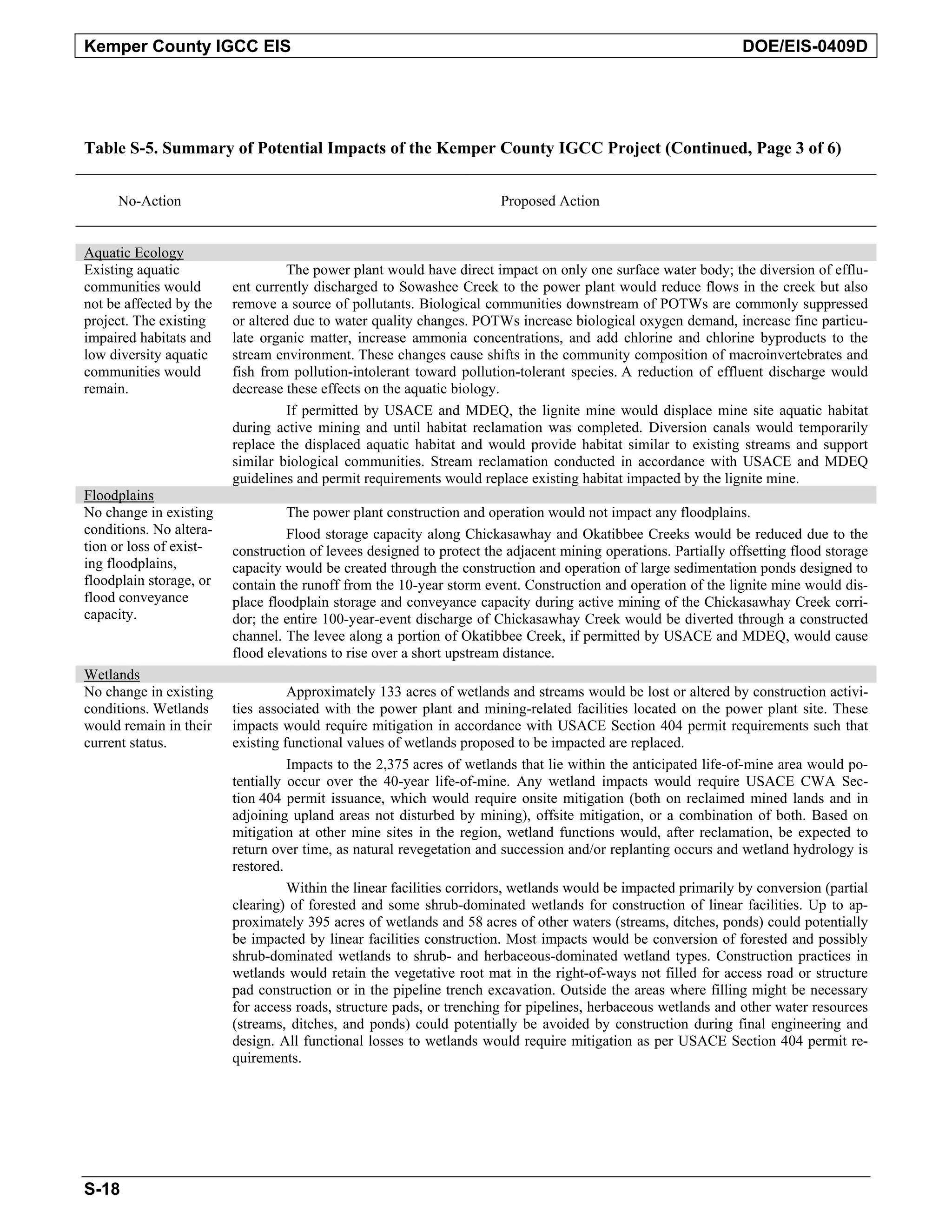
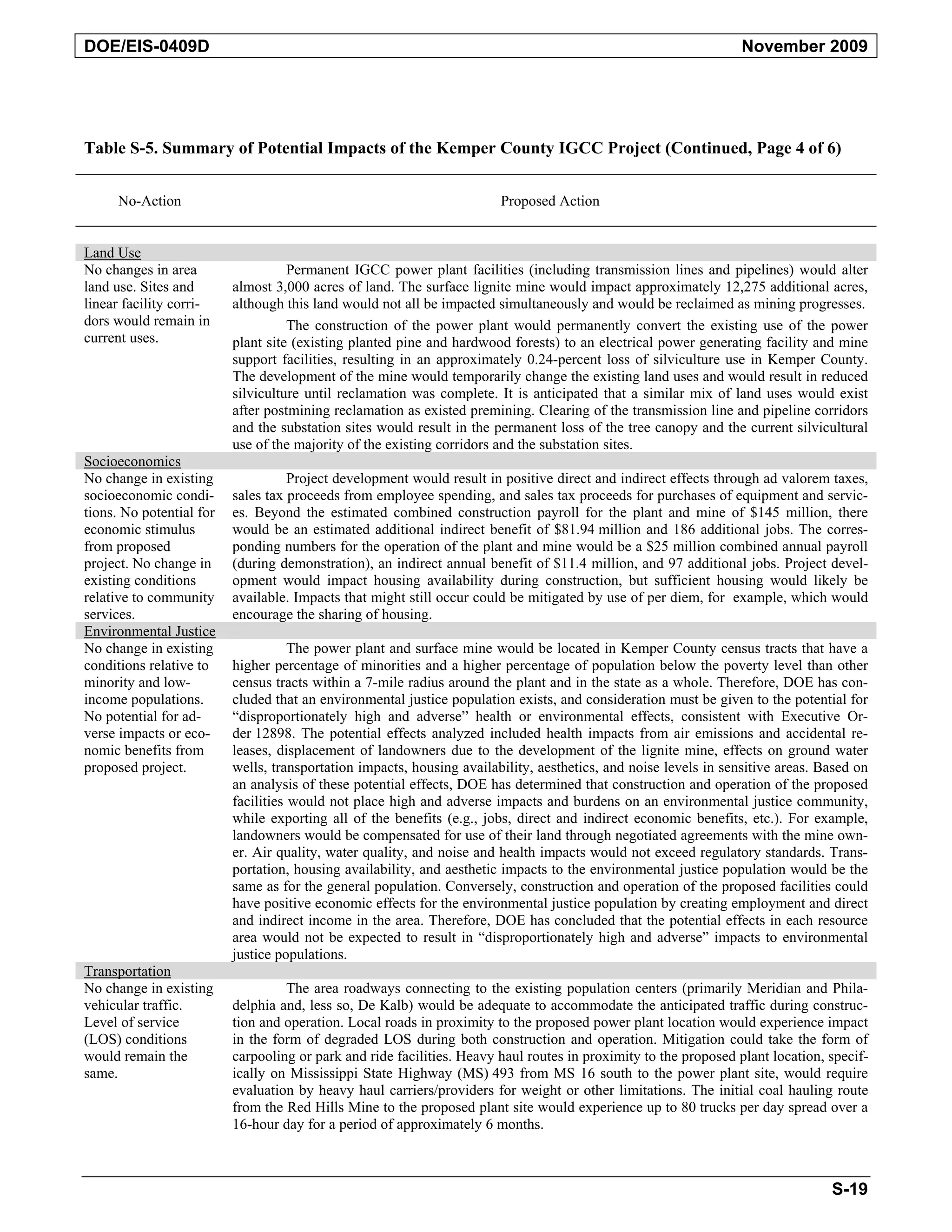


The document provides an overview of the proposed Kemper County IGCC Project in Mississippi, which would demonstrate an advanced coal gasification technology at a commercial scale. The U.S. Department of Energy is preparing an EIS to evaluate the potential environmental impacts and decide whether to provide financial assistance and a loan guarantee for the project. Key aspects of the proposed project include constructing an integrated gasification combined-cycle power plant capable of generating 582 megawatts while capturing 67% of carbon emissions, a nearby lignite mine, and associated infrastructure like pipelines and transmission lines. The EIS will analyze alternatives and potential impacts to resources like water, wildlife, and air quality.


![[Smart Grid Market Research] Coal: Closer Look at CCS (Part 3 of 3), May 2012](https://cdn.slidesharecdn.com/ss_thumbnails/coalcloserlookatccsmay2012zprymeresearchsmartgridinsights-120508111726-phpapp01-thumbnail.jpg?width=640&height=640&fit=bounds)


