U.S. Wood Demand & Timber Supplies
Brooks Mendell
bmendell@forisk.com
770.725.8447
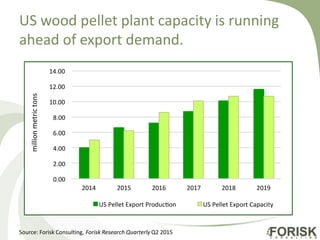
US wood pellet plant capacity is running
ahead of export demand.
Source: Forisk Consulting, Forisk Research Quarterly Q2 2015
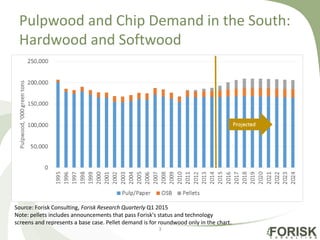
Pulpwood and Chip Demand in the South:
Hardwood and Softwood
3
Source: Forisk Consulting, Forisk Research Quarterly Q1 2015
Note: pellets includes announcements that pass Forisk's status and technology
screens and represents a base case. Pellet demand is for roundwood only in the chart.
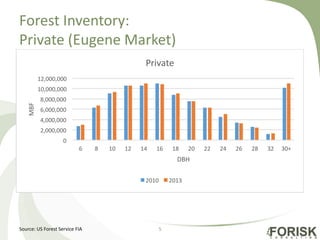
Forest Inventory:
Private (Eugene Market)
5Source: US Forest Service FIA
0
2,000,000
4,000,000
6,000,000
8,000,000
10,000,000
12,000,000
6 8 10 12 14 16 18 20 22 24 26 28 32 30+
MBF
DBH
Private
2010 2013
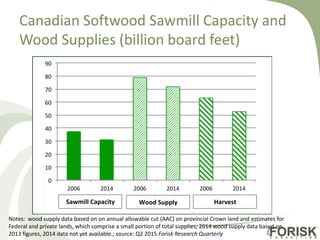
Canadian Softwood Sawmill Capacity and
Wood Supplies (billion board feet)
Notes: wood supply data based on on annual allowable cut (AAC) on provincial Crown land and estimates for
Federal and private lands, which comprise a small portion of total supplies; 2014 wood supply data based on
2013 figures, 2014 data not yet available.; source: Q2 2015 Forisk Research Quarterly
0
10
20
30
40
50
60
70
80
90
2006 2014 2006 2014 2006 2014
HarvestSawmill Capacity Wood Supply
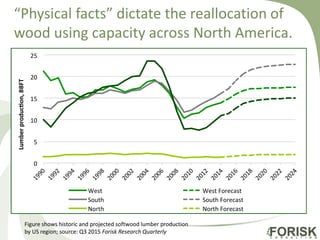
“Physical facts” dictate the reallocation of
wood using capacity across North America.
Figure shows historic and projected softwood lumber production
by US region; source: Q3 2015 Forisk Research Quarterly
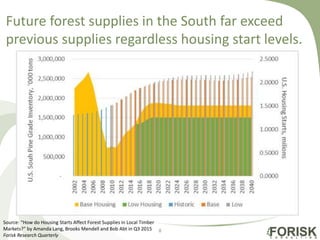
Future forest supplies in the South far exceed
previous supplies regardless housing start levels.
8
Source: “How do Housing Starts Affect Forest Supplies in Local Timber
Markets?” by Amanda Lang, Brooks Mendell and Bob Abt in Q3 2015
Forisk Research Quarterly
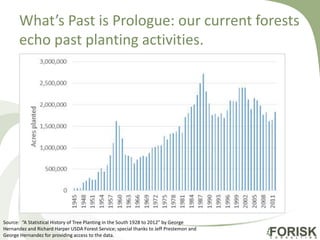
What’s Past is Prologue: our current forests
echo past planting activities.
Source: “A Statistical History of Tree Planting in the South 1928 to 2012” by George
Hernandez and Richard Harper USDA Forest Service; special thanks to Jeff Prestemon and
George Hernandez for providing access to the data.
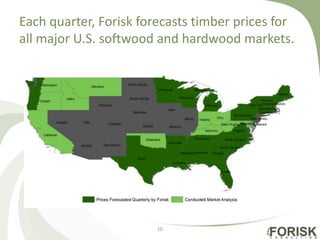
Each quarter, Forisk forecasts timber prices for
all major U.S. softwood and hardwood markets.
10

Dr. Brooks Mendell - Forisk

  • 1.
    U.S. Wood Demand& Timber Supplies Brooks Mendell bmendell@forisk.com 770.725.8447
  • 2.
    US wood pelletplant capacity is running ahead of export demand. Source: Forisk Consulting, Forisk Research Quarterly Q2 2015
  • 3.
    Pulpwood and ChipDemand in the South: Hardwood and Softwood 3 Source: Forisk Consulting, Forisk Research Quarterly Q1 2015 Note: pellets includes announcements that pass Forisk's status and technology screens and represents a base case. Pellet demand is for roundwood only in the chart.
  • 5.
    Forest Inventory: Private (EugeneMarket) 5Source: US Forest Service FIA 0 2,000,000 4,000,000 6,000,000 8,000,000 10,000,000 12,000,000 6 8 10 12 14 16 18 20 22 24 26 28 32 30+ MBF DBH Private 2010 2013
  • 6.
    Canadian Softwood SawmillCapacity and Wood Supplies (billion board feet) Notes: wood supply data based on on annual allowable cut (AAC) on provincial Crown land and estimates for Federal and private lands, which comprise a small portion of total supplies; 2014 wood supply data based on 2013 figures, 2014 data not yet available.; source: Q2 2015 Forisk Research Quarterly 0 10 20 30 40 50 60 70 80 90 2006 2014 2006 2014 2006 2014 HarvestSawmill Capacity Wood Supply
  • 7.
    “Physical facts” dictatethe reallocation of wood using capacity across North America. Figure shows historic and projected softwood lumber production by US region; source: Q3 2015 Forisk Research Quarterly
  • 8.
    Future forest suppliesin the South far exceed previous supplies regardless housing start levels. 8 Source: “How do Housing Starts Affect Forest Supplies in Local Timber Markets?” by Amanda Lang, Brooks Mendell and Bob Abt in Q3 2015 Forisk Research Quarterly
  • 9.
    What’s Past isPrologue: our current forests echo past planting activities. Source: “A Statistical History of Tree Planting in the South 1928 to 2012” by George Hernandez and Richard Harper USDA Forest Service; special thanks to Jeff Prestemon and George Hernandez for providing access to the data.
  • 10.
    Each quarter, Foriskforecasts timber prices for all major U.S. softwood and hardwood markets. 10

Editor's Notes

  • #2 Thank you
  • #3 Based on announced power plant conversions, Forisk projects world demand for industrial wood pellets to grow from 13.1 million metric tons in 2014 to 25.1 million metric tons in the next five years (Figure). The largest projected increases are in the UK (growth of 7.1 million metric tons) and Denmark (growth of 3.9 million metric tons). We assume that US exports will remain at 2014 levels for Belgium, the Netherlands, South Korea, and Sweden. Assuming that the US claims market share of 70% of the growth in demand for wood pellets in Denmark and the UK, pellet exports for industrial use could grow from 3.9 million metric tons in 2014 to 11.6 million metric tons in 2019 (table below). We assume that exports to the heat markets in Italy increase 15% each year for the next three years [I made this up…]. Total wood pellet exports from the US could increase to 11.8 million metric tons by 2019. In the Q1 2015 Forisk Research Quarterly, Forisk projected US export pellet capacity to increase to 11.1 million metric tons by 2019 (table). While 2019 estimates of pellet exports (from pellet demand/power plant conversions) matches well with estimates of pellet plant capacity in the US, the timing of pellet capacity is off. There could be a lag of actual pellet plant installations from what has been announced… [note: Excess capacity = capacity of pellet plants (from Q1 2015 FRQ) minus pellet exports (projected in table on previous page) “Excess” demand = pellet exports (projected on previous page) – capacity of pellet plants from Q1 2015 FRQ Basically, there won’t be enough demand in next 3 years to use all of the pellets from the announced plants…but there will be more than enough in projection by 2019.]
  • #4 Forisk note: pellet volumes here include Georgia Biomass, Green Circle, Westervelt, and Enviva facilities that are operating(pine and hardwood). Volumes reported in FRQ exclude those facilities and only includes pine volumes. We excluded these facilites in the FRQ as they were included in the WDR data and we did not want to double-count demand.
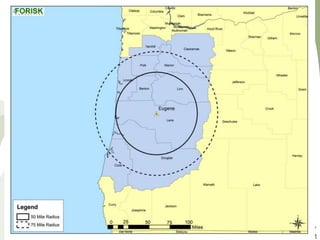
  • #5 Sawmill stats from Eugene case 25 grade-using mills relevant to market 20 lumber; 5 ply/veneer Capacity of these mills: 6.3 BBFT (24.3 million tons) 13.6 million tons IN THE MARKET (spatial analysis) CURRENTLY 11.2 million tons (utilization), as of Q1 2015
  • #6 Implied growth rates and data issues Ownership is critical
  • #11 This is where we “live”; this is why we care about local and regional data sets, and how the regions affect each other