Adsorption Chromatography, Reverse
Chromatography, Ion-exchange, Size
exclusion
21BT501 Downstream Processing
By
U.Dhivya Dharshini
AP/BT
Adsorption Chromatography
2
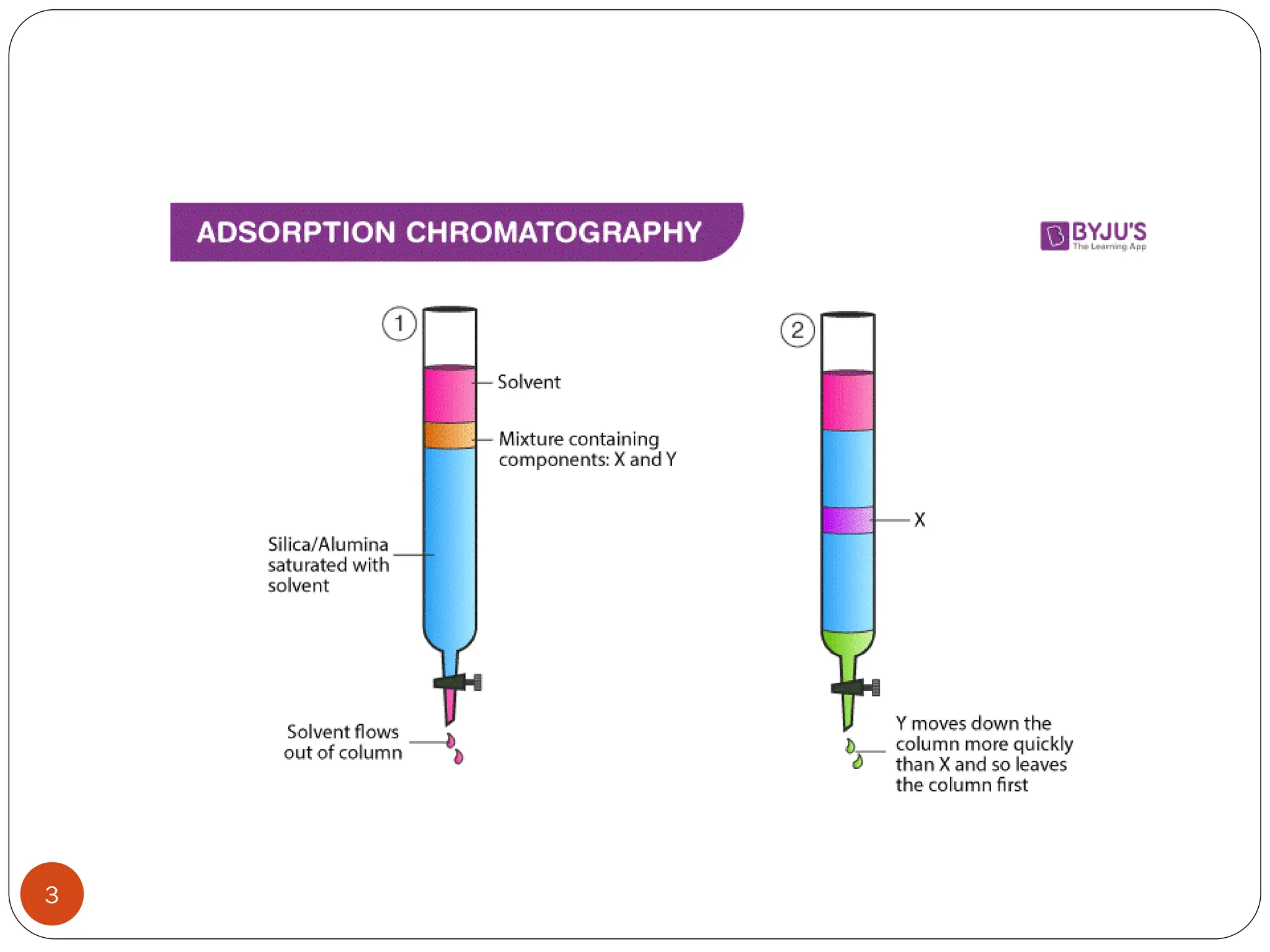
 Adsorption Chromatography involves the analytical
separation of a chemical mixture based on the interaction of
the adsorbate with the adsorbent.
 The mixture of gas or liquid gets separated when it passes
over the adsorbent bed that adsorbs different compounds at
different rates.
3
Types of Adsorption Chromatography
4
 Thin Layer Chromatography
 Paper chromatography
 Column chromatography
 Gas-Solid chromatography
5
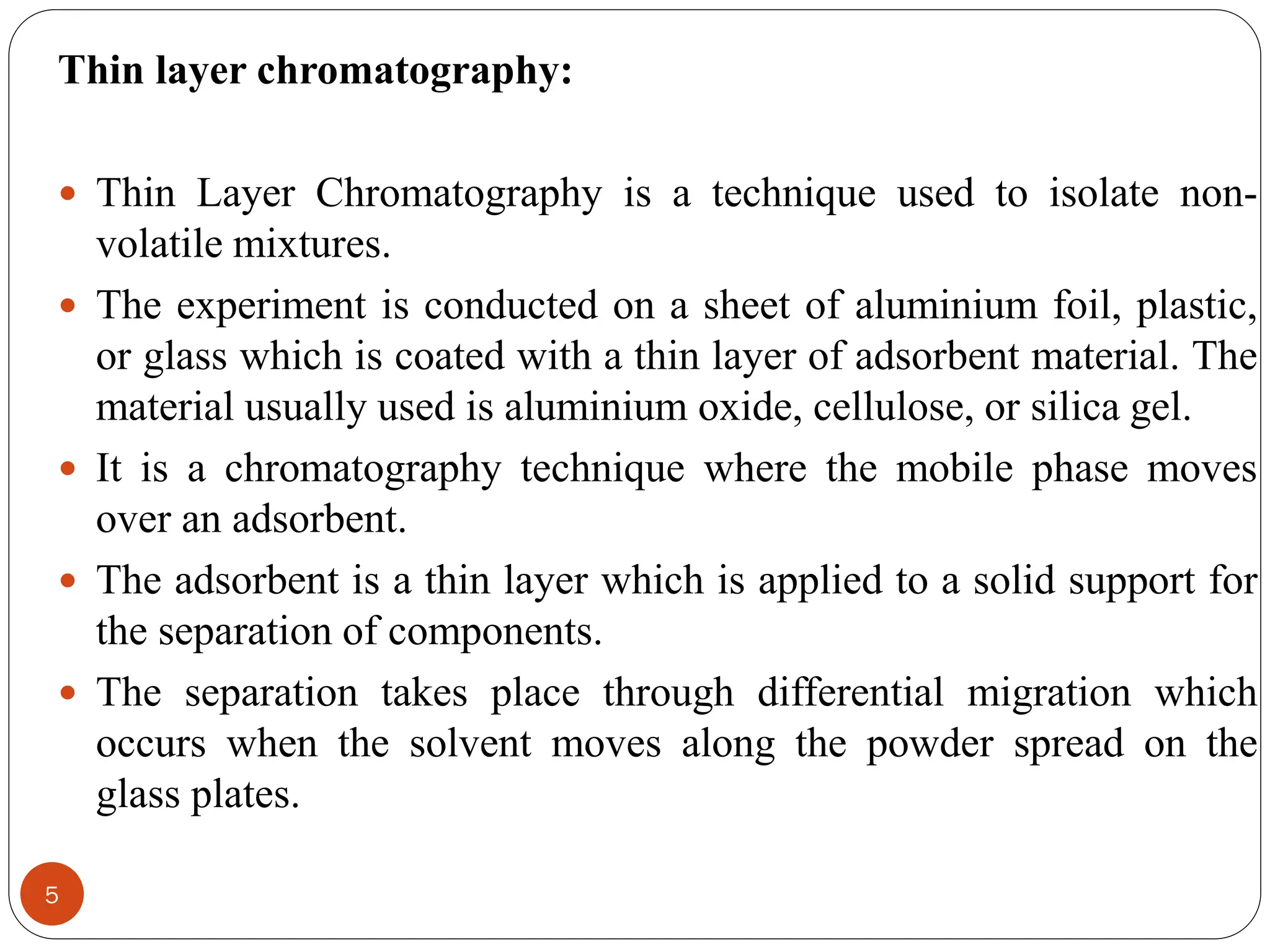
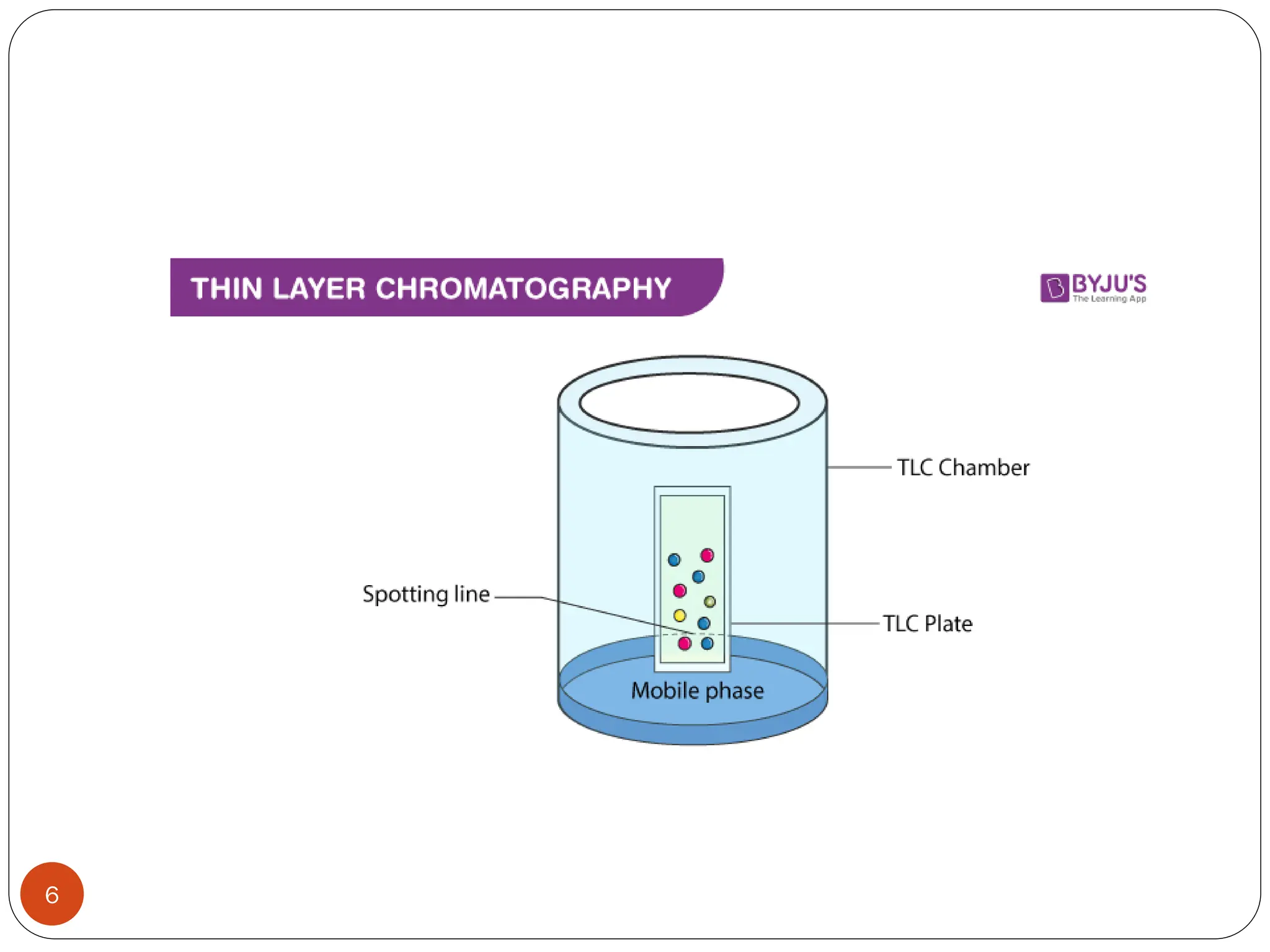
Thin layer chromatography:
 Thin Layer Chromatography is a technique used to isolate non-
volatile mixtures.
 The experiment is conducted on a sheet of aluminium foil, plastic,
or glass which is coated with a thin layer of adsorbent material. The
material usually used is aluminium oxide, cellulose, or silica gel.
 It is a chromatography technique where the mobile phase moves
over an adsorbent.
 The adsorbent is a thin layer which is applied to a solid support for
the separation of components.
 The separation takes place through differential migration which
occurs when the solvent moves along the powder spread on the
glass plates.
6
Paper chromatography
7
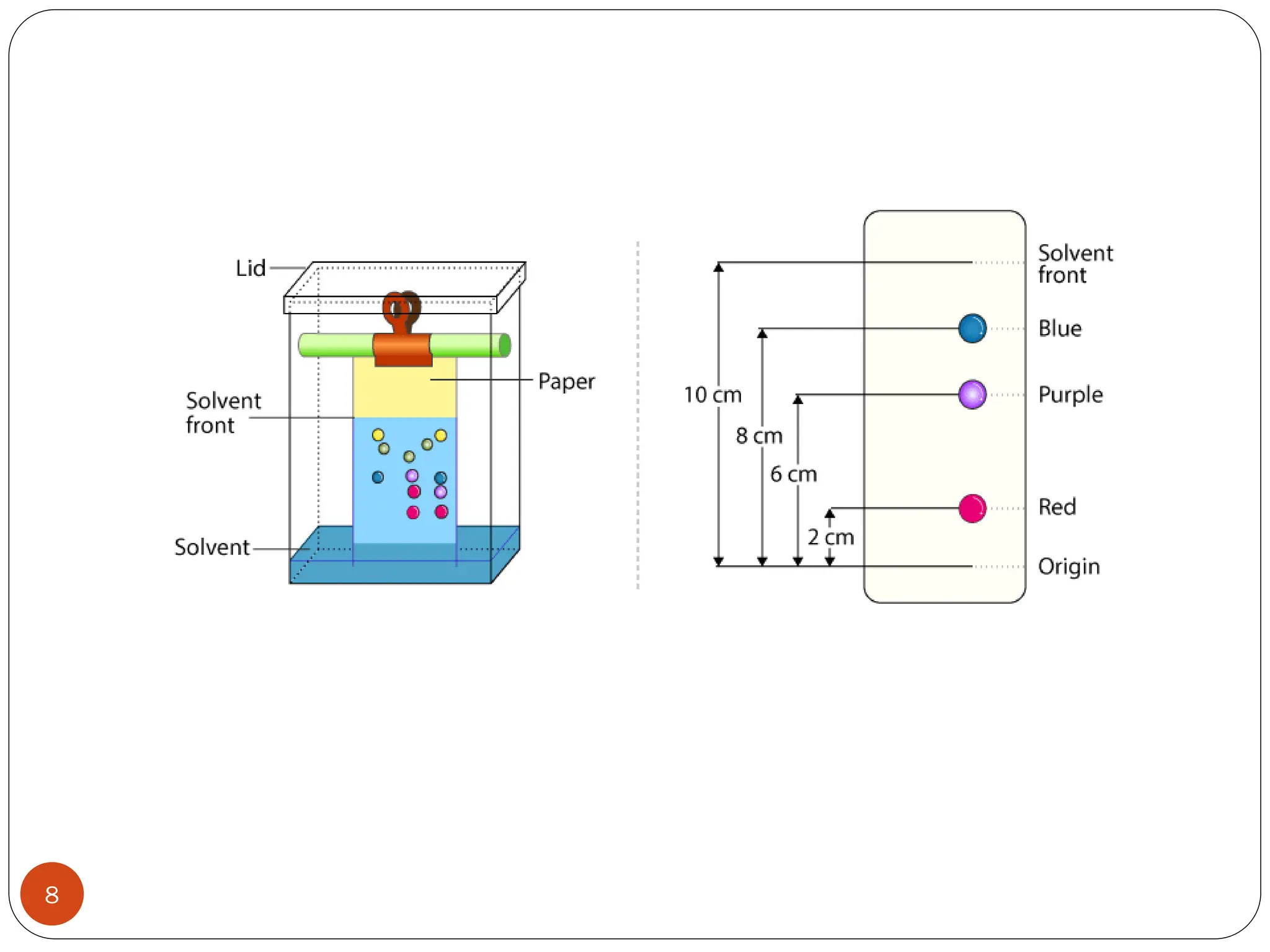
 Chromatography technique that uses paper sheets or strips
as the adsorbent being the stationary phase through which a
solution is made to pass is called paper chromatography.
 It is a powerful analytical tool that uses very small
quantities of material.
8
Column chromatography
9
 Column chromatography separates substances based on
differential adsorption of compounds to the adsorbent as
the compounds move through the column at different rates
which allows them to get separated in fractions.
10
Adsorption Chromatography Applications
11
 Adsorption chromatography is used for the separation of amino
acids.
 It is used in the isolation of antibiotics.
 It is used in the identification of carbohydrates.
 It is used to separate and identify fats and fatty acids.
 It is used to isolate and determine peptides and proteins
Reverse phase chromatography
12
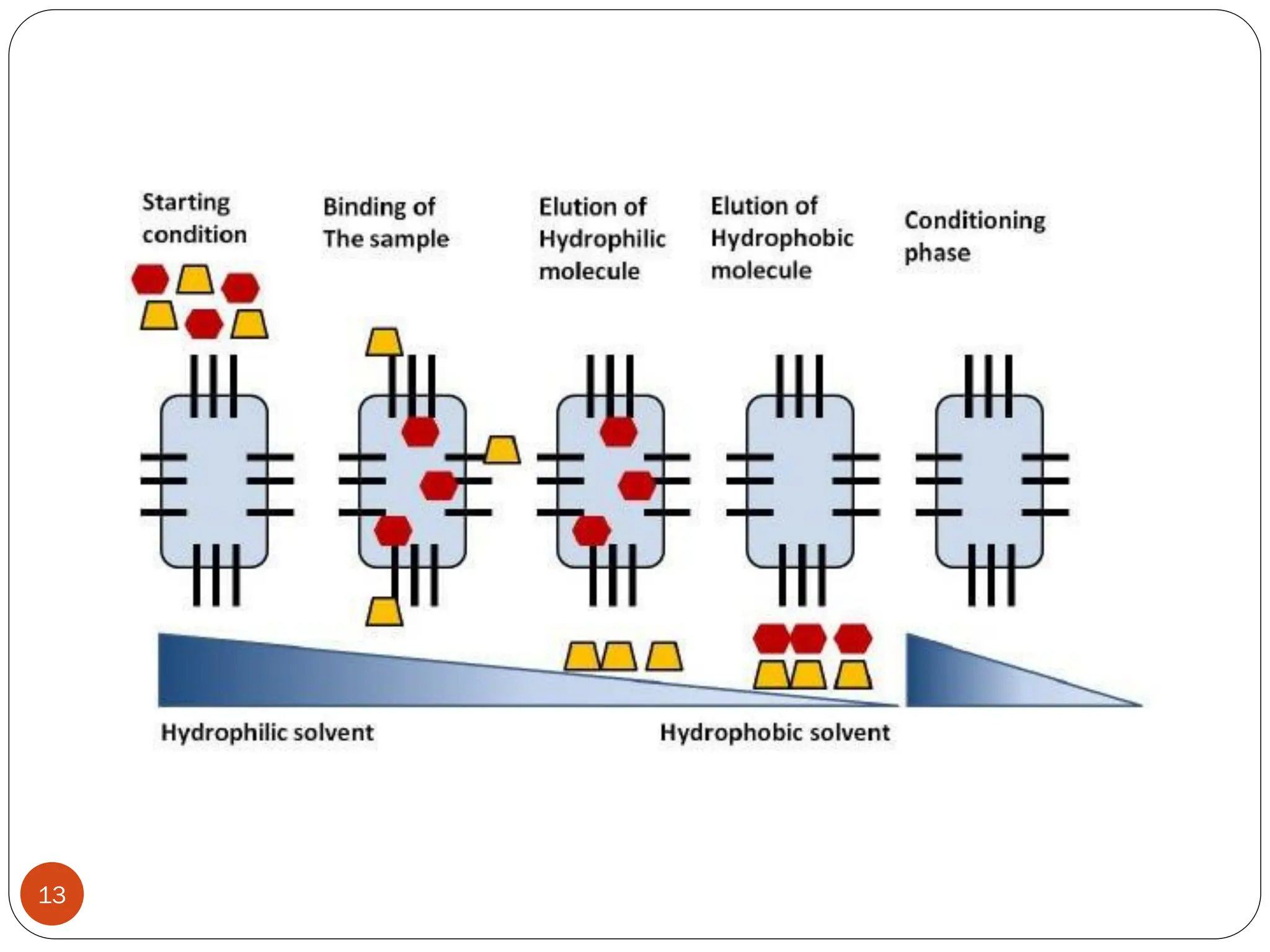
 Reverse-phase chromatography is a liquid chromatography
technique where the separation of molecules is achieved through
hydrophobic interaction between the liquid mobile phase and the
stationary phase.
 Used in the study of the analysis of drugs, metabolites, and
active molecules.
 Reverse chromatography, in combination with high-performance
liquid chromatography, is increasingly used for the separation of
biomolecules.
13
Ion Exchange Chromatography
 Ion exchange chromatography (or ion chromatography) is a
process that allows the separation of ions and polar molecules
based on their affinity to ion exchangers.
 The principle of separation is thus by reversible exchange of
ions between the target ions present in the sample solution to
the ions present on ion exchangers.
 In this process, two types of exchangers i.e., cationic and
anionic exchangers can be used.
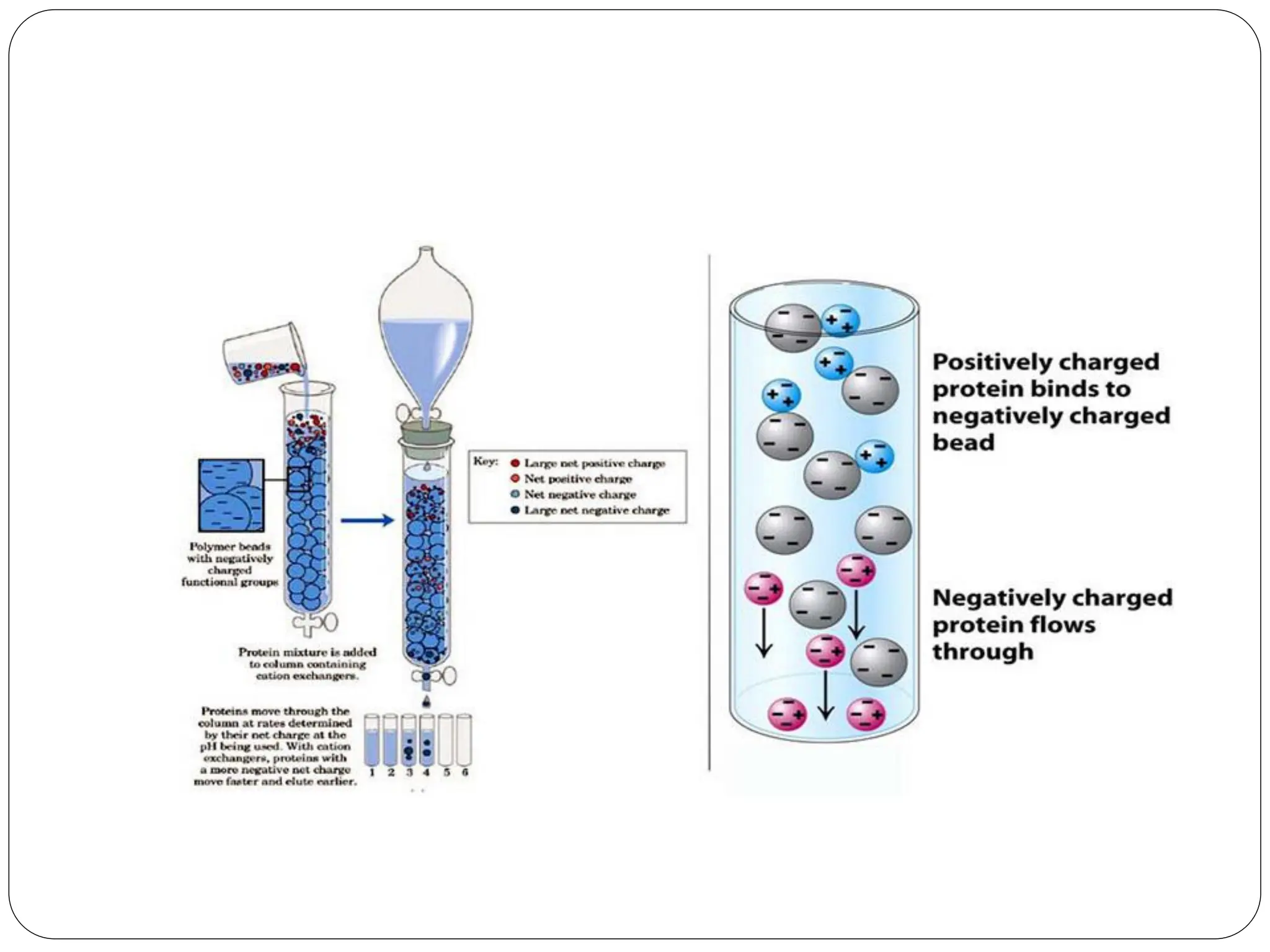
 Cationic exchangers possess negatively charged group, and
these will attract positively charged cations. These exchangers
are also called “Acidic ion exchange” materials, because their
negative charges result from the ionization of acidic group.
 Anionic exchangers have positively charged groups that will
attract negatively charged anions. These are also called “Basic
ion exchange” materials.
Principle
 This form of chromatography relies on the attraction between oppositely
charged stationary phase, known as an ion exchanger, and analyte.
 The ion exchangers basically contain charged groups covalently linked
to the surface of an insoluble matrix.
 The charged groups of the matrix can be positively or negatively
charged.
 When suspended in an aqueous solution, the charged groups of the
matrix will be surrounded by ions of the opposite charge.
 In this “ion cloud”, ions can be reversibly exchanged without changing
the nature and the properties of the matrix.
Instrumentation
 Pump
 Injector
 Columns
 Suppressor
 Detectors
 Data system
Procedure
 Ion exchange separations are carried out mainly in columns packed
with an ion-exchanger.
 These ionic exchangers are commercially available. They are made
up of styrene and divinyl benzene. Example. DEAE-cellulose is an
anionic exchanger, CM-cellulose is a cationic exchanger.
 The choice of the exchanger depends upon the charge of particle to be
separated. To separate anions “Anionic exchanger” is used, to
separate cations “Cationic exchanger” is used.
 First the column is filled with ion exchanger then the sample is applied
followed by the buffer. The tris-buffer, pyridine buffer, acetate buffer, citrate
and phosphate buffers are widely used.
 The particles which have high affinity for ion exchanger will come down the
column along with buffers.
 In next step using corresponding buffer separates the tightly bound particles.
 Then these particles are analyzed spectroscopically.
 An important use of ion-exchange chromatography is in the routine analysis
of amino acid mixtures.
Size Exclusion Chromatography
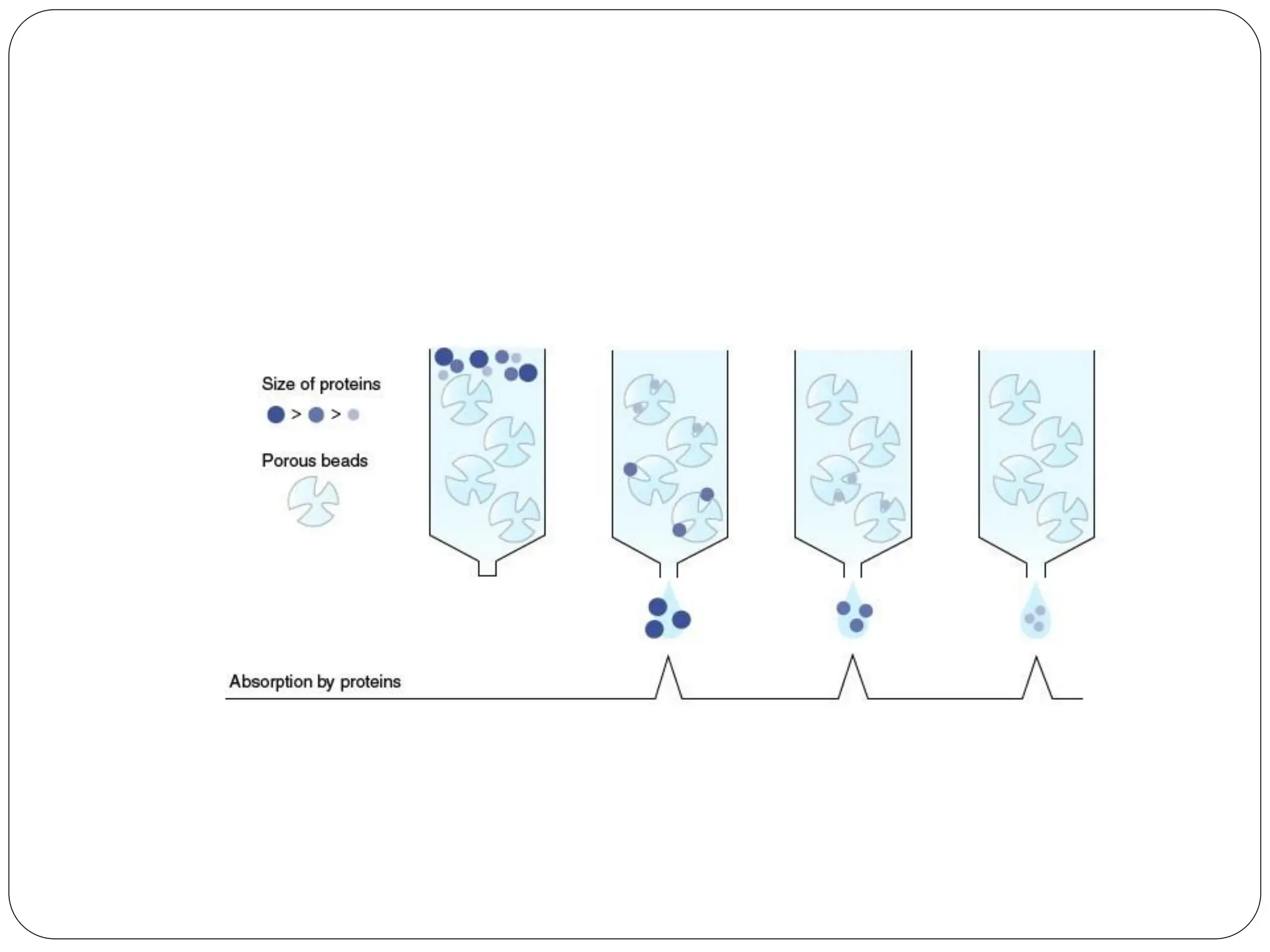
 Size exclusion chromatography (SEC) separates
components of a sample on the basis of their molecular
size.
 Differential exclusion or inclusion of the molecules is
achieved via filtration through a gel that contains spherical
beads
 These beads have pores of a specific size distribution so as to
include or exclude molecules of different sizes when they pass
through the gel.
 SEC is also known by other names such as exclusion
chromatography, gel filtration chromatography, liquid
exclusion chromatography, and gel permeation
chromatography.
Principle
 It is a technique in which the separation of components is based on the difference in
molecular weight or size.
 The stationary phase used is a porous polymer matrix whose pores are completely filled
with the solvent to be used as the mobile phase.
 The molecules in the sample are pumped through specialized columns containing such
microporous packing material (gel).
 The basis of the separation is that molecules above a certain size are totally excluded from
the pores, while smaller molecules access the interior of the pores partly or wholly.
 The flow of the mobile phase hence will cause larger molecules to pass through the column
unhindered, without penetrating the gel matrix, whereas smaller molecules will be retarded
according to their penetration of the gel.
Steps
A. Preparation of column for gel filtration
 It involves:
 Swelling of the gel
 Packing the column semi-permeable, porous polymer gel beads with a well-
defined range of pore sizes.
 Washing: After packing, several column volumes of buffer solution is passed
through the column to remove any air bubbles and to test the column
homogeneity.
B. Loading the sample onto the column using a syringe
C.Eluting the sample and detection of components
Applications of Gel Permeation Chromatography
 Proteins fractionation
 Purification
 Molecular weight determination.
 Separation of sugar, proteins, peptides, rubbers, and others on
the basis of their size.
 Can be used to determine the quaternary structure of purified
proteins.

downstream processing introduction and summary

  • 1.
    Adsorption Chromatography, Reverse Chromatography,Ion-exchange, Size exclusion 21BT501 Downstream Processing By U.Dhivya Dharshini AP/BT
  • 2.
    Adsorption Chromatography 2  AdsorptionChromatography involves the analytical separation of a chemical mixture based on the interaction of the adsorbate with the adsorbent.  The mixture of gas or liquid gets separated when it passes over the adsorbent bed that adsorbs different compounds at different rates.
  • 3.
  • 4.
    Types of AdsorptionChromatography 4  Thin Layer Chromatography  Paper chromatography  Column chromatography  Gas-Solid chromatography
  • 5.
    5 Thin layer chromatography: Thin Layer Chromatography is a technique used to isolate non- volatile mixtures.  The experiment is conducted on a sheet of aluminium foil, plastic, or glass which is coated with a thin layer of adsorbent material. The material usually used is aluminium oxide, cellulose, or silica gel.  It is a chromatography technique where the mobile phase moves over an adsorbent.  The adsorbent is a thin layer which is applied to a solid support for the separation of components.  The separation takes place through differential migration which occurs when the solvent moves along the powder spread on the glass plates.
  • 6.
  • 7.
    Paper chromatography 7  Chromatographytechnique that uses paper sheets or strips as the adsorbent being the stationary phase through which a solution is made to pass is called paper chromatography.  It is a powerful analytical tool that uses very small quantities of material.
  • 8.
  • 9.
    Column chromatography 9  Columnchromatography separates substances based on differential adsorption of compounds to the adsorbent as the compounds move through the column at different rates which allows them to get separated in fractions.
  • 10.
  • 11.
    Adsorption Chromatography Applications 11 Adsorption chromatography is used for the separation of amino acids.  It is used in the isolation of antibiotics.  It is used in the identification of carbohydrates.  It is used to separate and identify fats and fatty acids.  It is used to isolate and determine peptides and proteins
  • 12.
    Reverse phase chromatography 12 Reverse-phase chromatography is a liquid chromatography technique where the separation of molecules is achieved through hydrophobic interaction between the liquid mobile phase and the stationary phase.  Used in the study of the analysis of drugs, metabolites, and active molecules.  Reverse chromatography, in combination with high-performance liquid chromatography, is increasingly used for the separation of biomolecules.
  • 13.
  • 14.
    Ion Exchange Chromatography Ion exchange chromatography (or ion chromatography) is a process that allows the separation of ions and polar molecules based on their affinity to ion exchangers.  The principle of separation is thus by reversible exchange of ions between the target ions present in the sample solution to the ions present on ion exchangers.  In this process, two types of exchangers i.e., cationic and anionic exchangers can be used.
  • 15.
     Cationic exchangerspossess negatively charged group, and these will attract positively charged cations. These exchangers are also called “Acidic ion exchange” materials, because their negative charges result from the ionization of acidic group.  Anionic exchangers have positively charged groups that will attract negatively charged anions. These are also called “Basic ion exchange” materials.
  • 17.
    Principle  This formof chromatography relies on the attraction between oppositely charged stationary phase, known as an ion exchanger, and analyte.  The ion exchangers basically contain charged groups covalently linked to the surface of an insoluble matrix.  The charged groups of the matrix can be positively or negatively charged.  When suspended in an aqueous solution, the charged groups of the matrix will be surrounded by ions of the opposite charge.  In this “ion cloud”, ions can be reversibly exchanged without changing the nature and the properties of the matrix.
  • 18.
    Instrumentation  Pump  Injector Columns  Suppressor  Detectors  Data system
  • 19.
    Procedure  Ion exchangeseparations are carried out mainly in columns packed with an ion-exchanger.  These ionic exchangers are commercially available. They are made up of styrene and divinyl benzene. Example. DEAE-cellulose is an anionic exchanger, CM-cellulose is a cationic exchanger.  The choice of the exchanger depends upon the charge of particle to be separated. To separate anions “Anionic exchanger” is used, to separate cations “Cationic exchanger” is used.
  • 20.
     First thecolumn is filled with ion exchanger then the sample is applied followed by the buffer. The tris-buffer, pyridine buffer, acetate buffer, citrate and phosphate buffers are widely used.  The particles which have high affinity for ion exchanger will come down the column along with buffers.  In next step using corresponding buffer separates the tightly bound particles.  Then these particles are analyzed spectroscopically.  An important use of ion-exchange chromatography is in the routine analysis of amino acid mixtures.
  • 21.
    Size Exclusion Chromatography Size exclusion chromatography (SEC) separates components of a sample on the basis of their molecular size.  Differential exclusion or inclusion of the molecules is achieved via filtration through a gel that contains spherical beads
  • 22.
     These beadshave pores of a specific size distribution so as to include or exclude molecules of different sizes when they pass through the gel.  SEC is also known by other names such as exclusion chromatography, gel filtration chromatography, liquid exclusion chromatography, and gel permeation chromatography.
  • 24.
    Principle  It isa technique in which the separation of components is based on the difference in molecular weight or size.  The stationary phase used is a porous polymer matrix whose pores are completely filled with the solvent to be used as the mobile phase.  The molecules in the sample are pumped through specialized columns containing such microporous packing material (gel).  The basis of the separation is that molecules above a certain size are totally excluded from the pores, while smaller molecules access the interior of the pores partly or wholly.  The flow of the mobile phase hence will cause larger molecules to pass through the column unhindered, without penetrating the gel matrix, whereas smaller molecules will be retarded according to their penetration of the gel.
  • 25.
    Steps A. Preparation ofcolumn for gel filtration  It involves:  Swelling of the gel  Packing the column semi-permeable, porous polymer gel beads with a well- defined range of pore sizes.  Washing: After packing, several column volumes of buffer solution is passed through the column to remove any air bubbles and to test the column homogeneity. B. Loading the sample onto the column using a syringe C.Eluting the sample and detection of components
  • 26.
    Applications of GelPermeation Chromatography  Proteins fractionation  Purification  Molecular weight determination.  Separation of sugar, proteins, peptides, rubbers, and others on the basis of their size.  Can be used to determine the quaternary structure of purified proteins.