domes and vaults architecture construction techniques
1.
1
SUB: OE
NAME :Nupur Brahmbhatt
ROLL NO : 23SA118
Vaults &
Domes
2.
2
INTRODUCTION
"Where form meetsfunction, and history meets innovation.
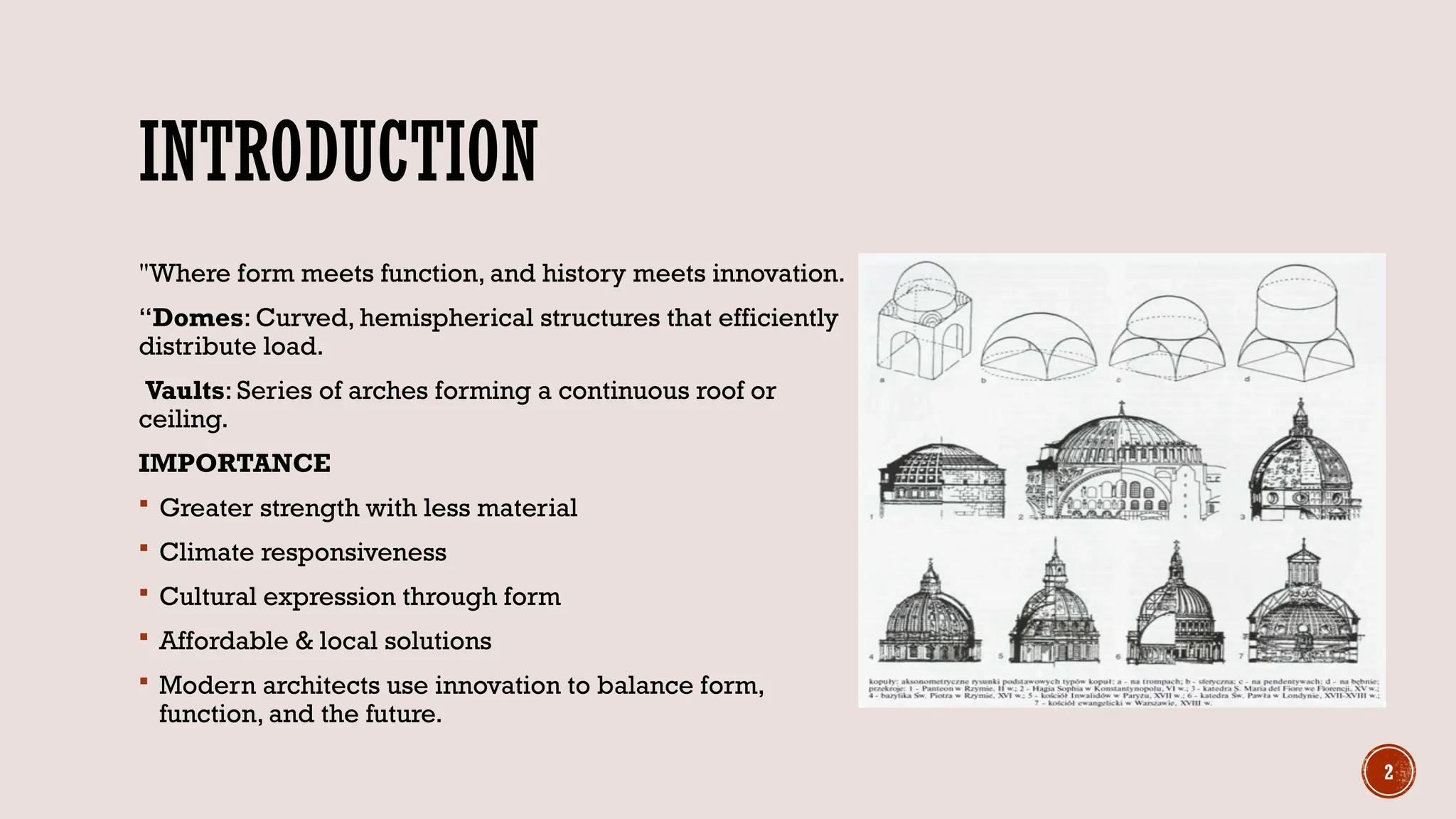
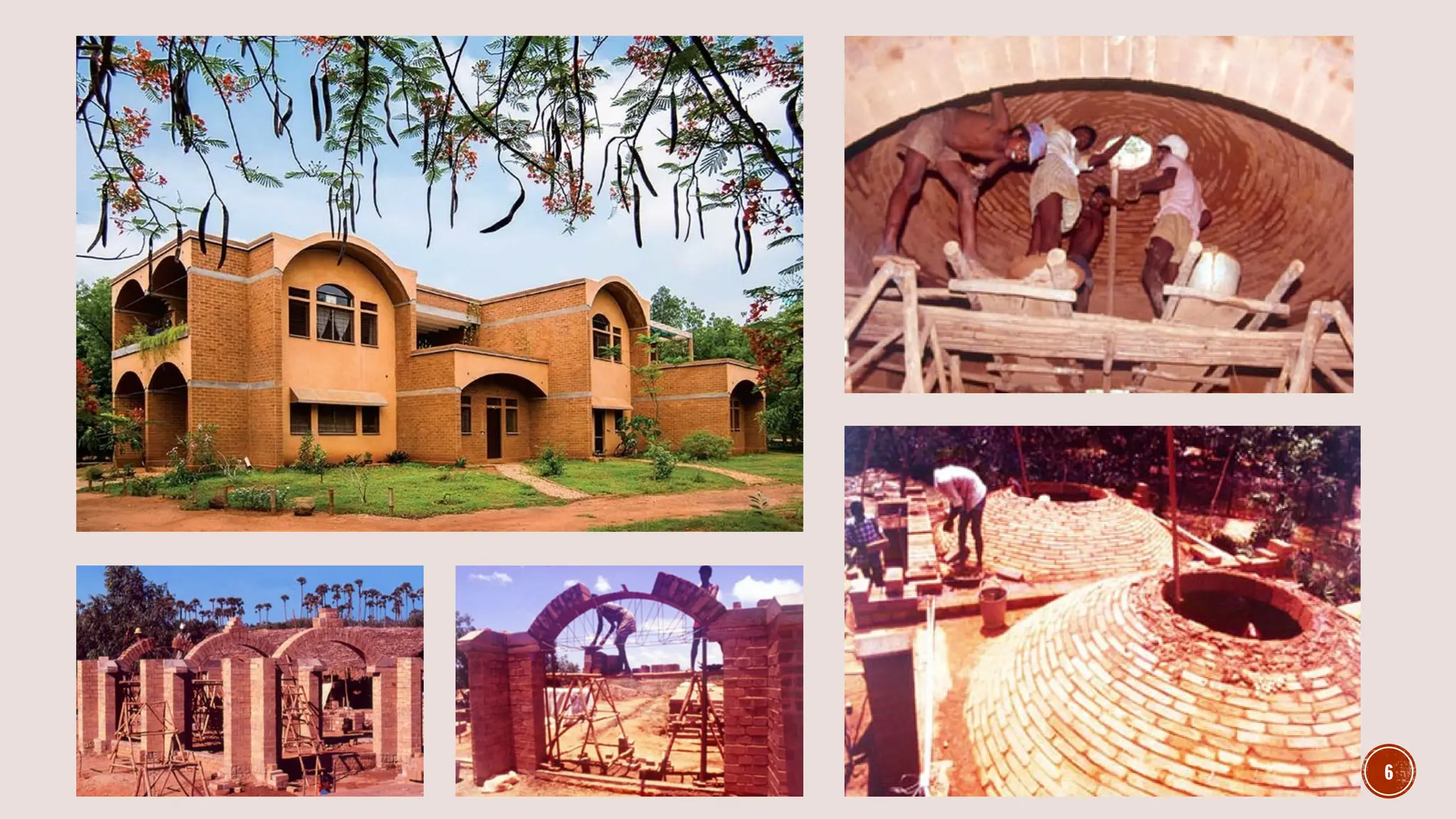
“Domes: Curved, hemispherical structures that efficiently
distribute load.
Vaults: Series of arches forming a continuous roof or
ceiling.
IMPORTANCE
Greater strength with less material
Climate responsiveness
Cultural expression through form
Affordable & local solutions
Modern architects use innovation to balance form,
function, and the future.
8
KEY FEATURES
Compression-BasedStructure:
No beams or columns
Load Transfer: Forces are transferred through the curved earth walls to the ground
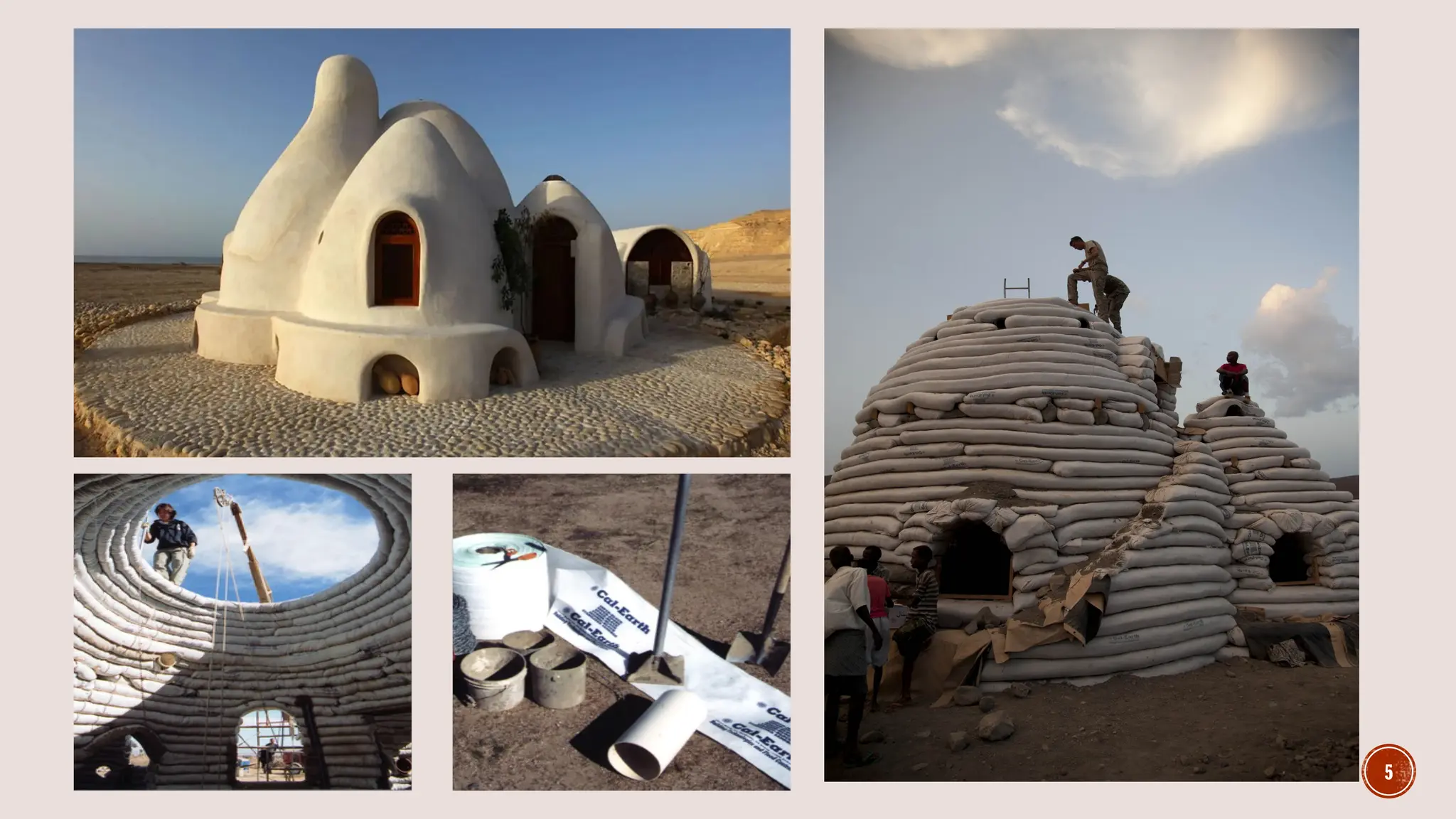
Material: Sandbags filled with earth, stabilized with lime or cement
Reinforcement: Barbed wire between layers for tensile strength
Thermal Mass:Thick walls store heat & cool gradually
Benefits: Disaster-resistant, low cost, sustainable
10
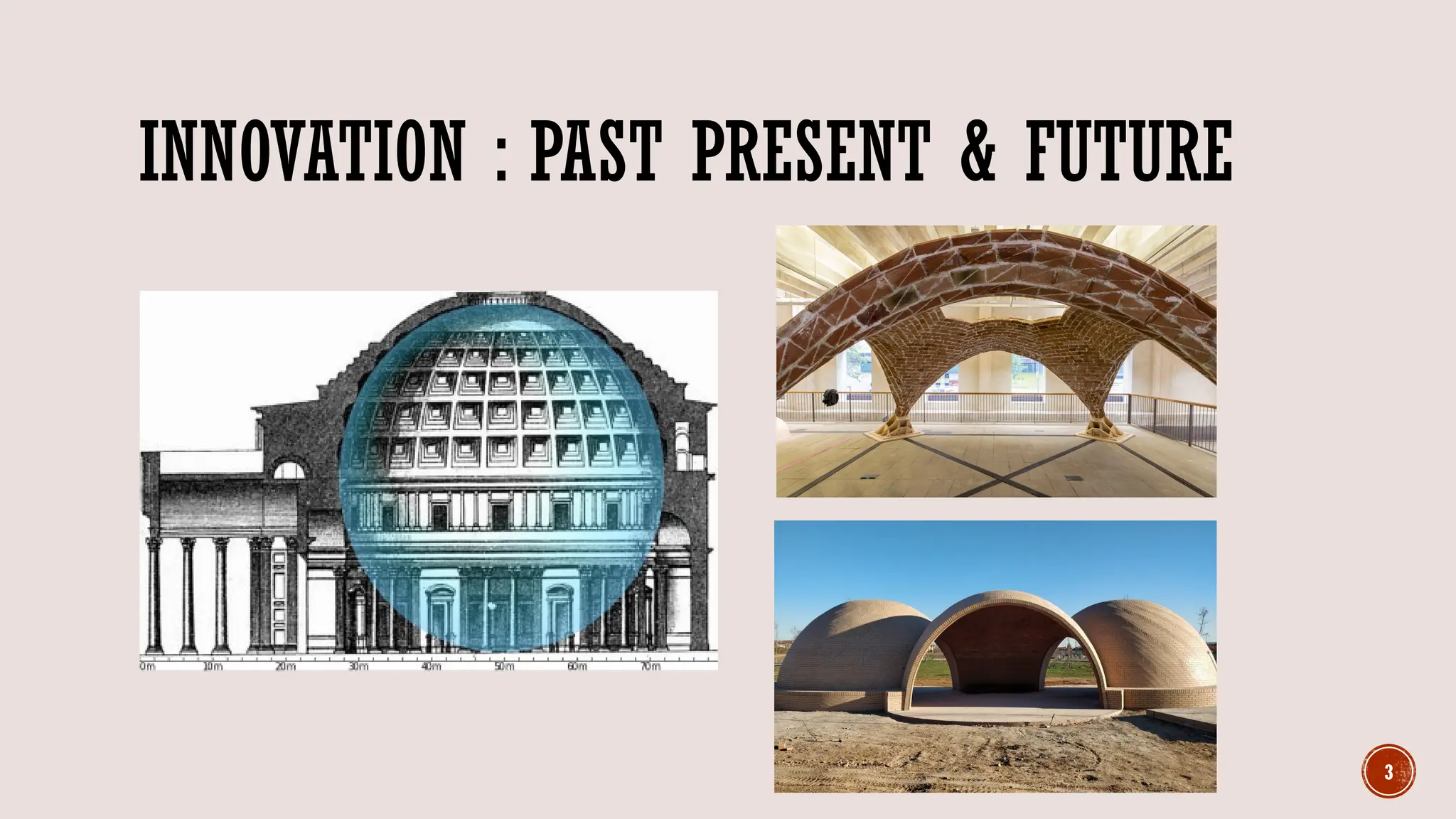
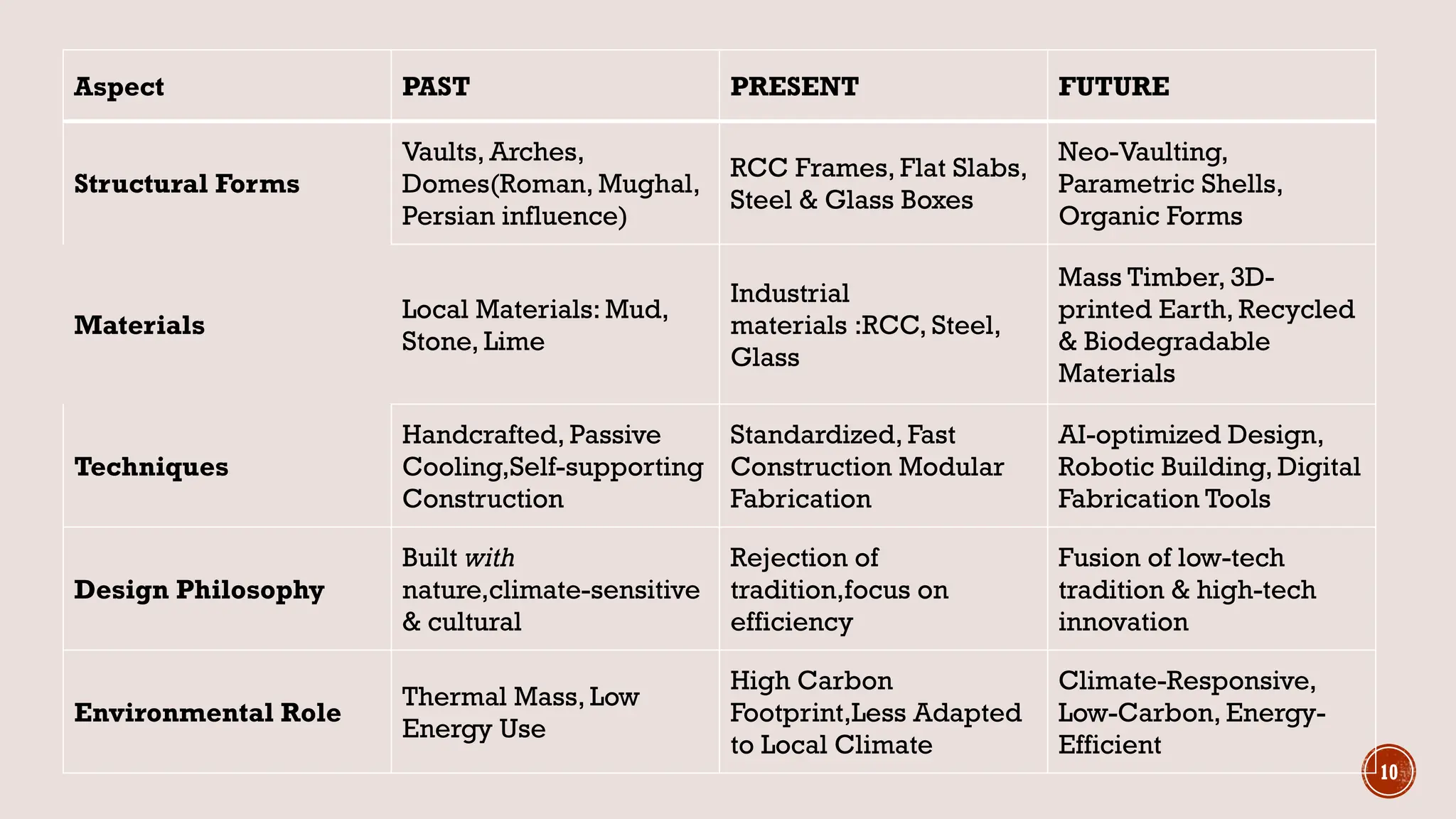
Aspect PAST PRESENTFUTURE
Structural Forms
Vaults, Arches,
Domes(Roman, Mughal,
Persian influence)
RCC Frames, Flat Slabs,
Steel & Glass Boxes
Neo-Vaulting,
Parametric Shells,
Organic Forms
Materials
Local Materials: Mud,
Stone, Lime
Industrial
materials :RCC, Steel,
Glass
Mass Timber, 3D-
printed Earth, Recycled
& Biodegradable
Materials
Techniques
Handcrafted, Passive
Cooling,Self-supporting
Construction
Standardized, Fast
Construction Modular
Fabrication
AI-optimized Design,
Robotic Building, Digital
Fabrication Tools
Design Philosophy
Built with
nature,climate-sensitive
& cultural
Rejection of
tradition,focus on
efficiency
Fusion of low-tech
tradition & high-tech
innovation
Environmental Role
Thermal Mass, Low
Energy Use
High Carbon
Footprint,Less Adapted
to Local Climate
Climate-Responsive,
Low-Carbon, Energy-
Efficient