A Finnish environmental NGO
working in urban environments –
       example of Dodo
Why an urban NGO?
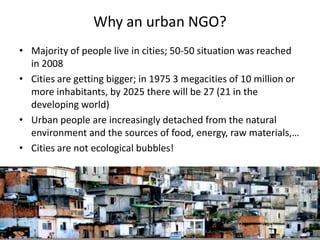
• Majority of people live in cities; 50-50 situation was reached
  in 2008
• Cities are getting bigger; in 1975 3 megacities of 10 million or
  more inhabitants, by 2025 there will be 27 (21 in the
  developing world)
• Urban people are increasingly detached from the natural
  environment and the sources of food, energy, raw materials,…
• Cities are not ecological bubbles!
Dodo – A Progressive Finnish
                 environmental NGO
• Established 1995
• Promotes global environmental
  thinking and citizen-based action
• Wide perspective to environmental
  issues
• Urban point of view: individuality &
  communality
• Open sharing of ideas and willingness
  to test any possible solutions – with a
  permission to fail
• Avoiding expert talk; everyone’s
  entitled to understand and contribute
  to the discourse
• strongly voluntary-based
Dodo guidelines
• Environmental problems will be solved in cities that are
  vibrant and tolerant.
• Positive thinking leads further. Therefore we don’t
  condemn, instead we encourage.
• Dodo offers new opportunities for different kinds of people.
  One does not need to be an expert in order to be able to
  participate and be part of the solution.
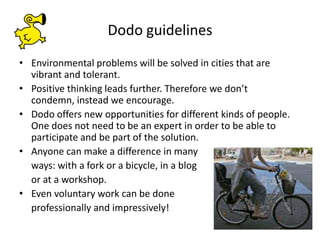
• Anyone can make a difference in many
  ways: with a fork or a bicycle, in a blog
  or at a workshop.
• Even voluntary work can be done
  professionally and impressively!
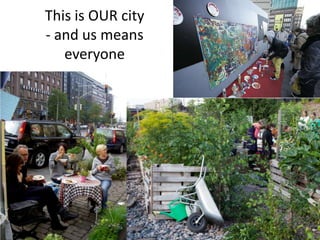
This is OUR city
- and us means
   everyone
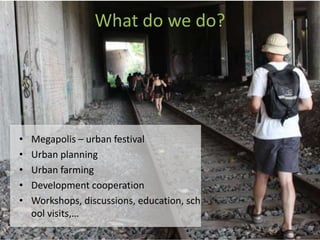
What do we do?


•   Megapolis – urban festival
•   Urban planning
•   Urban farming
•   Development cooperation
•   Workshops, discussions, education, sch
    ool visits,…
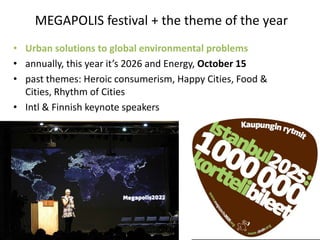
MEGAPOLIS festival + the theme of the year
• Urban solutions to global environmental problems
• annually, this year it’s 2026 and Energy, October 15
• past themes: Heroic consumerism, Happy Cities, Food &
  Cities, Rhythm of Cities
• Intl & Finnish keynote speakers
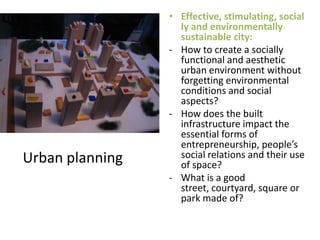
• Effective, stimulating, social
                   ly and environmentally
                   sustainable city:
                 - How to create a socially
                   functional and aesthetic
                   urban environment without
                   forgetting environmental
                   conditions and social
                   aspects?
                 - How does the built
                   infrastructure impact the
                   essential forms of
                   entrepreneurship, people’s
Urban planning     social relations and their use
                   of space?
                 - What is a good
                   street, courtyard, square or
                   park made of?
Urban farming
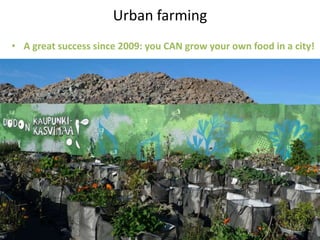
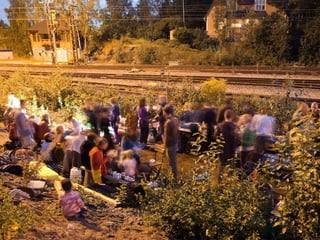
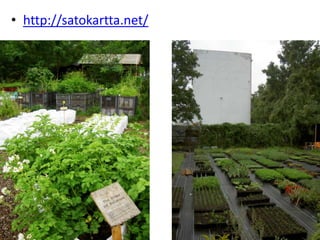
• A great success since 2009: you CAN grow your own food in a city!
Urban farming
   projects


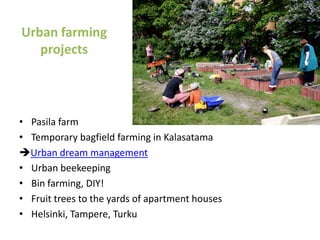
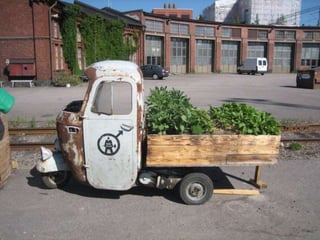
• Pasila farm
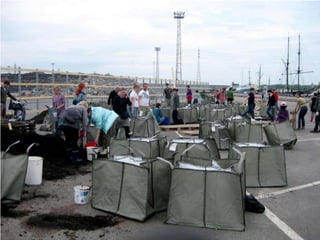
• Temporary bagfield farming in Kalasatama
Urban dream management
• Urban beekeeping
• Bin farming, DIY!
• Fruit trees to the yards of apartment houses
• Helsinki, Tampere, Turku
• http://satokartta.net/
From local to global – development
            cooperation in Africa
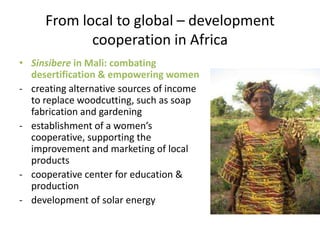
• Sinsibere in Mali: combating
  desertification & empowering women
- creating alternative sources of income
  to replace woodcutting, such as soap
  fabrication and gardening
- establishment of a women’s
  cooperative, supporting the
  improvement and marketing of local
  products
- cooperative center for education &
  production
- development of solar energy
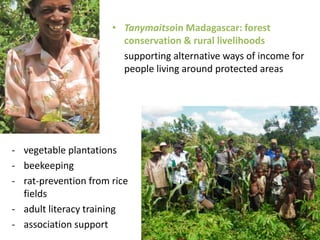
• Tanymaitsoin Madagascar: forest
                        conservation & rural livelihoods
                        supporting alternative ways of income for
                        people living around protected areas


- vegetable plantations
- beekeeping
- rat-prevention from rice
  fields
- adult literacy training
- association support
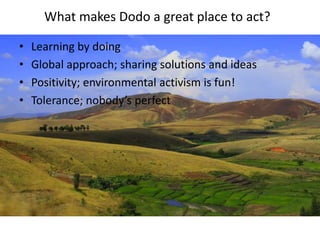
What makes Dodo a great place to act?

•   Learning by doing
•   Global approach; sharing solutions and ideas
•   Positivity; environmental activism is fun!
•   Tolerance; nobody’s perfect
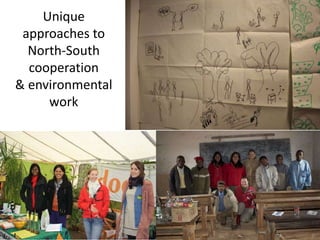
Unique
 approaches to
  North-South
  cooperation
& environmental
     work
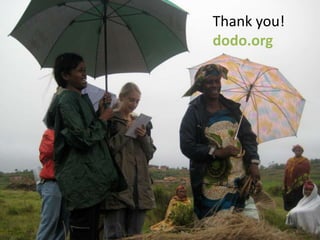
Thank you!
dodo.org

Dodopresentation eng

  • 1.
    A Finnish environmentalNGO working in urban environments – example of Dodo
  • 2.
    Why an urbanNGO? • Majority of people live in cities; 50-50 situation was reached in 2008 • Cities are getting bigger; in 1975 3 megacities of 10 million or more inhabitants, by 2025 there will be 27 (21 in the developing world) • Urban people are increasingly detached from the natural environment and the sources of food, energy, raw materials,… • Cities are not ecological bubbles!
  • 3.
    Dodo – AProgressive Finnish environmental NGO • Established 1995 • Promotes global environmental thinking and citizen-based action • Wide perspective to environmental issues • Urban point of view: individuality & communality • Open sharing of ideas and willingness to test any possible solutions – with a permission to fail • Avoiding expert talk; everyone’s entitled to understand and contribute to the discourse • strongly voluntary-based
  • 4.
    Dodo guidelines • Environmentalproblems will be solved in cities that are vibrant and tolerant. • Positive thinking leads further. Therefore we don’t condemn, instead we encourage. • Dodo offers new opportunities for different kinds of people. One does not need to be an expert in order to be able to participate and be part of the solution. • Anyone can make a difference in many ways: with a fork or a bicycle, in a blog or at a workshop. • Even voluntary work can be done professionally and impressively!
  • 5.
    This is OURcity - and us means everyone
  • 6.
    What do wedo? • Megapolis – urban festival • Urban planning • Urban farming • Development cooperation • Workshops, discussions, education, sch ool visits,…
  • 7.
    MEGAPOLIS festival +the theme of the year • Urban solutions to global environmental problems • annually, this year it’s 2026 and Energy, October 15 • past themes: Heroic consumerism, Happy Cities, Food & Cities, Rhythm of Cities • Intl & Finnish keynote speakers
  • 8.
    • Effective, stimulating,social ly and environmentally sustainable city: - How to create a socially functional and aesthetic urban environment without forgetting environmental conditions and social aspects? - How does the built infrastructure impact the essential forms of entrepreneurship, people’s Urban planning social relations and their use of space? - What is a good street, courtyard, square or park made of?
  • 9.
    Urban farming • Agreat success since 2009: you CAN grow your own food in a city!
  • 10.
    Urban farming projects • Pasila farm • Temporary bagfield farming in Kalasatama Urban dream management • Urban beekeeping • Bin farming, DIY! • Fruit trees to the yards of apartment houses • Helsinki, Tampere, Turku
  • 14.
  • 15.
    From local toglobal – development cooperation in Africa • Sinsibere in Mali: combating desertification & empowering women - creating alternative sources of income to replace woodcutting, such as soap fabrication and gardening - establishment of a women’s cooperative, supporting the improvement and marketing of local products - cooperative center for education & production - development of solar energy
  • 16.
    • Tanymaitsoin Madagascar:forest conservation & rural livelihoods supporting alternative ways of income for people living around protected areas - vegetable plantations - beekeeping - rat-prevention from rice fields - adult literacy training - association support
  • 17.
    What makes Dodoa great place to act? • Learning by doing • Global approach; sharing solutions and ideas • Positivity; environmental activism is fun! • Tolerance; nobody’s perfect
  • 18.
    Unique approaches to North-South cooperation & environmental work
  • 20.