docMD:   Eric H. Schnell  (schnell.9@osu.edu) Associate Professor Head, Information Technology  Prior Health Sciences Library The Ohio State University (DOCument Mediated Delivery) docMD  is funded through support by the National Network of Libraries of Medicine, Greater Midwest Region. Ohio State University project number 743202
docMD Goal “ To establish an electronic document delivery service for hospital libraries that are unable to support such a service themselves due to limited human, financial, or technical resources “
docMD Objectives Establish a mediated direct-to-customer document delivery service for hospital libraries  Identify the costs involved in providing such a service  Develop a model for use by other resource libraries in other regions of the country
Why docMD? IDD Reduces telecom costs  (Landes ’97) IDD Reduces turnaround time 1986: 13.76 days (Budd) 1999: reduced to 2.52 (Sellen) Web delivery reduces supply costs (Weible ’02)
Barriers to Hospital Library IDD Implementation Firewalls (McKnight 2001) communication ports network authority Workflow / staffing (Jackson 1993)  Access to technical staff Fiscal resources
How docMD Jumps these Barriers Firewalls  a common communication port is used (80) Workflow / staffing DOCLINE processing remains the same Less physical processing of documents Access to technical staff Essential technical staff at mediation center Little technical site support needed Fiscal resources GMR supported
Participating Libraries Must: Be a DOCLINE ®  library Identify the populations this project could potentially reach  Provide a letter of interest  Be willing to assist their users with local issues  Implement and market the service locally  Provide the project with feedback and participate in the evaluation process  Be willing to "go with the flow"    
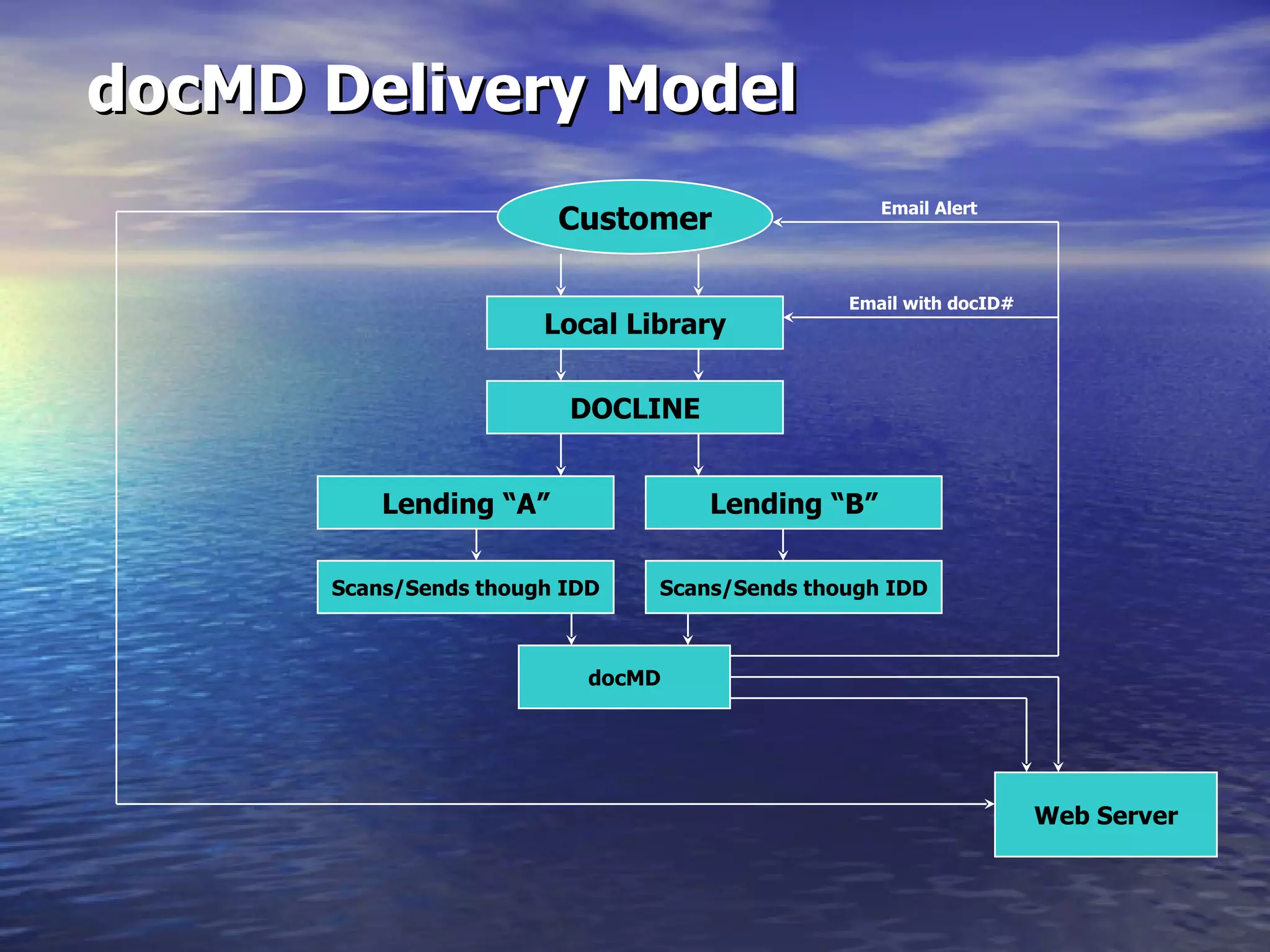
docMD Delivery Model Local Library Customer DOCLINE Lending “A” Lending “B” Scans/Sends though IDD Scans/Sends though IDD docMD Web Server Email with docID# Email Alert
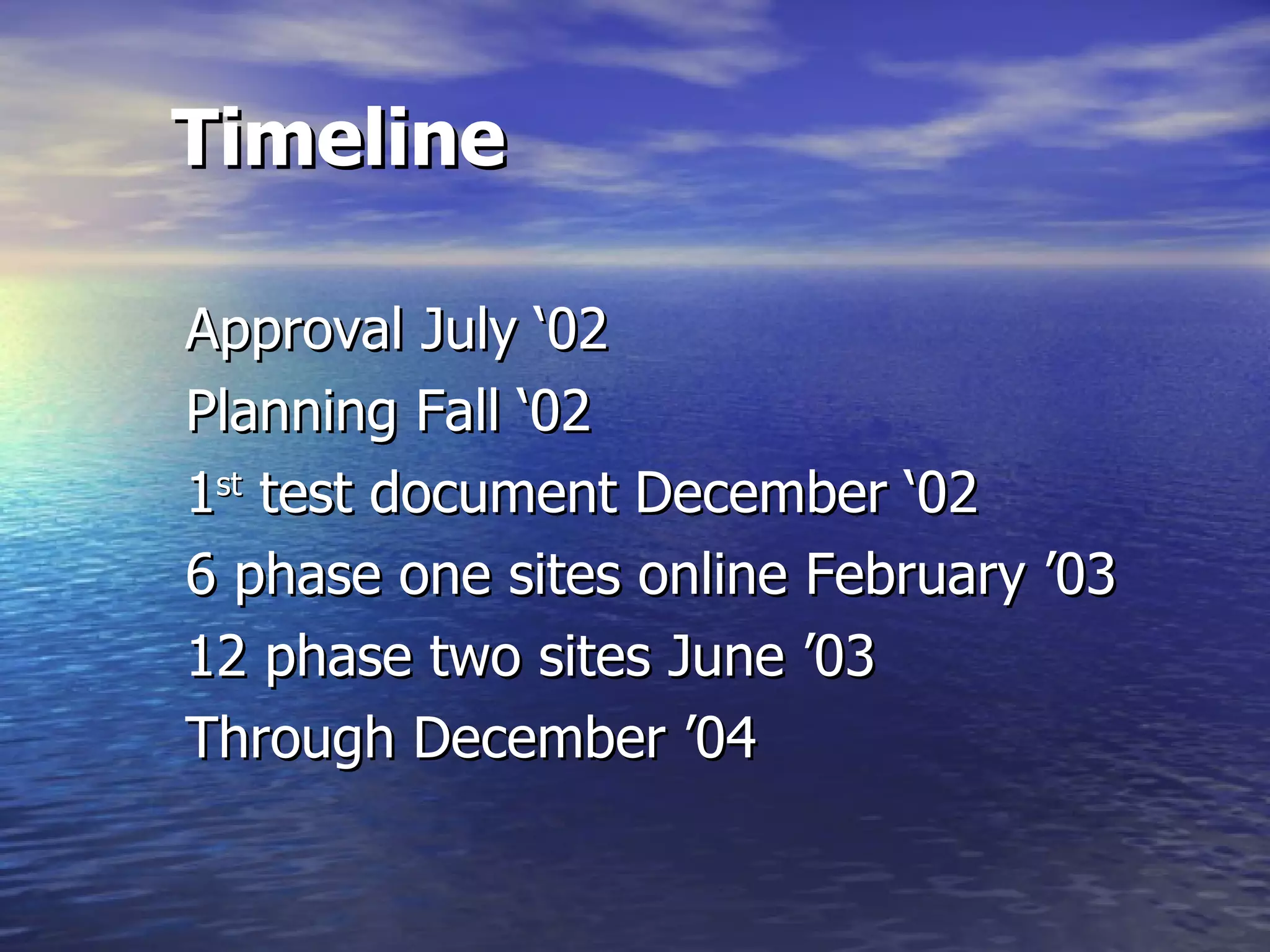
Timeline Approval July ‘02  Planning Fall ‘02 1 st  test document December ‘02 6 phase one sites online February ’03 12 phase two sites June ’03 Through December ’04
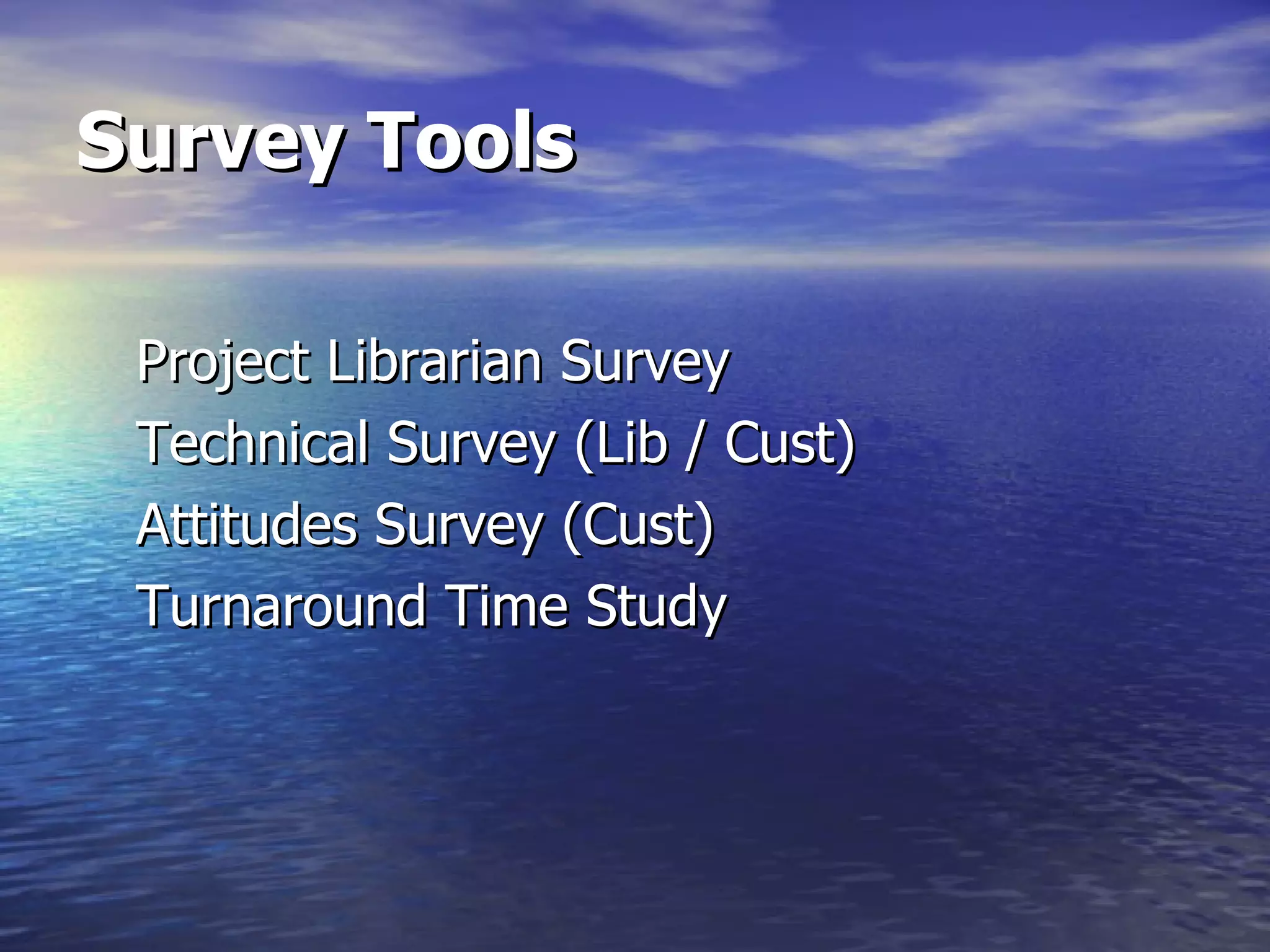
Survey Tools Project Librarian Survey Technical Survey (Lib / Cust) Attitudes Survey (Cust) Turnaround Time Study
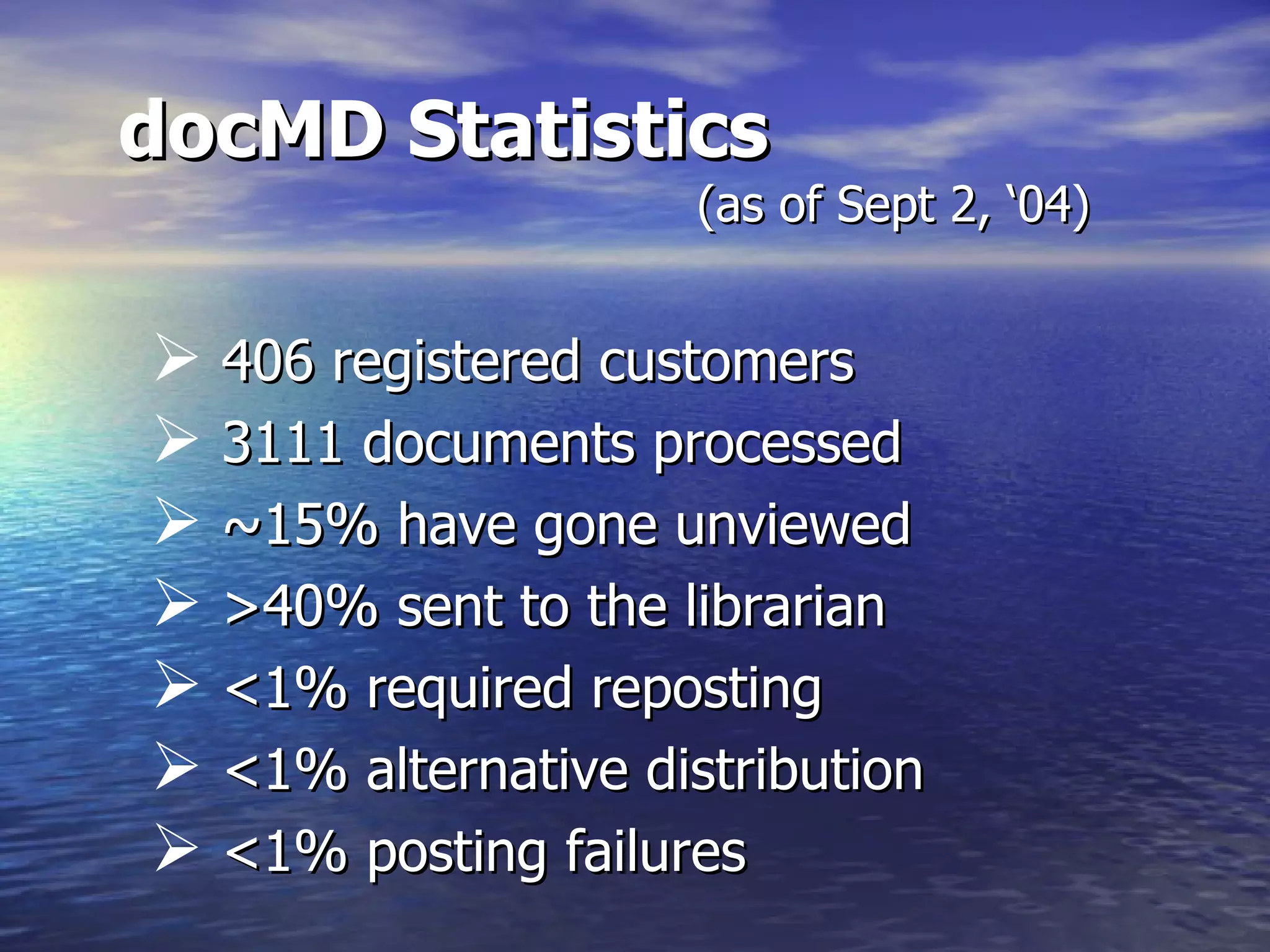
docMD Statistics     (as of Sept 2, ‘04) 406 registered customers 3111 documents processed ~15% have gone unviewed >40% sent to the librarian  <1% required reposting <1% alternative distribution <1% posting failures
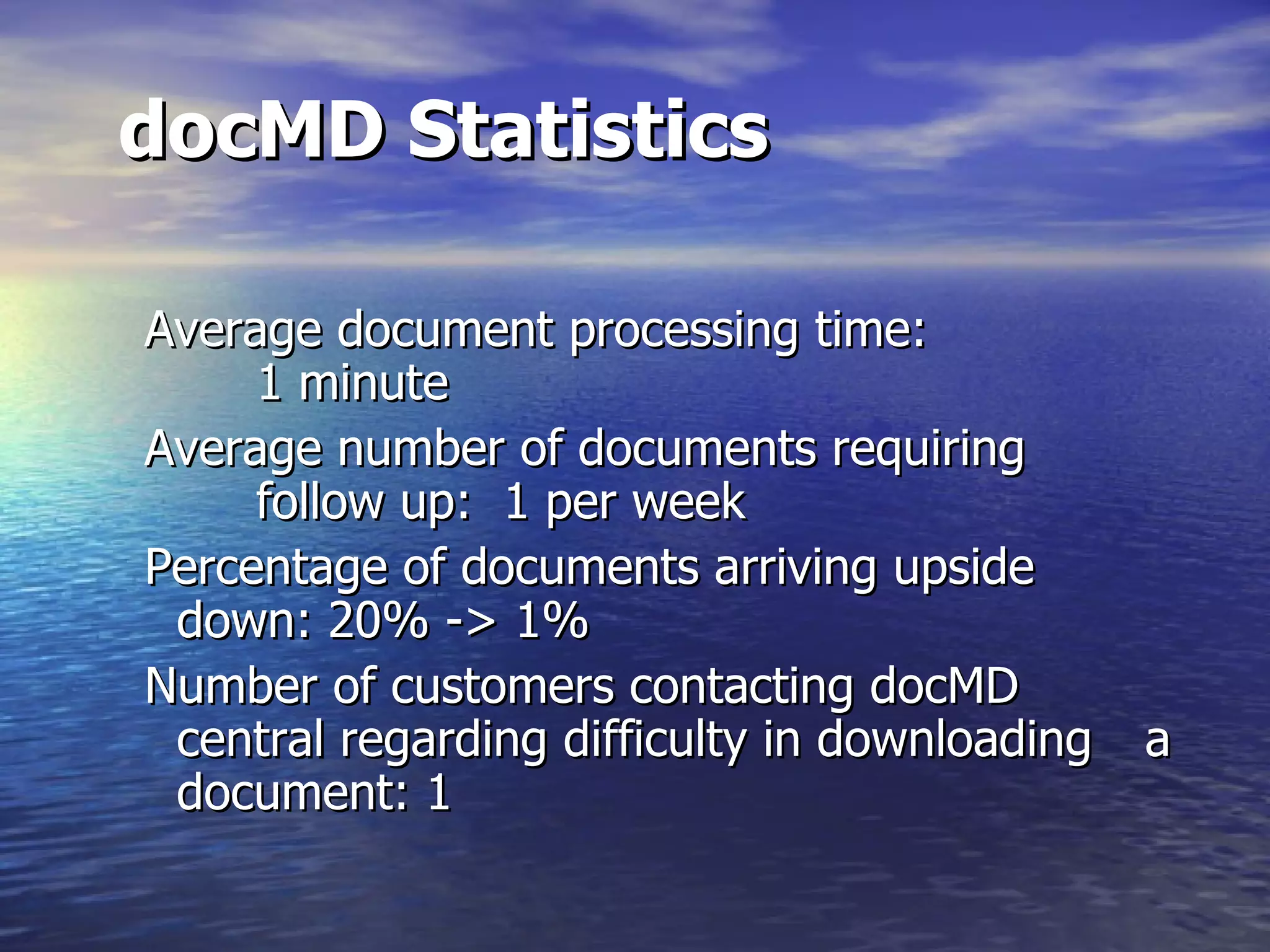
docMD Statistics     Average document processing time:  1 minute  Average number of documents requiring  follow up:  1 per week  Percentage of documents arriving upside  down: 20% -> 1% Number of customers contacting docMD  central regarding difficulty in downloading  a document: 1
Turnaround Time     Pre – docMD: 6.53 days (max 19 days) Post – docMD:  3.11 days (max 9)
Feedback “ Our docs are always so delighted when personalized mail arrives for them.”  one has a “raft of administrators tooling past his office wanting to know how his articles were retrieved electronically.  They believe that he magically pulled them up all by himself. “ “ another test subject… has been running around Nursing telling people…”
Issues: Geography: Project leaders / librarian  face-to-face contact difficult  Geography II: Difficult if not impossible  to organize group training Geography III: Email helps. Phone is  more effective but more time  consuming
Issues: How docMD is implemented at a site is  dependent on the hospital librarian Level of participation is dependent on  the marketing performed by the  hospital librarians Too much hand-holding or separation  anxiety?
Issues: Funding Pay-to-Play (1) Each hospital pays a fee based on scale determined by the number of documents they normally process through DOCLINE in relation to other participants in a tiered fee schedule.  Pay-to-Play (2)  Each hospital pays a per-document fee based on the actual number of documents they process using docMD and is billed on a quarterly or annual or per-document basis.  Subsidized (1) Each NNLM region establishes funding opportunities for resource libraries to support a docMD service for their resource area.  Resource libraries apply for the available awards.  Subsidized (2) Each NNLM region provides a funded mandate to each resource library to establish a docMD service in their area.  Benevolent  Any library can provide the service but supports it using their individual operating funds and can pursue reimbursement from the participants.
Issues: Standards GEDI: Generic Electronic Document Interchange Established in early 1990s Ariel 1.x - 3.4 Odyssey Open Standard Ariel 4.x   ???? proprietary
Issues: Standards Question: Is Ariel 3.4 compatible with all other versions of Ariel?   Answer:   Yes. Ariel 3.4 is able to send and receive documents with Ariel versions 2 and 3.  However, Infotrieve has in important announcement about Ariel: Infotrieve continues to improve and upgrade Ariel, which will greatly change Ariel’s technology (especially with an eye to building a networked version of Ariel 4.0). We foresee that future versions of Ariel will no longer be technically compatible with older versions. We anticipate that Ariel 3.4 will be the “cut off” version for future compatibility. Hence, we encourage all 3.x users to upgrade to 3.4 for free, to be prepared for this future change. We also encourage Ariel 2.x users to take advantage of our upgrade discount and get current to prevent incompatibilty with future releases of Ariel. Infotrieve will continue to communicate about this important issue so that our customers can plan and budget accordingly. When we release the next version of Ariel, we will provide Ariel 3.4 users with a patch that will ensure compatibility with the next version, Ariel 4.0. It is important to take advantage of this release now.  http://www4.infotrieve.com/ariel/FAQ.html
Issues: Standards Lack of IDD standards will result in the project ending in December 2004 Lack of IDD standards will prevent a wide scale implementation of the concept
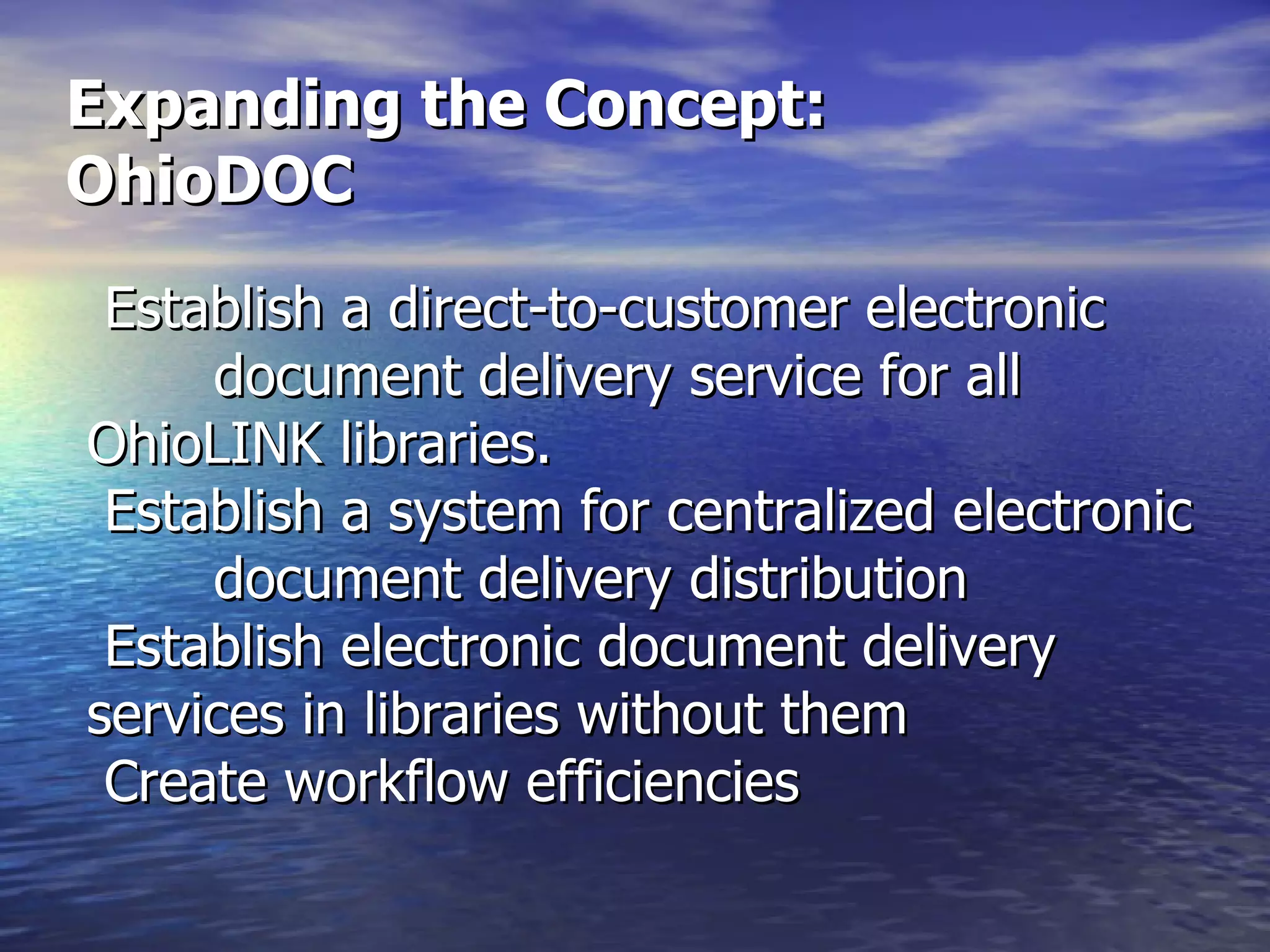
Expanding the Concept: OhioDOC  Establish a direct-to-customer electronic  document delivery service for all  OhioLINK libraries.  Establish a system for centralized electronic  document delivery distribution  Establish electronic document delivery  services in libraries without them Create workflow efficiencies
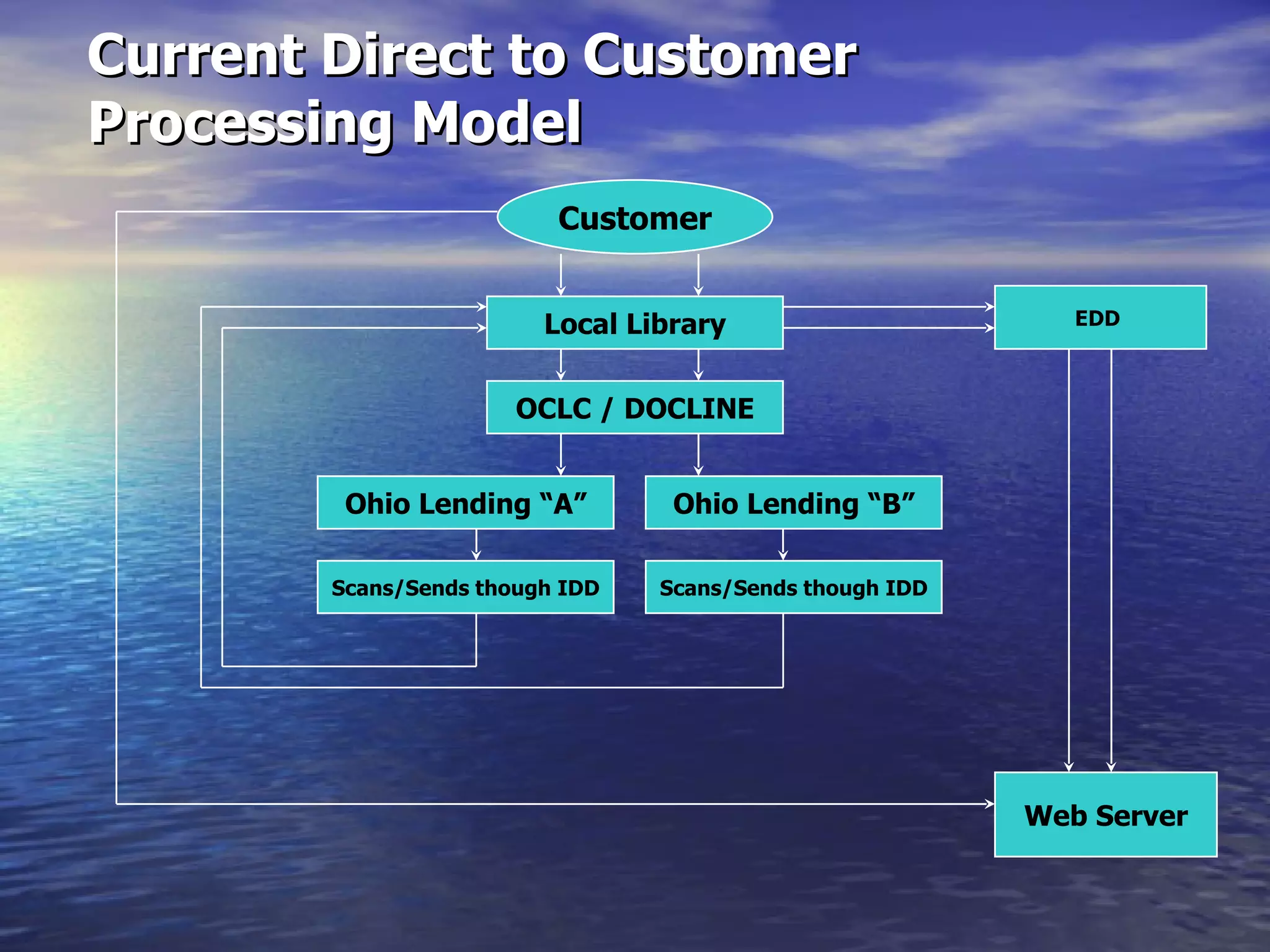
Current Direct to Customer  Processing Model Local Library Customer OCLC / DOCLINE Ohio Lending “A” Ohio Lending “B” Scans/Sends though IDD Scans/Sends though IDD EDD  Web Server
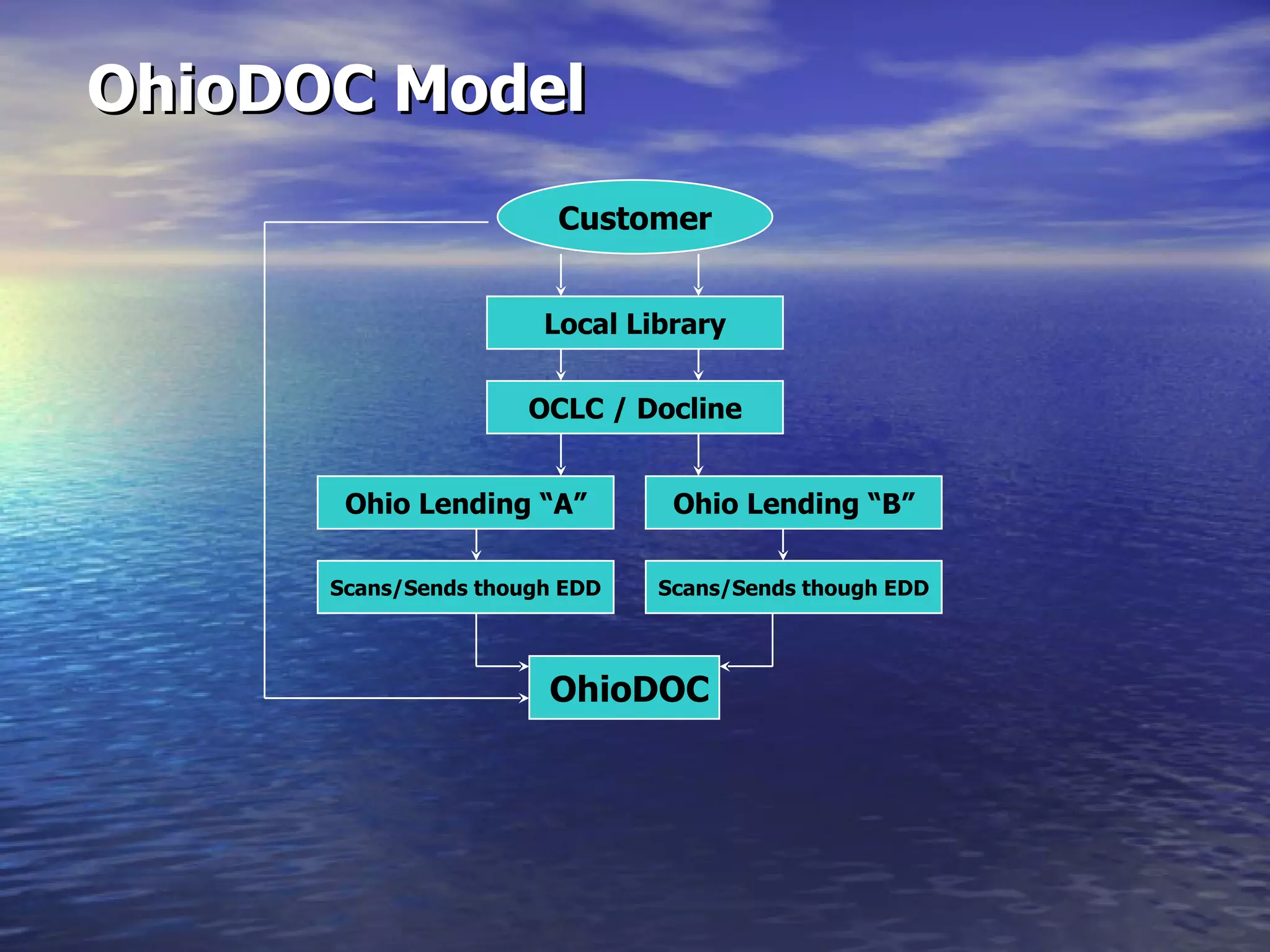
OhioDOC Model Local Library Customer OCLC / Docline Ohio Lending “A” Ohio Lending “B” Scans/Sends though EDD Scans/Sends though EDD OhioDOC
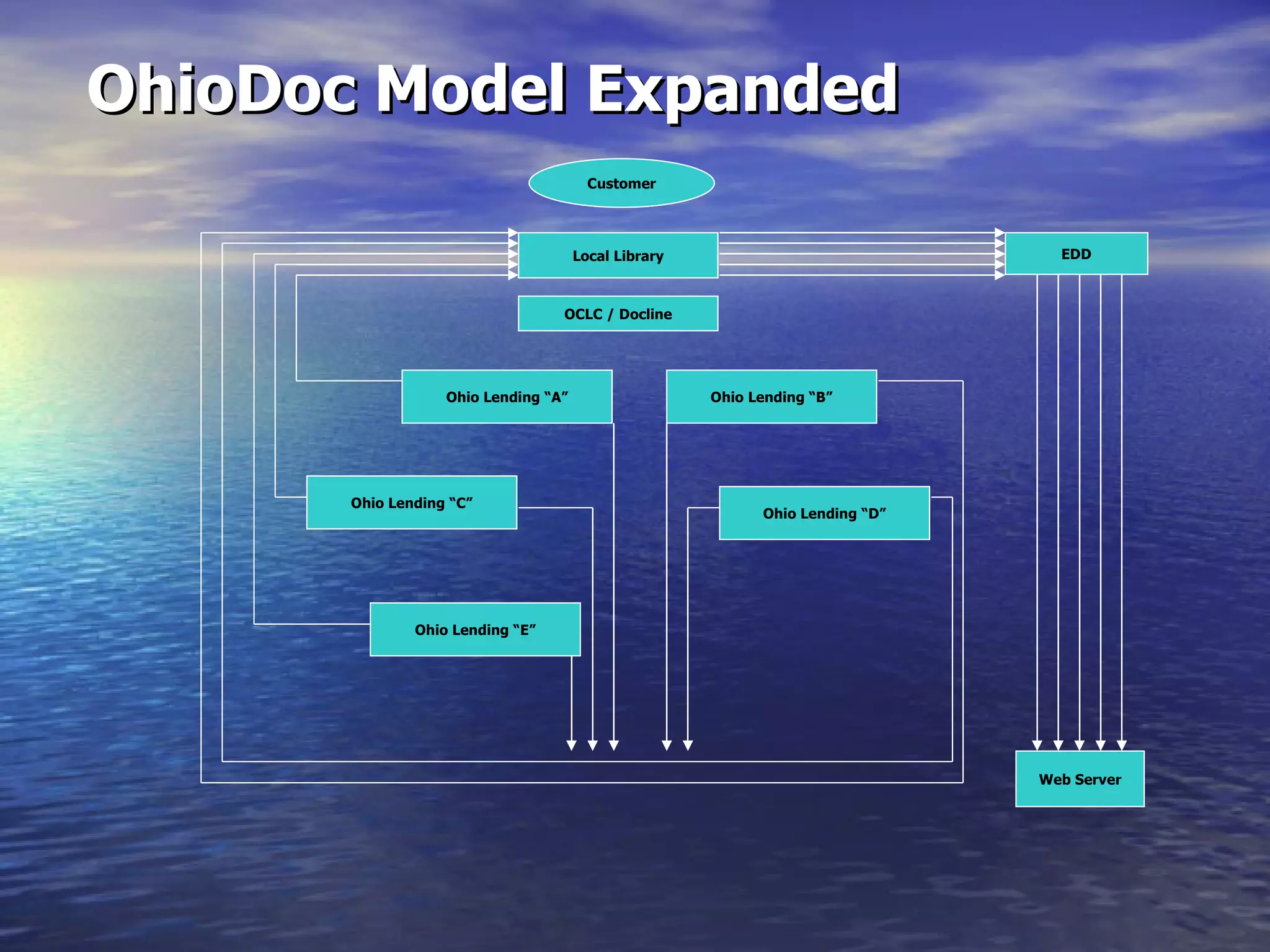
OhioDoc Model Expanded Local Library OCLC / Docline Ohio Lending “A” Customer EDD Web Server Ohio Lending “C” Ohio Lending “B” Ohio Lending “D” Ohio Lending “E”
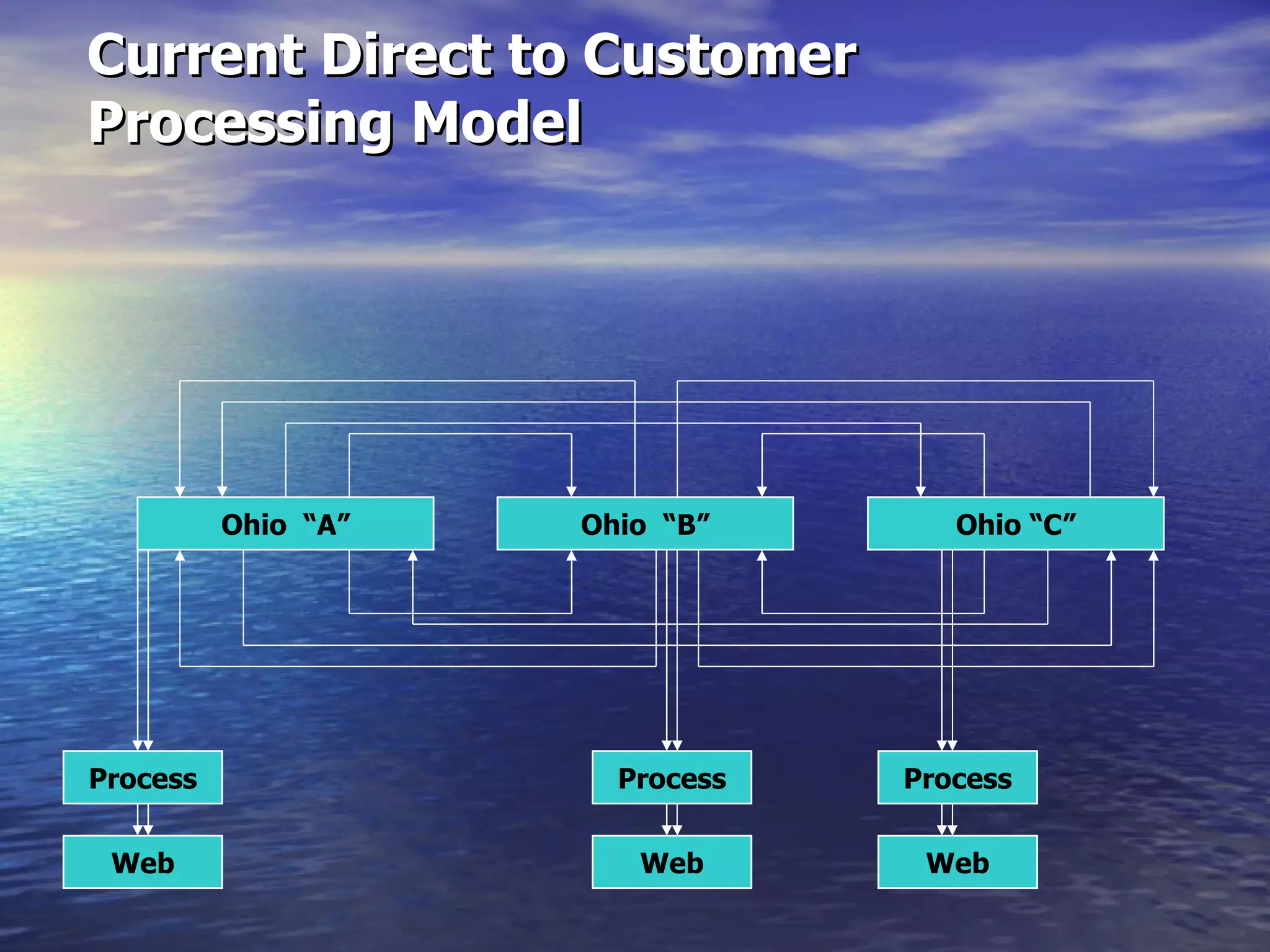
Current Direct to Customer  Processing Model Ohio  “A” Ohio  “B” Ohio “C” Process Process Process Web Web Web
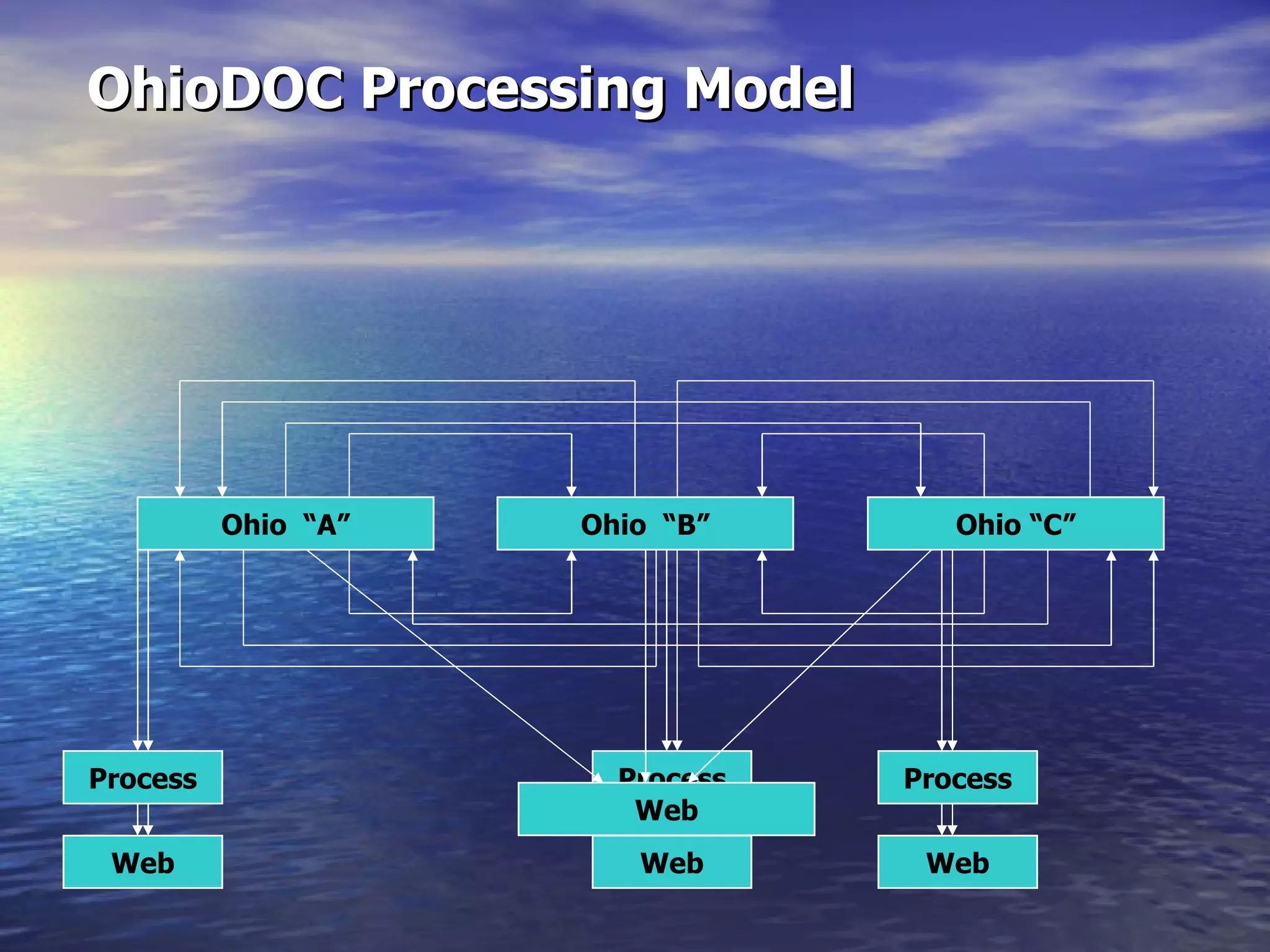
OhioDOC Processing Model Ohio  “A” Ohio  “B” Ohio “C” Process Process Process Web Web Web Web
OhioDOC Expectations Lending libraries still scan and process documents intended for OhioLINK libraries Borrowing libraries would no longer receive and process documents coming from OhioLINK lending libraries
Thanks!  E-mail:   [email_address] Project: docmd.med.ohio-state.edu

docMD: (DOCument Mediated Delivery)

  • 1.
    docMD: Eric H. Schnell (schnell.9@osu.edu) Associate Professor Head, Information Technology Prior Health Sciences Library The Ohio State University (DOCument Mediated Delivery) docMD is funded through support by the National Network of Libraries of Medicine, Greater Midwest Region. Ohio State University project number 743202
  • 2.
    docMD Goal “To establish an electronic document delivery service for hospital libraries that are unable to support such a service themselves due to limited human, financial, or technical resources “
  • 3.
    docMD Objectives Establisha mediated direct-to-customer document delivery service for hospital libraries Identify the costs involved in providing such a service Develop a model for use by other resource libraries in other regions of the country
  • 4.
    Why docMD? IDDReduces telecom costs (Landes ’97) IDD Reduces turnaround time 1986: 13.76 days (Budd) 1999: reduced to 2.52 (Sellen) Web delivery reduces supply costs (Weible ’02)
  • 5.
    Barriers to HospitalLibrary IDD Implementation Firewalls (McKnight 2001) communication ports network authority Workflow / staffing (Jackson 1993) Access to technical staff Fiscal resources
  • 6.
    How docMD Jumpsthese Barriers Firewalls a common communication port is used (80) Workflow / staffing DOCLINE processing remains the same Less physical processing of documents Access to technical staff Essential technical staff at mediation center Little technical site support needed Fiscal resources GMR supported
  • 7.
    Participating Libraries Must:Be a DOCLINE ® library Identify the populations this project could potentially reach Provide a letter of interest Be willing to assist their users with local issues Implement and market the service locally Provide the project with feedback and participate in the evaluation process  Be willing to &quot;go with the flow&quot;    
  • 8.
    docMD Delivery ModelLocal Library Customer DOCLINE Lending “A” Lending “B” Scans/Sends though IDD Scans/Sends though IDD docMD Web Server Email with docID# Email Alert
  • 9.
    Timeline Approval July‘02 Planning Fall ‘02 1 st test document December ‘02 6 phase one sites online February ’03 12 phase two sites June ’03 Through December ’04
  • 10.
    Survey Tools ProjectLibrarian Survey Technical Survey (Lib / Cust) Attitudes Survey (Cust) Turnaround Time Study
  • 11.
    docMD Statistics (as of Sept 2, ‘04) 406 registered customers 3111 documents processed ~15% have gone unviewed >40% sent to the librarian <1% required reposting <1% alternative distribution <1% posting failures
  • 12.
    docMD Statistics Average document processing time: 1 minute Average number of documents requiring follow up: 1 per week Percentage of documents arriving upside down: 20% -> 1% Number of customers contacting docMD central regarding difficulty in downloading a document: 1
  • 13.
    Turnaround Time Pre – docMD: 6.53 days (max 19 days) Post – docMD: 3.11 days (max 9)
  • 14.
    Feedback “ Ourdocs are always so delighted when personalized mail arrives for them.” one has a “raft of administrators tooling past his office wanting to know how his articles were retrieved electronically. They believe that he magically pulled them up all by himself. “ “ another test subject… has been running around Nursing telling people…”
  • 15.
    Issues: Geography: Projectleaders / librarian face-to-face contact difficult Geography II: Difficult if not impossible to organize group training Geography III: Email helps. Phone is more effective but more time consuming
  • 16.
    Issues: How docMDis implemented at a site is dependent on the hospital librarian Level of participation is dependent on the marketing performed by the hospital librarians Too much hand-holding or separation anxiety?
  • 17.
    Issues: Funding Pay-to-Play(1) Each hospital pays a fee based on scale determined by the number of documents they normally process through DOCLINE in relation to other participants in a tiered fee schedule. Pay-to-Play (2) Each hospital pays a per-document fee based on the actual number of documents they process using docMD and is billed on a quarterly or annual or per-document basis. Subsidized (1) Each NNLM region establishes funding opportunities for resource libraries to support a docMD service for their resource area. Resource libraries apply for the available awards. Subsidized (2) Each NNLM region provides a funded mandate to each resource library to establish a docMD service in their area. Benevolent Any library can provide the service but supports it using their individual operating funds and can pursue reimbursement from the participants.
  • 18.
    Issues: Standards GEDI:Generic Electronic Document Interchange Established in early 1990s Ariel 1.x - 3.4 Odyssey Open Standard Ariel 4.x ???? proprietary
  • 19.
    Issues: Standards Question:Is Ariel 3.4 compatible with all other versions of Ariel? Answer: Yes. Ariel 3.4 is able to send and receive documents with Ariel versions 2 and 3. However, Infotrieve has in important announcement about Ariel: Infotrieve continues to improve and upgrade Ariel, which will greatly change Ariel’s technology (especially with an eye to building a networked version of Ariel 4.0). We foresee that future versions of Ariel will no longer be technically compatible with older versions. We anticipate that Ariel 3.4 will be the “cut off” version for future compatibility. Hence, we encourage all 3.x users to upgrade to 3.4 for free, to be prepared for this future change. We also encourage Ariel 2.x users to take advantage of our upgrade discount and get current to prevent incompatibilty with future releases of Ariel. Infotrieve will continue to communicate about this important issue so that our customers can plan and budget accordingly. When we release the next version of Ariel, we will provide Ariel 3.4 users with a patch that will ensure compatibility with the next version, Ariel 4.0. It is important to take advantage of this release now. http://www4.infotrieve.com/ariel/FAQ.html
  • 20.
    Issues: Standards Lackof IDD standards will result in the project ending in December 2004 Lack of IDD standards will prevent a wide scale implementation of the concept
  • 21.
    Expanding the Concept:OhioDOC Establish a direct-to-customer electronic document delivery service for all OhioLINK libraries. Establish a system for centralized electronic document delivery distribution Establish electronic document delivery services in libraries without them Create workflow efficiencies
  • 22.
    Current Direct toCustomer Processing Model Local Library Customer OCLC / DOCLINE Ohio Lending “A” Ohio Lending “B” Scans/Sends though IDD Scans/Sends though IDD EDD Web Server
  • 23.
    OhioDOC Model LocalLibrary Customer OCLC / Docline Ohio Lending “A” Ohio Lending “B” Scans/Sends though EDD Scans/Sends though EDD OhioDOC
  • 24.
    OhioDoc Model ExpandedLocal Library OCLC / Docline Ohio Lending “A” Customer EDD Web Server Ohio Lending “C” Ohio Lending “B” Ohio Lending “D” Ohio Lending “E”
  • 25.
    Current Direct toCustomer Processing Model Ohio “A” Ohio “B” Ohio “C” Process Process Process Web Web Web
  • 26.
    OhioDOC Processing ModelOhio “A” Ohio “B” Ohio “C” Process Process Process Web Web Web Web
  • 27.
    OhioDOC Expectations Lendinglibraries still scan and process documents intended for OhioLINK libraries Borrowing libraries would no longer receive and process documents coming from OhioLINK lending libraries
  • 28.
    Thanks! E-mail: [email_address] Project: docmd.med.ohio-state.edu