DIAL project UAL
Digital integration into Arts Learning
Chris Follows & John Jackson
University of Arts London
Meeting of London JISC DL Programme projects
UCL, 26 April 2013
@DIALProject
http://dial.myblog.arts.ac.uk/
http://process.arts.ac.uk/content/dial-projects-and-activities
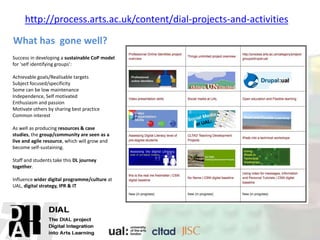
What has gone well?
http://process.arts.ac.uk/content/dial-projects-and-activities
Success in developing a sustainable CoP model
for 'self identifying groups’:
Achievable goals/Realisable targets
Subject focused/specificity
Some can be low maintenance
Independence, Self motivated
Enthusiasm and passion
Motivate others by sharing best practice
Common interest
As well as producing resources & case
studies, the group/community are seen as a
live and agile resource, which will grow and
become self-sustaining.
Staff and students take this DL journey
together.
Influence wider digital programme/culture at
UAL, digital strategy, IPR & IT
Cross collaboration
between
projects, departments, se
rvices and course
students and staff. (Pros
and Cons)
DIAL wider role: DIAL has
a unique and valuable
overview/insight of the
UAL digital landscape
across the all colleges of
the university, useful for
others to reference.
Engagement with the
digitally scared, CoP
model reaches groups
unlikely to have been
engaged through other
means.
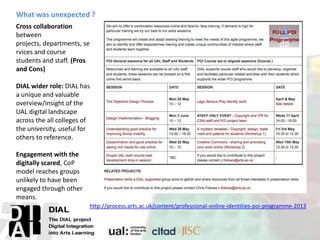
http://process.arts.ac.uk/content/professional-online-identities-poi-programme-2013
What was unexpected ?
Learning points for other projects
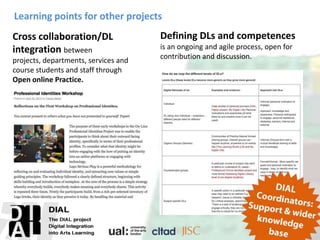
Defining DLs and competences
is an ongoing and agile process, open for
contribution and discussion.
Cross collaboration/DL
integration between
projects, departments, services and
course students and staff through
Open online Practice.
Challenges for sustainability?
Embed DLs development long term and continue DIAL work
and approach.
Celebration/benchmarking event Nov 2013 where we plan
to debate & share DIAL achievements and discuss its future.
SEE and CC skills sector research commission.
Curriculum digital integration (Induction support ISHE and
badges)
Engagement with the digitally scared, CoP model reaches
groups unlikely to have been engaged through other means.

DL JISC DIAL cluster meeting

  • 1.
    DIAL project UAL Digitalintegration into Arts Learning Chris Follows & John Jackson University of Arts London Meeting of London JISC DL Programme projects UCL, 26 April 2013 @DIALProject http://dial.myblog.arts.ac.uk/ http://process.arts.ac.uk/content/dial-projects-and-activities
  • 2.
    What has gonewell? http://process.arts.ac.uk/content/dial-projects-and-activities Success in developing a sustainable CoP model for 'self identifying groups’: Achievable goals/Realisable targets Subject focused/specificity Some can be low maintenance Independence, Self motivated Enthusiasm and passion Motivate others by sharing best practice Common interest As well as producing resources & case studies, the group/community are seen as a live and agile resource, which will grow and become self-sustaining. Staff and students take this DL journey together. Influence wider digital programme/culture at UAL, digital strategy, IPR & IT
  • 3.
    Cross collaboration between projects, departments,se rvices and course students and staff. (Pros and Cons) DIAL wider role: DIAL has a unique and valuable overview/insight of the UAL digital landscape across the all colleges of the university, useful for others to reference. Engagement with the digitally scared, CoP model reaches groups unlikely to have been engaged through other means. http://process.arts.ac.uk/content/professional-online-identities-poi-programme-2013 What was unexpected ?
  • 4.
    Learning points forother projects Defining DLs and competences is an ongoing and agile process, open for contribution and discussion. Cross collaboration/DL integration between projects, departments, services and course students and staff through Open online Practice.
  • 5.
    Challenges for sustainability? EmbedDLs development long term and continue DIAL work and approach. Celebration/benchmarking event Nov 2013 where we plan to debate & share DIAL achievements and discuss its future. SEE and CC skills sector research commission. Curriculum digital integration (Induction support ISHE and badges) Engagement with the digitally scared, CoP model reaches groups unlikely to have been engaged through other means.