Distributed
Systems for
Blockchain
using Cloud
By:
Hridyesh Bisht: 18070124030
Isha Patil: 18070124031
Kavya Suthar: 18070124037
01
Introduction
01.
02
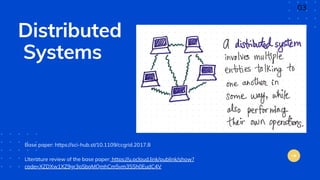
Distributed
Systems
Base paper: https://sci-hub.st/10.1109/ccgrid.2017.8
Literature review of the base paper: https://u.pcloud.link/publink/show?
code=XZDXw1XZ9gr3pSbqMQmhCm5vm3SSh0EudC4V
03
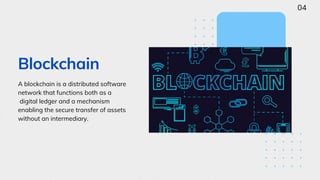
A blockchain is a distributed software
network that functions both as a
digital ledger and a mechanism
enabling the secure transfer of assets
without an intermediary.
Blockchain
04
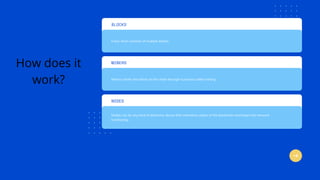
BLOCKS
Every chain consists of multiple blocks.
MINERS
Miners create new block on the chain through a process called mining
NODES
Nodes can be any kind of electronic device that maintains copies of the blockchain and keeps the network
functioning.
How does it
work?
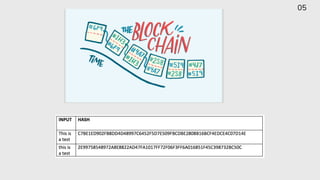
05
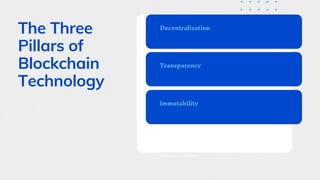
The Three
Pillars of
Blockchain
Technology
Decentralization
Transparency
Immutability
What are the obstacles to your company’s growth? Who are your
competitors? What changing factors can threaten your
company's position?
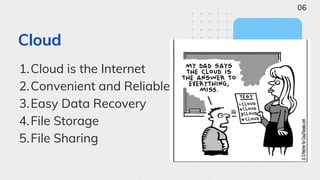
Cloud is the Internet
Convenient and Reliable
Easy Data Recovery
File Storage
File Sharing
1.
2.
3.
4.
5.
Cloud
06
Toward a blockchain cloud
manufacturing system as a peer to
peer distributed network platform [2]
Platform Evaluation.
Case Study Evaluation where
data can be shared in a
distributed manner.
Security Evaluation.
Confidentiality
Integrity
Availability
18
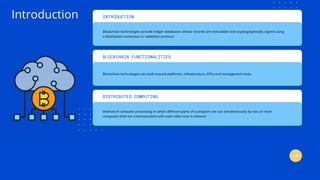
INTRODUCTION
Blockchain technologies provide ledger databases whose records are immutable and cryptographically signed using
a distributed consensus or validation protocol
Blockchain technologies are built around platforms, infrastructure, APIs and management tools.
DISTRIBUTED COMPUTING
Method of computer processing in which different parts of a program are run simultaneously by two or more
computers that are communicated with each other over a network
Introduction
BLOCKCHAIN FUNCTIONALITIES
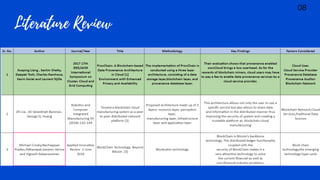
Papers
07
Literature Review
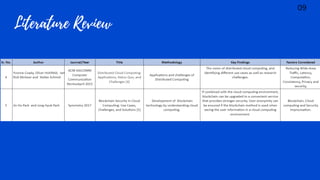
08
Literature Review
09
Blockchain implementation using cloud
02.
Methodology
10
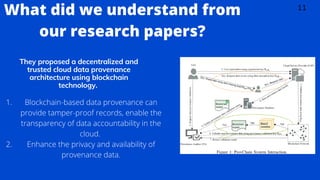
What did we understand from
our research papers?
They proposed a decentralized and
trusted cloud data provenance
architecture using blockchain
technology.
Blockchain-based data provenance can
provide tamper-proof records, enable the
transparency of data accountability in the
cloud.
Enhance the privacy and availability of
provenance data.
1.
2.
11
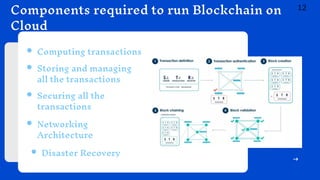
Storing and managing
all the transactions
Computing transactions
Securing all the
transactions
Networking
Architecture
Disaster Recovery
Components required to run Blockchain on
Cloud
12
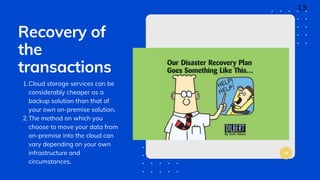
Recovery of
the
transactions
Cloud storage services can be
considerably cheaper as a
backup solution than that of
your own on-premise solution.
The method on which you
choose to move your data from
on-premise into the cloud can
vary depending on your own
infrastructure and
circumstances.
1.
2.
13
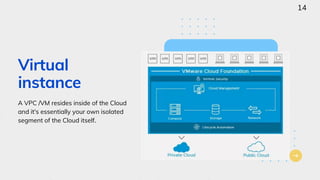
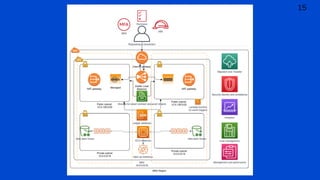
A VPC /VM resides inside of the Cloud
and it's essentially your own isolated
segment of the Cloud itself.
Virtual
instance
14
15
Results and Discussions
03.
16
Real-time auditing for all
data access in the cloud
storage application.
ProvChain: A Blockchain-based Data
Provenance Architecture in Cloud
Environment with Enhanced Privacy
and Availability [1]
Transforming the
provenance data and
uploading the record to
the blockchain network
Validation
Performance and Overhead
17
Toward a blockchain cloud
manufacturing system as a peer to
peer distributed network platform [2]
Platform Evaluation.
Case Study Evaluation where
data can be shared in a
distributed manner.
Security Evaluation.
Confidentiality
Integrity
Availability
18
Private Securities
Insuarance
BlockChain Technology: Beyond
Bitcoin [3]
Notary
Decentralised Storage
Decentralized proof of
existence of documents
Applications
of
Blockchain
in
Financial
and
Non-
Financial
Areas
19
Distributed Cloud Computing:
Applications, Status Quo, and
Challenges [4]
Reducing Latency
Computation at the Edge: Managing VMs
1.
2.
20
AUTHENTICATION
An attacker carries out various attempts to access a user’s personal key stored in the user’s computer or smartphone in order
to hack the bitcoin.
SECURITY INCIDENTS
51% Attack
Improved Blockchain
1.
2.
Blockchain Security in Cloud Computing: Use Cases, Challenges, and
Solutions [5]
21
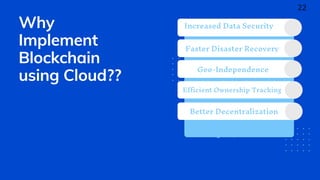
Why
Implement
Blockchain
using Cloud??
Company name
Better Decentralization
Efficient Ownership Tracking
Increased Data Security
Faster Disaster Recovery
Geo-Independence
22
References. https://ieeexplore.ieee.org/abstract/document/7973733 [1]
https://www.sciencedirect.com/science/article/abs/pii/S0736584518
30022X [2]
https://j2-capital.com/wp-content/uploads/2017/11/AIR-2016-
Blockchain.pdf [3]
Distributed Cloud Computing: Applications, Status Quo, and
Challenges [4]
Blockchain Security in Cloud Computing: Use Cases, Challenges, and
Solutions [5]
1.
2.
3.
4.
5.
23
Thank You
Hridyesh Bisht(030)
Isha Patil (031)
Kavya Suthar(037)
Done by,
1.
2.
3.
24

Distributed Systems for Blockchain using Cloud

  • 1.
    Distributed Systems for Blockchain using Cloud By: HridyeshBisht: 18070124030 Isha Patil: 18070124031 Kavya Suthar: 18070124037 01
  • 2.
  • 3.
    Distributed Systems Base paper: https://sci-hub.st/10.1109/ccgrid.2017.8 Literaturereview of the base paper: https://u.pcloud.link/publink/show? code=XZDXw1XZ9gr3pSbqMQmhCm5vm3SSh0EudC4V 03
  • 4.
    A blockchain isa distributed software network that functions both as a digital ledger and a mechanism enabling the secure transfer of assets without an intermediary. Blockchain 04
  • 5.
    BLOCKS Every chain consistsof multiple blocks. MINERS Miners create new block on the chain through a process called mining NODES Nodes can be any kind of electronic device that maintains copies of the blockchain and keeps the network functioning. How does it work?
  • 6.
  • 7.
    The Three Pillars of Blockchain Technology Decentralization Transparency Immutability Whatare the obstacles to your company’s growth? Who are your competitors? What changing factors can threaten your company's position?
  • 8.
    Cloud is theInternet Convenient and Reliable Easy Data Recovery File Storage File Sharing 1. 2. 3. 4. 5. Cloud 06
  • 9.
    Toward a blockchaincloud manufacturing system as a peer to peer distributed network platform [2] Platform Evaluation. Case Study Evaluation where data can be shared in a distributed manner. Security Evaluation. Confidentiality Integrity Availability 18
  • 10.
    INTRODUCTION Blockchain technologies provideledger databases whose records are immutable and cryptographically signed using a distributed consensus or validation protocol Blockchain technologies are built around platforms, infrastructure, APIs and management tools. DISTRIBUTED COMPUTING Method of computer processing in which different parts of a program are run simultaneously by two or more computers that are communicated with each other over a network Introduction BLOCKCHAIN FUNCTIONALITIES
  • 11.
  • 12.
  • 13.
  • 14.
    Blockchain implementation usingcloud 02. Methodology 10
  • 15.
    What did weunderstand from our research papers? They proposed a decentralized and trusted cloud data provenance architecture using blockchain technology. Blockchain-based data provenance can provide tamper-proof records, enable the transparency of data accountability in the cloud. Enhance the privacy and availability of provenance data. 1. 2. 11
  • 16.
    Storing and managing allthe transactions Computing transactions Securing all the transactions Networking Architecture Disaster Recovery Components required to run Blockchain on Cloud 12
  • 17.
    Recovery of the transactions Cloud storageservices can be considerably cheaper as a backup solution than that of your own on-premise solution. The method on which you choose to move your data from on-premise into the cloud can vary depending on your own infrastructure and circumstances. 1. 2. 13
  • 18.
    A VPC /VMresides inside of the Cloud and it's essentially your own isolated segment of the Cloud itself. Virtual instance 14
  • 19.
  • 20.
  • 21.
    Real-time auditing forall data access in the cloud storage application. ProvChain: A Blockchain-based Data Provenance Architecture in Cloud Environment with Enhanced Privacy and Availability [1] Transforming the provenance data and uploading the record to the blockchain network Validation Performance and Overhead 17
  • 22.
    Toward a blockchaincloud manufacturing system as a peer to peer distributed network platform [2] Platform Evaluation. Case Study Evaluation where data can be shared in a distributed manner. Security Evaluation. Confidentiality Integrity Availability 18
  • 23.
    Private Securities Insuarance BlockChain Technology:Beyond Bitcoin [3] Notary Decentralised Storage Decentralized proof of existence of documents Applications of Blockchain in Financial and Non- Financial Areas 19
  • 24.
    Distributed Cloud Computing: Applications,Status Quo, and Challenges [4] Reducing Latency Computation at the Edge: Managing VMs 1. 2. 20
  • 25.
    AUTHENTICATION An attacker carriesout various attempts to access a user’s personal key stored in the user’s computer or smartphone in order to hack the bitcoin. SECURITY INCIDENTS 51% Attack Improved Blockchain 1. 2. Blockchain Security in Cloud Computing: Use Cases, Challenges, and Solutions [5] 21
  • 26.
    Why Implement Blockchain using Cloud?? Company name BetterDecentralization Efficient Ownership Tracking Increased Data Security Faster Disaster Recovery Geo-Independence 22
  • 27.
    References. https://ieeexplore.ieee.org/abstract/document/7973733 [1] https://www.sciencedirect.com/science/article/abs/pii/S0736584518 30022X[2] https://j2-capital.com/wp-content/uploads/2017/11/AIR-2016- Blockchain.pdf [3] Distributed Cloud Computing: Applications, Status Quo, and Challenges [4] Blockchain Security in Cloud Computing: Use Cases, Challenges, and Solutions [5] 1. 2. 3. 4. 5. 23
  • 28.
    Thank You Hridyesh Bisht(030) IshaPatil (031) Kavya Suthar(037) Done by, 1. 2. 3. 24