Downloaded 213 times
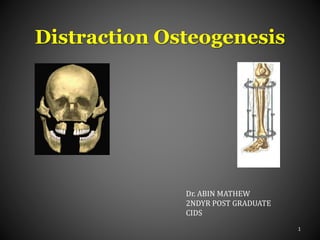


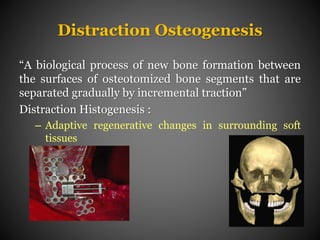


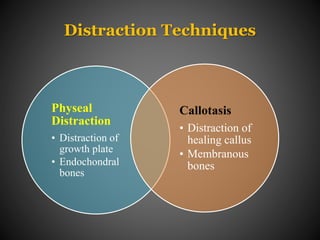


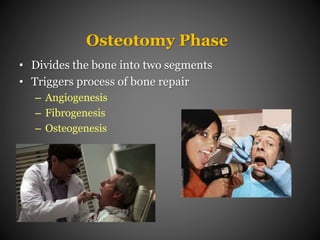


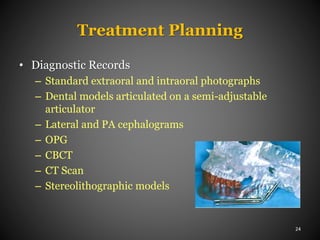



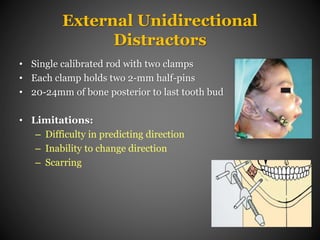


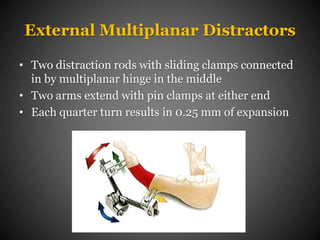




Distraction osteogenesis is a biological process used to treat craniofacial deformities. It involves separating bone segments gradually through incremental traction to stimulate new bone formation. Historically, it has been used since the early 1900s to lengthen limbs, and was first applied to the craniofacial skeleton in the 1980s. The process involves osteotomy, latency, distraction, consolidation, and remodeling phases. Both internal and external devices can be used uni-directionally or multi-directionally. Factors like age, site of surgery, rate and rhythm of distraction influence outcomes. The orthodontist plays a key role in planning distraction vectors and post-treatment orthodontics.


