APRIL IS
DISTRACTED
DRIVING
AWARENESS
MONTH
Blackwell Law Firm
What are the
three main
types of driver
distraction?
MANUAL
VISUAL
COGNITIVE
MANUAL
DISTRACTION
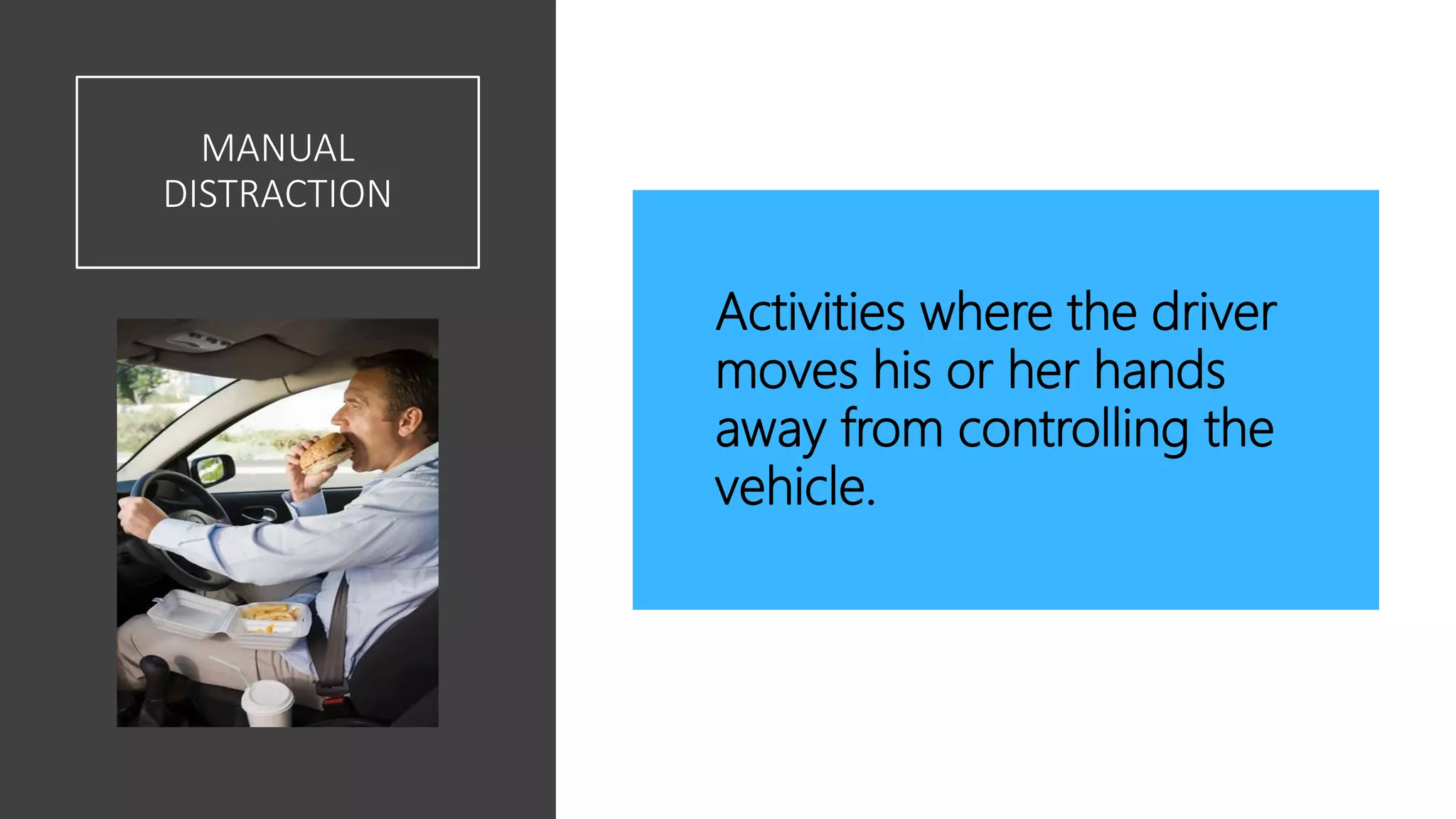
Activities where the driver
moves his or her hands
away from controlling the
vehicle.
VISUAL
DISTRACTION
Activities where the driver
focuses his or her eyes
away from the road.
COGNITIVE
DISTRACTION
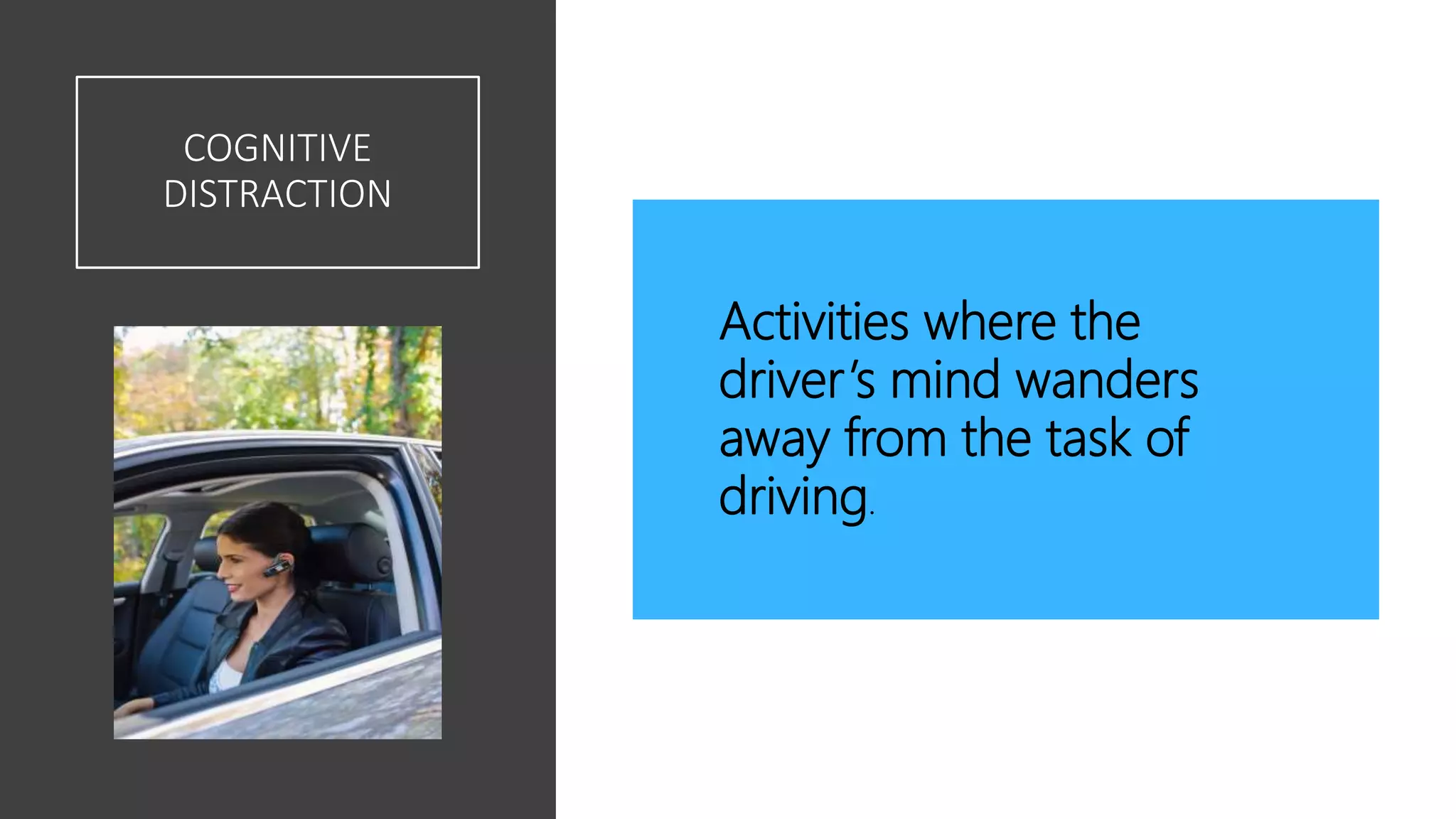
Activities where the
driver’s mind wanders
away from the task of
driving.
COGNITIVE
DISTRACTION
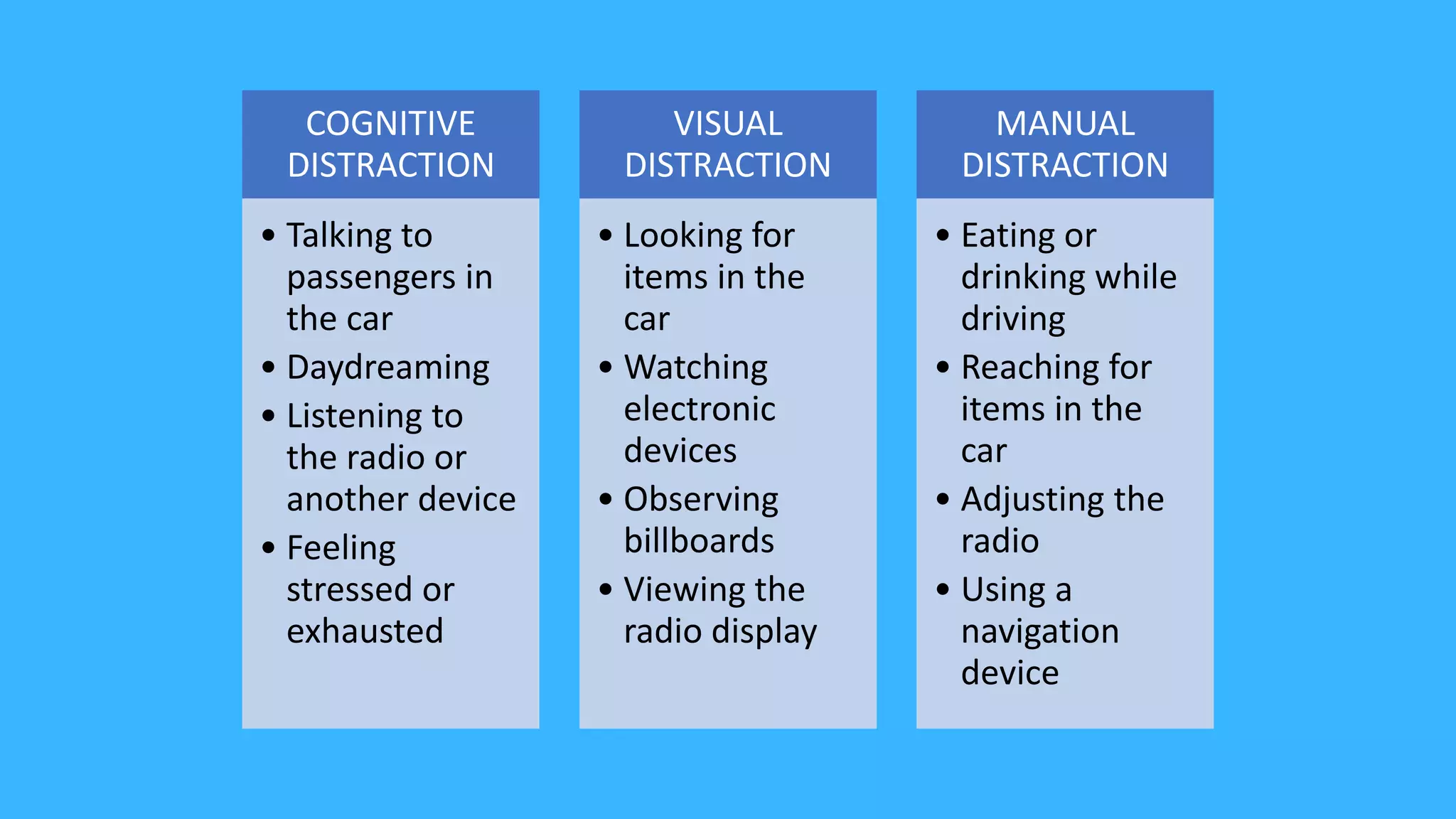
• Talking to
passengers in
the car
• Daydreaming
• Listening to
the radio or
another device
• Feeling
stressed or
exhausted
VISUAL
DISTRACTION
• Looking for
items in the
car
• Watching
electronic
devices
• Observing
billboards
• Viewing the
radio display
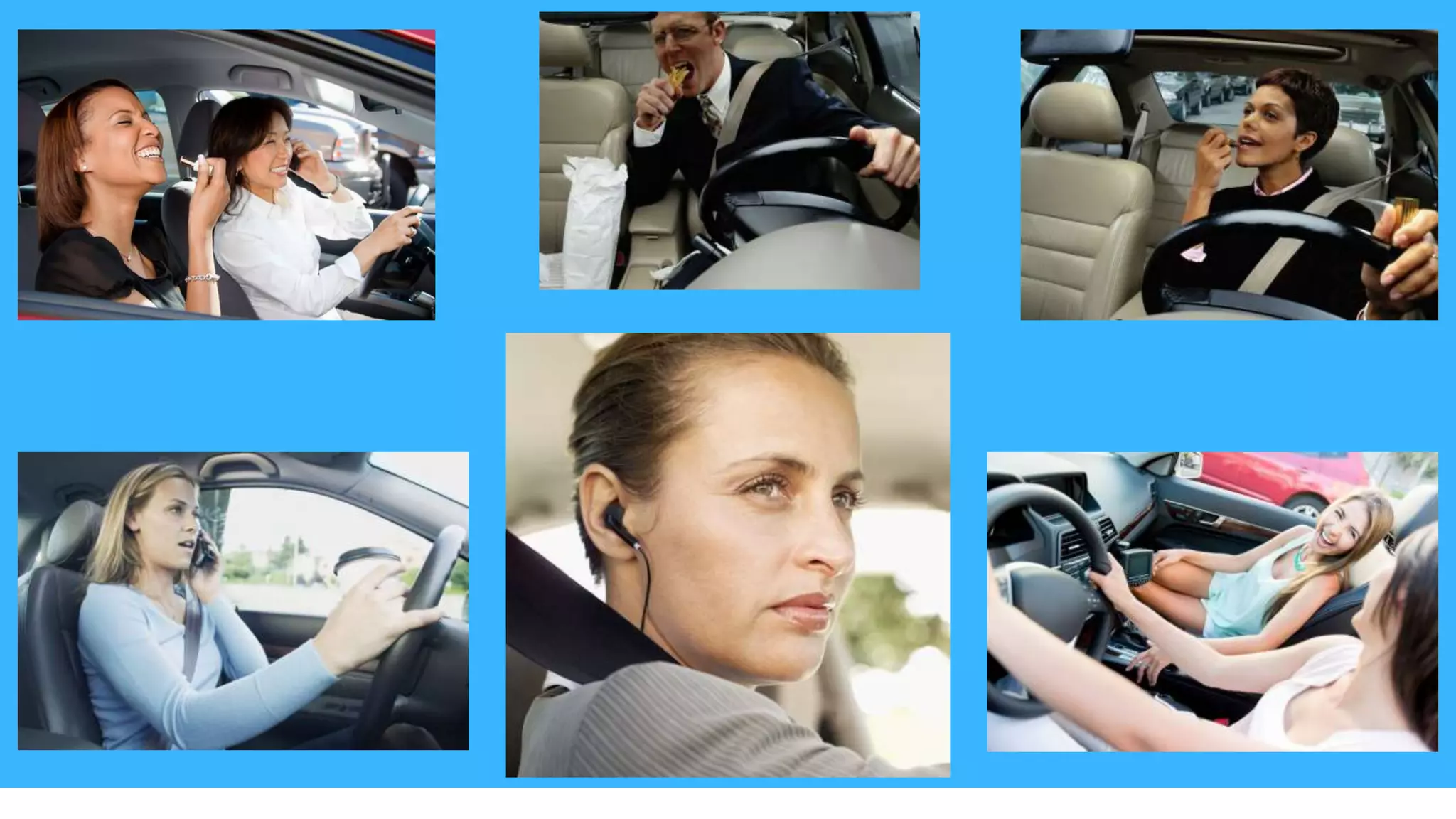
MANUAL
DISTRACTION
• Eating or
drinking while
driving
• Reaching for
items in the
car
• Adjusting the
radio
• Using a
navigation
device
Why Is
Texting So
Dangerous?
Texting is especially dangerous
because it involves all three types of
distraction at the same time. A
person who is texting takes their
hands, eyes and mind from the task
of driving.
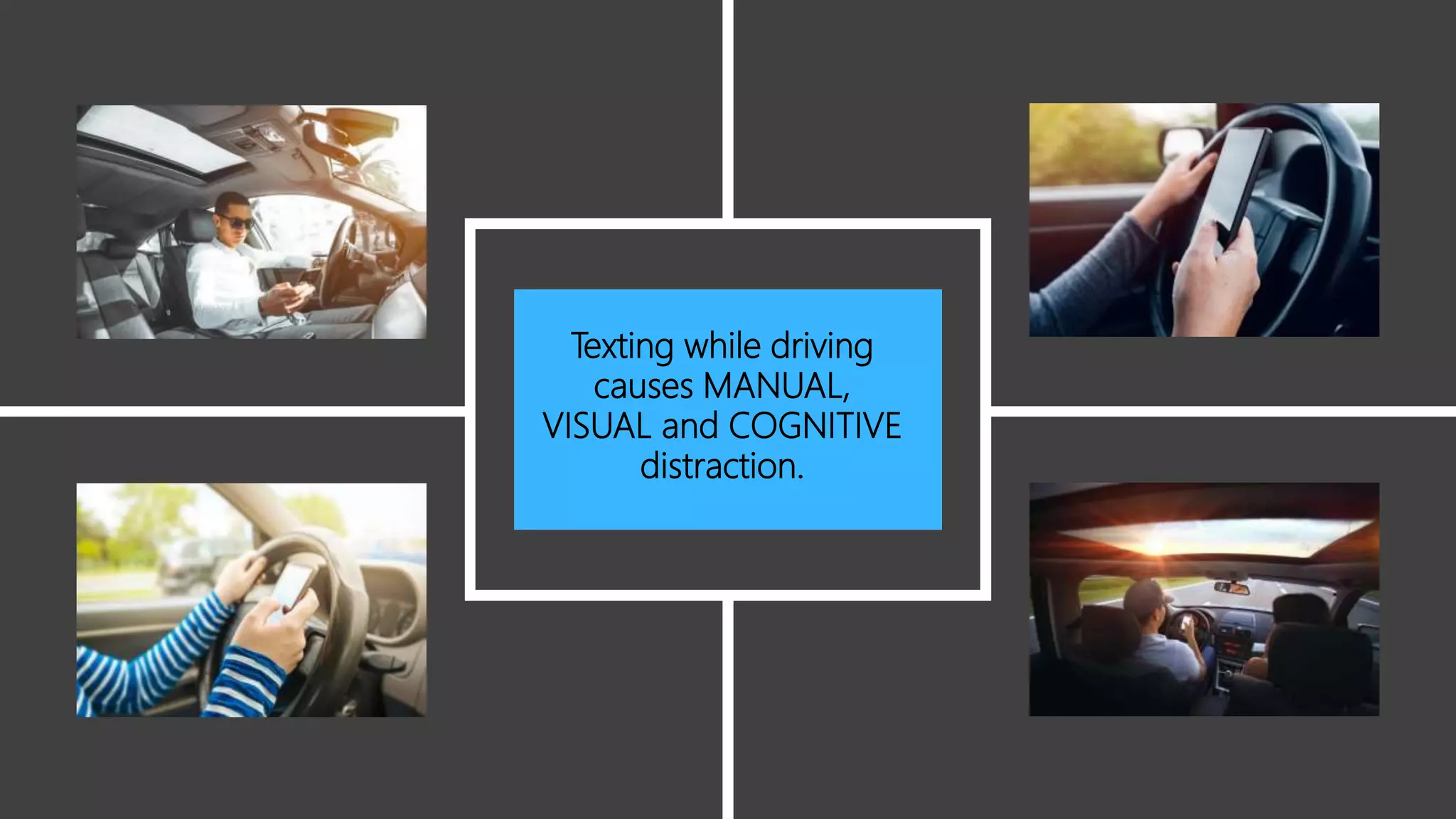
Texting while driving
causes MANUAL,
VISUAL and COGNITIVE
distraction.
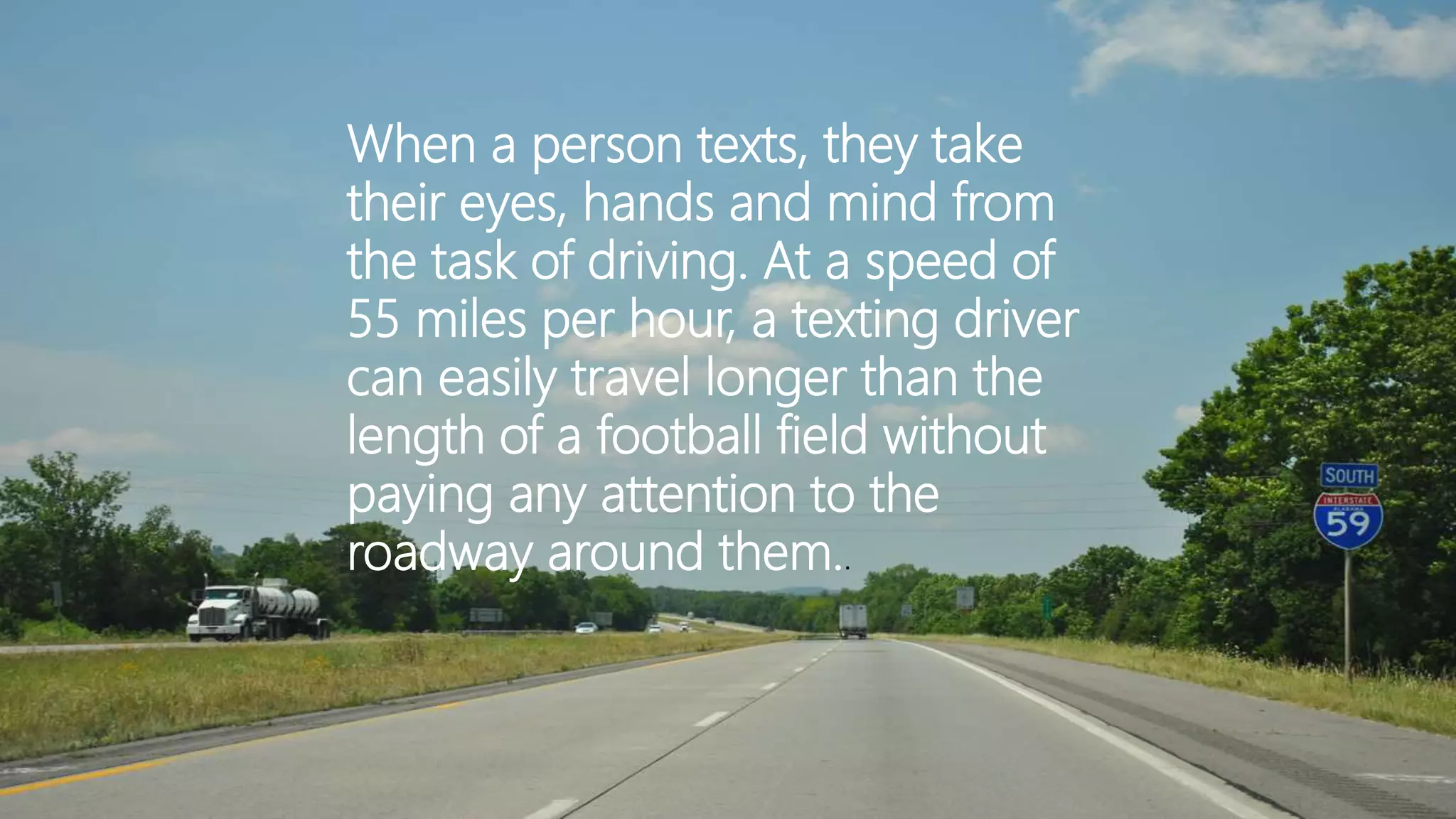
When a person texts, they take
their eyes, hands and mind from
the task of driving. At a speed of
55 miles per hour, a texting driver
can easily travel longer than the
length of a football field without
paying any attention to the
roadway around them..
Cell phones may be the primary
source of dangerous driver
distraction. Yet, they are not the
only source. Drivers face many
other dangerous distractions.
HOW CAN WE REDUCE
DANGEROUS
DISTRACTED DRIVING
ON ALABAMA ROADS
AND HIGHWAYS?
WE CAN REDUCE DISTRACTED
DRIVING THROUGH ---
LAW
TECHNOLOGY
EDUCATION
EXAMPLE
We Must
Strengthen The
LAW Many states (including Alabama) have laws
that are far too weak. In Alabama:
• Current law is limited in application. The
law has not been evaluated over time to
consider changing distractions impacting
drivers.
• Current law contains minimal penalties.
Distracted driving puts lives at risk. Yet,
the legal fines are minimal.
Distracted driving is a factor in
many car accidents on Alabama
roads and highways. Many needless
injuries and deaths could be
prevented by strengthening current
law to address new distractions and
to provide real penalties.
We Must Utilize
Available
TECHNOLOGY Technology can reduce driving distractions and their
danger. Both car features and phone software could be
used to save lives. Here are a few safety options:
• Car safety features can include systems for forward
collision warning, lane departure warning, automatic
emergency braking, and forward display.
• Cellphones can include a Do Not Disturb mode while
driving, software to deactivate features when your car
reaches a certain speed, and tracking for parents to
monitor their teenage driver.
BLOCKED
WHILE
DRIVING We can also use
technology to create
safety features and
apps that reduce or
eliminate distractions.
We Must
Emphasize
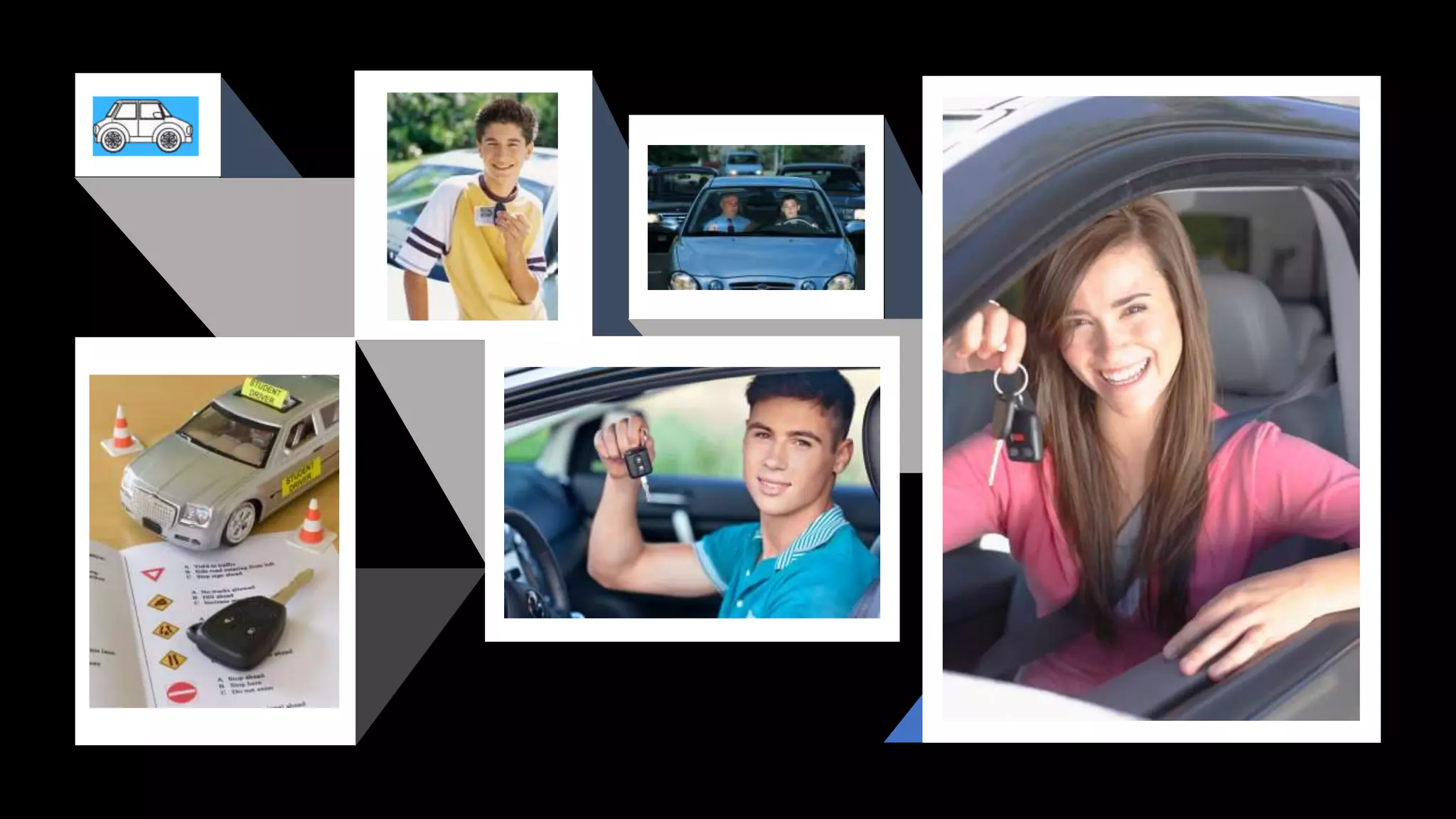
EDUCATION We should emphasize safety when educating new drivers:
• According to a Center for Disease Control (CDC) study,
teenage drivers are more likely to suffer a traffic
accident than any other group.
• A 2015 study by the AAA Foundation for Traffic Safety,
found 58% of teenager-involved crashes were caused
by distracted driving.
• Explain to your teenage driver how to minimize
potential distractions and keep focused on the road.
Wireless devices are not the only distraction for new
drivers.
Parents Must
Lead By
EXAMPLE A prior NPR survey revealed:
• 50% of parents admitted texting their
teenager knowing the teenager was driving.
• 55% of parents admitted using cellphone
apps while driving.
• 62% of parents admitted checking incoming
calls or talking on the cellphone while
driving.
Our children are watching our behavior. All
the safety talk in the world will have little
impact if our kids see us continuously
driving in a reckless or dangerous manner.
As parents, what should we do? We
should consciously choose to set the
example in our driving conduct as well as
our speech.
BLACKWELL LAW FIRM
120 HOLMES AVE NE #401
HUNTSVILLE, AL 35801
(256) 261-1315
www.blackwell-attorneys.com

Distracted Driving Awareness Month

  • 1.
  • 2.
    What are the threemain types of driver distraction? MANUAL VISUAL COGNITIVE
  • 3.
    MANUAL DISTRACTION Activities where thedriver moves his or her hands away from controlling the vehicle.
  • 4.
    VISUAL DISTRACTION Activities where thedriver focuses his or her eyes away from the road.
  • 5.
    COGNITIVE DISTRACTION Activities where the driver’smind wanders away from the task of driving.
  • 6.
    COGNITIVE DISTRACTION • Talking to passengersin the car • Daydreaming • Listening to the radio or another device • Feeling stressed or exhausted VISUAL DISTRACTION • Looking for items in the car • Watching electronic devices • Observing billboards • Viewing the radio display MANUAL DISTRACTION • Eating or drinking while driving • Reaching for items in the car • Adjusting the radio • Using a navigation device
  • 7.
    Why Is Texting So Dangerous? Textingis especially dangerous because it involves all three types of distraction at the same time. A person who is texting takes their hands, eyes and mind from the task of driving.
  • 8.
    Texting while driving causesMANUAL, VISUAL and COGNITIVE distraction.
  • 9.
    When a persontexts, they take their eyes, hands and mind from the task of driving. At a speed of 55 miles per hour, a texting driver can easily travel longer than the length of a football field without paying any attention to the roadway around them..
  • 10.
    Cell phones maybe the primary source of dangerous driver distraction. Yet, they are not the only source. Drivers face many other dangerous distractions.
  • 12.
    HOW CAN WEREDUCE DANGEROUS DISTRACTED DRIVING ON ALABAMA ROADS AND HIGHWAYS?
  • 13.
    WE CAN REDUCEDISTRACTED DRIVING THROUGH --- LAW TECHNOLOGY EDUCATION EXAMPLE
  • 14.
    We Must Strengthen The LAWMany states (including Alabama) have laws that are far too weak. In Alabama: • Current law is limited in application. The law has not been evaluated over time to consider changing distractions impacting drivers. • Current law contains minimal penalties. Distracted driving puts lives at risk. Yet, the legal fines are minimal.
  • 15.
    Distracted driving isa factor in many car accidents on Alabama roads and highways. Many needless injuries and deaths could be prevented by strengthening current law to address new distractions and to provide real penalties.
  • 16.
    We Must Utilize Available TECHNOLOGYTechnology can reduce driving distractions and their danger. Both car features and phone software could be used to save lives. Here are a few safety options: • Car safety features can include systems for forward collision warning, lane departure warning, automatic emergency braking, and forward display. • Cellphones can include a Do Not Disturb mode while driving, software to deactivate features when your car reaches a certain speed, and tracking for parents to monitor their teenage driver.
  • 17.
    BLOCKED WHILE DRIVING We canalso use technology to create safety features and apps that reduce or eliminate distractions.
  • 18.
    We Must Emphasize EDUCATION Weshould emphasize safety when educating new drivers: • According to a Center for Disease Control (CDC) study, teenage drivers are more likely to suffer a traffic accident than any other group. • A 2015 study by the AAA Foundation for Traffic Safety, found 58% of teenager-involved crashes were caused by distracted driving. • Explain to your teenage driver how to minimize potential distractions and keep focused on the road. Wireless devices are not the only distraction for new drivers.
  • 20.
    Parents Must Lead By EXAMPLEA prior NPR survey revealed: • 50% of parents admitted texting their teenager knowing the teenager was driving. • 55% of parents admitted using cellphone apps while driving. • 62% of parents admitted checking incoming calls or talking on the cellphone while driving.
  • 21.
    Our children arewatching our behavior. All the safety talk in the world will have little impact if our kids see us continuously driving in a reckless or dangerous manner. As parents, what should we do? We should consciously choose to set the example in our driving conduct as well as our speech.
  • 22.
    BLACKWELL LAW FIRM 120HOLMES AVE NE #401 HUNTSVILLE, AL 35801 (256) 261-1315 www.blackwell-attorneys.com