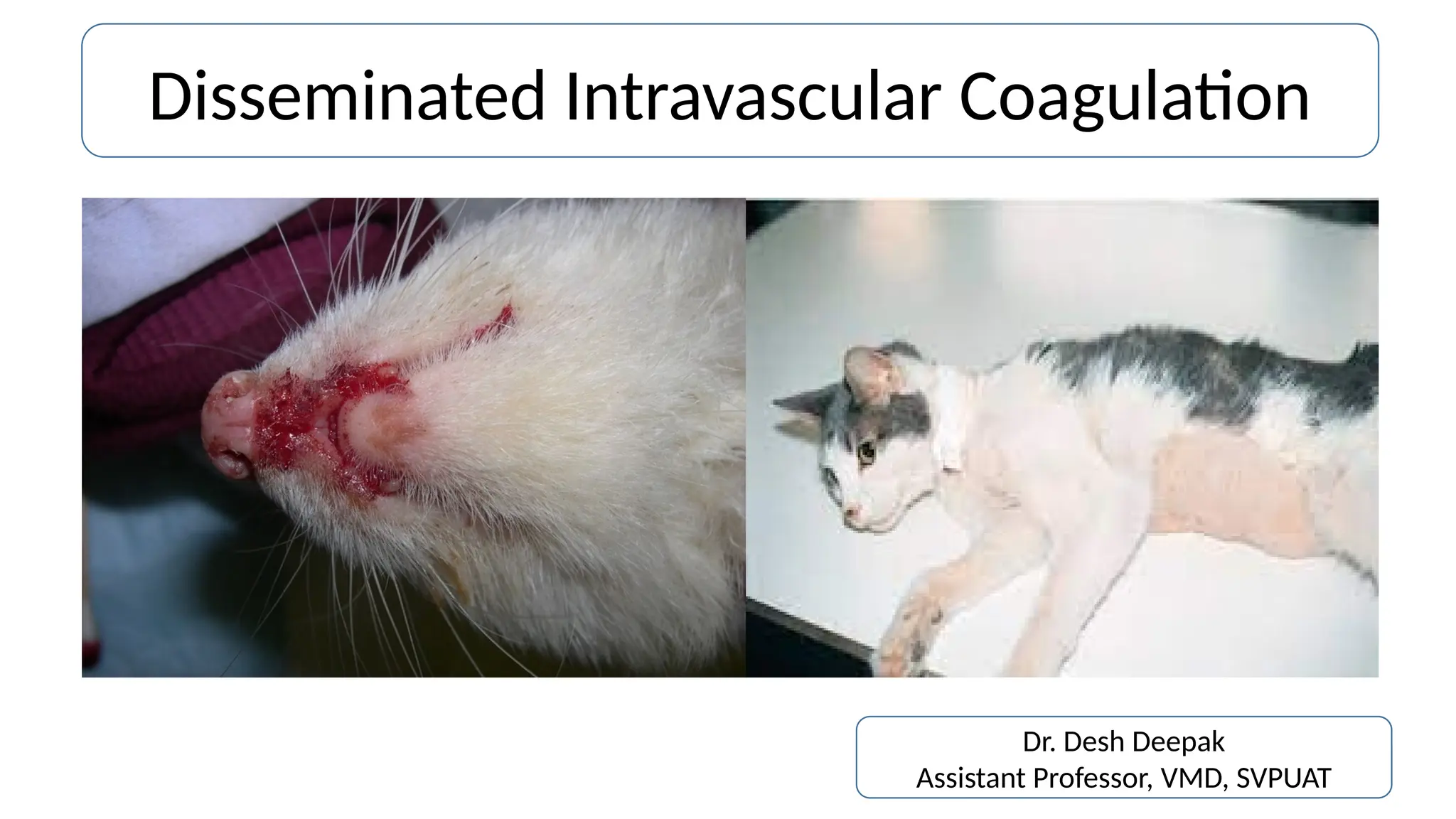
Disseminated Intravascular Coagulation
Dr. Desh Deepak
Assistant Professor, VMD, SVPUAT
Disseminated Intravascular Coagulation
 Synonyms: Consumption coagulopathy or defibrination syndrome
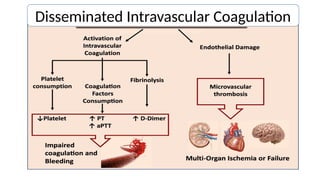
 Thrombo-haemmoragic syndrome caused by SIRS induced
activation of coagulation cascade and characterised by
depletion of clotting factors, paradoxical bleeding and (multiple
organ dysfunction syndrome) MODS
Etiology
 Severe diseases and conditions that initiates SIRS viz septicemic
diseases, toxemic diseases, metritis, mastitis, colitis,
gastroenteritis, immune mediated diseases and severe
traumatic injuries.
 Release of procoagulant material in blood in cancer and brain
injuries.
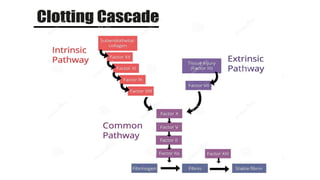
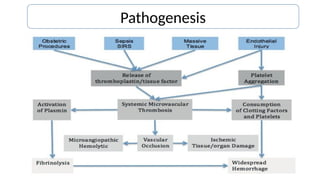
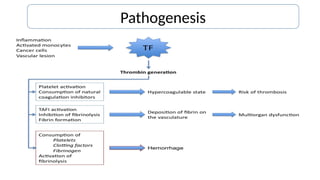
Pathogenesis
 Two mechanisms responsible for DIC
1. Excessive release of tissue factors/thromboplastin/factor III
(severe trauma, surgeries, obstetric and sepsis)
2. Widespread endothelial injuries
Pathogenesis
Pathogenesis
Clinical manifestations
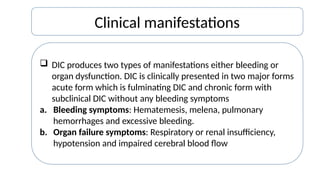
 DIC produces two types of manifestations either bleeding or
organ dysfunction. DIC is clinically presented in two major forms
acute form which is fulminating DIC and chronic form with
subclinical DIC without any bleeding symptoms
a. Bleeding symptoms: Hematemesis, melena, pulmonary
hemorrhages and excessive bleeding.
b. Organ failure symptoms: Respiratory or renal insufficiency,
hypotension and impaired cerebral blood flow
Diagnosis
 Tentative diagnosis of DIC is made on the basis of clinical status of patient and associated
SIRS, sepsis septicemia or shock.
 Confirmation of disseminated intravascular coagulation mainly focusses on coagulation
profile, since DIC is known to be a consumption coagulopathy. Hypothrombocytopenia is
consistent finding with DIC
 Coagulation profile is suggestive of decreased Prothrombin time, activated partial
thromboplastin time.
 DIC is associated with initial high fibrinogen which decreased with the progression of disease
with simultaneous elevation of fibrinogen degradation products (FDP) like plasma D-dimer
 Decreased antithrombin activity confirms hypercoagulable state of disseminated intravascular
coagulation.
 Antimortem diagnosis of thromboembolism is very difficult but some common
thromboembolism can be identified with sudden onset of clinical manifestations and can be
confirmed with modern diagnostic imaging techniques like electrocardiography, MRI and CT
angiography.
Disseminated Intravascular Coagulation
Therapeutic management
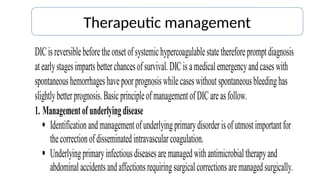
DICisreversiblebeforetheonsetofsystemichypercoagulablestatethereforepromptdiagnosis
atearlystagesimpartsbetterchancesofsurvival.DICis amedicalemergencyandcaseswith
spontaneoushemorrhageshavepoorprognosiswhilecaseswithoutspontaneousbleedinghas
slightlybetterprognosis.BasicprincipleofmanagementofDICareasfollow.
1. Managementofunderlyingdisease
 Identificationandmanagementofunderlyingprimarydisorderisofutmostimportantfor
thecorrectionofdisseminatedintravascularcoagulation.
 Underlyingprimaryinfectiousdiseasesaremanagedwithantimicrobialtherapyand
abdominalaccidentsandaffectionsrequiringsurgicalcorrectionsaremanagedsurgically.
Therapeutic management
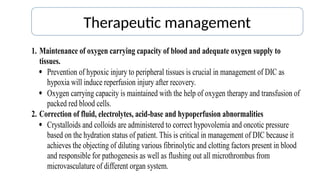
1. Maintenance of oxygen carrying capacity of blood and adequate oxygen supply to
tissues.
 Prevention of hypoxic injury to peripheral tissues is crucial in management of DIC as
hypoxia will induce reperfusion injury after recovery.
 Oxygen carrying capacity is maintained with the help of oxygen therapy and transfusion of
packed red blood cells.
2. Correction of fluid, electrolytes, acid-base and hypoperfusion abnormalities
 Crystalloids and colloids are administered to correct hypovolemia and oncotic pressure
based on the hydration status of patient. This is critical in management of DIC because it
achieves the objecting of diluting various fibrinolytic and clotting factors present in blood
and responsible for pathogenesis as well as flushing out all microthrombus from
microvasculature of different organ system.
Therapeutic management
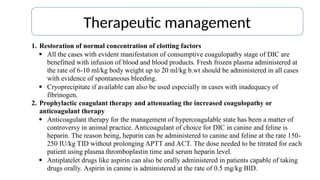
1. Restoration of normal concentration of clotting factors
 All the cases with evident manifestation of consumptive coagulopathy stage of DIC are
benefitted with infusion of blood and blood products. Fresh frozen plasma administered at
the rate of 6-10 ml/kg body weight up to 20 ml/kg b.wt should be administered in all cases
with evidence of spontaneous bleeding.
 Cryoprecipitate if available can also be used especially in cases with inadequacy of
fibrinogen.
2. Prophylactic coagulant therapy and attenuating the increased coagulopathy or
anticoagulant therapy
 Anticoagulant therapy for the management of hypercoagulable state has been a matter of
controversy in animal practice. Anticoagulant of choice for DIC in canine and feline is
heparin. The reason being, heparin can be administered to canine and feline at the rate 150-
250 IU/kg TID without prolonging APTT and ACT. The dose needed to be titrated for each
patient using plasma thromboplastin time and serum heparin level.
 Antiplatelet drugs like aspirin can also be orally administered in patients capable of taking
drugs orally. Aspirin in canine is administered at the rate of 0.5 mg/kg BID.
Thank you
Image credit to Google, used for education purpose only

Disseminated Intravascular coagulation.pptx

  • 1.
    Disseminated Intravascular Coagulation Dr.Desh Deepak Assistant Professor, VMD, SVPUAT
  • 2.
    Disseminated Intravascular Coagulation Synonyms: Consumption coagulopathy or defibrination syndrome  Thrombo-haemmoragic syndrome caused by SIRS induced activation of coagulation cascade and characterised by depletion of clotting factors, paradoxical bleeding and (multiple organ dysfunction syndrome) MODS
  • 3.
    Etiology  Severe diseasesand conditions that initiates SIRS viz septicemic diseases, toxemic diseases, metritis, mastitis, colitis, gastroenteritis, immune mediated diseases and severe traumatic injuries.  Release of procoagulant material in blood in cancer and brain injuries.
  • 4.
    Pathogenesis  Two mechanismsresponsible for DIC 1. Excessive release of tissue factors/thromboplastin/factor III (severe trauma, surgeries, obstetric and sepsis) 2. Widespread endothelial injuries
  • 6.
  • 7.
  • 8.
    Clinical manifestations  DICproduces two types of manifestations either bleeding or organ dysfunction. DIC is clinically presented in two major forms acute form which is fulminating DIC and chronic form with subclinical DIC without any bleeding symptoms a. Bleeding symptoms: Hematemesis, melena, pulmonary hemorrhages and excessive bleeding. b. Organ failure symptoms: Respiratory or renal insufficiency, hypotension and impaired cerebral blood flow
  • 9.
    Diagnosis  Tentative diagnosisof DIC is made on the basis of clinical status of patient and associated SIRS, sepsis septicemia or shock.  Confirmation of disseminated intravascular coagulation mainly focusses on coagulation profile, since DIC is known to be a consumption coagulopathy. Hypothrombocytopenia is consistent finding with DIC  Coagulation profile is suggestive of decreased Prothrombin time, activated partial thromboplastin time.  DIC is associated with initial high fibrinogen which decreased with the progression of disease with simultaneous elevation of fibrinogen degradation products (FDP) like plasma D-dimer  Decreased antithrombin activity confirms hypercoagulable state of disseminated intravascular coagulation.  Antimortem diagnosis of thromboembolism is very difficult but some common thromboembolism can be identified with sudden onset of clinical manifestations and can be confirmed with modern diagnostic imaging techniques like electrocardiography, MRI and CT angiography.
  • 10.
  • 11.
    Therapeutic management DICisreversiblebeforetheonsetofsystemichypercoagulablestatethereforepromptdiagnosis atearlystagesimpartsbetterchancesofsurvival.DICis amedicalemergencyandcaseswith spontaneoushemorrhageshavepoorprognosiswhilecaseswithoutspontaneousbleedinghas slightlybetterprognosis.BasicprincipleofmanagementofDICareasfollow. 1.Managementofunderlyingdisease  Identificationandmanagementofunderlyingprimarydisorderisofutmostimportantfor thecorrectionofdisseminatedintravascularcoagulation.  Underlyingprimaryinfectiousdiseasesaremanagedwithantimicrobialtherapyand abdominalaccidentsandaffectionsrequiringsurgicalcorrectionsaremanagedsurgically.
  • 12.
    Therapeutic management 1. Maintenanceof oxygen carrying capacity of blood and adequate oxygen supply to tissues.  Prevention of hypoxic injury to peripheral tissues is crucial in management of DIC as hypoxia will induce reperfusion injury after recovery.  Oxygen carrying capacity is maintained with the help of oxygen therapy and transfusion of packed red blood cells. 2. Correction of fluid, electrolytes, acid-base and hypoperfusion abnormalities  Crystalloids and colloids are administered to correct hypovolemia and oncotic pressure based on the hydration status of patient. This is critical in management of DIC because it achieves the objecting of diluting various fibrinolytic and clotting factors present in blood and responsible for pathogenesis as well as flushing out all microthrombus from microvasculature of different organ system.
  • 13.
    Therapeutic management 1. Restorationof normal concentration of clotting factors  All the cases with evident manifestation of consumptive coagulopathy stage of DIC are benefitted with infusion of blood and blood products. Fresh frozen plasma administered at the rate of 6-10 ml/kg body weight up to 20 ml/kg b.wt should be administered in all cases with evidence of spontaneous bleeding.  Cryoprecipitate if available can also be used especially in cases with inadequacy of fibrinogen. 2. Prophylactic coagulant therapy and attenuating the increased coagulopathy or anticoagulant therapy  Anticoagulant therapy for the management of hypercoagulable state has been a matter of controversy in animal practice. Anticoagulant of choice for DIC in canine and feline is heparin. The reason being, heparin can be administered to canine and feline at the rate 150- 250 IU/kg TID without prolonging APTT and ACT. The dose needed to be titrated for each patient using plasma thromboplastin time and serum heparin level.  Antiplatelet drugs like aspirin can also be orally administered in patients capable of taking drugs orally. Aspirin in canine is administered at the rate of 0.5 mg/kg BID.
  • 14.
  • 15.
    Image credit toGoogle, used for education purpose only