Disease
Management and
Disease Registries
Dr. Tanveer Abbas
Learning Objectives
After reading this chapter the reader should be
able to:
• Define the role of disease management in
chronic disease
• Describe the need for rapid retrieval of patient
and population statistics to manage patients
with chronic diseases
• Compare and contrast the various disease
registry formats including those that integrate
with electronic health records
• Describe the interrelationships between
disease registries, evidence based medicine
and pay for performance
Disease Management (DM)
Disease Management (DM) is
“a systematic population based approach to identify
persons at risk, intervene with a specific program of
care and measure clinical and other outcomes ”
DM is generally considered part of Population Health and is
divided into the following categories:
• Disease management: focuses on specific diseases like
diabetes
• Lifestyle management: focuses on personal risk factors like
smoking
• Demand management: focuses on improved utilization, as an
example, emergency room usage
• Condition management: focuses on temporary conditions
such as pregnancy and not diseases
Disease Management is discussed under Medical Informatics
because it is dependent on information technology for several
processes:
• Automated data collection and analysis
• Clinical Practice Guidelines (CPGs) that are web based or
embedded into the electronic health records (EHRs)
• Telemonitoring of patients at home
• Patient tracking
• Web based portals
• Networks to connect multiple healthcare workers on the DM
team
DM Program Groups
• The most common chronic diseases to be managed are heart failure, diabetes and
asthma due to high prevalence and cost. Following close behind are obesity,
hypertension, chronic renal failure and chronic obstructive lung disease (COPD).
Disease Management programs involve multiple groups:
• • Quality Improvement Organizations (QIOs)
• • State and Federal Governments (Medicare and Medicaid)
• • Pharmacy organizations
• • Pharmaceutical companies
• • Hospital Systems, including information technology
• • Physicians and their office staff
• • Employers
• • Insurers
• • Independent vendors; including EHR vendors
• • Health Maintenance Organizations (HMOs)
Processes Involved in DM
The usual processes involved in Disease Management are:
• Identification of a problem and a target population
• Comparison of local to national data (how do we compare to
others?)
• Review of existing clinical practice guidelines to see if they
can be used or modified
• Evaluation of patient self-management education
• Evaluation of process and outcomes measurements
• Feedback to clinicians and other hospital workers
• Emphasize systems and populations, not individuals
• Coordination among multiple services and agencies
Disease Registries
Definition of an electronic disease registry:
“A software application for capturing, managing and
providing access to condition specific information for
a list of patients to support organized clinical care ”
• Registries are tools that disease management
programs use to track patients with chronic diseases,
such as diabetes.
• As a result of this data DMPs can remind patients to
get lab work done and keep appointments.
Data Inputting Formats
Disease registries are available in several data inputting formats:
• Manual: data manually inputted onto paper or a computer
database or spreadsheet or into a web based program
• Automatic: data automatically inputted into standalone
software or web based site using client-server software and
integrated with, for example, a laboratory result program using
LOINC and HL7 standards
• Automated and Integrated: data input, retrieval, tracking and
graphing are all automatic and part of an electronic health
record. This is the least common scenario currently but is felt to
have great potential in DMPs
• Approximately 50 disease registries exist that are free or fee
based.
• Cost is usually $500-$600 year per user for commercial
registries.
• In general, free public registries have less functionality than
commercial registries.
Disease Registry Examples
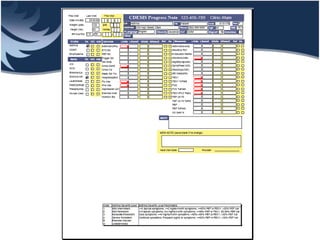
• Chronic Disease Electronic Management Systems (CDEMS). This
popular program is Microsoft Access-based and tracks diabetes
and adult preventive health.
• The program is customizable and includes lab reminders for
clinicians.
• The reports generated are also customizable and users have
access to a web forum to discuss issues.
• A free add-on program inputs data automatically from several
laboratory information systems (Quest, Labcorp, Dynacare and
PAML).
• Shortcomings include the need to manually input data and
access is limited to ten concurrent users.
Population Health Navigator (PHN). Population Health
Navigator is a program used by the Department of Defense
(DOD) to track asthma, beta-blocker use following myocardial
infarction, cardiovascular risk factors, breast cancer
screening, cervical cancer screening, depression, diabetes,
hypertension, COPD, hyperlipidemia, low back pain and high
utilizers.
• Data can be analyzed by physician, clinic or hospital system.
• Data can be exported to MS Excel for data manipulation.
• Drawbacks include that it is not integrated into the electronic
health record
DocSite Registry. One of the best known web-based
commercial registries is Patient Registry by DocSite that will
track multiple common diseases.
• It can be integrated with practice management software,
EHRs and e-prescribing systems.
• Clinical practice guidelines can be embedded in the registry
with the ability to make local modifications.
• Other features include HL7 links to input lab data, patient
education, patient letter generation and the ability to host
data locally or on the DocSite server.
• EClinicalWorks. This EHR vendor includes disease registries
but these are uncommon as part of many electronic health
records.
• This is the ideal format in that patient lists, alerts, reminders,
patient education, lab results, patient education and
reporting could all be part of one information system
Key Points
• Chronic diseases are on the rise in the USA
• Chronic diseases are costly so disease management programs
are common place, but benefits are controversial
• Disease management programs benefit from information
technology by creating electronic disease registries
• Most current EHRs are in the process of adding electronic
disease management programs
• Electronic disease registries will be helpful in managing
patients
Thank You

Disease Management and Disease Registries

  • 1.
  • 2.
    Learning Objectives After readingthis chapter the reader should be able to: • Define the role of disease management in chronic disease • Describe the need for rapid retrieval of patient and population statistics to manage patients with chronic diseases • Compare and contrast the various disease registry formats including those that integrate with electronic health records • Describe the interrelationships between disease registries, evidence based medicine and pay for performance
  • 3.
    Disease Management (DM) DiseaseManagement (DM) is “a systematic population based approach to identify persons at risk, intervene with a specific program of care and measure clinical and other outcomes ”
  • 4.
    DM is generallyconsidered part of Population Health and is divided into the following categories: • Disease management: focuses on specific diseases like diabetes • Lifestyle management: focuses on personal risk factors like smoking • Demand management: focuses on improved utilization, as an example, emergency room usage • Condition management: focuses on temporary conditions such as pregnancy and not diseases
  • 5.
    Disease Management isdiscussed under Medical Informatics because it is dependent on information technology for several processes: • Automated data collection and analysis • Clinical Practice Guidelines (CPGs) that are web based or embedded into the electronic health records (EHRs) • Telemonitoring of patients at home • Patient tracking • Web based portals • Networks to connect multiple healthcare workers on the DM team
  • 6.
    DM Program Groups •The most common chronic diseases to be managed are heart failure, diabetes and asthma due to high prevalence and cost. Following close behind are obesity, hypertension, chronic renal failure and chronic obstructive lung disease (COPD). Disease Management programs involve multiple groups: • • Quality Improvement Organizations (QIOs) • • State and Federal Governments (Medicare and Medicaid) • • Pharmacy organizations • • Pharmaceutical companies • • Hospital Systems, including information technology • • Physicians and their office staff • • Employers • • Insurers • • Independent vendors; including EHR vendors • • Health Maintenance Organizations (HMOs)
  • 7.
    Processes Involved inDM The usual processes involved in Disease Management are: • Identification of a problem and a target population • Comparison of local to national data (how do we compare to others?) • Review of existing clinical practice guidelines to see if they can be used or modified • Evaluation of patient self-management education • Evaluation of process and outcomes measurements • Feedback to clinicians and other hospital workers • Emphasize systems and populations, not individuals • Coordination among multiple services and agencies
  • 8.
    Disease Registries Definition ofan electronic disease registry: “A software application for capturing, managing and providing access to condition specific information for a list of patients to support organized clinical care ” • Registries are tools that disease management programs use to track patients with chronic diseases, such as diabetes. • As a result of this data DMPs can remind patients to get lab work done and keep appointments.
  • 9.
    Data Inputting Formats Diseaseregistries are available in several data inputting formats: • Manual: data manually inputted onto paper or a computer database or spreadsheet or into a web based program • Automatic: data automatically inputted into standalone software or web based site using client-server software and integrated with, for example, a laboratory result program using LOINC and HL7 standards • Automated and Integrated: data input, retrieval, tracking and graphing are all automatic and part of an electronic health record. This is the least common scenario currently but is felt to have great potential in DMPs
  • 10.
    • Approximately 50disease registries exist that are free or fee based. • Cost is usually $500-$600 year per user for commercial registries. • In general, free public registries have less functionality than commercial registries.
  • 11.
    Disease Registry Examples •Chronic Disease Electronic Management Systems (CDEMS). This popular program is Microsoft Access-based and tracks diabetes and adult preventive health. • The program is customizable and includes lab reminders for clinicians. • The reports generated are also customizable and users have access to a web forum to discuss issues. • A free add-on program inputs data automatically from several laboratory information systems (Quest, Labcorp, Dynacare and PAML). • Shortcomings include the need to manually input data and access is limited to ten concurrent users.
  • 13.
    Population Health Navigator(PHN). Population Health Navigator is a program used by the Department of Defense (DOD) to track asthma, beta-blocker use following myocardial infarction, cardiovascular risk factors, breast cancer screening, cervical cancer screening, depression, diabetes, hypertension, COPD, hyperlipidemia, low back pain and high utilizers. • Data can be analyzed by physician, clinic or hospital system. • Data can be exported to MS Excel for data manipulation. • Drawbacks include that it is not integrated into the electronic health record
  • 14.
    DocSite Registry. Oneof the best known web-based commercial registries is Patient Registry by DocSite that will track multiple common diseases. • It can be integrated with practice management software, EHRs and e-prescribing systems. • Clinical practice guidelines can be embedded in the registry with the ability to make local modifications. • Other features include HL7 links to input lab data, patient education, patient letter generation and the ability to host data locally or on the DocSite server.
  • 15.
    • EClinicalWorks. ThisEHR vendor includes disease registries but these are uncommon as part of many electronic health records. • This is the ideal format in that patient lists, alerts, reminders, patient education, lab results, patient education and reporting could all be part of one information system
  • 16.
    Key Points • Chronicdiseases are on the rise in the USA • Chronic diseases are costly so disease management programs are common place, but benefits are controversial • Disease management programs benefit from information technology by creating electronic disease registries • Most current EHRs are in the process of adding electronic disease management programs • Electronic disease registries will be helpful in managing patients
  • 17.