Download to read offline



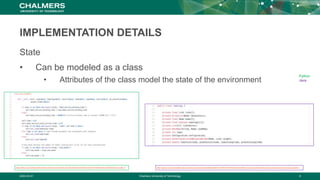
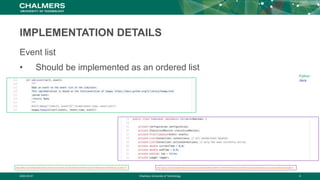

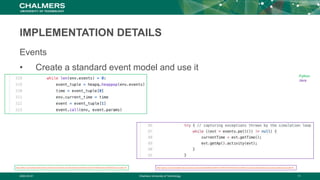


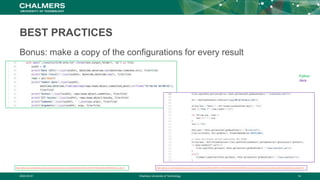
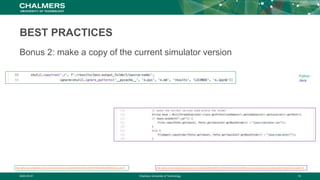


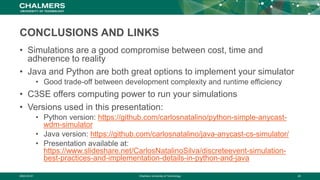


The document discusses best practices and implementation details for discrete-event simulation, emphasizing its advantages over analytic simulations. Key components include the environment, event progression, state, clock, and event list, with practical examples in banking, transportation, and networks. It also provides best practices for coding in Python and Java, highlighting the importance of configuration management, result saving, and the efficient use of threading.


![[DSC Europe 22] Engineers guide for shepherding models in to production - Mar...](https://cdn.slidesharecdn.com/ss_thumbnails/markodimitrijevic-engineersguideforshepherdingmodelsintoproduction2-221130080720-6e979b6f-thumbnail.jpg?width=640&height=640&fit=bounds)


