G60 POPULATION
DISCHARGE PLANNING
MARY ANGELA CATRON, MSW, LMSW
CASE MANAGER SOCIAL WORKER
ICU
I have nothing to disclose
Objectives
• Explain Multidisciplinary Discharge Planning from
the Social Worker perspective
• Discuss barriers to early discharge
• Review post acute discharge placement
What I Have Learned About Our
G-60 Population
1. Our population is aging
2. Traumatic injury in the G60 population is increasing
3. Aging, preexisting disease, decreased physical
reserve, medications
4. Physiologic response to injury might differ from that
seen in younger patients
Process of Care for
G-60 Population
• When the G-60 patient is admitted (ICU or floor)
– multidisciplinary comprehensive assessment by the
team
• Nutrition
• Respiratory
• PTOT
• Case managersocial worker
• Pharmacy
• Case managersocial worker
– a psychosocial assessment which helps to determine
a baseline of capabilities and circumstances
Explaining the Process
• Proactive assessment = START EARLY
– Day one
• Identify patients Decision-Making Capacity and
Care Preferences
• Substance use, Prescription and drug abuse,
Mental Status Evaluation (MSE), Elderly Abuse,
and Assess for Depression
Traumatically Injured G-60 Patients
• Traumatic injury may lead functional decline in
older patients
• Seriously injured patients may require long-term
placement
• Planning for transition to post hospital care
– special unit care
– Rehab, LTAC, brain injury programs, SNF
Discharge Planning
• Admission
- review initial purpose of admission
• Hospitalization
- follow with multidisciplinary team
• Discharge
- create a solid and individualized discharge plan
CHALLENGES TO DISCHARGE PLAN
• Managed care companies and private insurance
– make the final decision on what they will pay
– can delay timeliness of discharge waiting on a
payer
• Key is to be proactive early or miss benefit of
higher care
Number of days can be problem
Doc to Doc calls often needed
• Helping families to understand the benefit of
transitioning to next level of care
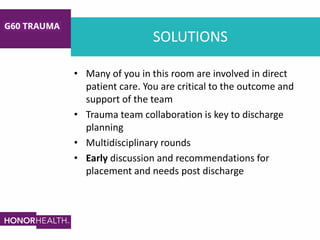
SOLUTIONS
• Many of you in this room are involved in direct
patient care. You are critical to the outcome and
support of the team
• Trauma team collaboration is key to discharge
planning
• Multidisciplinary rounds
• Early discussion and recommendations for
placement and needs post discharge
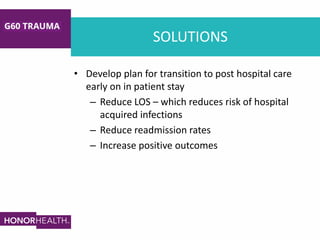
SOLUTIONS
• Develop plan for transition to post hospital care
early on in patient stay
– Reduce LOS – which reduces risk of hospital
acquired infections
– Reduce readmission rates
– Increase positive outcomes
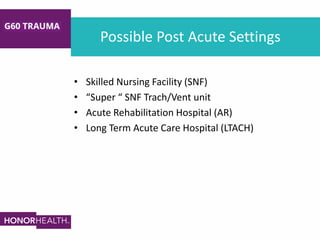
Possible Post Acute Settings
• Skilled Nursing Facility (SNF)
• “Super “ SNF Trach/Vent unit
• Acute Rehabilitation Hospital (AR)
• Long Term Acute Care Hospital (LTACH)
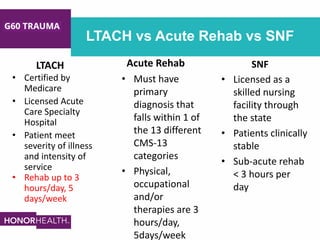
LTACH vs Acute Rehab vs SNF
LTACH
• Certified by
Medicare
• Licensed Acute
Care Specialty
Hospital
• Patient meet
severity of illness
and intensity of
service
• Rehab up to 3
hours/day, 5
days/week
Acute Rehab
• Must have
primary
diagnosis that
falls within 1 of
the 13 different
CMS-13
categories
• Physical,
occupational
and/or
therapies are 3
hours/day,
5days/week
SNF
• Licensed as a
skilled nursing
facility through
the state
• Patients clinically
stable
• Sub-acute rehab
< 3 hours per
day
Case Study
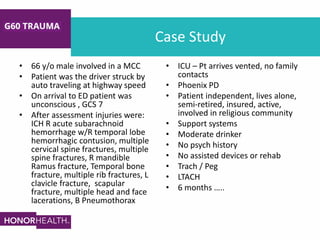
• 66 y/o male involved in a MCC
• Patient was the driver struck by
auto traveling at highway speed
• On arrival to ED patient was
unconscious , GCS 7
• After assessment injuries were:
ICH R acute subarachnoid
hemorrhage w/R temporal lobe
hemorrhagic contusion, multiple
cervical spine fractures, multiple
spine fractures, R mandible
Ramus fracture, Temporal bone
fracture, multiple rib fractures, L
clavicle fracture, scapular
fracture, multiple head and face
lacerations, B Pneumothorax
• ICU – Pt arrives vented, no family
contacts
• Phoenix PD
• Patient independent, lives alone,
semi-retired, insured, active,
involved in religious community
• Support systems
• Moderate drinker
• No psych history
• No assisted devices or rehab
• Trach / Peg
• LTACH
• 6 months …..
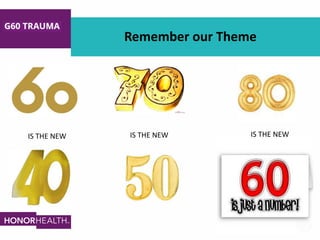
Remember our Theme
IS THE NEW IS THE NEW IS THE NEW

Discharge Planning (Angie Catron)

  • 1.
    G60 POPULATION DISCHARGE PLANNING MARYANGELA CATRON, MSW, LMSW CASE MANAGER SOCIAL WORKER ICU
  • 2.
    I have nothingto disclose
  • 3.
    Objectives • Explain MultidisciplinaryDischarge Planning from the Social Worker perspective • Discuss barriers to early discharge • Review post acute discharge placement
  • 4.
    What I HaveLearned About Our G-60 Population 1. Our population is aging 2. Traumatic injury in the G60 population is increasing 3. Aging, preexisting disease, decreased physical reserve, medications 4. Physiologic response to injury might differ from that seen in younger patients
  • 5.
    Process of Carefor G-60 Population • When the G-60 patient is admitted (ICU or floor) – multidisciplinary comprehensive assessment by the team • Nutrition • Respiratory • PTOT • Case managersocial worker • Pharmacy • Case managersocial worker – a psychosocial assessment which helps to determine a baseline of capabilities and circumstances
  • 6.
    Explaining the Process •Proactive assessment = START EARLY – Day one • Identify patients Decision-Making Capacity and Care Preferences • Substance use, Prescription and drug abuse, Mental Status Evaluation (MSE), Elderly Abuse, and Assess for Depression
  • 7.
    Traumatically Injured G-60Patients • Traumatic injury may lead functional decline in older patients • Seriously injured patients may require long-term placement • Planning for transition to post hospital care – special unit care – Rehab, LTAC, brain injury programs, SNF
  • 8.
    Discharge Planning • Admission -review initial purpose of admission • Hospitalization - follow with multidisciplinary team • Discharge - create a solid and individualized discharge plan
  • 9.
    CHALLENGES TO DISCHARGEPLAN • Managed care companies and private insurance – make the final decision on what they will pay – can delay timeliness of discharge waiting on a payer • Key is to be proactive early or miss benefit of higher care Number of days can be problem Doc to Doc calls often needed • Helping families to understand the benefit of transitioning to next level of care
  • 10.
    SOLUTIONS • Many ofyou in this room are involved in direct patient care. You are critical to the outcome and support of the team • Trauma team collaboration is key to discharge planning • Multidisciplinary rounds • Early discussion and recommendations for placement and needs post discharge
  • 11.
    SOLUTIONS • Develop planfor transition to post hospital care early on in patient stay – Reduce LOS – which reduces risk of hospital acquired infections – Reduce readmission rates – Increase positive outcomes
  • 12.
    Possible Post AcuteSettings • Skilled Nursing Facility (SNF) • “Super “ SNF Trach/Vent unit • Acute Rehabilitation Hospital (AR) • Long Term Acute Care Hospital (LTACH)
  • 13.
    LTACH vs AcuteRehab vs SNF LTACH • Certified by Medicare • Licensed Acute Care Specialty Hospital • Patient meet severity of illness and intensity of service • Rehab up to 3 hours/day, 5 days/week Acute Rehab • Must have primary diagnosis that falls within 1 of the 13 different CMS-13 categories • Physical, occupational and/or therapies are 3 hours/day, 5days/week SNF • Licensed as a skilled nursing facility through the state • Patients clinically stable • Sub-acute rehab < 3 hours per day
  • 14.
    Case Study • 66y/o male involved in a MCC • Patient was the driver struck by auto traveling at highway speed • On arrival to ED patient was unconscious , GCS 7 • After assessment injuries were: ICH R acute subarachnoid hemorrhage w/R temporal lobe hemorrhagic contusion, multiple cervical spine fractures, multiple spine fractures, R mandible Ramus fracture, Temporal bone fracture, multiple rib fractures, L clavicle fracture, scapular fracture, multiple head and face lacerations, B Pneumothorax • ICU – Pt arrives vented, no family contacts • Phoenix PD • Patient independent, lives alone, semi-retired, insured, active, involved in religious community • Support systems • Moderate drinker • No psych history • No assisted devices or rehab • Trach / Peg • LTACH • 6 months …..
  • 15.
    Remember our Theme ISTHE NEW IS THE NEW IS THE NEW