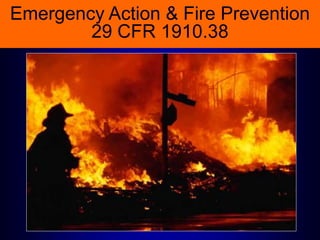
Emergency Action & Fire Prevention
29 CFR 1910.38
Are You Prepared?
 How would you react to a fire alarm
at work?
 Would you know your role if there
was a major chemical spill?
 What if an earthquake or hurricane
struck our community?
Goals
 Potential hazards
 Emergency response
 Evacuation
 Quiz
Fire Hazards and Prevention
 Flammable/combustible liquids
 Combustible solids
 Machine overheating/electrical malfunction
 Welding and torch cutting
 Smoking
Flammable Chemicals
 Don’t smoke
 Proper storage
 Proper dispensing
 Read labels and MSDS
 Spill response
Electrical Fire Hazards
 Overloaded electrical systems
 Frayed or damaged wiring
 Defective machinery or power tools
Housekeeping
 Control flammable and combustible
materials so they do not contribute to the
ignition or expansion of a fire
 Keep exits clear and maintain the
accessibility to fire response equipment
Chemical Spill Hazards
 Chemical types and locations
 Spotting a leak or spill
 Specific chemical hazards
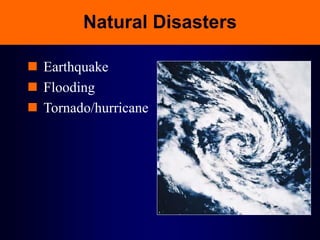
Natural Disasters
 Earthquake
 Flooding
 Tornado/hurricane
Goals
 Potential hazards
 Emergency response
 Evacuation
 Quiz
Fire Response
 Notification or alarm
 Retrieve a fire extinguisher
 Assess the situation
 Call for outside emergency assistance if
necessary
 If fighting a fire, continually evaluate for
the necessity of evacuation
Alarms
 Yell for help
 Main alarm system
 Backup alarm
 Fire suppression system will automatically
signal an alarm to the fire department
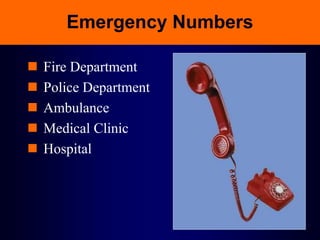
Emergency Numbers
 Fire Department
 Police Department
 Ambulance
 Medical Clinic
 Hospital
Extinguishing Equipment
 Portable extinguisher
 Fire hose
 Fire suppression systems
Extinguisher Types
 A - For combustibles such as trash, wood,
or paper
 B - For flammable liquids or gases
 C - For electrical fires
 D - For combustible metals like
magnesium
Extinguisher Use
 Pull the pin
 Aim at the base of the fire
 Squeeze the trigger
 Sweep back and forth
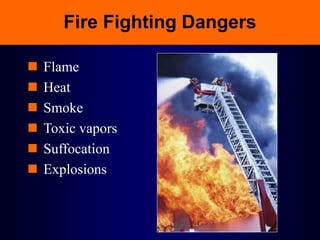
Fire Fighting Dangers
 Flame
 Heat
 Smoke
 Toxic vapors
 Suffocation
 Explosions
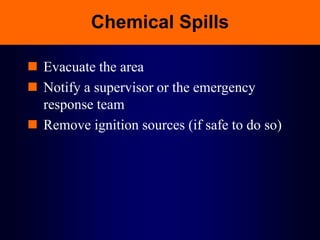
Chemical Spills
 Evacuate the area
 Notify a supervisor or the emergency
response team
 Remove ignition sources (if safe to do so)
Goals
 Potential hazards
 Emergency response
 Evacuation
 Quiz
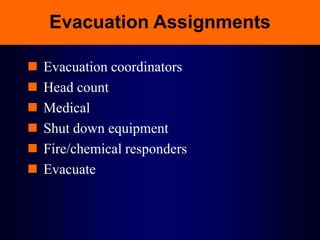
Evacuation Assignments
 Evacuation coordinators
 Head count
 Medical
 Shut down equipment
 Fire/chemical responders
 Evacuate
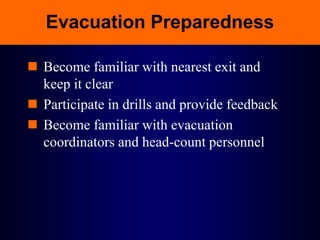
Evacuation Preparedness
 Become familiar with nearest exit and
keep it clear
 Participate in drills and provide feedback
 Become familiar with evacuation
coordinators and head-count personnel
Evacuation Procedures
 Recognize the evacuation signal
and listen for instructions
 Shut down equipment using the
emergency stop
 Go directly to the nearest safe exit
 Proceed to the assembly area.
Goals
 Potential hazards
 Emergency response
 Evacuation
 Quiz
Summary
 Understand how to prevent emergencies
 Understand emergency response
 Only use fire-fighting equipment if trained
 Know your role in an evacuation
 Apply this information (also applies at home)
 Ask your supervisor
Quiz
1. Housekeeping is only important because
it keeps the facility looking nice. True or False
2. The class A extinguisher is used for
putting out combustible metal fires. True or False
3. Name two potential fire hazards in your workspace
__________________ and __________________.
4. If someone is on fire, it is best to
use an extinguisher on the person. True or False
5. Describe the first two things you should do if you spot
a fire: ______________ and ______________.
Quiz (cont.)
6. What is the most dangerous habit to have when
working with flammable chemicals?
7. To use a fire extinguisher; P ______________,
A__________, S___________, S___________.
8. Name the evacuation coordinator and head-count
person for your department.
9. Prior to evacuating out the nearest exit, you
should _______________________________.
10. Which type of natural disaster is most likely to
strike your community, and how are you and
your company prepared for it?
Quiz Answers
1. False. Housekeeping prevents accumulation of
materials that may ignite or contribute to a fire.
2. False. Class A is for combustibles like wood or
paper. For combustible metals use class D.
3. Flammable liquids, piles of rags or boxes, poor
smoking habits, frayed electrical cords, etc.
4. False. Help the person stop, drop, and roll.
5. Notify someone, such as a supervisor, and
retrieve fire equipment, such as an extinguisher.
Quiz Answers (cont.)
6. Smoking is a very dangerous habit when working
with flammable chemicals.
7. Pull the pin, Aim at the base of the fire, Squeeze
the trigger, Sweep back and forth.
8. The evacuation coordinator and headcount person
for each department are defined in the emergency
action plan.
9. Shut down equipment using the emergency stop button.
10. Discuss company and personal plans for responding
to natural disasters in your area.

Emergency Action & Fire Prevention Training

  • 1.
    Emergency Action &Fire Prevention 29 CFR 1910.38
  • 2.
    Are You Prepared? How would you react to a fire alarm at work?  Would you know your role if there was a major chemical spill?  What if an earthquake or hurricane struck our community?
  • 3.
    Goals  Potential hazards Emergency response  Evacuation  Quiz
  • 4.
    Fire Hazards andPrevention  Flammable/combustible liquids  Combustible solids  Machine overheating/electrical malfunction  Welding and torch cutting  Smoking
  • 5.
    Flammable Chemicals  Don’tsmoke  Proper storage  Proper dispensing  Read labels and MSDS  Spill response
  • 6.
    Electrical Fire Hazards Overloaded electrical systems  Frayed or damaged wiring  Defective machinery or power tools
  • 7.
    Housekeeping  Control flammableand combustible materials so they do not contribute to the ignition or expansion of a fire  Keep exits clear and maintain the accessibility to fire response equipment
  • 8.
    Chemical Spill Hazards Chemical types and locations  Spotting a leak or spill  Specific chemical hazards
  • 9.
    Natural Disasters  Earthquake Flooding  Tornado/hurricane
  • 10.
    Goals  Potential hazards Emergency response  Evacuation  Quiz
  • 11.
    Fire Response  Notificationor alarm  Retrieve a fire extinguisher  Assess the situation  Call for outside emergency assistance if necessary  If fighting a fire, continually evaluate for the necessity of evacuation
  • 12.
    Alarms  Yell forhelp  Main alarm system  Backup alarm  Fire suppression system will automatically signal an alarm to the fire department
  • 13.
    Emergency Numbers  FireDepartment  Police Department  Ambulance  Medical Clinic  Hospital
  • 14.
    Extinguishing Equipment  Portableextinguisher  Fire hose  Fire suppression systems
  • 15.
    Extinguisher Types  A- For combustibles such as trash, wood, or paper  B - For flammable liquids or gases  C - For electrical fires  D - For combustible metals like magnesium
  • 16.
    Extinguisher Use  Pullthe pin  Aim at the base of the fire  Squeeze the trigger  Sweep back and forth
  • 17.
    Fire Fighting Dangers Flame  Heat  Smoke  Toxic vapors  Suffocation  Explosions
  • 18.
    Chemical Spills  Evacuatethe area  Notify a supervisor or the emergency response team  Remove ignition sources (if safe to do so)
  • 19.
    Goals  Potential hazards Emergency response  Evacuation  Quiz
  • 20.
    Evacuation Assignments  Evacuationcoordinators  Head count  Medical  Shut down equipment  Fire/chemical responders  Evacuate
  • 21.
    Evacuation Preparedness  Becomefamiliar with nearest exit and keep it clear  Participate in drills and provide feedback  Become familiar with evacuation coordinators and head-count personnel
  • 22.
    Evacuation Procedures  Recognizethe evacuation signal and listen for instructions  Shut down equipment using the emergency stop  Go directly to the nearest safe exit  Proceed to the assembly area.
  • 23.
    Goals  Potential hazards Emergency response  Evacuation  Quiz
  • 24.
    Summary  Understand howto prevent emergencies  Understand emergency response  Only use fire-fighting equipment if trained  Know your role in an evacuation  Apply this information (also applies at home)  Ask your supervisor
  • 25.
    Quiz 1. Housekeeping isonly important because it keeps the facility looking nice. True or False 2. The class A extinguisher is used for putting out combustible metal fires. True or False 3. Name two potential fire hazards in your workspace __________________ and __________________. 4. If someone is on fire, it is best to use an extinguisher on the person. True or False 5. Describe the first two things you should do if you spot a fire: ______________ and ______________.
  • 26.
    Quiz (cont.) 6. Whatis the most dangerous habit to have when working with flammable chemicals? 7. To use a fire extinguisher; P ______________, A__________, S___________, S___________. 8. Name the evacuation coordinator and head-count person for your department. 9. Prior to evacuating out the nearest exit, you should _______________________________. 10. Which type of natural disaster is most likely to strike your community, and how are you and your company prepared for it?
  • 27.
    Quiz Answers 1. False.Housekeeping prevents accumulation of materials that may ignite or contribute to a fire. 2. False. Class A is for combustibles like wood or paper. For combustible metals use class D. 3. Flammable liquids, piles of rags or boxes, poor smoking habits, frayed electrical cords, etc. 4. False. Help the person stop, drop, and roll. 5. Notify someone, such as a supervisor, and retrieve fire equipment, such as an extinguisher.
  • 28.
    Quiz Answers (cont.) 6.Smoking is a very dangerous habit when working with flammable chemicals. 7. Pull the pin, Aim at the base of the fire, Squeeze the trigger, Sweep back and forth. 8. The evacuation coordinator and headcount person for each department are defined in the emergency action plan. 9. Shut down equipment using the emergency stop button. 10. Discuss company and personal plans for responding to natural disasters in your area.