Organizational
Communication
Directions of
Communication
1.   Downward communication - flows from individuals
     in higher levels of the hierarchy to those in lower
     levels.

2.   Upward communication - flows from lower to
     higher levels in an organization.

3.   Horizontal communication - flows across functions
     in an organization. It is necessary for coordinating
     and integrating diverse organizational functions.

4.   Diagonal communication - is one that cuts across
     functions in an organization. This is important when
     members cannot communicate through upward,
Mana gement
of Change
Major Three
Categories of
Management of change
1. Technological changes – include such things
   as new equipment and new processes.

2. Environmental changes – are all the
   nontechnological changes that occur outside
   the organization.

3. Internal to the organization – include such
   changes as budget adjustments, policy
   changes, diversity adjustments, and personnel
   changes.
Alter native
   Change
Management
A pproaches
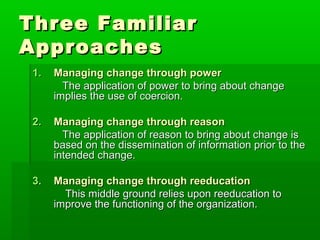
Three Familiar
Approaches
 1.   Managing change through power
        The application of power to bring about change
      implies the use of coercion.

 2.   Managing change through reason
        The application of reason to bring about change is
      based on the dissemination of information prior to the
      intended change.

 3.   Managing change through reeducation
        This middle ground relies upon reeducation to
      improve the functioning of the organization.

Directing report

  • 1.
  • 2.
    Directions of Communication 1. Downward communication - flows from individuals in higher levels of the hierarchy to those in lower levels. 2. Upward communication - flows from lower to higher levels in an organization. 3. Horizontal communication - flows across functions in an organization. It is necessary for coordinating and integrating diverse organizational functions. 4. Diagonal communication - is one that cuts across functions in an organization. This is important when members cannot communicate through upward,
  • 3.
  • 4.
    Major Three Categories of Managementof change 1. Technological changes – include such things as new equipment and new processes. 2. Environmental changes – are all the nontechnological changes that occur outside the organization. 3. Internal to the organization – include such changes as budget adjustments, policy changes, diversity adjustments, and personnel changes.
  • 5.
    Alter native Change Management A pproaches
  • 6.
    Three Familiar Approaches 1. Managing change through power The application of power to bring about change implies the use of coercion. 2. Managing change through reason The application of reason to bring about change is based on the dissemination of information prior to the intended change. 3. Managing change through reeducation This middle ground relies upon reeducation to improve the functioning of the organization.