DINING ETIQUETTE
PRESENTED BY: PRESENTED TO:
DATE:
BACKGROUND
 DINING ETIQUETTE IS AN AREA OF ETIQUETTE WHICH PERTAINS TO DINING, WHETHER AT HOME OR OUT IN A
RESTAURANT.
 ETIQUETTE IN GENERAL IS A SERIES OF SUGGESTIONS AND RULES FOR BEHAVIOR WHICH ARE DESIGNED TO
ENSURE THAT PEOPLE BEHAVE CONSISTENTLY AND WITHIN THE NORMS OF POLITENESS.
 MANY PEOPLE RECEIVE SOME ETIQUETTE EDUCATION AS THEY GROW UP FROM FAMILY MEMBERS AND
TEACHERS, AND IT IS ALSO POSSIBLE TO TAKE CLASSES WHICH PROVIDE INSTRUCTION IN ETIQUETTE.
 IN SOME COMMUNITIES, IT IS TRADITIONAL TO TAKE CLASSES, OFTEN IN PREPARATION FOR A DEBUT INTO
SOCIETY.
 THERE ARE SEVERAL KEY ELEMENTS OF DINING ETIQUETTE AND THEY ARE FURTHER EXPLAINED IN SLIDES
BELOW.
INTRODUCTION
 Dining etiquette is a set of rules and
customs that control accepted behavior
in particular social groups or social
situations, especially when dining out or
in a formal setting.
 Dining etiquette is essential for making a
favorable impression at both
lunch/dinner interviews as well as in
social business situations.
SEATING
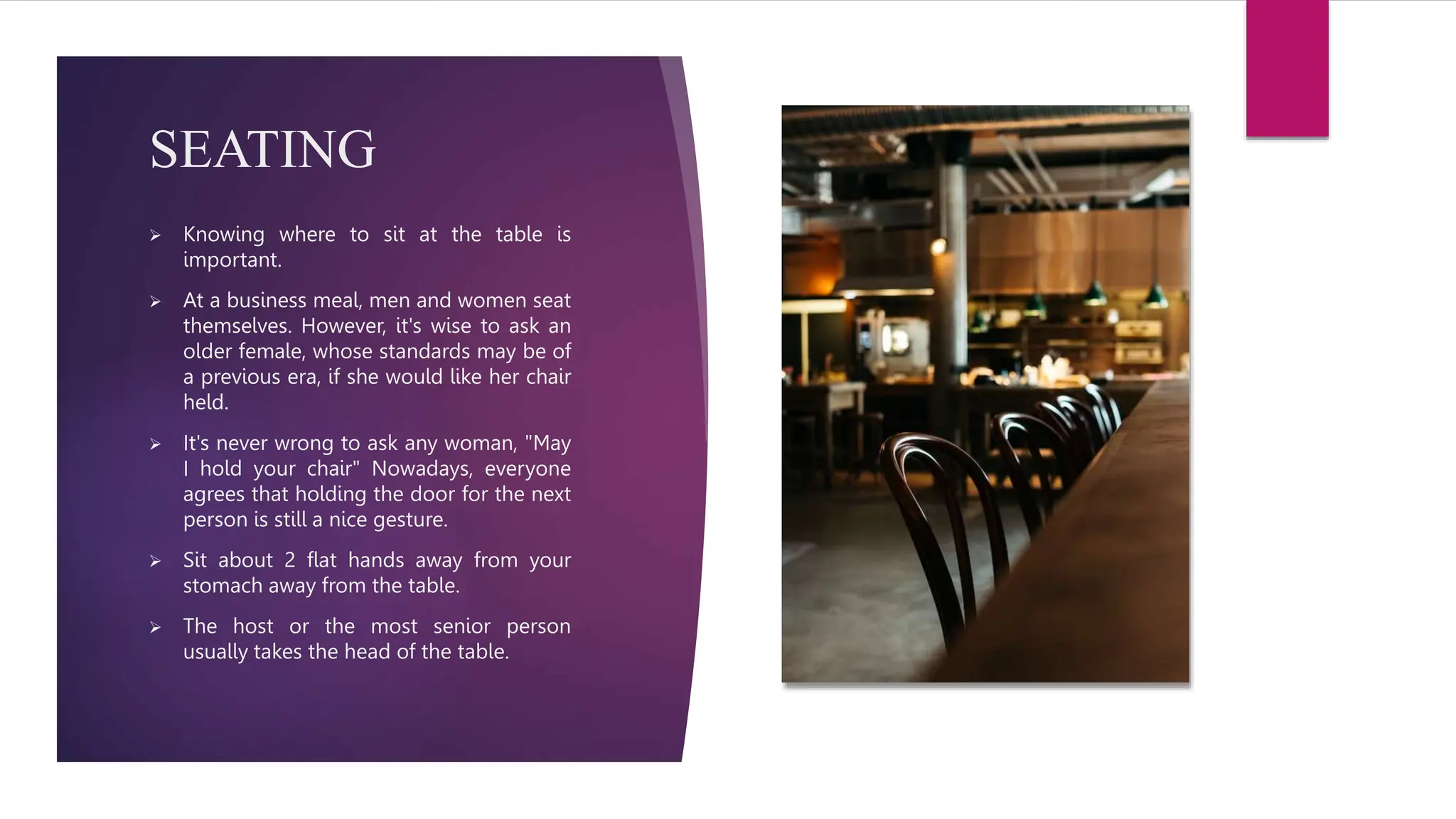
 Knowing where to sit at the table is
important.
 At a business meal, men and women seat
themselves. However, it's wise to ask an
older female, whose standards may be of
a previous era, if she would like her chair
held.
 It's never wrong to ask any woman, "May
I hold your chair" Nowadays, everyone
agrees that holding the door for the next
person is still a nice gesture.
 Sit about 2 flat hands away from your
stomach away from the table.
 The host or the most senior person
usually takes the head of the table.
TABLE SETTING
 Understanding the proper table setting
helps you navigate through the meal.
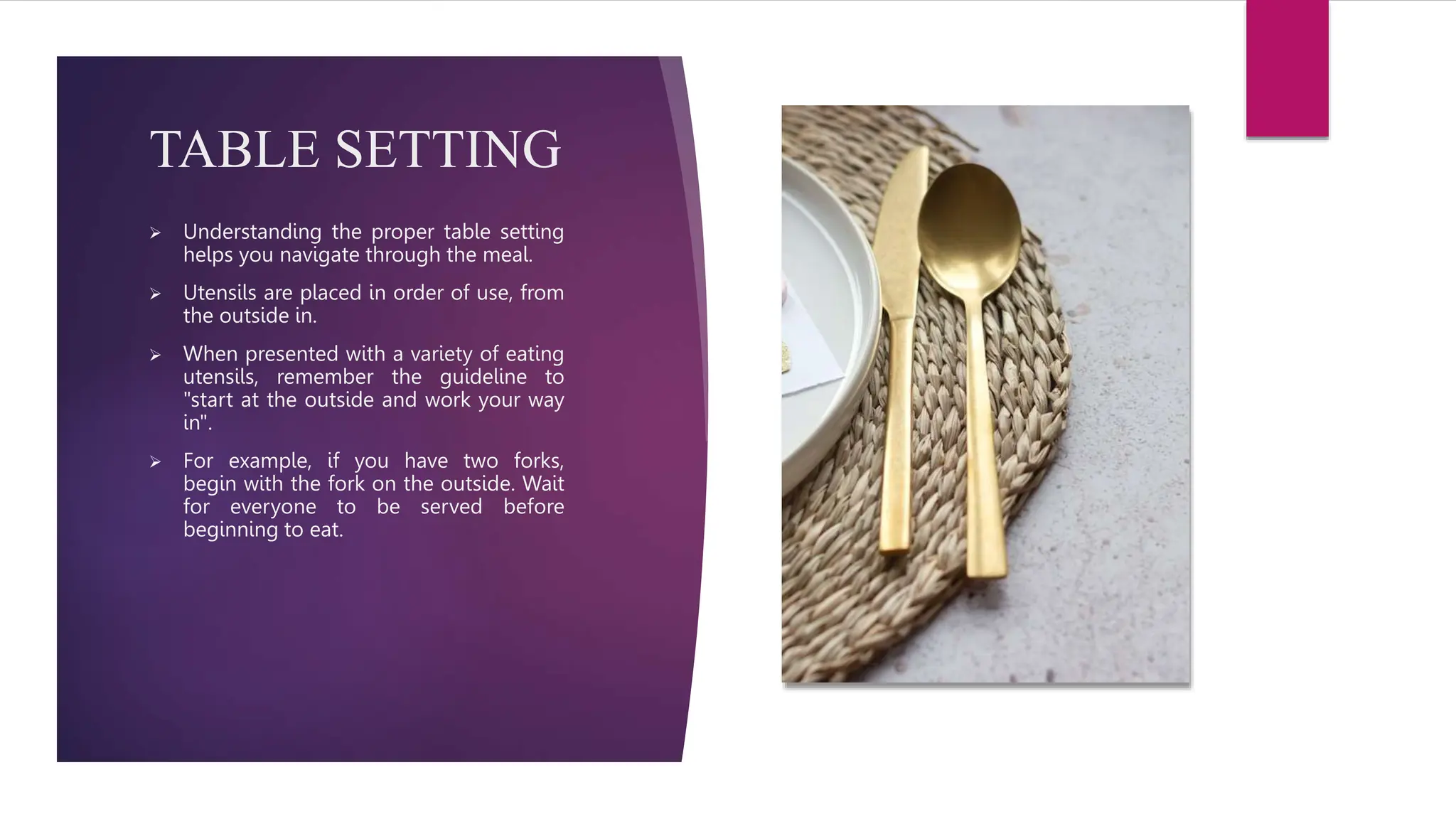
 Utensils are placed in order of use, from
the outside in.
 When presented with a variety of eating
utensils, remember the guideline to
"start at the outside and work your way
in".
 For example, if you have two forks,
begin with the fork on the outside. Wait
for everyone to be served before
beginning to eat.
EATING
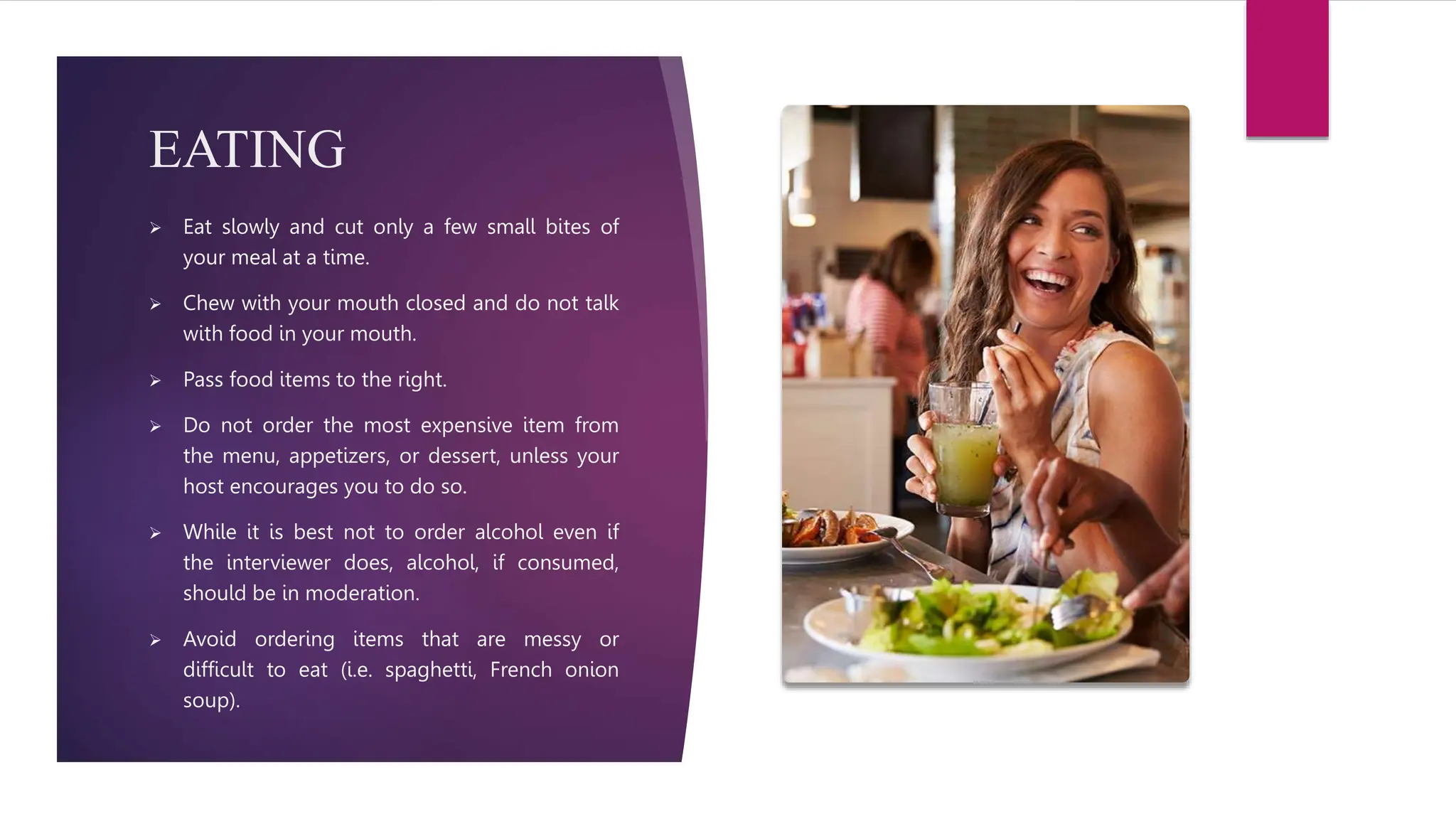
 Eat slowly and cut only a few small bites of
your meal at a time.
 Chew with your mouth closed and do not talk
with food in your mouth.
 Pass food items to the right.
 Do not order the most expensive item from
the menu, appetizers, or dessert, unless your
host encourages you to do so.
 While it is best not to order alcohol even if
the interviewer does, alcohol, if consumed,
should be in moderation.
 Avoid ordering items that are messy or
difficult to eat (i.e. spaghetti, French onion
soup).
POSTURE
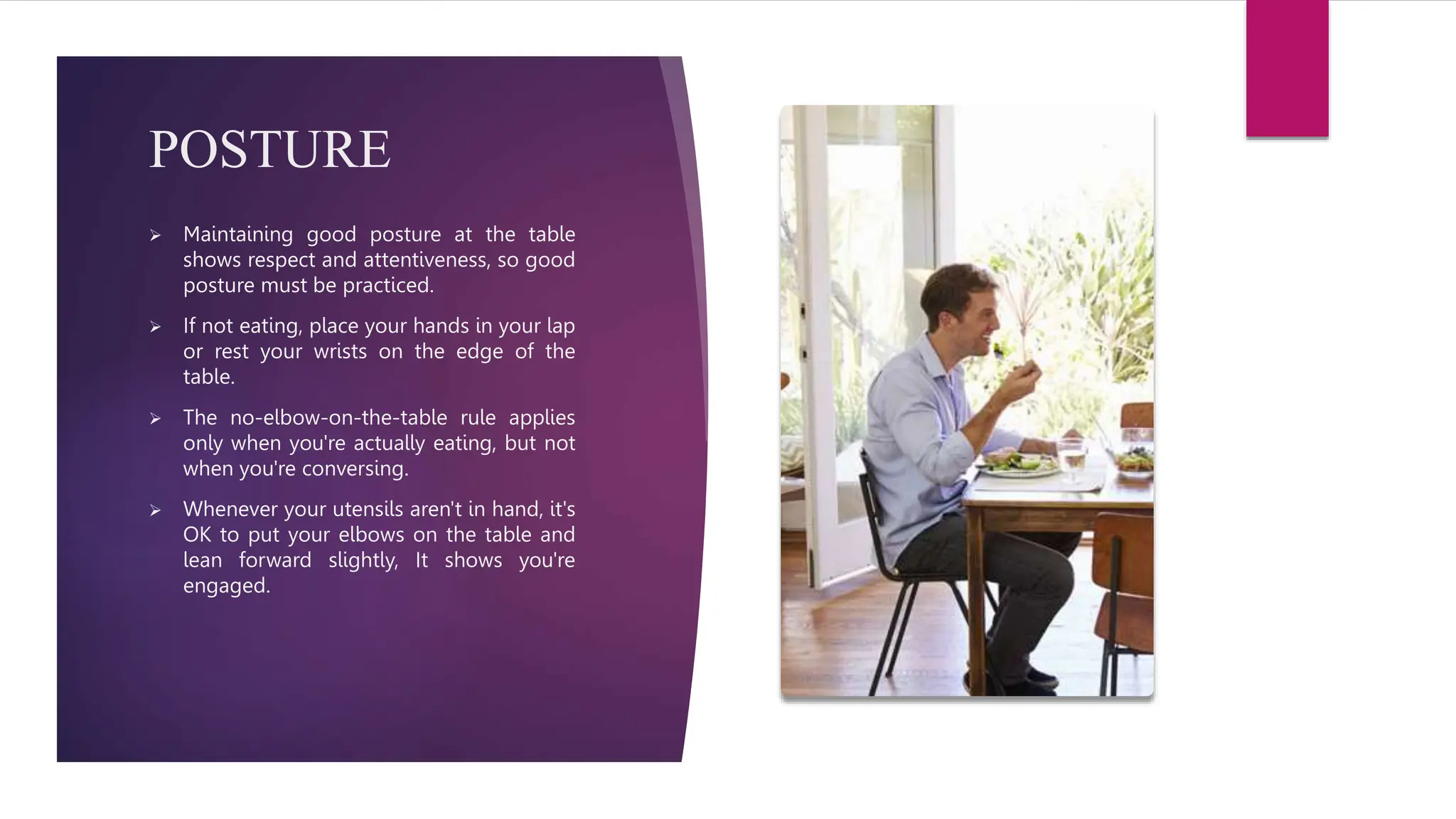
 Maintaining good posture at the table
shows respect and attentiveness, so good
posture must be practiced.
 If not eating, place your hands in your lap
or rest your wrists on the edge of the
table.
 The no-elbow-on-the-table rule applies
only when you're actually eating, but not
when you're conversing.
 Whenever your utensils aren't in hand, it's
OK to put your elbows on the table and
lean forward slightly, It shows you're
engaged.
NAPKIN
 Place your napkin in your lap
immediately upon seating.
 If there is a host or hostess, wait for them
to take their napkin from the table and
place it on their lap.
 Please, don't tuck your napkin into your
collar, between the buttons of your shirt,
or in your belt.
 If you need to leave the table for a few
moments, put your napkin on your chair.
 When you are finished with your meal
and preparing to leave, loosely fold and
place your napkin on the table.
CELL PHONES
 In social business situations, it is polite to
keep your cell phone on silent or vibrate
mode.
 You can simply avoid using your phone
during the meal. Thus, say no to cell
phones.
CONVERSATIONS
 Engage in polite and appropriate
conversations during the meal.
 Avoid controversial topics and focus on
getting to know others.
 Make good eye contact.
 Don't forget to introduce yourself to the
host/hostess and don't interrupt
conversations.
GRATITUDE
 After the meal, express gratitude to the
host or the person who invited you.
 Send a thank-you note or email within 24
hours.
Dining Etiquette.pptx

Dining Etiquette.pptx

  • 1.
    DINING ETIQUETTE PRESENTED BY:PRESENTED TO: DATE:
  • 2.
    BACKGROUND  DINING ETIQUETTEIS AN AREA OF ETIQUETTE WHICH PERTAINS TO DINING, WHETHER AT HOME OR OUT IN A RESTAURANT.  ETIQUETTE IN GENERAL IS A SERIES OF SUGGESTIONS AND RULES FOR BEHAVIOR WHICH ARE DESIGNED TO ENSURE THAT PEOPLE BEHAVE CONSISTENTLY AND WITHIN THE NORMS OF POLITENESS.  MANY PEOPLE RECEIVE SOME ETIQUETTE EDUCATION AS THEY GROW UP FROM FAMILY MEMBERS AND TEACHERS, AND IT IS ALSO POSSIBLE TO TAKE CLASSES WHICH PROVIDE INSTRUCTION IN ETIQUETTE.  IN SOME COMMUNITIES, IT IS TRADITIONAL TO TAKE CLASSES, OFTEN IN PREPARATION FOR A DEBUT INTO SOCIETY.  THERE ARE SEVERAL KEY ELEMENTS OF DINING ETIQUETTE AND THEY ARE FURTHER EXPLAINED IN SLIDES BELOW.
  • 3.
    INTRODUCTION  Dining etiquetteis a set of rules and customs that control accepted behavior in particular social groups or social situations, especially when dining out or in a formal setting.  Dining etiquette is essential for making a favorable impression at both lunch/dinner interviews as well as in social business situations.
  • 4.
    SEATING  Knowing whereto sit at the table is important.  At a business meal, men and women seat themselves. However, it's wise to ask an older female, whose standards may be of a previous era, if she would like her chair held.  It's never wrong to ask any woman, "May I hold your chair" Nowadays, everyone agrees that holding the door for the next person is still a nice gesture.  Sit about 2 flat hands away from your stomach away from the table.  The host or the most senior person usually takes the head of the table.
  • 5.
    TABLE SETTING  Understandingthe proper table setting helps you navigate through the meal.  Utensils are placed in order of use, from the outside in.  When presented with a variety of eating utensils, remember the guideline to "start at the outside and work your way in".  For example, if you have two forks, begin with the fork on the outside. Wait for everyone to be served before beginning to eat.
  • 6.
    EATING  Eat slowlyand cut only a few small bites of your meal at a time.  Chew with your mouth closed and do not talk with food in your mouth.  Pass food items to the right.  Do not order the most expensive item from the menu, appetizers, or dessert, unless your host encourages you to do so.  While it is best not to order alcohol even if the interviewer does, alcohol, if consumed, should be in moderation.  Avoid ordering items that are messy or difficult to eat (i.e. spaghetti, French onion soup).
  • 7.
    POSTURE  Maintaining goodposture at the table shows respect and attentiveness, so good posture must be practiced.  If not eating, place your hands in your lap or rest your wrists on the edge of the table.  The no-elbow-on-the-table rule applies only when you're actually eating, but not when you're conversing.  Whenever your utensils aren't in hand, it's OK to put your elbows on the table and lean forward slightly, It shows you're engaged.
  • 8.
    NAPKIN  Place yournapkin in your lap immediately upon seating.  If there is a host or hostess, wait for them to take their napkin from the table and place it on their lap.  Please, don't tuck your napkin into your collar, between the buttons of your shirt, or in your belt.  If you need to leave the table for a few moments, put your napkin on your chair.  When you are finished with your meal and preparing to leave, loosely fold and place your napkin on the table.
  • 9.
    CELL PHONES  Insocial business situations, it is polite to keep your cell phone on silent or vibrate mode.  You can simply avoid using your phone during the meal. Thus, say no to cell phones.
  • 10.
    CONVERSATIONS  Engage inpolite and appropriate conversations during the meal.  Avoid controversial topics and focus on getting to know others.  Make good eye contact.  Don't forget to introduce yourself to the host/hostess and don't interrupt conversations.
  • 11.
    GRATITUDE  After themeal, express gratitude to the host or the person who invited you.  Send a thank-you note or email within 24 hours.