DIGITAL MARKETING MUST-HAVES
BEST PRACTICES FOR ECOMMERCE
AUGUST 2016
Hello!
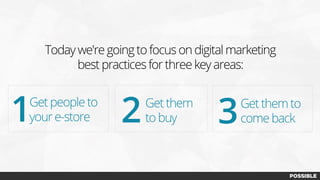
Today we're going to focus on digital marketing
best practices for three key areas:
1Get people to
your e-store 2Get them
to buy 3Get them to
come back
First and foremost…
You must know your business goals and
who your customersare
WHY?
Because whatever you learn from me today
won’t work unless you are clear on what
your business needs, your customer needs
and how you measure that success
SET CLEAR BUSINESS GOALS
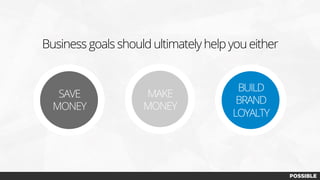
Business goals should ultimately help you either
SAVE
MONEY
MAKE
MONEY
BUILD
BRAND
LOYALTY
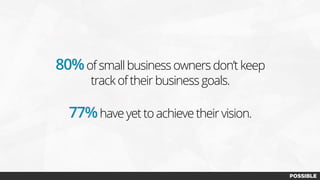
80%of small business owners don’t keep
track of their business goals.
77%have yet to achieve their vision.
Business goalsare like road maps, they help
give you something to work towards and be
accountable for in the next 3-5 years
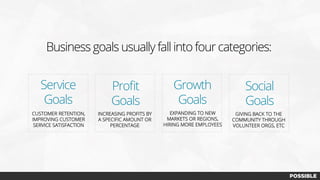
Business goals usually fall into four categories:
Service
Goals
Social
Goals
Profit
Goals
Growth
Goals
CUSTOMER RETENTION,
IMPROVING CUSTOMER
SERVICE SATISFACTION
INCREASING PROFITS BY
A SPECIFIC AMOUNT OR
PERCENTAGE
EXPANDING TO NEW
MARKETS OR REGIONS,
HIRING MORE EMPLOYEES
GIVING BACK TO THE
COMMUNITY THROUGH
VOLUNTEER ORGS, ETC
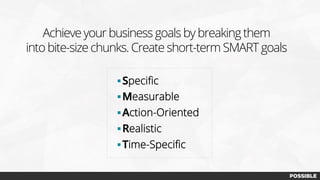
§ Specific
§ Measurable
§ Action-Oriented
§ Realistic
§ Time-Specific
Achieve your business goals by breaking them
into bite-size chunks. Create short-term SMART goals
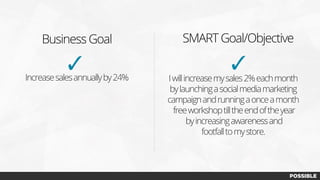
Iwillincreasemysales2%eachmonth
bylaunchingasocialmediamarketing
campaignandrunningaonceamonth
freeworkshoptilltheendoftheyear
byincreasingawarenessand
footfalltomystore.
Increasesalesannuallyby24%
✓
SMART Goal/ObjectiveBusiness Goal
✓
KNOW YOUR CUSTOMERS
In today’s age you have to know who your
customers are and their ‘buckets’ aka
customer segments.
This will help you know how to service, sell
and build a relationship with them. All things
digital marketing can help you with.
HOW?
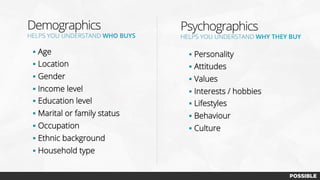
You look at your customers demographic
data and psychographic data, group them
by shared characteristics and put them in
‘buckets’.
Once you have your buckets you label
them. You have now created customer
segments.
Demographics
HELPS YOU UNDERSTAND WHO BUYS
Psychographics
HELPS YOU UNDERSTAND WHY THEY BUY
§  Age 
§  Location
§  Gender
§  Income level
§  Education level
§  Marital or family status
§  Occupation
§  Ethnic background
§  Household type
§  Personality
§  Attitudes
§  Values
§  Interests / hobbies
§  Lifestyles
§  Behaviour
§  Culture
UNDERSTAND THE CONSUMER
PURCHASE JOURNEY
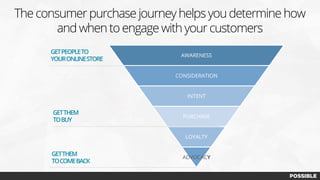
GETPEOPLETO
YOURONLINESTORE
GETTHEM
TOBUY
GETTHEM
TOCOMEBACK
AWARENESS
CONSIDERATION
INTENT
PURCHASE
LOYALTY
ADVOCACY
The consumer purchase journey helps you determine how
and when to engage with your customers
GET THEM TO YOUR ONLINE STORE
(AWARENESS)
WEB ADDRESSES
(also known as URLs)
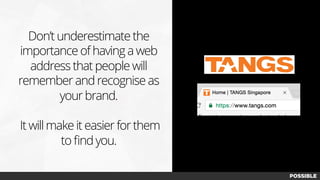
Don’t underestimate the
importance of having a web
address that people will
remember and recognise as
your brand.
It will make it easier for them
to find you.
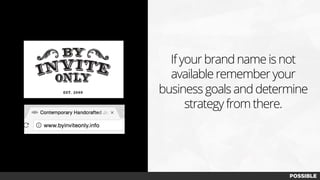
If your brand name is not
available remember your
business goals and determine
strategy from there.
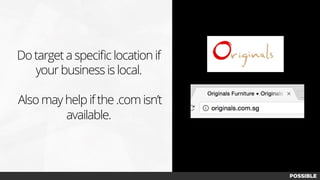
Do target a specific location if
your business is local.
Also may help if the .com isn’t
available.
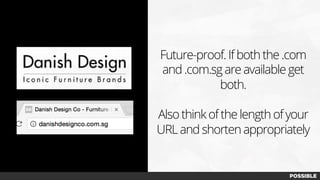
Future-proof. If both the .com
and .com.sg are available get
both.
Also think of the length of your
URL and shorten appropriately
WORK WITH INFLUENCERS
(also known as influencer marketing)
92%of people trust recommendations
from individuals (even if they don’t know
them) over brands.
51%of marketers believe they get better
customers from influencer marketing.
That’s because the relationship began with
trust in the influencer.
WHAT IS INFLUENCER MAREKTING?
“Successful influencer marketing converts
influencers into fans of your business'
products/services and encourages them to
help you get your message out to their
audience through their blogs, social media
accounts and email newsletters.”
General Assembly SG Influencer Marketing course description
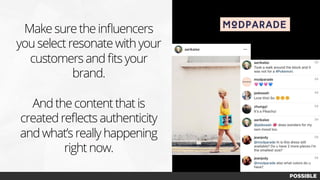
Make sure the influencers
you select resonate with your
customers and fits your
brand.
And the content that is
created reflects authenticity
and what’s really happening
right now.
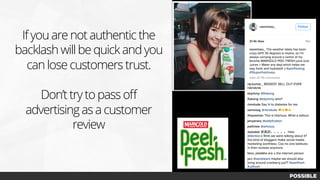
If you are not authentic the
backlash will be quick and you
can lose customers trust.
Don’t try to pass off
advertising as a customer
review
There are different types of Influencer Marketing
Campaign tactics you can use. Pick one, set your
objectives clearly and test how well it works.
§  Honest Review
§  Unboxing
§  Try-on Clothing
§  How to / Tutorial
§  First Impression
§  Giveaway / Contest
The best strategy for picking the
right influencer?
§  Context
§  Past Partnerships
§  Audience Responsiveness
§  Reach (who and where)
§  Building a long-term relationship
GET THEM TO BUY
(CONSIDERATION, INTENT &
PURCHASE)
AD RETARGETING CAMPAIGNS
(also known as Ad Remarketing on
Facebook)
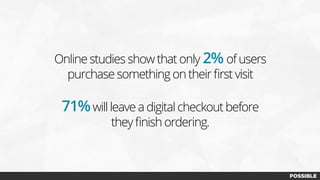
Online studies show that only 2% of users
purchase something on their first visit
71%will leave a digital checkout before
they finish ordering.
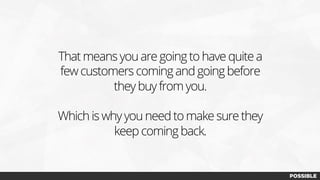
That means you are going to have quite a
few customers coming and going before
they buy from you.
Which is why you need to make sure they
keep coming back.
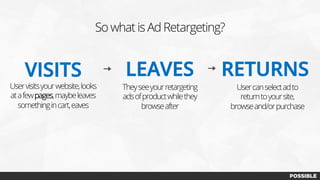
So what is Ad Retargeting?
Uservisitsyourwebsite,looks
atafewpages,maybeleaves
somethingincart,eaves
Theyseeyourretargeting
adsofproductwhilethey
browseafter
Usercanselectadto
returntoyoursite,
browseand/orpurchase
LEAVES RETURNSVISITS
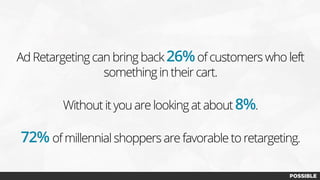
Ad Retargeting can bring back26%of customers who left
something in their cart.
Without it you are looking at about8%.
72% of millennial shoppers are favorable to retargeting.
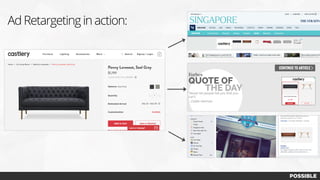
Ad Retargeting in action:
Some things to consider to get the most out of your
retargeting campaigns
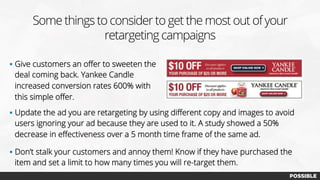
§  Give customers an offer to sweeten the
deal coming back. Yankee Candle
increased conversion rates 600% with
this simple offer.
§  Update the ad you are retargeting by using different copy and images to avoid
users ignoring your ad because they are used to it. A study showed a 50%
decrease in effectiveness over a 5 month time frame of the same ad.
§  Don’t stalk your customers and annoy them! Know if they have purchased the
item and set a limit to how many times you will re-target them.
GUEST CHECKOUT
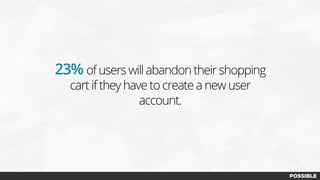
23% of users will abandon their shopping
cart if they have to create a new user
account.
Don’t make users have to create an account
to buy something from you.
Always give them a guest option.
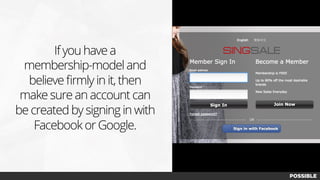
If you have a
membership-model and
believe firmly in it, then
make sure an account can
be created by signing in with
Facebook or Google.
GET THEM TO COME BACK
(LOYALTY & ADVOCACY)
USE YOUR DATA!
When you move into loyalty and advocacy
within your consumer journeyyou need to
use the same demographic and
psychographic data we talked about earlier
with the additional transactional and user
history to better service, personalise and build
relationships with your customers.
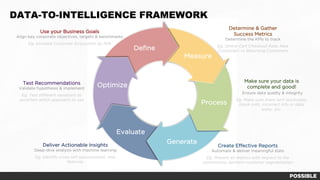
Define
Measure
Process
Generate
Evaluate
Optimize
Determine & Gather
Success Metrics
Determine the KPIs to track
Eg. Online Cart Checkout Rate, New
Customers vs Returning Customers
Make sure your data is
complete and good!
Ensure data quality & integrity
Eg. Make sure there isn’t duplicates,
blank cells, incorrect info or data
entry, etc.
Create Effective Reports
Automate & deliver meaningful stats
Eg. Present all metrics with respect to the
conversions, perform customer segmentation
Deliver Actionable Insights
Deep-dive analysis with machine learning
Eg. Identify cross-sell opportunities, new
features
Use your Business Goals
Align key corporate objectives, targets & benchmarks
Eg. Increase Customer Acquisition by 10%
Test Recommendations
Validate hypothesis & implement
Eg. Test different variations to
ascertain which approach to use
DATA-TO-INTELLIGENCE FRAMEWORK
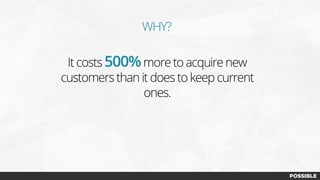
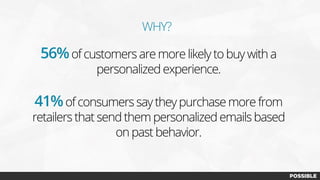
WHY?
It costs 500%more to acquire new
customers than it does to keep current
ones.
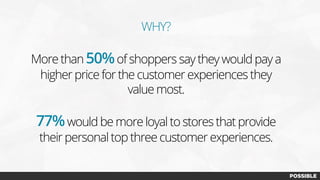
WHY?
More than 50%of shoppers say they would pay a
higher price for the customer experiences they
value most.
77%would be more loyal to stores that provide
their personal top three customer experiences.
WHY?
56%of customers are more likely to buy with a
personalized experience.
41%of consumers say they purchase more from
retailers that send them personalized emails based
on past behavior.
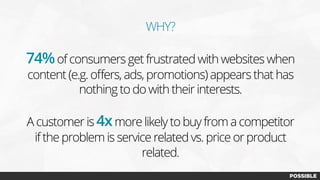
WHY?
74%of consumers get frustrated with websites when
content (e.g. offers, ads, promotions) appears that has
nothing to do with their interests.
A customer is 4xmore likely to buy from a competitor
if the problem is service related vs. price or product
related.
THANK YOU!
GERARD LIM
MANAGING DIRECTOR / SINGAPORE
GERARD.LIM@POSSIBLE.COM
MELISSA WILFLEY
EXPEIENCE DESIGN DIRECTOR / APAC
MELISSA.WILFLEY@POSSIBLE.COM
 

Digital marketing: Best practices for e-commerce

  • 1.
    DIGITAL MARKETING MUST-HAVES BESTPRACTICES FOR ECOMMERCE AUGUST 2016
  • 2.
  • 3.
    Today we're goingto focus on digital marketing best practices for three key areas: 1Get people to your e-store 2Get them to buy 3Get them to come back
  • 4.
    First and foremost… Youmust know your business goals and who your customersare
  • 5.
    WHY? Because whatever youlearn from me today won’t work unless you are clear on what your business needs, your customer needs and how you measure that success
  • 6.
  • 7.
    Business goals shouldultimately help you either SAVE MONEY MAKE MONEY BUILD BRAND LOYALTY
  • 8.
    80%of small businessowners don’t keep track of their business goals. 77%have yet to achieve their vision.
  • 9.
    Business goalsare likeroad maps, they help give you something to work towards and be accountable for in the next 3-5 years
  • 10.
    Business goals usuallyfall into four categories: Service Goals Social Goals Profit Goals Growth Goals CUSTOMER RETENTION, IMPROVING CUSTOMER SERVICE SATISFACTION INCREASING PROFITS BY A SPECIFIC AMOUNT OR PERCENTAGE EXPANDING TO NEW MARKETS OR REGIONS, HIRING MORE EMPLOYEES GIVING BACK TO THE COMMUNITY THROUGH VOLUNTEER ORGS, ETC
  • 11.
  • 12.
  • 13.
  • 14.
    In today’s ageyou have to know who your customers are and their ‘buckets’ aka customer segments. This will help you know how to service, sell and build a relationship with them. All things digital marketing can help you with.
  • 15.
    HOW? You look atyour customers demographic data and psychographic data, group them by shared characteristics and put them in ‘buckets’. Once you have your buckets you label them. You have now created customer segments.
  • 16.
    Demographics HELPS YOU UNDERSTANDWHO BUYS Psychographics HELPS YOU UNDERSTAND WHY THEY BUY §  Age  §  Location §  Gender §  Income level §  Education level §  Marital or family status §  Occupation §  Ethnic background §  Household type §  Personality §  Attitudes §  Values §  Interests / hobbies §  Lifestyles §  Behaviour §  Culture
  • 17.
  • 18.
  • 19.
    GET THEM TOYOUR ONLINE STORE (AWARENESS)
  • 20.
  • 21.
    Don’t underestimate the importanceof having a web address that people will remember and recognise as your brand. It will make it easier for them to find you.
  • 22.
    If your brandname is not available remember your business goals and determine strategy from there.
  • 23.
    Do target aspecific location if your business is local. Also may help if the .com isn’t available.
  • 24.
    Future-proof. If boththe .com and .com.sg are available get both. Also think of the length of your URL and shorten appropriately
  • 25.
    WORK WITH INFLUENCERS (alsoknown as influencer marketing)
  • 26.
    92%of people trustrecommendations from individuals (even if they don’t know them) over brands. 51%of marketers believe they get better customers from influencer marketing. That’s because the relationship began with trust in the influencer.
  • 27.
    WHAT IS INFLUENCERMAREKTING? “Successful influencer marketing converts influencers into fans of your business' products/services and encourages them to help you get your message out to their audience through their blogs, social media accounts and email newsletters.” General Assembly SG Influencer Marketing course description
  • 28.
    Make sure theinfluencers you select resonate with your customers and fits your brand. And the content that is created reflects authenticity and what’s really happening right now.
  • 29.
    If you arenot authentic the backlash will be quick and you can lose customers trust. Don’t try to pass off advertising as a customer review
  • 30.
    There are differenttypes of Influencer Marketing Campaign tactics you can use. Pick one, set your objectives clearly and test how well it works. §  Honest Review §  Unboxing §  Try-on Clothing §  How to / Tutorial §  First Impression §  Giveaway / Contest
  • 31.
    The best strategyfor picking the right influencer? §  Context §  Past Partnerships §  Audience Responsiveness §  Reach (who and where) §  Building a long-term relationship
  • 32.
    GET THEM TOBUY (CONSIDERATION, INTENT & PURCHASE)
  • 33.
    AD RETARGETING CAMPAIGNS (alsoknown as Ad Remarketing on Facebook)
  • 34.
    Online studies showthat only 2% of users purchase something on their first visit 71%will leave a digital checkout before they finish ordering.
  • 35.
    That means youare going to have quite a few customers coming and going before they buy from you. Which is why you need to make sure they keep coming back.
  • 36.
    So what isAd Retargeting? Uservisitsyourwebsite,looks atafewpages,maybeleaves somethingincart,eaves Theyseeyourretargeting adsofproductwhilethey browseafter Usercanselectadto returntoyoursite, browseand/orpurchase LEAVES RETURNSVISITS
  • 37.
    Ad Retargeting canbring back26%of customers who left something in their cart. Without it you are looking at about8%. 72% of millennial shoppers are favorable to retargeting.
  • 38.
  • 39.
    Some things toconsider to get the most out of your retargeting campaigns §  Give customers an offer to sweeten the deal coming back. Yankee Candle increased conversion rates 600% with this simple offer. §  Update the ad you are retargeting by using different copy and images to avoid users ignoring your ad because they are used to it. A study showed a 50% decrease in effectiveness over a 5 month time frame of the same ad. §  Don’t stalk your customers and annoy them! Know if they have purchased the item and set a limit to how many times you will re-target them.
  • 40.
  • 41.
    23% of userswill abandon their shopping cart if they have to create a new user account.
  • 42.
    Don’t make usershave to create an account to buy something from you. Always give them a guest option.
  • 43.
    If you havea membership-model and believe firmly in it, then make sure an account can be created by signing in with Facebook or Google.
  • 44.
    GET THEM TOCOME BACK (LOYALTY & ADVOCACY)
  • 45.
  • 46.
    When you moveinto loyalty and advocacy within your consumer journeyyou need to use the same demographic and psychographic data we talked about earlier with the additional transactional and user history to better service, personalise and build relationships with your customers.
  • 47.
    Define Measure Process Generate Evaluate Optimize Determine & Gather SuccessMetrics Determine the KPIs to track Eg. Online Cart Checkout Rate, New Customers vs Returning Customers Make sure your data is complete and good! Ensure data quality & integrity Eg. Make sure there isn’t duplicates, blank cells, incorrect info or data entry, etc. Create Effective Reports Automate & deliver meaningful stats Eg. Present all metrics with respect to the conversions, perform customer segmentation Deliver Actionable Insights Deep-dive analysis with machine learning Eg. Identify cross-sell opportunities, new features Use your Business Goals Align key corporate objectives, targets & benchmarks Eg. Increase Customer Acquisition by 10% Test Recommendations Validate hypothesis & implement Eg. Test different variations to ascertain which approach to use DATA-TO-INTELLIGENCE FRAMEWORK
  • 48.
    WHY? It costs 500%moreto acquire new customers than it does to keep current ones.
  • 49.
    WHY? More than 50%ofshoppers say they would pay a higher price for the customer experiences they value most. 77%would be more loyal to stores that provide their personal top three customer experiences.
  • 50.
    WHY? 56%of customers aremore likely to buy with a personalized experience. 41%of consumers say they purchase more from retailers that send them personalized emails based on past behavior.
  • 51.
    WHY? 74%of consumers getfrustrated with websites when content (e.g. offers, ads, promotions) appears that has nothing to do with their interests. A customer is 4xmore likely to buy from a competitor if the problem is service related vs. price or product related.
  • 52.
    THANK YOU! GERARD LIM MANAGINGDIRECTOR / SINGAPORE GERARD.LIM@POSSIBLE.COM MELISSA WILFLEY EXPEIENCE DESIGN DIRECTOR / APAC MELISSA.WILFLEY@POSSIBLE.COM