Digestive Secretions
Presentation
Presentation by Group roll no.61-70
Guided by Physiology Dept.
HOD……...........…..Dr. Fulse Sir
Asso. Prof…………Dr. Toshniwal sir
Asst. Prof….........Dr Marathe maam
Asst. Prof........…Dr Gaikwad sir
Edited by Swarnim Pandit
Digestive Secretions
Presentation
CO 1 & PO 1-2
Domain = Cognitive (Comprehension)
Level = Must Know & Knows how
learning Method = Lecture & Discussion
Assessment = Written & Viva Vaco
Outline
1
General Intro
2 Salivary Glands
3
Gastric Secretions
4
Pancreatic
Secretions
5
Intestinal
Secretions
6 Blie Secretions
Introduction to Digestive
Secretions
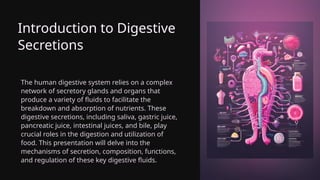
The human digestive system relies on a complex
network of secretory glands and organs that
produce a variety of fluids to facilitate the
breakdown and absorption of nutrients. These
digestive secretions, including saliva, gastric juice,
pancreatic juice, intestinal juices, and bile, play
crucial roles in the digestion and utilization of
food. This presentation will delve into the
mechanisms of secretion, composition, functions,
and regulation of these key digestive fluids.
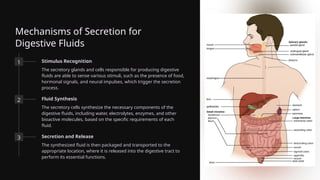
Mechanisms of Secretion for
Digestive Fluids
1 Stimulus Recognition
The secretory glands and cells responsible for producing digestive
fluids are able to sense various stimuli, such as the presence of food,
hormonal signals, and neural impulses, which trigger the secretion
process.
2 Fluid Synthesis
The secretory cells synthesize the necessary components of the
digestive fluids, including water, electrolytes, enzymes, and other
bioactive molecules, based on the specific requirements of each
fluid.
3 Secretion and Release
The synthesized fluid is then packaged and transported to the
appropriate location, where it is released into the digestive tract to
perform its essential functions.
Properties and
Composition of Saliva
Saliva is a vital bodily fluid that plays a crucial role in various
functions, from food digestion to maintaining oral health. This
section explores the key properties and composition of saliva,
highlighting its importance in our daily lives.
Saliva Volume and pH
1000 to 1500 ml
Saliva produced per day
Average flow rate: 1 ml/min
pH: 6.35 to 6.85
Slightly acidic, helps maintain oral balance
Specific Gravity
1.002 to 1.012
Tonicity
Saliva is hypotonic to plasma
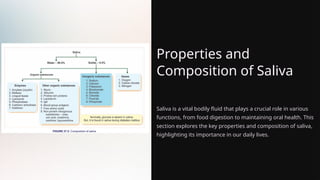
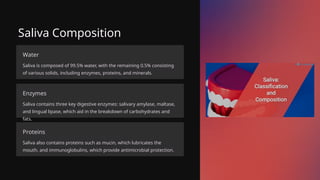
Saliva Composition
Water
Saliva is composed of 99.5% water, with the remaining 0.5% consisting
of various solids, including enzymes, proteins, and minerals.
Enzymes
Saliva contains three key digestive enzymes: salivary amylase, maltase,
and lingual lipase, which aid in the breakdown of carbohydrates and
fats.
Proteins
Saliva also contains proteins such as mucin, which lubricates the
mouth, and immunoglobulins, which provide antimicrobial protection.
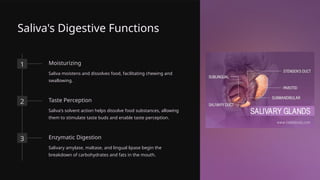
Saliva's Digestive Functions
1 Moisturizing
Saliva moistens and dissolves food, facilitating chewing and
swallowing.
2 Taste Perception
Saliva's solvent action helps dissolve food substances, allowing
them to stimulate taste buds and enable taste perception.
3 Enzymatic Digestion
Salivary amylase, maltase, and lingual lipase begin the
breakdown of carbohydrates and fats in the mouth.
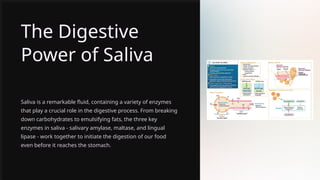
The Digestive
Power of Saliva
Saliva is a remarkable fluid, containing a variety of enzymes
that play a crucial role in the digestive process. From breaking
down carbohydrates to emulsifying fats, the three key
enzymes in saliva - salivary amylase, maltase, and lingual
lipase - work together to initiate the digestion of our food
even before it reaches the stomach.
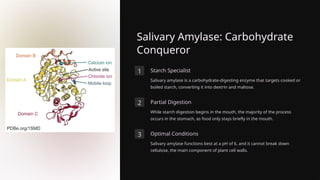
Salivary Amylase: Carbohydrate
Conqueror
1 Starch Specialist
Salivary amylase is a carbohydrate-digesting enzyme that targets cooked or
boiled starch, converting it into dextrin and maltose.
2 Partial Digestion
While starch digestion begins in the mouth, the majority of the process
occurs in the stomach, as food only stays briefly in the mouth.
3 Optimal Conditions
Salivary amylase functions best at a pH of 6, and it cannot break down
cellulose, the main component of plant cell walls.
Maltase and Lingual Lipase: Supporting
Roles
Maltase
Maltase is present in only trace amounts in human
saliva, but it plays a crucial role in converting
maltose into glucose, the body's primary energy
source.
Lingual Lipase
Lingual lipase is a lipid-digesting enzyme secreted
from the serous glands on the back of the tongue.
It helps break down pre-emulsified fats, such as
those found in milk, into fatty acids and
diacylglycerol.
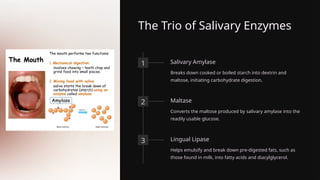
The Trio of Salivary Enzymes
1 Salivary Amylase
Breaks down cooked or boiled starch into dextrin and
maltose, initiating carbohydrate digestion.
2 Maltase
Converts the maltose produced by salivary amylase into the
readily usable glucose.
3 Lingual Lipase
Helps emulsify and break down pre-digested fats, such as
those found in milk, into fatty acids and diacylglycerol.
Saliva's Protective Functions
1 Cleansing
Saliva rinses the mouth, removing food debris, shed cells, and
foreign particles, preventing bacterial growth.
2 Antimicrobial Properties
Enzymes like lysozyme and proteins like lactoferrin and
immunoglobulin A in saliva have antimicrobial effects, protecting
the oral cavity.
3 Enamel Formation
Proline-rich proteins and lactoferrin in saliva stimulate the
formation of tooth enamel, strengthening and protecting the
teeth.
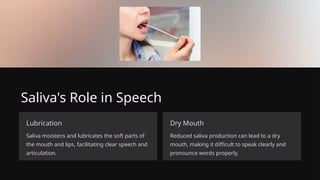
Saliva's Role in Speech
Lubrication
Saliva moistens and lubricates the soft parts of
the mouth and lips, facilitating clear speech and
articulation.
Dry Mouth
Reduced saliva production can lead to a dry
mouth, making it difficult to speak clearly and
pronounce words properly.
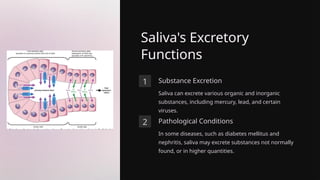
Saliva's Excretory
Functions
1 Substance Excretion
Saliva can excrete various organic and inorganic
substances, including mercury, lead, and certain
viruses.
2 Pathological Conditions
In some diseases, such as diabetes mellitus and
nephritis, saliva may excrete substances not normally
found, or in higher quantities.
Saliva and Temperature Regulation
Humans
In humans, sweat glands play the primary role in
temperature regulation, and saliva does not
contribute significantly to this function.
Other Animals
In some animals, such as dogs and cattle, the
excessive dripping of saliva during panting helps in
the loss of heat and regulation of body
temperature.
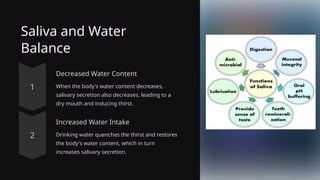
Saliva and Water
Balance
Decreased Water Content
When the body's water content decreases,
salivary secretion also decreases, leading to a
dry mouth and inducing thirst.
Increased Water Intake
Drinking water quenches the thirst and restores
the body's water content, which in turn
increases salivary secretion.
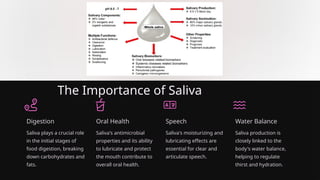
The Importance of Saliva
Digestion
Saliva plays a crucial role
in the initial stages of
food digestion, breaking
down carbohydrates and
fats.
Oral Health
Saliva's antimicrobial
properties and its ability
to lubricate and protect
the mouth contribute to
overall oral health.
Speech
Saliva's moisturizing and
lubricating effects are
essential for clear and
articulate speech.
Water Balance
Saliva production is
closely linked to the
body's water balance,
helping to regulate
thirst and hydration.
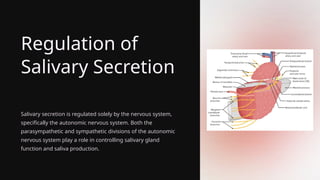
Regulation of
Salivary Secretion
Salivary secretion is regulated solely by the nervous system,
specifically the autonomic nervous system. Both the
parasympathetic and sympathetic divisions of the autonomic
nervous system play a role in controlling salivary gland
function and saliva production.
Nerve Supply to Salivary Glands
Parasympathetic Fibers
Parasympathetic preganglionic fibers to the
submandibular, sublingual, and parotid glands
arise from the superior and inferior salivatory
nuclei in the brainstem. These fibers travel through
various cranial nerves and ganglia before reaching
the salivary glands, where they stimulate secretion
of watery, low-protein saliva.
Sympathetic Fibers
Sympathetic preganglionic fibers to the salivary
glands originate from the first and second thoracic
segments of the spinal cord. They synapse in the
superior cervical ganglion, and the postganglionic
fibers then innervate the salivary glands.
Sympathetic stimulation causes secretion of thick,
protein-rich saliva.
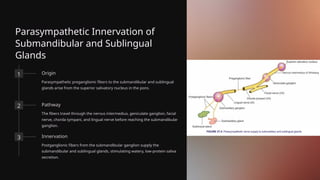
Parasympathetic Innervation of
Submandibular and Sublingual
Glands
1 Origin
Parasympathetic preganglionic fibers to the submandibular and sublingual
glands arise from the superior salivatory nucleus in the pons.
2 Pathway
The fibers travel through the nervus intermedius, geniculate ganglion, facial
nerve, chorda tympani, and lingual nerve before reaching the submandibular
ganglion.
3 Innervation
Postganglionic fibers from the submandibular ganglion supply the
submandibular and sublingual glands, stimulating watery, low-protein saliva
secretion.
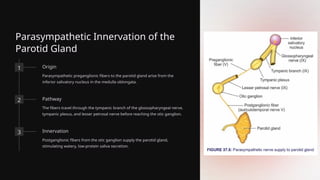
Parasympathetic Innervation of the
Parotid Gland
1 Origin
Parasympathetic preganglionic fibers to the parotid gland arise from the
inferior salivatory nucleus in the medulla oblongata.
2 Pathway
The fibers travel through the tympanic branch of the glossopharyngeal nerve,
tympanic plexus, and lesser petrosal nerve before reaching the otic ganglion.
3 Innervation
Postganglionic fibers from the otic ganglion supply the parotid gland,
stimulating watery, low-protein saliva secretion.
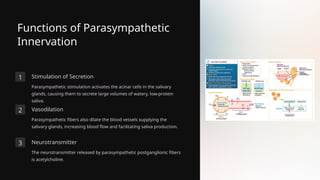
Functions of Parasympathetic
Innervation
1 Stimulation of Secretion
Parasympathetic stimulation activates the acinar cells in the salivary
glands, causing them to secrete large volumes of watery, low-protein
saliva.
2 Vasodilation
Parasympathetic fibers also dilate the blood vessels supplying the
salivary glands, increasing blood flow and facilitating saliva production.
3 Neurotransmitter
The neurotransmitter released by parasympathetic postganglionic fibers
is acetylcholine.
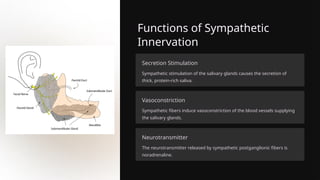
Functions of Sympathetic
Innervation
Secretion Stimulation
Sympathetic stimulation of the salivary glands causes the secretion of
thick, protein-rich saliva.
Vasoconstriction
Sympathetic fibers induce vasoconstriction of the blood vessels supplying
the salivary glands.
Neurotransmitter
The neurotransmitter released by sympathetic postganglionic fibers is
noradrenaline.
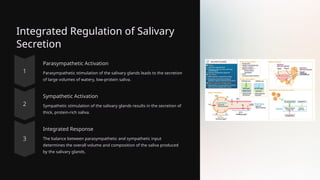
Integrated Regulation of Salivary
Secretion
Parasympathetic Activation
Parasympathetic stimulation of the salivary glands leads to the secretion
of large volumes of watery, low-protein saliva.
Sympathetic Activation
Sympathetic stimulation of the salivary glands results in the secretion of
thick, protein-rich saliva.
Integrated Response
The balance between parasympathetic and sympathetic input
determines the overall volume and composition of the saliva produced
by the salivary glands.
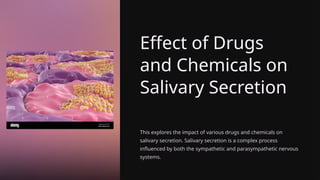
Effect of Drugs
and Chemicals on
Salivary Secretion
This explores the impact of various drugs and chemicals on
salivary secretion. Salivary secretion is a complex process
influenced by both the sympathetic and parasympathetic nervous
systems.
Substances Which Increase
Salivary Secretion
1 Sympathomimetic Drugs
Sympathomimetic drugs, such as adrenaline and ephedrine,
stimulate salivary secretion.
2 Parasympathomimetic Drugs
Parasympathomimetic drugs, including acetylcholine, pilocarpine,
muscarine, and physostigmine, also increase salivary secretion.
3 Histamine
Histamine, a chemical mediator, is known to enhance salivary secretion.
Substances Which Decrease Salivary
Secretion
Sympathetic Depressants
Sympathetic depressants, such
as ergotamine and dibenamine,
inhibit salivary secretion.
Parasympathetic
Depressants
Parasympathetic depressants,
including atropine and
scopolamine, also decrease
salivary secretion.
Anesthetics
Anesthetics, like chloroform
and ether, initially stimulate
salivary secretion. However,
deep anesthesia reduces
secretion due to central
inhibition.
Gastric Juice: Secretion
Composition Functions
and Regulation
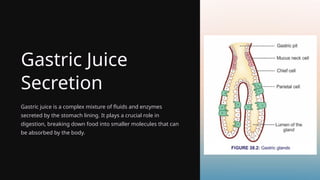
Gastric Juice
Secretion
Gastric juice is a complex mixture of fluids and enzymes
secreted by the stomach lining. It plays a crucial role in
digestion, breaking down food into smaller molecules that can
be absorbed by the body.
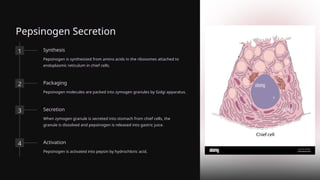
Pepsinogen Secretion
1 Synthesis
Pepsinogen is synthesized from amino acids in the ribosomes attached to
endoplasmic reticulum in chief cells.
2 Packaging
Pepsinogen molecules are packed into zymogen granules by Golgi apparatus.
3 Secretion
When zymogen granule is secreted into stomach from chief cells, the
granule is dissolved and pepsinogen is released into gastric juice.
4 Activation
Pepsinogen is activated into pepsin by hydrochloric acid.
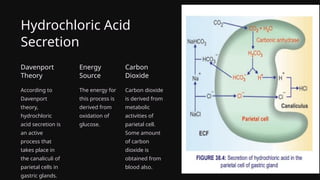
Hydrochloric Acid
Secretion
Davenport
Theory
According to
Davenport
theory,
hydrochloric
acid secretion is
an active
process that
takes place in
the canaliculi of
parietal cells in
gastric glands.
Energy
Source
The energy for
this process is
derived from
oxidation of
glucose.
Carbon
Dioxide
Carbon dioxide
is derived from
metabolic
activities of
parietal cell.
Some amount
of carbon
dioxide is
obtained from
blood also.
Hydrochloric Acid Formation
Carbon Dioxide
Carbon dioxide combines with water to form carbonic acid in the presence of carbonic anhydrase.
Carbonic Acid
Carbonic acid splits into hydrogen ion and bicarbonate ion.
Hydrogen Ion
The hydrogen ion is actively pumped into the canaliculus of parietal cell.
Chloride Ion
The chloride ion is also pumped into canaliculus actively.
Hydrochloric Acid
The hydrogen ion combines with chloride ion to form hydrochloric acid.
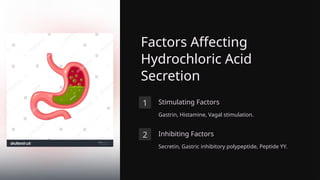
Factors Affecting
Hydrochloric Acid
Secretion
1 Stimulating Factors
Gastrin, Histamine, Vagal stimulation.
2 Inhibiting Factors
Secretin, Gastric inhibitory polypeptide, Peptide YY.
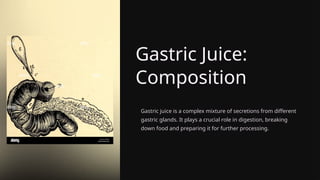
Gastric Juice:
Composition
Gastric juice is a complex mixture of secretions from different
gastric glands. It plays a crucial role in digestion, breaking
down food and preparing it for further processing.
Composition of Gastric Juice
Water Content
Gastric juice is primarily
composed of water, making
up 99.5% of its total volume.
Organic Compounds
The remaining 0.5% consists
of various organic
substances, including
digestive enzymes and other
secretions.
Inorganic Compounds
Inorganic substances, such
as hydrochloric acid and
electrolytes, also contribute
to the composition of gastric
juice.
Properties of Gastric Juice
Volume
Gastric juice volume ranges
from 1200 mL to 1500 mL per
day.
Reaction
Gastric juice is highly acidic,
with a pH of 0.9 to 1.2. This
acidity is due to the presence of
hydrochloric acid.
Specific Gravity
The specific gravity of gastric
juice is between 1.002 and
1.004.
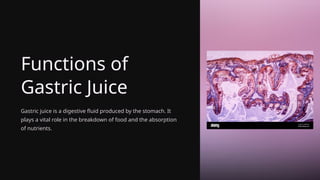
Functions of
Gastric Juice
Gastric juice is a digestive fluid produced by the stomach. It
plays a vital role in the breakdown of food and the absorption
of nutrients.
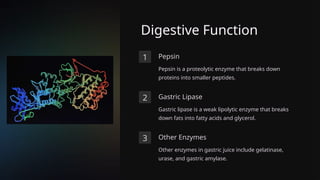
Digestive Function
1 Pepsin
Pepsin is a proteolytic enzyme that breaks down
proteins into smaller peptides.
2 Gastric Lipase
Gastric lipase is a weak lipolytic enzyme that breaks
down fats into fatty acids and glycerol.
3 Other Enzymes
Other enzymes in gastric juice include gelatinase,
urase, and gastric amylase.
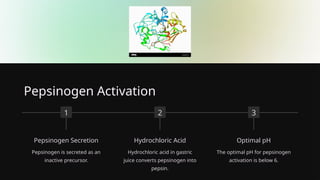
Pepsinogen Activation
1
Pepsinogen Secretion
Pepsinogen is secreted as an
inactive precursor.
2
Hydrochloric Acid
Hydrochloric acid in gastric
juice converts pepsinogen into
pepsin.
3
Optimal pH
The optimal pH for pepsinogen
activation is below 6.
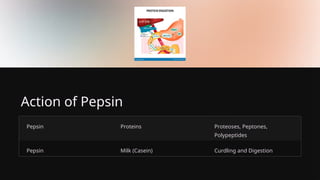
Action of Pepsin
Pepsin Proteins Proteoses, Peptones,
Polypeptides
Pepsin Milk (Casein) Curdling and Digestion
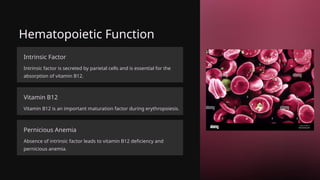
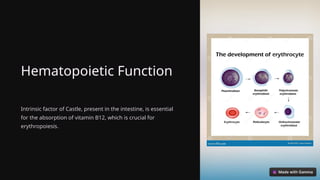
Hematopoietic Function
Intrinsic Factor
Intrinsic factor is secreted by parietal cells and is essential for the
absorption of vitamin B12.
Vitamin B12
Vitamin B12 is an important maturation factor during erythropoiesis.
Pernicious Anemia
Absence of intrinsic factor leads to vitamin B12 deficiency and
pernicious anemia.
Protective Function
Mucus
Mucus is a mucoprotein
secreted by mucus neck cells
and surface mucus cells.
Protection
Mucus protects the gastric wall
from irritation, mechanical
injury, and the digestive action
of pepsin.
Alkaline Nature
Mucus protects the gastric
mucosa from hydrochloric acid
due to its alkaline nature.
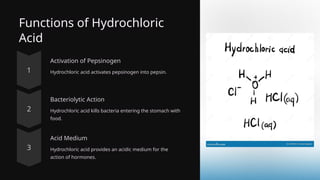
Functions of Hydrochloric
Acid
Activation of Pepsinogen
Hydrochloric acid activates pepsinogen into pepsin.
Bacteriolytic Action
Hydrochloric acid kills bacteria entering the stomach with
food.
Acid Medium
Hydrochloric acid provides an acidic medium for the
action of hormones.
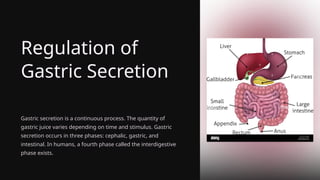
Regulation of
Gastric Secretion
Gastric secretion is a continuous process. The quantity of
gastric juice varies depending on time and stimulus. Gastric
secretion occurs in three phases: cephalic, gastric, and
intestinal. In humans, a fourth phase called the interdigestive
phase exists.
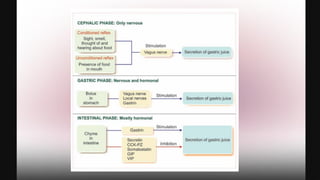
Phases of Gastric Secretion
1 Cephalic Phase
Secretion of gastric juice by stimuli arising from the head region is called the cephalic phase. This
phase is regulated by the nervous mechanism.
2 Gastric Phase
Secretion of gastric juice when food enters the stomach is called the gastric phase. This phase is
regulated by both nervous and hormonal control.
3 Intestinal Phase
The intestinal phase is the secretion of gastric juice when chyme enters the intestine. This phase is
regulated by nervous and hormonal control.
4 Interdigestive Phase
Secretion of a small amount of gastric juice in between meals is called the interdigestive phase. This
phase is mainly due to hormones like gastrin.
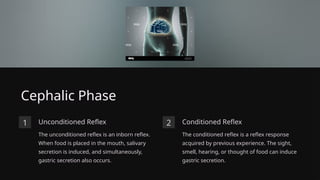
Cephalic Phase
1 Unconditioned Reflex
The unconditioned reflex is an inborn reflex.
When food is placed in the mouth, salivary
secretion is induced, and simultaneously,
gastric secretion also occurs.
2 Conditioned Reflex
The conditioned reflex is a reflex response
acquired by previous experience. The sight,
smell, hearing, or thought of food can induce
gastric secretion.
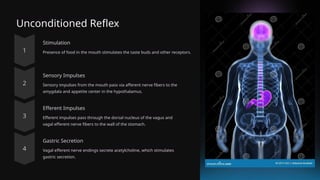
Unconditioned Reflex
Stimulation
Presence of food in the mouth stimulates the taste buds and other receptors.
Sensory Impulses
Sensory impulses from the mouth pass via afferent nerve fibers to the
amygdala and appetite center in the hypothalamus.
Efferent Impulses
Efferent impulses pass through the dorsal nucleus of the vagus and
vagal efferent nerve fibers to the wall of the stomach.
Gastric Secretion
Vagal efferent nerve endings secrete acetylcholine, which stimulates
gastric secretion.
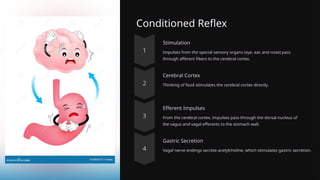
Conditioned Reflex
Stimulation
Impulses from the special sensory organs (eye, ear, and nose) pass
through afferent fibers to the cerebral cortex.
Cerebral Cortex
Thinking of food stimulates the cerebral cortex directly.
Efferent Impulses
From the cerebral cortex, impulses pass through the dorsal nucleus of
the vagus and vagal efferents to the stomach wall.
Gastric Secretion
Vagal nerve endings secrete acetylcholine, which stimulates gastric secretion.
Gastric Phase
Nervous Mechanism
The nervous mechanism involves the local
myenteric reflex and the vagovagal reflex.
Hormonal Mechanism
The hormonal mechanism involves gastrin, a
gastrointestinal hormone secreted by the G cells in
the pyloric glands of the stomach.
Intestinal Phase
Initial Stage
Chyme that enters the intestine stimulates the
duodenal mucosa to release gastrin, which
increases gastric secretion.
Later Stage
After the initial increase, there is a decrease or
complete stoppage of gastric secretion. Gastric
secretion is inhibited by the enterogastric reflex
and gastrointestinal hormones.
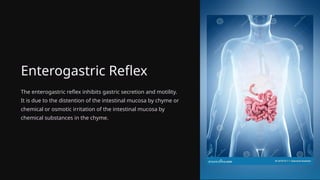
Enterogastric Reflex
The enterogastric reflex inhibits gastric secretion and motility.
It is due to the distention of the intestinal mucosa by chyme or
chemical or osmotic irritation of the intestinal mucosa by
chemical substances in the chyme.
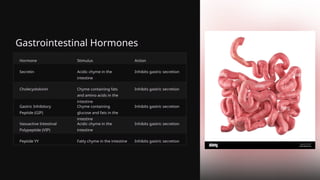
Gastrointestinal Hormones
Hormone Stimulus Action
Secretin Acidic chyme in the
intestine
Inhibits gastric secretion
Cholecystokinin Chyme containing fats
and amino acids in the
intestine
Inhibits gastric secretion
Gastric Inhibitory
Peptide (GIP)
Chyme containing
glucose and fats in the
intestine
Inhibits gastric secretion
Vasoactive Intestinal
Polypeptide (VIP)
Acidic chyme in the
intestine
Inhibits gastric secretion
Peptide YY Fatty chyme in the intestine Inhibits gastric secretion
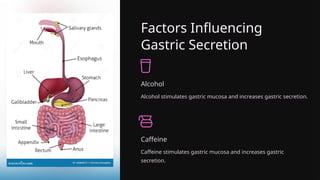
Factors Influencing
Gastric Secretion
Alcohol
Alcohol stimulates gastric mucosa and increases gastric secretion.
Caffeine
Caffeine stimulates gastric mucosa and increases gastric
secretion.
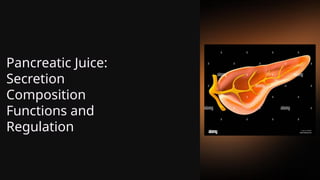
Pancreatic Juice:
Secretion
Composition
Functions and
Regulation
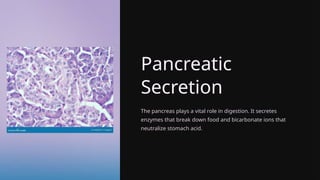
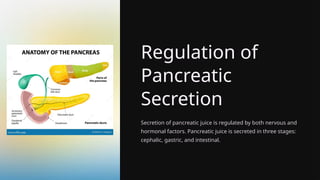
Pancreatic
Secretion
The pancreas plays a vital role in digestion. It secretes
enzymes that break down food and bicarbonate ions that
neutralize stomach acid.
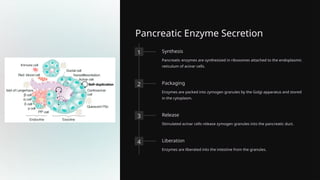
Pancreatic Enzyme Secretion
1 Synthesis
Pancreatic enzymes are synthesized in ribosomes attached to the endoplasmic
reticulum of acinar cells.
2 Packaging
Enzymes are packed into zymogen granules by the Golgi apparatus and stored
in the cytoplasm.
3 Release
Stimulated acinar cells release zymogen granules into the pancreatic duct.
4 Liberation
Enzymes are liberated into the intestine from the granules.
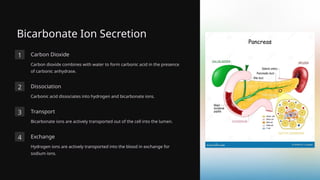
Bicarbonate Ion Secretion
1 Carbon Dioxide
Carbon dioxide combines with water to form carbonic acid in the presence
of carbonic anhydrase.
2 Dissociation
Carbonic acid dissociates into hydrogen and bicarbonate ions.
3 Transport
Bicarbonate ions are actively transported out of the cell into the lumen.
4 Exchange
Hydrogen ions are actively transported into the blood in exchange for
sodium ions.
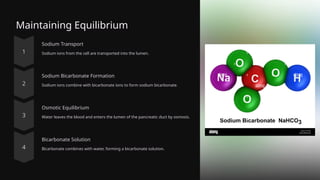
Maintaining Equilibrium
Sodium Transport
Sodium ions from the cell are transported into the lumen.
Sodium Bicarbonate Formation
Sodium ions combine with bicarbonate ions to form sodium bicarbonate.
Osmotic Equilibrium
Water leaves the blood and enters the lumen of the pancreatic duct by osmosis.
Bicarbonate Solution
Bicarbonate combines with water, forming a bicarbonate solution.
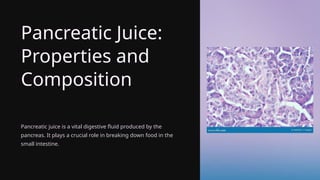
Pancreatic Juice:
Properties and
Composition
Pancreatic juice is a vital digestive fluid produced by the
pancreas. It plays a crucial role in breaking down food in the
small intestine.
Properties of Pancreatic
Juice
Volume 500 to 800 mL/day
Reaction Highly alkaline, pH 8 to 8.3
Specific Gravity 1.010 to 1.018
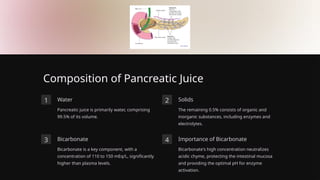
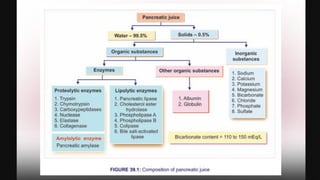
Composition of Pancreatic Juice
1 Water
Pancreatic juice is primarily water, comprising
99.5% of its volume.
2 Solids
The remaining 0.5% consists of organic and
inorganic substances, including enzymes and
electrolytes.
3 Bicarbonate
Bicarbonate is a key component, with a
concentration of 110 to 150 mEq/L, significantly
higher than plasma levels.
4 Importance of Bicarbonate
Bicarbonate's high concentration neutralizes
acidic chyme, protecting the intestinal mucosa
and providing the optimal pH for enzyme
activation.
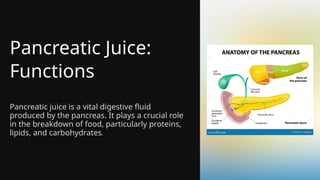
Pancreatic Juice:
Functions
Pancreatic juice is a vital digestive fluid
produced by the pancreas. It plays a crucial role
in the breakdown of food, particularly proteins,
lipids, and carbohydrates.
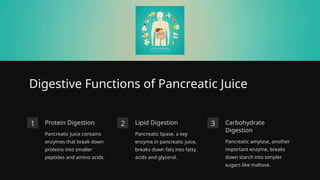
Digestive Functions of Pancreatic Juice
1 Protein Digestion
Pancreatic juice contains
enzymes that break down
proteins into smaller
peptides and amino acids.
2 Lipid Digestion
Pancreatic lipase, a key
enzyme in pancreatic juice,
breaks down fats into fatty
acids and glycerol.
3 Carbohydrate
Digestion
Pancreatic amylase, another
important enzyme, breaks
down starch into simpler
sugars like maltose.
Protein Digestion: Trypsin
Activation
Trypsin is secreted as inactive
trypsinogen, which is activated
by enterokinase in the small
intestine.
Functions
Trypsin breaks down proteins
into smaller peptides and
amino acids, curdles milk, and
activates other pancreatic
enzymes.
Inhibition
Trypsin inhibitor prevents
premature activation of trypsin
in the pancreas, protecting it
from damage.
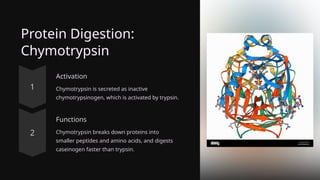
Protein Digestion:
Chymotrypsin
Activation
Chymotrypsin is secreted as inactive
chymotrypsinogen, which is activated by trypsin.
Functions
Chymotrypsin breaks down proteins into
smaller peptides and amino acids, and digests
caseinogen faster than trypsin.
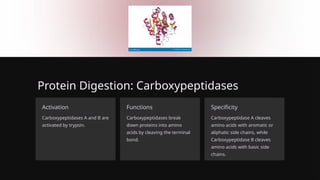
Protein Digestion: Carboxypeptidases
Activation
Carboxypeptidases A and B are
activated by trypsin.
Functions
Carboxypeptidases break
down proteins into amino
acids by cleaving the terminal
bond.
Specificity
Carboxypeptidase A cleaves
amino acids with aromatic or
aliphatic side chains, while
Carboxypeptidase B cleaves
amino acids with basic side
chains.
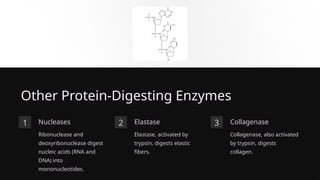
Other Protein-Digesting Enzymes
1 Nucleases
Ribonuclease and
deoxyribonuclease digest
nucleic acids (RNA and
DNA) into
mononucleotides.
2 Elastase
Elastase, activated by
trypsin, digests elastic
fibers.
3 Collagenase
Collagenase, also activated
by trypsin, digests
collagen.
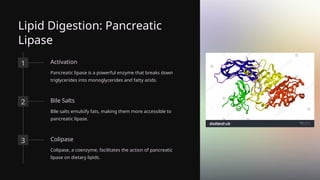
Lipid Digestion: Pancreatic
Lipase
1 Activation
Pancreatic lipase is a powerful enzyme that breaks down
triglycerides into monoglycerides and fatty acids.
2 Bile Salts
Bile salts emulsify fats, making them more accessible to
pancreatic lipase.
3 Colipase
Colipase, a coenzyme, facilitates the action of pancreatic
lipase on dietary lipids.
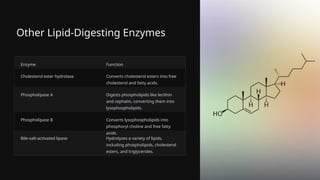
Other Lipid-Digesting Enzymes
Enzyme Function
Cholesterol ester hydrolase Converts cholesterol esters into free
cholesterol and fatty acids.
Phospholipase A Digests phospholipids like lecithin
and cephalin, converting them into
lysophospholipids.
Phospholipase B Converts lysophospholipids into
phosphoryl choline and free fatty
acids.
Bile-salt-activated lipase Hydrolyzes a variety of lipids,
including phospholipids, cholesterol
esters, and triglycerides.
Digestion of Carbohydrates
Pancreatic amylase is the key enzyme in pancreatic juice
that breaks down starch. Similar to salivary amylase, it
converts starch into dextrin and maltose, facilitating the
digestion of carbohydrates
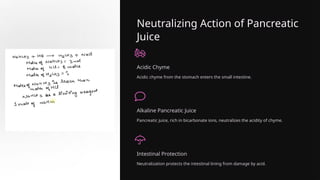
Neutralizing Action of Pancreatic
Juice
Acidic Chyme
Acidic chyme from the stomach enters the small intestine.
Alkaline Pancreatic Juice
Pancreatic juice, rich in bicarbonate ions, neutralizes the acidity of chyme.
Intestinal Protection
Neutralization protects the intestinal lining from damage by acid.
Regulation of
Pancreatic
Secretion
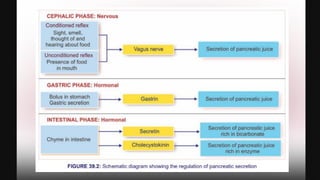
Secretion of pancreatic juice is regulated by both nervous and
hormonal factors. Pancreatic juice is secreted in three stages:
cephalic, gastric, and intestinal.
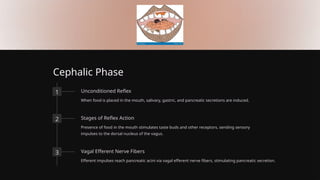
Cephalic Phase
1 Unconditioned Reflex
When food is placed in the mouth, salivary, gastric, and pancreatic secretions are induced.
2 Stages of Reflex Action
Presence of food in the mouth stimulates taste buds and other receptors, sending sensory
impulses to the dorsal nucleus of the vagus.
3 Vagal Efferent Nerve Fibers
Efferent impulses reach pancreatic acini via vagal efferent nerve fibers, stimulating pancreatic secretion.
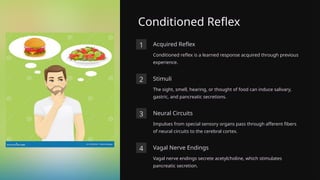
Conditioned Reflex
1 Acquired Reflex
Conditioned reflex is a learned response acquired through previous
experience.
2 Stimuli
The sight, smell, hearing, or thought of food can induce salivary,
gastric, and pancreatic secretions.
3 Neural Circuits
Impulses from special sensory organs pass through afferent fibers
of neural circuits to the cerebral cortex.
4 Vagal Nerve Endings
Vagal nerve endings secrete acetylcholine, which stimulates
pancreatic secretion.
Gastric Phase
Hormonal Control
Secretion of pancreatic juice
when food enters the stomach
is known as the gastric phase.
Gastrin
When food enters the stomach,
gastrin is secreted from the
stomach.
Pancreatic Stimulation
Gastrin is transported to the
pancreas through blood,
stimulating pancreatic
secretion.
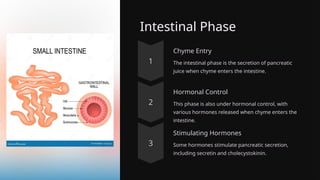
Intestinal Phase
Chyme Entry
The intestinal phase is the secretion of pancreatic
juice when chyme enters the intestine.
Hormonal Control
This phase is also under hormonal control, with
various hormones released when chyme enters the
intestine.
Stimulating Hormones
Some hormones stimulate pancreatic secretion,
including secretin and cholecystokinin.
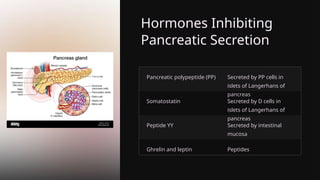
Hormones Inhibiting
Pancreatic Secretion
Pancreatic polypeptide (PP) Secreted by PP cells in
islets of Langerhans of
pancreas
Somatostatin Secreted by D cells in
islets of Langerhans of
pancreas
Peptide YY Secreted by intestinal
mucosa
Ghrelin and leptin Peptides
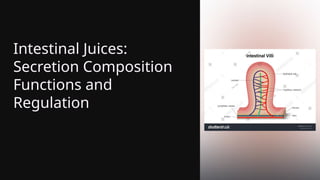
Intestinal Juices:
Secretion Composition
Functions and
Regulation
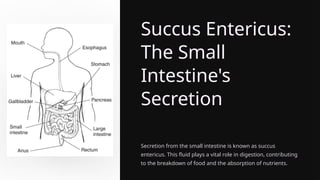
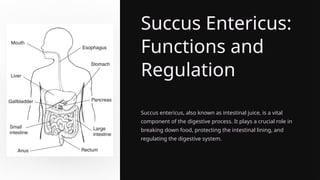
Succus Entericus:
The Small
Intestine's
Secretion
Secretion from the small intestine is known as succus
entericus. This fluid plays a vital role in digestion, contributing
to the breakdown of food and the absorption of nutrients.
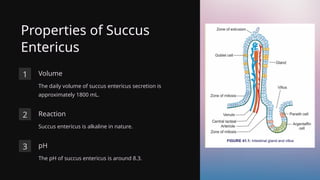
Properties of Succus
Entericus
1 Volume
The daily volume of succus entericus secretion is
approximately 1800 mL.
2 Reaction
Succus entericus is alkaline in nature.
3 pH
The pH of succus entericus is around 8.3.
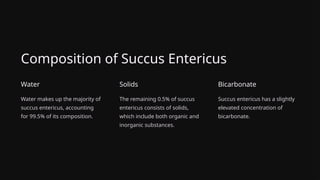
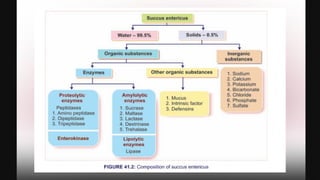
Composition of Succus Entericus
Water
Water makes up the majority of
succus entericus, accounting
for 99.5% of its composition.
Solids
The remaining 0.5% of succus
entericus consists of solids,
which include both organic and
inorganic substances.
Bicarbonate
Succus entericus has a slightly
elevated concentration of
bicarbonate.
Succus Entericus:
Functions and
Regulation
Succus entericus, also known as intestinal juice, is a vital
component of the digestive process. It plays a crucial role in
breaking down food, protecting the intestinal lining, and
regulating the digestive system.
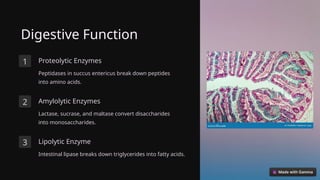
Digestive Function
1 Proteolytic Enzymes
Peptidases in succus entericus break down peptides
into amino acids.
2 Amylolytic Enzymes
Lactase, sucrase, and maltase convert disaccharides
into monosaccharides.
3 Lipolytic Enzyme
Intestinal lipase breaks down triglycerides into fatty acids.
Protective Function
Mucus
Mucus protects the intestinal wall from acidic
chyme, preventing ulcers.
Defensins
Defensins, antimicrobial peptides, kill
phagocytosed bacteria.
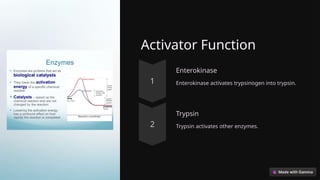
Activator Function
Enterokinase
Enterokinase activates trypsinogen into trypsin.
Trypsin
Trypsin activates other enzymes.
Hematopoietic Function
Intrinsic factor of Castle, present in the intestine, is essential
for the absorption of vitamin B12, which is crucial for
erythropoiesis.
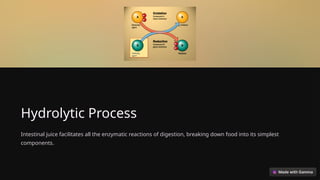
Hydrolytic Process
Intestinal juice facilitates all the enzymatic reactions of digestion, breaking down food into its simplest
components.
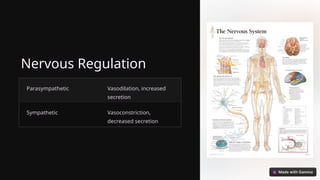
Nervous Regulation
Parasympathetic Vasodilation, increased
secretion
Sympathetic Vasoconstriction,
decreased secretion
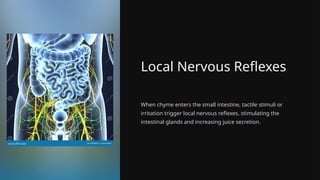
Local Nervous Reflexes
When chyme enters the small intestine, tactile stimuli or
irritation trigger local nervous reflexes, stimulating the
intestinal glands and increasing juice secretion.
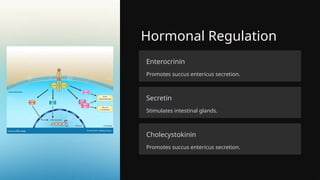
Hormonal Regulation
Enterocrinin
Promotes succus entericus secretion.
Secretin
Stimulates intestinal glands.
Cholecystokinin
Promotes succus entericus secretion.
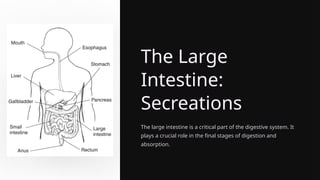
The Large
Intestine:
Secreations
The large intestine is a critical part of the digestive system. It
plays a crucial role in the final stages of digestion and
absorption.
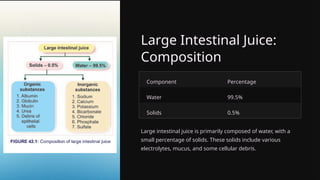
Large Intestinal Juice:
Composition
Component Percentage
Water 99.5%
Solids 0.5%
Large intestinal juice is primarily composed of water, with a
small percentage of solids. These solids include various
electrolytes, mucus, and some cellular debris.
Digestive Enzymes in Large Intestinal Juice
Absence of Digestive
Enzymes
Large intestinal juice does not
contain any digestive enzymes.
Role of Gut Microbiota
The digestion of remaining
food particles and the
production of short-chain fatty
acids are primarily handled by
the diverse microbial
community residing in the
large intestine.
Nutrient Absorption
The large intestine primarily
absorbs water, electrolytes,
and some vitamins produced
by gut bacteria.
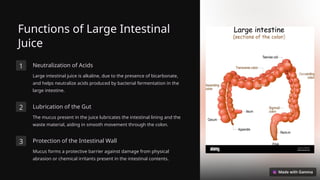
Functions of Large Intestinal
Juice
1 Neutralization of Acids
Large intestinal juice is alkaline, due to the presence of bicarbonate,
and helps neutralize acids produced by bacterial fermentation in the
large intestine.
2 Lubrication of the Gut
The mucus present in the juice lubricates the intestinal lining and the
waste material, aiding in smooth movement through the colon.
3 Protection of the Intestinal Wall
Mucus forms a protective barrier against damage from physical
abrasion or chemical irritants present in the intestinal contents.
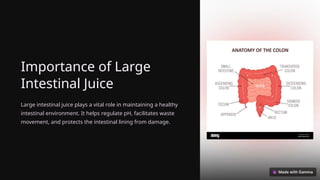
Importance of Large
Intestinal Juice
Large intestinal juice plays a vital role in maintaining a healthy
intestinal environment. It helps regulate pH, facilitates waste
movement, and protects the intestinal lining from damage.
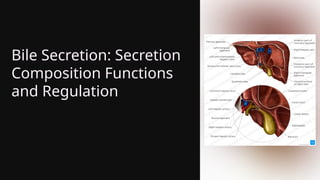
Bile Secretion: Secretion
Composition Functions
and Regulation
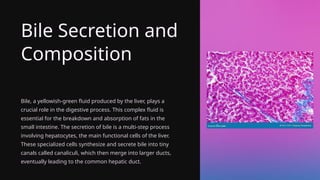
Bile Secretion and
Composition
Bile, a yellowish-green fluid produced by the liver, plays a
crucial role in the digestive process. This complex fluid is
essential for the breakdown and absorption of fats in the
small intestine. The secretion of bile is a multi-step process
involving hepatocytes, the main functional cells of the liver.
These specialized cells synthesize and secrete bile into tiny
canals called canaliculi, which then merge into larger ducts,
eventually leading to the common hepatic duct.
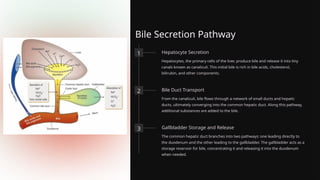
Bile Secretion Pathway
1 Hepatocyte Secretion
Hepatocytes, the primary cells of the liver, produce bile and release it into tiny
canals known as canaliculi. This initial bile is rich in bile acids, cholesterol,
bilirubin, and other components.
2 Bile Duct Transport
From the canaliculi, bile flows through a network of small ducts and hepatic
ducts, ultimately converging into the common hepatic duct. Along this pathway,
additional substances are added to the bile.
3 Gallbladder Storage and Release
The common hepatic duct branches into two pathways: one leading directly to
the duodenum and the other leading to the gallbladder. The gallbladder acts as a
storage reservoir for bile, concentrating it and releasing it into the duodenum
when needed.
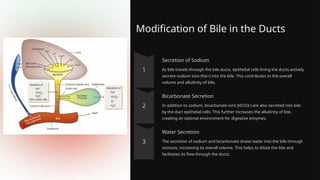
Modification of Bile in the Ducts
Secretion of Sodium
As bile travels through the bile ducts, epithelial cells lining the ducts actively
secrete sodium ions (Na+) into the bile. This contributes to the overall
volume and alkalinity of bile.
Bicarbonate Secretion
In addition to sodium, bicarbonate ions (HCO3-) are also secreted into bile
by the duct epithelial cells. This further increases the alkalinity of bile,
creating an optimal environment for digestive enzymes.
Water Secretion
The secretion of sodium and bicarbonate draws water into the bile through
osmosis, increasing its overall volume. This helps to dilute the bile and
facilitates its flow through the ducts.
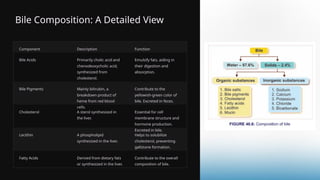
Bile Composition: A Detailed View
Component Description Function
Bile Acids Primarily cholic acid and
chenodeoxycholic acid,
synthesized from
cholesterol.
Emulsify fats, aiding in
their digestion and
absorption.
Bile Pigments Mainly bilirubin, a
breakdown product of
heme from red blood
cells.
Contribute to the
yellowish-green color of
bile. Excreted in feces.
Cholesterol A sterol synthesized in
the liver.
Essential for cell
membrane structure and
hormone production.
Excreted in bile.
Lecithin A phospholipid
synthesized in the liver.
Helps to solubilize
cholesterol, preventing
gallstone formation.
Fatty Acids Derived from dietary fats
or synthesized in the liver.
Contribute to the overall
composition of bile.
Properties of Bile
1 Volume
The average daily volume of bile produced is estimated to be between
800 and 1200 milliliters.
2 Reaction
Bile is alkaline, meaning it has a pH greater than 7. This alkalinity is
essential for the optimal function of digestive enzymes.
3 pH
The pH of bile typically ranges from 8 to 8.6, contributing to its alkaline
nature.
4 Specific Gravity
The specific gravity of bile, a measure of its density, is typically between
1.010 and 1.011.
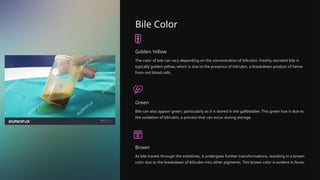
Bile Color
Golden Yellow
The color of bile can vary depending on the concentration of bilirubin. Freshly secreted bile is
typically golden yellow, which is due to the presence of bilirubin, a breakdown product of heme
from red blood cells.
Green
Bile can also appear green, particularly as it is stored in the gallbladder. This green hue is due to
the oxidation of bilirubin, a process that can occur during storage.
Brown
As bile travels through the intestines, it undergoes further transformations, resulting in a brown
color due to the breakdown of bilirubin into other pigments. This brown color is evident in feces.
Importance of Bile in Digestion
Emulsification of Fats
Bile acids, the primary
components of bile, play a
crucial role in the digestion and
absorption of fats. They act as
emulsifiers, breaking down
large fat globules into smaller
droplets, increasing their
surface area for interaction with
digestive enzymes.
Fat Absorption
Once fats are emulsified, they
are more accessible to
pancreatic lipase, an enzyme
that breaks down fats into
smaller molecules called fatty
acids and glycerol. These
smaller molecules are then
absorbed through the intestinal
wall.
Nutrient Transport
Bile also aids in the absorption
of other fat-soluble nutrients,
such as vitamins A, D, E, and K,
ensuring their proper uptake by
the body.
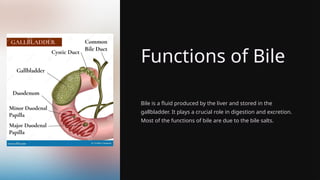
Functions of Bile
Bile is a fluid produced by the liver and stored in the
gallbladder. It plays a crucial role in digestion and excretion.
Most of the functions of bile are due to the bile salts.
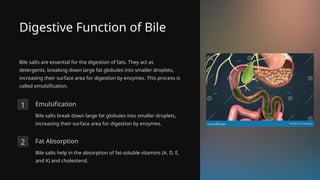
Digestive Function of Bile
Bile salts are essential for the digestion of fats. They act as
detergents, breaking down large fat globules into smaller droplets,
increasing their surface area for digestion by enzymes. This process is
called emulsification.
1 Emulsification
Bile salts break down large fat globules into smaller droplets,
increasing their surface area for digestion by enzymes.
2 Fat Absorption
Bile salts help in the absorption of fat-soluble vitamins (A, D, E,
and K) and cholesterol.
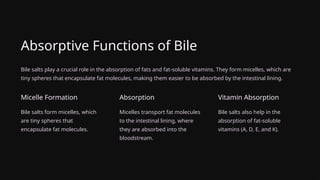
Absorptive Functions of Bile
Bile salts play a crucial role in the absorption of fats and fat-soluble vitamins. They form micelles, which are
tiny spheres that encapsulate fat molecules, making them easier to be absorbed by the intestinal lining.
Micelle Formation
Bile salts form micelles, which
are tiny spheres that
encapsulate fat molecules.
Absorption
Micelles transport fat molecules
to the intestinal lining, where
they are absorbed into the
bloodstream.
Vitamin Absorption
Bile salts also help in the
absorption of fat-soluble
vitamins (A, D, E, and K).
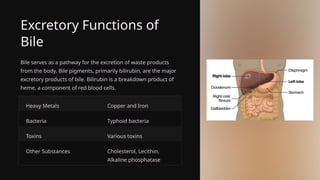
Excretory Functions of
Bile
Bile serves as a pathway for the excretion of waste products
from the body. Bile pigments, primarily bilirubin, are the major
excretory products of bile. Bilirubin is a breakdown product of
heme, a component of red blood cells.
Heavy Metals Copper and Iron
Bacteria Typhoid bacteria
Toxins Various toxins
Other Substances Cholesterol, Lecithin,
Alkaline phosphatase
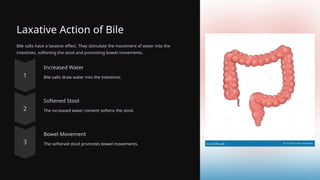
Laxative Action of Bile
Bile salts have a laxative effect. They stimulate the movement of water into the
intestines, softening the stool and promoting bowel movements.
Increased Water
Bile salts draw water into the intestines.
Softened Stool
The increased water content softens the stool.
Bowel Movement
The softened stool promotes bowel movements.
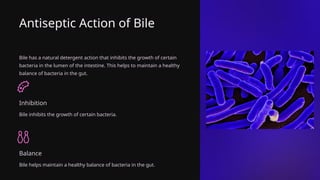
Antiseptic Action of Bile
Bile has a natural detergent action that inhibits the growth of certain
bacteria in the lumen of the intestine. This helps to maintain a healthy
balance of bacteria in the gut.
Inhibition
Bile inhibits the growth of certain bacteria.
Balance
Bile helps maintain a healthy balance of bacteria in the gut.
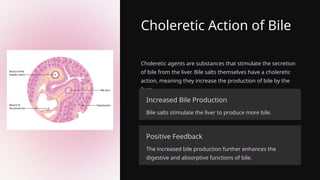
Choleretic Action of Bile
Choleretic agents are substances that stimulate the secretion
of bile from the liver. Bile salts themselves have a choleretic
action, meaning they increase the production of bile by the
liver.
Increased Bile Production
Bile salts stimulate the liver to produce more bile.
Positive Feedback
The increased bile production further enhances the
digestive and absorptive functions of bile.
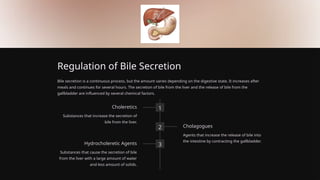
Regulation of Bile Secretion
Bile secretion is a continuous process, but the amount varies depending on the digestive state. It increases after
meals and continues for several hours. The secretion of bile from the liver and the release of bile from the
gallbladder are influenced by several chemical factors.
1
Choleretics
Substances that increase the secretion of
bile from the liver.
2 Cholagogues
Agents that increase the release of bile into
the intestine by contracting the gallbladder.
3
Hydrocholeretic Agents
Substances that cause the secretion of bile
from the liver with a large amount of water
and less amount of solids.
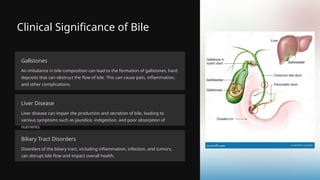
Clinical Significance of Bile
Gallstones
An imbalance in bile composition can lead to the formation of gallstones, hard
deposits that can obstruct the flow of bile. This can cause pain, inflammation,
and other complications.
Liver Disease
Liver disease can impair the production and secretion of bile, leading to
various symptoms such as jaundice, indigestion, and poor absorption of
nutrients.
Biliary Tract Disorders
Disorders of the biliary tract, including inflammation, infection, and tumors,
can disrupt bile flow and impact overall health.
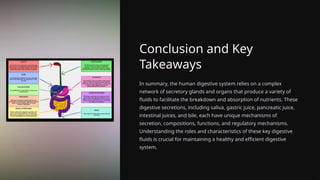
Conclusion and Key
Takeaways
In summary, the human digestive system relies on a complex
network of secretory glands and organs that produce a variety of
fluids to facilitate the breakdown and absorption of nutrients. These
digestive secretions, including saliva, gastric juice, pancreatic juice,
intestinal juices, and bile, each have unique mechanisms of
secretion, compositions, functions, and regulatory mechanisms.
Understanding the roles and characteristics of these key digestive
fluids is crucial for maintaining a healthy and efficient digestive
system.

Digestive...Secretions-Presentation.pptx

  • 1.
    Digestive Secretions Presentation Presentation byGroup roll no.61-70 Guided by Physiology Dept. HOD……...........…..Dr. Fulse Sir Asso. Prof…………Dr. Toshniwal sir Asst. Prof….........Dr Marathe maam Asst. Prof........…Dr Gaikwad sir Edited by Swarnim Pandit
  • 2.
    Digestive Secretions Presentation CO 1& PO 1-2 Domain = Cognitive (Comprehension) Level = Must Know & Knows how learning Method = Lecture & Discussion Assessment = Written & Viva Vaco
  • 3.
    Outline 1 General Intro 2 SalivaryGlands 3 Gastric Secretions 4 Pancreatic Secretions 5 Intestinal Secretions 6 Blie Secretions
  • 4.
    Introduction to Digestive Secretions Thehuman digestive system relies on a complex network of secretory glands and organs that produce a variety of fluids to facilitate the breakdown and absorption of nutrients. These digestive secretions, including saliva, gastric juice, pancreatic juice, intestinal juices, and bile, play crucial roles in the digestion and utilization of food. This presentation will delve into the mechanisms of secretion, composition, functions, and regulation of these key digestive fluids.
  • 5.
    Mechanisms of Secretionfor Digestive Fluids 1 Stimulus Recognition The secretory glands and cells responsible for producing digestive fluids are able to sense various stimuli, such as the presence of food, hormonal signals, and neural impulses, which trigger the secretion process. 2 Fluid Synthesis The secretory cells synthesize the necessary components of the digestive fluids, including water, electrolytes, enzymes, and other bioactive molecules, based on the specific requirements of each fluid. 3 Secretion and Release The synthesized fluid is then packaged and transported to the appropriate location, where it is released into the digestive tract to perform its essential functions.
  • 6.
    Properties and Composition ofSaliva Saliva is a vital bodily fluid that plays a crucial role in various functions, from food digestion to maintaining oral health. This section explores the key properties and composition of saliva, highlighting its importance in our daily lives.
  • 7.
    Saliva Volume andpH 1000 to 1500 ml Saliva produced per day Average flow rate: 1 ml/min pH: 6.35 to 6.85 Slightly acidic, helps maintain oral balance Specific Gravity 1.002 to 1.012 Tonicity Saliva is hypotonic to plasma
  • 8.
    Saliva Composition Water Saliva iscomposed of 99.5% water, with the remaining 0.5% consisting of various solids, including enzymes, proteins, and minerals. Enzymes Saliva contains three key digestive enzymes: salivary amylase, maltase, and lingual lipase, which aid in the breakdown of carbohydrates and fats. Proteins Saliva also contains proteins such as mucin, which lubricates the mouth, and immunoglobulins, which provide antimicrobial protection.
  • 9.
    Saliva's Digestive Functions 1Moisturizing Saliva moistens and dissolves food, facilitating chewing and swallowing. 2 Taste Perception Saliva's solvent action helps dissolve food substances, allowing them to stimulate taste buds and enable taste perception. 3 Enzymatic Digestion Salivary amylase, maltase, and lingual lipase begin the breakdown of carbohydrates and fats in the mouth.
  • 10.
    The Digestive Power ofSaliva Saliva is a remarkable fluid, containing a variety of enzymes that play a crucial role in the digestive process. From breaking down carbohydrates to emulsifying fats, the three key enzymes in saliva - salivary amylase, maltase, and lingual lipase - work together to initiate the digestion of our food even before it reaches the stomach.
  • 11.
    Salivary Amylase: Carbohydrate Conqueror 1Starch Specialist Salivary amylase is a carbohydrate-digesting enzyme that targets cooked or boiled starch, converting it into dextrin and maltose. 2 Partial Digestion While starch digestion begins in the mouth, the majority of the process occurs in the stomach, as food only stays briefly in the mouth. 3 Optimal Conditions Salivary amylase functions best at a pH of 6, and it cannot break down cellulose, the main component of plant cell walls.
  • 12.
    Maltase and LingualLipase: Supporting Roles Maltase Maltase is present in only trace amounts in human saliva, but it plays a crucial role in converting maltose into glucose, the body's primary energy source. Lingual Lipase Lingual lipase is a lipid-digesting enzyme secreted from the serous glands on the back of the tongue. It helps break down pre-emulsified fats, such as those found in milk, into fatty acids and diacylglycerol.
  • 13.
    The Trio ofSalivary Enzymes 1 Salivary Amylase Breaks down cooked or boiled starch into dextrin and maltose, initiating carbohydrate digestion. 2 Maltase Converts the maltose produced by salivary amylase into the readily usable glucose. 3 Lingual Lipase Helps emulsify and break down pre-digested fats, such as those found in milk, into fatty acids and diacylglycerol.
  • 14.
    Saliva's Protective Functions 1Cleansing Saliva rinses the mouth, removing food debris, shed cells, and foreign particles, preventing bacterial growth. 2 Antimicrobial Properties Enzymes like lysozyme and proteins like lactoferrin and immunoglobulin A in saliva have antimicrobial effects, protecting the oral cavity. 3 Enamel Formation Proline-rich proteins and lactoferrin in saliva stimulate the formation of tooth enamel, strengthening and protecting the teeth.
  • 15.
    Saliva's Role inSpeech Lubrication Saliva moistens and lubricates the soft parts of the mouth and lips, facilitating clear speech and articulation. Dry Mouth Reduced saliva production can lead to a dry mouth, making it difficult to speak clearly and pronounce words properly.
  • 16.
    Saliva's Excretory Functions 1 SubstanceExcretion Saliva can excrete various organic and inorganic substances, including mercury, lead, and certain viruses. 2 Pathological Conditions In some diseases, such as diabetes mellitus and nephritis, saliva may excrete substances not normally found, or in higher quantities.
  • 17.
    Saliva and TemperatureRegulation Humans In humans, sweat glands play the primary role in temperature regulation, and saliva does not contribute significantly to this function. Other Animals In some animals, such as dogs and cattle, the excessive dripping of saliva during panting helps in the loss of heat and regulation of body temperature.
  • 18.
    Saliva and Water Balance DecreasedWater Content When the body's water content decreases, salivary secretion also decreases, leading to a dry mouth and inducing thirst. Increased Water Intake Drinking water quenches the thirst and restores the body's water content, which in turn increases salivary secretion.
  • 19.
    The Importance ofSaliva Digestion Saliva plays a crucial role in the initial stages of food digestion, breaking down carbohydrates and fats. Oral Health Saliva's antimicrobial properties and its ability to lubricate and protect the mouth contribute to overall oral health. Speech Saliva's moisturizing and lubricating effects are essential for clear and articulate speech. Water Balance Saliva production is closely linked to the body's water balance, helping to regulate thirst and hydration.
  • 20.
    Regulation of Salivary Secretion Salivarysecretion is regulated solely by the nervous system, specifically the autonomic nervous system. Both the parasympathetic and sympathetic divisions of the autonomic nervous system play a role in controlling salivary gland function and saliva production.
  • 21.
    Nerve Supply toSalivary Glands Parasympathetic Fibers Parasympathetic preganglionic fibers to the submandibular, sublingual, and parotid glands arise from the superior and inferior salivatory nuclei in the brainstem. These fibers travel through various cranial nerves and ganglia before reaching the salivary glands, where they stimulate secretion of watery, low-protein saliva. Sympathetic Fibers Sympathetic preganglionic fibers to the salivary glands originate from the first and second thoracic segments of the spinal cord. They synapse in the superior cervical ganglion, and the postganglionic fibers then innervate the salivary glands. Sympathetic stimulation causes secretion of thick, protein-rich saliva.
  • 22.
    Parasympathetic Innervation of Submandibularand Sublingual Glands 1 Origin Parasympathetic preganglionic fibers to the submandibular and sublingual glands arise from the superior salivatory nucleus in the pons. 2 Pathway The fibers travel through the nervus intermedius, geniculate ganglion, facial nerve, chorda tympani, and lingual nerve before reaching the submandibular ganglion. 3 Innervation Postganglionic fibers from the submandibular ganglion supply the submandibular and sublingual glands, stimulating watery, low-protein saliva secretion.
  • 23.
    Parasympathetic Innervation ofthe Parotid Gland 1 Origin Parasympathetic preganglionic fibers to the parotid gland arise from the inferior salivatory nucleus in the medulla oblongata. 2 Pathway The fibers travel through the tympanic branch of the glossopharyngeal nerve, tympanic plexus, and lesser petrosal nerve before reaching the otic ganglion. 3 Innervation Postganglionic fibers from the otic ganglion supply the parotid gland, stimulating watery, low-protein saliva secretion.
  • 24.
    Functions of Parasympathetic Innervation 1Stimulation of Secretion Parasympathetic stimulation activates the acinar cells in the salivary glands, causing them to secrete large volumes of watery, low-protein saliva. 2 Vasodilation Parasympathetic fibers also dilate the blood vessels supplying the salivary glands, increasing blood flow and facilitating saliva production. 3 Neurotransmitter The neurotransmitter released by parasympathetic postganglionic fibers is acetylcholine.
  • 25.
    Functions of Sympathetic Innervation SecretionStimulation Sympathetic stimulation of the salivary glands causes the secretion of thick, protein-rich saliva. Vasoconstriction Sympathetic fibers induce vasoconstriction of the blood vessels supplying the salivary glands. Neurotransmitter The neurotransmitter released by sympathetic postganglionic fibers is noradrenaline.
  • 26.
    Integrated Regulation ofSalivary Secretion Parasympathetic Activation Parasympathetic stimulation of the salivary glands leads to the secretion of large volumes of watery, low-protein saliva. Sympathetic Activation Sympathetic stimulation of the salivary glands results in the secretion of thick, protein-rich saliva. Integrated Response The balance between parasympathetic and sympathetic input determines the overall volume and composition of the saliva produced by the salivary glands.
  • 27.
    Effect of Drugs andChemicals on Salivary Secretion This explores the impact of various drugs and chemicals on salivary secretion. Salivary secretion is a complex process influenced by both the sympathetic and parasympathetic nervous systems.
  • 28.
    Substances Which Increase SalivarySecretion 1 Sympathomimetic Drugs Sympathomimetic drugs, such as adrenaline and ephedrine, stimulate salivary secretion. 2 Parasympathomimetic Drugs Parasympathomimetic drugs, including acetylcholine, pilocarpine, muscarine, and physostigmine, also increase salivary secretion. 3 Histamine Histamine, a chemical mediator, is known to enhance salivary secretion.
  • 29.
    Substances Which DecreaseSalivary Secretion Sympathetic Depressants Sympathetic depressants, such as ergotamine and dibenamine, inhibit salivary secretion. Parasympathetic Depressants Parasympathetic depressants, including atropine and scopolamine, also decrease salivary secretion. Anesthetics Anesthetics, like chloroform and ether, initially stimulate salivary secretion. However, deep anesthesia reduces secretion due to central inhibition.
  • 30.
    Gastric Juice: Secretion CompositionFunctions and Regulation
  • 31.
    Gastric Juice Secretion Gastric juiceis a complex mixture of fluids and enzymes secreted by the stomach lining. It plays a crucial role in digestion, breaking down food into smaller molecules that can be absorbed by the body.
  • 32.
    Pepsinogen Secretion 1 Synthesis Pepsinogenis synthesized from amino acids in the ribosomes attached to endoplasmic reticulum in chief cells. 2 Packaging Pepsinogen molecules are packed into zymogen granules by Golgi apparatus. 3 Secretion When zymogen granule is secreted into stomach from chief cells, the granule is dissolved and pepsinogen is released into gastric juice. 4 Activation Pepsinogen is activated into pepsin by hydrochloric acid.
  • 33.
    Hydrochloric Acid Secretion Davenport Theory According to Davenport theory, hydrochloric acidsecretion is an active process that takes place in the canaliculi of parietal cells in gastric glands. Energy Source The energy for this process is derived from oxidation of glucose. Carbon Dioxide Carbon dioxide is derived from metabolic activities of parietal cell. Some amount of carbon dioxide is obtained from blood also.
  • 34.
    Hydrochloric Acid Formation CarbonDioxide Carbon dioxide combines with water to form carbonic acid in the presence of carbonic anhydrase. Carbonic Acid Carbonic acid splits into hydrogen ion and bicarbonate ion. Hydrogen Ion The hydrogen ion is actively pumped into the canaliculus of parietal cell. Chloride Ion The chloride ion is also pumped into canaliculus actively. Hydrochloric Acid The hydrogen ion combines with chloride ion to form hydrochloric acid.
  • 35.
    Factors Affecting Hydrochloric Acid Secretion 1Stimulating Factors Gastrin, Histamine, Vagal stimulation. 2 Inhibiting Factors Secretin, Gastric inhibitory polypeptide, Peptide YY.
  • 36.
    Gastric Juice: Composition Gastric juiceis a complex mixture of secretions from different gastric glands. It plays a crucial role in digestion, breaking down food and preparing it for further processing.
  • 37.
    Composition of GastricJuice Water Content Gastric juice is primarily composed of water, making up 99.5% of its total volume. Organic Compounds The remaining 0.5% consists of various organic substances, including digestive enzymes and other secretions. Inorganic Compounds Inorganic substances, such as hydrochloric acid and electrolytes, also contribute to the composition of gastric juice.
  • 39.
    Properties of GastricJuice Volume Gastric juice volume ranges from 1200 mL to 1500 mL per day. Reaction Gastric juice is highly acidic, with a pH of 0.9 to 1.2. This acidity is due to the presence of hydrochloric acid. Specific Gravity The specific gravity of gastric juice is between 1.002 and 1.004.
  • 40.
    Functions of Gastric Juice Gastricjuice is a digestive fluid produced by the stomach. It plays a vital role in the breakdown of food and the absorption of nutrients.
  • 41.
    Digestive Function 1 Pepsin Pepsinis a proteolytic enzyme that breaks down proteins into smaller peptides. 2 Gastric Lipase Gastric lipase is a weak lipolytic enzyme that breaks down fats into fatty acids and glycerol. 3 Other Enzymes Other enzymes in gastric juice include gelatinase, urase, and gastric amylase.
  • 42.
    Pepsinogen Activation 1 Pepsinogen Secretion Pepsinogenis secreted as an inactive precursor. 2 Hydrochloric Acid Hydrochloric acid in gastric juice converts pepsinogen into pepsin. 3 Optimal pH The optimal pH for pepsinogen activation is below 6.
  • 43.
    Action of Pepsin PepsinProteins Proteoses, Peptones, Polypeptides Pepsin Milk (Casein) Curdling and Digestion
  • 44.
    Hematopoietic Function Intrinsic Factor Intrinsicfactor is secreted by parietal cells and is essential for the absorption of vitamin B12. Vitamin B12 Vitamin B12 is an important maturation factor during erythropoiesis. Pernicious Anemia Absence of intrinsic factor leads to vitamin B12 deficiency and pernicious anemia.
  • 45.
    Protective Function Mucus Mucus isa mucoprotein secreted by mucus neck cells and surface mucus cells. Protection Mucus protects the gastric wall from irritation, mechanical injury, and the digestive action of pepsin. Alkaline Nature Mucus protects the gastric mucosa from hydrochloric acid due to its alkaline nature.
  • 46.
    Functions of Hydrochloric Acid Activationof Pepsinogen Hydrochloric acid activates pepsinogen into pepsin. Bacteriolytic Action Hydrochloric acid kills bacteria entering the stomach with food. Acid Medium Hydrochloric acid provides an acidic medium for the action of hormones.
  • 47.
    Regulation of Gastric Secretion Gastricsecretion is a continuous process. The quantity of gastric juice varies depending on time and stimulus. Gastric secretion occurs in three phases: cephalic, gastric, and intestinal. In humans, a fourth phase called the interdigestive phase exists.
  • 48.
    Phases of GastricSecretion 1 Cephalic Phase Secretion of gastric juice by stimuli arising from the head region is called the cephalic phase. This phase is regulated by the nervous mechanism. 2 Gastric Phase Secretion of gastric juice when food enters the stomach is called the gastric phase. This phase is regulated by both nervous and hormonal control. 3 Intestinal Phase The intestinal phase is the secretion of gastric juice when chyme enters the intestine. This phase is regulated by nervous and hormonal control. 4 Interdigestive Phase Secretion of a small amount of gastric juice in between meals is called the interdigestive phase. This phase is mainly due to hormones like gastrin.
  • 50.
    Cephalic Phase 1 UnconditionedReflex The unconditioned reflex is an inborn reflex. When food is placed in the mouth, salivary secretion is induced, and simultaneously, gastric secretion also occurs. 2 Conditioned Reflex The conditioned reflex is a reflex response acquired by previous experience. The sight, smell, hearing, or thought of food can induce gastric secretion.
  • 51.
    Unconditioned Reflex Stimulation Presence offood in the mouth stimulates the taste buds and other receptors. Sensory Impulses Sensory impulses from the mouth pass via afferent nerve fibers to the amygdala and appetite center in the hypothalamus. Efferent Impulses Efferent impulses pass through the dorsal nucleus of the vagus and vagal efferent nerve fibers to the wall of the stomach. Gastric Secretion Vagal efferent nerve endings secrete acetylcholine, which stimulates gastric secretion.
  • 52.
    Conditioned Reflex Stimulation Impulses fromthe special sensory organs (eye, ear, and nose) pass through afferent fibers to the cerebral cortex. Cerebral Cortex Thinking of food stimulates the cerebral cortex directly. Efferent Impulses From the cerebral cortex, impulses pass through the dorsal nucleus of the vagus and vagal efferents to the stomach wall. Gastric Secretion Vagal nerve endings secrete acetylcholine, which stimulates gastric secretion.
  • 53.
    Gastric Phase Nervous Mechanism Thenervous mechanism involves the local myenteric reflex and the vagovagal reflex. Hormonal Mechanism The hormonal mechanism involves gastrin, a gastrointestinal hormone secreted by the G cells in the pyloric glands of the stomach.
  • 54.
    Intestinal Phase Initial Stage Chymethat enters the intestine stimulates the duodenal mucosa to release gastrin, which increases gastric secretion. Later Stage After the initial increase, there is a decrease or complete stoppage of gastric secretion. Gastric secretion is inhibited by the enterogastric reflex and gastrointestinal hormones.
  • 55.
    Enterogastric Reflex The enterogastricreflex inhibits gastric secretion and motility. It is due to the distention of the intestinal mucosa by chyme or chemical or osmotic irritation of the intestinal mucosa by chemical substances in the chyme.
  • 56.
    Gastrointestinal Hormones Hormone StimulusAction Secretin Acidic chyme in the intestine Inhibits gastric secretion Cholecystokinin Chyme containing fats and amino acids in the intestine Inhibits gastric secretion Gastric Inhibitory Peptide (GIP) Chyme containing glucose and fats in the intestine Inhibits gastric secretion Vasoactive Intestinal Polypeptide (VIP) Acidic chyme in the intestine Inhibits gastric secretion Peptide YY Fatty chyme in the intestine Inhibits gastric secretion
  • 57.
    Factors Influencing Gastric Secretion Alcohol Alcoholstimulates gastric mucosa and increases gastric secretion. Caffeine Caffeine stimulates gastric mucosa and increases gastric secretion.
  • 58.
  • 59.
    Pancreatic Secretion The pancreas playsa vital role in digestion. It secretes enzymes that break down food and bicarbonate ions that neutralize stomach acid.
  • 60.
    Pancreatic Enzyme Secretion 1Synthesis Pancreatic enzymes are synthesized in ribosomes attached to the endoplasmic reticulum of acinar cells. 2 Packaging Enzymes are packed into zymogen granules by the Golgi apparatus and stored in the cytoplasm. 3 Release Stimulated acinar cells release zymogen granules into the pancreatic duct. 4 Liberation Enzymes are liberated into the intestine from the granules.
  • 61.
    Bicarbonate Ion Secretion 1Carbon Dioxide Carbon dioxide combines with water to form carbonic acid in the presence of carbonic anhydrase. 2 Dissociation Carbonic acid dissociates into hydrogen and bicarbonate ions. 3 Transport Bicarbonate ions are actively transported out of the cell into the lumen. 4 Exchange Hydrogen ions are actively transported into the blood in exchange for sodium ions.
  • 62.
    Maintaining Equilibrium Sodium Transport Sodiumions from the cell are transported into the lumen. Sodium Bicarbonate Formation Sodium ions combine with bicarbonate ions to form sodium bicarbonate. Osmotic Equilibrium Water leaves the blood and enters the lumen of the pancreatic duct by osmosis. Bicarbonate Solution Bicarbonate combines with water, forming a bicarbonate solution.
  • 63.
    Pancreatic Juice: Properties and Composition Pancreaticjuice is a vital digestive fluid produced by the pancreas. It plays a crucial role in breaking down food in the small intestine.
  • 64.
    Properties of Pancreatic Juice Volume500 to 800 mL/day Reaction Highly alkaline, pH 8 to 8.3 Specific Gravity 1.010 to 1.018
  • 65.
    Composition of PancreaticJuice 1 Water Pancreatic juice is primarily water, comprising 99.5% of its volume. 2 Solids The remaining 0.5% consists of organic and inorganic substances, including enzymes and electrolytes. 3 Bicarbonate Bicarbonate is a key component, with a concentration of 110 to 150 mEq/L, significantly higher than plasma levels. 4 Importance of Bicarbonate Bicarbonate's high concentration neutralizes acidic chyme, protecting the intestinal mucosa and providing the optimal pH for enzyme activation.
  • 67.
    Pancreatic Juice: Functions Pancreatic juiceis a vital digestive fluid produced by the pancreas. It plays a crucial role in the breakdown of food, particularly proteins, lipids, and carbohydrates.
  • 68.
    Digestive Functions ofPancreatic Juice 1 Protein Digestion Pancreatic juice contains enzymes that break down proteins into smaller peptides and amino acids. 2 Lipid Digestion Pancreatic lipase, a key enzyme in pancreatic juice, breaks down fats into fatty acids and glycerol. 3 Carbohydrate Digestion Pancreatic amylase, another important enzyme, breaks down starch into simpler sugars like maltose.
  • 69.
    Protein Digestion: Trypsin Activation Trypsinis secreted as inactive trypsinogen, which is activated by enterokinase in the small intestine. Functions Trypsin breaks down proteins into smaller peptides and amino acids, curdles milk, and activates other pancreatic enzymes. Inhibition Trypsin inhibitor prevents premature activation of trypsin in the pancreas, protecting it from damage.
  • 70.
    Protein Digestion: Chymotrypsin Activation Chymotrypsin issecreted as inactive chymotrypsinogen, which is activated by trypsin. Functions Chymotrypsin breaks down proteins into smaller peptides and amino acids, and digests caseinogen faster than trypsin.
  • 71.
    Protein Digestion: Carboxypeptidases Activation CarboxypeptidasesA and B are activated by trypsin. Functions Carboxypeptidases break down proteins into amino acids by cleaving the terminal bond. Specificity Carboxypeptidase A cleaves amino acids with aromatic or aliphatic side chains, while Carboxypeptidase B cleaves amino acids with basic side chains.
  • 72.
    Other Protein-Digesting Enzymes 1Nucleases Ribonuclease and deoxyribonuclease digest nucleic acids (RNA and DNA) into mononucleotides. 2 Elastase Elastase, activated by trypsin, digests elastic fibers. 3 Collagenase Collagenase, also activated by trypsin, digests collagen.
  • 73.
    Lipid Digestion: Pancreatic Lipase 1Activation Pancreatic lipase is a powerful enzyme that breaks down triglycerides into monoglycerides and fatty acids. 2 Bile Salts Bile salts emulsify fats, making them more accessible to pancreatic lipase. 3 Colipase Colipase, a coenzyme, facilitates the action of pancreatic lipase on dietary lipids.
  • 74.
    Other Lipid-Digesting Enzymes EnzymeFunction Cholesterol ester hydrolase Converts cholesterol esters into free cholesterol and fatty acids. Phospholipase A Digests phospholipids like lecithin and cephalin, converting them into lysophospholipids. Phospholipase B Converts lysophospholipids into phosphoryl choline and free fatty acids. Bile-salt-activated lipase Hydrolyzes a variety of lipids, including phospholipids, cholesterol esters, and triglycerides.
  • 75.
    Digestion of Carbohydrates Pancreaticamylase is the key enzyme in pancreatic juice that breaks down starch. Similar to salivary amylase, it converts starch into dextrin and maltose, facilitating the digestion of carbohydrates
  • 76.
    Neutralizing Action ofPancreatic Juice Acidic Chyme Acidic chyme from the stomach enters the small intestine. Alkaline Pancreatic Juice Pancreatic juice, rich in bicarbonate ions, neutralizes the acidity of chyme. Intestinal Protection Neutralization protects the intestinal lining from damage by acid.
  • 77.
    Regulation of Pancreatic Secretion Secretion ofpancreatic juice is regulated by both nervous and hormonal factors. Pancreatic juice is secreted in three stages: cephalic, gastric, and intestinal.
  • 79.
    Cephalic Phase 1 UnconditionedReflex When food is placed in the mouth, salivary, gastric, and pancreatic secretions are induced. 2 Stages of Reflex Action Presence of food in the mouth stimulates taste buds and other receptors, sending sensory impulses to the dorsal nucleus of the vagus. 3 Vagal Efferent Nerve Fibers Efferent impulses reach pancreatic acini via vagal efferent nerve fibers, stimulating pancreatic secretion.
  • 80.
    Conditioned Reflex 1 AcquiredReflex Conditioned reflex is a learned response acquired through previous experience. 2 Stimuli The sight, smell, hearing, or thought of food can induce salivary, gastric, and pancreatic secretions. 3 Neural Circuits Impulses from special sensory organs pass through afferent fibers of neural circuits to the cerebral cortex. 4 Vagal Nerve Endings Vagal nerve endings secrete acetylcholine, which stimulates pancreatic secretion.
  • 81.
    Gastric Phase Hormonal Control Secretionof pancreatic juice when food enters the stomach is known as the gastric phase. Gastrin When food enters the stomach, gastrin is secreted from the stomach. Pancreatic Stimulation Gastrin is transported to the pancreas through blood, stimulating pancreatic secretion.
  • 82.
    Intestinal Phase Chyme Entry Theintestinal phase is the secretion of pancreatic juice when chyme enters the intestine. Hormonal Control This phase is also under hormonal control, with various hormones released when chyme enters the intestine. Stimulating Hormones Some hormones stimulate pancreatic secretion, including secretin and cholecystokinin.
  • 83.
    Hormones Inhibiting Pancreatic Secretion Pancreaticpolypeptide (PP) Secreted by PP cells in islets of Langerhans of pancreas Somatostatin Secreted by D cells in islets of Langerhans of pancreas Peptide YY Secreted by intestinal mucosa Ghrelin and leptin Peptides
  • 84.
  • 85.
    Succus Entericus: The Small Intestine's Secretion Secretionfrom the small intestine is known as succus entericus. This fluid plays a vital role in digestion, contributing to the breakdown of food and the absorption of nutrients.
  • 86.
    Properties of Succus Entericus 1Volume The daily volume of succus entericus secretion is approximately 1800 mL. 2 Reaction Succus entericus is alkaline in nature. 3 pH The pH of succus entericus is around 8.3.
  • 87.
    Composition of SuccusEntericus Water Water makes up the majority of succus entericus, accounting for 99.5% of its composition. Solids The remaining 0.5% of succus entericus consists of solids, which include both organic and inorganic substances. Bicarbonate Succus entericus has a slightly elevated concentration of bicarbonate.
  • 89.
    Succus Entericus: Functions and Regulation Succusentericus, also known as intestinal juice, is a vital component of the digestive process. It plays a crucial role in breaking down food, protecting the intestinal lining, and regulating the digestive system.
  • 90.
    Digestive Function 1 ProteolyticEnzymes Peptidases in succus entericus break down peptides into amino acids. 2 Amylolytic Enzymes Lactase, sucrase, and maltase convert disaccharides into monosaccharides. 3 Lipolytic Enzyme Intestinal lipase breaks down triglycerides into fatty acids.
  • 91.
    Protective Function Mucus Mucus protectsthe intestinal wall from acidic chyme, preventing ulcers. Defensins Defensins, antimicrobial peptides, kill phagocytosed bacteria.
  • 92.
    Activator Function Enterokinase Enterokinase activatestrypsinogen into trypsin. Trypsin Trypsin activates other enzymes.
  • 93.
    Hematopoietic Function Intrinsic factorof Castle, present in the intestine, is essential for the absorption of vitamin B12, which is crucial for erythropoiesis.
  • 94.
    Hydrolytic Process Intestinal juicefacilitates all the enzymatic reactions of digestion, breaking down food into its simplest components.
  • 95.
    Nervous Regulation Parasympathetic Vasodilation,increased secretion Sympathetic Vasoconstriction, decreased secretion
  • 96.
    Local Nervous Reflexes Whenchyme enters the small intestine, tactile stimuli or irritation trigger local nervous reflexes, stimulating the intestinal glands and increasing juice secretion.
  • 97.
    Hormonal Regulation Enterocrinin Promotes succusentericus secretion. Secretin Stimulates intestinal glands. Cholecystokinin Promotes succus entericus secretion.
  • 98.
    The Large Intestine: Secreations The largeintestine is a critical part of the digestive system. It plays a crucial role in the final stages of digestion and absorption.
  • 99.
    Large Intestinal Juice: Composition ComponentPercentage Water 99.5% Solids 0.5% Large intestinal juice is primarily composed of water, with a small percentage of solids. These solids include various electrolytes, mucus, and some cellular debris.
  • 100.
    Digestive Enzymes inLarge Intestinal Juice Absence of Digestive Enzymes Large intestinal juice does not contain any digestive enzymes. Role of Gut Microbiota The digestion of remaining food particles and the production of short-chain fatty acids are primarily handled by the diverse microbial community residing in the large intestine. Nutrient Absorption The large intestine primarily absorbs water, electrolytes, and some vitamins produced by gut bacteria.
  • 101.
    Functions of LargeIntestinal Juice 1 Neutralization of Acids Large intestinal juice is alkaline, due to the presence of bicarbonate, and helps neutralize acids produced by bacterial fermentation in the large intestine. 2 Lubrication of the Gut The mucus present in the juice lubricates the intestinal lining and the waste material, aiding in smooth movement through the colon. 3 Protection of the Intestinal Wall Mucus forms a protective barrier against damage from physical abrasion or chemical irritants present in the intestinal contents.
  • 102.
    Importance of Large IntestinalJuice Large intestinal juice plays a vital role in maintaining a healthy intestinal environment. It helps regulate pH, facilitates waste movement, and protects the intestinal lining from damage.
  • 103.
    Bile Secretion: Secretion CompositionFunctions and Regulation
  • 104.
    Bile Secretion and Composition Bile,a yellowish-green fluid produced by the liver, plays a crucial role in the digestive process. This complex fluid is essential for the breakdown and absorption of fats in the small intestine. The secretion of bile is a multi-step process involving hepatocytes, the main functional cells of the liver. These specialized cells synthesize and secrete bile into tiny canals called canaliculi, which then merge into larger ducts, eventually leading to the common hepatic duct.
  • 105.
    Bile Secretion Pathway 1Hepatocyte Secretion Hepatocytes, the primary cells of the liver, produce bile and release it into tiny canals known as canaliculi. This initial bile is rich in bile acids, cholesterol, bilirubin, and other components. 2 Bile Duct Transport From the canaliculi, bile flows through a network of small ducts and hepatic ducts, ultimately converging into the common hepatic duct. Along this pathway, additional substances are added to the bile. 3 Gallbladder Storage and Release The common hepatic duct branches into two pathways: one leading directly to the duodenum and the other leading to the gallbladder. The gallbladder acts as a storage reservoir for bile, concentrating it and releasing it into the duodenum when needed.
  • 106.
    Modification of Bilein the Ducts Secretion of Sodium As bile travels through the bile ducts, epithelial cells lining the ducts actively secrete sodium ions (Na+) into the bile. This contributes to the overall volume and alkalinity of bile. Bicarbonate Secretion In addition to sodium, bicarbonate ions (HCO3-) are also secreted into bile by the duct epithelial cells. This further increases the alkalinity of bile, creating an optimal environment for digestive enzymes. Water Secretion The secretion of sodium and bicarbonate draws water into the bile through osmosis, increasing its overall volume. This helps to dilute the bile and facilitates its flow through the ducts.
  • 107.
    Bile Composition: ADetailed View Component Description Function Bile Acids Primarily cholic acid and chenodeoxycholic acid, synthesized from cholesterol. Emulsify fats, aiding in their digestion and absorption. Bile Pigments Mainly bilirubin, a breakdown product of heme from red blood cells. Contribute to the yellowish-green color of bile. Excreted in feces. Cholesterol A sterol synthesized in the liver. Essential for cell membrane structure and hormone production. Excreted in bile. Lecithin A phospholipid synthesized in the liver. Helps to solubilize cholesterol, preventing gallstone formation. Fatty Acids Derived from dietary fats or synthesized in the liver. Contribute to the overall composition of bile.
  • 108.
    Properties of Bile 1Volume The average daily volume of bile produced is estimated to be between 800 and 1200 milliliters. 2 Reaction Bile is alkaline, meaning it has a pH greater than 7. This alkalinity is essential for the optimal function of digestive enzymes. 3 pH The pH of bile typically ranges from 8 to 8.6, contributing to its alkaline nature. 4 Specific Gravity The specific gravity of bile, a measure of its density, is typically between 1.010 and 1.011.
  • 109.
    Bile Color Golden Yellow Thecolor of bile can vary depending on the concentration of bilirubin. Freshly secreted bile is typically golden yellow, which is due to the presence of bilirubin, a breakdown product of heme from red blood cells. Green Bile can also appear green, particularly as it is stored in the gallbladder. This green hue is due to the oxidation of bilirubin, a process that can occur during storage. Brown As bile travels through the intestines, it undergoes further transformations, resulting in a brown color due to the breakdown of bilirubin into other pigments. This brown color is evident in feces.
  • 110.
    Importance of Bilein Digestion Emulsification of Fats Bile acids, the primary components of bile, play a crucial role in the digestion and absorption of fats. They act as emulsifiers, breaking down large fat globules into smaller droplets, increasing their surface area for interaction with digestive enzymes. Fat Absorption Once fats are emulsified, they are more accessible to pancreatic lipase, an enzyme that breaks down fats into smaller molecules called fatty acids and glycerol. These smaller molecules are then absorbed through the intestinal wall. Nutrient Transport Bile also aids in the absorption of other fat-soluble nutrients, such as vitamins A, D, E, and K, ensuring their proper uptake by the body.
  • 111.
    Functions of Bile Bileis a fluid produced by the liver and stored in the gallbladder. It plays a crucial role in digestion and excretion. Most of the functions of bile are due to the bile salts.
  • 112.
    Digestive Function ofBile Bile salts are essential for the digestion of fats. They act as detergents, breaking down large fat globules into smaller droplets, increasing their surface area for digestion by enzymes. This process is called emulsification. 1 Emulsification Bile salts break down large fat globules into smaller droplets, increasing their surface area for digestion by enzymes. 2 Fat Absorption Bile salts help in the absorption of fat-soluble vitamins (A, D, E, and K) and cholesterol.
  • 113.
    Absorptive Functions ofBile Bile salts play a crucial role in the absorption of fats and fat-soluble vitamins. They form micelles, which are tiny spheres that encapsulate fat molecules, making them easier to be absorbed by the intestinal lining. Micelle Formation Bile salts form micelles, which are tiny spheres that encapsulate fat molecules. Absorption Micelles transport fat molecules to the intestinal lining, where they are absorbed into the bloodstream. Vitamin Absorption Bile salts also help in the absorption of fat-soluble vitamins (A, D, E, and K).
  • 114.
    Excretory Functions of Bile Bileserves as a pathway for the excretion of waste products from the body. Bile pigments, primarily bilirubin, are the major excretory products of bile. Bilirubin is a breakdown product of heme, a component of red blood cells. Heavy Metals Copper and Iron Bacteria Typhoid bacteria Toxins Various toxins Other Substances Cholesterol, Lecithin, Alkaline phosphatase
  • 115.
    Laxative Action ofBile Bile salts have a laxative effect. They stimulate the movement of water into the intestines, softening the stool and promoting bowel movements. Increased Water Bile salts draw water into the intestines. Softened Stool The increased water content softens the stool. Bowel Movement The softened stool promotes bowel movements.
  • 116.
    Antiseptic Action ofBile Bile has a natural detergent action that inhibits the growth of certain bacteria in the lumen of the intestine. This helps to maintain a healthy balance of bacteria in the gut. Inhibition Bile inhibits the growth of certain bacteria. Balance Bile helps maintain a healthy balance of bacteria in the gut.
  • 117.
    Choleretic Action ofBile Choleretic agents are substances that stimulate the secretion of bile from the liver. Bile salts themselves have a choleretic action, meaning they increase the production of bile by the liver. Increased Bile Production Bile salts stimulate the liver to produce more bile. Positive Feedback The increased bile production further enhances the digestive and absorptive functions of bile.
  • 118.
    Regulation of BileSecretion Bile secretion is a continuous process, but the amount varies depending on the digestive state. It increases after meals and continues for several hours. The secretion of bile from the liver and the release of bile from the gallbladder are influenced by several chemical factors. 1 Choleretics Substances that increase the secretion of bile from the liver. 2 Cholagogues Agents that increase the release of bile into the intestine by contracting the gallbladder. 3 Hydrocholeretic Agents Substances that cause the secretion of bile from the liver with a large amount of water and less amount of solids.
  • 119.
    Clinical Significance ofBile Gallstones An imbalance in bile composition can lead to the formation of gallstones, hard deposits that can obstruct the flow of bile. This can cause pain, inflammation, and other complications. Liver Disease Liver disease can impair the production and secretion of bile, leading to various symptoms such as jaundice, indigestion, and poor absorption of nutrients. Biliary Tract Disorders Disorders of the biliary tract, including inflammation, infection, and tumors, can disrupt bile flow and impact overall health.
  • 120.
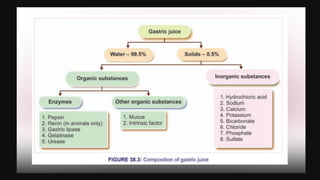
    Conclusion and Key Takeaways Insummary, the human digestive system relies on a complex network of secretory glands and organs that produce a variety of fluids to facilitate the breakdown and absorption of nutrients. These digestive secretions, including saliva, gastric juice, pancreatic juice, intestinal juices, and bile, each have unique mechanisms of secretion, compositions, functions, and regulatory mechanisms. Understanding the roles and characteristics of these key digestive fluids is crucial for maintaining a healthy and efficient digestive system.