August 6, 2012
Oregon Writing Project @ Willamette University
Pollenating ideas


“Books are the bees which carry the quickening pollen
from one to another mind.” ~James Russell Lowell
Pre-planning

 Annotations


 Mentor texts
Mentor texts
 Learning by example


 Seeing concepts modeled


 Getting the bigger picture


 Reading good writing
Annotations
 Reading critically


 Increasing comprehension


 Interacting with the text


 Writing to learn
Your turn to write…
 Explain your journey from student writer to writing
 teacher.

 What twists and turns and obstacles have you
 encountered and overcome as a writer?

 What challenges and triumphs have you had as a
 writing teacher?
Planning
 Stretching out the process


 Activating the language centers of the brain


 Providing plenty of practice
Stretching out the process
 Slowing down


 Taking smaller steps


 Giving students more learning time
Activating Language
 Using prior knowledge


 Building schema


 Bridging the gap between languages
Practicing
 Finding and narrowing topics


 Generating ideas


 Using multiple brainstorming methods
Your turn to write…
 How many ways do you use writing in your class?


 What has worked well and what has failed miserably?


 What writing experiments would you like to try with
 your students?
Drafting

 Integrating language instruction with writing


 Guiding students through a draft
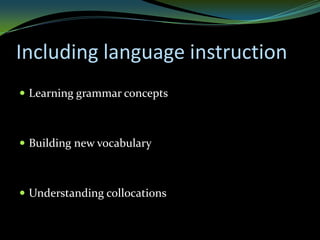
Including language instruction
 Learning grammar concepts


 Building new vocabulary


 Understanding collocations
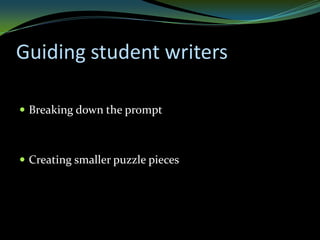
Guiding student writers

 Breaking down the prompt


 Creating smaller puzzle pieces
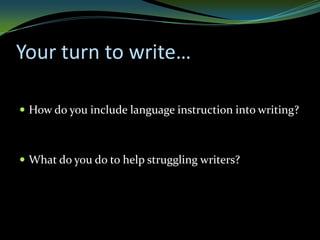
Your turn to write…

 How do you include language instruction into writing?


 What do you do to help struggling writers?
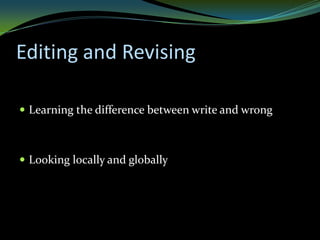
Editing and Revising

 Learning the difference between write and wrong


 Looking locally and globally
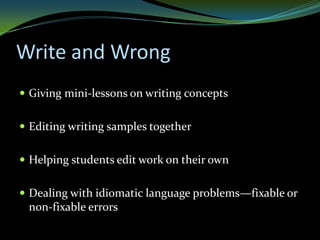
Write and Wrong
 Giving mini-lessons on writing concepts


 Editing writing samples together


 Helping students edit work on their own


 Dealing with idiomatic language problems—fixable or
 non-fixable errors
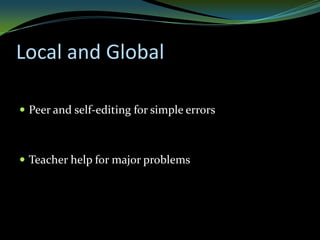
Local and Global

 Peer and self-editing for simple errors


 Teacher help for major problems
Your turn to write…

 What does editing and revising look like in your class?


 How much do you fix in your students’ writing?
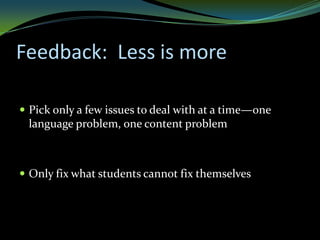
Feedback: Less is more

 Pick only a few issues to deal with at a time—one
 language problem, one content problem


 Only fix what students cannot fix themselves
Feedback: More is more
 Confer with students one on one


 Give clear, specific feedback


 Provide students with extra support for recurring
  problems
Grading
 Keep all drafts low-stakes


 Teach grading criteria clearly ahead of time


 Show examples of what fits the criteria


 Be consistent
Your turn to write…


 Dialogue journal—respond to another person’s writing
 and share how you use writing in class.
Review
 Pollenate students’ writing with good writing
    examples
   Engage students in critical thinking
   Slow the writing process down and spend more time
    brainstorming
   Integrate language instruction into the writing process
   Help students take smaller steps
   Encourage students to view mistakes as learning
    opportunities
Your turn to write…


 Plan a writing lesson using something you have
 learned today

Differentiating the writing process for ell writers

  • 1.
    August 6, 2012 OregonWriting Project @ Willamette University
  • 2.
    Pollenating ideas “Books arethe bees which carry the quickening pollen from one to another mind.” ~James Russell Lowell
  • 3.
  • 4.
    Mentor texts  Learningby example  Seeing concepts modeled  Getting the bigger picture  Reading good writing
  • 5.
    Annotations  Reading critically Increasing comprehension  Interacting with the text  Writing to learn
  • 6.
    Your turn towrite…  Explain your journey from student writer to writing teacher.  What twists and turns and obstacles have you encountered and overcome as a writer?  What challenges and triumphs have you had as a writing teacher?
  • 7.
    Planning  Stretching outthe process  Activating the language centers of the brain  Providing plenty of practice
  • 8.
    Stretching out theprocess  Slowing down  Taking smaller steps  Giving students more learning time
  • 9.
    Activating Language  Usingprior knowledge  Building schema  Bridging the gap between languages
  • 10.
    Practicing  Finding andnarrowing topics  Generating ideas  Using multiple brainstorming methods
  • 11.
    Your turn towrite…  How many ways do you use writing in your class?  What has worked well and what has failed miserably?  What writing experiments would you like to try with your students?
  • 12.
    Drafting  Integrating languageinstruction with writing  Guiding students through a draft
  • 13.
    Including language instruction Learning grammar concepts  Building new vocabulary  Understanding collocations
  • 14.
    Guiding student writers Breaking down the prompt  Creating smaller puzzle pieces
  • 15.
    Your turn towrite…  How do you include language instruction into writing?  What do you do to help struggling writers?
  • 16.
    Editing and Revising Learning the difference between write and wrong  Looking locally and globally
  • 17.
    Write and Wrong Giving mini-lessons on writing concepts  Editing writing samples together  Helping students edit work on their own  Dealing with idiomatic language problems—fixable or non-fixable errors
  • 18.
    Local and Global Peer and self-editing for simple errors  Teacher help for major problems
  • 19.
    Your turn towrite…  What does editing and revising look like in your class?  How much do you fix in your students’ writing?
  • 20.
    Feedback: Less ismore  Pick only a few issues to deal with at a time—one language problem, one content problem  Only fix what students cannot fix themselves
  • 21.
    Feedback: More ismore  Confer with students one on one  Give clear, specific feedback  Provide students with extra support for recurring problems
  • 22.
    Grading  Keep alldrafts low-stakes  Teach grading criteria clearly ahead of time  Show examples of what fits the criteria  Be consistent
  • 23.
    Your turn towrite…  Dialogue journal—respond to another person’s writing and share how you use writing in class.
  • 24.
    Review  Pollenate students’writing with good writing examples  Engage students in critical thinking  Slow the writing process down and spend more time brainstorming  Integrate language instruction into the writing process  Help students take smaller steps  Encourage students to view mistakes as learning opportunities
  • 25.
    Your turn towrite…  Plan a writing lesson using something you have learned today