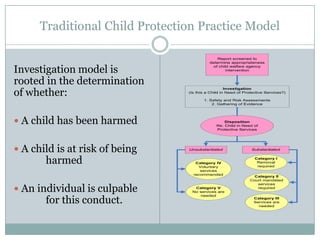
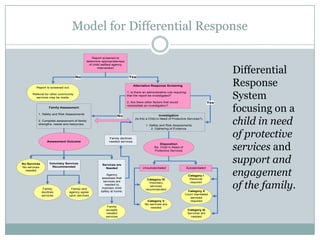
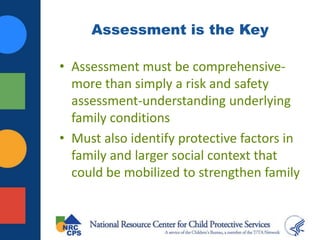
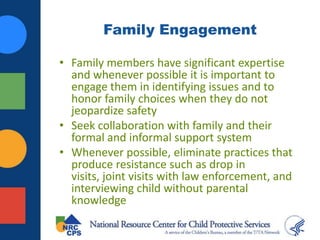
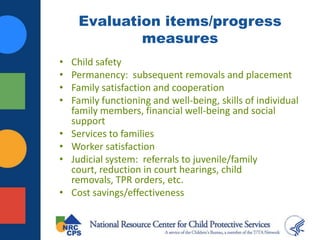
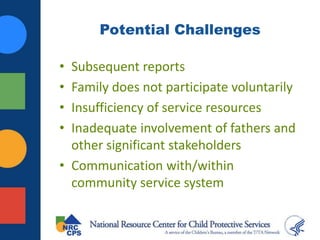
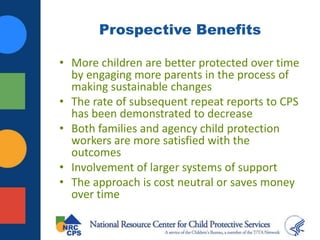
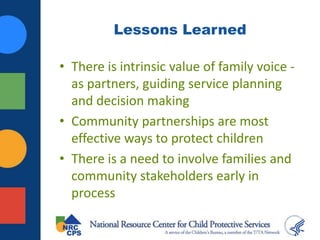
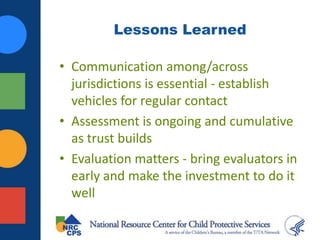
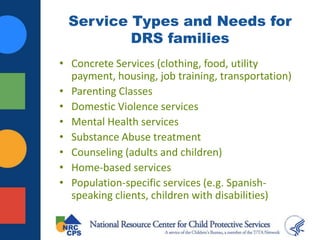
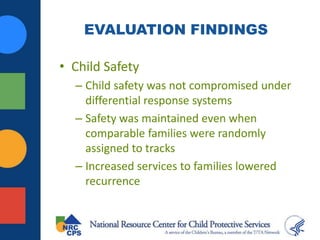
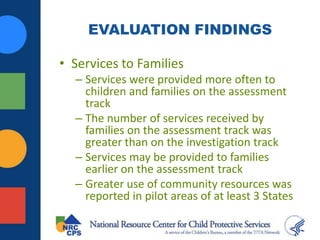
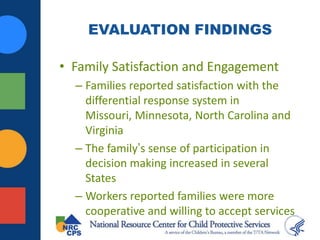
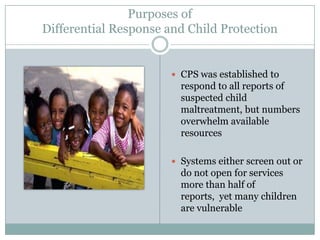
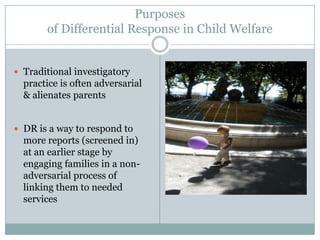
This document provides an overview of differential response in child protective services. It defines differential response as allowing more than one method for initially responding to child abuse and neglect reports. The purposes are to be more flexible in responses, engage families more effectively, and serve more families. Key elements include using discrete response pathways, voluntary services, and no substantiation determinations. Factors like allegation severity and safety determine response assignments. Evaluation findings show child safety is maintained, more families receive services earlier, and families and workers are more satisfied. Challenges include subsequent reports and insufficient resources. Benefits include better child protection long-term and cost savings.

![Why Implement
Differential Response?
“A lot of times the [family] situation calls for the formation of
a healing relationship so the very act of going there in an
investigatory mode impairs the ability [for workers] to form
a meaningful relationship in which parents can be
open, ask for and get help”
~Dr. Bruce Perry, M.D., Ph. D
Senior Fellow
Child Trauma Academy
www.childtrauma.org](https://image.slidesharecdn.com/differentialresponse-130419135105-phpapp02-130505125527-phpapp01/85/Differentialresponse-130419135105-phpapp02-8-320.jpg)