The Crisis Residential Center’sDirection ProgramEffectiveness Study
To Those Who Made This All PossibleResearch FellowsJennifer BoisenJacob CampbellShireen WheelerSupportive  FiguresEastern Washington UniversityDr. Ed Byrnes
Katie Clemons-Handy
Dr. Sarah Keller
Dr. Kim StansburyCrisis Residential CenterBrandon Livingston
Teresa WrightPresentation RoadmapWhat it’s all aboutWhat we didWhat it meansWhat to take away
Literature ReviewWhat it’s all about
Working with At-risk YouthReasons for Runaway and Homeless YouthSupport and nurturingSingle parent homesAbuse and neglectSubstance use / abuseCommon ProblemsAcademicPositive social networksMental & physical health issues
Programs & At-risk YouthMilieu environmentIndividualGroupFamily Referrals
About the CRCYFA ConnectionsSafety-net for SpokaneGeneral populationThree programs
MethodologyWhat we did
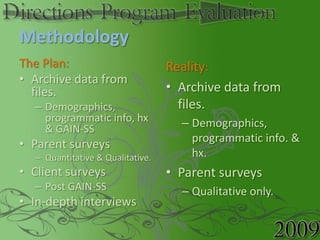
MethodologyThe Plan:Archive data from files.Demographics, programmatic info, hx & GAIN-SSParent surveysQuantitative & Qualitative.Client surveysPost GAIN-SSIn-depth interviewsReality:Archive data from files.Demographics, programmatic info. & hx.Parent surveysQualitative only.
Data AnalysisData from filesDescriptive AnalysesDemographic variablesProgrammatic variablesClient history & issuesCross tabulationChi SquareQualitative infoLook for commonalities and use to support/discuss findings/recommendations.
}{ Findings }{}{ Limitations}{}{}{ ImplicationsWhat it means
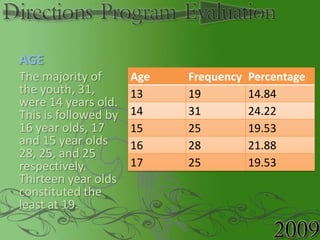
AGEThe majority of the youth, 31, were 14 years old. This is followed by 16 year olds, 17 and 15 year olds 28, 25, and 25 respectively. Thirteen year olds constituted the least at 19.
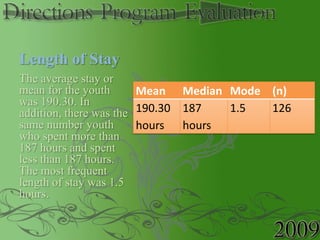
Length of StayThe average stay or mean for the youth was 190.30. In addition, there was the same number youth who spent more than 187 hours and spent less than 187 hours. The most frequent length of stay was 1.5 hours.
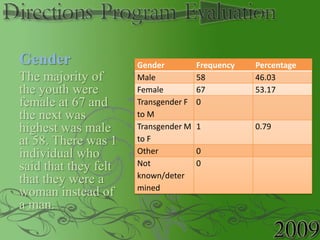
GenderThe majority of the youth were female at 67 and the next was highest was male at 58. There was 1 individual who said that they felt that they were a woman instead of a man.
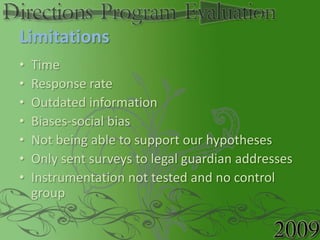
LimitationsTime
Response rate
Outdated information
Biases-social bias
Not being able to support our hypotheses
Only sent surveys to legal guardian addresses
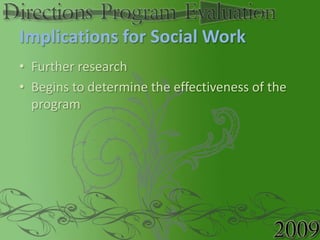
Instrumentation not tested and no control groupImplications for Social WorkFurther researchBegins to determine the effectiveness of the program
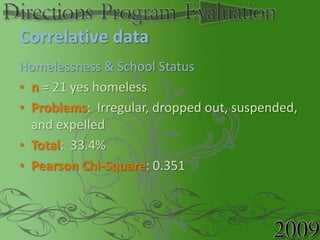
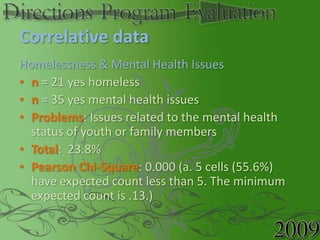
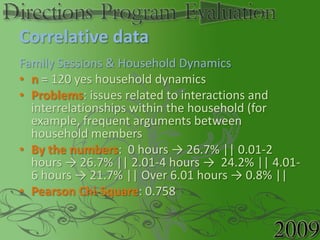
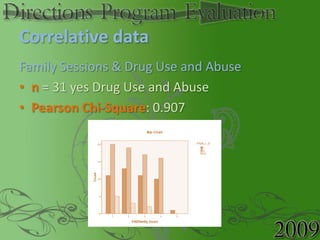
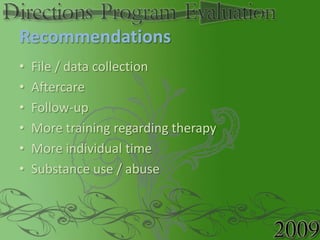
}{ Correlative data	}{}{ Recommendations 		}{}{}{ Future research			}{}{}{}{ ConclusionsWhat to take away