

Difference IN
Leadership and
Management
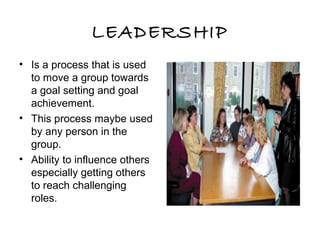
LEADERSHIP
• Is a process that is used
to move a group towards
a goal setting and goal
achievement.
• This process maybe used
by any person in the
group.
• Ability to influence others
especially getting others
to reach challenging
roles.
NURSING LEADERSHIP
• is the process whereby a nurse influences
one or more persons to achieve specific
goals in the provision of nursing care for
one or more patients or clients.
Purpose of Nursing
Leadership
• Improving the health status of individuals
or families
• Increasing the effectiveness and level of
satisfaction among professional
colleagues.
• Improving attitudes of citizens and
legislators toward the nursing profession
and their expectation of it.
Leadership Roles
• Visionary
• Influences
• Communicator
• Teacher
• Mentor
• Decision maker
• Risk taker
Three Requirements for being a
leader
• One must have a goal or an idea to which
one is strongly committed.
• One must have at least one follower to
lead.
• One must employ the leadership process.
Types of Leaders
• Emergent Leader – person who is
chosen by the group members who have
recognized and accepted the leader’s
influence.
• Organizational or Imposed Leaders –
person who is appointed to the position by
a person or group.
Four attributes of a Leader
must possess
• Awareness
• Assertiveness
• Accountability
• Advocacy
MANAGEMENT
• A form of work that
involves
coordinating an
organization’s
resources towards
accomplishing
organizational
objectives.
NURSING MANAGEMENT
• Can be viewed as a relationship of inputs
and outputs in which the workers (all
members of healthcare organization),
physical resources and technology
(include building, ground, supplies) are
merged to bring about the organizational
goals for delivery of quality nursing care.
Three basic skills in
Management Process
• Conceptual
• Human Relations Skill
• Technical Skills
Common Management
functions
• Planning
• Staffing
• Organizing
• Directing
• Controlling
• Decision making
A successful manager must:
• Understand the work to be performed
• Master the skill in performing the job
LEADERSHIP VS.
MANAGEMENT
• Leaders may or may not have official
appointment to the position
Managers are appointed officially to the
position
• Have power and authority to enforce
decisions only so long as followers are
willing to led
Have power and authority to enforce
decisions •Leadership
Management
• Influences others towards goal settings,
either formally or informally
Carry out predetermined policies, rules
and regulations
• Interested in risk taking & exploring new
ideas
Maintain an orderly, controlled rational &
equitable structures
•Leadership
Management
• Relate to people personally in an intuitive
and empathetic manner
Relate to people according to their roles
• Feel rewarded from personal
achievements
Feel rewarded when fulfilling
organizational mission or goals
•Leadership
Management
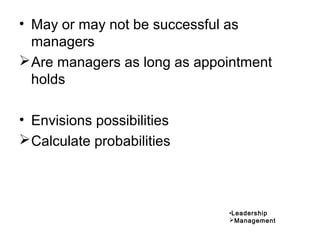
• May or may not be successful as
managers
Are managers as long as appointment
holds
• Envisions possibilities
Calculate probabilities
•Leadership
Management
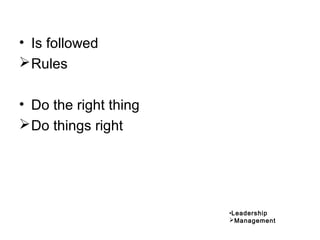
• Is followed
Rules
• Do the right thing
Do things right
•Leadership
Management
THE END

Difference in leadership and management

  • 1.
  • 2.
    LEADERSHIP • Is aprocess that is used to move a group towards a goal setting and goal achievement. • This process maybe used by any person in the group. • Ability to influence others especially getting others to reach challenging roles.
  • 3.
    NURSING LEADERSHIP • isthe process whereby a nurse influences one or more persons to achieve specific goals in the provision of nursing care for one or more patients or clients.
  • 4.
    Purpose of Nursing Leadership •Improving the health status of individuals or families • Increasing the effectiveness and level of satisfaction among professional colleagues. • Improving attitudes of citizens and legislators toward the nursing profession and their expectation of it.
  • 5.
    Leadership Roles • Visionary •Influences • Communicator • Teacher • Mentor • Decision maker • Risk taker
  • 6.
    Three Requirements forbeing a leader • One must have a goal or an idea to which one is strongly committed. • One must have at least one follower to lead. • One must employ the leadership process.
  • 7.
    Types of Leaders •Emergent Leader – person who is chosen by the group members who have recognized and accepted the leader’s influence. • Organizational or Imposed Leaders – person who is appointed to the position by a person or group.
  • 8.
    Four attributes ofa Leader must possess • Awareness • Assertiveness • Accountability • Advocacy
  • 9.
    MANAGEMENT • A formof work that involves coordinating an organization’s resources towards accomplishing organizational objectives.
  • 10.
    NURSING MANAGEMENT • Canbe viewed as a relationship of inputs and outputs in which the workers (all members of healthcare organization), physical resources and technology (include building, ground, supplies) are merged to bring about the organizational goals for delivery of quality nursing care.
  • 11.
    Three basic skillsin Management Process • Conceptual • Human Relations Skill • Technical Skills
  • 12.
    Common Management functions • Planning •Staffing • Organizing • Directing • Controlling • Decision making
  • 13.
    A successful managermust: • Understand the work to be performed • Master the skill in performing the job
  • 14.
  • 15.
    • Leaders mayor may not have official appointment to the position Managers are appointed officially to the position • Have power and authority to enforce decisions only so long as followers are willing to led Have power and authority to enforce decisions •Leadership Management
  • 16.
    • Influences otherstowards goal settings, either formally or informally Carry out predetermined policies, rules and regulations • Interested in risk taking & exploring new ideas Maintain an orderly, controlled rational & equitable structures •Leadership Management
  • 17.
    • Relate topeople personally in an intuitive and empathetic manner Relate to people according to their roles • Feel rewarded from personal achievements Feel rewarded when fulfilling organizational mission or goals •Leadership Management
  • 18.
    • May ormay not be successful as managers Are managers as long as appointment holds • Envisions possibilities Calculate probabilities •Leadership Management
  • 19.
    • Is followed Rules •Do the right thing Do things right •Leadership Management
  • 20.