To reflect and... Act.

    The difference between the poor
countries and the rich ones is not the age
             of the country.
This can be shown by countries
        like India & Egypt,
that are more than 2000 years old
           and are poor.
On the other hand, Canada,
      Australia & New Zealand, that
     150 years ago were inexpressive,
today are developed countries and are rich.
The difference between poor & rich
countries does not reside in the available
           natural resources.
Japan has a limited territory,
       80% mountainous, inadequate
  for agriculture & cattle raising, but it is
the second world economy. The country is
     like an immense floating factory,
 importing raw material from the whole
    world and exporting manufactured
                  products.
Another example is Switzerland, which
     does not plant cocoa but has the best
             chocolate of the world.
 In its little territory they raise animals and
   plant the soil during 4 months per year.
Not enough, they produce dairy products of
                  the best quality.
It is a small country that transmits an image
  of security, order & labor, which made it
             the world’s strong safe.
Executives from rich countries
who communicate with their counterparts
 in poor countries show that there is no
    significant intellectual difference.
Race or skin color are also not important:
immigrants labeled lazy in their countries
of origin are the productive power in rich
           European countries.
What is the difference then?
The difference is the attitude of the people,
framed along the years by the education &
                the culture.
On analyzing the behavior of the people in
rich & developed countries, we find that the
     great majority follow the following
           principles in their lives:
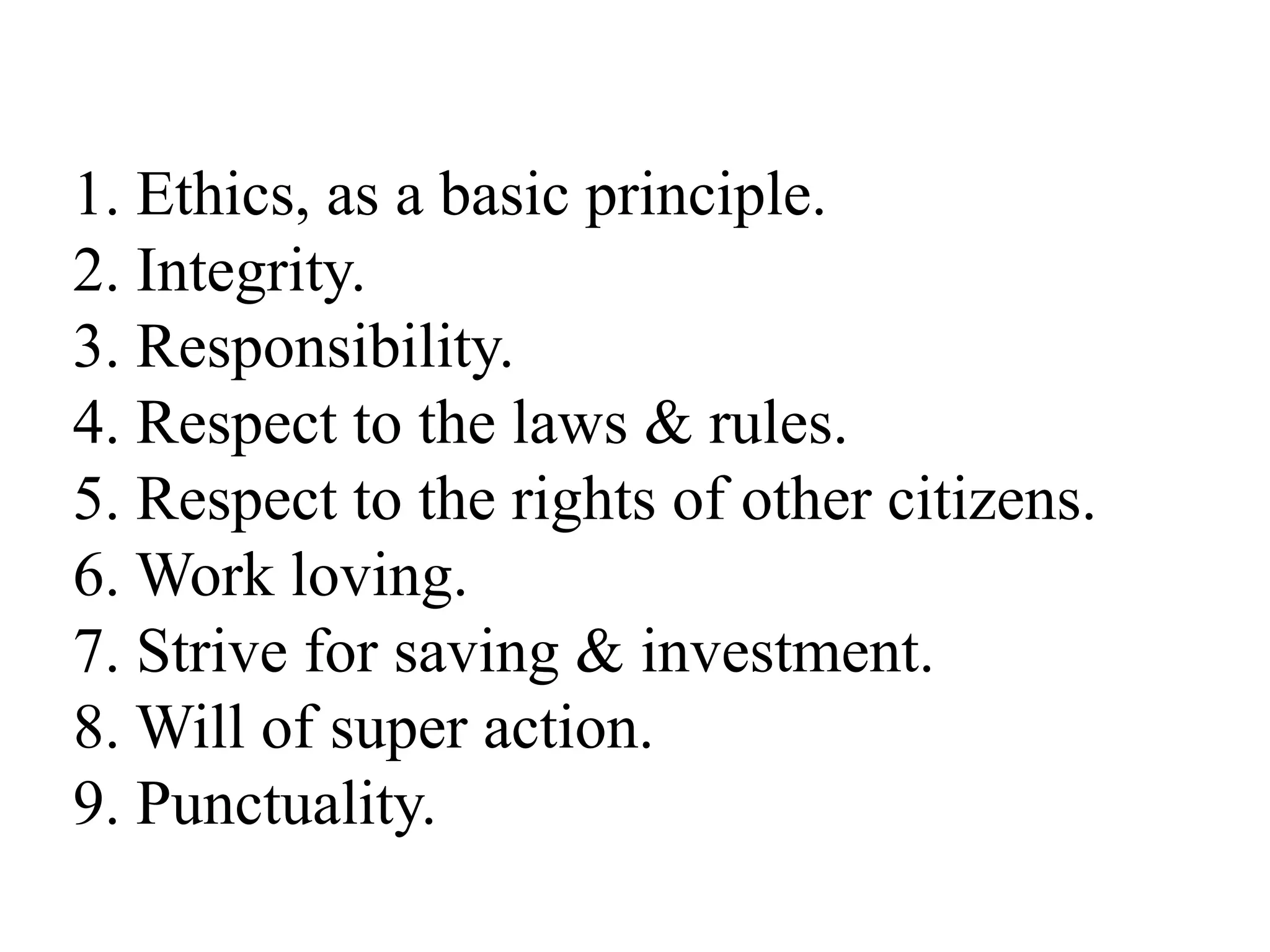
1. Ethics, as a basic principle.
2. Integrity.
3. Responsibility.
4. Respect to the laws & rules.
5. Respect to the rights of other citizens.
6. Work loving.
7. Strive for saving & investment.
8. Will of super action.
9. Punctuality.
In poor countries, only a minority follow
 these basic principles in their daily life.
We are not poor because we lack
natural resources or because nature was
              cruel to us.
We are poor because we lack attitude.

We lack the will to comply with and
teach these functional principles of
    rich & developed societies.
If you do not forward this message
nothing will happen to you. Your pet will
 not die, you will not be fired, you will
 not have bad luck for seven years and
        also you will not get sick.
If you love your country, let this
message circulate for a major quantity
 of people could reflect about this &
           CHANGE, ACT!!

Difference Between Rich & Poor Countries

  • 1.
    To reflect and...Act. The difference between the poor countries and the rich ones is not the age of the country.
  • 2.
    This can beshown by countries like India & Egypt, that are more than 2000 years old and are poor.
  • 3.
    On the otherhand, Canada, Australia & New Zealand, that 150 years ago were inexpressive, today are developed countries and are rich.
  • 4.
    The difference betweenpoor & rich countries does not reside in the available natural resources.
  • 5.
    Japan has alimited territory, 80% mountainous, inadequate for agriculture & cattle raising, but it is the second world economy. The country is like an immense floating factory, importing raw material from the whole world and exporting manufactured products.
  • 6.
    Another example isSwitzerland, which does not plant cocoa but has the best chocolate of the world. In its little territory they raise animals and plant the soil during 4 months per year. Not enough, they produce dairy products of the best quality. It is a small country that transmits an image of security, order & labor, which made it the world’s strong safe.
  • 7.
    Executives from richcountries who communicate with their counterparts in poor countries show that there is no significant intellectual difference.
  • 8.
    Race or skincolor are also not important: immigrants labeled lazy in their countries of origin are the productive power in rich European countries.
  • 9.
    What is thedifference then?
  • 10.
    The difference isthe attitude of the people, framed along the years by the education & the culture.
  • 11.
    On analyzing thebehavior of the people in rich & developed countries, we find that the great majority follow the following principles in their lives:
  • 12.
    1. Ethics, asa basic principle. 2. Integrity. 3. Responsibility. 4. Respect to the laws & rules. 5. Respect to the rights of other citizens. 6. Work loving. 7. Strive for saving & investment. 8. Will of super action. 9. Punctuality.
  • 13.
    In poor countries,only a minority follow these basic principles in their daily life.
  • 14.
    We are notpoor because we lack natural resources or because nature was cruel to us.
  • 15.
    We are poorbecause we lack attitude. We lack the will to comply with and teach these functional principles of rich & developed societies.
  • 16.
    If you donot forward this message nothing will happen to you. Your pet will not die, you will not be fired, you will not have bad luck for seven years and also you will not get sick.
  • 17.
    If you loveyour country, let this message circulate for a major quantity of people could reflect about this & CHANGE, ACT!!