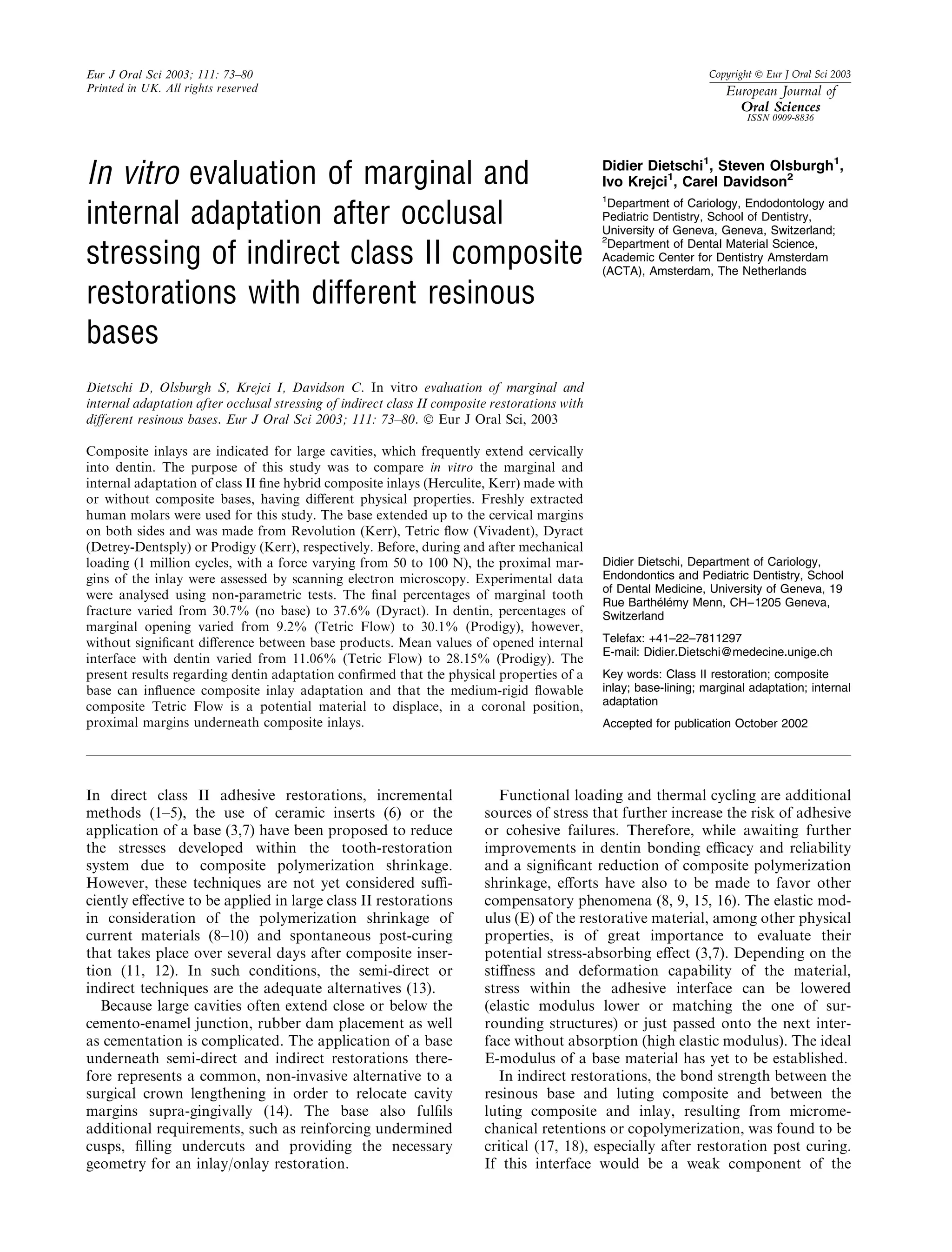
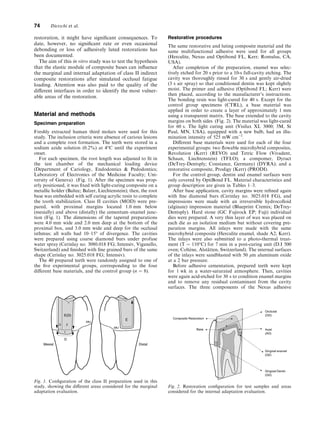
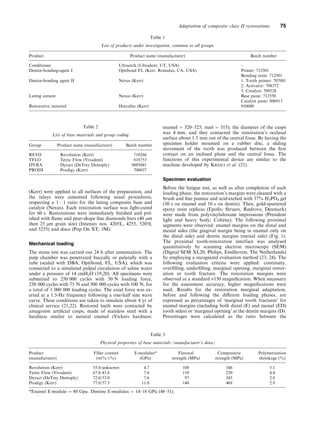
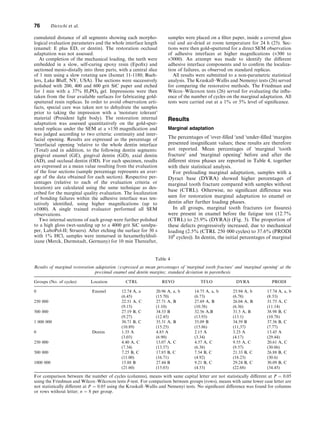
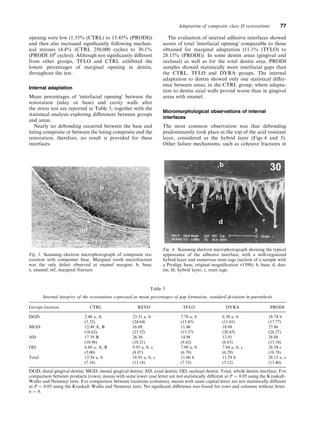
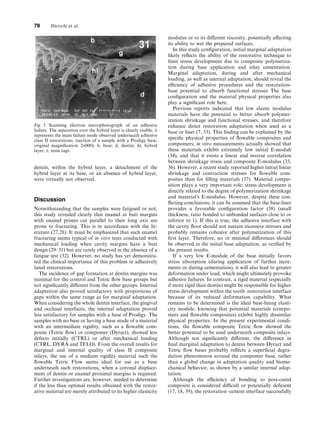
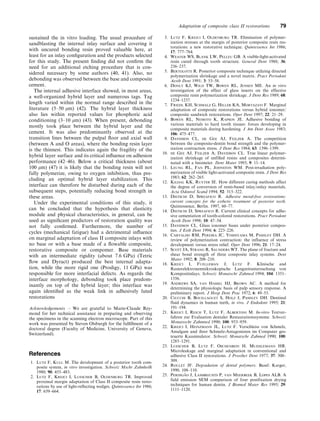
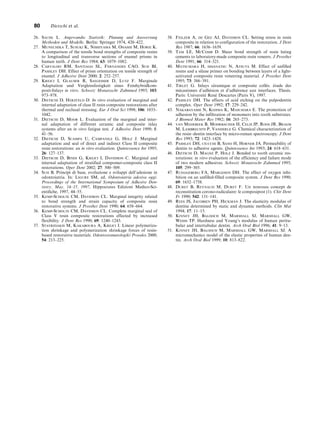
This study evaluated the marginal and internal adaptation of class II composite inlays made with or without different resinous bases after mechanical loading. Forty human molars were prepared with class II cavities and assigned to five groups: four with different resinous bases (two flowable composites, a compomer, and a restorative composite) and one control with no base. Composite inlays were made for each tooth and subjected to mechanical loading. Marginal and internal adaptation were assessed before, during, and after loading using scanning electron microscopy. Preliminary results found marginal tooth fracture ranged from 30.7-37.6% across groups, while marginal opening in dentin ranged from 9.2-30.1% depending



![CTEV [ clubfoot] DR ARUN LAL ,DR MOHAMED ASHRAF travancore medical college k...](https://cdn.slidesharecdn.com/ss_thumbnails/ctevclubfootdrarunlaldrmohamedashraftravancoremedicalcollegekollamkeralaindia-260208063247-18fc466c-thumbnail.jpg?width=640&height=640&fit=bounds)


![PERI-PROSTHETIC FRACTURE NAIL-PLATE CONSTRUCT [NPC].pptx](https://cdn.slidesharecdn.com/ss_thumbnails/drarunkumardrmohamedashrafperiprostheticfrasturenail-plateconstructnpc-260209164459-7e9d15a1-thumbnail.jpg?width=640&height=640&fit=bounds)


