Diabetes diet
BE CAREFUL IN PRESENTING A LOT OF FOOD…
Diabetes diet
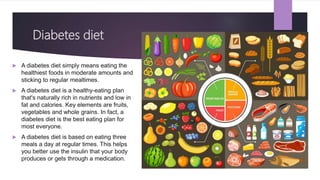
 A diabetes diet simply means eating the
healthiest foods in moderate amounts and
sticking to regular mealtimes.
 A diabetes diet is a healthy-eating plan
that's naturally rich in nutrients and low in
fat and calories. Key elements are fruits,
vegetables and whole grains. In fact, a
diabetes diet is the best eating plan for
most everyone.
 A diabetes diet is based on eating three
meals a day at regular times. This helps
you better use the insulin that your body
produces or gets through a medication.
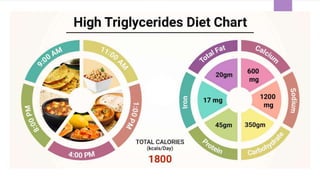
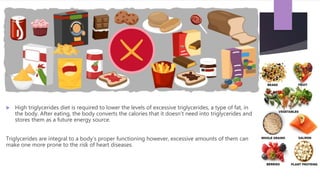
 High triglycerides diet is required to lower the levels of excessive triglycerides, a type of fat, in
the body. After eating, the body converts the calories that it doesn’t need into triglycerides and
stores them as a future energy source.
Triglycerides are integral to a body’s proper functioning however, excessive amounts of them can
make one more prone to the risk of heart diseases.
Sugar intake
 Limit your sugar intake – Extra
sugar gets converted into
triglycerides and gets stored in
the fat cells increasing the
scope of heart diseases.
 Minimising sugar consumption
by avoiding fruit juices, sugar-
sweetened beverages and
soda and instead replacing
them with water is known to
reduce triglyceride levels in the
blood.
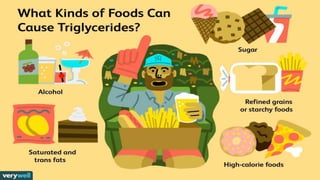
REDUCE Saturated and
trans fats
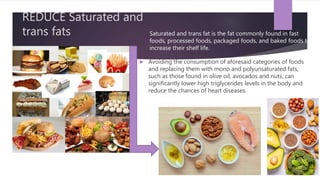
 Avoiding the consumption of aforesaid categories of foods
and replacing them with mono and polyunsaturated fats,
such as those found in olive oil, avocados and nuts, can
significantly lower high triglycerides levels in the body and
reduce the chances of heart diseases.
Saturated and trans fat is the fat commonly found in fast
foods, processed foods, packaged foods, and baked foods to
increase their shelf life.
High fibre diet
 Fibre is found in fruits, vegetables and whole grains.
Other healthy sources of fibre include nuts, cereals and
pulses. A high fibre diet helps in decreasing the
absorption of fat and sugar in the small intestine so
reducing triglyceride levels.
Why refined carbohydrates aren’t useful ?
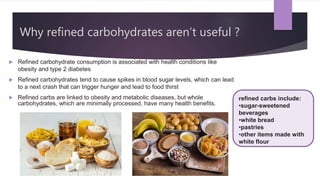
 Refined carbohydrate consumption is associated with health conditions like
obesity and type 2 diabetes
 Refined carbohydrates tend to cause spikes in blood sugar levels, which can lead
to a next crash that can trigger hunger and lead to food thirst
 Refined carbs are linked to obesity and metabolic diseases, but whole
carbohydrates, which are minimally processed, have many health benefits.
refined carbs include:
•sugar-sweetened
beverages
•white bread
•pastries
•other items made with
white flour
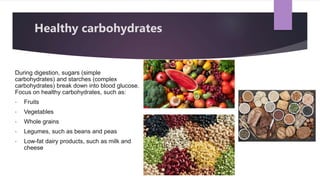
During digestion, sugars (simple
carbohydrates) and starches (complex
carbohydrates) break down into blood glucose.
Focus on healthy carbohydrates, such as:
• Fruits
• Vegetables
• Whole grains
• Legumes, such as beans and peas
• Low-fat dairy products, such as milk and
cheese
Healthy carbohydrates
Building a Healthy and Balanced Diet
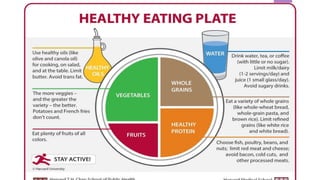
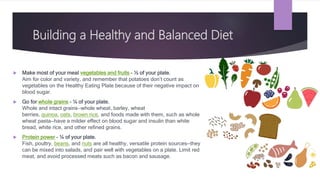
 Make most of your meal vegetables and fruits – ½ of your plate.
Aim for color and variety, and remember that potatoes don’t count as
vegetables on the Healthy Eating Plate because of their negative impact on
blood sugar.
 Go for whole grains – ¼ of your plate.
Whole and intact grains—whole wheat, barley, wheat
berries, quinoa, oats, brown rice, and foods made with them, such as whole
wheat pasta—have a milder effect on blood sugar and insulin than white
bread, white rice, and other refined grains.
 Protein power – ¼ of your plate.
Fish, poultry, beans, and nuts are all healthy, versatile protein sources—they
can be mixed into salads, and pair well with vegetables on a plate. Limit red
meat, and avoid processed meats such as bacon and sausage.
Building a Healthy and Balanced Diet
 Healthy plant oils – in moderation.
Choose healthy vegetable oils like olive, canola, soy, corn, sunflower,
peanut, and others, and avoid partially hydrogenated oils, which contain
unhealthy trans fats. Remember that low-fat does not mean “healthy.”
 Drink water, coffee, or tea.
Skip sugary drinks, limit milk and dairy products to one to two servings
per day, and limit juice to a small glass per day.
 Stay active.
The red figure running across the Healthy Eating Plate’s placemat is a
reminder that staying active is also important in weight control.
*I also wanted a burger or pizza…*

diebetes diet.pptx

  • 1.
    Diabetes diet BE CAREFULIN PRESENTING A LOT OF FOOD…
  • 2.
    Diabetes diet  Adiabetes diet simply means eating the healthiest foods in moderate amounts and sticking to regular mealtimes.  A diabetes diet is a healthy-eating plan that's naturally rich in nutrients and low in fat and calories. Key elements are fruits, vegetables and whole grains. In fact, a diabetes diet is the best eating plan for most everyone.  A diabetes diet is based on eating three meals a day at regular times. This helps you better use the insulin that your body produces or gets through a medication.
  • 4.
     High triglyceridesdiet is required to lower the levels of excessive triglycerides, a type of fat, in the body. After eating, the body converts the calories that it doesn’t need into triglycerides and stores them as a future energy source. Triglycerides are integral to a body’s proper functioning however, excessive amounts of them can make one more prone to the risk of heart diseases.
  • 6.
    Sugar intake  Limityour sugar intake – Extra sugar gets converted into triglycerides and gets stored in the fat cells increasing the scope of heart diseases.  Minimising sugar consumption by avoiding fruit juices, sugar- sweetened beverages and soda and instead replacing them with water is known to reduce triglyceride levels in the blood.
  • 8.
    REDUCE Saturated and transfats  Avoiding the consumption of aforesaid categories of foods and replacing them with mono and polyunsaturated fats, such as those found in olive oil, avocados and nuts, can significantly lower high triglycerides levels in the body and reduce the chances of heart diseases. Saturated and trans fat is the fat commonly found in fast foods, processed foods, packaged foods, and baked foods to increase their shelf life.
  • 9.
    High fibre diet Fibre is found in fruits, vegetables and whole grains. Other healthy sources of fibre include nuts, cereals and pulses. A high fibre diet helps in decreasing the absorption of fat and sugar in the small intestine so reducing triglyceride levels.
  • 10.
    Why refined carbohydratesaren’t useful ?  Refined carbohydrate consumption is associated with health conditions like obesity and type 2 diabetes  Refined carbohydrates tend to cause spikes in blood sugar levels, which can lead to a next crash that can trigger hunger and lead to food thirst  Refined carbs are linked to obesity and metabolic diseases, but whole carbohydrates, which are minimally processed, have many health benefits. refined carbs include: •sugar-sweetened beverages •white bread •pastries •other items made with white flour
  • 11.
    During digestion, sugars(simple carbohydrates) and starches (complex carbohydrates) break down into blood glucose. Focus on healthy carbohydrates, such as: • Fruits • Vegetables • Whole grains • Legumes, such as beans and peas • Low-fat dairy products, such as milk and cheese Healthy carbohydrates
  • 13.
    Building a Healthyand Balanced Diet  Make most of your meal vegetables and fruits – ½ of your plate. Aim for color and variety, and remember that potatoes don’t count as vegetables on the Healthy Eating Plate because of their negative impact on blood sugar.  Go for whole grains – ¼ of your plate. Whole and intact grains—whole wheat, barley, wheat berries, quinoa, oats, brown rice, and foods made with them, such as whole wheat pasta—have a milder effect on blood sugar and insulin than white bread, white rice, and other refined grains.  Protein power – ¼ of your plate. Fish, poultry, beans, and nuts are all healthy, versatile protein sources—they can be mixed into salads, and pair well with vegetables on a plate. Limit red meat, and avoid processed meats such as bacon and sausage.
  • 14.
    Building a Healthyand Balanced Diet  Healthy plant oils – in moderation. Choose healthy vegetable oils like olive, canola, soy, corn, sunflower, peanut, and others, and avoid partially hydrogenated oils, which contain unhealthy trans fats. Remember that low-fat does not mean “healthy.”  Drink water, coffee, or tea. Skip sugary drinks, limit milk and dairy products to one to two servings per day, and limit juice to a small glass per day.  Stay active. The red figure running across the Healthy Eating Plate’s placemat is a reminder that staying active is also important in weight control.
  • 15.
    *I also wanteda burger or pizza…*