



The Medical Records Institute estimated
 in Fall 2008 that 90% of healthcare
documentation in the US was done in the
   form of dictation and transcription.
Dictation has and continues to be a primary and efficient means of
    creating documentation by busy physicians in small private
          practices, as well as large clinics and hospitals.
The American Recovery and Reinvestment Act of 2009’s
  promises of financial subsidies for physicians that adopt
  and make “meaningful use” of Electronic Medical Record
     (EMR) Systems has led to some concern on behalf of
healthcare providers who are finding themselves challenged to
             replace dictation with EMR systems.
Is the replacement of dictation with
EMR templates in the best interest of
     providers and their patients?
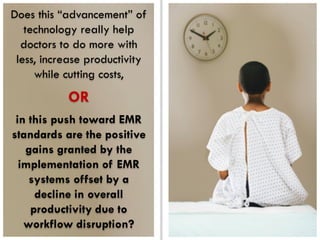
Does this “advancement” of
   technology really help
  doctors to do more with
 less, increase productivity
     while cutting costs,
           OR
 in this push toward EMR
standards are the positive
   gains granted by the
  implementation of EMR
    systems offset by a
     decline in overall
    productivity due to
   workflow disruption?
Is there an opportunity for
healthcare providers to adopt
 technologies that bring them
the best of both technologies,
or are providers to be forced
 to accept rigid solutions and
      make the best of it?
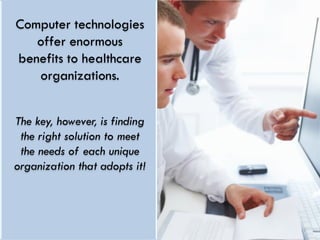
Computer technologies
   offer enormous
benefits to healthcare
   organizations.


The key, however, is finding
 the right solution to meet
 the needs of each unique
organization that adopts it!
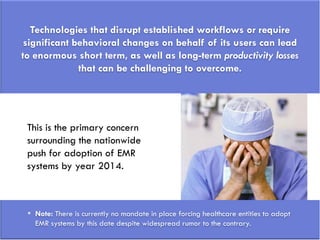
Technologies that disrupt established workflows or require
 significant behavioral changes on behalf of its users can lead
to enormous short term, as well as long-term productivity losses
              that can be challenging to overcome.


 This is the primary concern
 surrounding the nationwide
 push for adoption of EMR
 systems by year 2014.


 * Note: There is currently no mandate in place forcing healthcare entities to adopt
   EMR systems by this date despite widespread rumor to the contrary.
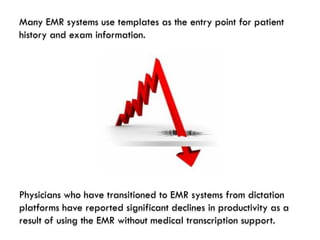
Many EMR systems use templates as the entry point for patient
history and exam information.


Physicians who have transitioned to EMR systems from dictation
platforms have reported significant declines in productivity as a
result of using the EMR without medical transcription support.
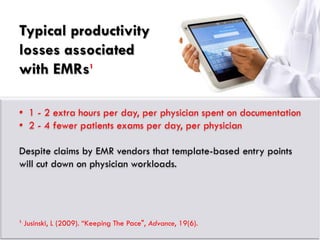
Typical productivity
losses associated
with EMRs1

• 1 - 2 extra hours per day, per physician spent on documentation
• 2 - 4 fewer patients exams per day, per physician

Despite claims by EMR vendors that template-based entry points
will cut down on physician workloads.


1.
     Jusinski, L (2009). “Keeping The Pace", Advance, 19(6).
Point-and-click entry transfers administrative responsibility to the
 physician, and the costs of that loss of productivity is significant
“Dictation is the most efficient way to document patient care. Take
    the example of a typical outpatient visit to an internist. It takes
  about one minute to dictate a note for an established patient and
about $4.30 in direct and indirect costs. By contrast, many EMRS use
   structured data entry as the primary method for entering clinical
   notes, in which physicians point and click their way through drop-
      down menus. The time required is at best equal to that of a
transcribed note, and physicians often report it takes 8 to 10 minutes
   to complete a note using structured data entry, meaning that the
  indirect cost to physicians is anywhere from $13.50 to $27.00.” 2


2.
     Daigh, R (2008). “Friend or Foe? – The EMR Mandate’s Effect on Transcription
     Companies", For The Record, 20(17).
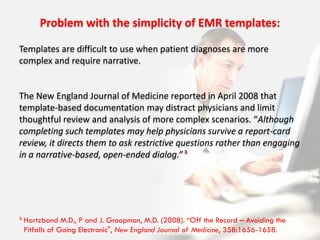
Problem with the simplicity of EMR templates:

Templates are difficult to use when patient diagnoses are more
complex and require narrative.


The New England Journal of Medicine reported in April 2008 that
template-based documentation may distract physicians and limit
thoughtful review and analysis of more complex scenarios. “Although
completing such templates may help physicians survive a report-card
review, it directs them to ask restrictive questions rather than engaging
in a narrative-based, open-ended dialog.” 3


3.
     Hartzband M.D., P and J. Groopman, M.D. (2008). “Off the Record – Avoiding the
     Pitfalls of Going Electronic", New England Journal of Medicine, 358:1656-1658.
The argument for continuing dictation and transcription for
   documentation is clear, but how are physicians, under
pressure to migrate to a paperless office, to make that leap
       with software that does not support dictation?
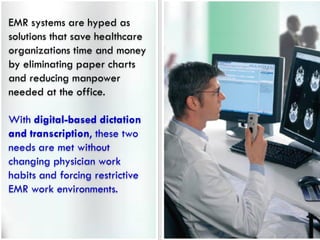
EMR systems are hyped as
solutions that save healthcare
organizations time and money
by eliminating paper charts
and reducing manpower
needed at the office.

With digital-based dictation
and transcription, these two
needs are met without
changing physician work
habits and forcing restrictive
EMR work environments.
The KEY to a successful software
implementation is finding the platform with the
 greatest amount of FLEXIBILITY that adopts to
    the physician’s own desired workflow.
Expecting to adopt an EMR package that drastically alters the
 work habits that physicians are accustomed to will result in
nothing more than disorder, which will come at a cost, either
 financial or in productive hours that could have been better
                 spent serving patients in need.
A far more efficient method is to continue to dictate notes
for transcription.

CASE IN POINT: OrthoMemphis
OrthoMemphis has saved several hundred thousand dollars by implementing a
hybrid system from SRSsoft. That hybrid system paid for itself in less than three
years due to a decline in support staff and elimination of storage space for
paper records. The hybrid approach that relies heavily on dictated records and
scanned documents far more pragmatic than the conventional alternatives. 4


 4.
   Anderson, H.J. (2009, April 1). “An EHR Is Not always a Perfect Fit", Health Data
  Management Magazine, http://www.healthdatamanagement.com/issues/2009_64/
  -27962-1.html.
The goal for physicians should be to
find the BEST in dictation and couple it with
              the BEST in EMR
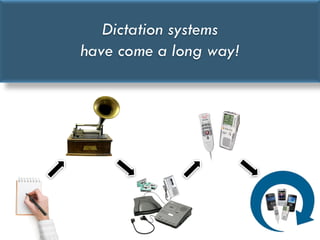
Dictation systems
have come a long way!
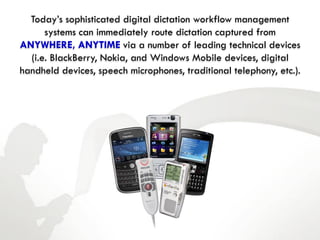
Today’s sophisticated digital dictation workflow management
      systems can immediately route dictation captured from
ANYWHERE, ANYTIME via a number of leading technical devices
  (i.e. BlackBerry, Nokia, and Windows Mobile devices, digital
handheld devices, speech microphones, traditional telephony, etc.).
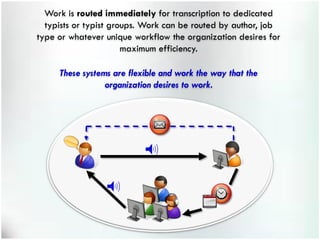
Work is routed immediately for transcription to dedicated
  typists or typist groups. Work can be routed by author, job
type or whatever unique workflow the organization desires for
                       maximum efficiency.

     These systems are flexible and work the way that the
                 organization desires to work.
WinScribe Dictation
                   manufactured by WinScribe, Inc.
                    is such a system!

WinScribe Dictation is a non-proprietary solution that includes a
free software development kit enabling organizations to easily
integrate dictation with other solutions quickly and easily.
A KEY component when looking to gain the best
possible productivity out of software solutions is
  integrating the software into other 3rd party
   products to automate the manual tasks staff
normally need to undertake. Integration not only
 speeds up the process, it also ensures that input
    information is consistent between systems.

  It is platforms like the                 solution
that will enable healthcare providers to leverage
the productivity they are accustomed to while still
     positioning them to attain their goals of a
 paperless office and the added efficiencies that
               come with this adoption.
For more information about WinScribe or to request a demonstration of our
digital dictation workflow management software,

Contact us at: sales@winscribe.com or call us at 1.866.494.6727

Dictation And The EMR

  • 2.
    The Medical RecordsInstitute estimated in Fall 2008 that 90% of healthcare documentation in the US was done in the form of dictation and transcription.
  • 3.
    Dictation has andcontinues to be a primary and efficient means of creating documentation by busy physicians in small private practices, as well as large clinics and hospitals.
  • 4.
    The American Recoveryand Reinvestment Act of 2009’s promises of financial subsidies for physicians that adopt and make “meaningful use” of Electronic Medical Record (EMR) Systems has led to some concern on behalf of healthcare providers who are finding themselves challenged to replace dictation with EMR systems.
  • 5.
    Is the replacementof dictation with EMR templates in the best interest of providers and their patients?
  • 6.
    Does this “advancement”of technology really help doctors to do more with less, increase productivity while cutting costs, OR in this push toward EMR standards are the positive gains granted by the implementation of EMR systems offset by a decline in overall productivity due to workflow disruption?
  • 7.
    Is there anopportunity for healthcare providers to adopt technologies that bring them the best of both technologies, or are providers to be forced to accept rigid solutions and make the best of it?
  • 8.
    Computer technologies offer enormous benefits to healthcare organizations. The key, however, is finding the right solution to meet the needs of each unique organization that adopts it!
  • 9.
    Technologies that disruptestablished workflows or require significant behavioral changes on behalf of its users can lead to enormous short term, as well as long-term productivity losses that can be challenging to overcome. This is the primary concern surrounding the nationwide push for adoption of EMR systems by year 2014. * Note: There is currently no mandate in place forcing healthcare entities to adopt EMR systems by this date despite widespread rumor to the contrary.
  • 10.
    Many EMR systemsuse templates as the entry point for patient history and exam information. Physicians who have transitioned to EMR systems from dictation platforms have reported significant declines in productivity as a result of using the EMR without medical transcription support.
  • 11.
    Typical productivity losses associated withEMRs1 • 1 - 2 extra hours per day, per physician spent on documentation • 2 - 4 fewer patients exams per day, per physician Despite claims by EMR vendors that template-based entry points will cut down on physician workloads. 1. Jusinski, L (2009). “Keeping The Pace", Advance, 19(6).
  • 12.
    Point-and-click entry transfersadministrative responsibility to the physician, and the costs of that loss of productivity is significant
  • 13.
    “Dictation is themost efficient way to document patient care. Take the example of a typical outpatient visit to an internist. It takes about one minute to dictate a note for an established patient and about $4.30 in direct and indirect costs. By contrast, many EMRS use structured data entry as the primary method for entering clinical notes, in which physicians point and click their way through drop- down menus. The time required is at best equal to that of a transcribed note, and physicians often report it takes 8 to 10 minutes to complete a note using structured data entry, meaning that the indirect cost to physicians is anywhere from $13.50 to $27.00.” 2 2. Daigh, R (2008). “Friend or Foe? – The EMR Mandate’s Effect on Transcription Companies", For The Record, 20(17).
  • 14.
    Problem with thesimplicity of EMR templates: Templates are difficult to use when patient diagnoses are more complex and require narrative. The New England Journal of Medicine reported in April 2008 that template-based documentation may distract physicians and limit thoughtful review and analysis of more complex scenarios. “Although completing such templates may help physicians survive a report-card review, it directs them to ask restrictive questions rather than engaging in a narrative-based, open-ended dialog.” 3 3. Hartzband M.D., P and J. Groopman, M.D. (2008). “Off the Record – Avoiding the Pitfalls of Going Electronic", New England Journal of Medicine, 358:1656-1658.
  • 15.
    The argument forcontinuing dictation and transcription for documentation is clear, but how are physicians, under pressure to migrate to a paperless office, to make that leap with software that does not support dictation?
  • 16.
    EMR systems arehyped as solutions that save healthcare organizations time and money by eliminating paper charts and reducing manpower needed at the office. With digital-based dictation and transcription, these two needs are met without changing physician work habits and forcing restrictive EMR work environments.
  • 17.
    The KEY toa successful software implementation is finding the platform with the greatest amount of FLEXIBILITY that adopts to the physician’s own desired workflow.
  • 18.
    Expecting to adoptan EMR package that drastically alters the work habits that physicians are accustomed to will result in nothing more than disorder, which will come at a cost, either financial or in productive hours that could have been better spent serving patients in need.
  • 19.
    A far moreefficient method is to continue to dictate notes for transcription. CASE IN POINT: OrthoMemphis OrthoMemphis has saved several hundred thousand dollars by implementing a hybrid system from SRSsoft. That hybrid system paid for itself in less than three years due to a decline in support staff and elimination of storage space for paper records. The hybrid approach that relies heavily on dictated records and scanned documents far more pragmatic than the conventional alternatives. 4 4. Anderson, H.J. (2009, April 1). “An EHR Is Not always a Perfect Fit", Health Data Management Magazine, http://www.healthdatamanagement.com/issues/2009_64/ -27962-1.html.
  • 20.
    The goal forphysicians should be to find the BEST in dictation and couple it with the BEST in EMR
  • 21.
  • 22.
    Today’s sophisticated digitaldictation workflow management systems can immediately route dictation captured from ANYWHERE, ANYTIME via a number of leading technical devices (i.e. BlackBerry, Nokia, and Windows Mobile devices, digital handheld devices, speech microphones, traditional telephony, etc.).
  • 23.
    Work is routedimmediately for transcription to dedicated typists or typist groups. Work can be routed by author, job type or whatever unique workflow the organization desires for maximum efficiency. These systems are flexible and work the way that the organization desires to work.
  • 24.
    WinScribe Dictation manufactured by WinScribe, Inc. is such a system! WinScribe Dictation is a non-proprietary solution that includes a free software development kit enabling organizations to easily integrate dictation with other solutions quickly and easily.
  • 25.
    A KEY componentwhen looking to gain the best possible productivity out of software solutions is integrating the software into other 3rd party products to automate the manual tasks staff normally need to undertake. Integration not only speeds up the process, it also ensures that input information is consistent between systems.
  • 26.
     Itis platforms like the solution that will enable healthcare providers to leverage the productivity they are accustomed to while still positioning them to attain their goals of a paperless office and the added efficiencies that come with this adoption.
  • 27.
    For more informationabout WinScribe or to request a demonstration of our digital dictation workflow management software, Contact us at: sales@winscribe.com or call us at 1.866.494.6727