DIAGNOSTIC
LAPAROSCOPIC
SURGERY: WHAT YOU
NEED TO KNOW
By
Dr. Valeria Simone MD
(Southlake General Surgery, Texas,
USA)
Overview
Diagnostic laparoscopic surgery is a minimally invasive procedure that plays a crucial role in modern medicine.
It enables surgeons to visualize internal structures of the abdomen and pelvis without large incisions, resulting
in quicker recovery and less pain than traditional surgeries.
This technique has transformed the diagnosis and treatment of certain conditions. Diagnostic laparoscopic
surgery involves making small incisions (0.5 to 1.5 cm) to access internal organs.
Diagnostic laparoscopy is a reliable approach employed by medical professionals. It lets them see into the
abdominal or pelvic area. This technique has changed how doctors find and diagnose problems. They can
discover and fix issues without making big cuts.
It is frequently suggested when ultrasounds or MRIs fail to provide definitive outcomes. Many patients and
healthcare providers prefer this option because it is safe, accurate, and has a shorter recovery time.
Key Highlights
• Diagnostic laparoscopic surgery is a small operation that finds and treats issues in the
abdomen or pelvis.
• It makes small cuts in the skin and uses a laparoscope with a video camera to see inside the
body.
• This surgery often helps diagnose endometriosis, pelvic inflammatory disease, appendicitis,
and unexplained abdominal pain.
• It allows patients to heal faster, leaves smaller scars, and has a lower risk of infections than
regular open surgeries.
• Patients usually need general anesthesia, and the surgery is done on an outpatient basis.
Understanding Diagnostic Laparoscopic
Surgery
Diagnostic laparoscopic surgery, like gynecologic
laparoscopy, allows doctors to see inside the body.
This helps them examine internal organs and spot
problems. This type of surgery is effective for issues
such as unexplained abdominal pain, gynecological
concerns, and tumors. It usually provides better
results than older surgical methods.
Patients enjoy this less invasive method because it
requires just a few small incisions. This technique
allows surgeons to quickly and effectively gather
important information or fix problems, such as
taking tissue samples.
Definition and Overview of Laparoscopic
Techniques
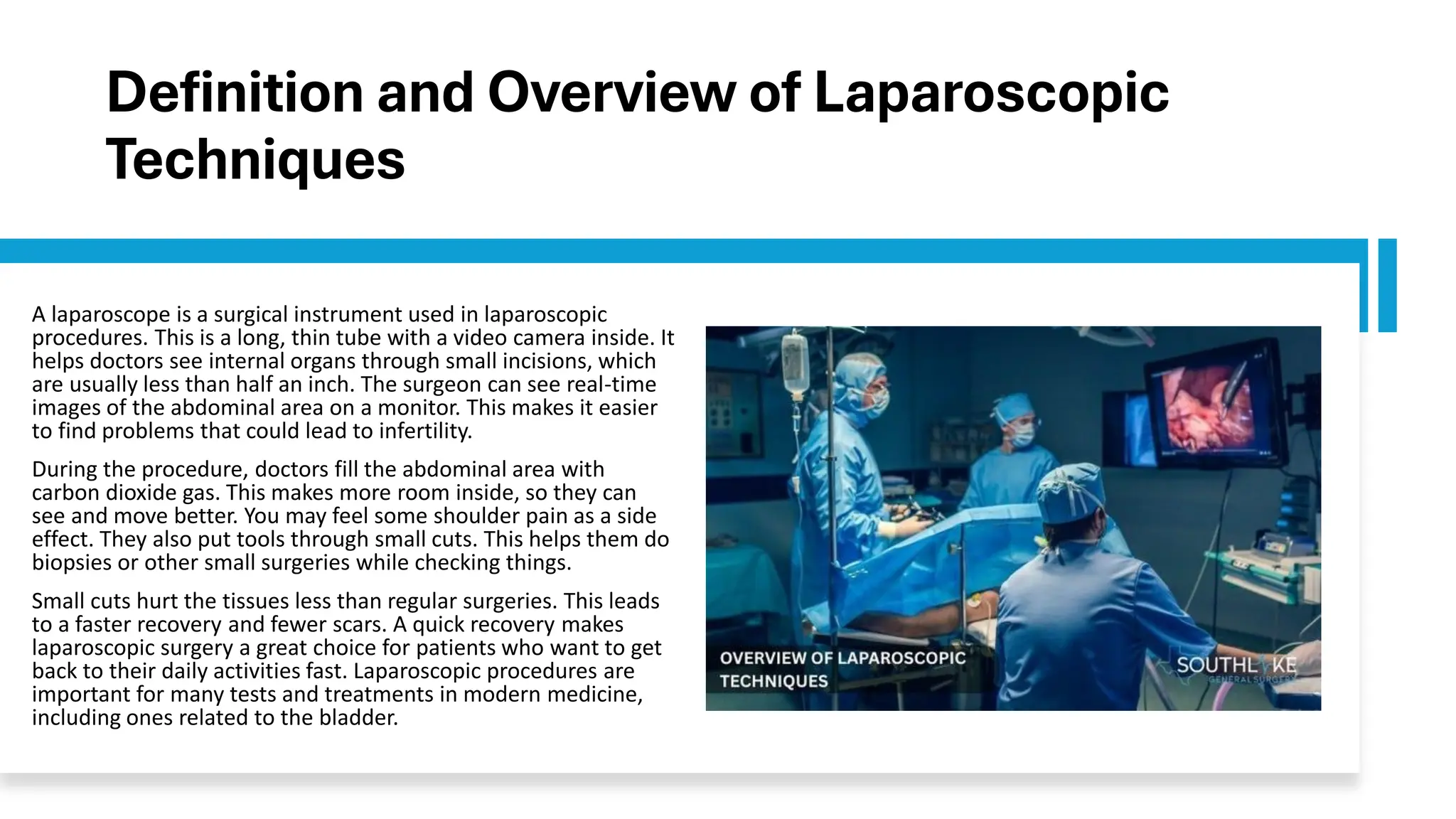
A laparoscope is a surgical instrument used in laparoscopic
procedures. This is a long, thin tube with a video camera inside. It
helps doctors see internal organs through small incisions, which
are usually less than half an inch. The surgeon can see real-time
images of the abdominal area on a monitor. This makes it easier
to find problems that could lead to infertility.
During the procedure, doctors fill the abdominal area with
carbon dioxide gas. This makes more room inside, so they can
see and move better. You may feel some shoulder pain as a side
effect. They also put tools through small cuts. This helps them do
biopsies or other small surgeries while checking things.
Small cuts hurt the tissues less than regular surgeries. This leads
to a faster recovery and fewer scars. A quick recovery makes
laparoscopic surgery a great choice for patients who want to get
back to their daily activities fast. Laparoscopic procedures are
important for many tests and treatments in modern medicine,
including ones related to the bladder.
The Advancement of Laparoscopic
Surgery in Modern Medicine
A significant breakthrough in modern surgical practices is laparoscopic surgery. It started as a way to find health issues over a hundred years ago.
At present, it plays a vital role in minimally invasive surgery. Doctors use it for various diagnoses and treatments.
This technique has evolved significantly:
• It has changed from being only a diagnostic tool to a popular option for many health issues.
• It gives accurate results and causes less discomfort for patients.
• It is often used in surgeries like: Gallbladder removalHernia repairCancer staging
With the advancements in science and technology, the tools utilized in laparoscopic surgery have seen significant improvements.
• Better cameras
• Enhanced surgical tools
• Safer methods to use carbon dioxide gas for insufflation
The progress in medical technology has allowed patients to heal more quickly. This shows just how vital laparoscopic surgery is in our healthcare
systems today.
The Role of Dr. Valeria Simone in
Laparoscopic Surgery
Dr. Valeria Simone is a skilled expert in laparoscopic
surgery and truly cares about her patients. She is
recognized for her cautious methods and her ability to
use the latest techniques. Her top priority is safety,
and she works hard to ensure the best results.
Over the course of her career, Dr. Simone has shown
unparalleled dedication to the medical profession. She
mainly works with diagnostic laparoscopy to address
complicated abdominal pain and gastroenterologist
problems.
Patients value her compassionate behavior and highly
skilled approach. She is committed to using minimally
invasive techniques for diagnosis and treatment.
Dr. Simone’s Expertise and
Experience
Dr. Valeria Simone is a skilled expert in laparoscopic surgery. She has many years of experience using this
method to find and treat different health problems. With advanced surgical tools, she carefully performs
surgeries. As a result, accurate diagnosis and effective treatment are facilitated. Her knowledge includes
conditions like endometriosis, fibroids, and abdominal pain that can be difficult to diagnose.
Dr. Simone is a reliable healthcare provider. She has great skills and offers caring support. Her main aim is to
teach her patients. She explains their surgery options and the steps they will take. No matter if the case is
simple or complex, she uses minimally invasive methods. This enables her patients to recover more quickly and
achieve excellent outcomes.
People have faith in Dr. Simone. She combines her skills and knowledge with genuine care for her patients. This
mix leads to excellent results in every laparoscopy she performs.
Benefits of Choosing Dr. Simone for
Your Procedure
Patients who choose Dr. Valeria Simone for their laparoscopic surgery get several benefits, such as:
• Fast Healing: Her unique abilities in minimally invasive methods help you recover quickly. This way, you can return to your normal routine
faster.
• Less Discomfort After Surgery: With minimally invasive techniques, you might feel less pain after your procedure.
• Smaller Scars: Laparoscopic surgery is very accurate, resulting in smaller scars compared to regular surgery.
Dr. Simone has a lot of experience. This means she gives care that is of very high quality. She offers:
• Clear Meetings: These meetings help make personal surgical plans that make patients feel safe.
• Kind Support: Her help continues after surgery. She offers full support and assistance during recovery.
Choosing Dr. Simone means you trust a healthcare provider who cares about getting the best results. She pays attention to:
• Safety: Always put the patient’s well-being first when doing surgery.
• Accuracy: Use reliable methods to achieve the best results.
• Patient Happiness: Focus on providing great care so patients feel happy with their experience.
Her commitment makes her a reliable choice for anyone needing laparoscopic surgery.
Preparing for Diagnostic Laparoscopic
Surgery
Preparation is very important for having successful
laparoscopic surgery. It begins with a meeting. During this
meeting, your healthcare provider will review your medical
history and symptoms. They will also schedule any tests that
you might need.
Patients usually need to stay away from eating before their
operation. They should wear loose and comfortable clothes.
It’s also important to avoid certain medications or
supplements.
Following these pre-operative steps can help make things
easier and reduce the chances of issues. This can lead to better
checks and a quicker recovery.
Initial
Consultation:
What to
Expect
The first consultation is an important step before you have a diagnostic laparoscopy. Your doctor will
do the following at this appointment:
• Understand the symptoms you are experiencing.
• Check your medical records and previous tests to find out if the surgery is necessary.
• You can share sensitive information that may affect the surgery, such as allergies or health issues.
The doctor may suggest doing some more tests. These might include:
• CT scans
• Ultrasounds
• Blood tests
These tests help us understand any problems that may be hidden.
Consultations are more than gathering information. They help you discuss any worries you may have.
At this point, your doctor will:
• The laparoscopic procedure is a type of surgery that uses small cuts in the body. Through these
incisions, a miniature camera and other specialized instruments are inserted. This lets the doctor
see and work on the organs inside without making a big incision.
• During this procedure, the doctor will check or treat areas like the abdomen. There are several
risks involved. These risks can include bleeding, infection, or injury to nearby organs. It is crucial to
have a conversation about these risks with your doctor prior to the surgery.
• Recovery takes time, but it is usually faster than with open surgery. You may feel pain, but you can
often control it with medicine. Pay close attention to everything your doctor says to help you get
ready for the procedure. This may mean not eating or drinking before the procedure and stopping
certain medicines.
Good communication during the consultation can lead to better results. If you’re anxious about the
procedure, it might help as well.
Pre-Operative Instructions and
Guidelines
Following the instructions before your surgery is very important for a successful diagnostic laparoscopy. This is particularly true for cleaning your
bowels. Here are a few fundamental guidelines to remember:
• Fasting: Before surgery, patients usually need to fast. This means no food, drinks, or smoking starting the night before. Fasting helps reduce
risks with anesthesia and makes surgery safer.
• Preparing the Abdomen: Keeping the area clean and following any extra steps from your healthcare provider can help prevent infections.
• Clothing: It’s best for patients to wear loose and comfortable clothes. This can make recovery easier after surgery.
• Medications: It’s important to tell your doctor about any medications, like blood thinners, aspirin, or supplements. You might need to stop
some of them as advised. After surgery, you will go to the recovery room before heading home.
• Transportation: You should arrange for someone to drive you home after the surgery. Sedatives and anesthesia can affect your reflexes for
several hours.
Following these steps can help you achieve better results. They also lower the chances of problems during and after laparoscopic surgery.
During the Surgery
Diagnostic laparoscopy is a precise method. First, patients are administered
general anesthesia to ensure they remain at ease. After that, the surgeon
makes small cuts in the abdomen. A laparoscope goes through these cuts to
get a clear view of the organs.
The operating table includes safety features and new technology that help
with accuracy. Once the surgery is finished, the cuts are closed. Following this,
the patient moves to the recovery room. This approach highlights the benefits
of using minimally invasive techniques.
Step-by-Step Procedure of
Diagnostic Laparoscopy
During the diagnostic laparoscopy, there are several key steps that ensure
everything is done correctly and safely:
• Preparation: The patient gets general anesthesia. This causes them to
become numb and immobile.
• Initial Incision: A small cut is made near the belly button. By doing so, the
doctor can access the abdominal cavity.
• Gas Insertion: Carbon dioxide is added to inflate the abdomen. This creates
space for a better view inside.
• Laparoscope Insertion: A laparoscope, which has a video camera, is inserted
next. This allows the physician to examine the internal organs.
• Exploration or Biopsy: The doctor might use some tools to take tissue
samples or fix issues.
• Closure: All tools are removed, gas escapes, and the cuts are closed with
sutures or adhesive.
These steps help you get the best diagnosis. Additionally, they help in
minimizing pain and speeding up the healing process.
Safety Measures and Technological
Advancements Used
Safety is very important during diagnostic laparoscopy. The operating tables help doctors see and reach the abdominal wall
and area easily. New anesthesia methods make sure patients feel comfortable and protect their vital functions. To avoid
problems, surgeons use high-definition cameras. These cameras give clear images of internal organs.
New technology improves these surgeries. Some of the changes are:
• Safer ways to use carbon dioxide reduce risks while doctors check organs.
• New laparoscopic tools help perform accurate surgeries that are less invasive.
• Safety measures include cleaning tools and using antibacterial sutures to reduce the chance of infections after surgery.
These helpful changes, along with careful surgical methods, ensure that safety and accuracy stay high during laparoscopic
surgeries. This way of working shows a strong promise to use the newest medical technology. The goal is to enhance
outcomes for patients while minimizing risks.
Let’s explore more: Diagnostic Laparoscopic Surgery: What to Know Beforehand — Southlake General Surgery
Make an Appointment
To schedule a consultation, contact Dr. Valeria Simone, MD, at Southlake General Surgery in
Texas, contact us at +1 (817) 748–0200. You can also Make an Online Appointment with us.
She has a lot of experience as a healthcare provider. Dr. Simone focuses on laparoscopic
surgery. This type of surgery is useful for checking abdominal pain and other issues.
During your meeting, she will talk about different surgical procedures that might be needed.
She can also help find problems like endometriosis or appendicitis.
Dr. Simone will give you advice on how to care for yourself after surgery. Don’t forget to bring
your medical history. Be sure to ask any questions you have about anesthesia or recovery
time.
Medically Reviewed By: Dr. Valeria Simone MD
Board-certified General Surgeon at Southlake General Surgery, Texas, USA.
Follow us on Facebook and YouTube.
Source: Diagnostic Laparoscopic Surgery: What to Know Beforehand
— Southlake General Surgery
THANK YOU!
SOUTHLAKE GENERAL SURGERY
1545 E. Southlake Blvd, Suite 270 Southlake, TX
EMAIL: info@southlakegeneralsurgery.com
VISIT US AT: www.southlakegeneralsurgery.com

Diagnostic Laparoscopic Surgery - What You Need to Know.pdf

  • 1.
    DIAGNOSTIC LAPAROSCOPIC SURGERY: WHAT YOU NEEDTO KNOW By Dr. Valeria Simone MD (Southlake General Surgery, Texas, USA)
  • 2.
    Overview Diagnostic laparoscopic surgeryis a minimally invasive procedure that plays a crucial role in modern medicine. It enables surgeons to visualize internal structures of the abdomen and pelvis without large incisions, resulting in quicker recovery and less pain than traditional surgeries. This technique has transformed the diagnosis and treatment of certain conditions. Diagnostic laparoscopic surgery involves making small incisions (0.5 to 1.5 cm) to access internal organs. Diagnostic laparoscopy is a reliable approach employed by medical professionals. It lets them see into the abdominal or pelvic area. This technique has changed how doctors find and diagnose problems. They can discover and fix issues without making big cuts. It is frequently suggested when ultrasounds or MRIs fail to provide definitive outcomes. Many patients and healthcare providers prefer this option because it is safe, accurate, and has a shorter recovery time.
  • 3.
    Key Highlights • Diagnosticlaparoscopic surgery is a small operation that finds and treats issues in the abdomen or pelvis. • It makes small cuts in the skin and uses a laparoscope with a video camera to see inside the body. • This surgery often helps diagnose endometriosis, pelvic inflammatory disease, appendicitis, and unexplained abdominal pain. • It allows patients to heal faster, leaves smaller scars, and has a lower risk of infections than regular open surgeries. • Patients usually need general anesthesia, and the surgery is done on an outpatient basis.
  • 4.
    Understanding Diagnostic Laparoscopic Surgery Diagnosticlaparoscopic surgery, like gynecologic laparoscopy, allows doctors to see inside the body. This helps them examine internal organs and spot problems. This type of surgery is effective for issues such as unexplained abdominal pain, gynecological concerns, and tumors. It usually provides better results than older surgical methods. Patients enjoy this less invasive method because it requires just a few small incisions. This technique allows surgeons to quickly and effectively gather important information or fix problems, such as taking tissue samples.
  • 5.
    Definition and Overviewof Laparoscopic Techniques A laparoscope is a surgical instrument used in laparoscopic procedures. This is a long, thin tube with a video camera inside. It helps doctors see internal organs through small incisions, which are usually less than half an inch. The surgeon can see real-time images of the abdominal area on a monitor. This makes it easier to find problems that could lead to infertility. During the procedure, doctors fill the abdominal area with carbon dioxide gas. This makes more room inside, so they can see and move better. You may feel some shoulder pain as a side effect. They also put tools through small cuts. This helps them do biopsies or other small surgeries while checking things. Small cuts hurt the tissues less than regular surgeries. This leads to a faster recovery and fewer scars. A quick recovery makes laparoscopic surgery a great choice for patients who want to get back to their daily activities fast. Laparoscopic procedures are important for many tests and treatments in modern medicine, including ones related to the bladder.
  • 6.
    The Advancement ofLaparoscopic Surgery in Modern Medicine A significant breakthrough in modern surgical practices is laparoscopic surgery. It started as a way to find health issues over a hundred years ago. At present, it plays a vital role in minimally invasive surgery. Doctors use it for various diagnoses and treatments. This technique has evolved significantly: • It has changed from being only a diagnostic tool to a popular option for many health issues. • It gives accurate results and causes less discomfort for patients. • It is often used in surgeries like: Gallbladder removalHernia repairCancer staging With the advancements in science and technology, the tools utilized in laparoscopic surgery have seen significant improvements. • Better cameras • Enhanced surgical tools • Safer methods to use carbon dioxide gas for insufflation The progress in medical technology has allowed patients to heal more quickly. This shows just how vital laparoscopic surgery is in our healthcare systems today.
  • 7.
    The Role ofDr. Valeria Simone in Laparoscopic Surgery Dr. Valeria Simone is a skilled expert in laparoscopic surgery and truly cares about her patients. She is recognized for her cautious methods and her ability to use the latest techniques. Her top priority is safety, and she works hard to ensure the best results. Over the course of her career, Dr. Simone has shown unparalleled dedication to the medical profession. She mainly works with diagnostic laparoscopy to address complicated abdominal pain and gastroenterologist problems. Patients value her compassionate behavior and highly skilled approach. She is committed to using minimally invasive techniques for diagnosis and treatment.
  • 8.
    Dr. Simone’s Expertiseand Experience Dr. Valeria Simone is a skilled expert in laparoscopic surgery. She has many years of experience using this method to find and treat different health problems. With advanced surgical tools, she carefully performs surgeries. As a result, accurate diagnosis and effective treatment are facilitated. Her knowledge includes conditions like endometriosis, fibroids, and abdominal pain that can be difficult to diagnose. Dr. Simone is a reliable healthcare provider. She has great skills and offers caring support. Her main aim is to teach her patients. She explains their surgery options and the steps they will take. No matter if the case is simple or complex, she uses minimally invasive methods. This enables her patients to recover more quickly and achieve excellent outcomes. People have faith in Dr. Simone. She combines her skills and knowledge with genuine care for her patients. This mix leads to excellent results in every laparoscopy she performs.
  • 9.
    Benefits of ChoosingDr. Simone for Your Procedure Patients who choose Dr. Valeria Simone for their laparoscopic surgery get several benefits, such as: • Fast Healing: Her unique abilities in minimally invasive methods help you recover quickly. This way, you can return to your normal routine faster. • Less Discomfort After Surgery: With minimally invasive techniques, you might feel less pain after your procedure. • Smaller Scars: Laparoscopic surgery is very accurate, resulting in smaller scars compared to regular surgery. Dr. Simone has a lot of experience. This means she gives care that is of very high quality. She offers: • Clear Meetings: These meetings help make personal surgical plans that make patients feel safe. • Kind Support: Her help continues after surgery. She offers full support and assistance during recovery. Choosing Dr. Simone means you trust a healthcare provider who cares about getting the best results. She pays attention to: • Safety: Always put the patient’s well-being first when doing surgery. • Accuracy: Use reliable methods to achieve the best results. • Patient Happiness: Focus on providing great care so patients feel happy with their experience. Her commitment makes her a reliable choice for anyone needing laparoscopic surgery.
  • 10.
    Preparing for DiagnosticLaparoscopic Surgery Preparation is very important for having successful laparoscopic surgery. It begins with a meeting. During this meeting, your healthcare provider will review your medical history and symptoms. They will also schedule any tests that you might need. Patients usually need to stay away from eating before their operation. They should wear loose and comfortable clothes. It’s also important to avoid certain medications or supplements. Following these pre-operative steps can help make things easier and reduce the chances of issues. This can lead to better checks and a quicker recovery.
  • 11.
    Initial Consultation: What to Expect The firstconsultation is an important step before you have a diagnostic laparoscopy. Your doctor will do the following at this appointment: • Understand the symptoms you are experiencing. • Check your medical records and previous tests to find out if the surgery is necessary. • You can share sensitive information that may affect the surgery, such as allergies or health issues. The doctor may suggest doing some more tests. These might include: • CT scans • Ultrasounds • Blood tests These tests help us understand any problems that may be hidden. Consultations are more than gathering information. They help you discuss any worries you may have. At this point, your doctor will: • The laparoscopic procedure is a type of surgery that uses small cuts in the body. Through these incisions, a miniature camera and other specialized instruments are inserted. This lets the doctor see and work on the organs inside without making a big incision. • During this procedure, the doctor will check or treat areas like the abdomen. There are several risks involved. These risks can include bleeding, infection, or injury to nearby organs. It is crucial to have a conversation about these risks with your doctor prior to the surgery. • Recovery takes time, but it is usually faster than with open surgery. You may feel pain, but you can often control it with medicine. Pay close attention to everything your doctor says to help you get ready for the procedure. This may mean not eating or drinking before the procedure and stopping certain medicines. Good communication during the consultation can lead to better results. If you’re anxious about the procedure, it might help as well.
  • 12.
    Pre-Operative Instructions and Guidelines Followingthe instructions before your surgery is very important for a successful diagnostic laparoscopy. This is particularly true for cleaning your bowels. Here are a few fundamental guidelines to remember: • Fasting: Before surgery, patients usually need to fast. This means no food, drinks, or smoking starting the night before. Fasting helps reduce risks with anesthesia and makes surgery safer. • Preparing the Abdomen: Keeping the area clean and following any extra steps from your healthcare provider can help prevent infections. • Clothing: It’s best for patients to wear loose and comfortable clothes. This can make recovery easier after surgery. • Medications: It’s important to tell your doctor about any medications, like blood thinners, aspirin, or supplements. You might need to stop some of them as advised. After surgery, you will go to the recovery room before heading home. • Transportation: You should arrange for someone to drive you home after the surgery. Sedatives and anesthesia can affect your reflexes for several hours. Following these steps can help you achieve better results. They also lower the chances of problems during and after laparoscopic surgery.
  • 13.
    During the Surgery Diagnosticlaparoscopy is a precise method. First, patients are administered general anesthesia to ensure they remain at ease. After that, the surgeon makes small cuts in the abdomen. A laparoscope goes through these cuts to get a clear view of the organs. The operating table includes safety features and new technology that help with accuracy. Once the surgery is finished, the cuts are closed. Following this, the patient moves to the recovery room. This approach highlights the benefits of using minimally invasive techniques.
  • 14.
    Step-by-Step Procedure of DiagnosticLaparoscopy During the diagnostic laparoscopy, there are several key steps that ensure everything is done correctly and safely: • Preparation: The patient gets general anesthesia. This causes them to become numb and immobile. • Initial Incision: A small cut is made near the belly button. By doing so, the doctor can access the abdominal cavity. • Gas Insertion: Carbon dioxide is added to inflate the abdomen. This creates space for a better view inside. • Laparoscope Insertion: A laparoscope, which has a video camera, is inserted next. This allows the physician to examine the internal organs. • Exploration or Biopsy: The doctor might use some tools to take tissue samples or fix issues. • Closure: All tools are removed, gas escapes, and the cuts are closed with sutures or adhesive. These steps help you get the best diagnosis. Additionally, they help in minimizing pain and speeding up the healing process.
  • 15.
    Safety Measures andTechnological Advancements Used Safety is very important during diagnostic laparoscopy. The operating tables help doctors see and reach the abdominal wall and area easily. New anesthesia methods make sure patients feel comfortable and protect their vital functions. To avoid problems, surgeons use high-definition cameras. These cameras give clear images of internal organs. New technology improves these surgeries. Some of the changes are: • Safer ways to use carbon dioxide reduce risks while doctors check organs. • New laparoscopic tools help perform accurate surgeries that are less invasive. • Safety measures include cleaning tools and using antibacterial sutures to reduce the chance of infections after surgery. These helpful changes, along with careful surgical methods, ensure that safety and accuracy stay high during laparoscopic surgeries. This way of working shows a strong promise to use the newest medical technology. The goal is to enhance outcomes for patients while minimizing risks. Let’s explore more: Diagnostic Laparoscopic Surgery: What to Know Beforehand — Southlake General Surgery
  • 16.
    Make an Appointment Toschedule a consultation, contact Dr. Valeria Simone, MD, at Southlake General Surgery in Texas, contact us at +1 (817) 748–0200. You can also Make an Online Appointment with us. She has a lot of experience as a healthcare provider. Dr. Simone focuses on laparoscopic surgery. This type of surgery is useful for checking abdominal pain and other issues. During your meeting, she will talk about different surgical procedures that might be needed. She can also help find problems like endometriosis or appendicitis. Dr. Simone will give you advice on how to care for yourself after surgery. Don’t forget to bring your medical history. Be sure to ask any questions you have about anesthesia or recovery time.
  • 17.
    Medically Reviewed By:Dr. Valeria Simone MD Board-certified General Surgeon at Southlake General Surgery, Texas, USA. Follow us on Facebook and YouTube. Source: Diagnostic Laparoscopic Surgery: What to Know Beforehand — Southlake General Surgery
  • 18.
    THANK YOU! SOUTHLAKE GENERALSURGERY 1545 E. Southlake Blvd, Suite 270 Southlake, TX EMAIL: info@southlakegeneralsurgery.com VISIT US AT: www.southlakegeneralsurgery.com