Diabetic foot and exercise
therapy
Diabetic Foot
• Diabetic foot ranges from foot at risk to frank gangrene
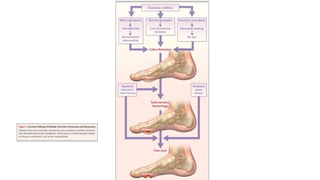
• A constellation of physical findings and medical complications in the
foot, arising as a consequence of
• Impaired sensation due to diabetic neuropathy (80 – 90%)
• Impaired blood supply due to peripheral vascular diseases (30-40%)
• Foot deformities
• Trauma
• Management of diabetic foot is multi-disciplinary
Diabetic foot classification
• Neuropathic foot with palpable pulses
• Foot with neuropathic ulceration
• Charcot foot, which may be secondarily complicated by ulceration
• Ischaemic foot without pulses and a varying degree of neuropathy
• Neuroischaemic foot characterized by both ischemia and neuropathy and
complicated by ulcer
• Critically ischaemic foot
• Acutely ischaemic foot
• Renal ischaemic foot characterized by digital necrosis
Wagner’s classification
• Stage 0 = Foot at risk
• Stage 1 = Superficial ulcer/blister
• Stage 2 = Deep ulcers
• Stage 3 =Deep ulcer with abscess, osteomyelitis,
• Stage 4 = Fore-foot gangrene
• Stage 5 = Hind-foot gangrene
Exercise therapy and etiological factors of
diabetic foot
• Main etiological factors (individually or altogether)
• Neuropathy
• Vasculopathy
• Foot deformities
• Trauma
• Other factors
• limited joint mobility (LJM)
• Muscle weakness
• Poor balance
• Posture and gait alterations
Peripheral neuropathy
• Regular physical activity and aerobic and resistance exercise training
• Reducing risk of developing neuropathy
• Reduces body weight
• Improves blood glucose control and insulin sensitivity
• Promoting microvascular function and fat oxidation by
• Reducing oxidative stress
• Increasing neurotrophic factors
Peripheral arterial disease
• The positive effects of ET in in diabetic patients with PAD
• Improvement in
• Endothelial function,
• Oxidative stress,
• Markers of adiposity (Body composition)
• Inflammatory responses
• Perfusion and plasma viscosity
• Facilitating oxygen delivery, skeletal muscle metabolism and strength
Joint mobility and Muscular dysfunction
• Pattern of dysfunction
• Plantar Fascia and Achilles Tendon
• Limited Joint Mobility
• Weak and elongated muscles
• Stretching and joint mobilization
• Reduce arch deformation, excessive pronation, rearfoot valgus, and improve
ankle dorsiflexion and PF tension
• Muscular dysfunction
• Muscle strength, power and performance
Balance, Posture and Gait
• POSTURE, BALANCE AND GAIT
• Improving and maintaining the foot’s biomechanics result in restoring a
physiological pattern
• Improving proprioception
• PLANTAR PRESSURE
• No positive direct effect on foot plantar pressure
• indirectly., improve the quality of PP distribution
• Improving functional deficit
• Improving static and dynamic posture alterations
• Reduce weight loss
Exercise treatment
• Wagner grade 1 or 2 DFU
• Type of exercises
• Range of joint motion,
• Stretching exercises,
• Strengthening exercises,
• Proprioception and balance exercises
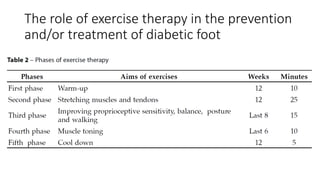
The role of exercise therapy in the prevention
and/or treatment of diabetic foot
Shortcomings in exercise therapy
• Patient compliance
• Therapist shortcomings
• Patient consultation.
Conclusion
• Multi-disciplinary approach needed
• Going to be an increasing problem
• High morbidity and cost
• Solution is probably in prevention
• Most feet can be spared…at least for a while

Diabetic foot and exercise therapy.pptx

  • 1.
    Diabetic foot andexercise therapy
  • 2.
    Diabetic Foot • Diabeticfoot ranges from foot at risk to frank gangrene • A constellation of physical findings and medical complications in the foot, arising as a consequence of • Impaired sensation due to diabetic neuropathy (80 – 90%) • Impaired blood supply due to peripheral vascular diseases (30-40%) • Foot deformities • Trauma • Management of diabetic foot is multi-disciplinary
  • 3.
    Diabetic foot classification •Neuropathic foot with palpable pulses • Foot with neuropathic ulceration • Charcot foot, which may be secondarily complicated by ulceration • Ischaemic foot without pulses and a varying degree of neuropathy • Neuroischaemic foot characterized by both ischemia and neuropathy and complicated by ulcer • Critically ischaemic foot • Acutely ischaemic foot • Renal ischaemic foot characterized by digital necrosis
  • 4.
    Wagner’s classification • Stage0 = Foot at risk • Stage 1 = Superficial ulcer/blister • Stage 2 = Deep ulcers • Stage 3 =Deep ulcer with abscess, osteomyelitis, • Stage 4 = Fore-foot gangrene • Stage 5 = Hind-foot gangrene
  • 6.
    Exercise therapy andetiological factors of diabetic foot • Main etiological factors (individually or altogether) • Neuropathy • Vasculopathy • Foot deformities • Trauma • Other factors • limited joint mobility (LJM) • Muscle weakness • Poor balance • Posture and gait alterations
  • 7.
    Peripheral neuropathy • Regularphysical activity and aerobic and resistance exercise training • Reducing risk of developing neuropathy • Reduces body weight • Improves blood glucose control and insulin sensitivity • Promoting microvascular function and fat oxidation by • Reducing oxidative stress • Increasing neurotrophic factors
  • 8.
    Peripheral arterial disease •The positive effects of ET in in diabetic patients with PAD • Improvement in • Endothelial function, • Oxidative stress, • Markers of adiposity (Body composition) • Inflammatory responses • Perfusion and plasma viscosity • Facilitating oxygen delivery, skeletal muscle metabolism and strength
  • 9.
    Joint mobility andMuscular dysfunction • Pattern of dysfunction • Plantar Fascia and Achilles Tendon • Limited Joint Mobility • Weak and elongated muscles • Stretching and joint mobilization • Reduce arch deformation, excessive pronation, rearfoot valgus, and improve ankle dorsiflexion and PF tension • Muscular dysfunction • Muscle strength, power and performance
  • 10.
    Balance, Posture andGait • POSTURE, BALANCE AND GAIT • Improving and maintaining the foot’s biomechanics result in restoring a physiological pattern • Improving proprioception • PLANTAR PRESSURE • No positive direct effect on foot plantar pressure • indirectly., improve the quality of PP distribution • Improving functional deficit • Improving static and dynamic posture alterations • Reduce weight loss
  • 11.
    Exercise treatment • Wagnergrade 1 or 2 DFU • Type of exercises • Range of joint motion, • Stretching exercises, • Strengthening exercises, • Proprioception and balance exercises
  • 12.
    The role ofexercise therapy in the prevention and/or treatment of diabetic foot
  • 13.
    Shortcomings in exercisetherapy • Patient compliance • Therapist shortcomings • Patient consultation.
  • 14.
    Conclusion • Multi-disciplinary approachneeded • Going to be an increasing problem • High morbidity and cost • Solution is probably in prevention • Most feet can be spared…at least for a while