By: Amelia Olton
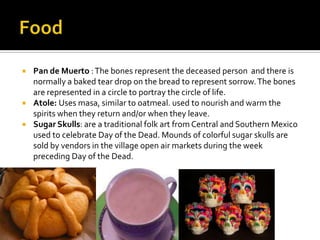
   Pan de Muerto : The bones represent the deceased person and there is
    normally a baked tear drop on the bread to represent sorrow. The bones
    are represented in a circle to portray the circle of life.
   Atole: Uses masa, similar to oatmeal. used to nourish and warm the
    spirits when they return and/or when they leave.
   Sugar Skulls: are a traditional folk art from Central and Southern Mexico
    used to celebrate Day of the Dead. Mounds of colorful sugar skulls are
    sold by vendors in the village open air markets during the week
    preceding Day of the Dead.
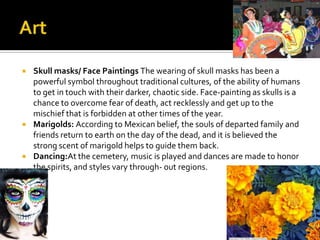
   Skull masks/ Face Paintings The wearing of skull masks has been a
    powerful symbol throughout traditional cultures, of the ability of humans
    to get in touch with their darker, chaotic side. Face-painting as skulls is a
    chance to overcome fear of death, act recklessly and get up to the
    mischief that is forbidden at other times of the year.
   Marigolds: According to Mexican belief, the souls of departed family and
    friends return to earth on the day of the dead, and it is believed the
    strong scent of marigold helps to guide them back.
   Dancing:At the cemetery, music is played and dances are made to honor
    the spirits, and styles vary through- out regions.
   For more than 500 years, the goddess Mictecacihuatl (Lady of the Dead)
    presided over Aztec harvest rituals using fires and incense, costumes of
    animal skins, images of their dead and offerings of ceramics, personal
    goods, flowers and foods, drink and flowers.
    Aztec, Mayan and other indigenous traditions have created the
    Mexican's attitude about death. From these ancestors has come the
    knowledge that souls continue to exist after death, resting Mictlan, the
    land of the dead, not for judgment or resurrection; but for the day each
    year when they could return home to visit their loved ones.
   When the Spaniards witnessed these traditions, they tried to force the
    indigenous people to take death as a somber, mournful process not a
    colorful lively tradition. The people still carried on, even when the
    Spaniards changed the dates to concede with the catholic calendar and
    All Saints day.
   Altars: family members honor their deceased
    with ofrendas or offerings on altars which may
    consist of photographs, bread, other foods,
    flowers, toys and other symbolic offerings.
   Songs: Families sing the favorite songs of the
    deceased one in the cemetery or by the altars in
    their homes.
   Stories: Loved ones of the dead sit by their
    graves and tell stories, and experiences they
    have from the person. It is a lively experience,
    not mournful.
   Build an altar with favorite foods and trinkets
    that the person liked when they were living
   Visit the graves of your loved ones and spruce
    it up as you see fit.
   Light the grave with candles and play their
    favorite music.

Dia de las muertos one

  • 1.
  • 2.
    Pan de Muerto : The bones represent the deceased person and there is normally a baked tear drop on the bread to represent sorrow. The bones are represented in a circle to portray the circle of life.  Atole: Uses masa, similar to oatmeal. used to nourish and warm the spirits when they return and/or when they leave.  Sugar Skulls: are a traditional folk art from Central and Southern Mexico used to celebrate Day of the Dead. Mounds of colorful sugar skulls are sold by vendors in the village open air markets during the week preceding Day of the Dead.
  • 3.
    Skull masks/ Face Paintings The wearing of skull masks has been a powerful symbol throughout traditional cultures, of the ability of humans to get in touch with their darker, chaotic side. Face-painting as skulls is a chance to overcome fear of death, act recklessly and get up to the mischief that is forbidden at other times of the year.  Marigolds: According to Mexican belief, the souls of departed family and friends return to earth on the day of the dead, and it is believed the strong scent of marigold helps to guide them back.  Dancing:At the cemetery, music is played and dances are made to honor the spirits, and styles vary through- out regions.
  • 4.
    For more than 500 years, the goddess Mictecacihuatl (Lady of the Dead) presided over Aztec harvest rituals using fires and incense, costumes of animal skins, images of their dead and offerings of ceramics, personal goods, flowers and foods, drink and flowers.  Aztec, Mayan and other indigenous traditions have created the Mexican's attitude about death. From these ancestors has come the knowledge that souls continue to exist after death, resting Mictlan, the land of the dead, not for judgment or resurrection; but for the day each year when they could return home to visit their loved ones.  When the Spaniards witnessed these traditions, they tried to force the indigenous people to take death as a somber, mournful process not a colorful lively tradition. The people still carried on, even when the Spaniards changed the dates to concede with the catholic calendar and All Saints day.
  • 5.
    Altars: family members honor their deceased with ofrendas or offerings on altars which may consist of photographs, bread, other foods, flowers, toys and other symbolic offerings.  Songs: Families sing the favorite songs of the deceased one in the cemetery or by the altars in their homes.  Stories: Loved ones of the dead sit by their graves and tell stories, and experiences they have from the person. It is a lively experience, not mournful.
  • 6.
    Build an altar with favorite foods and trinkets that the person liked when they were living  Visit the graves of your loved ones and spruce it up as you see fit.  Light the grave with candles and play their favorite music.