Innovative Solutions – from Data to Decisions
United Nations Procurement Seminar, June 11-12, 2014
Christian Grøn, Director, Consultancy, DHI
© DHI
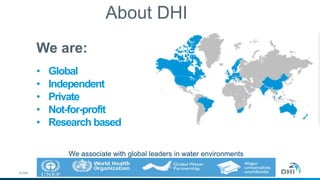
We are:
About DHI
We associate with global leaders in water environments
• Global
• Independent
• Private
• Not-for-profit
• Research based
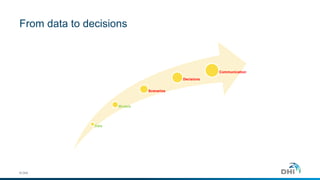
From data to decisions
© DHI
Data
Models
Scenarios
Decisions
Communication
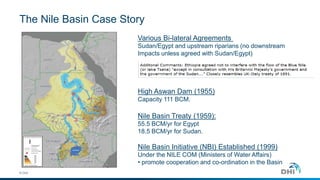
The Nile Basin Case Story
© DHI
Various Bi-lateral Agreements
Sudan/Egypt and upstream riparians (no downstream
Impacts unless agreed with Sudan/Egypt)
High Aswan Dam (1955)
Capacity 111 BCM.
Nile Basin Treaty (1959):
55.5 BCM/yr for Egypt
18.5 BCM/yr for Sudan.
Nile Basin Initiative (NBI) Established (1999)
Under the NILE COM (Ministers of Water Affairs)
• promote cooperation and co-ordination in the Basin
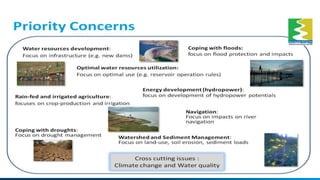
The Challenges
© DHI
• Downstream countries that rely almost completely on the Nile water
• Upstream countries with a desire and potential to develop water
infrastructure
• Environmental issues and important ecosystems (e.g. Lake Victoria)
• Water allocation agreements that inhibits upstream development
projects
The Nile Basin Decision Support System
© DHI
• ”Development and Deployment of the Nile Basin Decision Support
System
− Funding: 3.65 million US$ from the World Bank
− Timing: May 2009 – May 2012
• Integrates climatological, hydrological and environmental data in one
information management system
• Applies sophisticated water simulation models
• Adds sector economic production models, cost-benefit and multi-
criteria analysis tools
• Presents user friendly and understandable interfaces
System components
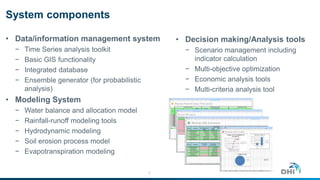
• Data/information management system
− Time Series analysis toolkit
− Basic GIS functionality
− Integrated database
− Ensemble generator (for probabilistic
analysis)
• Modeling System
− Water balance and allocation model
− Rainfall-runoff modeling tools
− Hydrodynamic modeling
− Soil erosion process model
− Evapotranspiration modeling
7
• Decision making/Analysis tools
− Scenario management including
indicator calculation
− Multi-objective optimization
− Economic analysis tools
− Multi-criteria analysis tool
Key values
© DHI
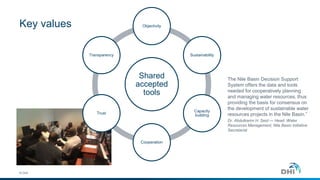
Shared
accepted
tools
Objectivity
Sustainability
Capacity
building
Cooperation
Trust
Transparency
The Nile Basin Decision Support
System offers the data and tools
needed for cooperatively planning
and managing water resources, thus
providing the basis for consensus on
the development of sustainable water
resources projects in the Nile Basin.”
Dr. Abdulkarim H. Seid — Head, Water
Resources Management, Nile Basin Initiative
Secretariat
You can too
© DHI
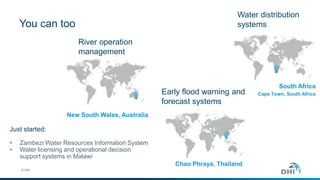
Water distribution
systems
South Africa
Cape Town, South AfricaEarly flood warning and
forecast systems
Chao Phraya, Thailand
River operation
management
New South Wales, Australia
Just started:
• Zambezi Water Resources Information System
• Water licensing and operational decision
support systems in Malawi
Thank you
Christian Grøn
chg@dhigroup.com
+45 4516 9570
+45 2965 3447
© DHI

DHI innovative solutions - from data to decisions

  • 1.
    Innovative Solutions –from Data to Decisions United Nations Procurement Seminar, June 11-12, 2014 Christian Grøn, Director, Consultancy, DHI
  • 2.
    © DHI We are: AboutDHI We associate with global leaders in water environments • Global • Independent • Private • Not-for-profit • Research based
  • 3.
    From data todecisions © DHI Data Models Scenarios Decisions Communication
  • 4.
    The Nile BasinCase Story © DHI Various Bi-lateral Agreements Sudan/Egypt and upstream riparians (no downstream Impacts unless agreed with Sudan/Egypt) High Aswan Dam (1955) Capacity 111 BCM. Nile Basin Treaty (1959): 55.5 BCM/yr for Egypt 18.5 BCM/yr for Sudan. Nile Basin Initiative (NBI) Established (1999) Under the NILE COM (Ministers of Water Affairs) • promote cooperation and co-ordination in the Basin
  • 5.
    The Challenges © DHI •Downstream countries that rely almost completely on the Nile water • Upstream countries with a desire and potential to develop water infrastructure • Environmental issues and important ecosystems (e.g. Lake Victoria) • Water allocation agreements that inhibits upstream development projects
  • 6.
    The Nile BasinDecision Support System © DHI • ”Development and Deployment of the Nile Basin Decision Support System − Funding: 3.65 million US$ from the World Bank − Timing: May 2009 – May 2012 • Integrates climatological, hydrological and environmental data in one information management system • Applies sophisticated water simulation models • Adds sector economic production models, cost-benefit and multi- criteria analysis tools • Presents user friendly and understandable interfaces
  • 7.
    System components • Data/informationmanagement system − Time Series analysis toolkit − Basic GIS functionality − Integrated database − Ensemble generator (for probabilistic analysis) • Modeling System − Water balance and allocation model − Rainfall-runoff modeling tools − Hydrodynamic modeling − Soil erosion process model − Evapotranspiration modeling 7 • Decision making/Analysis tools − Scenario management including indicator calculation − Multi-objective optimization − Economic analysis tools − Multi-criteria analysis tool
  • 8.
    Key values © DHI Shared accepted tools Objectivity Sustainability Capacity building Cooperation Trust Transparency TheNile Basin Decision Support System offers the data and tools needed for cooperatively planning and managing water resources, thus providing the basis for consensus on the development of sustainable water resources projects in the Nile Basin.” Dr. Abdulkarim H. Seid — Head, Water Resources Management, Nile Basin Initiative Secretariat
  • 9.
    You can too ©DHI Water distribution systems South Africa Cape Town, South AfricaEarly flood warning and forecast systems Chao Phraya, Thailand River operation management New South Wales, Australia Just started: • Zambezi Water Resources Information System • Water licensing and operational decision support systems in Malawi
  • 10.
    Thank you Christian Grøn chg@dhigroup.com +454516 9570 +45 2965 3447 © DHI

Editor's Notes

  • #9 Sustainability – is a result of the other things. If the NB DSS become a succes we will see commitment, willingness to invest in people, tools etc (capacity).